Ombudsman probes Villar senators over LRT-1 extension delay
The Office of the Ombudsman is investigating Senators Mark and Camille Villar for allegedly blocking the LRT-1 Cavite Extension to benefit their family's real estate holdings, sparking public outrage and raising questions about developer influence on infrastructure.
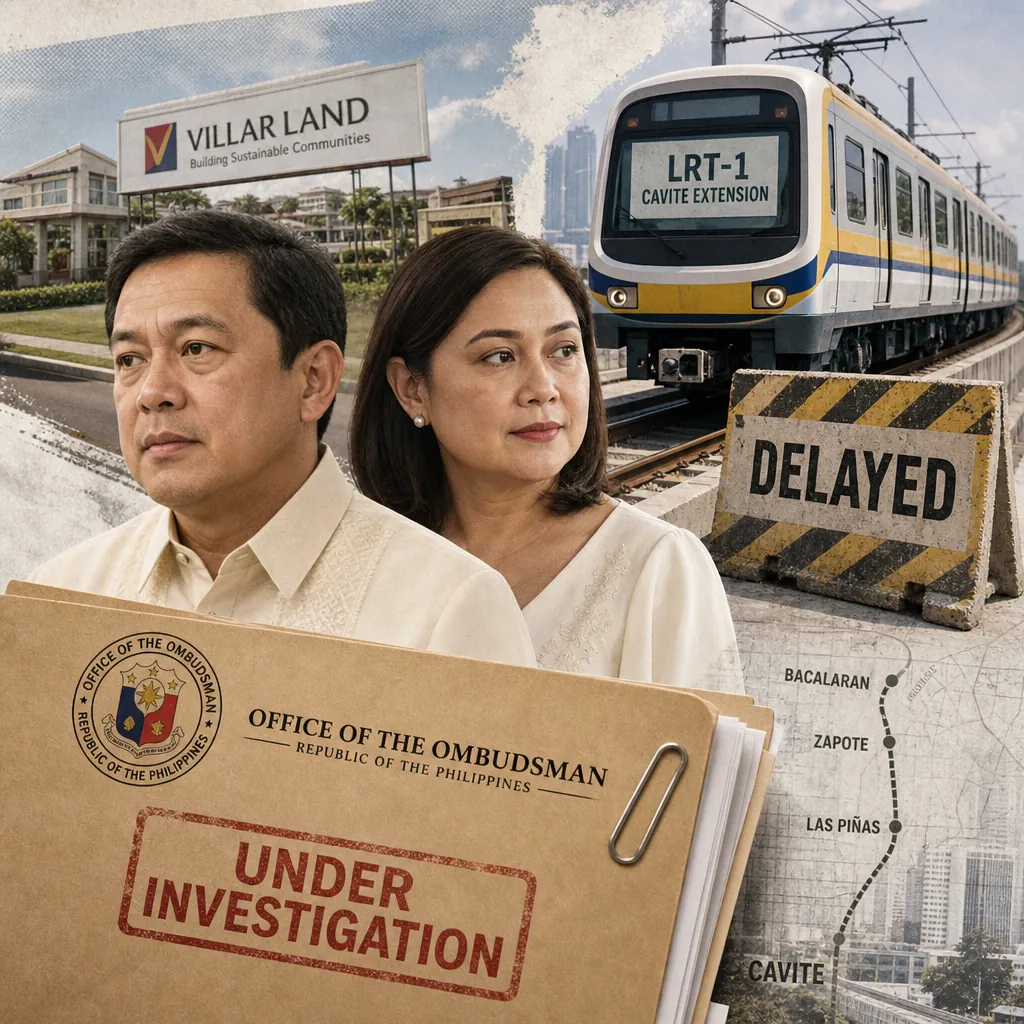
The conversation erupted on Monday, June 15, 2026, when multiple news outlets simultaneously reported Ombudsman Jesus Crispin Remulla's announcement that the Office of the Ombudsman was investigating Senators Mark and Camille Villar for allegedly blocking the LRT-1 Cavite Extension project to benefit their own real estate holdings. The Philippine Star's post quickly became the epicenter of discussion, accumulating 2,872 likes, 2,528 angry reactions, and 1,564 haha reactions within hours, signaling a mix of outrage and bitter amusement from the public. The narrative pivoted on Remulla's claim that the Villars wanted the alignment shifted to C5 Road in Las Piñas "where they have properties," a statement that immediately linked the controversy to the family's vast real estate empire, including Vista Land and Camella.
By mid-morning, Reddit user u/aarronn87 posted the same story with a scathing headline: "Long overdue na mga Villar dito. Sana makasuhan," which garnered 572 upvotes and 50 comments, reflecting the platform's more analytical audience. The discussion quickly moved beyond the immediate allegations to broader questions about infrastructure prioritization and conflicts of interest in Philippine real estate development. Comments on Facebook, while less structured, showed a clear sentiment of exhaustion—one user noted the project's decades-long delay, while others expressed skepticism that the investigation would lead to consequences due to the Villar family's political influence.
The first narrative thread centered on the specific land-use conflict, with the Ombudsman's office revealing that the Villars allegedly demanded the railway pass through their C5 properties, causing the project to stall at the Sucat, Parañaque alignment. News5Everywhere's post amplified this angle, generating 1,617 likes and 3,158 haha reactions—the highest laughter count among all posts—indicating that many found the situation absurdly predictable. The second thread focused on commuter frustration, with Philstar's headline explicitly stating "Millions of Cavite commuters... deserve answers," which tapped into years of pent-up anger over stalled infrastructure projects in the province. The third narrative, emerging later in the day via the Reddit post, explored investigative and legal implications, with users questioning the credibility of the allegations and the likelihood of prosecution given the Villars' political power.
Conversation snapshot. The day's conversation was dominated by a single story: the Ombudsman investigation into the Villar senators. The Philippine Star's Facebook post received 2,872 likes, 2,528 angry reactions, and 1,564 haha reactions—the angry and haha reactions far outnumbered positive or sad responses, suggesting a public that is both furious and jaded. News5Everywhere's post accumulated 1,617 likes and 3,158 haha reactions, the highest laughter count among all posts. PTVph's Twitter post saw much lower engagement, with fewer than 100 likes total, indicating that the story's main traction came from Facebook's wider demographic. On Reddit, u/aarronn87's post gained 572 upvotes and 50 comments, sparking debates about real estate development ethics. Separately, a quieter but relevant conversation emerged on Reddit later that same day: user u/AdventurousFail3572 posted a query about building a house on a 250 sqm lot in Alfonso, Cavite, asking for feedback on Hegdes Construction, a contractor frequently seen in Facebook ads. This post garnered only 2 likes and 1 comment, representing a practical, non-political thread about house-and-lot construction in Cavite.
Key themes
- Alleged conflict of interest. The Ombudsman's office revealed that the Villar senators allegedly wanted the LRT-1 alignment shifted to C5 Road in Las Piñas, where they own properties through their family's real estate conglomerate, which includes Vista Land and Camella. This directly implicates a major developer in delaying public infrastructure for private gain.
- Public outrage and mockery. The reaction on Facebook was polarized: angry and haha reactions dominated, indicating both fury and contempt toward the Villar-branded companies. The high number of laughter reactions suggests the public finds the situation absurdly predictable.
- Commuter frustration. The story tapped into years of pent-up anger over stalled infrastructure projects in Cavite. Commenters expressed exhaustion with the decades-long delay of the LRT-1 extension, which was supposed to improve connectivity for millions of commuters.
- Skepticism about accountability. Many commenters expressed doubt that the investigation would lead to consequences due to the Villar family's political influence. This reflects a broader cynicism about the rule of law and the power of political dynasties in the Philippines.
- Developer reputation risk. The controversy threatens to erode public trust in developers perceived to prioritize land values over public transport infrastructure. For any developer with land holdings near proposed transit routes, the story represents a serious reputational risk that could spill over to the broader industry as "developer cronyism" enters public discourse.
- Self-build alternatives. A separate, low-engagement Reddit thread about building a custom home in Alfonso, Cavite using an independent contractor signals a latent consumer preference for custom construction over developer packages, particularly in provincial areas. While not directly impacting the dominant narrative, it suggests that developers should monitor whether such sentiments grow.
How the narratives stack
Dominant narrative — The dominant narrative is that Senators Mark and Camille Villar are blocking the LRT-1 Cavite Extension to benefit their family's real estate holdings along C5 Road in Las Piñas. This story has generated exceptionally high engagement, with thousands of angry reactions and comments expressing frustration over delayed public transport. The narrative directly implicates the Villar family's development conglomerate (Vista Land, Camella, Lumina Homes) and threatens to erode public trust in developers perceived to prioritize land values over public transport infrastructure. For any strategically aligned reader—whether a competitor developer, an investor in real estate investment trusts tied to these locations (e.g., VistaREIT), or a trade association—this story represents a serious reputational risk that could spill over to the broader industry as "developer cronyism" enters public discourse.
Counter-narrative — Senator Mark Villar has denied the allegations, stating, "I vehemently deny allegations that I delayed or blocked the implementation of the LRT-1 extension project. I have never used my position for personal gain." He said he is open to any investigation on the matter. Senator Camille Villar has yet to release a statement. This counter-narrative is currently weak and has not gained significant traction in the conversation, as the Ombudsman's announcement carries official weight and the public's emotional response is overwhelmingly negative toward the Villars.
Emerging narrative — A quieter but relevant conversation is emerging around self-build alternatives to major developers. A Reddit post from a lot owner in Alfonso, Cavite seeking advice on hiring a construction company (Hegdes Construction) versus using local workers and an architect reflects a nascent but growing conversation about custom construction. While engagement is low, this signals that cost-conscious buyers in provincial areas are actively researching contractor options, likely driven by distrust of large developer margins and delayed turnovers. Over the next 3–6 months, expect more comparative discussions between developer-built homes and custom construction, particularly in Cavite and Laguna where land is more affordable.
Suppressed narrative — The under-covered story that matters but is not getting proportionate attention is the broader issue of how developer interests shape urban infrastructure across the Philippines. While the Villar controversy is getting massive coverage, the systemic problem of politically connected developers influencing zoning, right-of-way approvals, and project prioritization is not being discussed in depth. This pattern affects not just the LRT-1 extension but many other infrastructure projects nationwide. The lack of direct developer response in the captured posts means no counter-narrative exists in the feed, leaving the allegations to dominate unchecked. For Pag-IBIG housing loan programs or socialized housing projects, the cynicism amplified by this story could reduce buyer confidence in developer-led communities, particularly those associated with the Villar group.
Platform insights
Facebook dominated the conversation with the highest engagement volumes, particularly from news pages and public figures. The reactions were notably polarized: angry and haha reactions far outnumbered positive or sad responses, suggesting a public that is both furious and jaded. News5Everywhere's post alone accumulated 3,158 haha reactions alongside 105 angry reactions, a pattern consistent across all major Facebook posts. This indicates that Facebook users are highly engaged with political corruption stories and are using reaction buttons to express complex emotions—anger at the alleged corruption and bitter amusement at its predictability. The platform's wide demographic reach means the story is reaching beyond political junkies to ordinary commuters and homeowners in Cavite.
Twitter/X saw much lower engagement—fewer than 100 likes total for posts from PTVph and Ptercofficial—indicating that the story's main traction came from Facebook's wider demographic. Twitter's audience tends to be more politically engaged but smaller in the Philippines compared to Facebook. The low engagement suggests that the story did not trend on Twitter, possibly because it broke on a Monday when news cycles are crowded, or because the platform's algorithm did not amplify it.
Reddit remained the space for more substantive commentary, with u/aarronn87's post sparking debates about real estate development ethics, with one commenter drawing parallels to past controversies involving other major developers. Reddit users tend to be more analytical and skeptical, and the discussion quickly moved beyond the immediate allegations to broader questions about infrastructure prioritization and conflicts of interest. The platform's upvote system allowed the post to gain visibility, but the overall engagement (572 upvotes, 50 comments) is modest compared to Facebook's thousands of reactions.
Key voices and communities
- Media and investigative bodies. Major news outlets and the Office of the Ombudsman have dominated the conversation with high-engagement posts alleging that Senators Mark and Camille Villar are blocking the LRT-1 Cavite extension to serve their own property interests. These accounts generate tens of thousands of reactions and hundreds of comments per post, making them the primary agenda-setters on this issue. Their primary narrative frames the project delay as corruption by a powerful developer family, with Ombudsman Remulla publicly stating the Villars allegedly want the railway alignment to pass through their land along C5 Road in Las Piñas. This group directly implicates a major real estate developer (Villar-owned Vista Land, Camella, etc.) in delaying public infrastructure, creating significant reputational risk for any developer perceived as prioritizing private land value over public transit.
- Commuters and public advocates. Individual Reddit users and commenters amplify the narrative with strong anti-Villar sentiment, focusing on the long-suffering commuters of Cavite who have waited years for the LRT-1 extension. Their voices shape the public's emotional response, with a Reddit post titled "Long overdue na mga Villar dito. Sana makasuhan" gaining 572 upvotes and 50 comments. They view the Villars as corrupt elites using political power to enrich themselves at the expense of ordinary commuters, and they demand legal consequences. This group represents the broader public whose trust in large developers is at stake. Any developer seen as opposing transit projects for personal gain risks severe backlash, while those actively supporting infrastructure can gain goodwill.
- Real estate market participants. A scattering of posts from brokers and individual sellers list house-and-lot properties in Clark, Pampanga and other areas, but these receive very low engagement (often zero comments). A licensed broker provides detailed estate tax amnesty advice on Facebook, positioning as a trusted source. These posts are purely transactional or educational, not engaging with the LRT-1 controversy. They reflect a separate stream of market activity. While this group is not currently vocal on the controversy, their low engagement suggests the public conversation on infrastructure and developer reputation is happening overwhelmingly in news/social spaces, not in property listing channels.
- Emerging individual homebuilders. A separate, low-engagement thread on Reddit features a homeowner in Alfonso, Cavite seeking advice on hiring a construction contractor (Hegdes Construction) for a self-built house on a 250 sqm lot, with only two upvotes and one comment. This indicates niche, location-specific conversations that are tangential to the dominant LRT-1 controversy but signal a latent consumer preference for custom construction over developer packages, particularly in provincial areas.
Narrative streams
The LRT-1 Cavite Extension controversy
The central story of the day is the Ombudsman investigation into Senators Mark and Camille Villar for allegedly blocking the LRT-1 Cavite Extension project. The Light Rail Transit Line 1 (LRT-1) Cavite Extension is a major infrastructure project that aims to extend the LRT-1 line from its current terminus in Baclaran, Parañaque, further south into Cavite province. Phase 1 opened in 2024, adding five stations southbound, connecting to Bacoor, Cavite. The project is intended to improve connectivity for millions of commuters in the rapidly growing province of Cavite, which has long suffered from traffic congestion and limited public transport options.
The Office of the Ombudsman is an independent government agency in the Philippines that investigates and prosecutes government officials accused of corruption, graft, and other offenses. Ombudsman Jesus Crispin Remulla announced on Saturday, June 13, that the office was investigating the Villar siblings for allegedly blocking the project because they wanted the railway alignment to pass through their properties along C5 Road in Las Piñas. The Villar family owns a vast real estate empire through companies such as Vista Land & Lifescapes Inc., Camella Homes, and Lumina Homes, which have extensive land holdings in the area.
The public reaction has been overwhelmingly negative, with thousands of angry and laughing reactions on Facebook posts. The story has resonated deeply because it taps into long-standing frustrations about traffic, infrastructure delays, and the perceived influence of political dynasties on public policy. The conversation has also raised broader questions about how developer interests shape urban infrastructure, with commenters drawing parallels to other stalled projects and expressing skepticism that the investigation will lead to consequences.
Developer reputation and trust
The controversy directly threatens the reputation of the Villar-branded companies and, by extension, the broader real estate development industry. The public's reaction—dominated by laughter and anger—signals deep skepticism about developers' influence on public infrastructure, a sentiment that could affect buyer trust and investment appetite in areas tied to major political families. For any developer with land holdings near proposed transit routes, the story represents a serious reputational risk. The lack of direct developer response in the captured posts means no counter-narrative exists in the feed, leaving the allegations to dominate unchecked. This creates an opportunity for competitors to differentiate themselves by emphasizing ethical land-use practices, but also a threat that the entire sector could be painted as extractive.
Self-build and custom construction
A separate, quieter conversation on Reddit reflects a growing interest in self-built homes as an alternative to developer packages. A user in Alfonso, Cavite asked for advice on hiring a contractor (Hegdes Construction) versus using local workers and an architect for a house on a 250 sqm lot. While engagement is low, this signals that cost-conscious buyers in provincial areas are actively researching contractor options, likely driven by distrust of large developer margins and delayed turnovers. This trend, if it grows, could indicate a shift away from preselling or developer-financed projects in favor of self-build options, particularly in areas where land is more affordable.
Conversation trajectory
Based on engagement patterns and content evolution, the Philippine real estate conversation shows clear signals of developing in ways that impact the sector:
- Escalating scrutiny of developer-linked infrastructure interference. The Ombudsman investigation into alleged blocking of the LRT-1 Cavite extension by Villar senators has generated exceptionally high emotional engagement, with thousands of angry reactions and comments expressing frustration over delayed public transport. This narrative is rapidly moving from political gossip to a concrete governance issue that directly implicates major developers like Vista Land and Camella. Within the next 2–4 weeks, as the investigation progresses, expect heightened public questioning of how developer interests shape urban infrastructure, particularly in Cavite and Las Piñas where the disputed alignment lies. Trust in developers perceived as leveraging political connections will erode, especially among first-time homebuyers in socialized housing projects.
- Shift from general infrastructure complaints to targeted developer accountability. Comments across platforms reveal a growing demand for transparency not just on the LRT alignment but on broader developer influence over zoning, right-of-way approvals, and project prioritization. This trend will likely materialize within 3–5 months, as the Ombudsman's findings may trigger legislative inquiries or audits by the Department of Human Settlements and Urban Development (DHSUD). Buyers and investors are increasingly connecting delayed public projects to developer land banking strategies, which could depress sentiment toward preselling projects in areas served by incomplete transit lines.
- Rise of peer-to-peer property distress signals. Multiple listings showing marked-down prices and flexible payment terms (e.g., "from 7.5M down to 6.5M fixed") in areas like Pampanga and Caloocan indicate increasing seller urgency. Combined with Reddit threads questioning "worth it pa ba maghulog" and debates on Pag-IBIG loan value, a narrative of oversupply in mid-range RFO units is building. If interest rates remain elevated, this could accelerate into a broader reassessment of developer pricing strategies and preselling transparency within the next 6–9 months.
Key trigger events that will reshape this conversation include: the Ombudsman's official findings on the Villar LRT-1 complaint (expected within 60–90 days), which will either legitimize or deflate the narrative of developer overreach; the Baguio real property tax amnesty deadline on July 5, 2026, which may spark broader discussions on property tax burdens and penalties; and the completion of the Alaminos–San Pablo Bypass Road by December 2026, which could shift focus to connectivity benefits in Laguna and test developer claims about "township" value.
Response guidance
For communicators tracking this topic, the following approaches are recommended:
Platform-specific approaches:
- Facebook: Monitor high-engagement posts from major news outlets and public pages for real-time sentiment shifts, particularly those with thousands of angry reactions and shares. Deploy community management teams to respond to comment threads that ask for clarification on legal processes, project alignments, and developer accountability rather than engaging in partisan debates. Use branded, factual infographics that explain the right-of-way acquisition process and the role of government agencies, shared via official pages and in relevant local community groups. Avoid direct replies to posts that heavily mix political commentary with real estate topics; instead, post standalone clarifications on the company's own page to maintain control of the narrative.
- Twitter/X: Create a pinned thread that outlines the client's commitment to transparent land development and compliance with national infrastructure projects, linking to official project timelines. Engage with reputable industry analysts and journalists by offering objective data on property values in Cavite and the impact of the LRT-1 extension on housing accessibility. Use short, searchable hashtags such as #LRT1Extension and #ResponsibleDevelopment to aggregate positive and neutral conversations, but avoid amplifying the Villar-specific controversy.
- Reddit: Participate in relevant subreddits (e.g., r/Philippines) by providing concise, factual answers to user questions about real estate due diligence, such as title issues, developer bankruptcy risks, and HOA disputes. Avoid defending any specific developer or politician; instead, focus on educational content about buyer protections, like the Maceda Law, Condominium Act, and Pag-IBIG loan processes. Use a separate, neutral account (not the official brand handle) to share unbiased market insights when conversations turn accusatory toward developers.
Key messages:
- "We support transparent and lawful infrastructure development that benefits Filipino commuters and homeowners alike."
- "Our projects adhere to all regulatory requirements, including zoning, building permits, and environmental compliance certificates (ECC)."
- "Homebuyers are protected under Philippine law—through the Maceda Law, Condominium Act, and RESA Law—and we encourage due diligence."
- "We remain committed to providing affordable housing options, including socialized housing and rent-to-own schemes, in partnership with Pag-IBIG and DHSUD."
- "Infrastructure progress should not be delayed by private interests. We urge all stakeholders to prioritize public welfare over private gain."
Sensitive topics to navigate:
- Land use and conflict of interest: Avoid directly commenting on the Villar family's alleged actions; instead, emphasize the importance of impartial government oversight and adherence to approved alignment plans.
- Delayed infrastructure and commuter frustration: Acknowledge the legitimate anger of commuters in Cavite without assigning blame; pivot to discussing how the real estate industry supports connectivity and economic growth.
- Developer reputation in a politicized atmosphere: If the client has any connection to the Villar group, do not attempt a defense; instead, highlight independent board oversight and corporate governance practices.
Response priorities:
- Monitor and map narratives: Within 24 hours, set up keyword tracking for "Villar LRT-1," "Cavite extension," and "developer conflict of interest" to identify emerging angles and heavy-share posts.
- Prepare a public statement: Draft a brief, neutral corporate statement that reaffirms commitment to legal compliance and public interest, ready for release if the client's name is directly mentioned in connection with the controversy.
- Engage with educational content: Over the next week, publish blog posts and social media cards explaining the regulatory framework for large-scale real estate projects, focusing on buyer rights and fair competition.
See the full picture behind today's signals.
This report draws from Media Meter's MediaWatch, our real-time monitoring engine tracking 2,470+ Philippine sources across print, broadcast, digital, and social. Explore how the platform turns raw coverage into decision-grade intelligence, then see how it's configured for teams like yours — whether you're in PR agencies, corporate comms, government, or marketing.
Want more? Browse our Report Library for sector and crisis intelligence, or request a demo and we'll have your brand set up before the call.
Want this kind of intelligence on your brand?
This brief is built on the same MediaWatch methodology that runs continuously across every brand we monitor. See your competitive landscape, Impact Score, and narrative trajectory in a 30-minute demo.