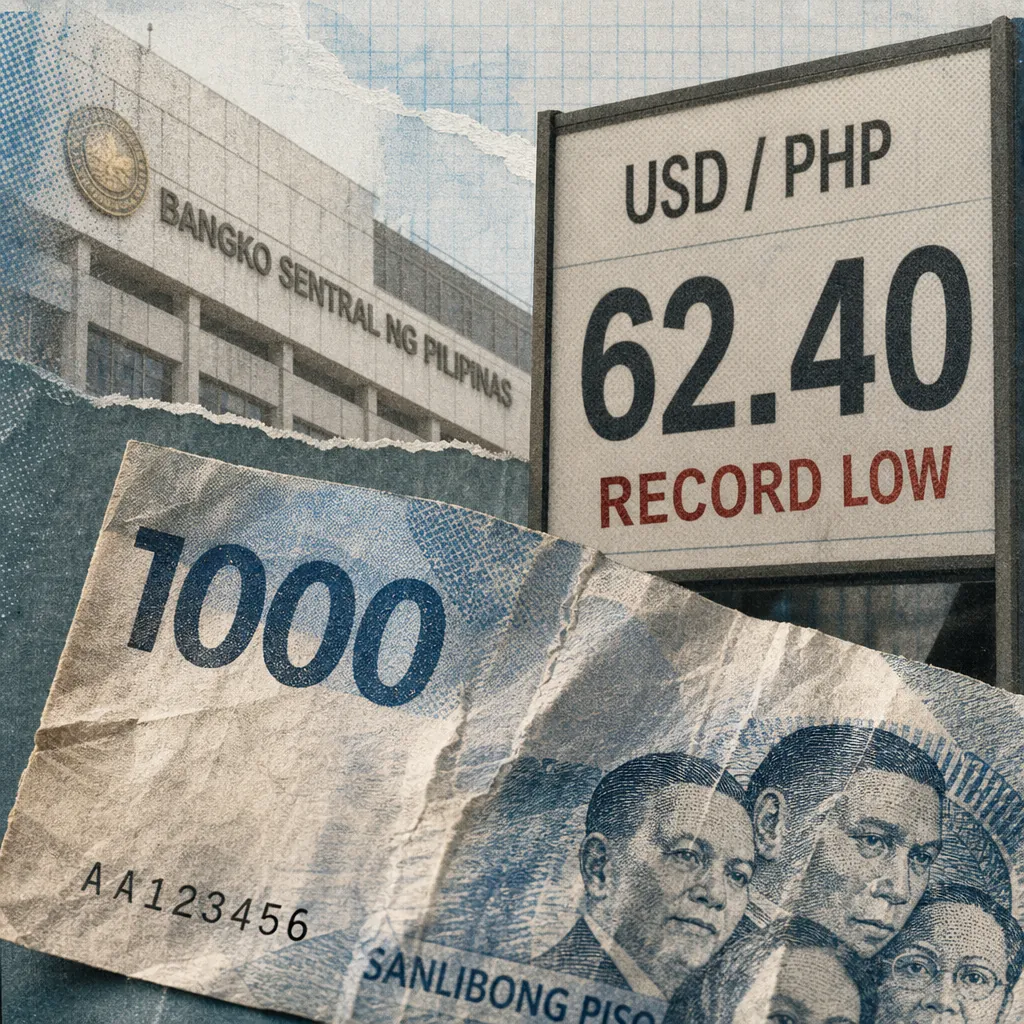
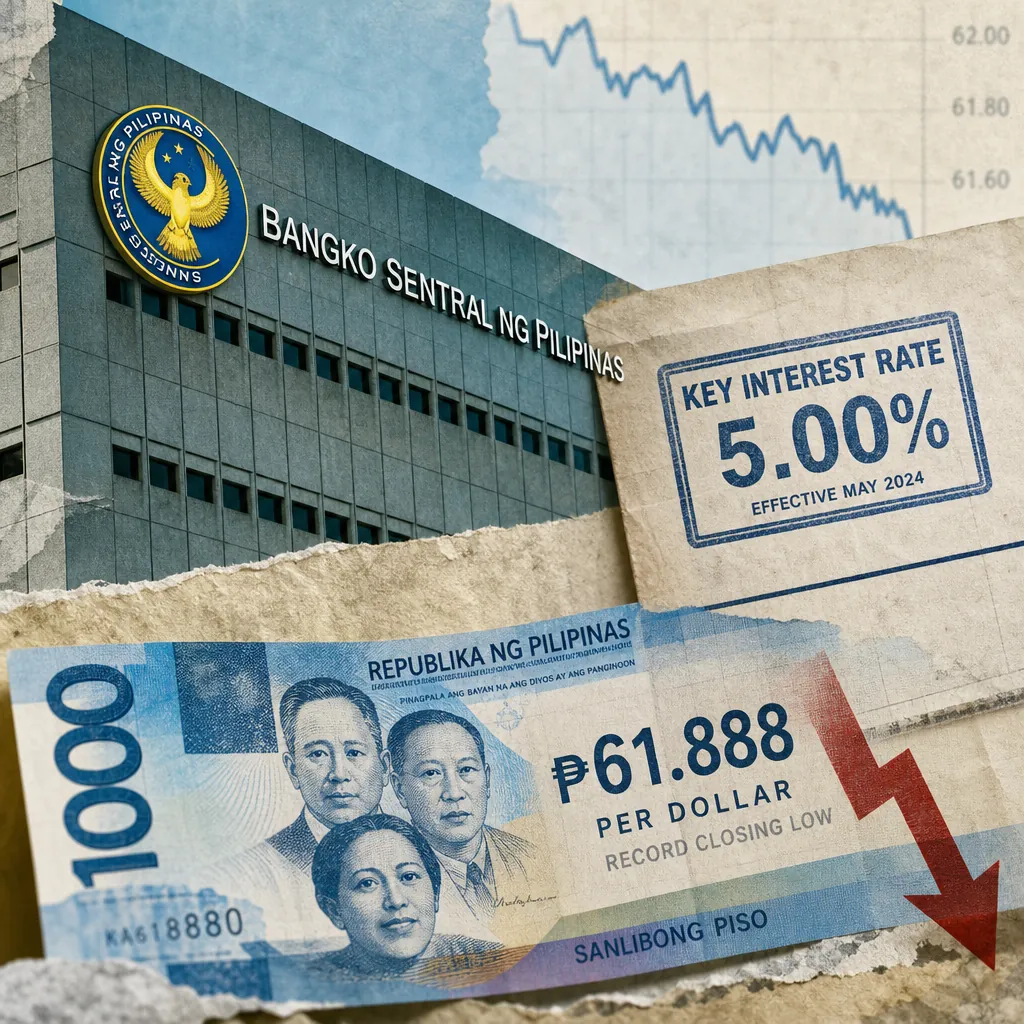
Peso hits record low, stocks slide below 6,000
The Philippine peso fell to a record low past P62 per dollar and the stock market dropped below 6,000 as inflation concerns and global risks weighed. Analysts expect August inflation to ease slightly but remain above target, while the central bank moves to ease bank liquidity access.
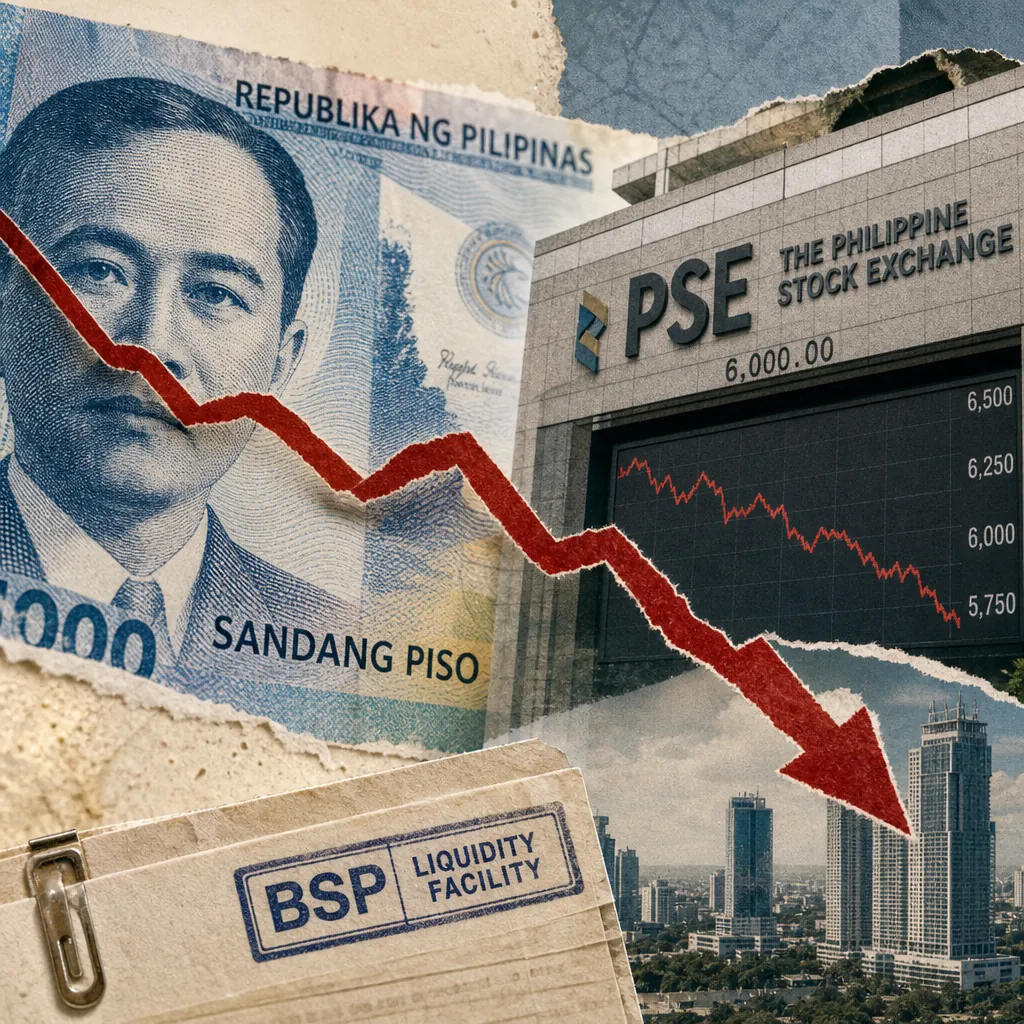
The Philippine peso breached the P62-per-dollar mark for the first time on Friday, closing at a record low of P62.265, while the benchmark stock index slid below 6,000 to 5,956.33, its steepest weekly decline of the year. The currency's slide—down 5.58% year to date—and the market's fall came as investors absorbed the central bank's third straight interest rate hike and braced for the August inflation report due Friday, Sept. 4. Analysts polled by major business outlets expect inflation to have eased slightly to around 6.0–6.1% in August, down from 6.2% in July, but still well above the central bank's 2–4% target. The peso's weakness is hitting ordinary Filipinos directly, raising the cost of imported goods, fuel, and food, while manufacturers say the weaker currency is a mixed blessing as it boosts export earnings but raises the cost of imported inputs. The central bank, meanwhile, is proposing to ease banks' access to its emergency liquidity facility, and the Department of Agriculture is revising its El Niño response plans as the weather pattern threatens food supply. The day's coverage also included lighter consumer stories—fun runs by Pru Life UK and Mercury Drug, a new realme phone launch, and food features—but the dominant narrative was the economy's strain.
Key themes
- Peso hits record low past P62 per dollar, stocks fall below 6,000 — The peso closed at P62.265 on Friday, its weakest ever, and the PSEi dropped 4.52% week-on-week to 5,956.33, its steepest weekly fall of the year. The declines reflect investor caution over global risks, higher oil prices, and the central bank's rate hikes.
- August inflation expected to ease slightly but stay above target — Analysts forecast inflation at 6.0–6.1% for August, down from 6.2% in July, but still above the BSP's 2–4% target. Food prices, driven by weather disruptions and higher rice costs, remain a key upward pressure.
- Central bank raises rates for third straight meeting, signals more to come — The BSP hiked its policy rate by 25 basis points on Thursday, citing inflation risks from El Niño and global oil prices. Governor Remolona said the rate is not preventing growth and urged the government to use fiscal space.
- BSP proposes easier bank access to emergency liquidity — The central bank wants to streamline requirements for its Discount Window Facility, making it faster for banks to borrow short-term funds during stress. Big banks would be required to test their access annually.
- El Niño threat prompts agriculture department to revise response plans — The Department of Agriculture ordered agencies to continuously update their El Niño plans as the weather pattern threatens crop production and food prices. The BSP cited El Niño as a key inflation risk.
- Government borrowings surge as budget deficit swells — The national government borrowed P291.4 billion in July, up 75% year-on-year, to plug a budget deficit that expanded more than fivefold. This raises concerns about fiscal sustainability.
- Pre-need industry profits plunge 53% despite strong sales — Pre-need companies saw net income drop to P2.5 billion in the first half, dragged by weaker investment income, even as plan sales and assets grew. The industry remains well-positioned, the regulator said.
- Digital payments continue to grow, with GCash expanding access — Digital payments accounted for 64.69% of retail transaction volume in 2025, up from 57.45% in 2024. GCash's GStocks now serves over 2 million users, and new partnerships are bringing financing to more regions.
How the narratives stack
Dominant — The peso's record low and the stock market's slide below 6,000 dominated the day's business coverage, with multiple outlets reporting on the currency's fall and its implications for the economy. This is the most significant development, as it affects every Filipino through higher import costs and reflects broader economic strain. The coverage was extensive across online news, with high advertising-equivalent value, indicating heavy attention.
Counter-narrative — Despite the market turmoil, some analysts see a potential rebound this week as bargain hunters return. The stock market's price-to-earnings ratio is below its five-year average, suggesting undervaluation. This counter-narrative offers a glimmer of hope but is tempered by the expectation that inflation will remain elevated.
Emerging — The BSP's proposal to ease bank access to its Discount Window Facility is an emerging story that signals the central bank's proactive stance on financial stability. It's a technical move but could become significant if liquidity stress increases. Also emerging is the government's plan to fast-track coal-fired power plants, which could reignite environmental debates.
Under-covered — The pre-need industry's 53% profit plunge received some coverage but not as much as the peso story. This is a significant decline that could affect consumers who hold pre-need plans, yet it was overshadowed by the macro headlines. The story deserves more attention given its implications for the sector's health.
Platform insights
- Facebook — The peso's fall and inflation news likely generated significant shares and comments, as these topics directly affect household budgets. Posts from news outlets like Manila Times and Inquirer would have high engagement, with users expressing concern over rising prices and the weakening currency.
- X (formerly Twitter) — Economists and market analysts likely dominated the conversation, sharing their forecasts and reactions to the BSP's rate hike. The hashtag #PesoCrisis or similar may have trended, with users debating the government's handling of the economy.
- YouTube — Video content from financial news channels and vloggers explaining the peso's fall and its impact on ordinary Filipinos would attract views. The Manila Times podcast on the monsoon and other headlines also drew attention.
- Reddit — Personal finance and investing subreddits likely discussed the stock market's decline and the peso's weakness, with users sharing strategies for coping with inflation and currency depreciation.
Key voices and communities
- Economists and analysts — Figures like Angelo Taningco of Security Bank, Aris Dacanay of HSBC, and Domini Velasquez of Chinabank provided forecasts and analysis, shaping the narrative on inflation and the peso. Their views are widely cited and influence market expectations.
- Government officials — BSP Governor Eli Remolona, Energy Secretary Sharon Garin, and Agriculture Secretary Francisco Tiu Laurel Jr. are key voices, defending policy decisions and outlining responses to economic challenges.
- Business groups — The Federation of Philippine Industries highlighted the peso's impact on manufacturers, while the Philippine Stock Exchange and brokers like Philstocks provided market commentary.
- Consumers and ordinary Filipinos — The peso's fall is felt at the grocery store and the gas pump, and their concerns are reflected in opinion pieces like Panay News' "When the peso falls, Juan and Maria feel it first." Their voices add a human dimension to the economic data.
- Financial institutions — Banks like Security Bank and GCash are active in promoting financial inclusion and digital services, offering a counterpoint to the gloom with stories of expansion and innovation.
Narrative streams
Peso's record low: A currency under pressure
The peso closed at P62.265 per dollar on Friday, its weakest level on record, after touching an intraday low of P62.27. The currency has weakened by 5.58% year to date, making it one of Asia's worst performers. The decline is driven by a stronger US dollar, higher oil prices, and geopolitical tensions in the Middle East, which have boosted the greenback. The BSP's rate hikes have done little to stem the slide, as the interest rate differential with the US remains narrow. For ordinary Filipinos, the weaker peso means higher prices for imported goods, fuel, and food. The Panay News opinion piece vividly illustrates this: "Every liter of fuel for a jeepney, every sack of wheat for a neighborhood bakery's pan de sal" costs more. Manufacturers are also feeling the pinch. The Federation of Philippine Industries said the weaker currency is adding to cost pressures, particularly for electronics, which account for over 58% of exports. "Every chip we ship depends on costly foreign inputs," said FPI Chairperson Elizabeth Lee. The read for the sector: exporters may see a temporary boost in peso terms, but the higher cost of imported inputs and the uncertainty could outweigh the benefits. The peso's trajectory will depend on global factors and the BSP's policy response.
Inflation: Easing but still painfully high
Analysts expect August inflation to have eased to around 6.0–6.1%, down from 6.2% in July, marking a fourth straight month of moderation. However, this is still well above the BSP's 2–4% target and significantly higher than the 1.5% rate a year ago. The main drivers are food prices, particularly rice, vegetables, and fish, which have been pushed up by monsoon rains and flooding. Transport costs remain elevated due to high oil prices. The BSP forecasts August inflation between 5.5% and 6.5%, and its governor has signaled that rate hikes may continue if inflation stays high. The Philippine Statistics Authority will release the official data on Sept. 4. The read for the sector: inflation remains a persistent problem, eroding purchasing power and complicating monetary policy. Businesses face higher input costs, and consumers are likely to remain cautious in their spending.
BSP's rate hikes and the growth trade-off
The BSP raised its policy rate by 25 basis points on Thursday, the third consecutive hike this year, bringing the rate to 5%. The move is aimed at taming inflation, but it comes at a time when economic growth has slowed to 2.3% in the second quarter. Governor Remolona defended the decision, arguing that the policy rate is not preventing growth. "It's not the policy rate that's preventing growth. The policy rate is low," he said, noting that the real interest rate is just 1.75%. He urged the national government to use fiscal space to support growth. The rate hike has pushed up short-term interest rates, as seen in the BSP's own securities auction, and has contributed to the stock market's decline. The read for the sector: higher borrowing costs will weigh on businesses and consumers, but the BSP is prioritizing inflation control. The government's fiscal response will be crucial in supporting growth.
BSP eases bank access to emergency liquidity
In a move to strengthen financial stability, the BSP is proposing to ease banks' access to its Discount Window Facility (DWF), a short-term credit facility that banks can tap during periods of liquidity stress. The proposed changes would streamline application requirements, allowing banks to electronically submit a single request, and would require domestic systemically important banks—those whose size and importance mean their failure could threaten the financial system—to maintain DWF lines and test their access annually. The BSP said the facility "supports confidence in the banking system and contributes to overall financial stability." The read for the sector: this is a proactive measure to ensure banks can quickly access funds if needed, which could help prevent a liquidity crunch. It also signals the BSP's vigilance amid market volatility.
El Niño: A looming threat to food supply and prices
The Department of Agriculture (DA) has ordered its agencies to continuously revise their El Niño response plans, as the weather pattern threatens to reduce crop production and push food prices higher. The BSP has cited El Niño as a key inflation risk, and the DA is preparing for potential drought conditions. Agriculture Secretary Francisco Tiu Laurel Jr. said, "The lessons we learned from the powerful El Niño episode that ended in mid-2024 should help us respond better to the climate challenge we now face." The DA is working on both immediate assistance and long-term measures to mitigate the impact. The read for the sector: food prices are likely to remain elevated if El Niño materializes, adding to inflationary pressures. The government's response will be critical in managing supply and prices.
Government borrowings surge as deficit widens
The national government's gross borrowings jumped 75.41% in July to P291.375 billion, driven by a budget deficit that expanded more than fivefold to P106.263 billion. Domestic borrowings rose 77.86%, while external borrowings increased 47.81%. The government is borrowing to fund its spending, which has outpaced revenues. This raises concerns about fiscal sustainability, as the debt-to-GDP ratio remains elevated. The read for the sector: the government's fiscal position is deteriorating, which could lead to higher taxes or reduced spending in the future. It also puts pressure on interest rates and the peso.
Pre-need industry: Profits plunge despite strong sales
The pre-need industry's net income dropped by 52.89% in the first half of 2026 to P2.506 billion, dragged by weaker investment income amid volatile financial markets. However, plan sales, premium income, and assets all grew. The Insurance Commission said the industry remains "well-positioned to support the continued development of the market and to meet its obligations to plan holders." The read for the sector: the profit decline is a concern, but the underlying business is growing. The industry's ability to meet its obligations depends on investment performance, which is affected by market conditions.
Digital payments and financial inclusion continue to expand
Despite the economic gloom, digital payments are growing rapidly. Digital transactions accounted for 64.69% of retail payment volume in 2025, up from 57.45% in 2024. GCash's GStocks platform now serves over 2 million users, and the company is expanding its financing partnerships, such as with EMCOR, to bring loans to more stores in Visayas and Mindanao. The BSP is also promoting financial inclusion, with initiatives like the Youth Financial Inclusion Ambassadors program, which recently helped open 528 bank accounts for students in Southern Leyte. The read for the sector: digital finance is a bright spot, offering opportunities for growth and inclusion. However, the economic downturn could slow adoption if consumers cut back on spending.
Conversation trajectory
- Inflation data release (Sept. 4) — The August inflation report will be a key test. If inflation comes in above 6%, the BSP may hike rates again, further pressuring the peso and stocks. If it comes in below, it could provide some relief. Observation window: next week.
- Peso movement — The peso may test new lows this week, according to analysts, as inflation concerns and a strong dollar weigh. A break below P62.50 could trigger further selling. Observation window: this week.
- Stock market rebound — Bargain hunters may drive a technical rebound this week, but the market's direction will depend on inflation data and global cues. Observation window: this week.
- BSP policy meeting (likely September) — The BSP's next policy meeting will be closely watched. If inflation remains high, another rate hike is possible. Observation window: next month.
- El Niño developments — The DA's revised plans and any signs of drought will affect food prices and inflation expectations. Observation window: ongoing.
- Government fiscal actions — The government's borrowing plans and any fiscal measures will be scrutinized. Observation window: ongoing.
- Trigger events — A worse-than-expected inflation print, a further peso slide, or a major El Niño impact could escalate the crisis narrative. Conversely, a positive surprise on inflation or a global risk-on mood could stabilize markets.
Response guidance
- For financial institutions — Emphasize stability and prudence in communications. Reassure customers about the safety of deposits and the availability of liquidity support. Highlight the BSP's measures to ensure financial stability.
- For businesses — Address the impact of the weaker peso and inflation on operations. Communicate how you are managing costs and supporting customers. Avoid speculation on future exchange rates.
- For government agencies — Be transparent about policy responses to inflation and the peso. Explain the rationale behind rate hikes and fiscal measures. Provide clear guidance on El Niño preparedness.
- For consumer-facing brands — Acknowledge the financial strain on consumers. Offer value and flexibility, such as installment plans or promotions. Avoid tone-deaf messaging that ignores economic hardship.
- Sensitive topics — Avoid downplaying the severity of the peso's fall or inflation. Do not make promises about future economic conditions. Be empathetic to consumer concerns.
See the full picture behind today's signals.
This report draws from Media Meter's MediaWatch, our real-time monitoring engine tracking 2,470+ Philippine sources across print, broadcast, digital, and social. Explore how the platform turns raw coverage into decision-grade intelligence, then see how it's configured for teams like yours — whether you're in PR agencies, corporate comms, government, or marketing.
Want more? Browse our Report Library for sector and crisis intelligence, or request a demo and we'll have your brand set up before the call.
Want this kind of intelligence on your brand?
This brief is built on the same MediaWatch methodology that runs continuously across every brand we monitor. See your competitive landscape, Impact Score, and narrative trajectory in a 30-minute demo.