BSP rate hike looms as growth forecast cut to 3%
The Bangko Sentral ng Pilipinas is expected to raise interest rates for a third straight time, even as Moody's Analytics slashes the Philippines' 2026 growth forecast to 3%. The day's coverage also highlighted record non-life insurance premiums, a major GCash IPO timetable shift, and a push to reform digital payment fees.
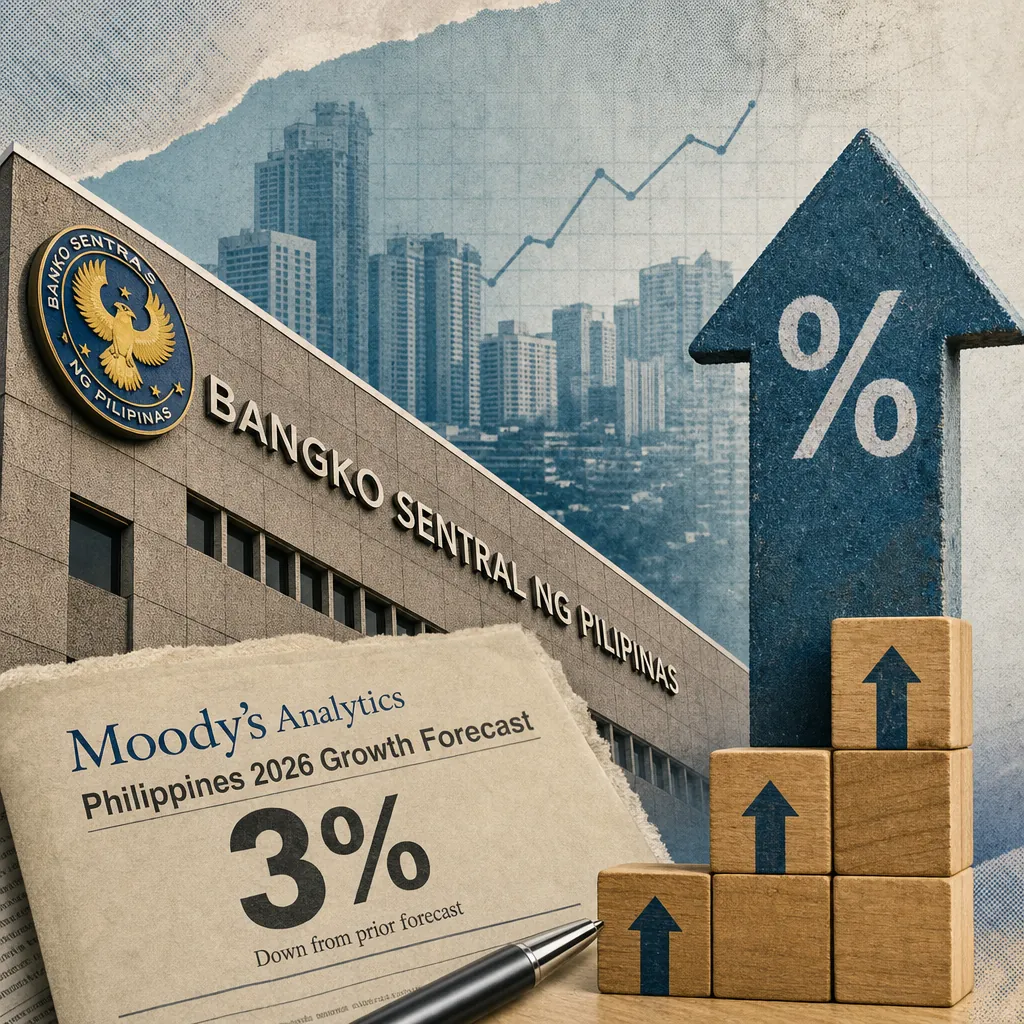
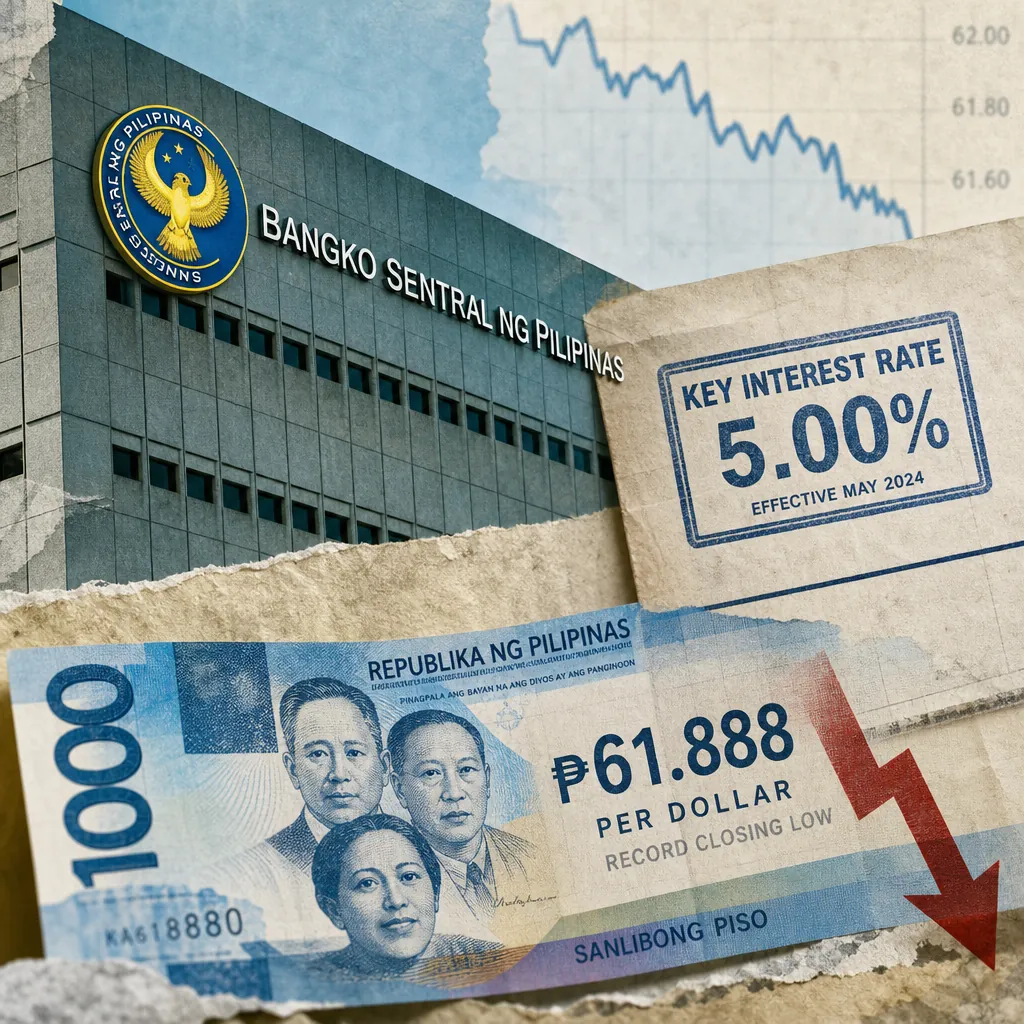
The Bangko Sentral ng Pilipinas (BSP) is set to deliver a third straight interest rate hike on Thursday, even as Moody's Analytics slashed its 2026 growth forecast for the Philippines to 3% from 4%, citing weak consumption and a collapse in private investment. The central bank's Monetary Board is widely expected to raise its key policy rate by another quarter point to 5.0%, a move aimed at taming inflation that hit a three-year high of 7.2% in April and remained above target at 6.2% in July. The tension between fighting inflation and supporting a slowing economy dominated the day's financial news, with analysts, former central bank officials, and market participants weighing in on the trade-off. Meanwhile, the non-life insurance industry posted a nearly 10% jump in net premiums in the first half, and the operator of e-wallet GCash adjusted the timetable for its potential P92-billion initial public offering (IPO), moving the listing date to Oct. 20. The BSP also signaled a new push to standardize digital payment fees, potentially shifting the cost burden from consumers to merchants. These developments, captured across a range of online news outlets, blogs, and social media, paint a picture of a financial sector navigating a delicate balancing act between price stability and economic growth.
Key themes
- BSP expected to hike rates for third straight meeting — The central bank's Monetary Board is widely expected to raise its key policy rate by another 25 basis points to 5.0% on Thursday, as inflation remains above the 2-4% target and the peso weakens. Analysts from Bank of America and other institutions see this as likely the last hike in the current cycle, given slowing growth.
- Moody's Analytics cuts 2026 GDP forecast to 3% — The analytics firm slashed its growth projection from 4% in June, citing a weaker-than-expected second quarter, where GDP expanded just 2.3% year-on-year, the worst post-pandemic reading. The forecast falls below the government's 3.5-4.5% target.
- Non-life insurance premiums rise nearly 10% in first half — The Insurance Commission reported total net premiums of P44.19 billion from January to June, up from P40.18 billion a year earlier, driven largely by motor car insurance. Net income jumped 44% to P7.37 billion.
- GCash parent Mynt shifts IPO timetable to Oct. 20 — Mynt, Inc. moved the listing date of its potential P92-billion initial public offering by one day, with the offer price and number of shares unchanged. Analysts see the adjustment as routine and unlikely to affect investor sentiment.
- BSP pushes to standardize digital payment fees — Deputy Governor Mamerto Tangonan said the central bank will enforce an existing rule that merchants, not consumers, should shoulder payment fees for services and utilities, potentially reducing costs for digital payment users.
- Banks' property exposure hits seven-year low — Real estate loans accounted for 18.72% of banks' total lending portfolio as of June, the lowest since December 2018, as higher borrowing costs and economic uncertainty weighed on demand.
- MSME financing gap highlighted at ADB forum — The Asian Development Bank called for tailored financing and broader support for micro, small, and medium enterprises, which account for 99.5% of registered establishments but receive less than 4% of total bank loans.
- Insurance industry pushes for catastrophe coverage — A Manila Times opinion piece noted that 98% of catastrophe losses in the Philippines are uninsured, urging the sector to build on initiatives like the Philippine Catastrophe Insurance Facility.
How the narratives stack
- Dominant — The BSP's rate decision and the growth-inflation trade-off dominated the day's coverage, with multiple articles from Inquirer, BusinessWorld, Manila Times, and Philstar analyzing the expected hike and its implications. The narrative centered on the central bank's difficult balancing act: inflation remains above target, but GDP growth has slowed sharply. This is the story that carries the most consequence for the financial sector and the broader economy.
- Counter-narrative — Despite the gloomy growth outlook, several financial institutions reported strong first-half results. Allianz PNB Life posted a 64% jump in net income and nearly doubled new business sales, while non-life insurers saw premiums rise nearly 10%. This counter-narrative suggests that the sector is resilient even as the macroeconomy struggles.
- Emerging — The BSP's push to standardize digital payment fees is an emerging story that could reshape consumer costs and merchant relationships. Deputy Governor Tangonan's statement that merchants should pay fees, not consumers, signals a potential regulatory shift that could benefit digital payment adoption.
- Under-covered — The MSME financing gap, highlighted at the ADB forum, received relatively little attention compared to the rate hike and growth forecast. Yet the statistic that MSMEs receive less than 4% of bank loans while contributing over a third of GDP is a significant structural issue that deserves more scrutiny.
Platform insights
- Facebook — Financial news articles from Inquirer, BusinessWorld, and Philstar were widely shared on Facebook, with users commenting on the impact of rate hikes on their loans and mortgages. Posts about the GCash IPO and digital payment fees also generated discussion, reflecting consumer interest in fintech.
- X (formerly Twitter) — Economists and market analysts used X to share their takes on the BSP's expected move and the Moody's forecast. The hashtag #BSP and #PHeconomy trended among financial professionals, with some debating whether the rate hike is necessary given the growth slowdown.
- YouTube — News channels and financial vloggers posted videos analyzing the BSP's decision and its implications for the peso and stock market. The peso's strengthening on Hormuz reopening hopes was a topic of interest, with traders explaining the currency's movements.
- Reddit — Personal finance communities on Reddit discussed the impact of rising interest rates on savings accounts and loan repayments. Some users expressed concern about the cost of living, while others debated the merits of the BSP's inflation-fighting stance.
Key voices and communities
- Economists and analysts — Bank of America, Moody's Analytics, and local economists like Michael Ricafort of RCBC provided expert commentary on the rate hike and growth outlook. Their analyses shaped the narrative around the BSP's decision.
- Central bank officials — BSP Deputy Governor Mamerto Tangonan's statements on digital payment fees and former Deputy Governor Diwa Guinigundo's comments on the rate hike added official perspective to the day's stories.
- Insurance industry leaders — Allianz PNB Life CEO Joseph Gross and the Insurance Commission's data releases highlighted the sector's strong performance, offering a positive counterpoint to the macroeconomic gloom.
- MSME advocates — The ADB's Suhail Khan and Skyro's campaign for SME financing brought attention to the funding gap faced by small businesses, a key community in the financial inclusion conversation.
- Consumers and content creators — Stories like the Home Credit Philippines feature on Miss Deliciousness and the Palawan Group's "Palawan for All" campaign illustrated how financial services impact everyday Filipinos, driving engagement on social media.
Narrative streams
BSP rate hike: A balancing act between inflation and growth
The Bangko Sentral ng Pilipinas is expected to raise its key policy rate by another 25 basis points to 5.0% on Thursday, marking the third consecutive hike since the onset of the Gulf conflict in March. Bank of America noted that the Philippines, along with Indonesia and India, is among the few Asian economies maintaining a positive policy-rate differential with the US Federal Reserve, as policymakers move to contain inflation and support the weakening peso. However, the move comes at a time when economic growth has slowed sharply, with GDP expanding just 2.3% in the second quarter. Former BSP Deputy Governor Diwa Guinigundo acknowledged the trade-off, saying that while the immediate effect of another hike would be "further tightening of financial conditions," the "bigger risk" is allowing inflation expectations to become unanchored. The read for the sector is that borrowing costs will remain elevated, potentially dampening credit growth and investment, but the central bank is prioritizing price stability to protect the peso and consumer purchasing power.
Moody's cuts growth forecast to 3%, citing weak demand
Moody's Analytics slashed its 2026 GDP growth forecast for the Philippines to 3% from 4%, citing weak consumption and a collapse in private investment. The revision follows the second-quarter GDP result of 2.3% year-on-year, the worst post-pandemic reading, as investments and public construction continued to reel from last year's flood control corruption scandal and rising oil prices strained household spending. The forecast falls below the government's 3.5-4.5% target, raising concerns about the economy's ability to create jobs and reduce poverty. The read for the sector is that slower growth will weigh on loan demand, insurance premiums, and investment returns, but financial institutions with strong balance sheets may still find opportunities in underserved segments like MSMEs.
Non-life insurance premiums rise, but catastrophe gap persists
The non-life insurance industry posted a nearly 10% jump in total net premiums in the first half of 2026, reaching P44.19 billion, driven largely by motor car insurance. Net income rose 44% to P7.37 billion, as premium growth outpaced claims. However, a Manila Times opinion piece highlighted that 98% of catastrophe losses in the Philippines are uninsured, with average annual disaster losses around $3.5 billion. The article called for building on initiatives like the Philippine Catastrophe Insurance Facility to close this gap. The read for the sector is that while the industry is growing, there is significant untapped potential in catastrophe insurance, especially given the country's high exposure to natural disasters.
GCash IPO timetable shift signals confidence
Mynt, Inc., the operator of e-wallet GCash, revised the timetable for its potential P92-billion initial public offering, moving the listing date to Oct. 20 from Oct. 19. The company is offering up to 9.23 billion shares at P10 each, with the offer price and number of shares unchanged. China Bank Capital's Juan Paolo Colet said the adjustment gives the company more time for book building and will not impact investor sentiment. The read for the sector is that the IPO is on track, and its success could pave the way for other fintech listings, boosting the Philippine stock market's profile.
BSP moves to standardize digital payment fees
BSP Deputy Governor Mamerto Tangonan said the central bank will enforce an existing rule that merchants, not consumers, should shoulder payment fees for services and utilities. This follows the earlier order to rationalize fund transfer fees, which led banks to waive Instapay fees. The move aims to reduce the cost burden on consumers and encourage digital payment adoption. The read for the sector is that payment processors and merchants may need to adjust their fee structures, potentially impacting their margins, but the long-term benefit is a more inclusive digital economy.
MSME financing gap: A structural challenge
At the BusinessWorld Insights forum, ADB Director Suhail Khan highlighted that MSMEs account for 99.5% of registered establishments and employ over 60% of Filipino workers, yet receive less than 4% of total bank loans. He called for tailored financing that combines digital tools, risk sharing, skills, and market access. The read for the sector is that banks and fintech companies have a significant opportunity to serve this underserved segment, but it requires innovative approaches beyond traditional lending.
Conversation trajectory
- BSP rate decision (next 24 hours) — The Monetary Board's decision on Thursday will set the tone for the coming weeks. If the hike is delivered as expected, markets may react positively to the clarity, but the accompanying statement on future moves will be closely watched. A surprise pause could boost equities but risk further peso weakness.
- Inflation data (next 4-6 weeks) — The BSP's next moves will depend on inflation prints. If inflation continues to slow from July's 6.2%, the case for further hikes weakens. Conversely, any uptick due to the NCR wage hike or oil prices could force additional tightening.
- GCash IPO (next 2 months) — The listing on Oct. 20 will be a major test of investor appetite for fintech. A successful IPO could encourage other digital players to go public, while a weak debut might dampen sentiment.
- Digital payment fee reforms (next 3-6 months) — The BSP's enforcement of merchant-pays fees could take time to implement. Watch for circulars and industry feedback, as this could reshape the competitive landscape for payment providers.
- Trigger events — Key triggers include the BSP's policy statement, the next GDP release (Q3 data due in November), and any escalation in the Middle East conflict affecting oil prices. Also monitor the impeachment trial's impact on political stability and market confidence.
Response guidance
- Rate hike communications — Financial institutions should prepare clear messaging on how the rate hike affects loan products and savings rates. Emphasize the BSP's commitment to price stability and provide guidance to customers on managing higher borrowing costs.
- Growth forecast messaging — Acknowledge the Moody's forecast but highlight resilience in specific sectors like insurance and fintech. Avoid doom-and-gloom; instead, focus on opportunities in underserved markets.
- Digital payment fees — Payment providers should proactively communicate any changes to fee structures, ensuring transparency and compliance with BSP rules. Highlight the consumer benefit of lower costs.
- MSME financing — Banks and fintechs should showcase their MSME lending programs and partnerships, emphasizing tailored solutions and digital tools. Use success stories to build trust.
- Catastrophe insurance — Insurers should leverage the Sarangani earthquake anniversary to promote disaster preparedness and the importance of insurance. Educate the public on available products and government initiatives.
See the full picture behind today's signals.
This report draws from Media Meter's MediaWatch, our real-time monitoring engine tracking 2,470+ Philippine sources across print, broadcast, digital, and social. Explore how the platform turns raw coverage into decision-grade intelligence, then see how it's configured for teams like yours — whether you're in PR agencies, corporate comms, government, or marketing.
Want more? Browse our Report Library for sector and crisis intelligence, or request a demo and we'll have your brand set up before the call.
Want this kind of intelligence on your brand?
This brief is built on the same MediaWatch methodology that runs continuously across every brand we monitor. See your competitive landscape, Impact Score, and narrative trajectory in a 30-minute demo.