Philippine Digital Payments Surge as BSP Tightens Security Rules
A snapshot of the Philippine digital banking and payments conversation on June 21-22, 2026, covering the BSP's SMS OTP replacement deadline, the Paleng-QR Ph Plus rollout, financial inclusion for refugees, and user frustrations with legacy bank apps.
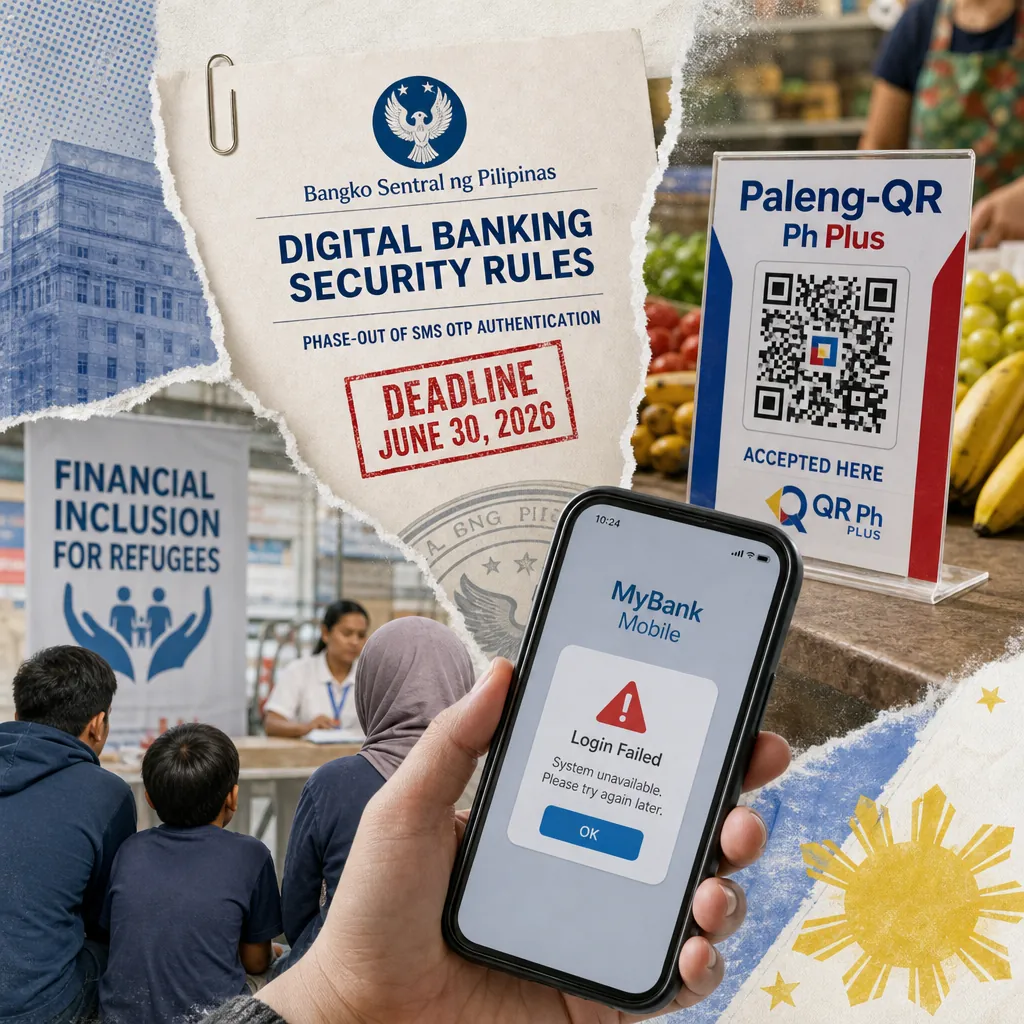
The conversation spanning June 21–22, 2026, unfolded against a regulatory deadline, with phdigitalbanks posting on Sunday that banks had only one week left to replace SMS OTPs with more secure options like in-app prompts and biometrics—a shift driven by the Bangko Sentral ng Pilipinas (BSP), the country's central bank, which issued new authentication rules to combat fraud. That same day, user master_ebb5987 vented on Reddit about BPI's app failing to process bill payments, declaring “Napakalaking banko pero yung app nila bulok” (Such a big bank but their app is rotten), earning 6 upvotes and sparking 11 comments expressing shared frustration. Monday brought a surge of activity: the Department of Information and Communications Technology (DICT) and BSP launched Starlink-powered free Wi-Fi at Pasig Mega Market to support Paleng-QR Ph Plus, a program that encourages market vendors and buyers to use QR code-based digital payments, making digital payments more accessible to vendors and buyers. Simultaneously, the Department of Justice (DOJ) and GCash, the country's leading mobile wallet, signed a memorandum of agreement to extend e-wallet access to refugees, with the Philippine Statistics Authority (PSA) offering National ID services to enable account opening. By midday, the Manila Bulletin reported that PESONet and InstaPay transactions—the two main electronic fund transfer systems in the Philippines—had surged 44.4% to ₱13.18 trillion in the first five months of 2026, underscoring the rapid digital shift. Yet user complaints persisted: “Ganito ba kalala ang Security Bank app?” (Is the Security Bank app this bad?) asked bob_lorde on Reddit, noting transfers wouldn't push through all day.
Conversation snapshot. The BSP authentication deadline post on Facebook by phdigitalbanks drew 599 likes and 286 shares, indicating strong public interest in security upgrades. The Paleng-QR Ph Plus launch post on Facebook received 42 likes and 25 love reactions, while a related Reddit thread gained 42 upvotes, reflecting community support for infrastructure improvements. The DOJ-GCash refugee inclusion story was shared by multiple news outlets, with the PSA's post on National ID enrollment for refugees getting 14 likes and 36 shares. On Reddit, the BPI app complaint (6 upvotes, 11 comments) and Security Bank app issue (0 upvotes, 3 comments) highlighted user frustrations, while a thread on checking accounts for post-dated checks (PDCs) accumulated 12 upvotes and 29 replies, showing active crowd-sourcing of safer banking options.
Key themes
- BSP authentication deadline drives security discourse – With the June 30 compliance date approaching, a highly engaging post from phdigitalbanks detailed the shift from SMS OTPs to in-app prompts, biometrics, and silent authentication. The post's 599 likes and 286 shares indicate strong consumer demand for clear guidance on the transition.
- Paleng-QR Ph Plus expands digital payments in public markets – The DICT and BSP activated Starlink-powered free Wi-Fi at Pasig Mega Market, directly addressing the connectivity barrier that vendors had cited. The initiative received positive engagement on Facebook and Reddit, with users praising the practical step for cashless adoption.
- Financial inclusion for refugees and senior citizens – The DOJ-GCash partnership allows refugees to open e-wallet accounts using the Philippine National ID, while senior citizens can now receive cash gifts via bank accounts, GCash, or remittance services. These moves signal a deliberate policy push to onboard underserved segments into the formal financial system.
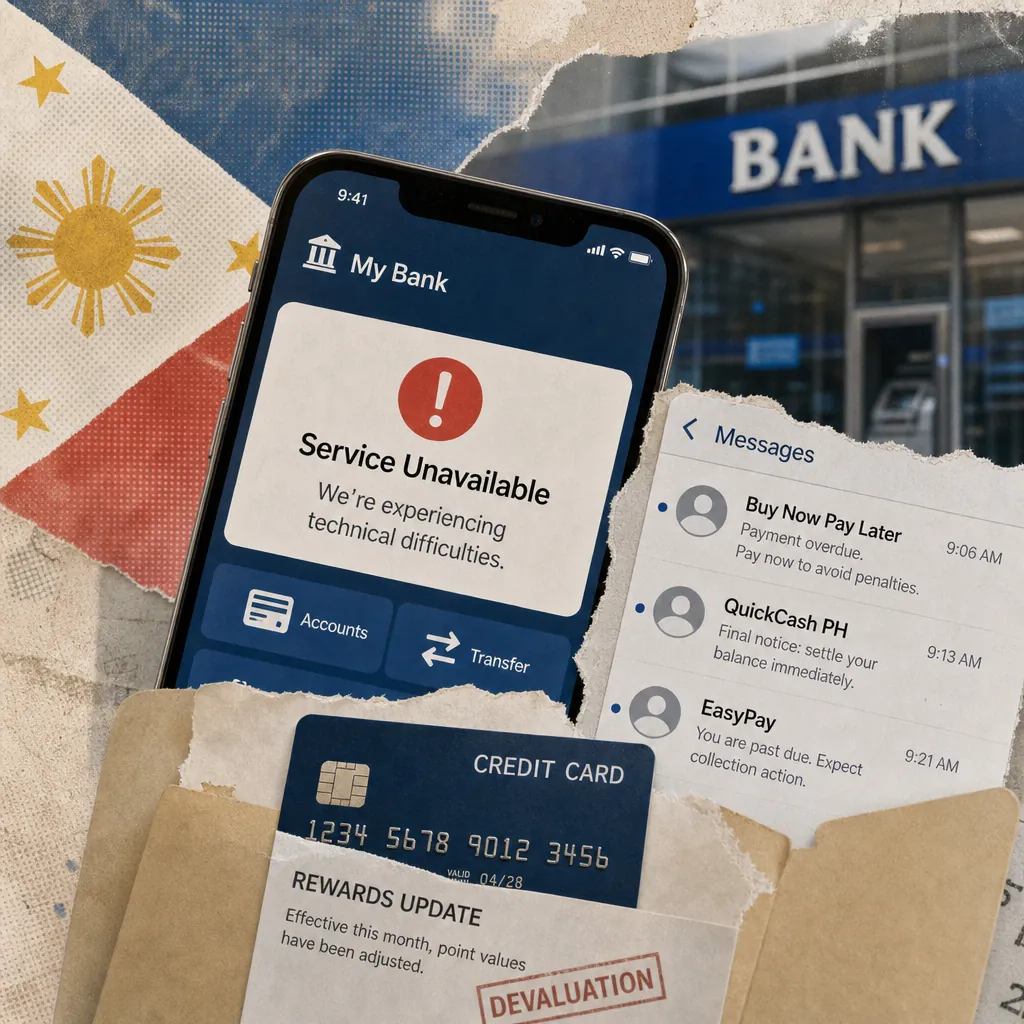
- User frustrations with legacy banking apps persist – Multiple Reddit posts reported app failures at BPI and Security Bank, with users unable to process bill payments or transfers. These complaints contrast sharply with the positive infrastructure news, highlighting a gap between policy-level digital adoption and individual user experience.
- PESONet/InstaPay transaction volumes surge – Combined transactions reached ₱13.18 trillion in the first five months of 2026, up 44.4% year-on-year, while transaction volume nearly tripled to 3.47 billion. This growth underscores the accelerating shift to digital payments, but also raises questions about system resilience.
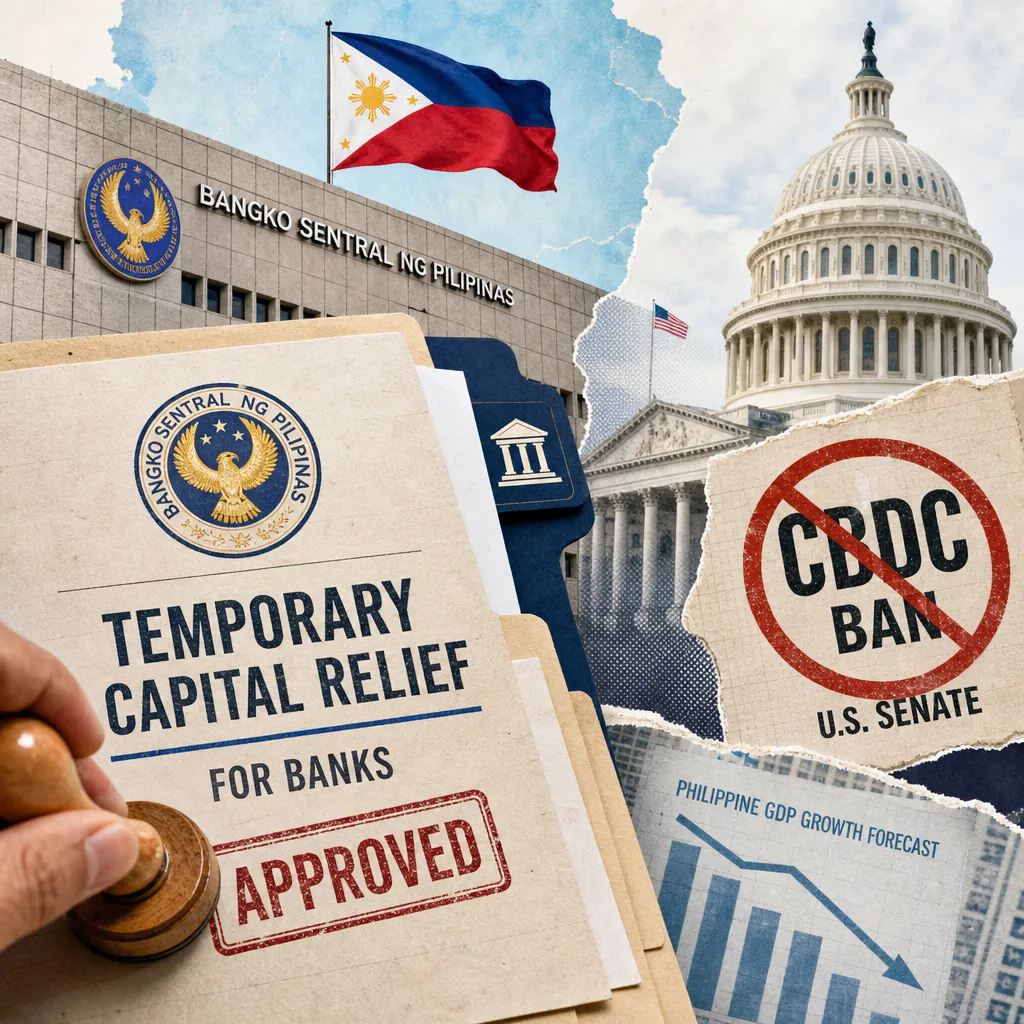
- BSP grants capital relief to banks amid Middle East conflict – The central bank allowed banks to temporarily exclude valuation losses on government securities from capital calculations, aiming to mitigate the financial impact of the war. This regulatory relief was reported by the Manila Bulletin and BusinessWorld.
- Moody's downgrades outlook on Philippine banks to negative – The credit rating agency warned that the Middle East conflict and inflation shock could slow credit growth and pressure asset quality. This development adds a layer of caution to the otherwise positive digital adoption narrative.
- BSP warns against 'money mules' – The central bank reminded the public that allowing their bank accounts or e-wallets to be used for illicit transfers could lead to criminal liability under the Anti-Financial Account Scamming Act. This warning comes as regulators intensify efforts to curb online fraud.
How the narratives stack
Dominant narrative – The dominant story is the rapid acceleration of digital payments in the Philippines, driven by government-led infrastructure projects (Paleng-QR Ph Plus, free Wi-Fi), regulatory mandates (BSP authentication deadline), and surging transaction volumes (PESONet/InstaPay up 44.4%). This narrative is reinforced by positive coverage of financial inclusion initiatives for refugees and senior citizens, and by partnerships like GCash with PUP for student payments. The overall tone is one of progress and modernization, with the BSP and government agencies positioned as enablers of a cashless future.
Counter-narrative – A persistent counter-narrative emerges from user complaints on Reddit about legacy bank app failures. Posts about BPI and Security Bank apps not working—despite the banks' size and resources—undermine the dominant narrative of seamless digital adoption. These frustrations suggest that while infrastructure and policy are advancing, individual institutions are struggling to deliver reliable user experiences, potentially eroding trust in the digital ecosystem.
Emerging narrative – The financial inclusion push for refugees and senior citizens is gaining momentum as an emerging narrative. The DOJ-GCash MOA and PSA's National ID enrollment for refugees received broad media coverage and positive community sentiment. This narrative positions digital payments as a tool for social equity, and it is likely to grow as more government benefit programs adopt e-wallet disbursement. The Atome-Dunkin' partnership, offering free donuts for cardholders, also signals a trend toward rewarding everyday digital transactions.
Suppressed narrative – The under-covered story is the potential strain on bank capital and asset quality from the Middle East conflict and inflation. Moody's downgrade of the Philippine banking sector outlook to negative, and the BSP's capital relief measure for banks, received limited social media attention compared to the more upbeat digital adoption stories. Yet these developments could have significant implications for credit availability and financial stability in the coming months. The conversation has not yet connected the dots between the macro headwinds and the user-level digital payment experience.
Platform insights
Facebook – Official bank and government pages dominated Facebook, promoting positive developments. phdigitalbanks drove the BSP deadline and Paleng-QR Ph stories, while BPI, Metrobank, and Chinabank focused on security features (Passkey) and depositor protection awareness. The DOJ-GCash MOA and PSA National Refugee Day posts received modest engagement (14 likes, 36 shares for PSA), but their informational tone set the policy context. Facebook served as the primary channel for official announcements and educational content, with engagement levels reflecting public interest in security and inclusion topics.
Reddit – Reddit became the primary outlet for user grievances and practical advice. The BPI app complaint (6 upvotes, 11 comments) and Security Bank app issue (0 upvotes, 3 comments) drove a narrative of reliability gaps, while the PDC checking account thread (12 upvotes, 29 comments) showed users actively crowd-sourcing safer options. Later, posts about Metrobank credit card approvals and BDO annual fee waivers shifted the discussion toward credit management, with the Interbank Debt Relief Program (IDRP) post providing a detailed, educational counterpoint to the frustration. Reddit's community-driven format allowed for nuanced discussions that contrasted with the polished messaging on Facebook.
Twitter/X – Coins.ph touted crypto mainstreaming via QR Ph payments, while GrabPH's customer-service replies to user @MarikuBorlado indicated ongoing transaction-related disputes. The Bank of Korea's CBDC deposit token pilot was shared by Cointelegraph, signaling regional interest in central bank digital currencies that could influence Philippine discussions. Twitter served as a real-time customer service channel and a platform for industry news sharing, with lower engagement but faster information flow.
YouTube – No significant YouTube activity was observed in the monitoring window, but the potential for explainer videos on topics like BSP authentication rules, IDRP, and Passkey setup remains high, given the demand for educational content seen on other platforms.
Key voices and communities
- Digital Banking Education Community – Accounts like phdigitalbanks on Facebook and Reddit communities such as r/DigitalbanksPh and r/PHCreditCards curate news, security updates, and comparative guides. Their posts consistently generate high engagement, with the BSP authentication deadline post reaching 599 likes and 286 shares. They serve as trusted intermediaries between regulators, banks, and retail users, simplifying complex policy changes into actionable tips.
- Traditional Banks & Financial Institutions – Major banks including BPI, Metrobank, Chinabank, and UnionBank maintain active social media presences with promotional, educational, and customer-service content. Their posts on deposit protection awareness week received over 250 reactions, while a corporate running event earned more than 150 responses. These institutions also push security upgrades, such as Chinabank's passkey deployment, and credit card acquisition campaigns.
- Government & Regulatory Bodies – Entities such as the DICT, PSA, DOJ, and BSP drive conversations around policy rollout and financial inclusion. The DICT's Paleng-QR Ph launch with Starlink-powered Wi-Fi at Pasig Mega Market earned 42 likes and widespread coverage, while the DOJ-GCash agreement for refugee e-wallet access was reported by multiple news outlets. The PSA's National ID initiative enabling refugees to open GCash accounts also supports inclusion goals.
- Consumer/Retail Users (Problem-Centric) – On Reddit, individual users voice highly emotional complaints about banking app failures, credit card application issues, and debt struggles. A thread about BPI's app being “bulok” (rotten) and failing to process bill payments received 6 upvotes and 11 comments, while another user described Security Bank's mobile app as unable to complete transfers all day. Debt-related posts, such as an EastWest customer trapped in a ₱27,000 monthly interest loop, reveal systemic stress points.
- Fintech and Digital-First Players – GCash, Maya, GoTyme, and Atome are active in promoting digital payment adoption and rewards. The Atome-Dunkin' partnership, offering free donuts for cardholders, and GCash's partnerships with PUP and the DOJ for refugee inclusion, position these players as innovators driving financial inclusion and everyday usage.
Narrative streams
BSP authentication deadline and security upgrade
The BSP's June 30 deadline for banks to replace SMS OTPs with more secure authentication methods—such as in-app prompts, biometrics, and silent authentication—dominated the conversation on Sunday. A post from phdigitalbanks detailing the change received 599 likes and 286 shares, indicating strong public interest and a need for clear guidance. The post explained that SMS OTPs are vulnerable to SIM swap scams and phishing, and that the new methods offer better protection. This narrative aligns with the BSP's broader push to enhance security and reduce fraud, but it also creates a reputational risk: any implementation hiccups (e.g., app downtime during transition) could amplify consumer frustration, as seen in existing complaints about BPI and Security Bank app reliability. The conversation is expected to shift from informational posts to user experiences and troubleshooting as the deadline approaches.
Paleng-QR Ph Plus and digital payments infrastructure
The launch of Starlink-powered free Wi-Fi at Pasig Mega Market on Monday marked a significant step in the Paleng-QR Ph Plus program, which aims to bring digital payments to public markets. The DICT and BSP jointly activated the satellite-powered connectivity, directly addressing the barrier that vendors like Joey “Market” Molina and Cecilia Valencia had cited. The initiative received 42 likes and 25 love reactions on Facebook, and a related Reddit thread gained 42 upvotes, with users praising the practical step for cashless adoption. This infrastructure push was framed as a direct response to President Marcos Jr.'s directive to expand digital connectivity in public markets, and it ties into the broader narrative of increasing QR Ph usage. The success of this pilot could lead to similar rollouts in other markets, generating content around “QR Ph success stories” and infrastructure gaps in other regions.
Financial inclusion for refugees and senior citizens
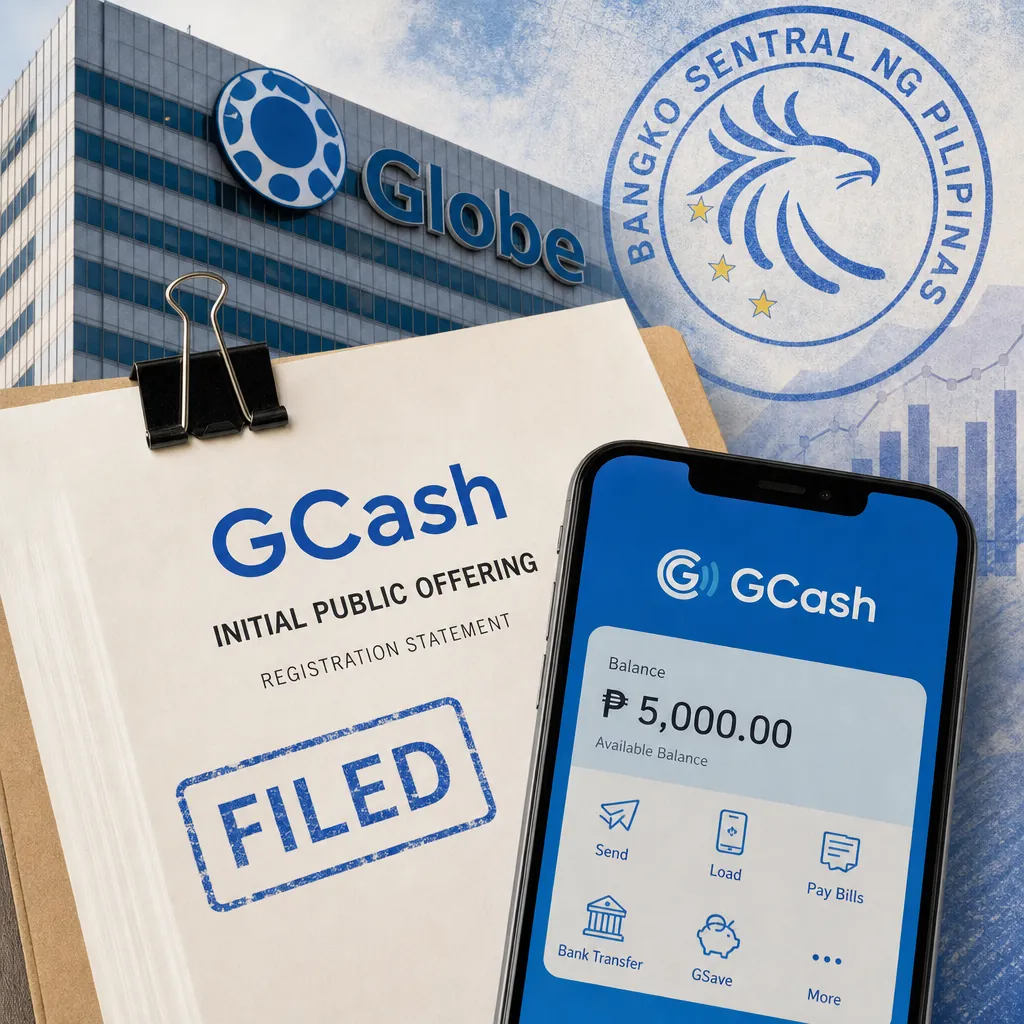
The DOJ-GCash memorandum of agreement signed on June 22 was a turning point for refugee financial access. The PSA joined National Refugee Day by offering National ID enrollment, enabling refugees to open GCash accounts. Posts from Cebu Daily News and RMN Network amplified the story, while the PNA also reported that senior citizens would now receive cash gifts via bank accounts, GCash, or Palawan remittance services—another step toward digitizing government disbursements. The conversation evolved from a simple announcement to a broader discussion of e-governance, as the PSA's post on National ID enrollment for refugees received 14 likes and 36 shares. This narrative positions digital payments as a tool for social equity and is likely to grow as more government benefit programs adopt e-wallet disbursement.
User frustrations with legacy banking apps
A parallel thread of discontent emerged strongly on Reddit. Starting with master_ebb5987's BPI app outage complaint on Sunday, the sentiment carried into Monday when bob_lorde reported Security Bank's app failing for an entire day. Another Redditor, ctrlaltdreamer, sought advice on checking accounts for PDC rentals, noting that BDO “security isn't as great” based on past news—a comment that accumulated 12 upvotes and 29 replies, reflecting lingering trust concerns. These posts contrasted sharply with the positive infrastructure news, highlighting a gap between policy-level digital adoption and individual user experience. The complaints suggest that legacy banks still lag behind the user experience offered by neobanks and e-wallets, and that competitive pressure will continue to drive app improvements.
PESONet/InstaPay transaction surge
The Manila Bulletin and BusinessWorld reported that combined PESONet and InstaPay transactions surged 44.4% to ₱13.18 trillion in the first five months of 2026, with transaction volume nearly tripling to 3.47 billion. This growth underscores the accelerating shift to digital payments, but also raises questions about system resilience. The BSP's data shows that InstaPay, a real-time payment system for transactions up to ₱50,000, has surpassed ATM withdrawals in both volume and value, indicating a fundamental change in consumer behavior. This narrative reinforces the BSP's digital inclusion goals but also creates pressure on banks and fintechs to ensure their platforms can handle the rising volume without service interruptions.
Macro headwinds: Moody's downgrade and BSP capital relief
Moody's Ratings downgraded its outlook on the Philippine banking sector to “negative,” warning that the Middle East conflict and inflation shock could slow credit growth and pressure asset quality. This came just over four months after the debt watcher affirmed a “stable” outlook. In response, the BSP granted banks temporary capital relief, allowing them to exclude valuation losses on government securities from capital calculations. These developments received limited social media attention compared to the more upbeat digital adoption stories, but they could have significant implications for credit availability and financial stability. The conversation has not yet connected the dots between the macro headwinds and the user-level digital payment experience.
Conversation trajectory
The conversation is headed toward several key developments over the next weeks and months:
- BSP authentication deadline (next 7–10 days): The June 30 compliance date will likely be followed by a wave of troubleshooting posts and security breach reports if implementation gaps emerge. Expect a surge in posts comparing in-app OTP push notifications, biometrics, and silent authentication, particularly as GCash has already begun its in-app OTP rollout. Frustration around implementation bugs (delayed prompts, false declines) will likely dominate feedback channels, requiring proactive customer education and support resources.
- Paleng-QR Ph Plus expansion (next 4–6 weeks): The success of the Pasig Mega Market pilot is expected to lead to similar announcements for other markets as local governments replicate the model. This will generate content around “QR Ph success stories” and infrastructure gaps in other regions. Engagement metrics from the Pasig launch indicate high receptivity to connectivity-focused digital payment stories.
- Financial inclusion for refugees and senior citizens (next 2–3 months): As more government benefit programs adopt e-wallet disbursement, the conversation will evolve into comparative analyses of disbursement reliability, fees, and fraud prevention. This creates opportunities for institutions to position themselves as inclusive and secure.
- App reliability complaints and legacy bank trust (next 3–4 weeks): Persistent user reports of app failures are generating sustained negative engagement even as the overall digital adoption trend accelerates. As the BSP OTP migration may introduce new glitches, comparison content between “legacy bank” app stability and digital-native neobanks will intensify. This trajectory demands proactive outage communication and visible investment in app performance updates.
- Macroeconomic pressures (next 6–12 months): The Moody's downgrade and BSP capital relief measures signal that the banking sector faces headwinds from the Middle East conflict and inflation. If credit growth slows or asset quality deteriorates, the conversation could shift from digital adoption to financial stability concerns. The next PESONet/InstaPay volume report (expected mid-July) and any BSP rate decision will be key trigger events.
Response guidance
For communicators tracking the Philippine digital banking and payments conversation, the following approaches are recommended:
- Platform-specific approaches: On Facebook, prioritize responding to app performance complaints with empathetic confirmation and specific troubleshooting steps. Leverage high-engagement posts about the BSP OTP shift to position your institution's migration timeline as a proactive security upgrade. On Twitter/X, establish a rapid-response protocol for service outage mentions, acknowledging the issue and moving to DMs within one or two replies. On Reddit, deploy an official account (verified flair) to answer technical questions in r/PHCreditCards and r/DigitalbanksPh, especially on IDRP mechanics, SCC cancellation timelines, and NAFFL eligibility.
- Key messages: Emphasize that security upgrades are not an inconvenience but a shield against SIM swap and phishing scams. Highlight that digital payments are already part of everyday life, with ₱13.18 trillion in transactions this year, and that the infrastructure is being built to make it work for everyone. Stress that financial inclusion means no one is left behind—whether refugee, senior citizen, or market vendor. For debt relief, communicate that the Interbank Debt Relief Program (IDRP) is a structured, BSP-endorsed solution that consolidates credit card debt into one lower-interest plan with no third-party fees.
- Sensitive topics to navigate: When addressing app outages, acknowledge the problem without blaming users' devices or network. Avoid vague “we are aware” statements; instead specify the root cause and expected fix timeline. For credit card approval inconsistencies, avoid implying the initial decline was a mistake; frame it as a standard multi-step verification process. When discussing debt restructuring, avoid language that could be perceived as judgmental; emphasize that financial hardship can happen to anyone and that IDRP exists as a compassionate reset.
- Response priorities: Address the most visible service complaints within 24 hours. The BPI and Security Bank app threads have high sentiment negativity and are shared across platforms. Deploy a dedicated team to reply to each public post with a ticket number and a direct contact channel. Capitalize on the BSP OTP deadline and Paleng-QR Ph momentum by running a countdown campaign alongside educational content. Standardize a debt relief FAQ based on the IDRP post's high engagement, replicating its structure in official channels.
See the full picture behind today's signals.
This report draws from Media Meter's MediaWatch, our real-time monitoring engine tracking 2,470+ Philippine sources across print, broadcast, digital, and social. Explore how the platform turns raw coverage into decision-grade intelligence, then see how it's configured for teams like yours — whether you're in PR agencies, corporate comms, government, or marketing.
Want more? Browse our Report Library for sector and crisis intelligence, or request a demo and we'll have your brand set up before the call.
Want this kind of intelligence on your brand?
This brief is built on the same MediaWatch methodology that runs continuously across every brand we monitor. See your competitive landscape, Impact Score, and narrative trajectory in a 30-minute demo.