Philippine governance crisis deepens amid corruption, quake, and Senate chaos
A weekend of overlapping crises: a 7.8 earthquake's aftermath, a Senate leadership implosion, PhilHealth benefit denials, and escalating corruption allegations test institutional credibility and public trust.
The weekend of June 13–14, 2026, saw Philippine social media consumed by a cascade of overlapping crises that together paint a picture of an institutional system under severe strain. The dominant conversation threads—a devastating earthquake response, a Senate leadership implosion, a PhilHealth benefits denial scandal, and escalating corruption allegations—are not isolated events but interconnected symptoms of a governance crisis that is eroding public trust across multiple fronts. The conversation is no longer about any single failure; it is about a system that appears to be failing on all fronts simultaneously.
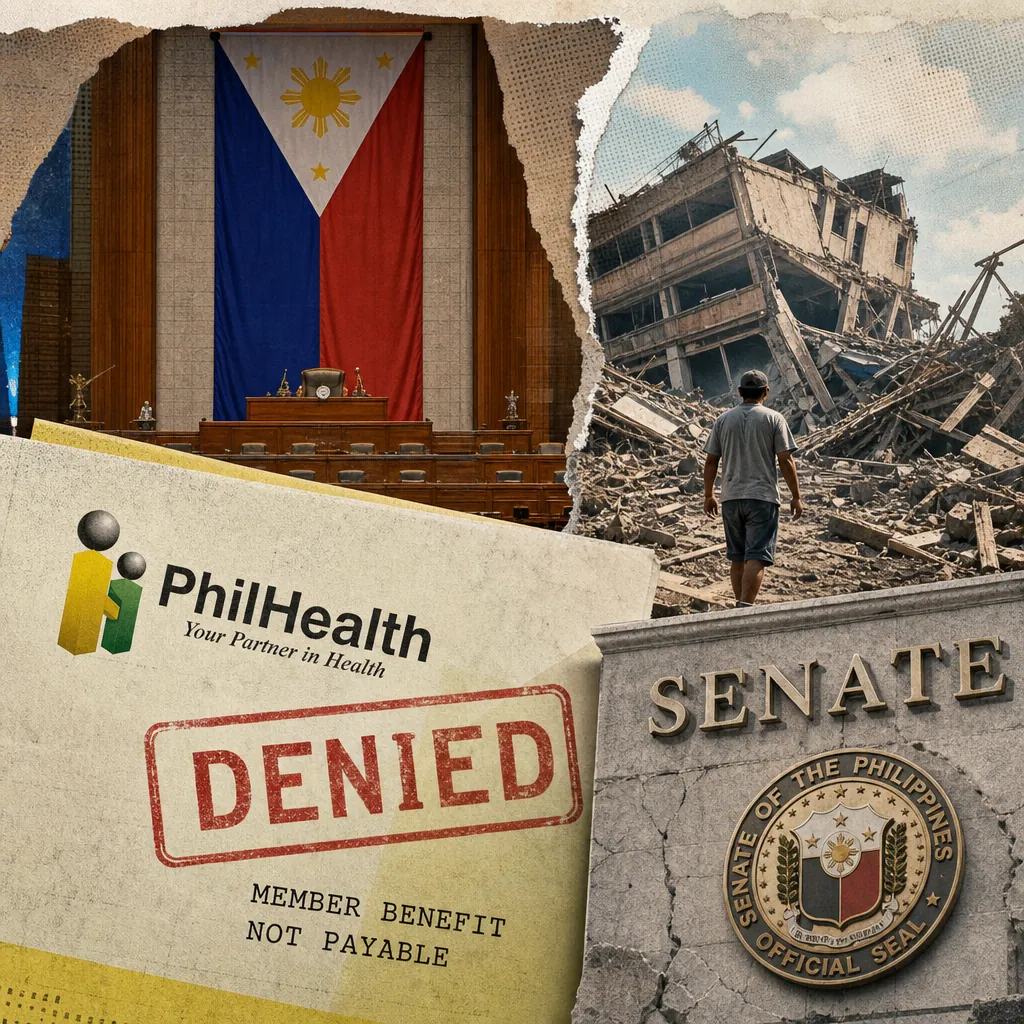
The weekend opened with the aftermath of the magnitude 7.8 earthquake that struck Mindanao on June 8. By June 13, the Office of Civil Defense (OCD) confirmed 61 deaths and over 1,200 injured, while the National Disaster Risk Reduction and Management Council (NDRRMC) reported over 724,000 individuals affected, with infrastructure damage surpassing P1 billion across 725 facilities. The Department of Social Welfare and Development (DSWD) and the Philippine Coast Guard (PCG) posted updates on relief operations, including airlifts of food packs to isolated barangays. However, a TV Patrol report that many barangays in Glan, Sarangani, had not yet received government aid, with residents falling ill from contaminated water, quickly undercut the official narrative. This gap between official assurance and ground reality became a central theme, amplified by Baguio City Mayor Benjamin Magalong's interview on ANC's Beyond the Exchange, where he stated that "Filipinos are frustrated by the system of corruption in government" and that "90% of Congressmen are corrupt". The earthquake response conversation thus became a lens through which broader governance failures were viewed.
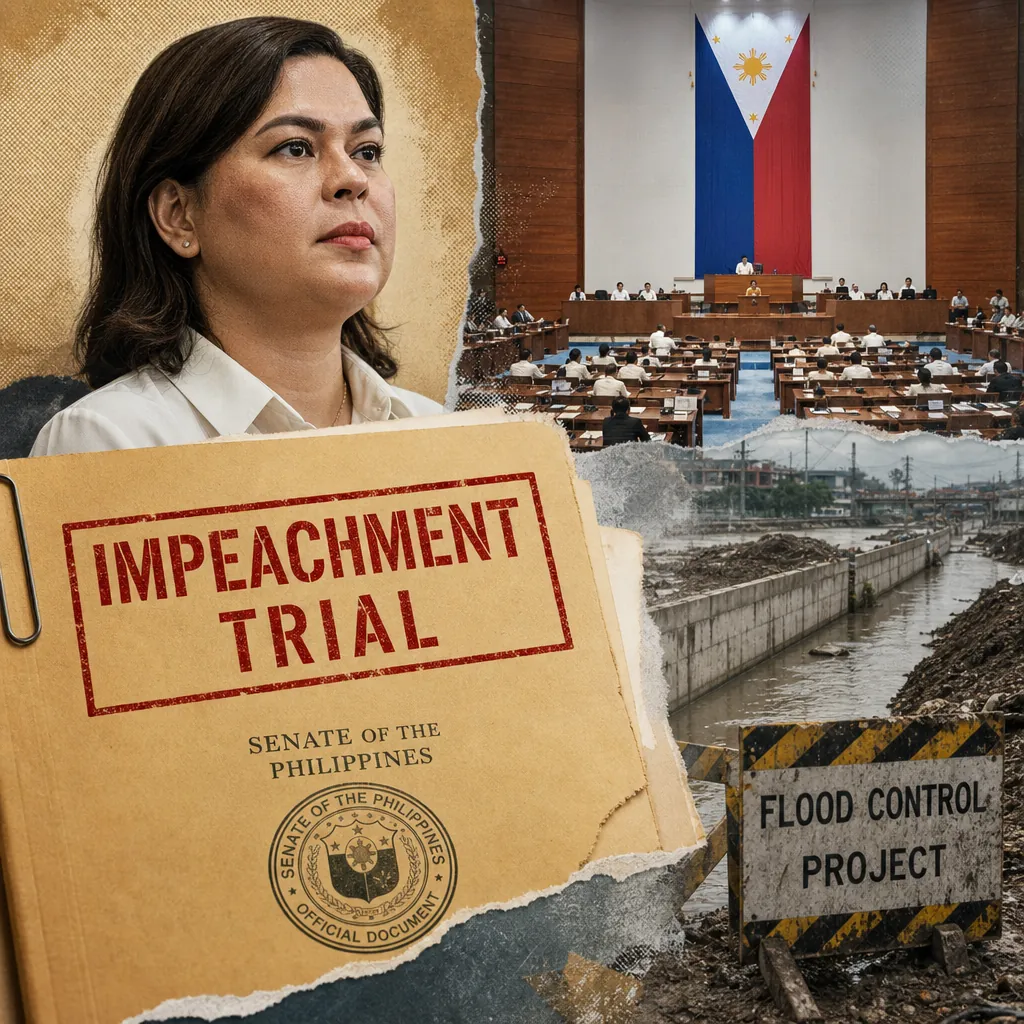
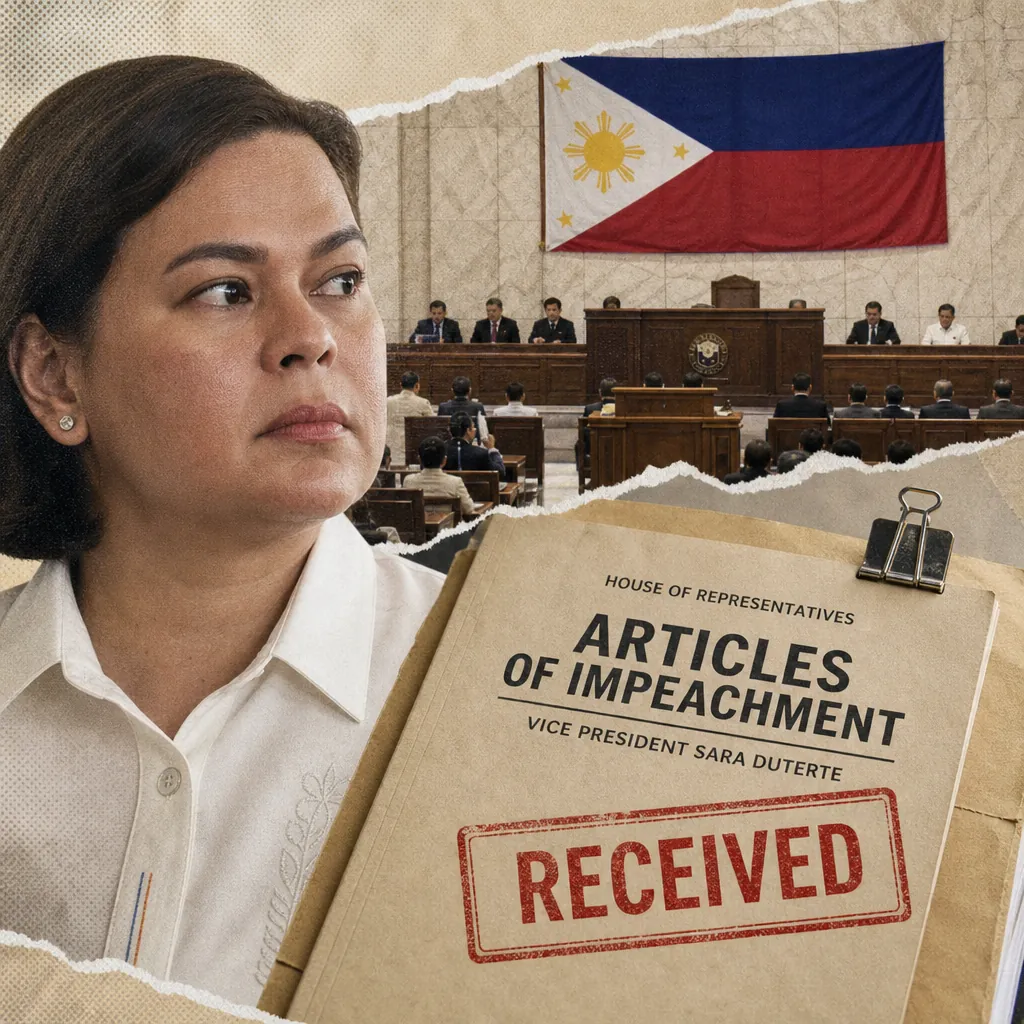
Simultaneously, the Senate leadership crisis deepened. Senator Alan Peter Cayetano's comparison of his leadership struggle to Ninoy Aquino Jr.'s martyrdom drew immediate backlash from the August Twenty One Movement (ATOM), which denounced the comparison as "laughable" and "highly insulting". Cayetano later clarified that he was not comparing himself to Ninoy, but the damage was done. Senator Joel Villanueva announced he would attend a possible special session called by President Marcos, stating, "We can't keep fighting". His father, Cibac party-list Rep. Eddie Villanueva, urged him to "follow your conscience, not your politician friends". The crisis has paralyzed legislative work, with the Senate unable to pass key bills or confirm military appointments. Senator Panfilo Lacson warned that the crisis could affect the impeachment trial of Vice President Sara Duterte, as detained senators may not be able to participate.
The PhilHealth benefits denial scandal erupted on June 14 when a widow's viral Facebook post claimed her husband was denied P200,000 in benefits because his confinement lasted less than 24 hours. The post drew 105 angry reactions and 201 haha reactions on SunStar Cebu's coverage, signaling a mix of outrage and mockery. PhilHealth issued a statement saying it had contacted the family and was reviewing the case, but its official response post received 131 angry reactions and 119 haha reactions, indicating deep public skepticism. Bagong Henerasyon Party-list Rep. Bernadette Herrera and Senator Bong Go both called on PhilHealth to address the "policy gap". The incident crystallized long-simmering frustration with the state insurer's bureaucracy and became a tipping point for public anger.
Corruption allegations continued to mount. The Sandiganbayan dismissed three graft cases against five Cebu City Bids and Awards Committee members, prompting a commentator to note that "the struggle against plunder and impunity does not end with the dismissal of a case". Senator Erwin Tulfo revealed that colleagues pressured him not to sign the Senate Blue Ribbon Committee's partial report on flood control anomalies, with one female senator allegedly among those who tried to dissuade him. Senator Lacson publicly thanked Tulfo for "speaking the truth". Meanwhile, an investigative exposé by PGMN alleging budget anomalies under former House Speaker Martin Romualdez accumulated over 31,000 views on YouTube, with the creator detailing five attempts to remove the video. A grassroots archiving movement has downloaded over 390GB of government procurement records and politician livestreams to prevent deletion.
The West Philippine Sea (WPS) conversation added a geopolitical dimension. China imposed sanctions on Defense Secretary Gilberto Teodoro Jr., and a new Chinese floating structure was discovered inside the lagoon of Bajo de Masinloc. Retired Senior Associate Justice Antonio Carpio called for a "tit for tat" response, declaring China's defense minister persona non grata. Political analyst Renato de Castro warned that the structure poses a security threat but stressed that diplomacy remains essential. The National Maritime Council (NMC) defended Teodoro, stating that his actions were in accordance with law and Philippine policy.
On the environmental front, PHIVOLCS confirmed a coastal uplift of approximately two meters in Barangay Pangyan, Glan, Sarangani, following the earthquake, exposing coral reefs and seagrass beds. The phenomenon drew hundreds of sad reactions across multiple news posts, reflecting public grief over the permanent ecological damage. Mayon Volcano also showed minor Strombolian activity on its 160th day of effusive eruption, with PHIVOLCS maintaining Alert Level 3. PAGASA announced that El Niño conditions are now present, with stronger typhoons expected.
Conversation snapshot. The weekend's conversation was dominated by high-engagement posts across Facebook, YouTube, and Twitter. The most engaged post was Senator Bong Go's birthday greeting from his official page, which amassed 15,133 likes, 18,438 love reactions, and over 8,400 comments. Mayor Magalong's interview clips on YouTube drew between 3,700 and 6,700 views each, with the clip on the Gatchalian-Cayetano row receiving 3,737 views and 33 comments. The PGMN exposé video accumulated 14,072 views and 2,086 likes on its 50-minute cut. The PhilHealth denial post on SunStar Cebu received 105 angry and 201 haha reactions. The PNP's crime statistics post claiming a 25.77% reduction in focus crimes was met with 3,648 haha reactions, signaling widespread disbelief. The coastal uplift posts from SunStar Davao and CDN Digital each received over 400 sad reactions.
Key themes
- Earthquake response gaps and corruption overlay – The government's relief efforts, while substantial, were undercut by reports of unreached barangays and Mayor Magalong's sweeping corruption allegations, which reframed the disaster response as a symptom of systemic graft.
- Senate leadership crisis and institutional paralysis – The Cayetano-Gatchalian leadership dispute has paralyzed the Senate, with Villanueva's conditional attendance at a special session offering a potential but uncertain resolution. The crisis threatens legislative productivity and public confidence.
- PhilHealth benefit denial as a tipping point – The widow's viral story has become a rallying cry against bureaucratic rigidity, with the 24-hour confinement rule now a symbol of institutional failure. The agency's defensive response has only deepened public anger.
- Corruption allegations across multiple fronts – From the flood control probe to the Sandiganbayan dismissal and the Romualdez exposé, corruption narratives are converging, creating a perception of impunity that the administration must address.
- West Philippine Sea tensions escalate – China's sanctions on Teodoro and the discovery of a new floating structure have heightened nationalist sentiment, with calls for a stronger response balanced by expert warnings to maintain diplomacy.
- Environmental and geological crises compound – The coastal uplift in Sarangani and ongoing volcanic activity at Mayon and Kanlaon add layers of long-term risk, demanding integrated disaster preparedness and environmental management.
- Public trust in institutions erodes – Across all threads, the dominant emotional response is mockery (haha reactions) and anger, indicating deep cynicism toward government agencies, the Senate, and law enforcement.
How the narratives stack
Dominant narrative – The Philippines is in a state of multiple, overlapping crises that reveal systemic governance failures. The earthquake response exposed gaps in disaster preparedness, the Senate leadership crisis shows political infighting paralyzing government, the PhilHealth scandal highlights bureaucratic callousness, and corruption allegations suggest impunity at the highest levels. The public is deeply skeptical and increasingly cynical.
Counter-narrative – The government is actively responding to all crises. DSWD and the AFP are conducting relief operations, the Senate is working toward a resolution, PhilHealth has reached out to the affected family, and the administration is pursuing legal and diplomatic channels on the WPS. The coastal uplift study and Mayon monitoring demonstrate scientific competence. Local governance successes like Laguna's 100% Good Financial Housekeeping passing rate show that accountability is possible.
Emerging narrative – A good governance movement is coalescing around figures like Mayor Magalong and Senator Villanueva, who are positioning themselves as reformers above the political fray. Magalong's call for a "more aggressive campaign vs. government corruption" and Villanueva's "duty above faction" rhetoric may signal a shift toward issue-based politics ahead of 2028.
Suppressed narrative – The long-term environmental and economic impacts of the coastal uplift and the earthquake are under-discussed. The permanent loss of marine habitat and the displacement of fishing communities will require sustained recovery efforts that are not yet part of the public conversation. Similarly, the mental health toll of the disaster and the ongoing political crises is largely absent from the discourse.
Platform insights
Facebook remained the dominant platform for high-engagement content, particularly for political figures and viral scandals. The Bong Go birthday posts demonstrated the power of personality-driven fandom, while the PhilHealth denial post showed how quickly anger can spread. The platform's reaction buttons (love, haha, angry) provided clear sentiment signals: haha reactions dominated corruption and Senate crisis posts, indicating mockery rather than outrage.
YouTube served as the primary venue for in-depth analysis and long-form content. Mayor Magalong's interview clips, the PGMN exposé, and Senate crisis coverage all drew thousands of views and active comment sections. The platform allowed for more nuanced discussion than Facebook, with viewers engaging with expert analysis and legal arguments.
Twitter (X) functioned as a real-time news wire for breaking updates, but engagement was low. Official agency tweets on earthquake response and infrastructure updates received minimal likes and retweets, suggesting that Twitter is used for information consumption rather than conversation. The platform's role is secondary to Facebook and YouTube in shaping public sentiment.
Reddit emerged as a space for strategic analysis and collective sentiment, particularly on the Senate leadership crisis and the PhilHealth scandal. The "13th vote" post on the Senate crisis received 547 upvotes, indicating strong support for unseating Cayetano. The platform's voting mechanism provided a clear gauge of public opinion.
Key voices and communities
Investigative accountability voices – Independent media outlets like PGMN and citizen archivists like Bayanwatch PH are driving the corruption narrative. Their content, which includes detailed exposés and decentralized data preservation, generates high engagement and challenges official narratives. They are a critical stakeholder for any anti-corruption communication strategy.
Political oversight figures – Senators Lacson, Tulfo, and Villanueva, along with Mayor Magalong, are positioning themselves as reformers. Their statements on flood control, Senate leadership, and corruption resonate with audiences seeking accountability. They are potential allies for transparency initiatives but also pose a risk if their criticisms are not addressed.
Disaster response ecosystem – DSWD, OCD, PHIVOLCS, PAGASA, and the AFP are the primary sources of official information on the earthquake and volcanic activity. Their posts receive moderate engagement but high trust. The coastal uplift study and Mayon monitoring demonstrate scientific competence, but the gap between official assurance and ground reality remains a credibility challenge.
Healthcare beneficiary advocates – The PhilHealth denial scandal has mobilized a broad coalition of patients, advocates, and lawmakers. The widow's story has become a symbol of bureaucratic failure, and calls for policy reform are growing. This group's anger is a reputational threat to PhilHealth and the universal healthcare agenda.
National security and WPS commentators – Experts like Renato de Castro and retired Justice Antonio Carpio are shaping the WPS conversation. Their calls for a balanced approach—diplomacy backed by capability—provide a credible counterpoint to more hawkish voices. The NMC's defense of Teodoro adds institutional weight.
Narrative streams
Earthquake response and corruption
The magnitude 7.8 earthquake that struck Mindanao on June 8 has killed at least 60 people, with over 724,000 individuals affected and infrastructure damage exceeding P1 billion. The government's response has been substantial: DSWD has deployed food packs, the AFP has conducted airlifts, and the PCG has transported relief goods. However, reports that several barangays in Glan, Sarangani, remain unreached have undercut the official narrative. Mayor Magalong's interview on ANC, in which he claimed that "90% of Congressmen are corrupt" and that corruption is a "way of life" in the House, reframed the disaster response as a symptom of systemic graft. The coastal uplift in Sarangani, which has exposed coral reefs and caused marine life die-offs, adds an environmental dimension that could shift public concern from immediate relief to long-term recovery. The NDRRMC's report of over 5,200 aftershocks and the ongoing volcanic activity at Mayon and Kanlaon underscore the multi-hazard nature of the crisis.
Senate leadership crisis
The Senate remains paralyzed by a leadership dispute between the bloc of Senator Alan Peter Cayetano and the faction supporting Senator Sherwin Gatchalian, who has been recognized as Senate President Pro Tempore by Malacañang. Cayetano's comparison of his struggle to Ninoy Aquino's martyrdom drew immediate backlash from ATOM, which organized a protest at the Ninoy Aquino Monument in Makati. Cayetano later clarified that he was not comparing himself to Ninoy, but the controversy has damaged his standing. Senator Joel Villanueva's announcement that he would attend a possible special session has been seen as a potential breakthrough, but his father's public advice to "follow your conscience, not your politician friends" highlights the personal and political stakes involved. Senator Lacson warned that the crisis could affect the impeachment trial of Vice President Sara Duterte, as detained senators may not be able to participate, potentially reducing the number of senator-judges below the required 16 for conviction. The Senate is scheduled to resume session on June 15, but the nature of the convening remains unclear.
PhilHealth benefits denial
The viral story of Maria Lourdes Sulit, whose husband Marvin died of a brain hematoma and was denied PhilHealth benefits because his confinement was under 24 hours, has become a national scandal. The post on SunStar Cebu received 105 angry reactions and 201 haha reactions, indicating a mix of outrage and mockery. PhilHealth's official response—stating it had contacted the family and was reviewing the case—was met with even greater anger, with 131 angry reactions and 119 haha reactions on its own post. Lawmakers from both sides of the aisle have called for a review of the 24-hour confinement rule. Senator Bong Go demanded an explanation, while Rep. Bernadette Herrera tagged PhilHealth's official page in her call for action. The incident has become a rallying point for broader criticism of the universal healthcare system, with Dr. Tony Leachon linking it to earlier allegations of P60 billion in diverted funds.
Corruption allegations and accountability
Corruption allegations are converging across multiple fronts. The Sandiganbayan's dismissal of graft cases against five Cebu City BAC members has been met with skepticism, with a commentator noting that "the struggle against plunder and impunity does not end with the dismissal of a case". Senator Erwin Tulfo's revelation that colleagues pressured him not to sign the Blue Ribbon Committee's partial report on flood control anomalies has exposed internal Senate resistance to accountability. The PGMN exposé alleging budget anomalies under former House Speaker Martin Romualdez has accumulated over 31,000 views on YouTube, with the creator detailing five attempts to remove the video. A grassroots archiving movement has downloaded over 390GB of government procurement records and politician livestreams to prevent deletion, signaling a shift toward decentralized data preservation. The Bureau of Internal Revenue (BIR) also filed criminal tax cases against former Bamban Mayor Alice Guo, adding an enforcement dimension to the accountability narrative.
West Philippine Sea tensions
China's sanctions on Defense Secretary Gilberto Teodoro Jr. and the discovery of a new Chinese floating structure inside the lagoon of Bajo de Masinloc have escalated tensions in the West Philippine Sea. Retired Senior Associate Justice Antonio Carpio called for a "tit for tat" response, declaring China's defense minister persona non grata. Political analyst Renato de Castro warned that the structure poses a security threat but stressed that diplomacy remains essential. The National Maritime Council (NMC) defended Teodoro, stating that his actions were in accordance with law and Philippine policy. The government is reportedly studying a second arbitration case over Chinese floating platforms, buoys, and antennas monitored near Bajo de Masinloc. The conversation is bifurcating between those who advocate for a stronger military response and those who emphasize legal and diplomatic channels.
Conversation trajectory
Earthquake response and corruption (next 2–4 weeks): The conversation will shift from immediate relief to long-term recovery and accountability. The coastal uplift study scheduled for June 16 will generate a fresh wave of content, and any perceived delays in rehabilitation will be met with criticism. Mayor Magalong's corruption allegations will continue to resonate, especially if the Blue Ribbon Committee releases more findings. The PNP's crime statistics debacle (3,648 haha reactions) suggests that official data will be treated with skepticism unless independently verified.
Senate leadership crisis (next 1–2 weeks): The special session, if called, will be a decisive moment. Villanueva's attendance could break the deadlock, but the crisis may also escalate if Cayetano's bloc challenges the legitimacy of the session. The Supreme Court may be asked to intervene, prolonging the uncertainty. The crisis will continue to dominate political discourse and overshadow legislative priorities.
PhilHealth scandal (next 4–6 weeks): The 24-hour confinement rule will become a legislative talking point during budget deliberations. PhilHealth must announce a policy review and a compassionate resolution for the affected family to begin rebuilding trust. Failure to do so will result in sustained reputational damage and may trigger broader calls for healthcare reform.
West Philippine Sea (ongoing): Any new incident—a water cannon event, a construction move, or a diplomatic statement—will instantly dominate headlines. The government's response will be closely watched. The second arbitration case study provides a legal pathway that could unify nationalist sentiment, but the sanctions on Teodoro have personalized the conflict.
Key trigger events: The Senate special session (likely within 1–2 weeks), the release of the coastal uplift study (June 16), the next Senate Blue Ribbon hearing, the ICC medical examination of former President Duterte (timing unknown), and any new Chinese activity in the WPS. Each event will reshape the conversation and test the government's ability to manage multiple crises simultaneously.
Response guidance
Platform approaches: On Facebook, deploy empathetic, human-centered content that acknowledges public frustration while highlighting concrete actions. Use infographics to explain complex policies like the PhilHealth 24-hour rule. On YouTube, produce explainer videos on the impeachment process, the Senate leadership dispute, and the WPS legal options. On Twitter, use threads to provide real-time updates on earthquake relief and Senate developments, and engage with journalists to amplify factual reporting. On Reddit, participate in discussions with neutral, process-focused explanations to counter misinformation.
Key messages: (1) The government is fully mobilized to assist all earthquake-affected communities, with over 724,000 individuals receiving support. (2) The Senate leadership issue is being addressed through existing constitutional mechanisms; special sessions ensure continuity of legislative work. (3) PhilHealth is reviewing the 24-hour confinement rule to prevent tragedies like this from happening again. (4) The administration is committed to transparency and accountability; all COA reports are public, and any verified anomalies will be addressed. (5) The Philippines will continue to assert its sovereign rights in the West Philippine Sea through diplomatic and legal channels, supported by the AFP's vigilant monitoring.
Sensitive topics: Avoid defending the PhilHealth 24-hour rule too rigidly; acknowledge the human cost and commit to a compassionate revision. On the Senate crisis, avoid taking sides; emphasize the importance of functional governance. On corruption allegations, avoid dismissing them; instead, highlight ongoing investigations and enforcement actions. On the WPS, balance resolve with diplomacy; avoid inflammatory language that could escalate rhetoric.
Response priorities: (1) Issue a clear, empathetic PhilHealth statement outlining the policy review and a timeline for resolution. (2) Coordinate with the Office of the Ombudsman to release a neutral explainer on motions to quash versus case dismissals on the merits. (3) Prepare a pre-monsoon communication package that proactively addresses flood control project status and accountability mechanisms. (4) Develop a rapid-response framework for WPS incidents, with pre-approved messaging that reinforces legal and diplomatic channels.
See the full picture behind today's signals.
This report draws from Media Meter's MediaWatch, our real-time monitoring engine tracking 2,470+ Philippine sources across print, broadcast, digital, and social. Explore how the platform turns raw coverage into decision-grade intelligence, then see how it's configured for teams like yours — whether you're in PR agencies, corporate comms, government, or marketing.
Want more? Browse our Report Library for sector and crisis intelligence, or request a demo and we'll have your brand set up before the call.
Want this kind of intelligence on your brand?
This brief is built on the same MediaWatch methodology that runs continuously across every brand we monitor. See your competitive landscape, Impact Score, and narrative trajectory in a 30-minute demo.