Philippine Road Safety Crisis: Fatal Crashes and LTO Crackdown
A wave of fatal motorcycle and vehicle accidents across the Philippines, including hit-and-run incidents, coincides with a major LTO license revocation campaign, intensifying public calls for stricter enforcement and road safety reforms.
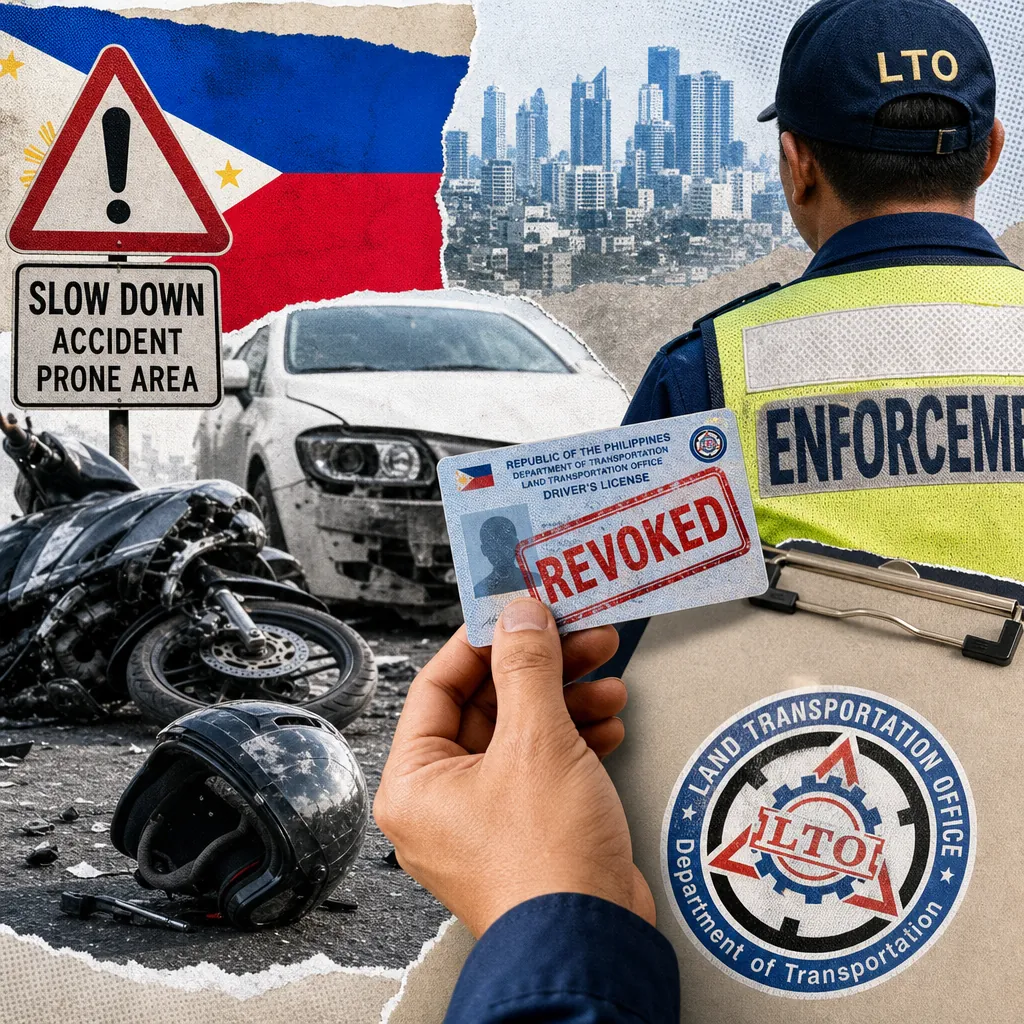
The weekend of June 13–14, 2026, saw a grim series of road accidents across the Philippines, with at least seven fatalities in separate incidents involving motorcycles, pickup trucks, and a dump truck. The crashes, concentrated in Cebu, Pasig, Bulacan, and Iloilo, have triggered widespread public grief and outrage on social media, while a concurrent announcement that the Land Transportation Office (LTO) has suspended or revoked over 800 driver's licenses since October has added a regulatory dimension to the conversation. The combination of graphic accident footage, emotional reactions, and enforcement data is shaping a narrative that moves beyond individual tragedies toward systemic questions about road discipline, driver accountability, and the economic pressures pushing more Filipinos onto motorcycles.
Conversation snapshot. The most engaged post was a SunStar Cebu Facebook report on a fatal Cebu crash, which drew 71 likes, 148 sad reactions, 3 care reactions, and 60 comments. A GMA News YouTube video of a Pasig crash accumulated 4,346 views, 58 likes, and 36 comments. A TV Patrol Twitter post on the same incident, which noted alcohol involvement, received 3 likes, 1 share, and 1,638 views. A Remate Online article on a Cebu South Coastal Road (CSCR) crash had 126 views on Twitter. A Philstar Facebook post on the LTO license revocations garnered 52 likes and 8 comments. A Reddit post from a prospective female delivery rider received 4 upvotes and 7 comments. A onewesternvisayas Facebook post on a Bingawan, Iloilo hit-and-run got 42 likes, 23 sad reactions, 1 angry reaction, and 3 shares.
Key themes
- Fatal Motorcycle Accidents and Public Grief – The weekend's conversation was dominated by reports of deadly crashes, primarily involving motorcycles. The Cebu accident, where a motorcycle making a U-turn was hit by a pickup, killed two. A Pasig crash saw a motorcycle hit a concrete barrier, leaving the rider critical. In Bulacan, a married couple on a motorcycle died after being hit by a dump truck. These incidents generated strong emotional reactions, especially on Facebook, where sad reactions far outnumbered likes.
- Alcohol and Reckless Driving as Root Causes – The Pasig crash report explicitly stated that the passenger admitted the rider had been drinking and driving fast. This detail shifted public discourse from sympathy to blame, with commenters debating enforcement of drunk-driving laws. The CSCR crash involved an illegal U-turn, highlighting risky maneuvers beyond alcohol. The Bingawan hit-and-run driver admitted to speeding.
- Hit-and-Run Accountability and Provincial Road Risk – The Bingawan incident introduced a new dimension: a pickup driver fled the scene after killing a tricycle driver and a teenage motorcycle rider, later surrendering to a barangay captain. This raised questions about legal consequences and the vulnerability of tricycle passengers, often elderly, in rural areas.
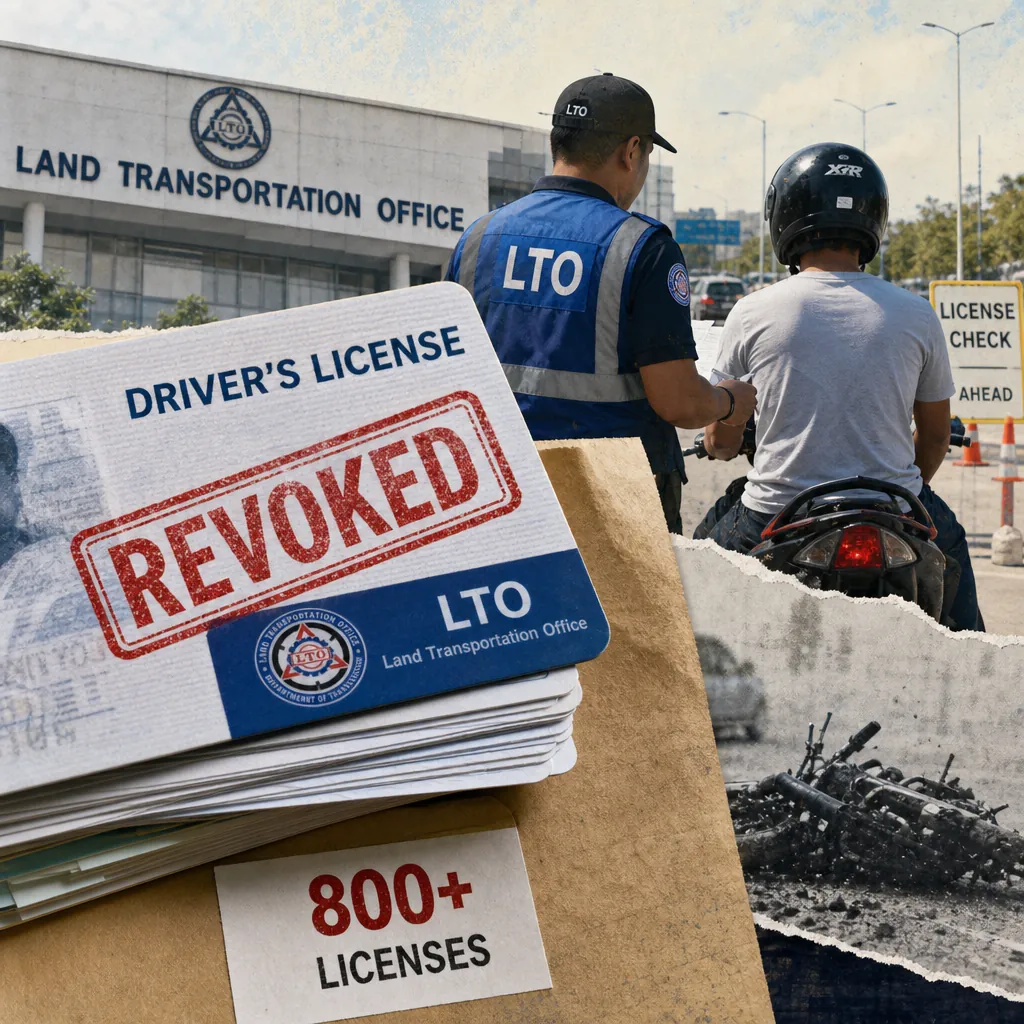
- LTO License Revocation Campaign – The LTO announced it had suspended or revoked over 800 driver's licenses since October 2025, with 434 revoked and 396 suspended. This enforcement action was framed as a response to reckless driving, providing a policy counterpoint to the accident reports.
- Economic Pressures Driving Gig Motorcycle Work – A Reddit post from a woman considering weekend delivery work to combat inflation highlighted the economic push factors behind motorcycle use. The post expressed safety concerns and fear of scams, reflecting a growing demographic of female riders entering the gig economy.
- PUV Cleanliness Crackdown – The Land Transportation Franchising and Regulatory Board (LTFRB) warned public utility vehicle (PUV) operators to maintain cleanliness, issuing a show-cause order against a taxi operator. This added a regulatory layer to the conversation, emphasizing operator responsibility.
- Road Safety Infrastructure and Enforcement Gaps – Multiple incidents, including a pedestrian killed by a motorcycle while crossing in a pedestrian lane in Cebu, and a truck helper dying after a rear-end collision in Pasig, underscored infrastructure and enforcement shortcomings.
How the narratives stack
Dominant narrative – The dominant story is that Philippine roads are increasingly deadly, with motorcycles at the center of a crisis. The weekend's multiple fatalities, amplified by graphic social media posts, have created a sense of urgency. The LTO's license revocation campaign is seen as a necessary but insufficient response, with many commenters calling for even stricter measures.
Counter-narrative – A quieter but persistent counter-narrative, visible on Reddit, frames motorcycle riding as an economic necessity. For many Filipinos, especially those entering the gig economy, the risk is outweighed by the need for income. This narrative complicates the dominant story by suggesting that safety campaigns alone will not reduce accidents if economic pressures remain unaddressed.
Emerging narrative – The conversation is beginning to shift from individual blame to systemic critique. The LTO enforcement data, combined with the hit-and-run incident, is fueling calls for better enforcement of existing laws, improved road infrastructure, and greater accountability for drivers who flee. The involvement of a tricycle in the Bingawan crash is also drawing attention to the risks faced by passengers in unregulated public transport.
Suppressed narrative – The role of road design and vehicle safety features is largely absent from the conversation. While the accidents are attributed to driver behavior, there is little discussion of how road engineering, lighting, signage, or vehicle safety technologies (e.g., ABS, collision avoidance) could prevent crashes. This is a missed opportunity for industry stakeholders to lead with safety innovation.
Platform insights
Facebook – Facebook was the primary platform for emotional engagement. SunStar Cebu's post on the Cebu crash generated the highest number of sad reactions (148) and comments (60), indicating raw public grief. The LTO enforcement post on Philstar had a more measured response (52 likes, 8 comments), suggesting public approval of the crackdown. The Bingawan hit-and-run post on onewesternvisayas drew 23 sad reactions out of 42 total reactions, showing strong emotional weight even with lower reach. Facebook's reaction system allowed quick sentiment measurement, with sad reactions dominating accident posts.
YouTube – GMA News's video of the Pasig crash accumulated 4,346 views and 58 likes, with 36 comments. The platform served as a hub for in-depth coverage, attracting viewers seeking detailed reports. The comment section likely hosted more substantive discussions on road safety policy.
Twitter (X) – TV Patrol's tweet on the Pasig crash, which included the alcohol detail, had 1,638 views but only 3 likes and 1 share. This suggests the information was widely seen but not actively engaged with, possibly because users shared it via direct messages or quote tweets. The CSCR crash tweet had 126 views with no engagements.
Reddit – A post from a prospective female delivery rider received modest engagement (4 upvotes, 7 comments) but represents a growing niche conversation about economic pressures and safety concerns. Reddit's format allows for detailed advice and personal stories, contrasting with the emotional reactions on Facebook.
Key voices and communities
- Local News Media Outlets – SunStar Cebu, TV Patrol, GMA News, Remate Online, and Philstar are driving conversation volume. Their reports on fatal accidents attract high emotional engagement and shape public perception. They frame accidents as tragic but preventable, often citing official details like alcohol or speed.
- Concerned Local Community (Readers & Commenters) – The audience reacting to accident news on Facebook and Twitter forms an emotional stakeholder group. Their comments express grief, anger, and calls for stricter enforcement. This group's engagement signals broader public sentiment to policymakers and brands.
- Prospective Delivery Riders & Gig Economy Workers – A small but emerging segment on Reddit consists of individuals exploring delivery work as a side income. They raise practical concerns about safety, scams, and application procedures. This group represents a growing customer base for entry-level motorcycles and safety gear.
- Government Agencies – The LTO and LTFRB are key institutional voices. The LTO's license revocation announcement and the LTFRB's PUV cleanliness crackdown add regulatory dimensions to the conversation, positioning these agencies as enforcers of road discipline.
Narrative streams
Fatal Crashes Across the Philippines
The weekend saw a cluster of deadly accidents. On June 13, a motorcycle making a U-turn on the Cebu South Coastal Road was hit by a pickup, killing the rider and a passenger. In Pasig, a motorcycle crashed into a concrete barrier on Ortigas Avenue, leaving the rider critical; the passenger admitted the rider had been drinking. In Bulacan, a married couple on a motorcycle died after being hit by a dump truck. On June 14, a hit-and-run in Bingawan, Iloilo, killed a tricycle driver and a teenage motorcycle rider; the pickup driver fled but later surrendered. A pedestrian was also killed by a motorcycle while crossing in a pedestrian lane in Cebu. These incidents, reported across multiple platforms, have created a cumulative sense of crisis.
LTO's License Revocation Campaign
The LTO announced that since October 2025, it has suspended or revoked over 800 driver's licenses, with 434 revoked and 396 suspended. The agency framed this as part of a campaign to discipline reckless drivers and ensure road safety. The announcement received moderate engagement on Facebook (52 likes, 8 comments) but provided a policy anchor for the conversation, suggesting that enforcement is ramping up. This development is significant for the automotive industry, as it signals increased regulatory pressure that could affect driver behavior and, by extension, motorcycle sales and insurance trends.
Economic Pressures and the Gig Economy
A Reddit post from a woman considering weekend delivery work to combat inflation highlighted the economic motivations behind motorcycle use. She expressed concerns about safety as a female rider and fear of scams. The post received 7 comments offering advice on application processes and insurance. This narrative stream contextualizes the high volume of motorcycles on Philippine roads, suggesting that demand may continue to rise even as accident rates spike and enforcement tightens.
PUV Cleanliness and Regulatory Oversight
The LTFRB warned PUV operators to maintain cleanliness, issuing a show-cause order against a taxi operator. Chairman Vigor Mendoza II emphasized that operating untidy vehicles disrespects passengers and violates regulations. This adds a layer of regulatory oversight to the conversation, focusing on operator responsibility rather than just driver behavior.
Conversation trajectory
The conversation is likely to intensify in the coming weeks. The LTO's license revocation campaign provides a tangible benchmark for measuring enforcement progress, and each new accident adds emotional urgency. Expect calls for even stricter measures, including mandatory alcohol testing and higher fines, to grow. The economic pressure driving more Filipinos into motorcycle-based gig work will continue to intersect with safety concerns, potentially leading to more nuanced discussions about rider training and insurance. The release of the 2026 first-half road crash statistics (expected within 4–6 weeks) will provide data-driven ammunition for safety advocates. The onset of the rainy season may shift focus to flood-related accidents and vehicle maintenance. Any legislative hearings on amending the Motorcycle Helmet Law or imposing higher fines for drunk riding will catalyze further media coverage and public discourse.
Response guidance
For communicators in the automotive and mobility sector, the current conversation presents both risks and opportunities. The dominant narrative of tragedy and enforcement creates a receptive audience for safety messaging. Brands should consider:
- Acknowledge the grief expressed in accident posts with empathetic, non-commercial responses. Avoid victim-blaming; instead, focus on universal safety principles.
- Align with enforcement efforts by publicly endorsing the LTO's license revocation campaign. Co-create content that educates drivers on common violations and how to avoid them.
- Target delivery riders with practical safety guides, scam advisories, and information on insurance and licensing. Use platforms like Reddit and Facebook to reach this growing demographic.
- Leverage visual evidence from dashcam videos to illustrate risky behaviors (e.g., illegal U-turns, speeding) and promote defensive driving techniques.
- Avoid sensitive topics such as victim-blaming, alcohol culture, or gender stereotypes. Frame messages around shared responsibility and positive alternatives.
See the full picture behind today's signals.
This report draws from Media Meter's MediaWatch, our real-time monitoring engine tracking 2,470+ Philippine sources across print, broadcast, digital, and social. Explore how the platform turns raw coverage into decision-grade intelligence, then see how it's configured for teams like yours — whether you're in PR agencies, corporate comms, government, or marketing.
Want more? Browse our Report Library for sector and crisis intelligence, or request a demo and we'll have your brand set up before the call.
Want this kind of intelligence on your brand?
This brief is built on the same MediaWatch methodology that runs continuously across every brand we monitor. See your competitive landscape, Impact Score, and narrative trajectory in a 30-minute demo.