Floods, LTO crackdown, and P13.3B suspension dominate
The Philippine automotive sector faced a day of converging crises: monsoon floods raised vehicle safety and used-car concerns, the LTO announced a September crackdown on fake plates, and the Ombudsman suspended two transport officials over P13.3 billion in computer fees.
The Philippine automotive conversation on August 18 was defined by three converging stories: the aftermath of severe monsoon flooding that raised urgent questions about vehicle safety and the used-car market, a regulatory crackdown on fake license plates that reached a celebrity supercar, and the suspension of two top transport officials over P13.3 billion in questionable computer fees. Each story drew heavy engagement across social platforms and extensive coverage in national media, creating a day where consumer anxiety, regulatory enforcement, and governance accountability all competed for attention.
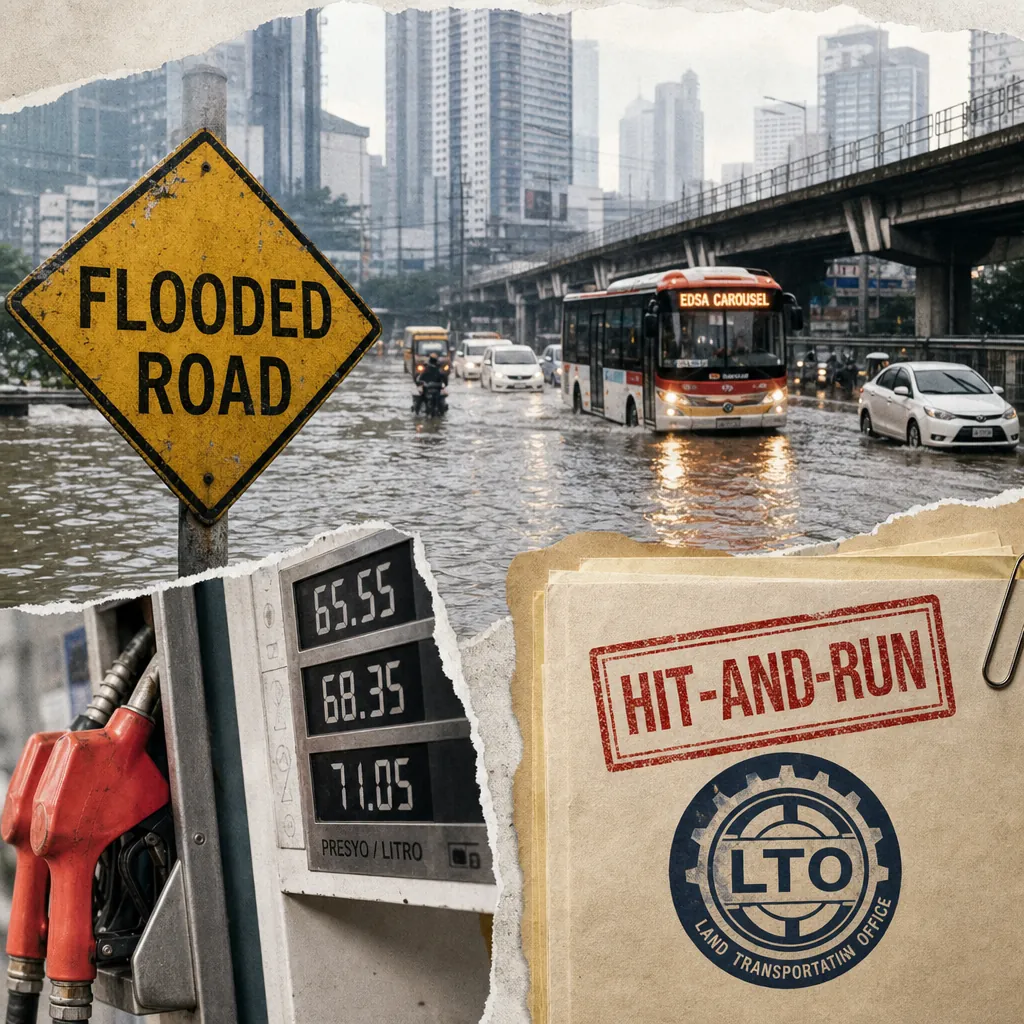
The flooding narrative, which began the evening of August 17, dominated emotional engagement. A viral Facebook post about a delivery rider who "fought fairly" against the flood accumulated 142 likes, 236 shares, and 579 sad reactions—an unusually high emotional response ratio that signaled deep public resonance with the plight of workers forced to brave unsafe conditions. By mid-day, a Twitter post from @_iancruz about delivery rider Mark Lee, who defiantly navigated waist-deep floodwaters to complete his deliveries, became a rallying cry across platforms, with the quote "Baha ka lang, magdedeliver ako ng parcel" (You're just a flood, I'll still deliver my parcel) spawning multiple retweets and reposts. This story generated 85 likes and 15 shares within hours on one rebroadcast, and additional engagement on Facebook with 85 likes, 12 shares, and 27 care reactions—a sentiment profile indicating profound public sympathy for gig workers' precarious conditions. Meanwhile, CCTV footage from Mandaluyong City showing a sedan attempting to drive through flooded Araullo Street went viral with 22,557 views, prompting questions about driver judgment during severe weather.
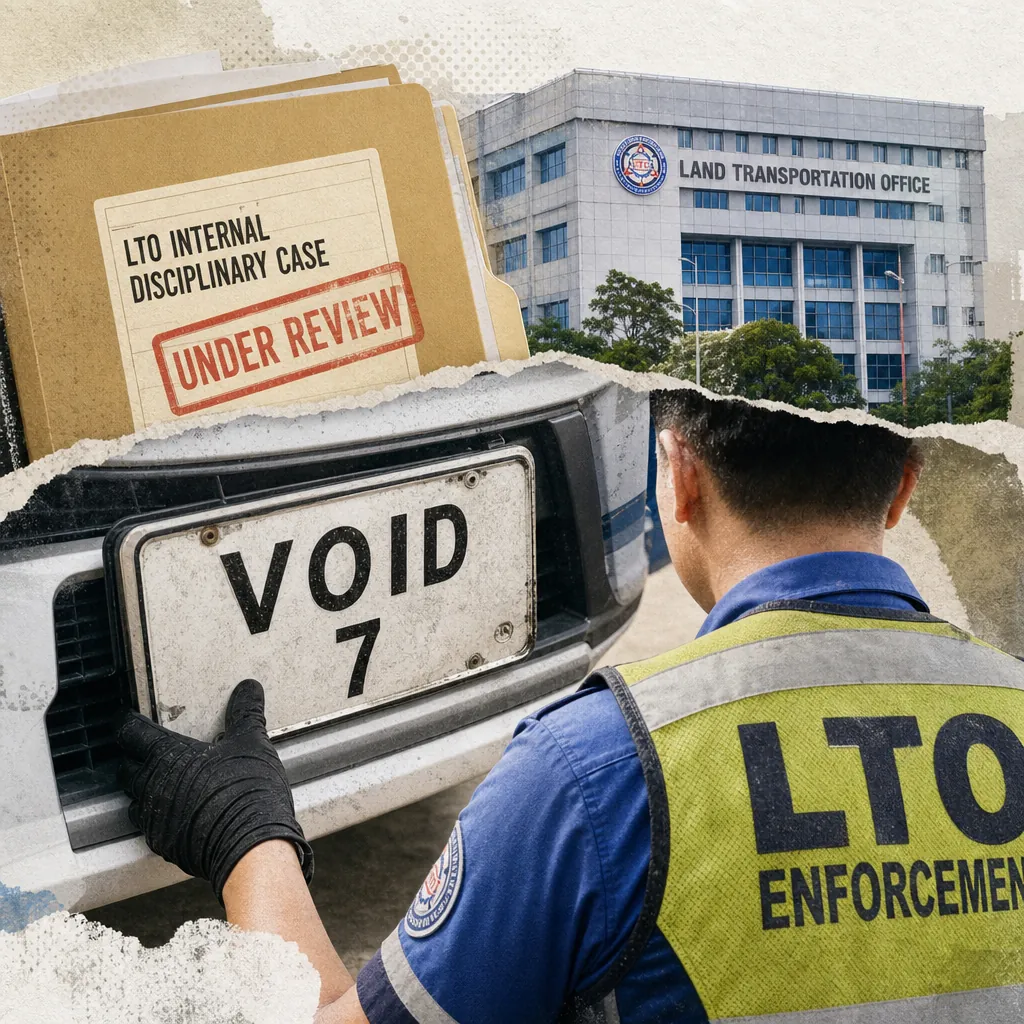
While the flood stories dominated emotional engagement, the regulatory and governance stories dominated the news cycle. The Land Transportation Office (LTO) announced a nationwide crackdown on fake and improvised license plates starting September 1, with vehicles using unauthorized plates to be impounded. This announcement was triggered by the high-profile case of actor Derek Ramsay, who voluntarily surrendered his Porsche 918 Spyder over an alleged fake plate, with LTO Assistant Secretary Markus Lacanilao confirming the vehicle was now impounded. The LTO framed the surrender as a good-faith act of cooperation ahead of an August 24 hearing, with the phrase "no VIP in the law" appearing across multiple outlets.
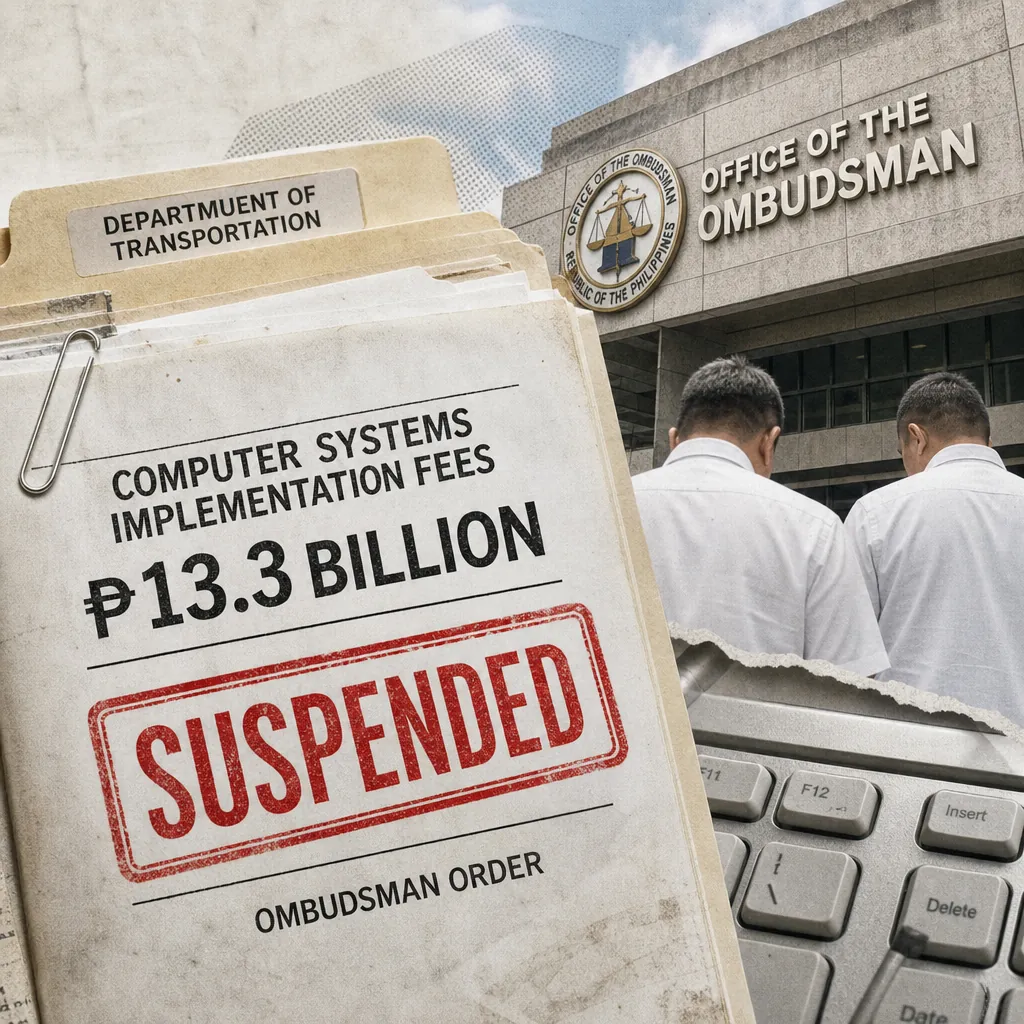
Simultaneously, the Office of the Ombudsman announced a six-month preventive suspension without pay for Land Transportation Franchising and Regulatory Board (LTFRB) Chairman Vigor Mendoza II and Office of Transport Cooperatives (OTC) Chairperson Teofilo Guadiz III. The suspension stemmed from their tenure as former LTO chiefs, where the continued use of the STRADCOM-operated IT system alongside the newer LTMS generated an additional P13.3 billion in computer fees charged to motorists from 2019 to 2025. This story drew significant engagement, with ABS-CBN's report alone drawing 3,452 views and 18 likes within hours of posting, and the Inquirer's report on YouTube reaching 3,306 views.
Key themes
- Flood-damaged vehicles raise consumer anxiety about safety and provenance: The flooding sparked widespread concern about vehicle durability, with a Reddit thread questioning whether even brand-new cars stored at dealership compounds were vulnerable to flooding, and another user asking whether a two-month-old BYD Seal 5 driven through knee-deep water was safe. This anxiety extended to the used-car market, with users noting "Marami na naman murang 2nd hand cars ang bentahan sa FB Marketplace" (There are again many cheap 2nd hand cars being sold on FB Marketplace).
- Delivery riders become symbols of resilience and vulnerability: The story of Mark Lee, a delivery rider who navigated waist-deep floodwaters to complete his deliveries, became a rallying cry across platforms, with the quote "Baha ka lang, magdedeliver ako ng parcel" (You're just a flood, I'll still deliver my parcel) generating 85 likes and 15 shares within hours on one rebroadcast. This narrative highlighted the precarious conditions of gig workers and drew 27 care reactions on Facebook.
- LTO announces nationwide crackdown on fake plates starting September 1: The Land Transportation Office (LTO) will impound vehicles with unauthorized improvised plates, with LTO chief Markus Lacanilao stating, "If you do not have an authorization to use a special plate, we will impound your vehicle". The agency has observed a rise in the online sale of improvised plates that closely imitate official LTO plates, including the QR code.
- Ombudsman suspends two transport officials over P13.3 billion in computer fees: The Office of the Ombudsman placed LTFRB Chairman Vigor Mendoza II and OTC Chairperson Teofilo Guadiz III under six-month preventive suspension without pay for their roles in the continued use of the STRADCOM-operated LTO IT system, which resulted in an additional P13.3 billion in computer fees charged to motorists from 2019 to 2025. The Ombudsman cited "patent disregard of established government policy" in its ruling.
- Hybrid and EV interest persists despite flood concerns: A detailed buyer inquiry on Reddit explicitly favored the JAECOO J5 Hybrid despite initial budget constraints, with the poster stating "Interested din sana ako sa BEV, pero condo living ako ngayon so mahirap ang charging, kaya hybrid muna ang mas practical for me" (I'm also interested in a BEV, but I live in a condo so charging is difficult, so hybrid is more practical for me). This practical consideration of charging infrastructure limitations reflected a broader pattern in consumer discussions.
- Motorcycle safety concerns emerge amid flood coverage: GMA Regional TV reported on motorcycle accidents in Bacolod and Cabatuan that resulted in rider fatalities, including one incident where a 15-year-old student was killed after colliding with a bus. These incidents created a somber backdrop to the Honda Click160 community celebration in Cebu City, where riders gathered for the Octane + Caffeine event.
- Chinese automotive brands gain traction as practical alternatives: The JAECOO J5 and BYD models are being positioned by consumers themselves as the pragmatic choice for flood-prone areas, with a Reddit user detailing a comprehensive comparison of the J5 Hybrid against BYD Atto 2 and MG ZS, expressing willingness to stretch their budget for the JAECOO. This reflects a broader pattern of Chinese brands strengthening beyond price competitiveness into reliability and future-proofing conversations.
- Government accountability and consumer protection converge: The P13.3 billion computer fees figure became a recurring motif across platforms, with the Inquirer's headline "Ombudsman suspends LTFRB, OTC chiefs over LTO P13-B fee mess" framing the issue as a burden on motorists. Public reaction on social platforms was notably critical, with comment sections showing substantial engagement and numerous instances of frustrated reactions to the news.
How the narratives stack
Dominant: The flood narrative dominated emotional engagement and consumer conversation, with the delivery rider story and flood-damaged vehicle concerns generating the highest levels of public response. The viral story of Mark Lee, the delivery rider who navigated waist-deep floodwaters, accumulated 85 likes and 15 shares within hours on one rebroadcast, and additional engagement on Facebook with 85 likes, 12 shares, and 27 care reactions. This narrative was amplified by mainstream news coverage of stalled vehicles and drivers attempting to cross flooded streets, creating a reputational environment where vehicle reliability and flood-resistance are front-of-mind for consumers. The emotional resonance of the delivery rider stories and the widespread sharing of motorcycle accidents underscored the importance of safety features and rider support programs in automotive marketing communications.
Counter-narrative: The LTO's enforcement crackdown, triggered by the Derek Ramsay case, presented a counter-narrative of regulatory accountability and "no VIP in the law." The LTO framed the voluntary surrender of the Porsche 918 Spyder as a good-faith act of cooperation, with the agency insisting on standard procedures. This narrative shifted public sentiment from speculation about leniency toward recognition that even high-profile individuals were expected to comply, with one Facebook commenter noting the "good faith" gesture was being interpreted favorably by the agency. The September 1 nationwide crackdown on fake plates emerged as a practical consumer alert, with the LTO's memorandum banning improvised plates that mimic government-issued ones becoming a key fact repeated across Twitter and Facebook.
Emerging: The suspension of LTFRB Chairman Vigor Mendoza II and OTC Chairperson Teofilo Guadiz III over P13.3 billion in computer fees emerged as a significant governance story with direct implications for the automotive sector. The Ombudsman's ruling cited "patent disregard of established government policy" and found that the parallel system use "resulted in the continued generation and collection of computer fees despite the expiration of the BOO Agreement". This story drew significant engagement, with the full Ombudsman press release on Facebook earning 156 likes and 71 shares, and the Reddit thread on r/Philippines generating 59 upvotes with 10 comments. The suspension of both officials—the two individuals responsible for franchise regulation and transport cooperatives—introduces operational uncertainty for public utility vehicle registration, renewals, and fleet operations.
Under-covered: The VinFast and Green GSM "RENTAPASADA" program, which offers flexible five-year leases starting at P1,050 per day for ride-hailing drivers, received low public engagement metrics but represents a significant shift toward EV access models that bypass upfront purchase costs. This story, which signals a move from ownership to access models in the electric vehicle space, was largely overshadowed by the flood and enforcement narratives. The program's low daily rate and franchise assistance appeals could shift ride-hailing operator preferences, potentially impacting financing partnerships or fleet purchasing patterns.
Platform insights
- Facebook: The platform served as the primary emotional outlet for flood-related stories, with the highest engagement levels concentrated on human-interest narratives. The viral delivery rider story and the ABS-CBN news segment generated the most interactions, while the emotional response distribution—particularly the 579 sad reactions on the original flood post—demonstrated that Facebook users were primarily seeking to express empathy and solidarity rather than engage in technical discussion. The Ombudsman's full press release also earned 156 likes and 71 shares from users who appreciated the detailed legal breakdown. Automotive brand posts from Omoda Jaecoo and Honda Philippines received minimal engagement, suggesting that promotional content struggled to compete with the flood narrative's emotional dominance.
- Reddit: Reddit emerged as the platform for practical, technical discussion, with users seeking advice on vehicle maintenance, flood damage assessment, and purchase decisions. The platform's structure allowed for more detailed, nuanced conversations about topics like tire replacements for the Suzuki Burgman Ex, parking etiquette for e-bikes, and the viability of various vehicle options in flood-prone areas. The relatively low upvote counts on these posts suggested niche but engaged communities rather than mass appeal, yet the quality of discussion was notably higher and more actionable than on other platforms. The Reddit thread on the Ombudsman suspension generated 59 upvotes with 10 comments from users dissecting the specifics.
- Twitter: Twitter functioned as the real-time news dissemination platform, with breaking stories about the flood and rider incidents spreading rapidly through retweets. The Mark Lee delivery rider story originated here and gained momentum through @_iancruz's post before crossing over to Facebook, demonstrating Twitter's role as an early-stage amplifier for compelling narratives. The CCTV video of the sedan attempting to cross flooded Araullo Street also gained significant traction on Twitter with 22,557 views, though engagement metrics suggested more passive consumption than active discussion. For the LTO story, Twitter served as the real-time news feed, with multiple posts linking to full stories and updates from verified accounts like @gmanews and @News5PH.
- YouTube: Video coverage from ABS-CBN, PTV, and UNTV dominated this platform, with the ABS-CBN segment on the Ombudsman suspension alone amassing 3,452 views and 11 comments—a ratio that suggests viewers were more interested in watching the visual coverage than in engaging in textual debate. The Inquirer's report on YouTube reached 3,306 views. Notably, the ANC full-cast interview on the suspensions, which also covered unrelated topics like flood control and Legarda's medical leave, drew 853 views, indicating that audiences were seeking broader contextual analysis rather than just the suspension announcement.
Key voices and communities
- Flood-affected vehicle owners and first-time buyers: This group is actively engaged across Facebook, Twitter, and Reddit, driven by the recent severe flooding in Metro Manila and nearby provinces. They are highly influential in shaping perceptions about vehicle durability, flood damage, and the used-car market, with viral posts generating hundreds of emotional reactions and thousands of views. Their concerns oscillate between practical advice-seeking and emotional distress over lost or damaged vehicles. A Reddit user who drove their two-month-old BYD Seal 5 through floodwaters asked the community "Safe to assume napo bang ok naman yung car?" (Is it safe to assume the car is okay?), revealing a widespread information gap about post-flood vehicle evaluation.
- Omoda Jaecoo enthusiasts and prospective buyers: A growing community of consumers and dealer pages is actively promoting and discussing Omoda Jaecoo models, particularly the J5 hybrid and electric variants. Their conversations are concentrated on Facebook and Reddit, with moderate engagement but high intent signals such as test drive participation and purchase inquiries. One Reddit user detailed a comprehensive comparison of the J5 Hybrid against BYD Atto 2 and MG ZS, expressing willingness to stretch their budget for the JAECOO. This group is influential in early adoption conversations for emerging Chinese automotive brands in the Philippines.
- Motorcycle rider and delivery community: This is a highly active and emotionally engaged group on Facebook and Twitter, composed primarily of delivery riders, motorcycle owners, and scooter enthusiasts. Their content frequently goes viral due to the human-interest angle of riders working through dangerous conditions, and they have strong community bonds around safety, maintenance, and shared experiences. The story of Mark Lee, the delivery rider who braved waist-deep floods to deliver a parcel, amassed 85 likes and 27 care reactions, generating mainstream news pickup. A separate post celebrating the Honda Click160 community's Cebu gathering underscores strong brand loyalty within the two-wheeled segment.
- Mainstream media and regional news outlets: Traditional media entities on Facebook, Twitter, and YouTube are amplifying flood-related vehicle incidents and rider casualties, using verified footage and police reports to drive public awareness. Their influence is significant because they reach broad audiences beyond niche automotive communities, shaping public perception of government preparedness and vehicle safety standards. A television patrol segment featured an automobile group's advice for drivers during the rainy season, directly bridging automotive stakeholders with public safety messaging. Regional news coverage of rider fatalities in Bacolod and Cabatuan attracted local engagement and highlighted the human cost of unsafe road conditions.
- EV and e-mobility advocates: This emerging group of EV owners, early adopters, and e-bike users is actively discussing practical concerns about electric vehicles in flood-prone and urban environments. Their conversations are primarily on Reddit and Facebook, with moderate engagement but high knowledge-sharing value, particularly around charging infrastructure and vehicle performance in adverse conditions. A new BYD Seal 5 owner sought community validation after driving through floodwaters, while another Reddit user recounted an e-bike parking dispute that highlighted the growing pains of e-mobility adoption in suburban communities. These posts demonstrate the specific anxieties and social friction points that come with EV ownership in the Philippines.
Narrative streams
Flood-damaged vehicles and the used-car market anxiety
The flooding that swept through Metro Manila and nearby provinces on August 17-18 triggered a wave of consumer anxiety about vehicle safety and provenance. A Reddit thread posted by u/Repulsive-Repeat-492 questioned whether brand new cars stored at dealership compounds were also vulnerable to flooding, noting that "Marami na naman murang 2nd hand cars ang bentahan sa FB Marketplace" (There are again many cheap 2nd hand cars being sold on FB Marketplace) and questioning whether even dealer-held inventory could be compromised. This post tapped into a growing consumer anxiety about vehicle provenance in the aftermath of flooding, with commenters quickly engaging on the practical implications of purchasing used vehicles that might have hidden flood damage.
This concern was validated and expanded upon by u/Emergency-Ring4719, who posted a deeply personal account of driving their two-month-old BYD Seal 5 through floodwaters reaching below knee level for approximately 40 minutes, asking the community "Safe to assume napo bang ok naman yung car?" (Is it safe to assume the car is okay?) and revealing a widespread information gap about post-flood vehicle evaluation. The dual posts sparked discussion about the lack of accessible, authoritative guidance for vehicle owners facing flood exposure, with responses ranging from personal anecdotes to technical speculation about PHEV battery safety in submerged conditions.
The conversation's evolution from incident reporting toward practical ownership concerns is significant. Discussion threads emerged about whether brand-new dealer-stocked vehicles could be flood-compromised and whether used cars flooded during the August 17-18 monsoon are quietly entering the secondhand market. This trajectory suggests that within 2-3 weeks, the conversation will evolve into focused buyer-advice content and heightened scrutiny of used-car sellers, particularly on marketplace platforms.
Read for the sector: Automotive manufacturers and dealers face a critical trust moment. The flood-damaged vehicle concern directly impacts brand trust and purchase decisions, especially for hybrid and EV models. Brands that publish authoritative guidance on flood exposure thresholds, water wading depth, and post-flood inspection protocols can position themselves as safety partners and differentiate from competitors. Dealers who offer transparent flood-status disclosures and warranties on used vehicles can build trust in a market where consumers are increasingly skeptical of hidden flood damage.
The LTO crackdown on fake plates and the Derek Ramsay case
The Land Transportation Office's (LTO) announcement of a nationwide crackdown on fake and improvised license plates starting September 1 was triggered by the high-profile case of actor Derek Ramsay, who voluntarily surrendered his Porsche 918 Spyder over an alleged fake plate. LTO Assistant Secretary Markus Lacanilao confirmed the vehicle was now impounded, and the agency framed the surrender as a good-faith act of cooperation ahead of the August 24 hearing. The phrase "no VIP in the law" appeared across multiple outlets as the LTO insisted on standard procedures.
By August 18, the story had matured into two distinct threads: the procedural investigation into who installed the plate (with businessman AJ Violago admitting to swapping it for his initials for a wedding event), and the broader regulatory crackdown on improvised plates set to begin September 1. The LTO's memorandum banning improvised plates that mimic government-issued ones, including those with QR codes, became a key fact repeated across Twitter and Facebook. Lacanilao compared the use of fake plates to forging a driver's license or passport, noting that some motorists use them to evade traffic enforcement cameras.
A secondary but actionable sub-thread involved the question of why the Porsche was still registered under Ramsay's name despite his claim that he had sold it to Violago. Detailed Facebook posts explained that the LTO had not yet processed the title transfer, meaning Ramsay remained the registered owner and bore initial responsibility. This sparked discussion around the risks of selling vehicles without immediate title transfer—a topic that directly resonates with secondhand car buyers and sellers in the Philippines.
Read for the sector: The LTO's zero-tolerance posture creates immediate compliance risk for dealers and buyers transacting in used vehicles with questionable documentation. The narrative explicitly warns that selling vehicles with illegally obtained papers can lead to fraud charges, which could chill secondary-market activity and affect dealership trade-in volumes. For automotive stakeholders, this is a window to proactively educate customers about the legitimacy of their license plates and the risks of purchasing vehicles with improvised plates, especially with the September 1 enforcement date approaching.
Ombudsman suspends LTFRB and OTC chiefs over P13.3 billion computer fees
The Office of the Ombudsman's announcement of a six-month preventive suspension without pay for LTFRB Chairman Vigor Mendoza II and OTC Chairperson Teofilo Guadiz III dominated the governance narrative on August 18. The suspension stemmed from their tenure as former LTO chiefs, where the continued use of the STRADCOM-operated IT system alongside the newer LTMS generated an additional P13.3 billion in computer fees charged to motorists from 2019 to 2025. The Ombudsman's ruling cited "patent disregard of established government policy" and found that the parallel system use "resulted in the continued generation and collection of computer fees despite the expiration of the BOO Agreement".
The public's focus on the "P13.379 billion" figure became a recurring motif across platforms, with the Inquirer's headline "Ombudsman suspends LTFRB, OTC chiefs over LTO P13-B fee mess" framing the issue as a burden on motorists. The full Ombudsman press release on Facebook earned 156 likes and 71 shares from users who appreciated the detailed legal breakdown. Both suspended officials issued public statements, with Mendoza expressing respect for the decision while noting he would present "evidence-backed legal arguments that all my actions when I was still the LTO Chief were all for the protection and interest of not only the motorists but also the Filipino people". This statement drew a mixed emotional response—40 "love" reactions contrasted with 2 "angry" reactions, suggesting early public skepticism about the officials' claims of good faith.
The Department of Transportation (DOTr) issued its official response, with Secretary Giovanni Lopez stating the department "will comply with the Ombudsman's order" and assuring the public that both LTFRB and OTC "will remain fully operational and essential services will continue to be delivered efficiently and without interruption". This institutional messaging was strategically placed to preempt concerns about regulatory paralysis, though it drew limited engagement—29 likes on the UNTV Facebook post and 1,369 views on the corresponding Twitter post—indicating the public was more focused on the substance of the suspension than on bureaucratic reassurances.
Read for the sector: The suspension of both LTFRB and OTC chairmen—the two individuals responsible for franchise regulation and transport cooperatives—introduces operational uncertainty for public utility vehicle registration, renewals, and fleet operations. The January 2025 directive that allowed PUV registration renewals through the old system without LTFRB confirmation is now under scrutiny as part of the alleged misconduct, which could signal upcoming procedural changes or delays in the registration pipeline. Automotive industry stakeholders should anticipate potential operational disruptions as new leadership assumes temporary control of both agencies. The repeated emphasis on P13.3 billion in "additional burden and expense for the transacting public" may heighten consumer sensitivity to any fees associated with vehicle registration or franchising, prompting public demands for fee transparency across the automotive sector.
Hybrid and EV adoption amid flood concerns and charging limitations
A parallel conversation developed on Reddit around vehicle purchasing decisions in the context of flooding and fuel costs, with u/Kindly-Letterhead-563 posting a detailed inquiry about various MPV and crossover options, explicitly stating "Interested din sana ako sa BEV, pero condo living ako ngayon so mahirap ang charging, kaya hybrid muna ang mas practical for me" (I'm also interested in a BEV, but I live in a condo so charging is difficult, so hybrid is more practical for me). This practical consideration of charging infrastructure limitations reflected a broader pattern in consumer discussions, especially following the flood events which highlighted the vulnerability of all vehicle types to water damage.
The poster's mention of JAECOO J5 Hybrid as their preferred option generated engaged discussion around Chinese-brand alternatives, with commenters weighing fuel economy against long-term reliability concerns—a topic that briefly intersected with the flooding narrative when considering whether hybrid systems add additional risk in flood conditions. The detailed buyer inquiry outlined specific needs—fuel efficiency, ground clearance, flood tolerance, and family space—with the poster explicitly favoring the JAECOO J5 Hybrid despite initial budget constraints, indicating willingness to stretch spending for perceived value.
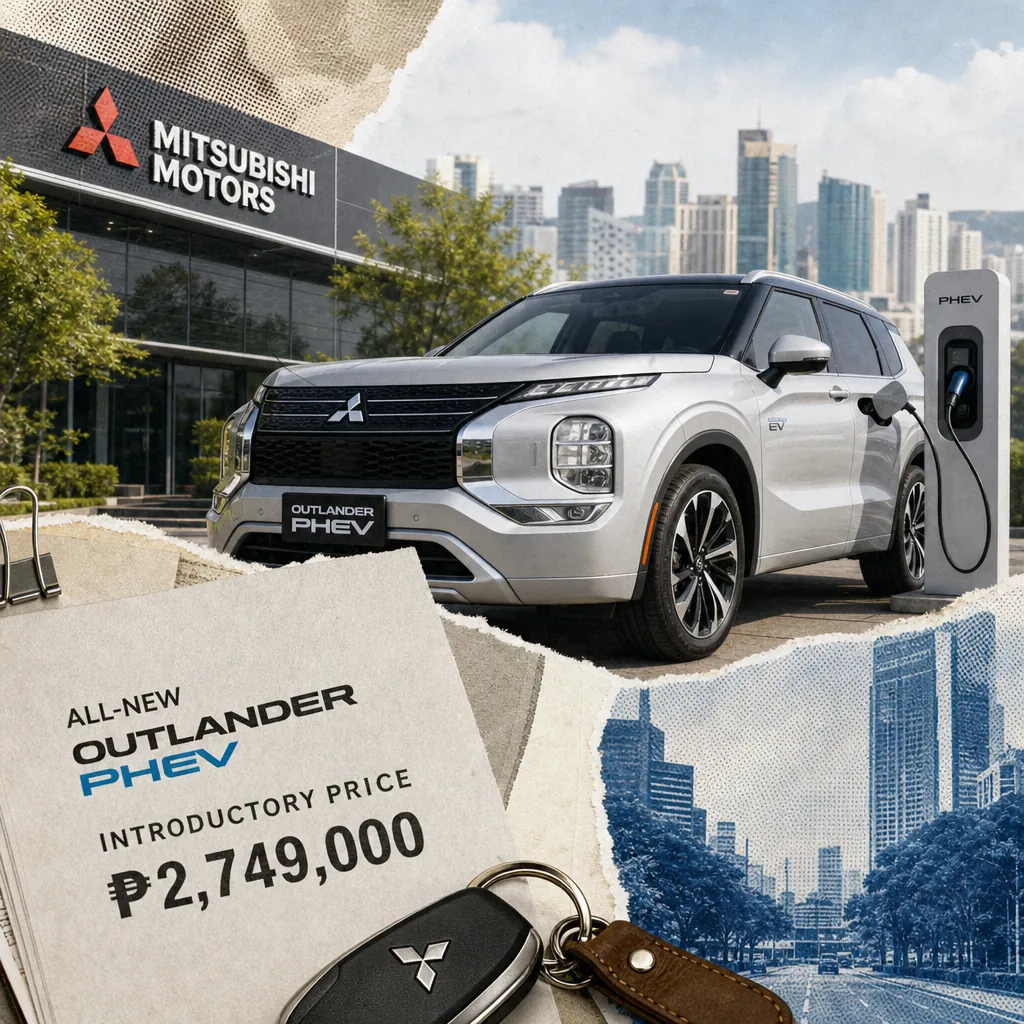
Meanwhile, Omoda Jaecoo's South African dealer arm promoted the J5 BEV and J5 SHS alongside a Cebu roadshow event, suggesting aggressive marketing efforts for the brand despite—or perhaps because of—the increasing consumer interest in fuel-efficient alternatives. The Cebu debut, scheduled for August 20-24 at SM Seaside City Cebu, is part of Omoda and Jaecoo Philippines' continuing nationwide expansion and its efforts to make the brand accessible to customers in the Visayas.
The sustained interest in hybrid and EV options despite the flooding events—evidenced by the detailed purchasing inquiries and the continued promotional activity from JAECOO and BYD—suggests that the transition toward electrified vehicles remains a priority for Filipino consumers, though charging infrastructure limitations continue to create friction for full BEV adoption. The conversation flow demonstrated that consumers are actively seeking guidance on balancing fuel economy, flood resilience, and long-term value in their purchase decisions, creating an opening for manufacturers to position specific models as purpose-built for Philippine conditions.
Read for the sector: Hybrid vehicles, particularly the JAECOO J5 and BYD models, are being positioned by consumers themselves as the pragmatic choice for flood-prone areas—a narrative that should be reinforced with technical content explaining water wading depth, battery safety, and post-flood inspection protocols. For EV and hybrid brands, the practical concerns raised by current owners—charging infrastructure, flood safety, and long-term reliability—should be proactively addressed through educational content and after-sales support commitments. The ideal window for this intervention is within the next two weeks, while the BYD Seal 5 flood-driving thread is still generating comments and before the next typhoon-season news cycle resets attention.
Motorcycle safety and the delivery rider economy
Throughout the flood coverage, an undercurrent of motorcycle safety concerns emerged, particularly around the disproportionate vulnerability of two-wheeled vehicles in severe weather. GMA Regional TV's reports of rider deaths in Bacolod City and Cabatuan, including one incident where a 15-year-old student was killed after colliding with a bus, highlighted the daily dangers faced by Filipino riders beyond flood conditions. One PH's Frontline Pilipinas report of a rider ambushed in Taguig during heavy rain added a crime dimension to the mobility narrative, suggesting that riders face multiple layers of risk in urban environments.
The viral story of delivery rider Mark Lee, who defiantly navigated waist-deep floodwaters to complete his deliveries, became a rallying cry across platforms, with the quote "Baha ka lang, magdedeliver ako ng parcel" (You're just a flood, I'll still deliver my parcel) quickly becoming a symbol of resilience. This single post spawned multiple retweets and reposts, accumulating 85 likes and 15 shares within hours on one rebroadcast, and the widespread sharing of this story on Facebook generated additional engagement with 85 likes, 12 shares, and 27 care reactions—a sentiment profile indicating the public's profound sympathy for gig workers' precarious conditions.
The emotional framing of riders as hardworking victims—rather than reckless drivers—shifted public sympathy strongly toward two-wheeler users, with tragic accident reports also drawing attention to motorcycle safety. These incidents created a somber backdrop to the Honda Click160 community celebration in Cebu City, where riders gathered for the Octane + Caffeine event, with organizers posting "We celebrated the road, built connections, and made history together"—a stark contrast to the tragedy narratives from the same day.
Read for the sector: The emotional resonance of the delivery rider stories and the widespread sharing of motorcycle accidents underscores the importance of emphasizing safety features and rider support programs in motorcycle marketing communications, particularly during typhoon season when these narratives dominate public consciousness. Motorcycle brands and delivery platforms should monitor rider safety perceptions and vehicle reliability narratives, as their experiences directly impact brand reputation for durability and rider support. Collaborating with riding communities and delivery platforms on safety campaigns could generate positive coverage and strengthen brand trust.
Conversation trajectory
- Flood-damage discourse transitioning from news reports to consumer decision-making: The conversation is shifting rapidly from incident reporting toward practical ownership concerns, with discussion threads emerging about whether brand-new dealer-stocked vehicles could be flood-compromised and whether used cars flooded during the August 17-18 monsoon are quietly entering the secondhand market. Expect this to evolve within 2-3 weeks into focused buyer-advice content and heightened scrutiny of used-car sellers, particularly on marketplace platforms. Observation window: 2-3 weeks.
- Electric and hybrid vehicle range-reliability perceptions being tested by flood events: A first-time owner of a BYD Seal 5 DM-i posted about driving through knee-deep floodwater in EV mode, and while no immediate issues were reported, the thread is drawing significant attention to the question of flood resilience for electrified powertrains. This suggests an emerging sub-conversation about whether PHEVs and BEVs are safer, equal, or riskier in flood conditions compared to conventional ICE vehicles, which could directly shape purchasing sentiment. The trajectory is likely to accelerate over the next month as more rain-related incidents occur and EV owners share their experiences across forums and social platforms. Observation window: 1 month.
- Budget-conscious car buyers actively comparing Chinese hybrid and traditional Japanese options: A detailed buyer-request thread is gaining traction, with a user weighing a JAECOO J5 Hybrid against BYD Atto 2 DM-i, MG ZS, and a secondhand Toyota Innova, explicitly prioritizing hybrid efficiency, ground clearance, and long-term value within a P800K-P1M budget. This reflects a broader pattern: the perception of Chinese brands is strengthening beyond just price competitiveness and into reliability and future-proofing conversations, while Japanese brands continue being seen as safe but potentially less feature-rich alternatives. Expect this comparison trend to intensify through Q4 2026 as year-end promos and new model launches coincide. Observation window: Q4 2026.
- Motorcycle rider safety and livelihood vulnerability emerging as a persistent emotional narrative: The viral story of a delivery rider continuing through floodwaters to earn for his family has generated strong sentiment, with reactions heavily weighted toward sadness and care, indicating empathy-driven sharing rather than purely informational exchanges. Parallel reports of rider fatalities and accidents in Western Visayas are amplifying concerns about transport-worker safety during monsoon season. This is likely to drive conversations around motorcyclist insurance, rider training, and local government infrastructure accountability in the coming weeks. Observation window: 2-4 weeks.
- LTO enforcement narrative escalating into mainstream public discourse: The fake plate issue has moved rapidly from a celebrity gossip item to a serious regulatory enforcement story, with the agency's September 1 nationwide crackdown emerging as the central hook. The voluntary surrender of the Porsche 918 by the actor and businessman, which generated significantly higher engagement than typical government announcements, has effectively humanized the LTO's campaign and created a public relations anchor for stricter enforcement. Expect the conversation to intensify substantially after the August 24 hearing, with a projected 3-4x increase in traffic-related mentions as the crackdown date approaches. Observation window: 2-3 weeks.
- Governance accountability discourse escalating into operational disruption concerns: The conversation has moved beyond the initial suspension announcement into questions about leadership vacuums and service continuity, with both the LTFRB and OTC assuring ongoing operations amid the leadership gap. The Ombudsman's order, dated August 17, 2026, has triggered a wave of commentary from both affected officials, who are signaling legal challenges while expressing respect for the process, which will likely sustain this narrative for at least two to three weeks. Expect a 2-3x increase in conversation volume as legal maneuverings unfold and the DOTr navigates interim leadership arrangements. Observation window: 2-3 weeks.
Trigger events to watch:
- The August 24 LTO hearing on the Porsche case, which will determine administrative penalties and likely generate a second wave of high-volume coverage.
- The September 1 nationwide fake plate crackdown, representing the largest imminent catalyst, with media outlets already broadcasting the enforcement timeline and impoundment protocols.
- The August 20-23 JAECOO test-drive event in Cebu City, which will likely inject fresh showroom-level content into the EV/PHEV conversation and provide an opportunity for on-the-ground engagement with potential buyers.
- The release of the August CAMPI/TMA sales report, expected within the first two weeks of September, which could reinforce or challenge emerging narratives about Chinese versus Japanese vehicle resilience given the flood event.
- The appointment of interim or acting officials for both the LTFRB and OTC, which will trigger renewed scrutiny of qualifications and perceived politicization, expected within 1-2 weeks based on standard DOTr response patterns.
- The receipt and release of the official suspension order and the subsequent legal filings from both Mendoza and Guadiz, which will likely generate a new wave of coverage and commentary within the coming week as their legal strategies become public.
Response guidance
Flood-safety communications: Activate brand pages to publish flood-safety content tailored to vehicle owners, particularly guidance on water fording depth, electrical system precautions for hybrids and EVs, and post-flood inspection protocols. The viral emotional posts about riders and stranded vehicles create a high-engagement window for practical, lifesaving information. Coordinate with dealer networks to issue localized advisories for customers in affected areas like Mandaluyong and Batangas, emphasizing that certified service centers can perform flood-damage assessments. This positions the brand as proactive and customer-protective rather than reactive.
Used-car transparency: Leverage community conversation about second-hand market risks by sharing content on how to verify vehicle history and identify flood-damaged units, without directly referencing marketplace listings. This builds trust and positions the brand as a safeguard against consumer fraud. For dealers, consider publishing transparent flood-status disclosures and warranties on used vehicles to differentiate in a market where consumers are increasingly skeptical of hidden flood damage.
EV and hybrid reassurance: Provide practical guidance for new EV and PHEV owners on post-flood checks, given the specific question about a BYD Seal 5 driven through floodwater. This allows the brand to demonstrate technical expertise while reassuring owners about vehicle resilience and safety systems. Avoid overclaiming—neutral, data-informed guidance on how water exposure can impact battery systems and electrical components will serve brands far better than defensive or promotional statements. The ideal window for this intervention is within the next two weeks, while the BYD Seal 5 flood-driving thread is still generating comments and before the next typhoon-season news cycle resets attention.
Rider empathy and safety: Respond to the high-reach rider empathy narrative with a dedicated post honoring delivery workers and gig economy drivers, potentially highlighting safe riding practices during adverse weather. This aligns brand values with public sentiment without exploiting tragedy. Engage with safety-focused conversations around motorcycle accidents by promoting rider education programs and helmet safety, aligning with existing public discourse while staying away from graphic content.
LTO compliance preparedness: Prepare client advisories on the LTO's September 1 enforcement wave, emphasizing the need for dealerships and fleet operators to audit their inventory's plate authenticity and registration paperwork ahead of the crackdown to avoid liability or negative media exposure. Monitor the August 24 hearing closely; if the LTO issues penalties or expands its probe to include other celebrity-owned vehicles, prepare rapid-response messaging that positions your clients as advocates for lawful vehicle ownership rather than as targets of the enforcement narrative.
Regulatory continuity messaging: For government and regulatory clients, reinforce the "no VIP treatment" messaging that has shown positive engagement in the current cycle. Synchronize and rapidly disseminate official statements from the suspended officials and the DOTr across all monitored platforms, creating a coherent, unified narrative that defines the situation on official terms before public perception solidifies. Reinforce service continuity and public welfare narratives, proactively pushing out information about the continued full operations of LTFRB and OTC, alongside public service initiatives like the free rides.
See the full picture behind today's signals.
This report draws from Media Meter's MediaWatch, our real-time monitoring engine tracking 2,470+ Philippine sources across print, broadcast, digital, and social. Explore how the platform turns raw coverage into decision-grade intelligence, then see how it's configured for teams like yours — whether you're in PR agencies, corporate comms, government, or marketing.
Want more? Browse our Report Library for sector and crisis intelligence, or request a demo and we'll have your brand set up before the call.
Want this kind of intelligence on your brand?
This brief is built on the same MediaWatch methodology that runs continuously across every brand we monitor. See your competitive landscape, Impact Score, and narrative trajectory in a 30-minute demo.