Floods, fuel hikes, and LTO scandals hit PH roads
A day of compounding crises: monsoon floods paralyze Metro Manila, fuel prices spike, and two LTO hit-and-run incidents erode public trust in road safety regulators.
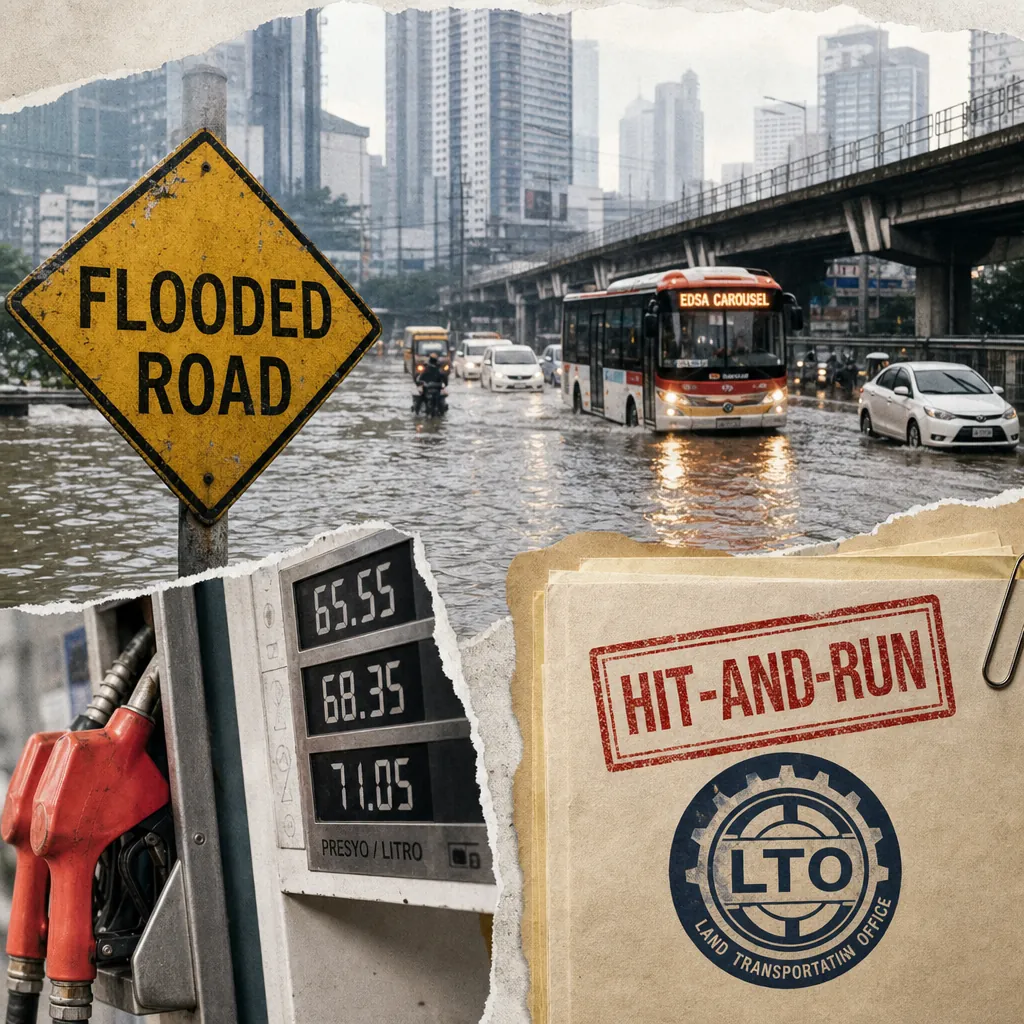
The conversation on Monday, August 17, 2026, opened with a dual shock to the automotive sector: an announced fuel price hike and a severe southwest monsoon (Habagat) crippling Metro Manila. The fuel news broke early via @brixlelis, who reported that gasoline would rise by P2.49 per liter, diesel by P3.84, and kerosene by P5.01 effective Tuesday. Almost simultaneously, reports of flooding began emerging, with a News5 Quick Reaction Team post noting that vehicles were barely moving along Blumentritt, San Juan City, past 6 p.m. due to heavy traffic caused by the downpour. This immediate convergence of fuel cost pressure and weather-induced mobility disruption set the narrative tone for the day, framing both economic and operational challenges for motorists and fleet-dependent industries.
By mid-evening, the flood narrative had escalated from inconvenience to danger. A widely shared video from the Buendia area in Makati showed commuters hitching rides on the backs of larger, high-clearance vehicles to cross flooded streets, with the post amassing 82,993 views and 2,160 likes. On Facebook, the same incident drew 3,372 reactions and 266 comments, with users expressing a mix of admiration for the "diskarte" (resourcefulness) and concern for safety. The emotional peak of the evening came with a dramatic rescue in España, Manila, where a family was evacuated from their submerged vehicle by a rescue boat, captured in a BNC YouTube report that drew 2,583 views. Concurrently, a separate incident in Makati showed a black car stalled after attempting to traverse floodwaters near the Edsa-Magallanes tunnel, serving as a cautionary visual for drivers. These events directly illustrate the physical risks and vehicle damage scenarios that the rain event inflicted, reinforcing the value of flood-resistant vehicle features and driver advisories.
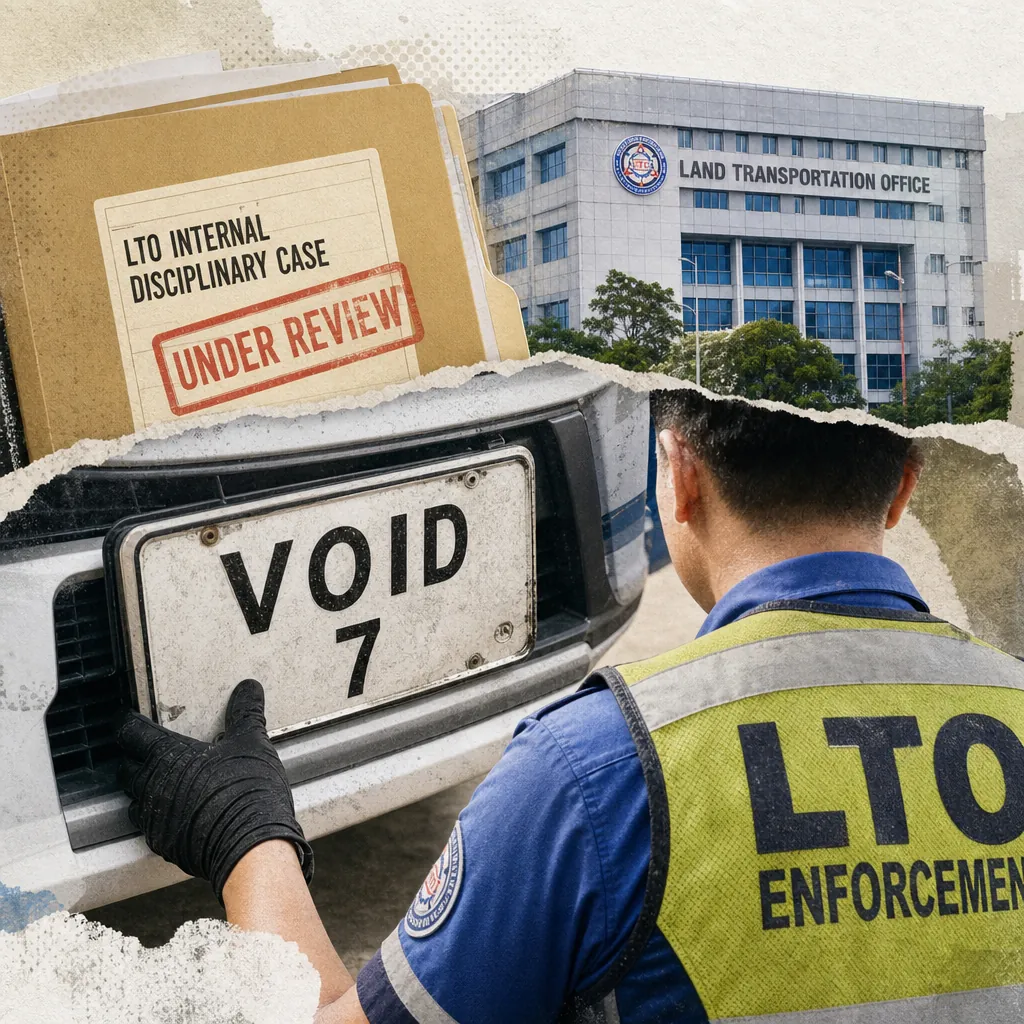
Meanwhile, a separate scandal was unfolding on the regulatory front. Two hit-and-run incidents involving Land Transportation Office (LTO) personnel dominated the news cycle, casting a shadow over the agency responsible for driver licensing and vehicle registration. The first, in Antipolo City, involved an LTO employee who allegedly struck two women crossing a pedestrian lane on Sumulong Highway, then fled the scene. An off-duty police officer chased and apprehended him after a ten-minute pursuit. The second, in Mandaue City, Cebu, involved an LTO vehicle hitting a cyclist, leading to the suspension of the driver's license and a show cause order. These incidents, covered extensively by GMA News, ABS-CBN, and other outlets, framed the LTO as both a traffic enforcer and a perpetrator, a reputation risk for the agency. The public response was swift and angry, with reaction data showing a mix of anger, sadness, and even mockery, as users questioned how an agency tasked with enforcing road safety could produce such violators.
Key themes
- Flooding paralyzes Metro Manila, stranding motorists: Severe monsoon rains caused widespread flooding across the capital, with vehicles stalling in deep water and traffic grinding to a halt. Viral videos of cars floating and commuters wading through waist-deep water dominated social media, highlighting the vulnerability of both vehicles and infrastructure.
- Fuel price hike triggers pre-emptive queues: The announcement of significant fuel price increases—gasoline up P2.49/L, diesel P3.84/L, kerosene P5.01/L—sent motorists rushing to stations to fill up before the Tuesday adjustment. Long lines at Commonwealth Avenue and elsewhere underscored the economic strain on daily commuters and logistics providers.
- LTO hit-and-run incidents erode public trust: Two separate incidents involving LTO personnel—one in Antipolo, one in Mandaue—generated widespread outrage and raised questions about the agency's credibility. The swift administrative response (suspension, license revocation) tempered some anger but left a lingering sense of institutional hypocrisy.
- Community bayanihan shines amid crisis: Amid the chaos, stories of mutual aid—bystanders pushing stalled vehicles, high-clearance vehicles giving rides to stranded commuters, a rider rescuing a stray dog—provided a positive counter-narrative. These acts of solidarity drew significant engagement and offered a human-interest angle to the day's grim news.
- Government response and free ride program: The Department of Transportation (DOTr) announced free rides for Tuesday, deploying 43 government vehicles to assist stranded commuters. This move was framed as a direct response to the flooding, but also highlighted the scale of the disruption and the government's reactive rather than proactive approach.
- Electric vehicle momentum continues: Despite the day's crises, positive industry news emerged: BYD's chairman visited the Philippines, signaling expanded EV offerings, and XPENG previewed its AI-driven vehicles ahead of a September launch. These developments suggest a growing appetite for electrification, even as fuel prices and flooding dominate the immediate conversation.
- Agricultural losses mount: The Department of Agriculture reported over P1 billion in losses from recent storms and monsoon rains, affecting 30,073 farmers and 25,662 hectares. While not directly automotive, this adds to the broader economic strain that could dampen consumer spending on vehicles.
- Infrastructure and urban planning under scrutiny: The flooding reignited debates about the billions spent on flood control projects, with the Daily Tribune asking "Where did billions go?" This narrative threatens to extend beyond weather to questions of government competence and accountability.
How the narratives stack
Dominant: The flooding and its impact on mobility is the clear dominant narrative of the day, both in terms of volume and engagement. The Mother Ignacia "floating car" video alone drew nearly 50,000 "haha" reactions on GMA News' Facebook post, while the Buendia shared-ride video amassed over 82,000 views on Twitter. This narrative is not just about weather; it's about vehicle reliability, driver judgment, and the fragility of urban infrastructure. Within the captured set, this story generated the most posts and the highest engagement, making it the centerpiece of the day's conversation.
Counter-narrative: The "bayanihan" (community spirit) stories provide a counter-narrative to the doom and gloom. Posts showing residents helping push stalled vehicles, high-clearance vehicles offering rides, and a rider rescuing a stray dog drew overwhelmingly positive reactions. This narrative emphasizes resilience and collective action, offering a more hopeful framing of the day's events. It also presents an opportunity for brands to align with community-support messaging.
Emerging: The LTO hit-and-run incidents are an emerging narrative that could escalate into a broader critique of regulatory accountability. While the flooding dominated the day, the LTO story has the potential to sustain attention over the coming weeks, especially as legal proceedings unfold and regional incidents surface. The pattern of two incidents in one day suggests a systemic issue rather than an isolated lapse, which could invite legislative scrutiny.
Suppressed: The electric vehicle (EV) momentum story—BYD's expansion and XPENG's launch—was largely overshadowed by the day's crises. Yet this is a significant development for the industry, signaling a shift toward electrification that could be accelerated by fuel price hikes. The lack of attention to EV news in the captured set may reflect the monitoring scope, but it also suggests that positive industry stories struggle to break through during crisis periods.
Platform insights
- Facebook: The primary platform for emotional and community-driven content. The Buendia shared-ride post garnered the highest engagement, with 3,372 reactions and 266 comments, dominated by "Care" (1,040) and "Love" (2,278) reactions, indicating strong public empathy and approval of the solidarity shown. The platform also hosted the "Driver On Water" meme, which drew thousands of "haha" reactions, blending humor with criticism of reckless driving. Government advisories from Quezon City and Marikina also found a home here, with users seeking actionable information.
- Twitter/X: Served as the primary news wire, with users like @brixlelis and News5 breaking the initial fuel and traffic stories. The Buendia video post on Twitter achieved the highest viewership (82,993 views) among all analyzed media, demonstrating the platform's reach for amplifying viral moments. The conversation on Twitter was more concise and rapid, focusing on immediate alerts and updates rather than the deeper emotional commentary seen on Facebook.
- YouTube: The platform for detailed, long-form journalism. Channels like BNC, News5, and ABS-CBN News posted comprehensive reports on the vehicle rescue and the LTO hit-and-run, which extended the news cycle beyond the initial social media posts. While view counts were modest (ranging from 807 to 2,583), the content served as a credible, sourced reference for the events, often being cited as the "official" report after the fact. This sequential flow—from Twitter alert to Facebook virality to YouTube documentary—represents the standard news consumption lifecycle in the Philippines.
Key voices and communities
- Mainstream News Desks and Broadcast Media Networks: Major news organizations like GMA News, ABS-CBN, and News5 are the most influential voices, setting the agenda for public discourse. Their coverage of fuel price movements, severe flooding, and road incidents consistently attracts tens of thousands of views. They frame stories around public safety, government accountability, and practical mobility challenges, often amplifying viral citizen content.
- Government Agencies and Regulatory Bodies: The LTO and municipal disaster response units are critical stakeholders, often positioned reactively within the news cycle. Their involvement spans enforcement actions, incident responses, and advisory announcements during weather disruptions. The LTO's swift disciplinary response to the hit-and-run incidents was a key moment, but the agency's credibility remains under scrutiny.
- Motorcycle Riders and Two-Wheeled Vehicle Communities: An engaged and rapidly growing stakeholder cluster, motorcycle riders appear both as victims of adverse conditions and as proactive community members. Their content spans localized flood impacts and brand-specific community events, with moderate engagement levels indicating a niche but highly loyal audience. The heartwarming story of a rider rescuing a stray dog during heavy rain circulated on Twitter, while Honda's regional café meetup for big bike enthusiasts in Cebu reinforced community-building narratives.
- Ride-Hailing and Mobility Service Providers: Companies like Angkas emerge as secondary but strategically important voices, navigating operational announcements during severe weather events. Their content focuses on service adjustments, safety advisories, and onboarding schedules, engaging an audience of active riders and prospective drivers. A rescheduled onboarding advisory due to inclement weather in Quezon City highlighted their operational responsiveness and community consideration.
- Commuters and General Public Witnesses: Individual citizens posting from the ground form the most dispersed yet authentic stakeholder group, capturing real-time flood conditions, traffic jams, and community assistance moments. Their user-generated content frequently outperforms professional news segments in engagement, driven by raw authenticity and relatable experiences. The most striking example involved residents paying ₱100 per passenger for kalesa rides to reach home across floodwaters, accumulating over 1,700 reactions and 240 comments.
Narrative streams
Flooding and Vehicle Vulnerability
The flooding narrative is the day's most dominant stream, with viral videos of vehicles stalling and floating in floodwaters generating massive engagement. The Mother Ignacia incident, where a car accelerated into deep water and floated, became a meme, with users joking about a "Driver On Water" cheat code. GMA News' post on this incident drew 14,732 likes and 47,598 "haha" reactions, while a separate video of a rider pushing his motorcycle through chest-deep water at Chino Roces Avenue drew 7,440 "sad" reactions, reflecting public empathy for two-wheeler users. These visuals directly inform consumer perceptions of vehicle durability and safety, making them a reputational risk for automotive brands. The lack of brand-specific mentions in the captured set suggests an opportunity for proactive positioning—brands could publish educational content on flood-safe driving, water-wading limits, and after-flood maintenance, positioning themselves as responsible voices rather than defensive defenders of product performance.
Fuel Price Hike and Economic Strain
The fuel price announcement, while brief, triggered immediate consumer action: long lines at stations as motorists rushed to fill up before the Tuesday increase. This behavior signals high price sensitivity and a potential shift in consumer sentiment toward fuel-efficient vehicles. For automotive brands, especially those with commercial fleets or fuel-hungry SUVs, messaging around fuel efficiency and total cost of ownership becomes significantly more potent during such periods. The hike also intersects with broader inflation concerns, as the Department of Economy, Planning, and Development warned that persistently high inflation could reverse poverty reduction gains. This economic pressure may dampen showroom traffic and test drive activity in the near term, but it also creates an opening for EV-related messaging that emphasizes long-term savings over upfront costs.
LTO Hit-and-Run Incidents and Institutional Trust
The two LTO incidents—one in Antipolo, one in Mandaue—form a pattern that threatens public trust in the agency responsible for road safety enforcement. The Antipolo case, involving an employee who allegedly struck two women and fled, drew significant mainstream coverage, including a GMA 24 Oras Weekend report that amassed 49,299 views. The agency's swift response—preventive suspension, license revocation, and a show cause order—was a critical defensive move, but the public's reaction, marked by anger and sadness, suggests lingering skepticism. The Mandaue case, where an LTO vehicle hit a cyclist, added a regional dimension, reinforcing the pattern. For stakeholders in the automotive industry, this trust deficit could lead to increased scrutiny of regulatory processes, potentially affecting dealerships, distributors, and after-sales service providers. The "good officer" counter-narrative—the off-duty police officer who chased and apprehended the suspect—offers a constructive angle, with NAPOLCOM officials calling for a spot promotion, which could soften the negative tone.
Government Response and Free Ride Program
The DOTr's announcement of free rides on Tuesday, deploying 43 government vehicles, was a direct response to the flooding. This move was framed as a proactive measure to assist stranded commuters, but it also highlighted the scale of the disruption. The program, ordered by President Ferdinand Marcos Jr., underscores the government's reactive approach to weather-related crises. For automotive stakeholders, this presents an opportunity to align with government efforts by offering support services, such as free vehicle checks or towing assistance during storms, which could capture positive sentiment and differentiate brands from competitors.
Electric Vehicle Momentum Amid Crisis
Despite the day's crises, positive industry news emerged: BYD's chairman Wang Chuanfu visited the Philippines, signaling the company's commitment to expanding its EV offerings, and XPENG previewed its AI-driven vehicles ahead of a September 25 launch. These developments suggest a growing appetite for electrification, even as fuel prices and flooding dominate the immediate conversation. The fuel price hike could accelerate this shift, as consumers seek alternatives to traditional combustion engines. However, the flooding also raises questions about EV battery safety in water, a potential reputational risk that manufacturers should address proactively with clear water-wading specifications and safety messaging.
Conversation trajectory
- Flooding aftermath and recovery (48-72 hours): As floodwaters recede, expect a shift from live incident coverage to damage assessments and recovery stories. Insurance claims for water-damaged vehicles will likely surface within 5-7 days, shifting conversation toward repair costs and coverage. Brands that establish visible support mechanisms—such as flood damage assessment services or maintenance checks—during this period will likely capture positive sentiment.
- Fuel price impact (1 week): The actual pump price adjustments will shift conversation from anticipation to direct consumer impact. Expect discussions on transportation costs, potentially affecting sentiment around vehicle ownership and usage. This is a critical window for EV and fuel-efficient vehicle messaging.
- LTO scandal fallout (2-3 weeks): The LTO incidents will likely sustain attention as legal proceedings unfold. The formal filing of charges and any administrative actions will generate a second news cycle. The "good officer" narrative may provide a constructive counterpoint, but the pattern of two incidents suggests a systemic issue that could invite legislative response. Monitoring this trajectory is crucial for stakeholders in the regulatory space.
- Trigger events: The actual fuel price adjustment on Tuesday; the LTO's official response to the Antipolo incident, including any public statements; the upcoming weekend's motorcycle community events, such as the Honda big bike gathering in Cebu, which may offer a positive counterpoint; and the release of flood damage assessment reports from insurance providers.
Response guidance
For communicators in the automotive and transportation sector, the following guidance is relevant:
- Develop flood-safety educational content: Publish practical guides on judging water depth, avoiding flooded routes, and understanding vehicle wading limits. Frame this as proactive safety messaging, not reactive commentary, to avoid appearing opportunistic. Use the viral incidents as cautionary examples without ridiculing affected motorists.
- Leverage the bayanihan narrative: Amplify community assistance stories through corporate social responsibility initiatives, such as free vehicle checks or towing assistance during storms. The positive engagement on these stories suggests a strong audience appetite for humanizing content.
- Monitor LTO fallout closely: For stakeholders in regulatory affairs, prepare communication templates that acknowledge the incidents and reinforce commitments to transparent and accountable practices. Avoid direct commentary on the merits of the cases, but be ready to address broader questions about road safety enforcement.
- Position EV messaging strategically: The fuel price hike creates an opening for EV-related messaging that emphasizes long-term savings and environmental benefits. However, be mindful of flood-related concerns about EV battery safety; proactively address water-wading specifications and safety features.
- Coordinate with government advisories: Share local government road status advisories and support the DOTr's free ride program. Positioning your brand as a helpful source of navigation information during severe weather can build trust and goodwill.
- Sensitive topics to navigate: Avoid appearing to defend government inaction on flooding; focus on what individuals can control. Do not directly shame drivers who attempted to cross flooded streets; instead, frame the conversation around the uncertainty motorists face. Maintain a neutral, fact-based stance on the LTO incidents to avoid reputational spillover.
See the full picture behind today's signals.
This report draws from Media Meter's MediaWatch, our real-time monitoring engine tracking 2,470+ Philippine sources across print, broadcast, digital, and social. Explore how the platform turns raw coverage into decision-grade intelligence, then see how it's configured for teams like yours — whether you're in PR agencies, corporate comms, government, or marketing.
Want more? Browse our Report Library for sector and crisis intelligence, or request a demo and we'll have your brand set up before the call.
Want this kind of intelligence on your brand?
This brief is built on the same MediaWatch methodology that runs continuously across every brand we monitor. See your competitive landscape, Impact Score, and narrative trajectory in a 30-minute demo.