PLDT's P24.2B Data Center REIT IPO: Ambition vs. Consumer Trust
A daily snapshot of the Philippine telecommunications conversation on June 22, 2026, covering PLDT's landmark data center REIT IPO filing, persistent consumer service complaints, DICT's digital inclusion push, and the emerging narrative around regulatory escalation as a consumer shield.
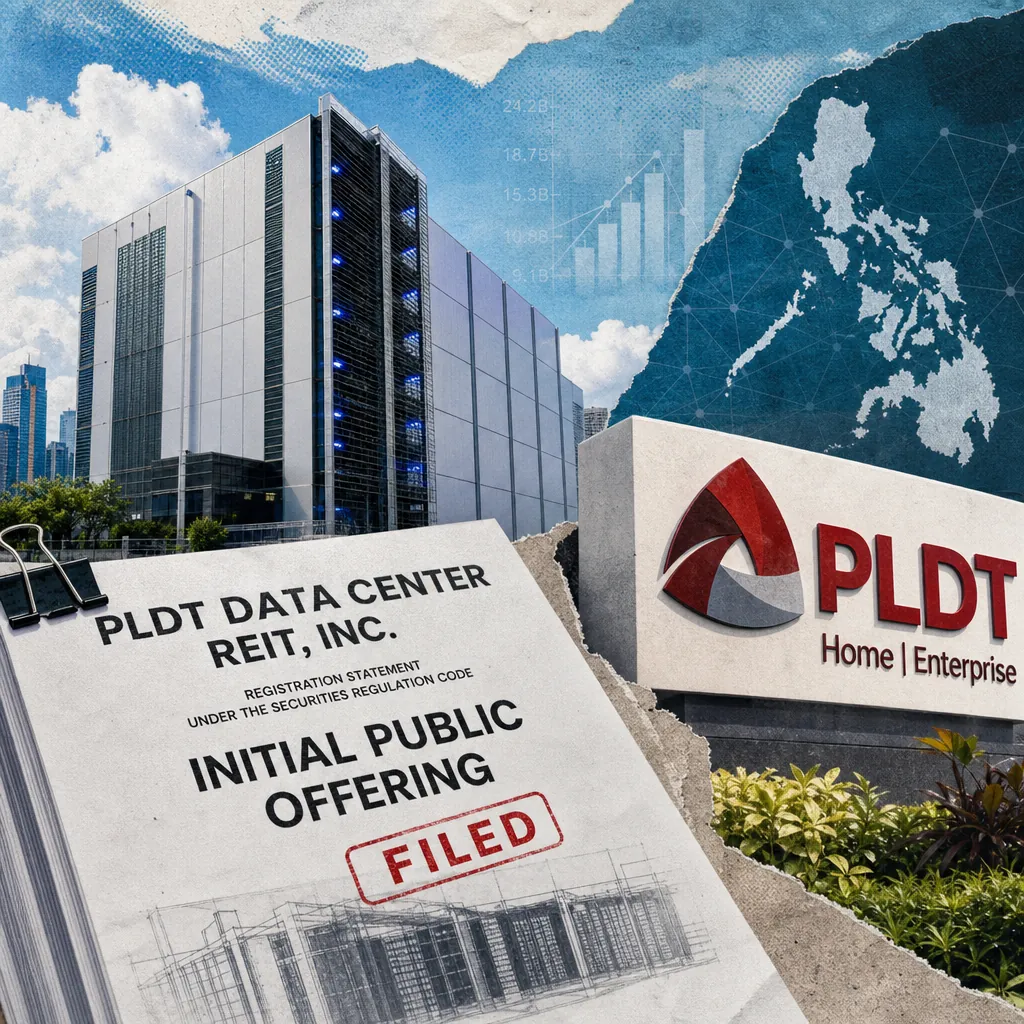
The conversation on June 22, 2026, opened with a major corporate announcement: PLDT filed for the VITRO REIT IPO, aiming to raise up to P24.2 billion in what would be the Philippines’ first data center real estate investment trust (REIT). A REIT is a company that owns and operates income-producing real estate and is required to distribute most of its profits as dividends to shareholders. The news quickly spread across platforms, with Forbes noting the backing of billionaires Manuel V. Pangilinan and Anthoni Salim and reporting 22,222 views on its tweet, while InsiderPH’s Facebook post drew 330 likes and 76 shares. Simultaneously, the Department of Information and Communications Technology (DICT) rolled out a series of digital inclusion initiatives—from the Bayanihan SIM Card program distributing 3,887 SIMs in Kalinga to satellite-powered Free Wi-Fi at Pasig Mega Market enabling Paleng-QR Ph cashless transactions. Yet beneath these positive developments, a parallel stream of user complaints emerged on Reddit, where subscribers detailed prolonged outages, billing disputes, and regulatory escalations against PLDT, Globe, and Converge. By June 22, the conversation had bifurcated into institutional progress versus persistent consumer frustration, with sentiment shifting rapidly as users shared both breakthroughs and breakdowns.
Conversation snapshot. The day’s most-viewed post was Forbes’ tweet on the VITRO IPO, which accumulated 22,222 views, 27 likes, and 10 comments. On Facebook, InsiderPH’s post on the same topic received 330 likes and 76 shares, while a retail investor page’s post garnered 14 likes and 1 comment. The highest-engagement consumer post was a Reddit thread detailing a successful P10,500 refund from Globe after National Telecommunications Commission (NTC) intervention, which received 455 upvotes and 35 comments. A Converge outage thread on Reddit drew 19 upvotes and 28 comments, and a PLDT disconnection query on Reddit received 1 like and 0 comments. DICT’s Facebook posts on digital inclusion initiatives received modest engagement, ranging from 7 to 18 likes. A YouTube video from ANC on the IPO had only 16 views.
Key themes
- PLDT’s VITRO REIT IPO as a Digital Infrastructure Milestone – The filing for the first data center REIT in the Philippines generated significant positive attention from business media and retail investors, framing PLDT as a pioneer in digital infrastructure. The P24.2 billion target raise and the backing of prominent billionaires were highlighted across Forbes, Manila Standard, and BNC.
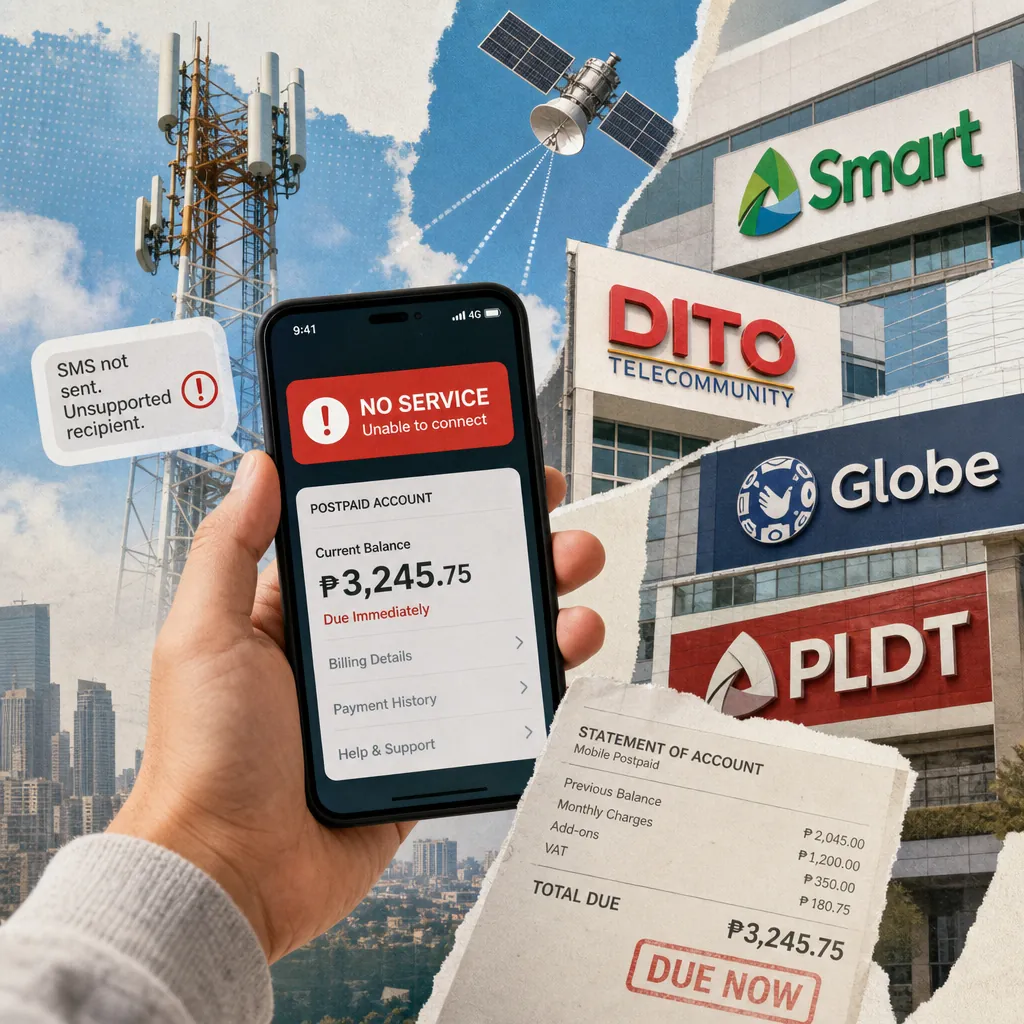
- Consumer Service Failures and NTC Escalations – Reddit became the epicenter of consumer advocacy, with users sharing detailed accounts of prolonged outages, billing disputes, and successful resolutions after involving the NTC. The most viral story involved a Globe subscriber recovering P10,500 after a year-long battle, with the user explicitly advising others to copy the NTC on email threads. Converge and PLDT subscribers also reported multi-week outages resolved only after regulatory escalation.
- DICT’s Digital Inclusion Push – The DICT announced the distribution of 1,915 Bayanihan SIM cards in Polomolok and Kitabog and 3,887 in Kalinga, alongside the launch of Starlink-powered free Wi-Fi at Pasig Mega Market to support cashless transactions via Paleng-QR Ph. These posts, while low-engagement, built a consistent narrative of connectivity reaching underserved areas.
- Government Digital Governance and Cybersecurity Education – A parallel thread focused on digital literacy for public servants, with DICT Guimaras conducting a forum on the eGovPH Super App and cybersecurity awareness. Google Cloud announced a partnership with DICT to embed enterprise AI into citizen support, while the Department of Budget and Management (DBM) shared how blockchain is being used for budget transparency.
- The Duality of Telco Investment and Frontline Service – The juxtaposition of PLDT’s P24.2 billion capital raise for data centers with concurrent Reddit posts about modems stuck in boot loops and billing disputes underscored a strategic tension: capital injection for back-end capacity alongside frontline service that still frustrates paying customers.
- NTC as an Effective Consumer Shield – A recurring theme across complaint threads was the NTC’s role as a credible backstop. Users shared templates for escalating issues, with one noting that copying the regulator on emails forced immediate corporate response. This narrative moved from helplessness to empowered action, offering a replicable playbook for consumers.
- Retail Investor Interest in REIT Mechanics – On Facebook, retail investors began analyzing the VITRO REIT’s potential dividend yield, with one user humorously noting, “Kailangan na talaga natin mag-ipon ng BP” (We really need to save up for this), signaling grassroots interest in the offering.
- Converge as a Distribution Platform – A promotional post for a radio program listed Converge channel 79 among its broadcast platforms, indicating that Converge is increasingly referenced as a legitimate cable TV channel alongside traditional providers.
How the narratives stack
Dominant narrative – The dominant story of the day is PLDT’s VITRO REIT IPO as a landmark for Philippine digital infrastructure. Business media and financial outlets framed the filing as a pioneering move that unlocks value from PLDT’s data center portfolio, with the P24.2 billion raise positioned as a vote of confidence in the country’s digital future. This narrative reached the largest audience, with Forbes’ single post accumulating over 22,000 views. The story is reinforced by the backing of prominent billionaires and the potential for retail investors to participate in the growth of digital infrastructure.
Counter-narrative – The counter-narrative is the persistent consumer frustration with telco service quality, which directly undermines the positive corporate story. Reddit threads detailing prolonged outages, billing disputes, and the need for NTC intervention paint a picture of companies that prioritize expansion over customer care. The most powerful counter-narrative is the success story of a Globe subscriber who recovered P10,500 after NTC involvement, which garnered 455 upvotes and 35 comments. This narrative suggests that telcos are responsive only when forced by regulators, creating a trust deficit that the IPO’s positive framing cannot easily overcome.
Emerging narrative – An emerging narrative is the NTC’s role as an effective consumer shield. Users are increasingly sharing detailed escalation templates, with one explicitly advising others to copy the NTC on email threads to force corporate response. This narrative is building momentum as more affected users replicate these tactics, potentially leading to a rise in coordinated complaint threads and hashtag campaigns linking telco failures to regulatory inaction. The NTC’s 30-day maximum repair rule is also being cited in Converge outage discussions, signaling growing consumer awareness of their rights.
Suppressed narrative – The under-covered story is the disconnect between government digital inclusion initiatives and telco service reliability. While the DICT is actively deploying free Wi-Fi in public markets and distributing SIM cards to students, major telcos are failing to resolve basic home internet issues. This gap represents a strategic risk: if telcos do not align their customer experience with the government’s digital progress narrative, they may be framed as a bottleneck rather than a partner. The DICT’s posts on Bayanihan SIM distributions and Starlink-powered Wi-Fi received minimal engagement, suggesting that these positive stories are not reaching the same audiences as the complaint threads.
Platform insights
Facebook – Facebook served as the primary channel for both official announcements and user venting. PLDT’s IPO news reached 330 likes and 76 shares on InsiderPH, while DICT’s program updates maintained steady but low positive sentiment (7–18 likes). However, individual complaint posts on Facebook, such as a user whose PLDT account showed “Invalid” in PLDT CARES, created a dissonant undercurrent. The platform’s algorithm appears to favor high-engagement entertainment content over telco discussions, as evidenced by a non-telco post from officialbomboradyotuguegarao that drew 629 “haha” reactions and 128 comments.
Reddit – Reddit became the epicenter of consumer advocacy and technical discussion. The Globe refund story triggered a surge in upvotes and comments, steering the discussion toward regulatory success. The Converge outage thread added technical depth, with users cross-referencing NTC rules on maximum repair times. A PLDT disconnection query received only 1 like and 0 comments, indicating that not all posts gain traction, but those that do can generate significant engagement. Reddit’s format allows for detailed, actionable advice, making it a key platform for consumers seeking solutions.
Twitter – Corporate and news outlets (Forbes, ANC, Bilyonaryo) drove the IPO narrative on Twitter with high view counts (Forbes: 22,222), but low community interaction. The platform’s rapid-fire nature meant that the IPO story was quickly overtaken by other news, such as the Tacloban school shooting and Typhoon Francisco updates. No telco-specific hashtags trended on Twitter during the day.
YouTube – YouTube had only one relevant video, an ANC segment on the VITRO IPO with 16 views, indicating limited viral spread for telco content on this platform. The low viewership suggests that video content on financial news does not resonate strongly with the general audience compared to entertainment or breaking news.
Key voices and communities
Corporate and Financial Media – Mainstream business news outlets such as Forbes, Manila Standard, BNC, and BusinessWorld drove high-visibility conversation around the VITRO REIT IPO. Their framing shapes how the broader investment community interprets the move, with emphasis on the P24.2 billion target raise and the backing of billionaires. Forbes’ single post accumulated over 22,000 views, making this group the largest absolute audience reach in the dataset.
Government and Regulatory Agencies – The DICT and related local government units dominate conversation around digital inclusion, cybersecurity, and public connectivity programs across Facebook and Twitter. Their content reaches smaller but highly targeted audiences, typically receiving tens to low hundreds of likes, yet carries official authority and partnership potential with both private sector and civil society.
Consumer Complainants and Escalation-Aware Users – Individual customers sharing negative service experiences form a highly vocal stakeholder group, concentrated on Reddit and Facebook. While each post’s direct engagement is moderate (e.g., 455 upvotes for the Globe refund story), the emotional intensity and repeatability of themes create persistent reputational risk for PLDT, Globe, and Converge. Their documented success in using NTC escalation suggests that proactive, transparent complaint resolution could reduce negative word-of-mouth.
Digital Inclusion and Education Stakeholders – Local government units, state universities, and DICT provincial offices form a decentralized but mission-driven community focused on bridging the digital divide. Their content receives modest engagement but demonstrates sustained program delivery, such as the distribution of 1,915 Bayanihan SIMs across four schools in Polomolok and Kitabog. These stakeholders are natural allies for any organization promoting digital literacy or affordable connectivity.
Retail Investors – A nascent but growing community on Facebook is beginning to analyze the VITRO REIT’s mechanics and potential dividend yield. Their interest signals grassroots demand for digital infrastructure investment opportunities, but their influence is currently limited to small, niche groups.
Narrative streams
PLDT’s VITRO REIT IPO: A Landmark for Digital Infrastructure
On June 22, PLDT announced that its data center unit, VITRO Inc., had filed a registration statement with the Securities and Exchange Commission (SEC) for an initial public offering (IPO) as a real estate investment trust (REIT). A REIT is a company that owns and operates income-producing real estate and is required to distribute at least 90% of its taxable income to shareholders as dividends. The offering involves up to 1.91 billion secondary common shares, with an over-allotment option of up to 286.96 million shares, at a price of up to P11 per share, potentially raising gross proceeds of P24.2 billion. Upon completion, the public would own 48.95% of VITRO, with PLDT retaining the remainder. The initial portfolio comprises eight data centers with a combined capacity of about 24 megawatts.
Business media coverage was overwhelmingly positive, framing the IPO as a “first” for Philippine digital infrastructure and highlighting the backing of billionaires Manuel V. Pangilinan and Anthoni Salim. Forbes’ tweet on the story accumulated 22,222 views, 27 likes, and 10 comments, with users debating yield estimates and debt reduction plans. A Facebook investor page noted, “Kailangan na talaga natin mag-ipon ng BP,” signaling retail interest. The narrative positions PLDT as a forward-looking digital infrastructure leader, with the proceeds expected to be used for reinvestment and debt repayment.
However, this positive narrative was disrupted by concurrent Reddit posts detailing how PLDT’s service failures contradicted its expansion ambitions. One user described a month without internet and called the company “corrupt”, while another reported a Smart Home WiFi modem stuck in a boot loop. The juxtaposition of a P24.2 billion capital raise with frontline service failures creates a strategic tension that PLDT must address to maintain credibility.
Consumer Service Failures and the Rise of NTC Escalation
A parallel stream of conversation on Reddit focused on consumer grievances against major telcos. On June 21, Reddit user strwbrry_shrtcakee20 posted a furious account of a PLDT disconnection process, calling the company “corrupt” and recounting a month without internet. The next day, Spiritual_Jaguar2989 shared a Smart Home WiFi modem stuck in a boot loop, with factory resets failing. Most dramatically, ilikefish1275 posted about winning back P10,500 from Globe after a year-long battle: “the full P10,500 finally landed back in my wallet—proving that even if you already paid off a bogus fee… you should never let it slide”. This post garnered 455 upvotes and 35 comments, marking a turning point as users shared their own NTC escalation success stories.
Converge also faced criticism: theythoughtimexpert described an 80-day outage resolved only after the fourth technician and NTC involvement. The sentiment shifted from helpless anger to empowered action, with the NTC emerging as a credible backstop. Users explicitly advised others to copy the NTC on email threads, noting that “Globe replied the very next day asking for my GCash info to process a refund”. This narrative thread—moving from resignation to proven process—offers a replicable playbook for consumers facing billing disputes and puts additional pressure on telcos to resolve issues faster.
DICT’s Digital Inclusion Push: Connectivity for the Underserved
While complaints dominated Reddit, DICT’s Facebook and Twitter feeds highlighted steady government progress. On June 22, the agency announced 1,915 Bayanihan SIM cards distributed in Polomolok and Kitabog, and a separate 3,887 beneficiaries in Kalinga through partnerships with Globe and Smart. The Bayanihan SIM Card program is a government initiative to provide free SIM cards with pre-loaded data to students and teachers in underserved areas, aiming to bridge the digital divide in education.
Simultaneously, the Pasig Mega Market project used Starlink satellite internet to support Paleng-QR Ph, a program that promotes cashless transactions in public markets. DICT Undersecretary Sarah Sison cited the President’s directive on digital transformation, and vendor testimonials in the DICT video emphasized fewer signal breakages and safer transactions. These posts received modest engagement (7–18 likes) but built a consistent narrative of connectivity reaching underserved areas.
Government Digital Governance and Cybersecurity Education
A parallel thread focused on digital literacy for public servants. DICT Guimaras conducted a forum on the eGovPH Super App and cybersecurity awareness. The eGovPH Super App is a government platform that consolidates various public services, such as document requests and payments, into a single mobile application. Google Cloud announced a partnership with DICT to embed enterprise AI into citizen support, while the DBM shared how blockchain is being used for budget transparency via Special Allotment Release Orders (SAROs). These posts, while low-engagement, established a government-led ecosystem that contrasted with telco service gaps.
The Student Discount Bill: A New Affordability Debate
A separate but related narrative emerged around House Bill No. 9859, the “Student Discount Para sa Load Act,” which proposes a 20% discount on mobile load, calls, texts, and internet services for Filipino students. The bill, filed by Mamamayang Liberal Party-list, would require telcos to implement the discount and submit quarterly compliance reports to the NTC. The single comment on the post came from a Reddit user quoted in the article: “It’s good and all, but I hope no one will bear the burden for this discount,” reflecting early skepticism about cost allocation. Another Reddit user suggested free Wi-Fi in public places like schools and libraries as a more targeted solution. This narrative is still nascent but could gain traction as the bill moves through committee hearings.
Conversation trajectory
Based on engagement patterns and content evolution, the Philippine telecommunications conversation shows clear signals of developing in ways that impact the sector:
- PLDT’s VITRO REIT IPO will reshape the financial narrative around digital infrastructure (next 2–3 months). The announcement has generated significant cross-platform interest, and as the filing progresses and institutional investors weigh in, the conversation will likely bifurcate between investment-focused platforms (where yield projections and comparables will trend) and consumer channels (where existing grievances may be amplified in contrast to the company’s growth narrative). The IPO’s pricing and listing date announcement will be a key trigger event.
- Consumer frustration is increasingly channeled through regulatory escalation, creating a self-reinforcing success story loop (next 4–8 weeks). Detailed accounts of NTC-assisted resolutions are receiving high engagement, signaling that users are sharing actionable templates for complaining effectively. This trend will accelerate as more affected users replicate these tactics, putting additional pressure on PLDT, Globe, and Converge to resolve outages and billing disputes faster. Expect a rise in coordinated complaint threads and hashtag campaigns linking telco failures to regulatory inaction.
- DICT’s digital inclusion programs will face scrutiny on execution and sustainability (next quarter). The Bayanihan SIM distribution and Starlink-powered free Wi-Fi demonstrate a clear government push for last-mile connectivity, but the conversation will likely shift from pure celebration to questions about long-term maintenance, speed consistency, and whether these initiatives actually reduce the digital divide. The DICT’s P118-million enterprise CDN and anti-DDoS procurement bid signals awareness of scaling challenges.
- The Student Discount Bill will inject a new affordability dimension (next 3–6 weeks). As the bill moves through committee hearings, stakeholders will increasingly scrutinize telcos’ pricing structures and profit margins. The framing may shift from “discount for students” to “why can’t prepaid load be cheaper for everyone?” if the bill stalls or passes with heavy industry pushback.
Key trigger events that will reshape this conversation include: the VITRO REIT pricing and listing date announcement (expected within 2–3 months), the NTC’s potential ruling on the Converge outage complaint (within weeks, which could set a precedent for compensation), the DICT CDN/anti-DDoS bid deadline on June 29, 2026, and the Senate and House hearings on HB 9859 over the next 2–3 weeks.
Response guidance
Platform approaches:
- Facebook: Deploy empathetic, solution-oriented replies on complaint posts, acknowledging frustration while directing users to direct customer service channels. Avoid generic apologies; instead reference specific issues like billing or service restoration. Amplify positive business announcements (e.g., VITRO REIT IPO) through shareable visual content that frames the investment as a milestone for Philippine digital infrastructure. Use DICT partnership stories to showcase commitment to connectivity and digital inclusion.
- Reddit: Engage in r/InternetPH and similar subreddits by providing clear escalation paths (e.g., NTC filing, executive customer service email) without naming specific users. Frame responses as “we’ve heard similar concerns and here’s how we’re improving.” Consider creating an official Reddit AMA focused on service reliability and data center expansion. Monitor threads about outages and delays proactively, posting official status updates before users escalate their grievances.
- Twitter: Establish a rapid-response team for complaint tweets (especially those with #PLDTDown or similar) that can triage issues within 30 minutes, moving conversations to DMs for account details. Leverage positive news like the VITRO IPO to create a thread highlighting reliability investments. Retweet and quote DICT’s digital inclusion initiatives to reinforce the narrative that connectivity challenges are being tackled at the national level.
Key messages:
- “We’re investing heavily in network infrastructure—our recent P24.2B data center REIT filing is proof of our commitment to better, more reliable connectivity for every Filipino.”
- “If you’ve experienced a service issue, we want to make it right. Contact our support teams directly, and if the resolution isn’t satisfactory, the NTC is there to help.”
- “Digital inclusion is a shared mission. Through partnerships with DICT, we’re providing free WiFi in public markets and Bayanihan SIMs to students—so no one gets left behind.”
- “We acknowledge that some outages have taken too long to resolve. We’re overhauling our repair processes to ensure complex issues are escalated faster and fixed within regulatory timelines.”
Sensitive topics to navigate:
- Customer refunds and termination fees: Avoid defending charges for service that wasn’t delivered. Instead, proactively waive fees for the outage period and streamline refund processing. The Reddit post about Globe highlights how NTC escalation forced a refund; pre-empt similar situations by offering automatic credits.
- Long-duration outages (e.g., 80 days): Do not dismiss as “complex issues.” Acknowledge the impact on remote work and education, and commit to service-level guarantees with compensation beyond the minimum required by NTC.
- Billing disputes after service termination: The narrative “they forced us to pay for nothing” can go viral. Respond by clarifying pro-rated billing and offering same-day termination processing once requirements are submitted.
- Cost burden perception on the Student Discount Bill: Avoid defensive language when users suggest telcos will simply increase prices elsewhere. Instead, explain the industry’s cost structure and stress the need for a partnership with government to identify sustainable funding sources.
Response priorities:
- Immediate triage of high-severity complaints on Reddit and Facebook. Assign dedicated case managers to users who have posted about multi-week outages or billing injustices. A personal follow-up can convert a detractor into a promoter and stop the story from spreading further.
- Proactive communication on service improvement initiatives. Within 48 hours of the VITRO IPO announcement, release a media statement or blog post linking the capital raise to specific network upgrades (e.g., fiber-to-the-home expansion, tower densification) to counter the “they only care about investors” perception.
- Coordination with DICT on shared success stories. Promote the Pasig Mega Market free WiFi and Bayanihan SIM distribution as tangible examples of the company’s commitment to digital equity, using real vendor testimonies to humanize the narrative.
See the full picture behind today's signals.
This report draws from Media Meter's MediaWatch, our real-time monitoring engine tracking 2,470+ Philippine sources across print, broadcast, digital, and social. Explore how the platform turns raw coverage into decision-grade intelligence, then see how it's configured for teams like yours — whether you're in PR agencies, corporate comms, government, or marketing.
Want more? Browse our Report Library for sector and crisis intelligence, or request a demo and we'll have your brand set up before the call.
Want this kind of intelligence on your brand?
This brief is built on the same MediaWatch methodology that runs continuously across every brand we monitor. See your competitive landscape, Impact Score, and narrative trajectory in a 30-minute demo.