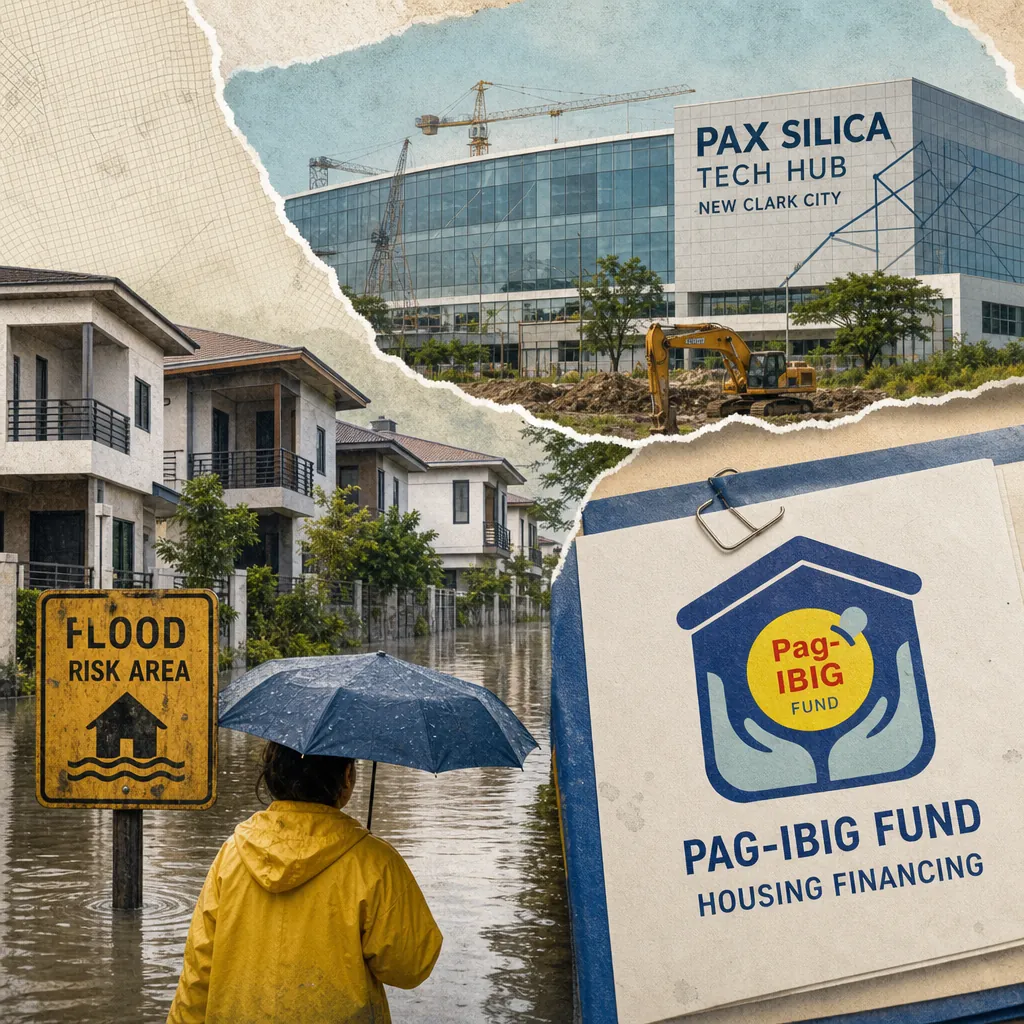
Property market bottoming, Pag-IBIG rate cuts, and infrastructure handovers shape July 7 real estate conversation
On July 7, 2026, the Philippine real estate conversation was driven by three major developments: a Leechiu Property Consultants executive's signal that the residential market may be nearing its bottom, Pag-IBIG Fund's promotional rate cuts and higher loan ceiling, and Filinvest Land's turnover of a Bicutan property for a major rail interchange. These narratives were amplified by media coverage and social engagement, while consumer discussions on Reddit revealed cautious buyer sentiment and ongoing due diligence.
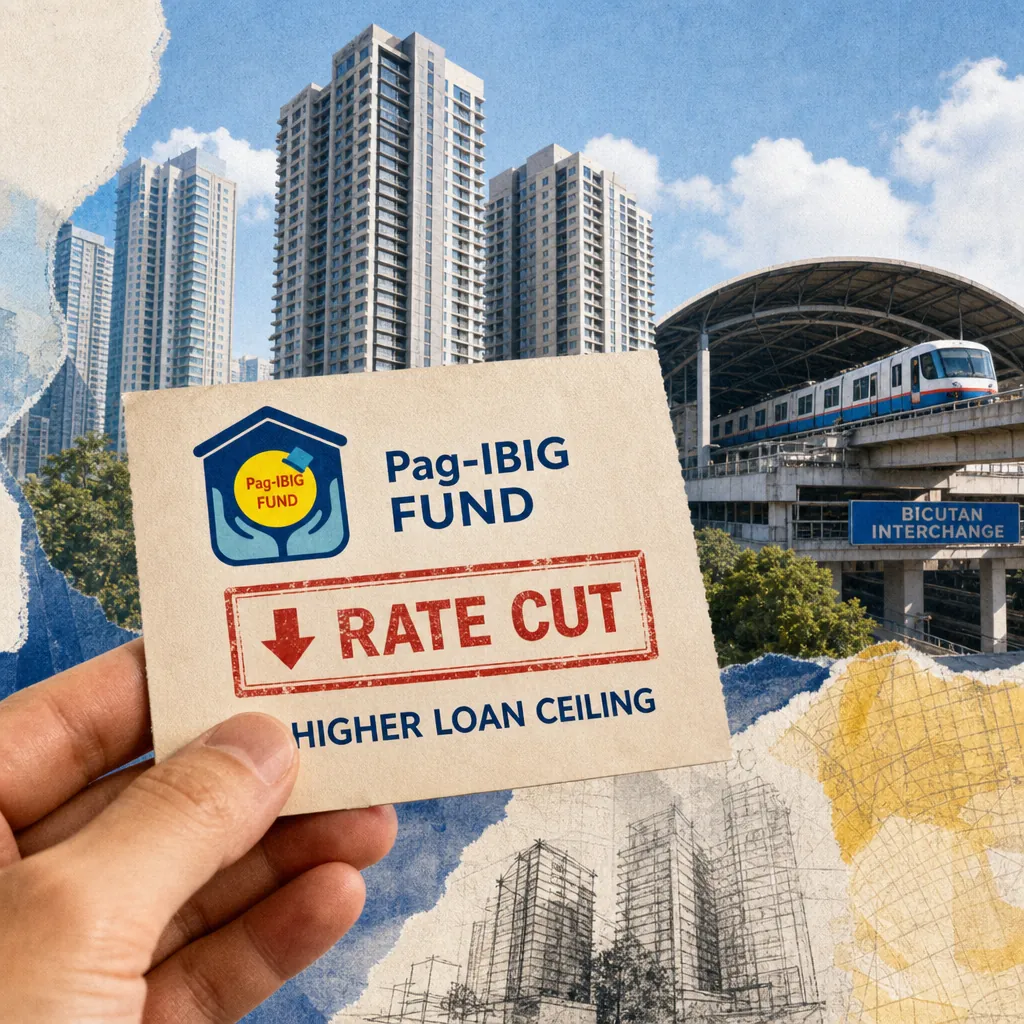
The Philippine real estate conversation on July 7, 2026, was shaped by three major developments that together signal a sector in transition: a Leechiu Property Consultants executive's assessment that the residential market may be nearing its bottom, Pag-IBIG Fund's promotional rate cuts and higher loan ceiling, and Filinvest Land's turnover of a Bicutan property for a major rail interchange. These narratives were amplified by media coverage and social engagement, while consumer discussions on Reddit revealed cautious buyer sentiment and ongoing due diligence.
A Leechiu Property Consultants director told reporters that the Philippine residential property market may be nearing the bottom of its downturn, though a sustained recovery will depend on the broader economy and global developments. Roy Golez said there are encouraging signs that the residential segment is stabilizing after a prolonged slowdown, even as his company's outlook for the second half of 2026 remains cautious. "A lot of it depends on the economy. Our outlook for the next half of the year, it might be difficult," Golez said. He noted that demand has flattened while supply has also remained subdued, preventing a significant buildup of inventory. Although unsold residential units have edged up, Golez said the level is not alarming. The article, published by Inquirer Online, carried an estimated advertising-equivalent value of ₱275,544, reflecting heavy coverage of this market assessment.
Simultaneously, the Pag-IBIG Fund announced it continues to offer more affordable home financing options, including a 3% subsidized rate for eligible socialized housing borrowers, promotional rates of 4.5% and 5.75% for low-cost to open-market homes, and a higher maximum housing loan amount of ₱10 million. Housing Secretary Jose Ramon Aliling, who also chairs Pag-IBIG's board of trustees, said the broader market — from minimum-wage earners to middle-income workers — is benefiting from these rates. "Pag-IBIG's promo rates are about making homeownership more affordable at a time when many Filipino families are carefully weighing the cost of buying a home," Aliling said. The announcement was covered by multiple outlets including the Manila Times Online (₱309,120 in estimated advertising-equivalent value) and the Daily Tribune Online (₱119,808). On Facebook, the inquirerdotnet post about Pag-IBIG's affordable home loan push generated 7 likes, 2 love reactions, 1 haha, 2 shares, and 2 comments, indicating modest but warm public reception.
On the infrastructure front, Filinvest Land Inc. turned over a 6,000-square-meter property in Bicutan to the Department of Transportation (DOTr), paving the way for the Bicutan Station — a major interchange between the North-South Commuter Railway (NSCR) and the Metro Manila Subway Project. The station will use a unidirectional track-sharing design that will allow Metro Manila Subway trains to run on the NSCR line, creating a continuous rail link connecting Clark, Metro Manila, and Calamba. Filinvest also announced plans to build the Filinvest Pedestrian Link, an elevated pedestrian bridge and covered walkway connecting the station to its adjacent 6.5-hectare property. The story was covered by Inquirer Online (₱224,280), Manila Times Online (₱209,440), BusinessWorld Online (₱100,448), and Philstar Online (₱258,808), among others. On Twitter, bilyonaryo_ph's post about the handover garnered 611 views and 2 likes, while inquirerbiz's post received 285 views, 1 like, and 1 share.
Meanwhile, the Department of Human Settlements and Urban Development (DHSUD) announced it has maintained zero overdue regulatory applications for three consecutive weeks, a milestone under its Zero Backlog Program. Secretary Aliling said the achievement followed a comprehensive internal audit that identified bottlenecks and led to streamlined processes. The story was covered by the Manila Times Online (₱190,400) and the Daily Tribune Online (₱99,528). However, a separate article by Philstar Online highlighted that delays in the issuance of Licenses to Sell (LTS) by DHSUD remain a growing headwind for the property sector. Joey Roi Bondoc, head of research at Colliers Philippines, said prolonged processing of LTS applications has become one of the industry's most pressing regulatory challenges, as developers cannot legally market residential projects without securing the permit. The article carried an estimated advertising-equivalent value of ₱394,207.
On social media, consumer conversations on Reddit reflected cautious buyer sentiment. A user asked whether Alabang property prices still have room to appreciate, receiving 2 upvotes and 1 comment. Another user inquired about Ina Executive Homes in Better Living, Parañaque, detailing a thorough due diligence process — checking Project NOAH flood maps, water supply, title, taxes, and hazard maps — and asking about neighborhood safety, traffic, and schools. A direct owner listing for a house-and-lot in Biñan, Laguna (₱4.5M, cash only, clean title, owner pays CGT) also appeared, indicating active secondary market activity. An Accenture non-voice hiring post for Alabang, Cubao, Mandaluyong, and BGC with salaries of ₱25k-32k reinforced the link between BPO employment hubs and housing demand.
Weather-related concerns also entered the conversation. A thunderstorm advisory from Pagasa covered parts of Metro Manila and Luzon, including Parañaque, Las Piñas, Muntinlupa, Bulacan, Pampanga, and Laguna — areas with active real estate developments. A separate report of flooding at Quezon City Memorial Circle generated 223 views on Twitter. Super Typhoon Inday (international name: Bavi) was approaching the Philippine area of responsibility, with Signal No. 1 hoisted over parts of Cagayan. These weather events add to the backdrop of environmental vulnerabilities that developers and homebuyers must consider.
Key themes
- Property market may be bottoming, but recovery hinges on economy — A Leechiu Property Consultants director said the residential market may be nearing the bottom of its downturn, with demand flattening and supply subdued. However, the outlook for the second half of 2026 remains cautious, and a sustained recovery will depend on the broader economy and global developments.
- Pag-IBIG rate cuts and higher loan ceiling drive affordability narrative — Pag-IBIG Fund's promotional rates (as low as 3% for socialized housing) and increased loan ceiling of ₱10 million are generating positive media coverage and agent-led marketing. The announcement is framed as making homeownership more accessible under the Expanded 4PH program.
- Filinvest Land's Bicutan property turnover signals developer-infrastructure integration — Filinvest Land's handover of a 6,000-sqm property for the Bicutan Station interchange reinforces the narrative of developers as partners in national infrastructure. The project will connect the NSCR and Metro Manila Subway, creating a continuous rail link.
- DHSUD's zero backlog achievement contrasts with persistent LTS delays — DHSUD reported zero overdue regulatory applications for three consecutive weeks, a milestone under its Zero Backlog Program. However, Colliers Philippines highlighted that delays in License to Sell issuances remain a major constraint on new project launches and housing supply.
- Consumer due diligence intensifies around flood risk, location, and financing — Reddit posts show buyers conducting thorough research on specific subdivisions, checking flood maps, title status, and neighborhood safety. Questions about Alabang property appreciation and Pag-IBIG loan mechanics reflect cautious, information-seeking behavior.
- BPO employment hubs continue to drive housing demand — An Accenture hiring post for non-voice roles in Alabang, Cubao, Mandaluyong, and BGC reinforces the work-live dynamic that fuels demand for nearby housing. This trend is expected to intensify as more BPO companies recruit in these areas.
- Weather and climate risks enter the conversation — Thunderstorm advisories, flooding reports, and an approaching super typhoon highlight environmental vulnerabilities that could affect property values and buyer decisions, particularly in flood-prone areas.
How the narratives stack
Dominant — Within the captured set, the dominant narrative is the convergence of positive policy and corporate signals: Pag-IBIG's rate cuts, Filinvest's infrastructure handover, and the Leechiu executive's bottoming assessment. These stories received the heaviest media coverage, with multiple outlets reporting on each, and generated modest but positive social engagement. The Pag-IBIG announcement alone was covered by the Manila Times, Daily Tribune, and Inquirer, while the Filinvest handover was reported by Inquirer, Manila Times, BusinessWorld, and Philstar. This narrative positions the sector as stabilizing and supported by government and private sector initiatives.
Counter-narrative — A persistent counter-narrative is the regulatory bottleneck highlighted by Colliers Philippines: delays in License to Sell issuances by DHSUD are constraining new project launches and housing supply. This directly contradicts the DHSUD's own messaging of zero backlog and streamlined processes. The Colliers article received significant coverage (₱394,207 in estimated advertising-equivalent value), indicating that industry analysts are flagging this as a major concern.
Emerging — Consumer due diligence and caution are emerging as a significant theme. Reddit posts show buyers conducting detailed research on flood risk, title status, and neighborhood safety before committing to purchases. This behavior, if it spreads, could slow sales cycles and increase the importance of transparent, educational marketing from developers and lenders.
Suppressed — The potential impact of weather and climate risks on property values and development viability remains under-covered in mainstream media. While thunderstorm advisories and typhoon warnings are reported as news, their implications for real estate — such as flood risk in specific subdivisions, construction delays, and insurance costs — are rarely discussed in the context of housing. This gap leaves buyers to rely on peer forums like Reddit for such information.
Platform insights
- Facebook — The platform served as a broadcast channel for policy news and developer announcements. The inquirerdotnet post on Pag-IBIG loans generated modest engagement (7 likes, 2 loves, 1 haha, 2 shares, 2 comments), indicating a passive, approving audience rather than active debate. Agent-generated promotional posts (e.g., townhouse ads leveraging Pag-IBIG rates) received zero likes but were shared, suggesting passive consumption by potential buyers.
- Twitter (X) — Discussions remained concise and news-focused. Posts from bilyonaryo_ph (611 views), inquirerbiz (285 views), and other outlets drove real-time updates on the Filinvest handover and Pag-IBIG rates. Engagement was low (1-2 likes per post), indicating a niche but informed audience of industry watchers and journalists.
- Reddit — Consumer conversations on Reddit were more detailed and research-oriented. Posts about Alabang property appreciation, Ina Executive Homes due diligence, and direct owner listings in Biñan generated low upvote counts (2-3) but reflected genuine purchase consideration and information-seeking. The platform serves as a peer-validation space where buyers share detailed questions and experiences.
- YouTube — No new real estate-specific YouTube content was captured in this batch, but the platform remains relevant for longer-form content such as market analysis and project walkthroughs.
Key voices and communities
- Leechiu Property Consultants — The firm's director, Roy Golez, emerged as a key voice providing market intelligence. His assessment that the residential market may be bottoming was widely quoted by media, lending credibility to the stabilization narrative. Leechiu's H1 2026 report (referenced in earlier monitoring) continues to be a reference point for unsold inventory and price trends.
- Pag-IBIG Fund and DHSUD — Government housing agencies are central to the affordability narrative. Housing Secretary Jose Ramon Aliling and Pag-IBIG CEO Marilene Acosta are the primary spokespersons, framing rate cuts and streamlined processes as achievements under the Marcos administration's Expanded 4PH program. Their messaging is amplified by official media and news outlets.
- Filinvest Land Inc. — The Gotianun-led developer is positioned as a proactive partner in national infrastructure. The Bicutan property handover story generated positive coverage across multiple outlets, reinforcing the developer's reputation for transit-oriented development and public-private collaboration.
- Colliers Philippines — The research firm, through head of research Joey Roi Bondoc, provides a counterpoint to the positive government narrative by highlighting regulatory bottlenecks (LTS delays) that constrain housing supply. Colliers is a trusted third-party voice for industry analysis.
- Consumer homebuyers on Reddit — Individual buyers and prospective homeowners form a small but influential community that drives peer-to-peer information exchange. Their detailed queries about flood risk, title verification, and financing mechanics reflect a cautious, research-oriented approach that developers and lenders must address.
Narrative streams
Pag-IBIG rate cuts and the affordability push
The Pag-IBIG Fund's announcement of promotional interest rates — 3% for socialized housing, 4.5% for low-cost, and 5.75% for open-market loans, with a maximum loan ceiling of ₱10 million — dominated the policy-focused conversation on July 7. The Manila Times reported that Housing Secretary Jose Ramon Aliling and Pag-IBIG CEO Marilene Acosta said the rates comply with President Ferdinand Marcos Jr.'s directive to make homeownership more accessible under the Expanded Pambansang Pabahay Para sa Pilipino (4PH) program. The Daily Tribune similarly quoted Aliling: "Pag-IBIG's promo rates are about making homeownership more affordable at a time when many Filipino families are carefully weighing the cost of buying a home".
On Facebook, the inquirerdotnet post generated 7 likes, 2 love reactions, and 1 haha, along with 2 shares and 2 comments. The single haha reaction suggests a touch of skepticism, possibly about whether the rates will truly benefit buyers or whether processing delays will undermine the promise. The low comment count indicates limited active debate, but the positive-to-negative reaction ratio (9 positive vs. 1 haha) suggests general approval.
For banking clients like BPI, the Pag-IBIG rate cuts alter the competitive landscape for housing loans. Banks may need to adjust their own mortgage rates or emphasize value-added services (e.g., faster processing, flexible terms) to retain customers. For developers, the lower rates could stimulate demand, particularly in the affordable and mid-market segments. However, the promo rates are only available until December 2026, creating a time-sensitive window for buyers and a potential surge in applications.
Filinvest Land's Bicutan handover: infrastructure integration as a value driver
Filinvest Land Inc.'s turnover of a 6,000-square-meter property in Bicutan to the DOTr marks a significant milestone for the North-South Commuter Railway (NSCR) and Metro Manila Subway projects. The Bicutan Station will serve as a major interchange, using a unidirectional track-sharing design that allows subway trains to run on the NSCR line, creating a continuous rail link from Clark to Calamba.
Filinvest also announced plans to build the Filinvest Pedestrian Link, an elevated pedestrian bridge and covered walkway connecting the station to its adjacent 6.5-hectare property and future developments. This positions the developer as a proactive partner in transit-oriented development, enhancing the value of its nearby landholdings.
The story was covered by at least four major outlets — Inquirer, Manila Times, BusinessWorld, and Philstar — with combined estimated advertising-equivalent value exceeding ₱790,000. On Twitter, bilyonaryo_ph's post garnered 611 views, while inquirerbiz's post received 285 views. The positive framing ("paving the way," "pivotal milestone") reinforces the narrative of developers as enablers of national infrastructure.
For PLDT and Smart, this development signals increased demand for connectivity in the Bicutan area and along the rail corridor. For BPI, the project creates opportunities for financing both the infrastructure and adjacent residential/commercial developments. For Malacañang, the handover provides a tangible example of public-private partnership under the administration's infrastructure program.
DHSUD: zero backlog vs. LTS delays
The Department of Human Settlements and Urban Development (DHSUD) announced it has maintained zero overdue regulatory applications for three consecutive weeks, a milestone under its Zero Backlog Program. Secretary Aliling said the achievement followed a comprehensive internal audit that identified bottlenecks and led to streamlined processes. The program covers Certificates of Registration and Licenses to Sell (CR-LS), which developers must secure before legally marketing subdivision and condominium projects.
However, a separate article by Philstar Online, quoting Colliers Philippines head of research Joey Roi Bondoc, highlighted that delays in License to Sell (LTS) issuances remain a major constraint. "The LTS issue would be a major concern," Bondoc said, noting that prolonged processing limits new project launches, constrains housing supply, and could drive up prices. The article carried an estimated advertising-equivalent value of ₱394,207, indicating significant media attention to this counterpoint.
This tension between DHSUD's self-reported efficiency and industry analysts' concerns about LTS delays creates a credibility gap. For developers, the uncertainty around permit processing times can disrupt project timelines and cash flow. For homebuyers, delays in LTS issuance can mean longer waits for turnover or even project cancellations. Monitoring how DHSUD addresses this gap — through further streamlining or public reporting on LTS processing times — will be critical.
Consumer caution and due diligence on Reddit
Consumer conversations on Reddit on July 7 reflected a cautious, research-oriented approach to home buying. A user asked whether Alabang property prices still have room to appreciate, receiving 2 upvotes and 1 comment. The question implies that prices are already considered high, and the user is weighing whether to buy now or wait. Another user inquired about Ina Executive Homes in Better Living, Parañaque, detailing a thorough due diligence process — checking Project NOAH flood maps, water supply, title, taxes, and hazard maps — and asking about neighborhood safety, traffic, and schools for a young family.
A direct owner listing for a house-and-lot in Biñan, Laguna (₱4.5M, cash only, clean title, owner pays CGT) also appeared, indicating active secondary market activity. An Accenture non-voice hiring post for Alabang, Cubao, Mandaluyong, and BGC with salaries of ₱25k-32k reinforced the link between BPO employment hubs and housing demand.
These posts, while low in engagement, are significant because they represent real purchase consideration. The detailed nature of the Parañaque query — including title checks and hazard map reviews — shows that buyers are becoming more sophisticated and risk-aware. Developers and lenders can address this by providing transparent, educational content on flood risk, title verification, and financing options.
Weather and climate risks enter the conversation
Weather-related news added a layer of environmental context to the real estate conversation. A thunderstorm advisory from Pagasa covered parts of Metro Manila and Luzon, including Parañaque, Las Piñas, Muntinlupa, Bulacan, Pampanga, and Laguna — areas with active real estate developments. A separate report of flooding at Quezon City Memorial Circle generated 223 views on Twitter. Super Typhoon Inday (international name: Bavi) was approaching the Philippine area of responsibility, with Signal No. 1 hoisted over parts of Cagayan.
While these reports are not directly about real estate, they highlight environmental vulnerabilities that can affect property values, construction timelines, and buyer decisions. Flood-prone areas may see reduced demand, while developments with robust drainage and flood mitigation features could gain a competitive advantage. Developers and lenders should monitor weather patterns and consider proactive communication about resilience measures.
Conversation trajectory
- Pag-IBIG promo rate deadline (December 2026) will drive a surge in loan applications and marketing — The 4.5% promotional rate is available only until December 15, 2026. Expect a significant increase in housing loan applications and developer/broker marketing campaigns in the months leading up to this deadline, as buyers rush to lock in lower rates. This will elevate conversation volume around affordability and monthly amortization. Observation window: 3-5 months.
- Leechiu's bottoming assessment will be tested by Q3 2026 economic data — The Leechiu Property Consultants executive's view that the market may be nearing its bottom will be validated or challenged by upcoming economic indicators, including GDP growth, inflation trends, and employment data. If the economy weakens, the recovery narrative could stall. Observation window: 3-6 months.
- DHSUD LTS delays could become a flashpoint for developer frustration — The gap between DHSUD's zero-backlog claim and Colliers' warning about LTS delays may widen if developers continue to face permit bottlenecks. This could lead to negative media coverage or industry calls for further regulatory reform. Observation window: 2-4 months.
- Consumer due diligence behavior will spread to more platforms — The detailed Reddit queries about flood risk and title verification suggest that buyers are becoming more sophisticated. This behavior is likely to spread to Facebook groups, YouTube reviews, and other platforms, increasing the demand for transparent, data-rich content from developers and lenders. Observation window: 6-12 months.
- Typhoon season will keep climate risks in the spotlight — With Super Typhoon Inday approaching and the rainy season underway, weather-related disruptions will continue to generate headlines. Any footage of flooding in established subdivisions or condos could amplify buyer concerns about location risk. Observation window: 3-6 months.
Key trigger events: The Bangko Sentral ng Pilipinas' monetary policy meeting in August 2026 (interest rate decisions affect mortgage affordability); the release of Q2 2026 GDP data (economic growth trajectory); the Pag-IBIG Fund's mid-year performance report (loan uptake and default rates); and the first major typhoon landfall of the season (testing infrastructure resilience).
Response guidance
- For developers: Proactively address consumer due diligence by publishing transparent information about flood risk, title status, and construction timelines. Consider creating a "buyer's checklist" that covers hazard map reviews, title verification, and financing options. Leverage the Pag-IBIG rate cuts in marketing materials, but avoid overpromising on affordability — focus on total cost of ownership and long-term value.
- For lenders (BPI, etc.): Position your institution as a trusted advisor by offering educational content on Pag-IBIG vs. bank loan comparisons, amortization schedules, and the true cost of 30-year terms. The Pag-IBIG rate cuts create competitive pressure, so emphasize value-added services such as faster processing, flexible terms, and personalized financial advice.
- For telecom clients (PLDT/Smart): The Filinvest Bicutan handover and ongoing BPO hiring in Alabang, BGC, and other hubs signal growing demand for connectivity in transit-oriented developments and employment centers. Co-marketing with developers offering "smart home" features or fiber-ready units could differentiate services.
- For government clients (Malacañang, DHSUD): The Pag-IBIG rate cuts and DHSUD's zero-backlog achievement are concrete wins that can be woven into public communications about the administration's housing agenda. However, be prepared to address the LTS delay issue transparently — acknowledge the challenge and outline steps being taken to further streamline processes.
- Sensitive topics to navigate: Avoid speculative language about property appreciation (e.g., "buy now before prices go up") that could backfire if the market cools. When discussing Pag-IBIG loans, be transparent about amortization schedules and the fact that early payments go mostly to interest. For flood-prone areas, acknowledge risks and highlight mitigation measures rather than downplaying them.
See the full picture behind today's signals.
This report draws from Media Meter's MediaWatch, our real-time monitoring engine tracking 2,470+ Philippine sources across print, broadcast, digital, and social. Explore how the platform turns raw coverage into decision-grade intelligence, then see how it's configured for teams like yours — whether you're in PR agencies, corporate comms, government, or marketing.
Want more? Browse our Report Library for sector and crisis intelligence, or request a demo and we'll have your brand set up before the call.
Want this kind of intelligence on your brand?
This brief is built on the same MediaWatch methodology that runs continuously across every brand we monitor. See your competitive landscape, Impact Score, and narrative trajectory in a 30-minute demo.