School Shooting Spurs PH Online Safety Reckoning
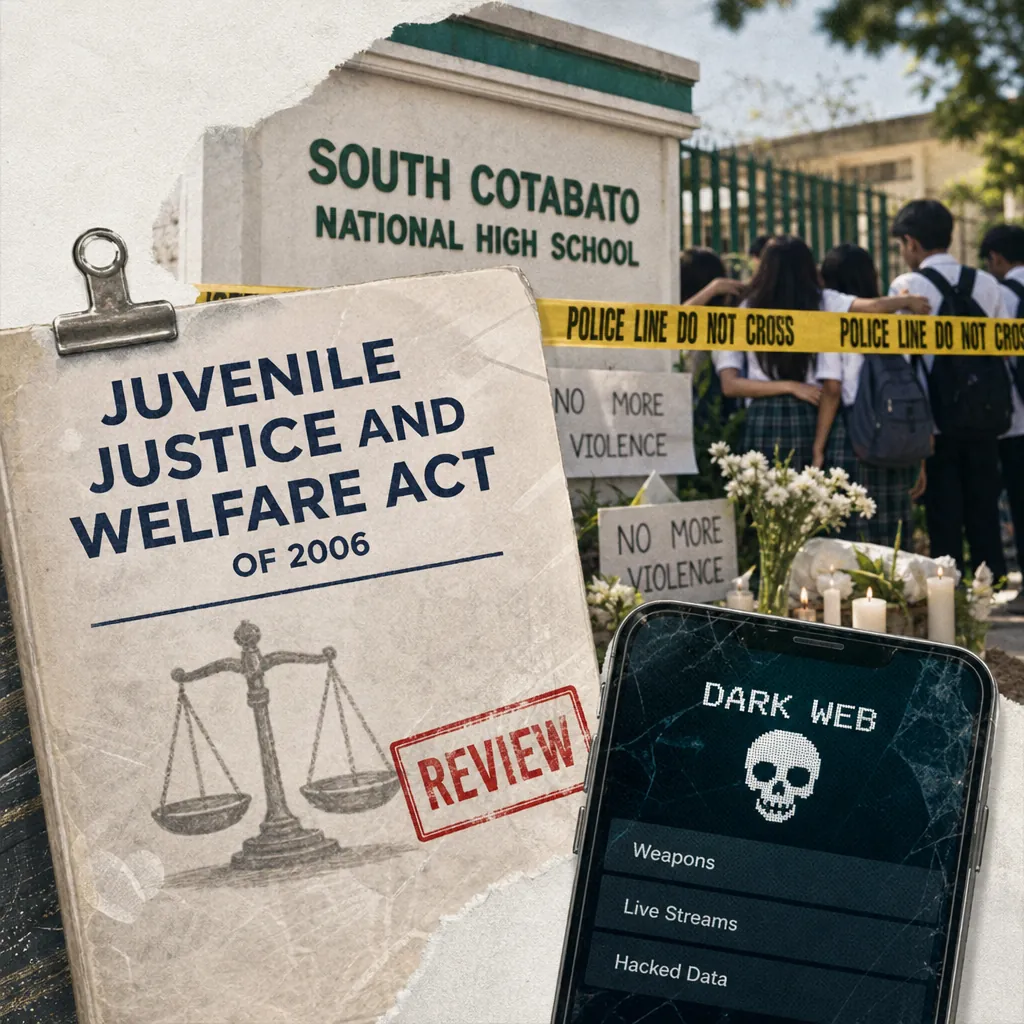
A deadly school shooting in South Cotabato, tied by investigators to the "deep dark web," pushed the Philippine government to weigh internet restrictions for minors and prompted new scrutiny of online scams and digital safety.
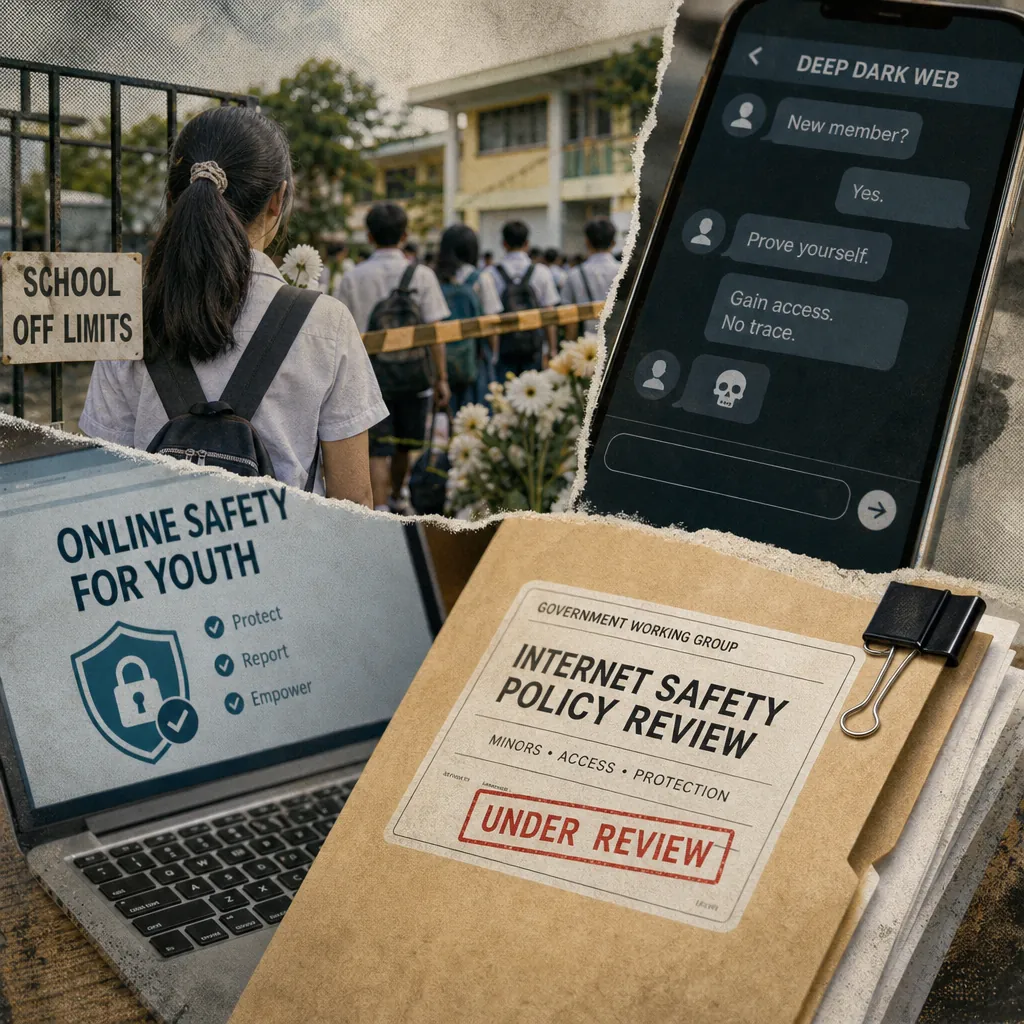
A 16-year-old Grade 9 student opened fire at Banga National High School in South Cotabato on Friday, killing two schoolmates and wounding eight others before shooting himself dead, and by Saturday investigators had tied the attack to what Interior Secretary Jonvic Remulla called the "deep dark web."22 The disclosure, made at a news briefing at Camp Crame in Quezon City, set off a day of official responses that reached from the Department of Education to the Department of Information and Communications Technology, and it pulled the Philippines' patchy record on online safety into the open.1317
Remulla said the suspect had been viewing a website that promotes violence and had left notes on his phone describing his depression and his plans for the attack.22 Police investigators, briefing Banga Mayor Albert Palencia, said the plan had been set as early as August and was initially scheduled for Sept. 3 before being postponed; hours before the shooting, the teenager told friends and classmates in a group chat to go home after lunch because he was about to carry out his plan.10 The warnings were dismissed as jokes because the student was known for joking around, Palencia said.10 The suspect used a firearm owned by his father, a disaster risk mitigation officer, according to investigation findings.22
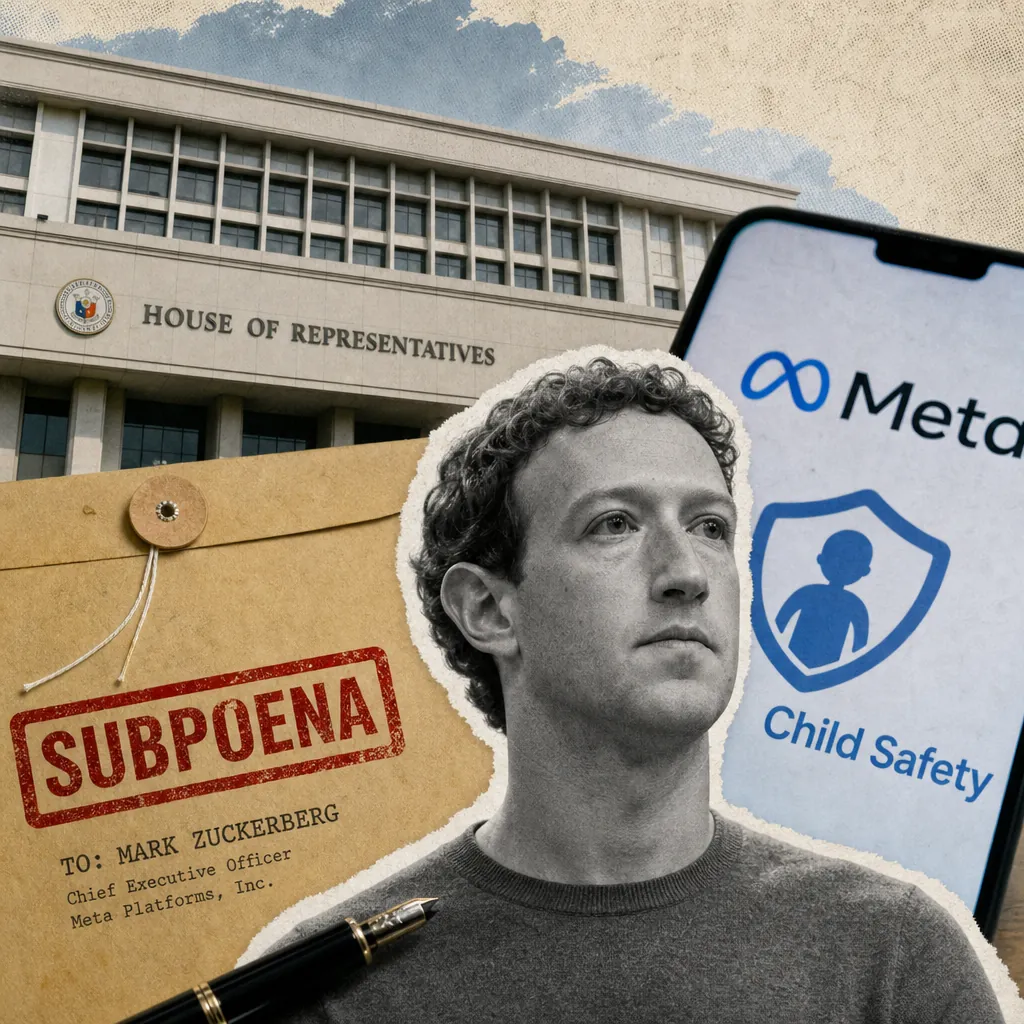
The shooting dominated the day's coverage in the items reviewed here, drawing the heaviest newspaper attention of any story in the set. A single report on the investigation carried an estimated P1.21 million in advertising-equivalent value — the notional cost of buying the same space as paid advertising, not a count of readers.22 The story also produced the day's most consequential policy signal: Remulla said the Department of the Interior and Local Government (DILG) is considering restrictions on internet and social media use by minors, and will coordinate with the Department of Information and Communications Technology (DICT) to study the measure, possibly bringing a proposal to Congress along the lines of a law already enforced in Australia.6
Key themes
- A school shooting is tied to the "deep dark web." Interior Secretary Jonvic Remulla said the 16-year-old suspect in the Banga National High School attack was "heavily involved in the deep dark web" and had viewed a violence-promoting website, though he did not name the site or say any specific community directly prompted the shooting.1322
- The attack was planned for weeks and warned about in a group chat. Investigators recovered conversations showing the plan dated to August, with an initial date of Sept. 3, and that the suspect told classmates to leave school before lunch on the day of the shooting; the warnings were treated as jokes.10
- The government is weighing limits on minors' internet access. The DILG will work with the DICT to study restricting internet and social media use by minors, and may take the proposal to Congress, citing Australia's approach as a model.6
- The Education department says it was not prepared. Education Secretary Sonny Angara acknowledged the department was not ready for this kind of incident because it had focused on academic performance, and said it is studying metal detectors and more school counselor associates for mental health support.17
- AI-powered scams are getting harder to spot. A Manila Times report on Infobip's Fraud and Security Trends 2026 found harmful message detections rose 77 percent year-on-year in 2025, with phishing now accounting for 49 percent of all blocked harmful content.3
- A celebrity scam attempt put a face on the fraud problem. Actor Baron Geisler warned his followers after a woman posing as a fan asked him to call her about an "urgent" matter and then appeared to be doing something inappropriate on camera; he said he learned he was not the only target and that the scheme had been running for some time.1
- Small businesses face disruption from AI, a trade official warns. Matthew Wilson, Barbados' ambassador to the World Trade Organization and chair of its informal working group on micro, small and medium enterprises, said service-based small firms in Southeast Asia must adapt to the dislocation AI will bring.5
- A telecom is scaling up AI in customer service. Software company UiPath said PLDT has expanded its use of AI and automation, including a knowledge-retrieval tool that cuts response times from up to five days to one to three seconds and is estimated to save 25,000 to 30,000 hours of manual work a year.11
How the narratives stack
Dominant: The Banga National High School shooting and its online dimensions. Across the items captured here, this was the most heavily covered story, with multiple reports from Philstar Online and Manila Times Online and the largest single advertising-equivalent value in the set at an estimated P1.21 million.22 The coverage moved quickly from the facts of the attack to the suspect's online activity, his mental health, and the failure of adults and institutions to act on warning signs.101317 The dominance is a property of this captured set, which was weighted toward national news and business pages; it is not a claim about the whole of the day's media.
Counter-narrative: The government's instinct to restrict minors' internet access drew a parallel to Australia's under-16 social media rules, but the reporting also surfaced the limits of that approach. Remulla did not name the website or online community involved and stopped short of saying any specific site prompted the shooting, leaving open the question of whether blocking access would have changed the outcome.1322 The Education department's admission that it was unprepared, and its focus on counselors and metal detectors rather than online monitoring, points to a school-safety response that is still being defined.17
Emerging: The broader digital-safety agenda. The same day's coverage included AI-powered scam trends, a celebrity's warning about a fan-impersonation scheme, a trade official's warning about AI disruption for small businesses, and a telecom's expansion of AI in customer service.13511 These stories are not yet connected in public discussion, but together they describe a country adopting AI quickly while its defenses against online harm lag.
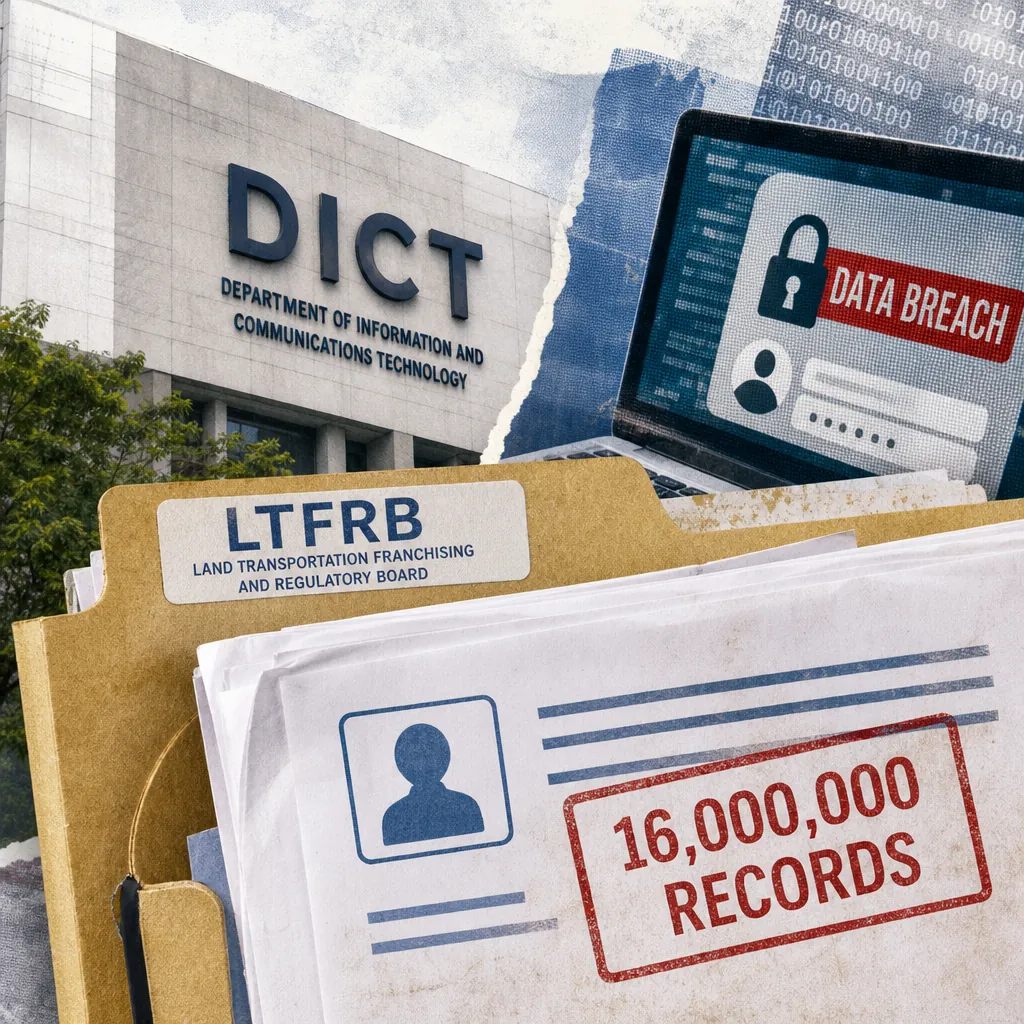
Under-covered: The LTFRB data breach. The Land Transportation Franchising and Regulatory Board confirmed that its Electronic Support System, known as LESS, was breached and took the platform offline, suspending all transactions until further notice, but said the specific data involved and the full extent of the impact remain subject to technical validation.12 The story appeared in a single blog item in this set and did not draw the attention given to the school shooting, even though it affects transport operators and motorists who rely on the system.
Platform insights
Facebook: The day's most visible social activity came from public figures using the platform to speak directly to followers. Senator Robin Padilla used a Facebook livestream to confirm his plan to migrate to an Islamic country with his family, a statement that was then picked up by news outlets.7 The platform functioned as a primary channel for announcements that would previously have gone through press conferences.
Instagram: Actor Baron Geisler used an Instagram Story to warn followers about a scam attempt, describing how a woman posing as a fan asked him to call her and then appeared to be doing something inappropriate on camera.1 The format — a short, personal, disappearing post — is well suited to quick safety warnings, and the story was amplified by Manila Bulletin Online.
X and Reddit: The items reviewed here did not include measurable activity from these platforms, so no engagement figures can be reported for them. The conversation around the school shooting and the proposed internet restrictions for minors is likely to develop on these platforms in the coming days, but that is a forward-looking observation, not a measured one.
YouTube and video platforms: Abante News used a short-form video format to report on the DILG's consideration of internet restrictions for minors, packaging the story for mobile viewing.6 The format suggests the policy debate is reaching audiences through social video as much as through text news.
Key voices and communities
Government officials: Interior Secretary Jonvic Remulla was the most quoted figure of the day, disclosing the suspect's online activity and floating restrictions on minors' internet use.61322 Education Secretary Sonny Angara followed with an admission of unpreparedness and a list of possible school-safety measures.17 Their statements set the terms of the policy debate.
Law enforcement and local officials: The Philippine National Police and Banga Mayor Albert Palencia provided the investigative detail — the August planning, the Sept. 3 postponement, the group-chat warnings — that turned the shooting from a single event into a story about missed signals.1022
Children's rights advocates: A Manila Times column by children's rights advocate Dr. Murray Heasley's organization challenged telecommunications companies PLDT, Globe Telecom and Dito Telecommunity, as well as corporations and the clergy, over the sexual abuse and exploitation of Filipino children, including online.9 The column also raised a dispute with the Zambales II Electric Cooperative, which it said was refusing to replace a busted transformer until a children's home paid P125,123.9
The business and technology sector: UiPath and PLDT represented the corporate side of the AI story, with PLDT's expanded use of automation presented as a customer-service improvement.11 Matthew Wilson of the World Trade Organization represented the international policy view, warning that AI will dislocate service-based small enterprises.5
Media and civic organizations: The Philippine Daily Inquirer ran a "Silver Sessions" event to teach seniors about AI and cybersecurity, an effort to bring older Filipinos into the digital-safety conversation.4 The Manila Times ran a Sunday business feature on whether the Philippines is prepared for AI-powered scams.3
Narrative streams
A school shooting puts the "deep dark web" in the spotlight
The 16-year-old suspect in the Banga National High School shooting had been exposed to what Interior Secretary Jonvic Remulla called the "deep dark web," a term officials used to describe hidden or hard-to-find online spaces, and had left notes on his phone about his depression and his plans.1322 Remulla said the suspect had been viewing a website that promotes violence but declined to name it, and he stopped short of saying any particular site or community directly prompted the attack.22 Police investigators told Mayor Palencia that the plan dated to August and was first set for Sept. 3; hours before the shooting, the suspect told friends and classmates in a group chat to go home after lunch because he was about to carry out his plan, and the warnings were dismissed as jokes.10 The suspect used a firearm owned by his father, a disaster risk mitigation officer.22
The read for the sector: schools, parents and platforms are now under pressure to detect and act on online warning signs that, in this case, were visible to classmates in a group chat but not to any adult with the authority to intervene. The Department of Education's response — studying metal detectors and hiring more school counselor associates — addresses the physical and mental-health sides of the problem but does not yet describe how schools would monitor or respond to online threats.17 For technology companies, the case raises the question of what responsibility platforms bear when a user's online activity is later cited in a violent attack, even if no specific site is blamed.
The government considers restricting minors' internet access
The DILG is considering restrictions on internet and social media use by minors and will coordinate with the DICT to study the measure, Remulla said, adding that the proposal could go to Congress and citing Australia's restrictions on young people's social media access as a model.6 Australia's law, which sets an age floor for social media accounts, is one of the first national attempts to keep children off major platforms; the Philippine proposal is at an early stage and no draft has been published.
The read for the sector: internet service providers, social media platforms and device makers would face new compliance questions if the Philippines adopts age-based restrictions, including how to verify ages without collecting more personal data and how to enforce limits without cutting off access to education and government services. The DICT's own budget is already under scrutiny in Congress, with the department and its attached agencies proposing P19.49 billion for fiscal year 2027, about seven percent higher than the 2026 allocation, against a digital economy the Philippine Statistics Authority estimates generated P2.74 trillion in 2025, or 9.8 percent of gross domestic product, and employed 10.39 million Filipinos.20 Any new enforcement mandate would land on a department whose funding is being debated on the same principle — that digital infrastructure is economic infrastructure.20
AI-powered scams get harder to detect
A Manila Times report on Infobip's Fraud and Security Trends 2026, which analyzed billions of interactions globally, found that harmful message detections grew 77 percent year-on-year in 2025 and that phishing now accounts for 49 percent of all blocked harmful content — nearly one in every two blocked messages.3 The report's framing is that fraudsters have adopted artificial intelligence to automate attacks at scale, personalize messages until they are nearly indistinguishable from legitimate communications, and adapt to blocking measures faster than static defenses can respond.3
The read for the sector: banks, telecoms and messaging platforms face a moving target, because the defenses that worked when scams were identifiable by poor grammar and implausible requests no longer catch messages written by AI. For ordinary Filipinos, the practical consequence is that the old advice — look for typos, check the sender — is less reliable, and verification through a second channel becomes more important.
A celebrity scam attempt shows the playbook
Actor Baron Geisler warned his followers after a woman posing as a fan messaged him saying she needed to call him about something "urgent."1 He returned the call and noticed the woman doing something inappropriate on camera, which led him to conclude it was a scam.1 He said he learned he was not the only target and that the scheme had been running for some time, and he urged the public to be careful about random calls and messages, especially from people they do not know personally.1
The read for the sector: the incident illustrates a low-tech entry point — a direct message and a phone call — that does not require sophisticated AI, and it shows how public figures can use their platforms to warn audiences. For platforms, the case is a reminder that impersonation and social-engineering attacks often begin in direct messages, where automated detection is harder than in public posts.
Small businesses face AI disruption, a trade official warns
Matthew Wilson, Barbados' ambassador to the World Trade Organization and chair of its informal working group on micro, small and medium enterprises, said service-based small enterprises in Southeast Asia, including the Philippines, should learn to adapt to the evolving AI landscape.5 "One of the biggest issues that I see with the service sector in MSMEs in Southeast Asia and in parts of Africa right now, like Kenya, will be the dislocation that will happen with AI," Wilson said.5 He said small and medium enterprises providing back-office services must first recognize that AI could displace that work.5
The read for the sector: micro, small and medium enterprises — the businesses that make up the large majority of Philippine firms and employment — are being told to prepare for a shift that many have neither the capital nor the expertise to manage. The warning matters because back-office and business-process services have been a major source of Philippine employment, and AI tools that automate those tasks could reduce demand for the workers who perform them.
A telecom scales up AI in customer service
Software company UiPath said PLDT has expanded its use of artificial intelligence and automation to improve customer service and operational processes as demand for digital connectivity grows.11 PLDT has integrated business orchestration and agentic capabilities from the UiPath Platform into initiatives including knowledge retrieval, customer support and risk management.11 One initiative, KAI (Knowledge, Automation, Intelligence), reduces knowledge-retrieval work from a process that could take up to five days to one that produces contextual responses within one to three seconds, and is estimated to reduce 25,000 to 30,000 hours of manual work annually, equivalent to about 12 full-time employee positions.11 PLDT also uses Ellie (Enablement and Intelligence Engine), an internal AI-powered digital assistant.11
The read for the sector: the same AI capability that a trade official warns will dislocate small service businesses is being deployed by a large telecom to cut internal labor hours, which shows how the technology's effects are uneven — large firms capture the efficiency gains while smaller competitors and their workers absorb the disruption. For PLDT customers, the practical change is faster responses; for the labor market, the change is fewer manual hours in one company's operations.
A transport agency's data breach leaves services offline
The Land Transportation Franchising and Regulatory Board (LTFRB) confirmed that its data environment was breached and took its online transaction system, the LTFRB Electronic Support System (LESS), offline, suspending all services and transactions through the platform until further notice.12 The agency issued a public advisory after days of questions from a transport-sector coalition, and said the specific data involved and the full extent of the impact remain subject to technical validation.12
The read for the sector: transport operators and motorists who rely on LESS for franchise and regulatory transactions have no online alternative while the system is down, and the agency has not said what personal or business data may have been exposed. For other government agencies running online services, the breach is a reminder that public-facing transaction systems hold data that is valuable to attackers and that disclosure timelines matter to the people affected.
Other stories in the day's coverage
The day's items also included several stories outside the technology and safety thread. The Philippine Atmospheric, Geophysical and Astronomical Services Administration (Pagasa) said the southwest monsoon, or habagat, would continue to affect the western portions of Southern Luzon and the Visayas over the next three to five days, with generally fair weather and occasional rains over Metro Manila.2 Government agencies, civic organizations and volunteers joined the 41st International Coastal Cleanup at Baseco, Manila, where the site coordinating managing director of the Manila Bay Site Coordinating Management Office of the Department of Environment and Natural Resources-National Capital Region said the area has changed significantly but still has scattered trash and high fecal coliform levels.14 A Manila Times column described how landslides closed roads in Benguet, including Halsema Highway at Paoay in Atok on Aug. 9, and how the Department of Public Works and Highways in the Cordillera Administrative Region counted 186 calamity-affected road sections by Aug. 13, with Pagasa recording 1,413 millimeters of rain in Baguio and Benguet between Aug. 1 and 9.8 Senator Robin Padilla said he and his wife, Mariel Rodriguez-Padilla, had decided to migrate to an Islamic country to raise their child, and that he would finish his Senate term through 2028.7 DreamWorks' animated film "Forgotten Island," set for a Sept. 25 release, drew social media attention for its depictions of Filipino culture, including mythological creatures such as the manananggal.15 Philippine wushu athlete Agatha Chrystenzen Wong prepared for the women's taijiquan and taijijian events at the 20th Asian Games in Nagoya, Japan, aiming for a podium finish.16 A man listed as a regional most wanted person was arrested at the Dasmariñas City police station in Cavite while applying for a police clearance, after his name appeared in the clearance system.21 A Philippine Daily Inquirer feature profiled Elena Laddran, a Filipina teacher who has lived and worked in Kazakhstan for two decades.19 The Philippine Daily Inquirer also held a "Silver Sessions" event to teach senior citizens about AI and cybersecurity, part of an effort to keep older Filipinos engaged with a changing digital world.4
Conversation trajectory
Over the next one to two weeks: The DILG-DICT study on restricting minors' internet access will produce early signals about whether the proposal moves toward a draft bill or stalls. Watch for statements from the DICT, which is simultaneously defending its proposed P19.49 billion budget for fiscal year 2027 in Congress, and for any reaction from telecommunications companies and social media platforms.620
Over the next two to four weeks: The Department of Education's review of school security measures, including metal detectors and additional counselor associates, will move from announcement to budget request. Watch for whether the department's plan includes any online-threat monitoring, which its initial statement did not describe.17
Over the next one to three months: The LTFRB's technical validation of the LESS breach will determine what data was exposed and how many transport operators and motorists are affected. Watch for the agency's disclosure of the scope of the breach and for any regulatory action against the board over its handling of the incident.12
Trigger events: A congressional hearing on the DICT budget, any filing of an internet-restriction bill, the release of the LTFRB's breach findings, and the next Infobip or similar fraud report that updates the 77 percent detection growth figure.361220
Response guidance
For technology and telecommunications companies: Prepare for questions about how your platforms detect and remove violent or harmful content, and about what data you hold on minors. The DILG's proposal to restrict minors' internet access will put age-verification and content-moderation practices under scrutiny, and the LTFRB breach will keep attention on how public and private systems protect user data.612
For schools and education officials: The Banga shooting showed that warning signs can appear in group chats that adults never see. Consider how teachers and counselors can be trained to recognize and escalate online threats, and how students can report concerns without fear of being dismissed as joking.1017
For banks, payment providers and messaging platforms: The rise in AI-personalized phishing means customer education that relies on spotting bad grammar is outdated. Focus on verification through a second channel and on clear, simple warnings about impersonation attempts, including those that begin with a direct message and a phone call.13
For small and medium enterprises: The WTO warning about AI dislocation in service work is a prompt to assess which back-office tasks could be automated and to plan for retraining or redeployment. Businesses that adopt AI tools early may capture efficiency gains, but those that do not may lose contracts to competitors that do.5
For government agencies running online services: The LTFRB breach is a case study in disclosure. Tell affected users what happened, what data may be involved, and when services will return, even while technical validation is ongoing, because silence during an outage fuels speculation and erodes trust.12
For communicators across the sector: The day's most-shared items were personal and direct — a celebrity's Instagram warning, a senator's Facebook livestream — rather than institutional statements. When addressing online safety, consider using the same direct, first-person formats that audiences already engage with.17
See the full picture behind today's signals.
This report draws from Media Meter's MediaWatch, our real-time monitoring engine tracking 2,470+ Philippine sources across print, broadcast, digital, and social. Explore how the platform turns raw coverage into decision-grade intelligence, then see how it's configured for teams like yours — whether you're in PR agencies, corporate comms, government, or marketing.
Want more? Browse our Report Library for sector and crisis intelligence, or request a demo and we'll have your brand set up before the call.
Want this kind of intelligence on your brand?
This brief is built on the same MediaWatch methodology that runs continuously across every brand we monitor. See your competitive landscape, Impact Score, and narrative trajectory in a 30-minute demo.