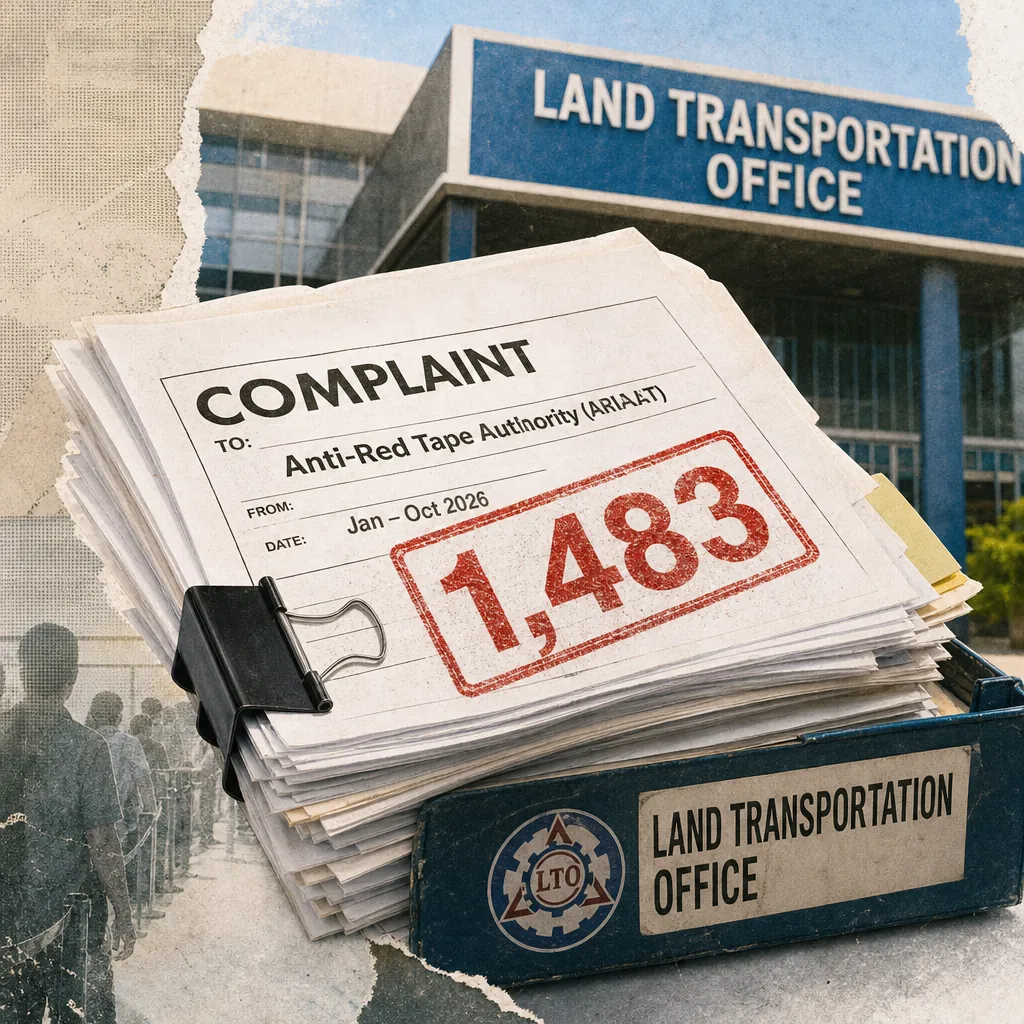
Senate budget hearings put FDA, DICT and DOH under scrutiny
Senators used the 2027 budget deliberations to question the FDA on flavored air and energy drinks, press the DICT on abortion-drug pages and data breaches, and flag 16 million expiring COVID-19 syringes at the health department. Telco consolidation, fiber growth and a P2.2-billion Iloilo water project rounded out the day's coverage.
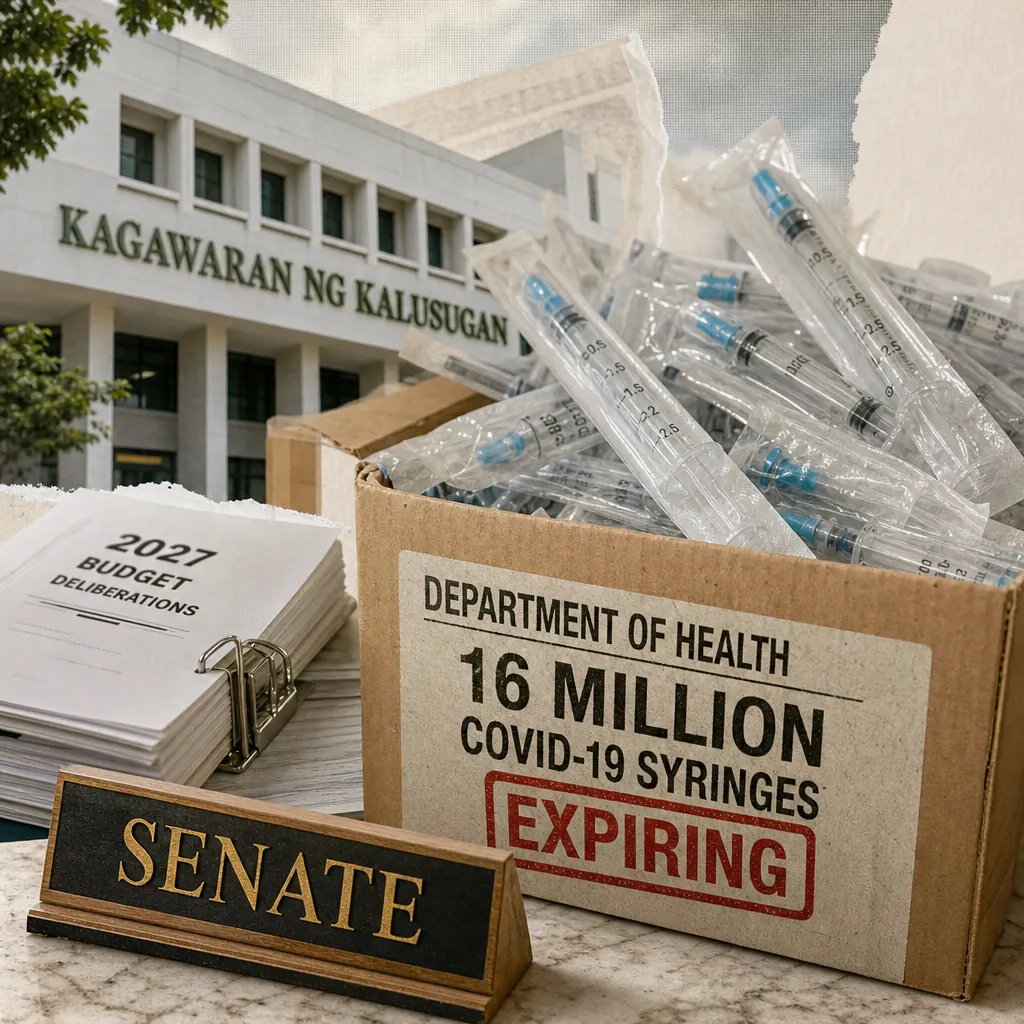
Senators turned the 2027 budget hearings into a set of pointed questions about how the country's regulators watch what Filipinos buy, breathe and click. Sen. Pia Cayetano asked the Food and Drug Administration (FDA) how it monitors "flavored air" products and highly caffeinated energy drinks aimed at young people, warning they may be skirting the restrictions that already apply to electronic cigarettes1. In the same round of deliberations, Senate President Pro Tempore Vicente "Tito" Sotto III pressed the Department of Information and Communications Technology (DICT) to crack down on Facebook groups selling abortifacients, drugs used to end a pregnancy, which are illegal in the Philippines2. Sen. Raffy Tulfo flagged more than 16 million unused COVID-19 vaccination syringes worth ₱41.6 million sitting in a warehouse and due to expire in 202713.
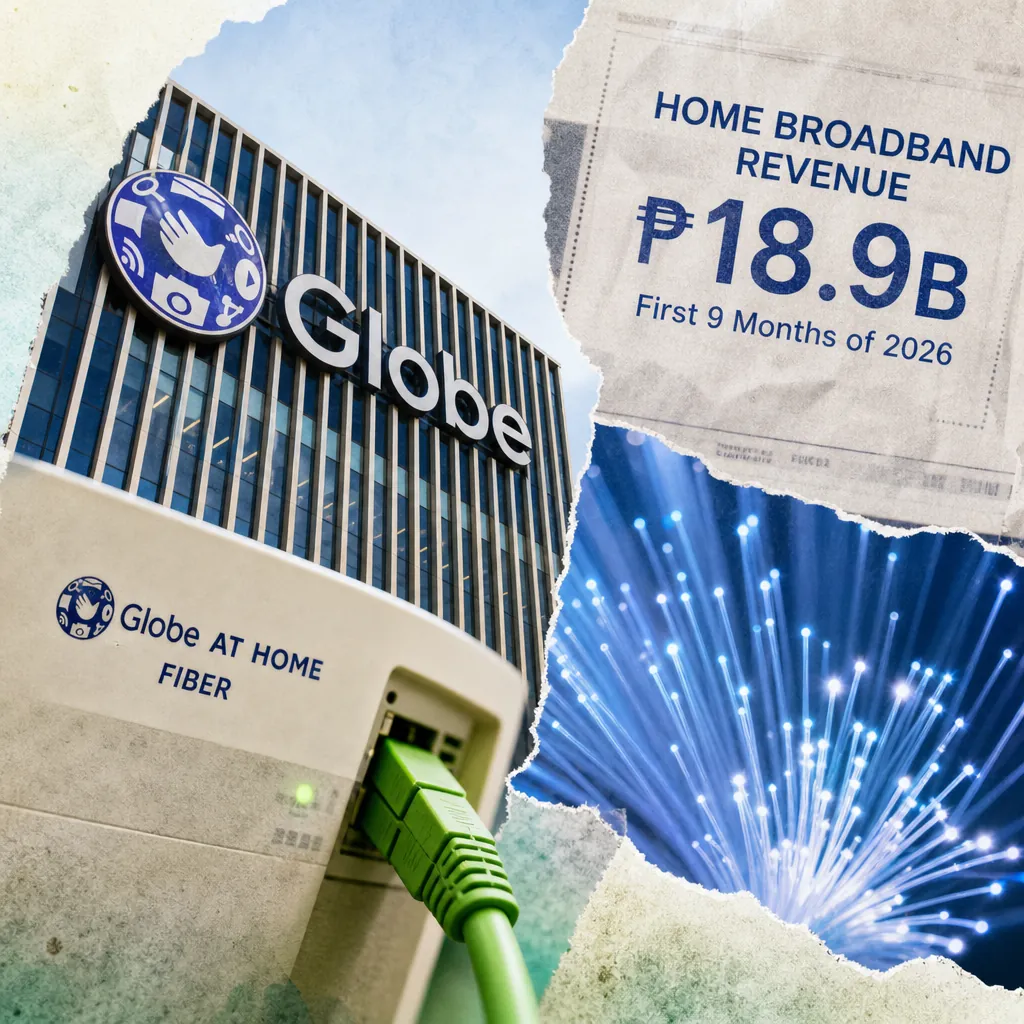
The day's business and technology coverage ran on a separate track. PLDT Inc. chairman Manuel V. Pangilinan's argument that four telecommunications players are "untenable" in a small market drew a rebuttal from internet advocates, who said a merger would raise prices without improving service20. Globe Telecom Inc. reported blocking 775.6 million spam and scam texts in the ten months to October26, while its home broadband unit posted a 30% year-on-year rise in fiber subscribers9. Smart said its 5G network now covers 6,100 base stations10. President Ferdinand Marcos Jr. and Pangilinan broke ground on a ₱2.2-billion bulk water project in Iloilo, with the President directing agencies to use irrigation dams to shore up supply as a "super" El Niño approaches2717.
The items gathered here span a wide range of subjects, from a Senate editorial on a Grade 3 textbook's QR code to a volleyball finals preview, and the technology and telecommunications thread is the one that carries the most consequence for the sector. The budget hearings matter because they are one of the few moments when legislators can force agencies to explain, on the record, how they enforce laws that already exist. The corporate items matter because they show where the money and the market structure are heading. Neither is a crisis; both are signals worth tracking into December.
Key themes
- Senators question how the FDA polices nicotine-adjacent and stimulant products sold to minors. Cayetano raised "flavored air" and high-caffeine energy drinks during the Department of Health (DOH) budget deliberations, asking the FDA how it monitors products that may circumvent e-cigarette restrictions and how it warns the public1. The exchange puts the agency's enforcement capacity on the record.
- The DICT is asked to police illegal abortion-drug sales on Facebook. Sotto said a quick search still turns up groups offering abortifacients, and asked whether the DICT can crack down and monitor such pages regularly2. The DICT's budget sponsor, Cayetano, said the agency was willing to partner with the Department of Justice.
- More than 16 million COVID-19 syringes worth ₱41.6 million sit unused and expire in 2027. Tulfo said a Senate team found the boxes at the Tala warehouse, ordered from 2022; DOH budget sponsor Sen. JV Ejercito said the syringes arrived late and other stock had to be used13.
- Internet advocates reject the case for telco consolidation. Better Internet Philippines' Grace Mirandilla Santos said consolidation "often results in higher consumer prices with little to no improvement in quality of services," and Democracy.Net.PH's Pierre Tito Galla said fewer players would reduce pressure to improve coverage and offers20.
- Globe blocked 775.6 million spam and scam texts in ten months. The company also blacklisted 184,491 SIM cards and deactivated 62,661 in the January-to-October period, using behavioral analytics and machine learning to spot fraud patterns26.
- Globe's home broadband unit grew fiber subscribers 30% year-on-year. Globe AT HOME revenues reached ₱18.9 billion in the first nine months of 2026, up 6% from ₱17.8 billion, with fiber at about 93% of broadband revenues9.
- Smart's 5G network reached 6,100 base stations serving 12.9 million 5G devices. Mobile data traffic hit 5,029 petabytes in the first nine months of 2026, up from 4,393 petabytes a year earlier10.
- The DICT says no money was stolen in reported government data breaches. Secretary Robert Joseph De Claro said the compromised information was already public, that agencies must report breaches within two hours, and that AI is making threats more sophisticated23.
How the narratives stack
Dominant. The Senate budget hearings carried the most consequential material in this set. Three separate exchanges — on flavored air and energy drinks1, on abortion drugs sold through Facebook2, and on the unused syringe stock13 — put regulators under direct questioning about enforcement, and each produced a concrete figure or admission. The flavored-air exchange is the most forward-looking: Cayetano described the products as a way of "beating around" existing e-cigarette restrictions, which means the question is not whether the products exist but whether the FDA has the tools to classify and monitor them. The syringe story is the most concrete: 16 million units, ₱41.6 million, a 2027 expiry, and an explanation from Ejercito that the order arrived after the emergency had passed13.
Counter-narrative. The telco consolidation debate is the clearest counter-narrative in the set. Pangilinan's position — that four players cannot survive in a market this size — is met directly by advocates who argue the opposite: that fewer players means higher prices and weaker service20. The BusinessMirror item carries the largest advertising-equivalent value in this set, at roughly ₱1.5 million, which reflects the prominence the outlet gave the story rather than how many people read it. The advocates' argument leans on the Konektadong Pinoy Act, a law that lowered barriers to entering the telecommunications market; they read it as evidence that the policy direction has been toward more competition, not less20.
Emerging. Two threads are building without resolution. The first is cybersecurity: the DICT's assurance that no funds were stolen in recent government breaches23 sits alongside Globe's disclosure that it blocked 775.6 million scam texts in ten months26. Both point to the same underlying problem — fraud and intrusion attempts at scale — and both are being answered with detection technology rather than with a change in the rules. The second is the AI governance structure. Executive Order 131, signed November 12, 2026, adopted the Philippine AI Governance Framework and created the National Artificial Intelligence Council, an interagency body chaired by the executive secretary with the DICT, the Department of Science and Technology and the economic planning secretary among its members4. A Manila Times column questioned whether another council of the same Cabinet members adds capacity; the structure itself is now in place and will shape how AI rules are written.
Under-covered. The Batang Ligtas (Safe Child) Act, a bill meant to control children's access to abusive content online, has not yet been signed by the President, and a Panay News piece reported that teenage boys viewing child sexual abuse material on smartphones and then assaulting young girls is a common but largely unreported pattern14. The existing law, Republic Act 11930, already requires telecommunications companies and internet service providers to block child sexual abuse images; the new bill would add obligations. This story ran in a regional outlet and drew no Senate airtime in the items captured here, even as the same hearings spent hours on syringes and expressway delays.
Platform insights
- Facebook. The day's most specific platform problem surfaced in the Senate: Sotto said a quick search on Facebook still returns numerous groups promoting abortion and offering abortifacients for sale2. That is a content-moderation gap described on the record by a legislator, and it puts the DICT in the position of deciding whether to monitor and request takedowns. The same hearing produced no comparable claim about any other platform.
- X and Reddit. No posts from these platforms appear in the material gathered for this window, so there is no engagement evidence to report. The absence is a property of what was captured, not a finding about how those platforms behaved.
- YouTube. The Senate sessions were streamed on the Senate of the Philippines' YouTube channel, and the Inquirer's reports on Cayetano and Padilla used screengrabs from that feed15. The hearings therefore reached audiences through video as well as through written reports, though the items here give no view counts.
Key voices and communities
Senators on the finance committee. Cayetano, Sotto, Tulfo and Ejercito drove the day's regulatory questions. Cayetano framed the flavored-air issue as a workaround of e-cigarette rules1; Sotto framed the abortion-drug pages as an enforcement failure2; Tulfo framed the syringes as procurement that chased a fading emergency13. Ejercito, as sponsor of the health budget, supplied the agencies' explanations.
Internet and digital-rights advocates. Better Internet Philippines and Democracy.Net.PH are the organized opposition to telco consolidation. Their argument is economic: competition produces lower prices and better service, and consolidation does the reverse20. They matter because they are the group most likely to file positions with the Philippine Competition Commission if a merger is formally notified.
Telecommunications and technology companies. Globe, Smart and PLDT are the principal corporate voices. Globe's disclosures on spam blocking26 and fiber growth9 are both a business update and a public-positioning exercise; Pangilinan's "untenable" remark20 is the clearest statement yet that the industry's largest player wants the market structure revisited.
The DICT. Secretary De Claro is the government's main technology voice in this set, answering on data breaches23 and, through Cayetano, on the abortion-drug pages2. The department is simultaneously the regulator, the cybersecurity coordinator and a member of the new AI council4.
Consumer and public-interest groups outside tech. The Gabay Guro teacher-support program, marking its Grand Gathering on November 29 at the Meralco Theater, is the day's largest non-regulatory community story, with more than 50,000 teachers trained and 2,272 scholars graduated since 2007736. It is not a technology story, but it shows where public attention goes when the Senate is not in session.
Narrative streams
The FDA is asked how it monitors "flavored air" and high-caffeine drinks
Cayetano's questions to the FDA during the DOH budget deliberations centered on two product categories: so-called "flavored air" products and highly caffeinated energy drinks1. Her concern was that both are marketed in ways that reach young people, and that flavored air in particular may be a route around the restrictions that already apply to electronic cigarettes. "This product ngayon is called 'flavored air.' It's their way now of beating around" the existing rules, she said, according to the Inquirer report1.
The exchange matters because the FDA's authority depends on classification. A product sold as a consumer good rather than as a tobacco or nicotine product falls under a different set of rules, and the agency's ability to act depends on whether it can establish that the product is being used or marketed as a nicotine delivery system. Cayetano asked how the agency monitors such products and how it informs the public of their risks1. The report does not record the FDA's answer, which leaves the enforcement question open.
For the food, beverage and consumer-health sectors, the practical consequence is that products positioned at the edge of existing categories will face more legislative scrutiny in the coming budget cycle. Companies that sell energy drinks or inhalable flavored products should expect questions about labeling, caffeine content and youth marketing to move from committee hearings into proposed amendments. The Inquirer item carried an estimated ₱540,540 in advertising-equivalent value, a measure of the space the story occupied rather than of its audience.
The DICT is pressed on abortion drugs sold through Facebook groups
Sotto's question to the DICT was direct: can the agency crack down on Facebook groups selling abortifacients and regularly monitor so that no such group or page operates2? He said a quick search on Facebook still returns numerous groups, and that within them people openly offer the drugs, which are illegal in the Philippines2.
Abortifacients are substances used to induce an abortion or terminate a pregnancy. Their sale is illegal under Philippine law, and the question Sotto raised is one of platform enforcement: the groups operate on a private company's service, and the government's leverage runs through requests for takedown and through the DICT's coordination with law enforcement. Cayetano, sponsoring the DICT budget, said the agency would be willing to partner with the Department of Justice2.
The read for the digital sector is that platform content moderation is now a budget-hearing issue. Social media companies operating in the Philippines can expect legislators to ask, in public, why illegal commerce remains visible on their services, and the DICT's willingness to partner with prosecutors signals that the response will be enforcement-led rather than rule-making. The Inquirer report carried an estimated ₱230,580 in advertising-equivalent value.
Sixteen million syringes expire in a warehouse as senators question procurement timing
Tulfo said a Senate team's ocular inspection at the Tala warehouse found boxes of roughly 16 million unused syringes intended for COVID-19 vaccination, stocked since 2022 and set to expire in 2027, worth ₱41.6 million13. "Patapos na 'yung COVID, nag-order sila ng pagkarami-raming syringes," he said, describing the order as having chased an emergency that was already ending13. Ejercito, the DOH's budget sponsor, said the syringes arrived late, and that different syringes had to be used because of the urgency of the situation13.
The story is a procurement-timing case rather than a health-supply failure: the vaccines were administered, but the consumables arrived after the need had passed. For suppliers and logistics providers to the health department, the lesson is that delivery schedules are now being audited against the epidemic curve, and that late delivery of emergency goods can become a legislative finding even when the goods themselves were paid for and stored properly. ABS-CBN News carried the report with an estimated ₱412,335 in advertising-equivalent value.
Internet advocates push back on the case for fewer telcos
Pangilinan's argument that four players are "untenable" in a small market drew a direct rebuttal from two advocacy groups20. Santos of Better Internet Philippines said studies show more competition usually brings lower prices and better services, and that the Konektadong Pinoy Act was passed precisely to lower barriers to entry; consolidation, she said, "often results in higher consumer prices with little to no improvement in quality of services"20. Galla of Democracy.Net.PH said fewer players would mean less pressure to improve service, coverage and prices, and that consolidation "could end the pressures for players to develop more consumer-friendly offers"20.
The Konektadong Pinoy Act is the law that opened the telecommunications market to more entrants by easing franchise and infrastructure requirements; the advocates read it as a statement of policy that the country wants more competition, not fewer players. The debate now turns on whether a merger would be reviewed by the Philippine Competition Commission, the independent body that assesses whether combinations substantially lessen competition. No merger has been formally notified in the items captured here, so the outcome is uncertain. What is observable is that the largest player has publicly argued for consolidation and that organized opposition is already prepared. The BusinessMirror report carried an estimated ₱1.5 million in advertising-equivalent value, the highest in this set.
Globe reports 775.6 million blocked scam texts and 30% fiber growth
Globe said it prevented 775.6 million spam and scam texts from reaching Filipinos in the ten months to October, using flooding detection and keyword filtering, and blacklisted 184,491 SIM cards while deactivating 62,66126. Chief information security officer Garrett Silao said the company uses behavioral analytics and machine learning to identify patterns and to learn how fraud evolves26. Separately, Globe AT HOME reported ₱18.9 billion in revenues for the first nine months of 2026, up 6% from ₱17.8 billion, with third-quarter broadband revenues up 2% quarter-on-quarter to ₱6.4 billion and fiber subscribers up 30% year-on-year9. Fiber accounted for about 93% of broadband revenues, up from 91% a year earlier9.
The two disclosures belong together: the scam-blocking numbers are a public-service claim that supports the company's position in policy debates about fraud liability, and the fiber numbers show where its growth is coming from. For consumers, the practical point is that text-based fraud is being filtered at the network level, which shifts the burden of vigilance but does not remove it. For competitors and regulators, the fiber share is the number to watch, because it shows how quickly the market is moving off copper and legacy technologies.
Smart's 5G buildout reaches 6,100 sites as data traffic climbs
Smart said its 5G network reached 6,100 base stations as of September 2026, up from 5,400 in 2025, serving 12.9 million 5G devices and covering 99% of the population in Metro Manila and Rizal and 97% nationwide across 5G and 4G10. Mobile data traffic reached 5,029 petabytes in the first nine months of 2026, up from 4,393 petabytes a year earlier10. The company also rolled out AI-powered services on top of the network, including AI.Smart Workspace and a network-level voice tool called PureVoice10.
A petabyte is a million gigabytes; the traffic figure is a measure of how much data moved across the network, not of how many customers used it. The buildout numbers matter for the same reason the fiber numbers do: they show that the capital spending race between the two major telcos is still running, even as the industry's largest player argues that the market cannot support four competitors20. If consolidation were to proceed, the combined network footprint would be the main asset under discussion.
The DICT says no money was stolen in government data breaches
De Claro said that, based on the information available to the DICT, no money was stolen from accounts in connection with reported data breaches at several government agencies, and that the compromised information was typically already public23. He said agencies must report breaches within two hours and acknowledged that AI is making cyber threats more sophisticated, and that the department is strengthening capabilities and pursuing regional cooperation with ASEAN members and advanced economies23.
The statement is a reassurance with a narrow scope: it addresses monetary loss, not the exposure of personal data, and it does not say how many breaches occurred or which agencies were affected. For the public sector, the two-hour reporting rule is the operative commitment, because it sets a clock that agencies can be held to. For the private sector, the DICT's regional cooperation track is the signal to watch, since cross-border data flows and threat intelligence sharing are where most of the practical work happens.
A new AI council takes shape under Executive Order 131
Executive Order 131, signed November 12, 2026, adopted the Philippine AI Governance Framework and created the National Artificial Intelligence Council, an interagency body reporting to the President4. It is chaired by the executive secretary, with the secretary of Economy, Planning and Development as vice chairman, and the secretaries of the DICT, Science and Technology, Trade and Industry, Finance, Education, Labor and Employment, and Budget and Management, plus the Commission on Higher Education chairman and the Technical Education and Skills Development Authority director general, as members4. The order describes four elements: ethics and principles, standards and assurance, a risk-based policy toolkit, and enabling resources4.
The Manila Times column's question — whether another council of the same Cabinet members adds capacity — is the right one to ask, because the framework's effectiveness will depend on whether the council can issue binding standards or only coordinate. For technology companies, the risk-based toolkit is the part to watch: it implies that obligations will vary by the risk level of the AI application, which is the approach the European Union has taken. The council's first outputs will indicate how strictly the Philippines intends to regulate.
Water security and the Jalaur project
Marcos and Pangilinan led the groundbreaking for the ₱2.2-billion Jalaur Bulk Water Supply Project of the Metro Iloilo Water District in Santa Barbara, Iloilo, a partnership between the National Irrigation Administration and the water district with Metro Pacific as a joint venture partner27. The President said allocation for domestic use is designed to meet community needs "without compromising the irrigation requirements of our farmers," and directed agencies to use irrigation dams to supplement bulk water supply as a "super" El Niño raises the risk of shortages1727. The project will draw 86 million liters per day17.
The Philippine Atmospheric, Geophysical and Astronomical Services Administration (PAGASA) has said the slow-onset effects of the super El Niño may hit hardest in February or March 2027, with below-normal rainfall expected29. For water utilities and their private partners, the project is a template: irrigation infrastructure used to supply households, with the farm sector's allocation protected in principle. Whether that protection holds in a drought year is the question farmers will test.
Conversation trajectory
Senate budget hearings, through the end of the 2027 budget cycle (observation window: the next two to three weeks). The hearings are still in progress, and the FDA, DICT and DOH will return for plenary debates. Watch for the FDA to be asked for a written answer on how it classifies flavored-air products, and for the DICT to be asked for a specific takedown count on abortion-drug pages. A concrete commitment in either area would move the story from questioning to policy.
Telco consolidation, over the next quarter. No merger has been notified in the items captured here. The trigger to watch is a formal filing with the Philippine Competition Commission; if one appears, the advocates' arguments20 become a formal opposition rather than a press comment. Pangilinan's "untenable" remark is the clearest signal that a filing is being considered.
AI governance, over the next three to six months. Executive Order 131 is in force4, and the National Artificial Intelligence Council's first standards or toolkit will show whether the risk-based approach produces binding rules. The DICT's cybersecurity work23 and the council's standards work are likely to intersect on AI-generated fraud.
El Niño and water supply, through the first half of 2027. PAGASA expects below-normal rainfall by February and March 202729. The Jalaur project will not be complete in that window, so the near-term test is whether the directive to use irrigation dams for household supply17 produces visible allocation decisions during the dry season.
Trigger events. The Gabay Guro Grand Gathering on November 29736 will draw entertainment and education coverage. The Senate's plenary votes on the DOH and DICT budgets will produce the next round of agency commitments. Any Philippine Competition Commission action on telecommunications will reopen the consolidation debate.
Response guidance
Regulated product companies: prepare for classification questions. Food, beverage and consumer-health businesses selling energy drinks or inhalable flavored products should be ready to explain, in plain terms, how their products are classified, what the caffeine or nicotine content is, and how they are kept away from minors. The Senate hearing showed that legislators will ask the FDA to account for products that sit at the edge of existing categories1; companies that can answer those questions before they are asked are in a better position than those that cannot.
Platform operators: treat illegal-commerce pages as a budget-hearing issue. The DICT has been asked publicly to monitor and crack down on Facebook groups selling abortifacients2. Platforms should expect requests for takedown data and should be prepared to report what they removed and how quickly, because the question has moved from general content moderation to specific illegal commerce.
Telecommunications companies: separate the service record from the market-structure argument. Globe's spam-blocking and fiber numbers269 and Smart's 5G buildout10 are the strongest material the industry has for showing that competition is producing investment. Companies arguing for consolidation should expect those numbers to be used against them, and should be ready to explain why a smaller number of players would not reduce the investment that produced them.
Public-sector communicators: put a number on the two-hour breach rule. The DICT's assurance that no money was stolen23 answers a narrow question. Agencies should be prepared to say how many breaches were reported, how many met the two-hour deadline, and what data was exposed, because those are the questions the reassurance invites.
Health and education communicators: expect procurement and content questions to keep surfacing. The syringe stock13 and the Grade 3 textbook QR code that led to a video by China Global Television Network30 are different stories with the same shape: a specific item, found by a legislator, that raises a broader question about how the agency checks what it buys and what it teaches. Agencies should have item-level answers ready rather than general assurances.
All sectors: watch the water and weather calendar. The Jalaur project1727 and PAGASA's February–March 2027 outlook29 set a timetable that will affect utilities, agriculture and local governments. Companies with operations in Iloilo and Western Visayas should track allocation decisions during the dry season.
See the full picture behind today's signals.
This report draws from Media Meter's MediaWatch, our real-time monitoring engine tracking 2,470+ Philippine sources across print, broadcast, digital, and social. Explore how the platform turns raw coverage into decision-grade intelligence, then see how it's configured for teams like yours — whether you're in PR agencies, corporate comms, government, or marketing.
Want more? Browse our Report Library for sector and crisis intelligence, or request a demo and we'll have your brand set up before the call.
Want this kind of intelligence on your brand?
This brief is built on the same MediaWatch methodology that runs continuously across every brand we monitor. See your competitive landscape, Impact Score, and narrative trajectory in a 30-minute demo.