NTC Orders SIM Verification as Telcos Push AI Networks
The National Telecommunications Commission gave mobile operators 15 days to verify subscribers holding more than 100 SIM cards each, while a separate report described PLDT, Globe, Converge and DITO building AI-ready networks. Globe and Converge also reported corporate governance awards.
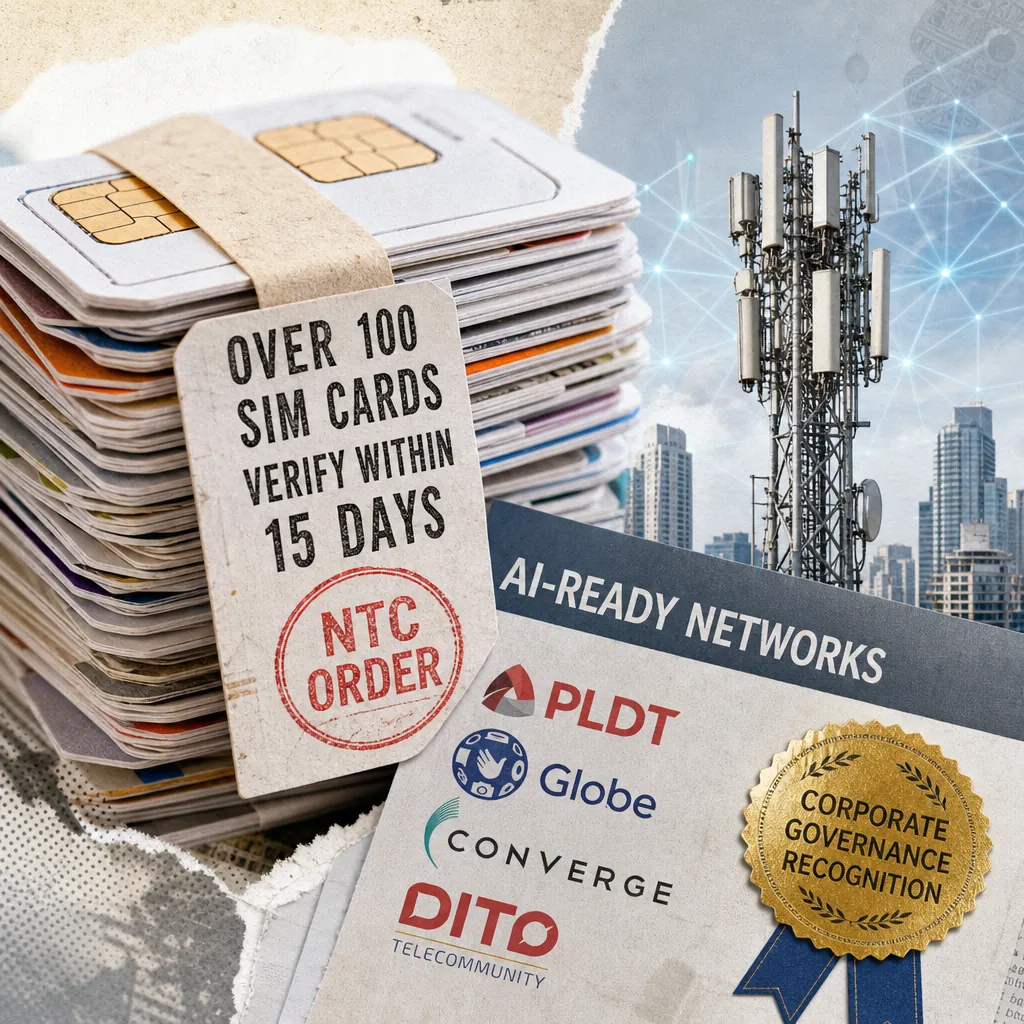
The National Telecommunications Commission (NTC) has given the country's mobile network operators 15 days from receipt of a memorandum order to run fresh identity checks on any subscriber holding more than 100 registered SIM cards, and to deactivate the numbers of anyone who cannot prove they still control them219. The order, reported by Inquirer Online and carried in the Manila Standard business pages, is the clearest enforcement step yet under the SIM Registration Act, the 2022 law that requires every prepaid SIM to be tied to a verified identity219. In the same window, a Manila Times supplement described the four major carriers moving into artificial intelligence, cloud and data-center infrastructure, and two of them — Globe Telecom and Converge ICT Solutions — separately announced top marks in a corporate governance ranking17719.
The SIM order is the item with the widest reach in this set. It ran in a broadsheet business section and on a major news site, and it concerns a rule that touches every prepaid user in a market where the great majority of subscriptions are prepaid219. The governance awards and the network-strategy piece are corporate announcements: they matter to investors and to the companies' public standing, but they change nothing for an ordinary subscriber's phone bill or signal. The day's news, taken together, is about a regulator tightening the identity layer of the phone network while the operators argue their future lies in the computing layer above it.
What the coverage does not contain is any public reaction. No consumer group, no industry association and no lawmaker is quoted responding to the 100-SIM threshold in the items reviewed here. The order's practical effect — how many subscribers actually hold more than 100 SIMs, and how many of those are legitimate businesses rather than fraud rings — is not stated in any of the reports. Those are open questions the next few weeks will answer.
Key themes
- The NTC set a 100-SIM threshold and a 15-day clock. Mobile operators must run know-your-customer checks — the same identity-verification process banks use — on subscribers with more than 100 SIMs under one name, and deactivate those who cannot show continued possession and legitimate use219.
- Deactivation is permanent unless the user produces identification. NTC deputy commissioner Alvin Blanco said a deactivated number stays dead unless the person can prove with proper documents that the SIM is registered personally under their name19.
- The regulator named the targets: organized scam groups, individual scammers and SMS blaster operators. SMS blasters are devices that flood an area with text messages, often used to push scams and phishing links19.
- The four major carriers are repositioning as computing companies. PLDT and Smart are combining 5G, AI, fiber, data centers and satellite; Globe is moving from 5G-Advanced toward an AI-ready architecture and talking about 6G; Converge is building fiber, subsea cables, satellite, data centers and sovereign cloud; DITO is pursuing 5G Standalone and 5G RedCap17.
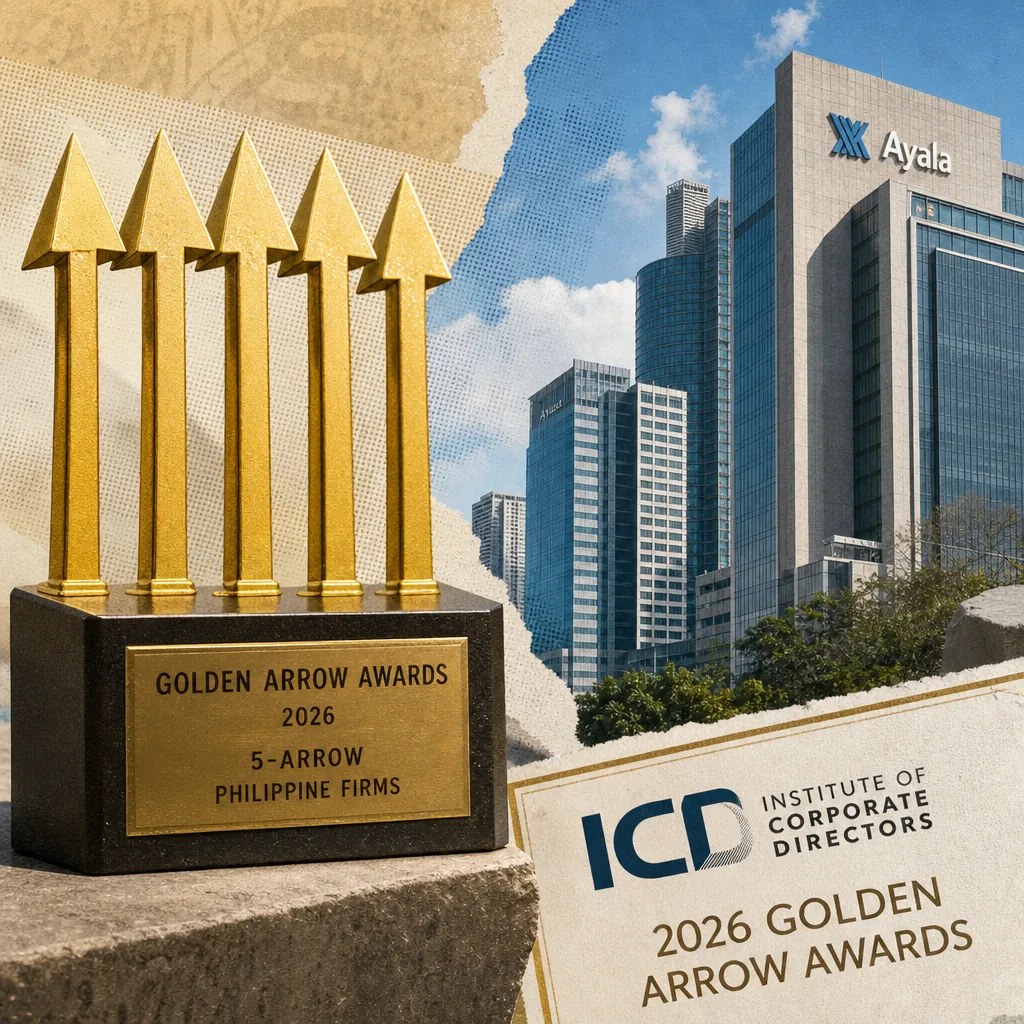
- Globe became the first holder of the Institute of Corporate Directors' Golden Arrow Hall of Fame award. It earned Five Golden Arrows for five consecutive years, the highest distinction for publicly listed Philippine companies under the Golden Arrow Awards7.
- Converge reported a second consecutive Five Golden Arrow rating. The award is assessed through the Institute of Corporate Directors using the ASEAN Corporate Governance Scorecard, a regional scoring framework for listed companies19.
- The governance announcements arrived with a caveat. The Converge report notes that the supplied release contains conflicting year references that need confirmation, so the exact award years should be treated as unverified19.
How the narratives stack
Dominant. The NTC's 100-SIM order is the lead story in this set by consequence. It is the only item that changes what a company must do and what a subscriber must prove, and it is the only one that ran across more than one medium — a broadsheet business page and an online business desk219. Its dominance here rests on two items, so it is dominance within this captured set rather than a measure of how the story played across all outlets. The order extends a policy sequence that began with the SIM Registration Act and continued through earlier crackdowns on text scams; the Philippine National Police has said most cybercrimes remain tied to SIM cards despite the law, a point Inquirer's report links back to2.
Counter-narrative. The Manila Times supplement argues the sector's real contest is no longer network speed but the ability to build digital systems for AI, cloud and connected devices17. That framing sits against the regulator's message, which is about control and identity rather than capability. Both are true at once: the carriers are investing upward into computing infrastructure while the government tightens the gate at the bottom of the stack. The supplement is a sponsored-style special page rather than a news report, so its claims about each carrier's roadmap reflect the companies' own positioning17.
Emerging. Corporate governance is being used as a competitive signal. Globe's Hall of Fame award and Converge's second Five Golden Arrow rating are both pitched at investors and regulators, and both arrived in the same 24 hours719. The Institute of Corporate Directors is a private body that scores listed companies on board oversight, risk management and accountability; its Golden Arrow Awards have become a routine item in Philippine corporate public relations. The Converge item's internal date inconsistencies show how lightly these releases are sometimes checked before publication19.
Under-covered. No item in this set reports how many subscribers hold more than 100 SIMs, what share of those are legitimate resellers or small businesses, or how the deactivation will be appealed. The order's enforcement mechanics — who at each telco does the verification, what documents count, how fast appeals move — are absent from the coverage. That gap matters because the 100-SIM line will catch some legitimate users, and the reports do not say how they will be handled219.
Platform insights
The items in this set are news articles and corporate releases; none of them reports social-media engagement figures, so there is no platform-level activity to describe here.
Key voices and communities
The NTC and its deputy commissioner. Alvin Blanco is the named official explaining the order, and his quote about permanent deactivation is the most concrete statement in the coverage19. The commission's framing is enforcement: SIMs are the delivery channel for scams, and identity verification is the fix219.
The mobile network operators. PLDT, Globe, Converge and DITO appear in this set as the regulated parties and as infrastructure builders17. Their public position, as reflected in the supplement, is that the next phase of competition is about AI-ready networks and cloud services rather than raw coverage17.
The Institute of Corporate Directors. The body behind the Golden Arrow Awards appears twice, once through Globe's Hall of Fame recognition and once through Converge's rating719. Its scorecard gives listed companies a third-party benchmark they can cite to investors.
Investors and analysts. The governance awards and the network-strategy supplement are aimed at the capital markets, where telco shares trade on expectations about data-center and cloud revenue growth177.
Narrative streams
The NTC gives telcos 15 days to verify heavy SIM holders
The order requires mobile network operators to conduct additional verification of any subscriber with more than 100 SIMs registered under a single name, within 15 days of receiving the memorandum219. Operators must perform know-your-customer checks to confirm the registered user actually possesses and controls the cards and uses them for legitimate purposes2. The commission then ordered deactivation of SIMs whose users cannot establish continued possession, control and legitimate use219. Blanco's statement makes clear the deactivation is not reversible by default: "Once these numbers are deactivated, it is permanent, unless the person can prove, by proper identification documents, that the affected SIM is registered personally under their name"19.
The policy builds on the SIM Registration Act, which requires every SIM to be tied to a verified identity and was meant to curb text scams and anonymous fraud2. The NTC said the measure targets organized scam groups, individual scammers and operators of SMS blaster devices19. Inquirer's report notes that the Philippine National Police has said most cybercrimes remain tied to SIM cards despite the law, which is the enforcement gap this order is meant to close2.
For the carriers, the operational burden is real but bounded: the 100-SIM threshold means the verification pool is a small slice of the subscriber base, though the reports do not say how small219. The bigger risk is reputational — a deactivation wave that catches legitimate small businesses, resellers or family plans would generate complaints the NTC would have to answer. For subscribers, the practical message is that holding a large stack of SIMs now requires documentation. For the sector, the order signals that the regulator intends to enforce the registration law through the operators rather than through individual prosecutions.
Carriers pitch AI-ready networks as the next competitive ground
The Manila Times supplement describes a sector-wide shift: the central question is no longer who builds the fastest mobile or broadband network but who can build the digital systems to carry AI, cloud services and connected devices17. PLDT and Smart are combining 5G, AI, fiber, data centers and satellite connectivity17. Globe is moving from 5G-Advanced toward an AI-ready network architecture and has begun to articulate a path toward 6G, the successor standard to 5G17. Converge is building a stack from nationwide fiber to subsea cables, satellite connectivity, data centers and sovereign cloud — cloud services hosted domestically under local jurisdiction17. DITO is pursuing 5G Standalone, an intelligent core, high-capacity backbone technology and 5G RedCap, a reduced-capability version of 5G designed for cheaper connected devices17.
The piece is a special supplement rather than a news report, and it reads as a sector positioning statement. Its value to a reader is the map it draws: all four carriers are investing in the same adjacent businesses — data centers, cloud, enterprise services — where margins are higher than in consumer connectivity. The read for the sector is that the carriers' growth story is shifting from subscriber counts to enterprise and cloud revenue, and that the companies will increasingly compete with technology firms as much as with each other. The regulatory story about SIM identity and the commercial story about AI infrastructure are running on separate tracks, and the carriers will have to manage both.
Globe and Converge cite governance awards as investor signals
Globe said it became the first recipient of the Institute of Corporate Directors' Golden Arrow Hall of Fame Award after earning Five Golden Arrows for five consecutive years, presented at the Golden Arrow Awards 20267. The award is the highest distinction for publicly listed Philippine companies and reflects adherence to corporate governance standards7. Globe's chief compliance officer and senior vice president for legal and compliance, Atty. Marisalve Ciocson-Co, described the recognition as a milestone reflecting consistent commitment to governance principles7.
Converge reported a second consecutive Five Golden Arrow rating, linking it to board oversight, risk management and accountability19. The Institute of Corporate Directors evaluates companies using the ASEAN Corporate Governance Scorecard, a regional framework that scores listed firms on shareholder rights, board responsibilities and disclosure19. The Converge report flags that the supplied release contains conflicting year references requiring confirmation, so the precise award years should be treated as unverified19.
These awards are routine in Philippine corporate communications, but they carry weight with institutional investors and lenders who use governance scores in screening. For Globe, the Hall of Fame designation is a first-mover claim it can put in front of investors. For Converge, the second-year rating supports its pitch as a maturing listed company. The read for the sector is that governance rankings have become a standard part of the telco investor-relations calendar, and companies will keep issuing them alongside their financial results.
Conversation trajectory
The 15-day verification window (next 2–3 weeks). The clock runs from each operator's receipt of the memorandum order, so the first deactivations should surface within roughly two weeks. Watch for NTC statements on how many SIMs were deactivated and for complaints from legitimate multi-SIM users, which would indicate the threshold is catching the wrong people219.
The SIM Registration Act enforcement record (next quarter). The NTC's order is the first major test of whether the registration law can be enforced through operators. If scam text volume does not fall, expect pressure for a lower threshold or for registration audits2.
Carrier capital-spending guidance (next earnings cycle). The AI, data-center and cloud investments described in the supplement will show up in capital expenditure guidance and segment revenue in the next round of earnings reports17. Watch whether enterprise and data-center revenue grows faster than consumer broadband.
Governance award season (next 12 months). The Golden Arrow Awards run annually; Globe's Hall of Fame status means it exits the standard ranking, while Converge will be positioned for a third consecutive rating719.
Trigger events. An NTC press conference or data release on deactivations; a reported scam campaign traced to a deactivated number; a carrier earnings call with data-center revenue disclosure; and any congressional hearing on SIM registration enforcement.
Response guidance
Subscribers holding many SIMs: gather documentation now. Anyone with more than 100 registered SIMs under one name should prepare identification proving personal registration and legitimate use before the 15-day window closes, because deactivation is permanent without it19.
Small businesses and resellers: clarify legitimate use. The order does not distinguish between fraud rings and legitimate multi-SIM operations in the coverage reviewed. Businesses that rely on multiple SIMs should document their use case and raise it with their carrier's compliance desk early2.
Carriers: publish the verification process. Operators should explain in plain language how the know-your-customer checks will run, what documents count and how appeals work, so that legitimate users are not caught by surprise219.
Carriers: separate the enforcement message from the growth message. The SIM order and the AI-network strategy are being announced in the same news cycle. Communications should keep the compliance story factual and the growth story in investor channels, so the two do not blur17.
Investor-relations teams: verify award details before release. The Converge governance release contained conflicting year references, a reminder that award announcements should be checked against the awarding body's records before publication19.
Consumer-facing messaging: explain the scam rationale. The NTC's stated targets are organized scam groups, individual scammers and SMS blaster operators19. Communications that lead with that rationale will land better than messages framed only as a compliance requirement.
See the full picture behind today's signals.
This report draws from Media Meter's MediaWatch, our real-time monitoring engine tracking 2,470+ Philippine sources across print, broadcast, digital, and social. Explore how the platform turns raw coverage into decision-grade intelligence, then see how it's configured for teams like yours — whether you're in PR agencies, corporate comms, government, or marketing.
Want more? Browse our Report Library for sector and crisis intelligence, or request a demo and we'll have your brand set up before the call.
Want this kind of intelligence on your brand?
This brief is built on the same MediaWatch methodology that runs continuously across every brand we monitor. See your competitive landscape, Impact Score, and narrative trajectory in a 30-minute demo.