El Nino inflation risk, pork price drop lead food news
Chinabank Research warns a severe El Nino could push Philippine inflation past 8%, while pork retail prices fall in Metro Manila markets and the government tightens rice and pork import rules.
The Conversation
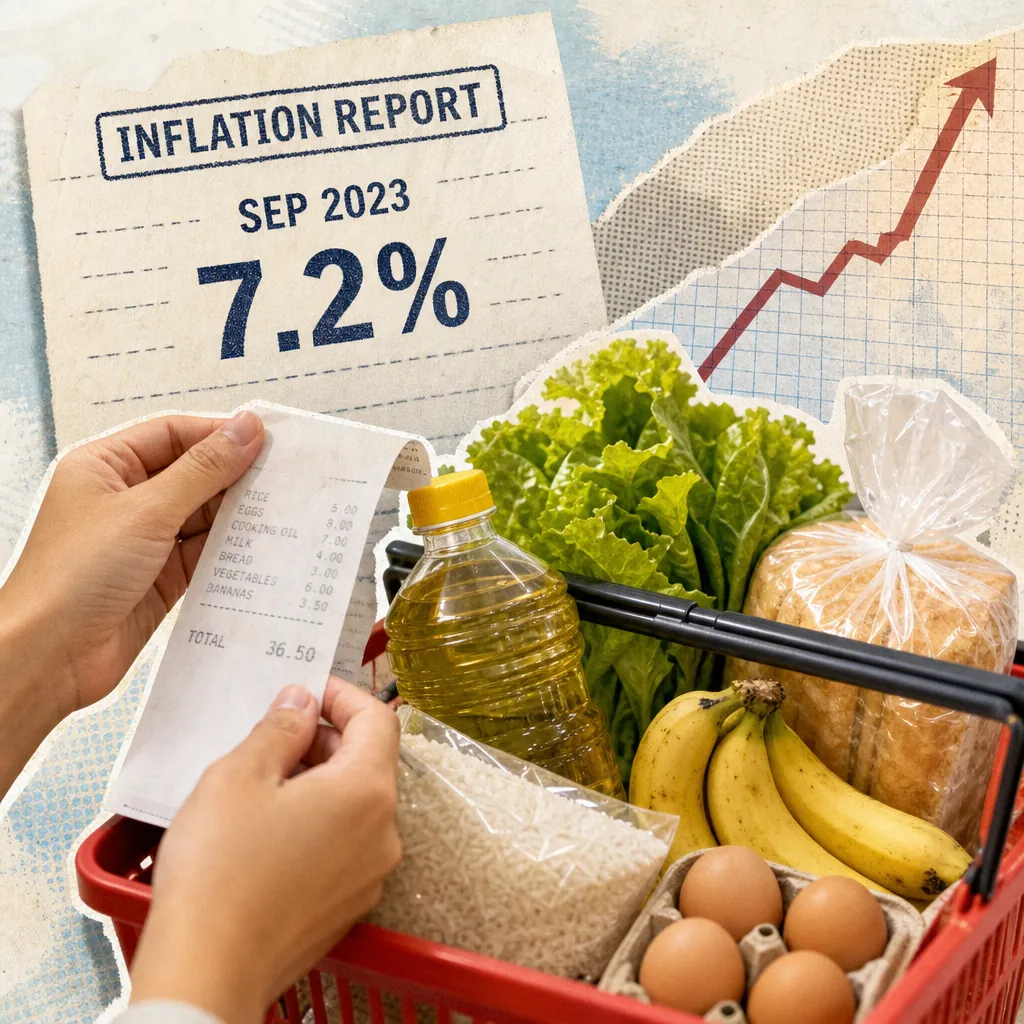
A severe El Niño could add as much as 1.57 percentage points to Philippine inflation, pushing the headline rate past 8% in the fourth quarter of 2026, according to a commentary from Chinabank Research, the research arm of China Banking Corp.4854 The estimate, reported on October 14 by the Manila Times, BusinessWorld, and Inquirer, lands as actual inflation already sits at 7.2% for September, above the government's 2.0% to 4.0% target band.48 The same research note warns that the drought could shave as much as 0.81 percentage point off gross domestic product growth, the total value of goods and services the country produces, under a severe scenario.71
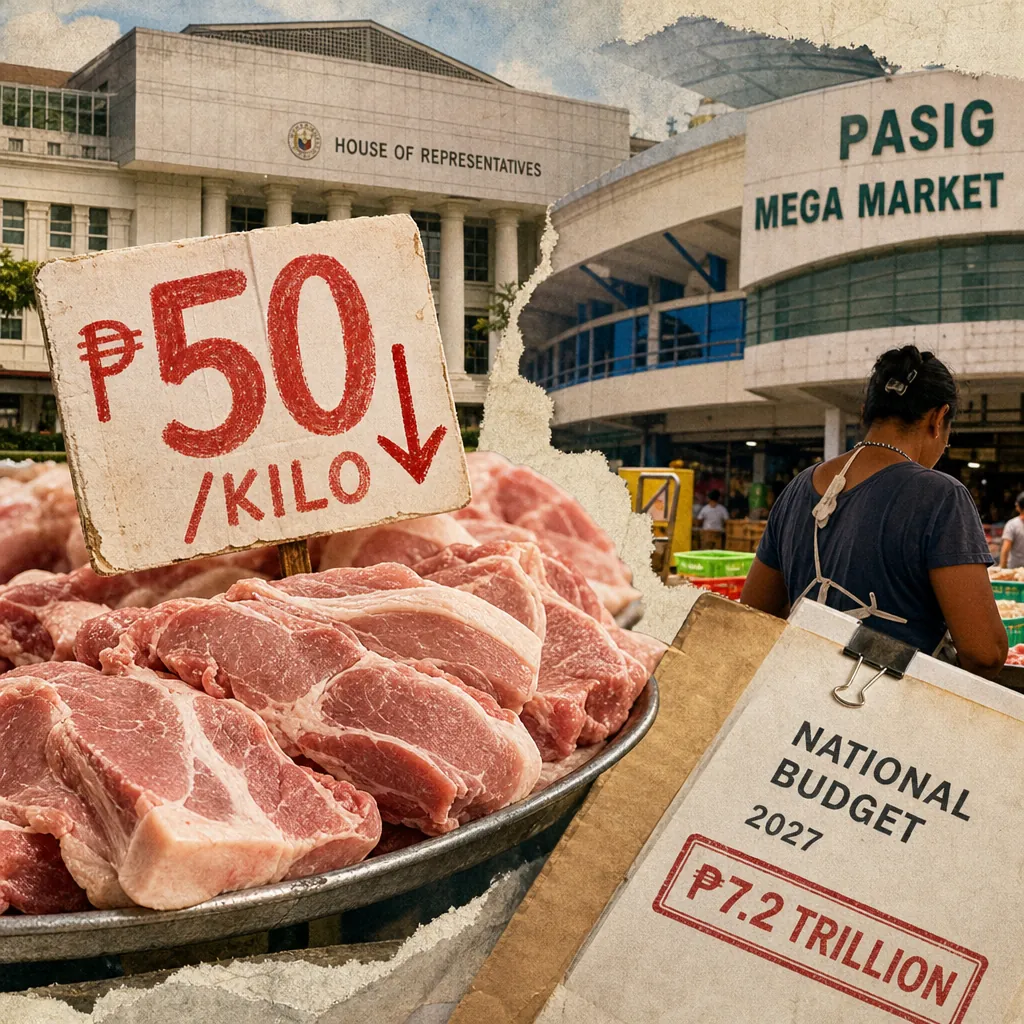
On the ground, pork retail prices at Pasig Mega Market in Metro Manila fell by as much as ₱50 per kilogram, according to vendors who attributed the drop to abundant supply and slow sales.27 GMA Network's morning and noontime newscasts carried the Pasig price reports on October 11 and 12, and a separate YouTube channel posted a chicken price update from the Lipa Auction Market in Batangas on October 10.282930 The Pasig pork video drew 4,608 views and 8 comments on YouTube.27
The policy response is moving on several fronts at once. The Department of Agriculture (DA), the agency responsible for farm production and food supply, said it will keep its plan to impose quantitative restrictions, or caps, on pork imports after the farmgate price of hogs fell sharply.26 The National Food Authority (NFA), which manages the country's rice buffer stock, said rice imports remain necessary to secure supply and prevent shortages.42 And Senator Francis Pangilinan, who chairs the Senate Committee on Agriculture, Food and Agrarian Reform, said a proposed deal to import American rice must be "heavily scrutinized" because of its possible impact on the domestic market.4374
Key themes
- Severe El Niño could add 1.57 percentage points to inflation — Chinabank Research estimates the drought could push headline inflation above 8% in the fourth quarter, with a second-round impact of 0.26 percentage point as higher agricultural costs feed through to food manufacturing and other sectors.4854
- Pork retail prices fall by as much as ₱50 per kilogram in Pasig — Vendors at Pasig Mega Market attributed the drop to plentiful supply and sluggish buying, a consumer-side signal that runs counter to the broader inflation narrative.2728
- The DA holds to pork import caps after farmgate hog prices drop — The agency said it will proceed with quantitative restrictions on pork imports, a move that would limit foreign supply and could support domestic hog prices.26
- Senator Pangilinan questions the US rice import deal — The Senate agriculture committee chairman said the proposed purchase of 100,000 metric tons in 2027 and 200,000 metric tons annually from 2028 raises questions about who absorbs higher shipping costs.4374
- The NFA says rice imports remain necessary — The agency charged with maintaining the national rice buffer said imports are needed to prevent shortages, even as the DA cancelled an import permit for controversial Vietnamese shipments before they reached Philippine soil.4231
- African swine fever (ASF) remains a live concern in parts of the country — Two villages in Lal-lo, Cagayan were placed under total lockdown following ASF concerns, and 30.9 kilos of undocumented meat were seized at a checkpoint in Baggao, Cagayan.4477 The disease affects pigs and can devastate hog herds.
- Davao meat supplies remain safe and stable — The National Meat Inspection Service Regional Technical Operations Center-Davao Region reported negative ASF results across 12 accredited slaughterhouses, with rapid testing confirming the absence of the virus.6364
- The DTI reminds holiday shoppers to check product safety marks — Trade Secretary Ma. Cristina A. Roque told consumers to look for Philippine Standard (PS) marks and Import Commodity Clearance (ICC) stickers before buying, especially online, at the Certified Products Expo 2026 in Mandaluyong City.3857
How the narratives stack
Dominant: The El Niño inflation warning dominated the business pages across the items captured here. Chinabank Research's estimate that a severe drought could add 1.57 percentage points to inflation and push the headline rate past 8% was carried by the Manila Times, BusinessWorld, Inquirer, and Bombo Radyo Cauayan, among others.485471 The story's consequence is straightforward: if the forecast holds, food and energy costs will rise for every household, and the government's inflation target will be missed by a wide margin. The coverage drew heavy newspaper attention, with the BusinessWorld front-page item alone carrying an estimated ₱353,338 in advertising-equivalent value, the notional cost of buying the same space as paid advertising.54
Counter-narrative: Pork prices are falling, not rising. Vendors at Pasig Mega Market reported drops of as much as ₱50 per kilogram, and the DA is responding by tightening import rules rather than loosening them.2726 This is the opposite of what a supply shock would normally produce, and it reflects a domestic hog sector that is currently oversupplied. The counter-narrative matters because it shows the inflation story is not uniform across food categories: rice and chicken face upward pressure, while pork faces downward pressure from ample local supply.
Emerging: The Senate's scrutiny of rice import deals is gaining traction. Pangilinan's questions about the US rice memorandum of understanding, which targets 100,000 metric tons in 2027 and 200,000 metric tons annually from 2028, set up a public test at next week's DA budget hearing.4374 The NFA's insistence that imports remain necessary, alongside the DA's cancellation of a Vietnamese rice import permit, suggests the government is trying to manage both supply and political risk simultaneously.4231
Under-covered: The DOST-FNRI's push to commercialize ready-to-eat meal packs for emergencies received limited attention in the items captured here. The Department of Science and Technology's Food and Nutrition Research Institute is seeking industry partners to commercialize four ready-to-eat products, collectively called Ready for Everyday and Emergency Situations-Quality Meal (ResQ Meals), with availability targeted for the first or second quarter of 2027.75 The products were featured at the Handa Pilipinas 2026 Visayas Leg in Palo, Leyte. This story sits at the intersection of disaster preparedness and food manufacturing, but it drew a single item in the captured set.
Platform insights
YouTube: The platform carried the most substantive food-price content in the captured set. GMA Network's noontime and morning newscasts posted pork and chicken price reports from Pasig and Lipa, with the Pasig pork video drawing 4,608 views and 8 comments.27282930 A separate Bilyonaryo News Channel segment on Jollibee's renewable energy shift and Meralco PowerGen's coal project drew 9,934 views and 1 comment.39 The engagement figures are modest, suggesting food-price content on YouTube reaches a niche audience of market watchers rather than a mass viewership.
Facebook: A post from Original Bohol Island News reported that Bohol has had no ASF cases since September, a localized update that would not have appeared in national coverage.45 The platform serves as a distribution channel for provincial news that does not travel to Manila-based outlets.
X (formerly Twitter): The Philippine News Agency's account posted about the Lal-lo lockdown, and a user account commented on the Jollibee franchise records entering the impeachment trial record.4437 The platform's role in the captured set is primarily as a relay for official announcements and commentary rather than as a source of original reporting.
Reddit: No meaningful activity appeared in the captured set.
Key voices and communities
Chinabank Research: The bank's research arm produced the most consequential analysis in the captured set, estimating the inflation impact of El Niño under mild, strong, and severe scenarios.4854 Its framing of El Niño as "not just an agriculture story" but "a potential second-round inflation shock and an additional drag on growth" set the terms for how other outlets covered the story.54
Pork and chicken vendors at public markets: Vendors at Pasig Mega Market and the Lipa Auction Market provided the on-the-ground price data that anchors the consumer side of the story.2729 Their reports of slow sales and abundant supply offer a counterpoint to the macro inflation forecasts.
Senator Francis Pangilinan: The Senate agriculture committee chairman is positioning himself as a check on rice import deals, questioning who benefits and who absorbs higher costs.4374 He is preparing to lead the DA budget hearing next week, which will give him a platform to press the agency on its import policies.
The Department of Agriculture and the National Food Authority: The two agencies are managing the supply side, with the DA tightening pork import rules and cancelling a Vietnamese rice permit while the NFA insists imports remain necessary.263142 Their public statements reflect an attempt to balance farmer livelihoods against consumer prices.
The National Meat Inspection Service: The agency's Davao regional office provided the most detailed local assurance on meat safety, reporting negative ASF results across 12 slaughterhouses and explaining the rapid testing and confirmatory laboratory process.6364
Narrative streams
El Niño inflation forecast puts 8% headline rate in play
Chinabank Research's estimate that a severe El Niño could add 1.57 percentage points to headline inflation is the most specific forecast in the captured set.4854 The bank broke down the impact by scenario: a weak El Niño would add about 0.25 percentage point through direct price effects alone, a strong episode could add 0.66 percentage point, and a severe one could add 1.57 percentage points including second-round effects.54 The second-round impact of 0.26 percentage point reflects higher agricultural costs feeding through to food manufacturing and other parts of the economy.48
The context matters for readers who do not follow inflation data closely. Headline inflation measures the average change in prices for a basket of goods and services that typical Filipino households buy. The September reading of 7.2% means prices were 7.2% higher than in September 2025, the fastest pace in three years.71 The government's target range is 2.0% to 4.0%, so the current rate is already well above the band. Chinabank said inflation could peak in the last three months of 2026 and remain below 8.0% in its baseline, but a severe El Niño could push it above that level.48
The read for the food and beverage sector is that input costs for grain-based products, animal feed, and water-intensive crops will rise if the drought intensifies. Food manufacturers that have not locked in supply contracts or hedged commodity exposure will face margin pressure in the first half of 2027. The Philippine Atmospheric, Geophysical and Astronomical Services Administration (PAGASA), the government's weather bureau, expects El Niño to strengthen in late 2026 and continue through the first half of 2027.71
Pork prices fall as supply stays ample, but import caps loom
Pork retail prices at Pasig Mega Market fell by as much as ₱50 per kilogram, with vendors citing abundant supply and slow sales.27 A separate GMA Network report attributed the decline to sluggish buying.28 The price drop is significant because pork is the most consumed meat in the Philippines, and retail prices at public markets are the reference point for household food budgets.
The DA's decision to proceed with quantitative restrictions on pork imports, announced after the farmgate price of hogs fell sharply, is a supply-management response.26 Quantitative restrictions are caps on the volume of a product that can be imported, and they are intended to protect domestic producers from being undercut by cheaper foreign supply. The policy tension is clear: consumers benefit from lower pork prices now, but farmers who are already seeing farmgate prices fall would face further pressure if imports continued unchecked.
The read for the sector is that pork processors and retailers should expect a period of lower input costs in the near term, but the import caps could tighten supply and push prices back up if domestic production does not recover. The DA has not announced an implementation date for the restrictions.26
Rice import policy faces scrutiny on multiple fronts
Senator Pangilinan's opposition to the proposed US rice import deal centers on cost: "Why import rice from the United States if shipping costs are higher? Who will benefit, and who will shoulder the additional expenses? Will consumers end up paying for them again?"74 The memorandum of understanding between the Philippine Rice Industry Stakeholders Movement and USA Rice targets purchases of 100,000 metric tons in 2027 and 200,000 metric tons annually starting 2028.43
The NFA's position is that rice imports remain necessary to secure food supply and prevent shortages.42 The agency manages the country's rice buffer stock, which is used to stabilize prices during lean seasons and emergencies. The DA separately cancelled the import permit for controversial rice shipments from Vietnam before they reached Philippine soil, a move that suggests the agency is tightening scrutiny of import documentation.31
Pangilinan is preparing to lead the budget hearing for the DA and its attached agencies next week, where the rice import terms and the agency's production-cost programs will be tested publicly.43 The read for the sector is that rice importers and traders should expect closer scrutiny of contracts and shipping costs, and food manufacturers that rely on imported rice should monitor the hearing for signals about future supply and pricing.
ASF remains a live concern in Cagayan and a managed risk in Davao
Two villages in Lal-lo, Cagayan were placed under total lockdown following concerns over the spread of African swine fever, a viral disease that affects pigs and can devastate hog herds.44 In a separate incident, government workers seized 30.9 kilos of undocumented meat in Baggao, Cagayan, at a checkpoint in Mocag village.77 The meat was stacked in three cardboard boxes being transported by motorcycle, and the rider failed to produce documents and a permit from the National Meat Inspection Service.77
The contrast with Davao is instructive. The National Meat Inspection Service Regional Technical Operations Center-Davao Region reported negative ASF results across 12 accredited slaughterhouses, with rapid lateral flow tests during livestock processing and confirmatory testing at the Regional Animal Diagnostic Laboratory.6364 Dr. Lailanie Rose Rico, the NMIS regional technical director, said the region maintains a robust supply chain supported by continuous influx of livestock from neighboring areas.64
The read for the sector is that ASF remains a localized risk rather than a national crisis, but the Cagayan lockdown and the Baggao seizure show that enforcement at checkpoints is active. Pork processors and retailers should verify that their suppliers have proper inspection certificates, particularly for imported products.63
DTI pushes product safety checks as holiday shopping begins
Trade Secretary Ma. Cristina A. Roque told consumers on October 14 to check for Philippine Standard marks and Import Commodity Clearance stickers before buying, especially online.38 The reminder came at the Certified Products Expo 2026 in Mandaluyong City, an event held for Consumer Month.38 The DTI raised concerns about uncertified goods on e-commerce platforms.31
The PS mark indicates that a product has passed Philippine quality and safety standards, while the ICC sticker is required for imported products that are regulated. The DTI's Davao del Norte field office reinforced the message on a radio program, with senior trade and industry development specialist Kareen P. Casing explaining that "safe products mean consumers should have access to products that are safe, reliable, properly labeled, and compliant with applicable quality and safety standards."57
The read for the sector is that food and beverage brands sold online should ensure their product listings display the required certification marks, because the DTI is signaling that it will scrutinize e-commerce platforms for uncertified goods. No consumer response to the reminder appeared in the days after.38
Government prepares water and food supplies for El Niño
The government will start distributing free portable water filtration kits to communities next week, Social Welfare Secretary Rex Gatchalian announced.87 The kits use Sawyer water filtration systems with bucket adapter kits supplied by the international nongovernment organization Waves for Water, and they are certified by the Department of Health as medical devices that have passed the Philippine National Standards for Drinking Water.87 The filters use 0.1-micron membranes that can remove bacteria associated with cholera and other waterborne diseases.
In Davao Region, about 67% of the region's 49 local government units had started preventive measures as of October 12, including organizing local task forces and preparing contingency plans.68 The regional preparations come amid public debate over President Ferdinand Marcos Jr.'s recommendation to collect rainwater in buckets, or balde, as a household preparedness measure.68 GMA News reported that prices of drums and buckets rose at some stores due to higher demand, and the Palace defended the President after criticism.41
On the food side, the DOST-FNRI is seeking industry partners to commercialize four ready-to-eat meal products for emergencies, with availability targeted for the first or second quarter of 2027.75 The products, called ResQ Meals, were featured at the Handa Pilipinas 2026 Visayas Leg in Palo, Leyte. DOST-FNRI Supervising Science Research Specialist Jaypy De Juan said nutrition should be part of disaster preparedness: "It is important that we consider nutrition. Because in preparation, we must have enough energy to address situations like that."75
The read for the sector is that food manufacturers have an opportunity to partner with the government on emergency food products, and beverage companies should prepare for increased demand for bottled water and filtration products as El Niño intensifies.
Conversation trajectory
Over the next 1–2 weeks: The DA budget hearing, expected next week, will test the rice import terms and the agency's production-cost programs publicly.43 Senator Pangilinan has already flagged the proposed 100,000 metric ton American rice purchase for 2027 as a cost question, and the hearing will give him a platform to press the DA on who absorbs higher import costs.4374 Watch for the DA to announce an implementation date for the pork import restrictions, which has not yet been set.26
Over the next 4–6 weeks: The government's water filtration kit distribution begins next week, and the pace of rollout will indicate how seriously the administration is treating the El Niño threat.87 PAGASA's forecasts for El Niño strength through the end of 2026 will shape whether the severe scenario that Chinabank Research modeled becomes the baseline.71 If the drought intensifies as expected, food manufacturers should prepare for higher input costs in the first quarter of 2027.
Over the next 3–6 months: The DOST-FNRI's ResQ Meals commercialization target of the first or second quarter of 2027 will test whether the private sector sees emergency food products as a viable market.75 The US rice import deal, if it proceeds, would begin deliveries in 2027, and the terms of the agreement will be finalized in the coming months.43
Trigger events: The DA budget hearing next week is the most immediate trigger for rice and pork policy signals. The release of October inflation data in early November will show whether the September acceleration to 7.2% was a peak or a step in a longer climb.48 PAGASA's next El Niño advisory will indicate whether the severe scenario remains in play.
Response guidance
Food manufacturers: Map exposure to rice, pork, and chicken supply changes now, because the import restrictions and weaker palay output are moving at the same time.2631 Prepare cost-focused messaging before the DA budget hearing, because the senator's questions on who absorbs higher import costs will set the terms other food price stories follow.43
Retailers and e-commerce platforms: Ensure product listings display Philippine Standard marks and Import Commodity Clearance stickers, because the DTI is signaling that it will scrutinize online platforms for uncertified goods.3857 The agency's Consumer Welfare Month theme, "Safe Products, Confident Consumers," indicates that enforcement activity is likely to continue through October.57
Pork processors and retailers: Verify that suppliers have proper inspection certificates, particularly for imported products, as the Cagayan lockdown and Baggao seizure show that checkpoint enforcement is active.4477 Monitor the DA's implementation timeline for pork import caps, which could tighten supply and push prices back up.26
Beverage companies: Prepare for increased demand for bottled water and filtration products as El Niño intensifies and the government distributes water filtration kits.87 The Davao Region's preparations, with 67% of local government units taking preventive measures, indicate that demand for water-related products will rise in drought-affected areas.68
All food and beverage communicators: Avoid price-focused messaging that could be read as insensitive to households facing higher food costs. The inflation forecast of above 8% under a severe El Niño scenario means consumers will be sensitive to any perception that brands are profiting from the drought.48 Focus messaging on supply reliability and product availability rather than price.
Brands tied to PBA teams: Log the October 11 Manila Clasico result and Magnolia's five-game winning streak as scheduled sports exposure only, and check whether the brand's own channels posted about it.7 The corporate names on both jerseys are consumer brands, so the game is brand exposure rather than a reputational issue.2
See the full picture behind today's signals.
This report draws from Media Meter's MediaWatch, our real-time monitoring engine tracking 2,470+ Philippine sources across print, broadcast, digital, and social. Explore how the platform turns raw coverage into decision-grade intelligence, then see how it's configured for teams like yours — whether you're in PR agencies, corporate comms, government, or marketing.
Want more? Browse our Report Library for sector and crisis intelligence, or request a demo and we'll have your brand set up before the call.
Want this kind of intelligence on your brand?
This brief is built on the same MediaWatch methodology that runs continuously across every brand we monitor. See your competitive landscape, Impact Score, and narrative trajectory in a 30-minute demo.