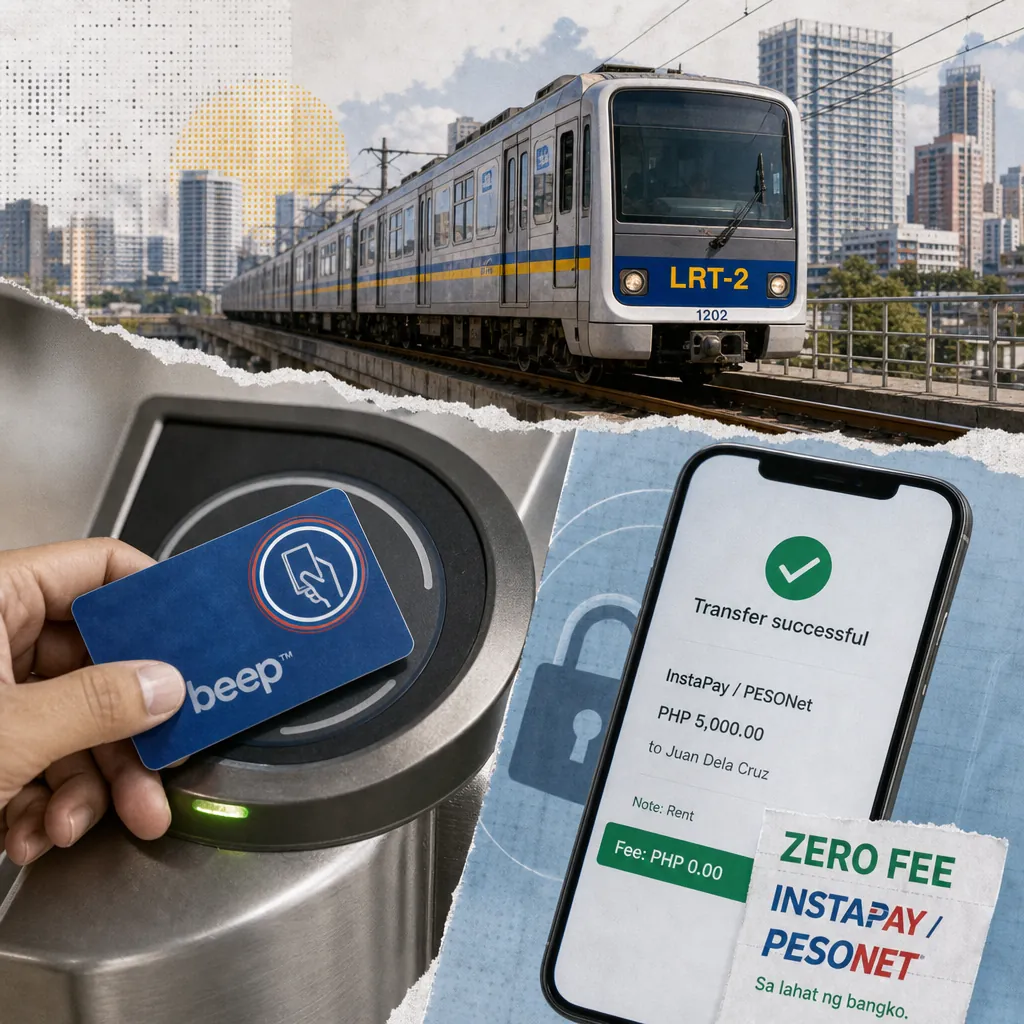
Free InstaPay transfers become the new normal as BSP deadline spurs bank competition
RCBC waives InstaPay fees following BPI, with BSP Governor Remolona expecting more banks to follow by the July 4 deadline. Social media erupts with consumer enthusiasm, while news coverage also highlights rising bad loans, Monetary Board reappointments, and Goldman Sachs' forecast of three more rate hikes.

The conversation around interbank transfer fees erupted on Friday, July 3, 2026, when the Facebook page "phdigitalbanks" broke the news that RCBC would waive InstaPay fees starting July 4, offering 30 free transfers per month via RCBC Pulz and unlimited free transfers via DiskarTech. Within hours, the post exploded with 2,604 likes, 3,713 love reactions, and 1,643 wow reactions—an emotional mix of relief and surprise that signaled genuine consumer hunger for fee-free transactions. The announcement quickly ricocheted across platforms: on Twitter, "philippinestar" amplified the news with a succinct "BYE, TRANSFER FEES 👋", racking up 48,355 views and 82 likes within the same day. Meanwhile, Reddit saw the highest close-engagement traction when "tiphuman8997" posted the story to r/Philippines, accumulating 214 upvotes and 25 comments—the most vocal of which debated whether other banks would follow.
The news media amplified the story with institutional weight. The Manila Times reported that BSP Governor Eli Remolona Jr. expects more banks to waive fees over the weekend, citing Circular No. 1238 which caps the gap between interbank and intrabank fees. The Philippine Star and Inquirer also covered the development, with Inquirer noting that RCBC's move follows BPI's similar waiver earlier that week, framing it as a domino effect driven by policy rather than pure market competition. The coverage across the captured set was substantial: the Manila Times article alone carried an estimated advertising-equivalent value of ₱302,960, while the Inquirer piece was worth ₱246,352.
But the fee-waiver story did not dominate the news cycle alone. The same day brought a cluster of other significant banking and economic developments. The Bangko Sentral ng Pilipinas (BSP) reported that the banking industry's non-performing loan (NPL) ratio rose to a nine-month high of 3.44 percent in May, with bad loans reaching ₱601.4 billion—a 14 percent increase year-on-year. This was covered by Inquirer (₱340,336 AVE), Manila Times (₱229,040), Business Mirror (₱290,400), and Philstar (₱334,264.8), making it one of the most-covered stories of the day. Separately, President Marcos reappointed Walter Wassmer and Jose Querubin to the Monetary Board until July 2032, a move that drew coverage from Inquirer (₱246,352), Philstar (₱260,218.8), and Manila Times (₱152,320). And Goldman Sachs forecast three more 25-basis-point rate hikes by the BSP to 5.5 percent, citing inflation risks from El Niño and the US-Iran war oil shock—a story that ran in the Manila Bulletin with an AVE of ₱386,976.
On social media, the fee-waiver conversation evolved rapidly. Early sentiment was overwhelmingly positive. "jacquesjax.reyes" posted a simple "FREE InstaPay transfers with your RCBC account starting July 4, 2026", earning 160 likes and 68 loves. By midday, "kaskasanbuddies" published a detailed breakdown comparing RCBC's offer to MariBank's 50 free transfers, positioning RCBC among the most generous options in the market. The mood was celebratory—"blueraven_0415" on Reddit wrote "Finally, some real competition", reflecting a narrative that consumers had long viewed transfer fees as an unnecessary tax on digital payments.
As the day progressed, more granular discussions emerged around the mechanics of RCBC's offer. "technobaboy" clarified on Twitter that free transfers apply only to the first 30 transactions per month with a minimum of ₱100, and a ₱10 fee kicks in beyond that or below the minimum. Reddit users parsed the difference between RCBC Pulz and DiskarTech—some expressed confusion over the dual offering, while others saw DiskarTech's unlimited free transfers as the superior product. A brief but notable side conversation about transaction limits emerged: one Reddit commenter joked "₱499,999.99 daily limit? Who transfers that much? But okay, good for businesses."
The regulatory angle gave the story institutional weight. "dzrhnews" linked RCBC's move to BPI's similar waiver earlier that week, framing it as a domino effect driven by policy rather than pure market competition. On Reddit, "moneygoals_ph" summarized the BSP governor's statement and noted "the more people who can send and receive money for free, the more useful the system becomes", earning 57 upvotes. This thread underscored how the narrative evolved from a single bank promotion to an industry-wide shift.
Meanwhile, the news media also covered other banking stories that shaped the day's conversation. RCBC itself was in the news for reshaping its balance sheet—shortening the average duration of its investment securities portfolio to 3.5 years from 7.3 years in 2021, a move designed to cushion the impact of possible rate increases. The Philstar article (₱258,103.2 AVE) quoted RCBC President Reginaldo Anthony Cariaso: "My objective remains the same – to protect, scale, and elevate the strong franchise that is RCBC." BPI also made news for its sustainable finance program, having extended ₱376 billion in cumulative financing under its Sustainable Development Finance Program, supporting 532 projects. The Manila Times article (₱145,600 AVE) noted that BPI's SDF disbursements reached ₱54 billion last year alone.
Mynt Inc., the parent firm of GCash, flagged its exposure to risks in the licensed online gaming industry as the company prepares for what could be the country's biggest initial public offering later this year. The Philstar article (₱400,553.6 AVE) quoted Mynt saying the regulatory environment surrounding licensed online gaming remains dynamic and uncertain.
Key themes
- Fee waiver cascade reaches tipping point: RCBC's announcement on July 3, effective July 4, follows BPI's waiver on July 1, with BSP Governor Remolona explicitly expecting more banks to follow over the weekend. The BSP's Circular No. 1238, which caps the gap between interbank and intrabank fees, is the regulatory catalyst. Consumer enthusiasm is exceptionally high—posts about RCBC's free transfer announcement generated thousands of combined reactions and shares across platforms, with love and wow reactions dominating over neutral or negative ones.
- Consumer sentiment shifts from gratitude to granular comparison: Early reactions were overwhelmingly positive, but within hours, commentary pivoted to dissecting limits—30 free transfers per month, minimum ₱100, and the ₱10 fee when exceeded. Users contrasted RCBC Pulz's cap with DiskarTech's unlimited free transfers, and compared against MariBank's 50 free transfers, leading to increased demand for truly unlimited offers.
- Bad loans hit nine-month high: The banking industry's NPL ratio rose to 3.44 percent in May, the highest since August 2025. Bad loans reached ₱601.4 billion, up 14 percent year-on-year. Analysts cited the combined effects of inflation, elevated business costs, and higher interest rates as borrowers struggle to repay debts.
- Monetary Board reappointments ensure policy continuity: President Marcos reappointed Walter Wassmer and Jose Querubin to the Monetary Board until July 2032. Their expertise in financial markets, commercial banking, and risk management is seen as valuable as the BSP navigates high inflation and slow economic growth.
- Goldman Sachs forecasts three more BSP rate hikes: The American investment bank expects the BSP to raise key borrowing costs by 25 basis points three times to 5.5 percent, citing inflation threats from El Niño and the US-Iran war oil shock. Goldman Sachs noted that the effects of inflationary pressures are emerging more quickly than in the 2022 crisis.
- RCBC reshapes balance sheet for tighter environment: RCBC has shortened the average duration of its investment securities portfolio to 3.5 years from 7.3 years in 2021, and tightened credit exposure by reducing lending lines to higher-risk segments. The bank also rolled out an analytics-driven collections initiative called the CARE Program.
- BPI leads in sustainable finance: BPI has extended ₱376 billion in cumulative financing under its Sustainable Development Finance Program, supporting 532 projects. The bank said projects financed under the program were estimated to reduce greenhouse gas emissions by 41 million tons annually.
- GCash flags online gaming risks: Mynt Inc., GCash's parent, acknowledged exposure to regulatory and political risks associated with the licensed online gaming industry, as the company prepares for its IPO. The regulatory environment remains dynamic and uncertain.
How the narratives stack
Dominant: The rapid, industry-wide shift toward free InstaPay transfers, driven by BSP Circular No. 1238, is the dominant narrative across both social media and news coverage. Consumer enthusiasm is exceptionally high, and BSP Governor Remolona's public validation frames the move as a coordinated, pro-consumer policy success. This directly supports the government's financial inclusion agenda and creates a positive regulatory narrative. Within the captured set, this story generated the highest social engagement and substantial news coverage, with multiple outlets reporting on the fee waiver and the BSP's expectations.
Counter-narrative: The rising bad loan ratio and Goldman Sachs' rate hike forecast provide a counter-narrative of financial stress. While consumers celebrate free transfers, the banking sector faces deteriorating asset quality and the prospect of higher borrowing costs. The NPL story was covered by four major outlets, indicating its significance. This counter-narrative tempers the celebratory mood with a reminder of underlying economic vulnerabilities.
Emerging: The role of digital banking subsidiaries like DiskarTech in offering unlimited free transfers is an emerging story. DiskarTech's unlimited offer is more generous than RCBC Pulz's 30-transaction cap, suggesting that second-tier digital brands may become key competitive threats to mainstream bank apps. This dynamic is being closely watched by consumers and analysts alike.
Suppressed: The potential for service disruptions during the first wave of free transfers is a suppressed story. Both GCash and LandBank scheduled system maintenance on July 4—the exact day the fee waivers take effect—triggering user frustration. If banks experience even minor service degradation, the positive narrative could quickly be contaminated with complaints about downtime. This risk is highest in the first 24–48 hours after July 4, but has received little mainstream media attention.
Platform insights
- Facebook: The conversation originated and peaked on Facebook, driven by dedicated financial news pages like phdigitalbanks and lifestyle hubs like kaskasanbuddies. The emotional reactions—dominated by "Love" (3,713) and "Wow" (1,643)—indicate a platform where consumers express enthusiastic approval rather than skepticism. Later in the day, pages like radarphmedia added contextualized analysis that reframed the fee waiver as a signal that banks are now competing on pricing, not just features.
- Twitter: News outlets dominated here. philippinestar, gmanews, and philstarnews each drove thousands of views with concise breaking-news formats. The platform served as the primary amplification channel for official statements, such as Remolona's weekend deadline for compliance, which reached over 2,500 views on gmanews alone.
- Reddit: Analytical and competitive comparisons flourished. Posts by digitalbanksph and moneygoals_ph attracted 119 and 57 upvotes respectively, with comment threads dissecting how RCBC's offer stacks up against BPI's and MariBank's terms. Reddit users also raised the question of whether smaller banks could afford to follow—a concern only hinted at on other platforms.
Key voices and communities
- Digital finance aggregators and early adopters: Community-driven pages and influencers who specialize in tracking banking promos, digital features, and fee changes across Philippine financial institutions. Their content on Facebook and Reddit generates outsized engagement, with a single post from phdigitalbanks receiving over 2,600 likes, 3,700 love reactions, and 1,300 shares. They act as rapid amplifiers, often publishing digestible comparisons and step-by-step guides within hours of official announcements. Their messaging frames fee waivers as a consumer win, emphasizing competition and the pressure it puts on other banks to follow.
- Mainstream news media and official news outlets: Established news organizations—including gmanews, philstarnews, rapplerdotcom, dzrhnews, and ancalerts—provided the primary coverage of RCBC's fee waiver and the broader BSP regulatory push. Their Twitter posts reached tens of thousands of viewers; philippinestar's single tweet garnered over 48,000 views and 82 likes. These outlets frame the story within the larger narrative of digital payment adoption and regulatory compliance, quoting BSP Governor Remolona directly.
- Regulatory and government voices: The BSP and its Monetary Board members are the central institutional actors shaping this conversation. Posts from official government accounts and news outlets highlight BSP Circular No. 1238, which caps the difference between interbank and intrabank fees. BSP Governor Remolona's statements are widely quoted, and the reappointment of Monetary Board members Wassmer and Querubin generated mixed public sentiment, with 69 "haha" reactions and 10 angry reactions on one post, indicating some skepticism.
- Consumer advocates and personal finance communities: Subreddits like r/PHCreditCards and specialized Facebook groups such as kaskasanbuddies focus on practical financial tips, product comparisons, and consumer protection. These communities discuss not only fee waivers but also related issues like credit card applications, dispute experiences, and service reliability. They are pragmatic and value-driven, weighing the total cost of banking—including transfer fees, reward perks, and customer service quality.
Narrative streams
The fee waiver cascade: from BPI to RCBC and beyond
The story of free InstaPay transfers began on July 1 when BPI became the first major bank to waive InstaPay and PESONet fees. On July 3, RCBC followed suit, announcing that starting July 4, its customers would enjoy 30 free InstaPay transfers per month via RCBC Pulz and unlimited free transfers via DiskarTech. The BSP's Circular No. 1238, which caps the gap between interbank and intrabank fees, is the regulatory catalyst. Governor Remolona explicitly expects more banks to announce waivers over the weekend, creating a compressed announcement window that will dominate conversation.
The social media reaction was immediate and intense. The phdigitalbanks post alone generated over 7,900 combined reactions, with love and wow reactions far outnumbering likes—a sign of genuine consumer relief and surprise. On Twitter, philippinestar's post garnered 48,355 views, while gmanews' report on Remolona's statement reached over 2,500 views. The coverage value of the news articles in the captured set was substantial: the Manila Times article was worth ₱302,960, and the Inquirer article was worth ₱246,352.
For BPI, being the first major bank to announce free transfers positions it as an industry leader, but RCBC's more generous offer—especially DiskarTech's unlimited free transfers—shifts some positive attention. A influential consumer finance account explicitly compared RCBC's 30 free monthly transfers favorably against the market, noting MariBank's 50 free transfers as the only higher benchmark. The risk for BPI is being perceived as less generous; for other clients like Metrobank or BDO, the risk is being seen as lagging behind.
Bad loans rise as economic pressures mount
The BSP reported that the banking industry's gross NPL ratio rose to 3.44 percent in May, the highest in nine months. In peso terms, bad loans reached ₱601.4 billion, up 14 percent year-on-year and 3.71 percent month-on-month. Analysts cited the combined effects of rising prices of goods, elevated business costs, and higher interest rates as borrowers struggle to repay debts on time. The Business Mirror article (₱290,400 AVE) quoted experts saying "borrower stress among households and businesses is now evident".
This narrative stream provides a sobering counterpoint to the celebratory fee-waiver story. While consumers benefit from lower transfer costs, the banking sector faces deteriorating asset quality. The NPL ratio is still below the peak of 3.5 percent in August 2025, but the upward trend is concerning. Banks have also pared their buffers against unpaid loans, setting aside ₱534.8 billion as allowance for credit losses—down from previous months.
Monetary Board reappointments ensure continuity
President Marcos reappointed Walter Wassmer and Jose Querubin to the Monetary Board until July 2032, ensuring policy continuity at a time of high inflation and slow economic growth. Wassmer, a former senior executive vice president at BDO, and Querubin bring expertise in financial markets, commercial banking, and risk management. BSP Governor Remolona praised their contributions, saying their expertise "complements the Board's strength in economics, public service, and business".
The reappointments drew mixed public sentiment on social media. A Facebook post by an official news account generated 69 "haha" reactions and 10 angry reactions, indicating some skepticism about the appointments. The coverage value across the captured set was significant: Inquirer (₱246,352), Philstar (₱260,218.8), and Manila Times (₱152,320) all covered the story.
Goldman Sachs forecasts more rate hikes
Goldman Sachs expects the BSP to raise key borrowing costs by 25 basis points three times to 5.5 percent, citing inflation threats from El Niño and the US-Iran war oil shock. The Manila Bulletin article (₱386,976 AVE) quoted Goldman Sachs economists saying the effects of inflationary pressures are "emerging more quickly, increasing the risk that inflation expectations become de-anchored". This forecast adds to the narrative of economic headwinds facing the banking sector and the broader economy.
RCBC reshapes balance sheet for tighter environment
RCBC is shoring up its balance sheet and repositioning its funding and lending portfolios as the lender braces for a potentially more volatile interest-rate and credit environment in the second half of 2026. The bank has shortened the average duration of its investment securities portfolio to 3.5 years in the first quarter from 7.3 years in 2021, a move designed to cushion the impact of possible rate increases on its capital position. President and CEO Reginaldo Anthony Cariaso said, "My objective remains the same – to protect, scale, and elevate the strong franchise that is RCBC." The lender has also tightened its credit exposure by reducing lending lines to higher-risk segments and rolling out an analytics-driven collections initiative dubbed the CARE Program for auto loans.
BPI leads in sustainable finance
BPI has extended ₱376 billion in cumulative financing under its Sustainable Development Finance Program, supporting 532 projects. The Manila Times article (₱145,600 AVE) noted that SDF disbursements reached ₱54 billion last year alone, bringing total financing under the program to the highest level in the Philippine banking industry. The bank said projects financed under the program were estimated to reduce greenhouse gas emissions by 41 million tons annually. Among BPI's biggest renewable energy transactions is its participation in a ₱214.87-billion syndicated loan for Prime Infrastructure Inc.'s two pumped-storage hydropower projects in Laguna and Rizal.
GCash flags online gaming risks ahead of IPO
Mynt Inc., the parent firm of GCash, acknowledged its exposure to risks in the licensed online gaming industry as the company prepares for what could be the country's biggest initial public offering later this year. The Philstar article (₱400,553.6 AVE) quoted Mynt saying the regulatory environment surrounding licensed online gaming remains dynamic and uncertain, with government regulators actively studying and proposing policies to limit access to online gaming and impose stricter controls on the sector. Operating as a digital payments platform, Mynt said one of the key functions of the GCash app is to process payments between users and merchants, including those in the licensed online gaming sector.
Conversation trajectory
- Industry-wide fee waiver cascade reaching a tipping point: The BSP's Circular No. 1238 deadline of July 4 is driving a rapid wave of compliance, with BPI having removed InstaPay and PESONet fees on July 1 and RCBC following on July 4. Governor Remolona explicitly expects more banks to announce waivers over the weekend, creating a compressed announcement window that will dominate conversation. Within the next 7–14 days, expect at least three to five major institutions (including likely Metrobank and GCash) to unveil similar offers, intensifying competitive comparison posts across Facebook and Reddit.
- Consumer sentiment shifting from gratitude to granular feature comparison: Early reactions on platforms like Reddit and Facebook were overwhelmingly positive, with posts like "Finally, some real competition" and "Thank you RCBC for responding" receiving thousands of reactions. However, within 3–5 days, commentary will pivot to dissecting limits—30 free transfers per month, minimum ₱100, and the ₱10 fee when exceeded. Users will contrast RCBC Pulz's cap with DiskarTech's unlimited free transfers, and compare against MariBank's 50 free transfers, leading to increased demand for truly unlimited offers. Prepare for a wave of "fine-print" discussions and calls for all banks to match the most generous tier.
- Operational reliability concerns emerging as a counter-narrative: Both GCash and LandBank scheduled system maintenance on July 4—the exact day the fee waivers take effect—triggering user frustration (GCash's advisory received over 1,400 likes and 311 comments, with numerous sad/angry reactions). If banks experience even minor service degradation during the first wave of free transfers, the positive narrative will quickly be contaminated with complaints about downtime and "promises versus reality." This risk is highest in the first 24–48 hours after July 4.
- Regulatory framing will accelerate financial inclusion discourse: BSP's circular is explicitly tied to lowering costs for digital payments, and posts from major news sources already frame the moves as promoting digital transactions and financial inclusion. Expect opinion leaders and advocacy groups to push for expansion beyond personal transfers to micro-merchant payments, leveraging the BSP's language. This conversation trend will strengthen over the next month, creating both reputational opportunity and pressure for banking clients to broaden free transfer coverage.
Key trigger events that will reshape this conversation include: the July 4 deadline itself, when at least several banks are expected to announce fee waivers, likely generating a news spike of 3–5× normal volume. A potential outage or service disruption on July 4 (given GCash and LandBank maintenance) could shift sentiment from celebratory to critical within hours. Finally, the BSP's next Monetary Board meeting (expected later in July) where Governor Remolona may comment on compliance rates, providing a catalyst for round-two coverage.
Response guidance
For BPI (immediate): Amplify the "first to act" positioning by tying the free transfer initiative directly to BSP Circular 1238 compliance, using BSP Governor Remolona's quote as third-party validation. Create a comparative infographic showing BPI's zero-fee transfers vs. industry averages (including ₱10 fees at some banks) to sustain positive sentiment and preempt RCBC's more generous DiskarTech offer from dominating the narrative.
For GCash/PLDT (urgent): Proactively address the maintenance timing by releasing a follow-up advisory emphasizing that the downtime was brief (1 AM to 2 AM) and that GCash still leads in convenience for bank transfers. Use the high engagement on the maintenance post to pivot into a "we're upgrading for you" story, tying into the broader BSP-driven cashless push. Monitor for any user-reported transfer failures similar to the Twitter complaint and ensure swift resolution to avoid compounding reputation risk.
For Malacañang (medium-term): Prepare talking points that frame the free transfer wave as a direct result of BSP regulatory foresight. The reappointment of Monetary Board members, despite mixed public reaction, should be paired with the positive fee-waiver news to reinforce the board's effectiveness. Highlight that the initiative is inclusive—RCBC's DiskarTech (targeting underserved segments) and BPI's SaveUp account opening via National ID selfie are complementary steps.
Platform-specific approaches:
- Facebook: Highlight BPI's pioneering role by sharing posts that frame BPI as the first major bank to eliminate InstaPay and PESONet fees. Use customer testimonial content celebrating the savings from zero fees. Respond to comparison comments with a calm, value-focused message emphasizing that BPI offers unlimited free InstaPay with no per-transaction minimum.
- Twitter: Engage with the BSP governor's statement by retweeting with a brief note: "We started July 1—proud to support the push for digital inclusion." Monitor and reply to users tagging BPI with transfer fee concerns by offering quick troubleshooting tips.
- Reddit: Contribute to threads by adding nuanced comments that highlight BPI's unlimited offering without disparaging competitors. Address user questions about transfer limits and minimums by clarifying that BPI has no caps or minimum for personal transfers.
Key messages:
- "BPI was first to eliminate InstaPay and PESONet fees on July 1, giving customers unlimited free transfers with no minimum—because we believe digital payments should be accessible to all Filipinos."
- "Zero transfer fees are not just a promotion—they are part of BPI's long-term commitment to financial inclusion, aligned with BSP Circular No. 1238 and the national push for a cash-lite economy."
- "We welcome other banks following our lead. The more seamless interbank transfers become, the stronger the entire digital payments ecosystem grows—and customers benefit the most."
- "BPI's free transfers cover both InstaPay and PESONet, with no monthly cap and no per-transaction minimum—giving our customers true flexibility for everyday transactions."
Sensitive topics to navigate:
- Competitive comparison with RCBC and others: Avoid directly criticizing RCBC's 30-transfer cap or ₱100 minimum. Instead, frame BPI's offering as "unlimited" and "no minimum" without naming rivals. Prepare a neutral comparison response that highlights value without disparaging competitors.
- Possible service outages during high demand: With free transfers driving increased usage, any downtime could be blamed on the fee waiver. Be proactive: publish uptime statistics and invest in infrastructure messaging to reassure customers that BPI can handle the load.
- Regulatory pressure narrative: Some may see zero fees as forced regulatory compliance rather than voluntary consumer benefit. Address this by emphasizing BPI's proactive early adoption (starting July 1, before the July 4 deadline) to demonstrate genuine customer-first intent.
See the full picture behind today's signals.
This report draws from Media Meter's MediaWatch, our real-time monitoring engine tracking 2,470+ Philippine sources across print, broadcast, digital, and social. Explore how the platform turns raw coverage into decision-grade intelligence, then see how it's configured for teams like yours — whether you're in PR agencies, corporate comms, government, or marketing.
Want more? Browse our Report Library for sector and crisis intelligence, or request a demo and we'll have your brand set up before the call.
Want this kind of intelligence on your brand?
This brief is built on the same MediaWatch methodology that runs continuously across every brand we monitor. See your competitive landscape, Impact Score, and narrative trajectory in a 30-minute demo.