GCash IPO, Sin Tax, Grab-Atome Lead Finance News
A ₱92.32-billion GCash parent IPO and a proposed sin-tax hike that could lift 2027 inflation to 4.5% dominated Philippine business coverage, while Grab agreed to buy control of buy-now-pay-later lender Atome for $1.49 billion.

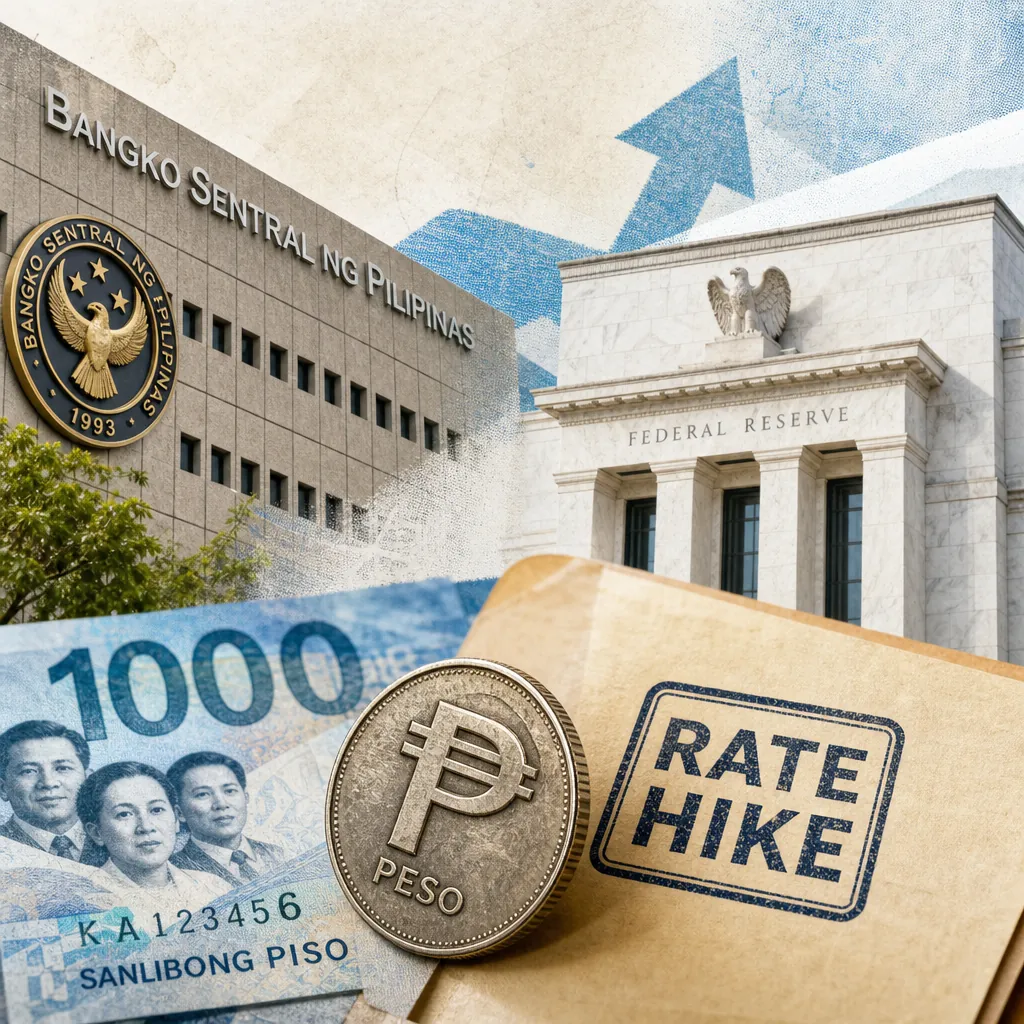
The most consequential financial story in the Philippines on Wednesday was the approach of the largest initial public offering the country has seen: the planned ₱92.32-billion listing of Mynt Inc., the company behind the GCash e-wallet, which is in the final stages of regulatory approval 868. The offer covers up to 9.23 billion common shares at an indicative maximum price of ₱10 each, and capital-market adviser Jonathan Ravelas of Reyes Tacandong & Co. told the Kapihan sa Manila Bay media forum that the ₱10 figure is a ceiling set in the regulatory filing, not a target or a promise 1252. The final price will come out of bookbuilding — the process in which underwriters canvass investor demand to set an offer price — and Ravelas said the quality of investors and the demand after listing matter more than whether the offer hits its maximum 12. He also said Mynt can keep growing by adding financial products to an ecosystem it already has, describing GCash as a "financial supermarket" whose users will transact more as they come to understand investing and passive income 868.
That listing is already moving the wider market. The benchmark Philippine Stock Exchange index (PSEi) — the main gauge of prices for the country's largest listed companies — fell 1.51 percent, or 90.84 points, to close at 5,916.94 on Wednesday, dropping below the 6,000-point level for the first time in this window 4673. Ravelas attributed the retreat partly to investors selling shares to raise cash for the Mynt offer, alongside the possibility of a US Federal Reserve rate increase 74. The sell-off was broad: the services sector index fell 3.18 percent, port operator International Container Terminal Services Inc. closed at its intraday low of ₱922, down 3.76 percent, while market bellwether SM Investments Corp. edged up 0.19 percent to ₱523.50 46.
A second, slower-building story ran alongside it: the Department of Finance's proposal to raise excise taxes on sugary drinks, alcohol and tobacco. Chinabank Research said the increases could lift consumer prices for those products by around 30 percent and push inflation — the rate at which the general price level rises — to as high as 4.5 percent in 2027, above the Bangko Sentral ng Pilipinas' 2-to-4-percent target band 3241. The research house estimated the tax package would add about 0.3 percentage points to headline inflation from first-round effects alone, and up to 0.6 percentage points once second-round effects are included 41.
Key themes
- GCash parent's ₱92.32-billion IPO nears the finish line. Mynt Inc. is in the final stages of regulatory approval for an offering of up to 9.23 billion shares at an indicative maximum of ₱10 each, with the final price to be set through bookbuilding 868.
- The PSEi fell below 6,000 as investors raised cash for the IPO. The index closed at 5,916.94, down 1.51 percent, with services the weakest sector at a 3.18-percent decline 4673.
- A proposed sin-tax hike could push 2027 inflation to 4.5 percent. Chinabank Research said higher excise taxes on sugary drinks, alcohol and tobacco could raise prices by around 30 percent and add up to 0.6 percentage points to inflation once second-round effects are counted 3241.
- Grab agreed to buy 60 percent of Atome Financial for $1.49 billion. The deal brings buy-now-pay-later lending, consumer cash loans and digital lending into Grab's financial services portfolio, with completion targeted for the third quarter of 2027 154256.
- The BSP drafted new rules for disciplining banks and their officers. The proposed circular sets out how the central bank will investigate and decide administrative cases, with penalties from reprimands and fines to suspension, removal and disqualification 1359.
- Alternergy will raise ₱2 billion through its first green bond issue. The renewable-energy company's board approved 1.5-year green fixed-rate notes at 7.75 percent a year, offered to qualified institutional buyers 161766.
- Maya and Visa enabled wallet cards on Google Pay, and Maya added ID-less account upgrades. The Google Pay rollout extends contactless payments to Maya Visa wallet cards, while ID-less verification lets eligible users upgrade accounts using name and birthday checked against National ID records 414.
- Remittances from overseas Filipinos hit a seven-month high of $3.24 billion in July. The Bangko Sentral ng Pilipinas reported the inflows were 1.9 percent higher than July last year and the highest since December 2025 67.
How the narratives stack
Dominant. The GCash IPO and the market's reaction to it dominated the business coverage in this set. The story appeared across multiple outlets — Inquirer Online, Inquirer Plus, BusinessWorld, Philstar and the Manila Times — and carried the largest single-item coverage value in the set, with the BusinessWorld report on Mynt's growth potential drawing an estimated ₱286,610 in advertising-equivalent value 68. The PSEi's drop below 6,000 was covered by both Philstar and The Financial District, and the two stories are linked: investors are selling to fund IPO subscriptions 467374.
Counter-narrative. The sin-tax story offered a different kind of weight: it is not a market event but a policy proposal with direct consumer consequences. Chinabank Research's estimate that the tax increases could raise prices by around 30 percent and push inflation to 4.5 percent in 2027 was carried by BusinessWorld, Head Topics and Inquirer Online, and the BusinessWorld version drew an estimated ₱663,913 in advertising-equivalent value — the highest single-item figure in the set 3241. That coverage value reflects the space the story occupied in the business pages, not the number of readers it reached.
Emerging. Grab's $1.49-billion acquisition of a 60-percent stake in Atome Financial is a regional deal with direct Philippine relevance, since Atome operates in the Philippines alongside Singapore, Malaysia, Indonesia and Thailand 1542. The deal would bring buy-now-pay-later lending and consumer cash loans into Grab's existing payments, banking, lending and insurance businesses, and Grab said it expects its loan book to exceed $6 billion by 2028 including Atome, up from a previous target of more than $3 billion by the end of this year 56. Completion is targeted for the third quarter of 2027, subject to regulatory approvals 47.
Under-covered. Two stories with real consumer impact drew less attention in this set. The Bangko Sentral ng Pilipinas' draft rules for administrative cases against banks and their officers appeared in Inquirer Online and BusinessWorld, but the coverage was procedural rather than analytical 1359. And Maya's ID-less account verification — which lets eligible users upgrade their accounts using name and birthday checked against National ID records through the Philippine Statistics Authority's National ID eVerify service — appeared only on a blog, Chasing Curious Alice 4. Both stories affect how ordinary Filipinos interact with financial institutions, but neither generated the volume of coverage that the IPO and tax stories did.
Platform insights
Facebook. The social conversation around the GCash IPO and the sin-tax proposal was concentrated on Facebook, where business pages and personal accounts shared news links and commentary. The monitoring writeup for this window did not capture specific engagement figures for individual Facebook posts, so the volume of interaction cannot be quantified from the available data.
X. Discussion on X focused on the PSEi's drop below 6,000 and the implications for retail investors. The platform carried a mix of market commentary from finance-focused accounts and reactions from ordinary users concerned about the cost of the sin-tax proposal. As with Facebook, the writeup did not provide post-level engagement figures.
Reddit. The r/Philippines and r/phinvest communities carried threads on the GCash IPO, with users discussing whether to subscribe and how the listing might affect the broader market. The tone was cautious, with several users noting the PSEi's decline as a reason to wait. No engagement figures were captured for these threads.
YouTube. Business and finance channels posted explainer videos on the sin-tax proposal and the GCash IPO, but the monitoring writeup did not record view counts or other engagement metrics for these videos.
Key voices and communities
Capital-market analysts. Jonathan Ravelas of Reyes Tacandong & Co. was the most quoted voice in the set, appearing in coverage of the GCash IPO, the PSEi decline and the remittances data 8126774. His framing — that the ₱10 price is a ceiling, not a promise, and that the quality of investors matters more than the headline price — shaped how the IPO story was reported 12.
Chinabank Research. The research house's estimate that the sin-tax proposal could push inflation to 4.5 percent in 2027 was the anchor for the tax story, and its breakdown of first-round versus second-round effects gave the coverage its analytical spine 3241.
The Bangko Sentral ng Pilipinas. The central bank appeared in three distinct roles: as the regulator drafting new disciplinary rules for banks 1359, as the source of the remittances data 67, and as the institution whose next policy move analysts were debating 78.
Retail investors and GCash users. The IPO story is aimed at a retail audience — GCash has millions of users, and the listing is positioned as a way for ordinary Filipinos to participate in the stock market. The Arthaland preferred-share offering available through GStocks PH, the investment platform inside the GCash app, illustrates how fintech is lowering barriers to capital-market participation 76.
BusinessWorld and Inquirer. These two outlets carried the bulk of the financial coverage in this set, with BusinessWorld running separate reports on the sin tax, the Grab-Atome deal, the BSP rules, the Maxicare rebrand, the Alternergy notes and the Aznar Shipping IPO 41555658596566.
Narrative streams
GCash parent's ₱92.32-billion IPO approaches pricing
Mynt Inc., the operator of GCash, is in the final stages of regulatory preparations for an initial public offering of up to 9.23 billion common shares at an indicative maximum price of ₱10 each 868. The offer comprises up to 8.027 billion shares and an overallotment option of up to 1.2 billion shares 68. Ravelas said the ₱10 figure is a ceiling set in the regulatory filing and should not be treated as the company's target or final price; the actual price will emerge from bookbuilding, which takes into account investor demand, company fundamentals, comparable firms, market conditions and the size and structure of the offer 1252. "The ₱10 is a ceiling, not a promise, and certainly not a measure of whether the IPO succeeds or fails," Ravelas said 12. He added that Mynt can expand by adding financial products to its existing ecosystem: "They're already a wallet, very generic. The only thing that they need to do is add more products to sell. Because they already have the ecosystem" 8. The read for the sector is that the IPO will test whether Philippine retail investors will commit capital to a technology-driven financial platform at scale, and the answer will shape how other fintechs approach the public market. The listing also matters for the broader market: the PSEi's decline below 6,000 was attributed partly to investors raising cash for the offer 74.
PSEi falls below 6,000 as investors prepare for the IPO
The Philippine Stock Exchange index closed at 5,916.94 on Wednesday, down 90.84 points or 1.51 percent, with the broader All Shares index retreating 1.26 percent to 3,300.26 4673. Services posted the biggest sectoral decline at 3.18 percent, and International Container Terminal Services Inc. closed at its intraday low of ₱922, down 3.76 percent 46. Regina Capital Development Corp. head of sales Luis Limlingan said investors were concerned about slower third-quarter economic growth and the absence of clear catalysts 73. Ravelas said the market was displaying symptoms of investors preparing for two things: a possible US Federal Reserve rate hike and the Mynt IPO 74. The read for the sector is that the IPO is already reshaping trading behavior — investors are selling existing holdings to fund subscriptions, which means the listing's pricing will be influenced by the market conditions it is helping to create. The PSEi's drop below 6,000 is a psychological threshold; whether it holds depends on the Fed's next move and the IPO's reception.
Sin-tax proposal could push 2027 inflation to 4.5 percent
The Department of Finance's proposal to raise excise taxes on sugary drinks, alcohol and tobacco could raise prices for those products by around 30 percent and push inflation to as high as 4.5 percent in 2027, according to Chinabank Research 3241. The research house said the proposal could add as much as 0.3 percentage points to headline inflation in 2027 from first-round effects, assuming it is passed this year and implemented at the start of 2027, and up to 0.6 percentage points once second-round effects are included 41. Chinabank expects inflation to average 3.9 percent in 2027, so the tax package would push the rate above the Bangko Sentral ng Pilipinas' 2-to-4-percent target band 41. The BSP's own projection for 2027 is 5.4 percent, so the tax-driven estimate is below that but still above target 10. The read for the sector is that food and beverage manufacturers, retailers and consumers should prepare for higher shelf prices if the proposal passes, and the government faces a trade-off between revenue and inflation control. The proposal is part of a broader fiscal strategy to fund government programs, but its timing — as the country grapples with elevated oil prices — adds to the price pressures households already face 10.
Grab buys control of Atome Financial for $1.49 billion
Grab Holdings Ltd. agreed to acquire a 60-percent equity interest in Atome Financial, the Singapore-based buy-now-pay-later fintech, for $1.49 billion in cash, with $260 million injected as fresh growth capital 1542. The deal would bring Atome's buy-now-pay-later loans, consumer cash loans, cards and digital lending businesses into Grab's financial services portfolio, which already spans payments, digital banking, lending and insurance 15. Atome operates in the Philippines, Singapore, Malaysia, Indonesia and Thailand, serving 25 million cumulative transacted users 15. Grab said it expects to grow its loan book to over $6 billion by 2028 including Atome, compared with a previous target of more than $3 billion by the end of this year 56. The acquisition is expected to be completed by the third quarter of 2027, subject to regulatory approvals 47. The read for the sector is that the deal consolidates two of Southeast Asia's largest consumer-finance platforms and extends credit access to people without formal credit histories, which could pressure traditional banks to compete on convenience and speed. For Philippine borrowers, the combination of Grab's ride-hailing and delivery user base with Atome's lending products could mean more embedded credit offers at the point of transaction.
BSP drafts new disciplinary rules for banks and their officers
The Bangko Sentral ng Pilipinas is collecting comments on a draft circular that will spell out how it investigates and decides administrative cases against banks and other BSP-supervised institutions, and against their directors, trustees, officers and employees 1359. Under the proposed rules, complaints must be written, sworn and supported by evidence such as documents or witness affidavits; anonymous complaints are not accepted 13. Complaints involving purely criminal, civil and labor disputes, or those within the exclusive jurisdiction of regular courts and other government agencies, will be dismissed 13. The accused gets 30 calendar days to submit a sworn answer and supporting evidence 54. Penalties range from reprimands and fines to suspension, removal from office and disqualification 13. The draft circular is grounded in The New Central Bank Act, as amended, and The General Banking Law of 2000 59. The read for the sector is that the BSP is formalizing its enforcement process, which could lead to faster resolutions of cases against erring banks and their officers. For bank customers, the change may mean complaints are handled more predictably, but the exclusion of anonymous complaints could deter whistleblowers who fear retaliation.
Alternergy raises ₱2 billion through first green bond issue
Alternergy Holdings Corp., a listed renewable-energy company, will issue ₱2 billion in green fixed-rate notes after its board approved the maiden offering 161766. The notes will be offered to qualified institutional buyers, have a tenor of 1.5 years and carry an interest rate of 7.75 percent per annum, payable quarterly, with the principal repaid in full at maturity 1666. BDO Capital & Investment Corp. is the sole issue manager and arranger, and the notes will be listed on the Philippine Dealing & Exchange Corp. 17. Green notes are debt securities issued to raise funds for environmentally beneficial projects, including renewable energy developments 66. Alternergy President Gerry Magbanua said the proceeds would support pre-development requirements of projects awarded under the government's fourth Green Energy Auction, as well as other projects in its pipeline 1666. The read for the sector is that the issuance tests investor appetite for green debt from a smaller renewable-energy player, and its success could encourage other Philippine companies to tap the debt market for clean-energy financing. The 7.75-percent rate is a benchmark for what investors demand from such offerings.
Maya and Visa expand digital payment access
Visa and Maya enabled Maya Visa wallet cards for Google Wallet and Google Pay, allowing cardholders to use physical and virtual wallet cards for digital payments 14. The rollout extends Google Pay availability to all Maya Visa cards, including credit and wallet cards; Maya previously enabled Google Wallet and Google Pay for its credit cardholders in November 2025 14. Google Pay transactions are enabled by Visa's tokenization technology, which replaces actual card numbers with unique digital tokens to prevent account information from being shared with merchants or stored on devices 14. Separately, Maya introduced ID-less verification, which lets eligible users upgrade their accounts without uploading a physical ID; users enter their name and birthday, and Maya checks these against National ID records through the Philippine Statistics Authority's National ID eVerify service 4. The read for the sector is that both moves lower the friction of using digital financial services — one by making payments more convenient at physical points of sale, the other by removing a common barrier to account upgrades. For consumers, the changes mean fewer steps and less documentation, which could accelerate the shift away from cash.
Remittances hit a seven-month high in July
Money sent home by overseas Filipinos reached $3.24 billion in July, a seven-month high and 1.9 percent higher than the $3.18 billion recorded in July last year, according to Bangko Sentral ng Pilipinas data 67. It was the highest monthly figure since the $3.52 billion recorded in December 2025 67. For January to July, cash remittances rose 2.3 percent to $20.38 billion, with the United States the top source, followed by Singapore and Saudi Arabia 67. Personal remittances, which include cash sent through banks and informal channels as well as remittances in kind, also rose 2.3 percent to $22.73 billion 67. Ravelas said remittances "continue to demonstrate resilience and remain a critical buffer for the Philippine economy" 67. The read for the sector is that household consumption, which drives a large share of Philippine economic growth, continues to be supported by money from abroad even as the peso weakens and oil prices remain elevated. For banks and remittance operators, the steady inflows represent a reliable source of fee income and a base for cross-selling other financial products.
Maxicare rebrands its life insurance arm
Maxicare Life Insurance Corp. has been rebranded to Maxicare Insurance as part of the Maxicare Group's integration of its companies 3155. The rebranding aims to unify the group's services and streamline its operations from a traditional health maintenance organization into a broader healthcare group 55. The Insurance Commission approved the rebrand 55. The group said the change is intended to make preventive care, medical services and financial protection easier to understand and access for Filipinos, with Maxicare Insurance integrated into the group's healthcare plans 31. The read for the sector is that the rebrand reflects a broader trend of healthcare and insurance companies consolidating to offer bundled products, which could simplify choices for consumers but also reduce the number of independent providers in the market.
Aznar Shipping's December IPO faces cautious market
Cebu-based Aznar Shipping Corp.'s planned initial public offering could face a cautious market amid domestic and global economic uncertainties, although its December listing schedule may help if sentiment improves following larger offerings, analysts said 3365. Aznar Shipping has filed a registration statement with the Securities and Exchange Commission for a ₱737-million IPO comprising up to one billion primary common shares and an overallotment option of up to 100 million secondary shares 65. First Grade Finance Inc. Managing Director Astro C. del Castillo said the "litany of concerns in our domestic economy and the uncertainty in the global economic environment will not be a good backdrop during Aznar's period of offering" 33. Toby Allan C. Arce, head of sales trading at Globalinks Securities and Stocks Inc., said the planned IPO could broaden the types of companies entering the Philippine stock market 65. The read for the sector is that the IPO's reception will indicate whether investor appetite extends beyond large, well-known technology and consumer names to smaller, sector-specific companies. If Aznar's offering struggles, it could discourage other mid-sized firms from listing.
Other corporate and market developments
Several other items rounded out the day's financial coverage. CARD SME Bank launched an upgraded version of its konek2CARD mobile banking app on July 28, 2026, in General Santos City, adding biometric login, real-time notifications and an Express Loan section for digital loan applications 43. LANDBANK received the Karlsruhe Sustainable Finance Award for Outstanding Sustainable Project Financing for its renewable-energy and power-infrastructure portfolio 45. Sun Life Grepa Financial Inc. was recognized with the Best Employer Brand Transformation Journey award at the People Insight Awards 2026 2. The Consulate General of the Republic of San Marino in the Philippines, led by Honorary Consul General Jean Henri Lhuillier, distributed food relief to ten families in Pasay City affected by flooding and construction disruptions 2728.
Conversation trajectory
The GCash IPO pricing will be the next major signal. The bookbuilding process is underway, and the final offer price will be announced before the listing. Watch for the price to come in below the ₱10 ceiling if demand is weaker than expected, or at the ceiling if demand is strong. The PSEi's performance in the days leading up to the pricing will indicate whether investors are still selling to fund subscriptions. Observation window: the next two to four weeks, or until the final price is announced.
The sin-tax proposal will move to Congress. The Department of Finance's proposal needs legislative approval, and the debate will pit revenue needs against inflation concerns. Watch for statements from food and beverage manufacturers, retailers and consumer groups, as well as any changes to the proposed tax rates. The BSP's next policy meeting will also be a venue for discussing the inflation impact. Observation window: the next four to six weeks, or until the proposal is filed as a bill.
The Grab-Atome deal will face regulatory review. The acquisition requires approvals from competition authorities in the five markets where Atome operates, including the Philippines. Watch for the Philippine Competition Commission's review and any conditions it imposes. The deal is targeted for completion in the third quarter of 2027, so the regulatory process will take time. Observation window: the next six to twelve months.
The BSP's draft rules on administrative cases are open for comment. The central bank is collecting feedback from stakeholders before finalizing the circular. Watch for comments from banks and industry groups, and for any changes to the proposed procedures, particularly the exclusion of anonymous complaints. Observation window: the next four to eight weeks, or until the comment period closes.
The PSEi's move below 6,000 will be tested. The index's decline was driven by a combination of IPO-related selling, oil prices and geopolitical concerns. Watch for whether it recovers above 6,000 or continues to fall, and for any intervention from the BSP or the government. The US Federal Reserve's next rate decision will be a key trigger. Observation window: the next one to two weeks.
Trigger events to watch: the announcement of the GCash IPO's final price; the filing of the sin-tax proposal as a bill in Congress; the Philippine Competition Commission's review of the Grab-Atome deal; the BSP's next policy meeting; and the release of third-quarter GDP data.
Response guidance
For banks and financial institutions: Prepare for the GCash IPO's impact on retail investor behavior. If the listing draws significant retail participation, expect more customers to ask about stock-market investing and other products. Train frontline staff to explain basic investment concepts and to direct customers to appropriate channels. The BSP's draft rules on administrative cases also mean banks should review their compliance and complaint-handling procedures to ensure they can respond to written, sworn complaints within the 30-day window.
For consumer-goods companies: The sin-tax proposal, if passed, would raise prices for sugary drinks, alcohol and tobacco by around 30 percent. Companies in these categories should prepare for changes in consumer behavior, including trading down to cheaper alternatives or reducing purchases. Communicate clearly with retailers about pricing changes and consider whether to reformulate products to reduce sugar content, which could affect tax classification.
For fintech and payment providers: The Maya-Visa Google Pay rollout and Maya's ID-less verification show that consumers respond to reduced friction. Consider whether your own onboarding and payment processes can be simplified. The Grab-Atome deal also signals that embedded lending at the point of transaction is a growing model; evaluate whether partnerships with retailers or platforms could extend your reach.
For renewable-energy companies: Alternergy's green bond issuance at 7.75 percent provides a benchmark for what investors expect from similar offerings. If your company is considering a green bond, use this as a reference point for pricing and structure. The proceeds are earmarked for projects under the Green Energy Auction, so companies with awarded projects may find similar financing opportunities.
For communicators across the sector: The dominant stories — the GCash IPO and the sin-tax proposal — are both about how financial decisions affect ordinary Filipinos. Frame messages around concrete impacts: what the IPO means for retail investors, what the tax hike means for household budgets. Avoid jargon and explain terms like bookbuilding, inflation and excise tax in plain language. The coverage in this set was concentrated in online news outlets, so digital channels are the primary venue for reaching the audience following these stories.
Sensitive topics to handle carefully: The PSEi's decline below 6,000 could prompt questions about market stability. Avoid speculation about further declines; stick to the factors analysts have identified — IPO-related selling, oil prices and Fed policy. The BSP's draft rules on anonymous complaints may draw criticism from transparency advocates; if your organization is asked to comment, focus on the procedural aspects rather than the political implications. The sin-tax proposal is politically sensitive; if your company has a position, state it clearly and support it with data on consumer impact.
See the full picture behind today's signals.
This report draws from Media Meter's MediaWatch, our real-time monitoring engine tracking 2,470+ Philippine sources across print, broadcast, digital, and social. Explore how the platform turns raw coverage into decision-grade intelligence, then see how it's configured for teams like yours — whether you're in PR agencies, corporate comms, government, or marketing.
Want more? Browse our Report Library for sector and crisis intelligence, or request a demo and we'll have your brand set up before the call.
Want this kind of intelligence on your brand?
This brief is built on the same MediaWatch methodology that runs continuously across every brand we monitor. See your competitive landscape, Impact Score, and narrative trajectory in a 30-minute demo.