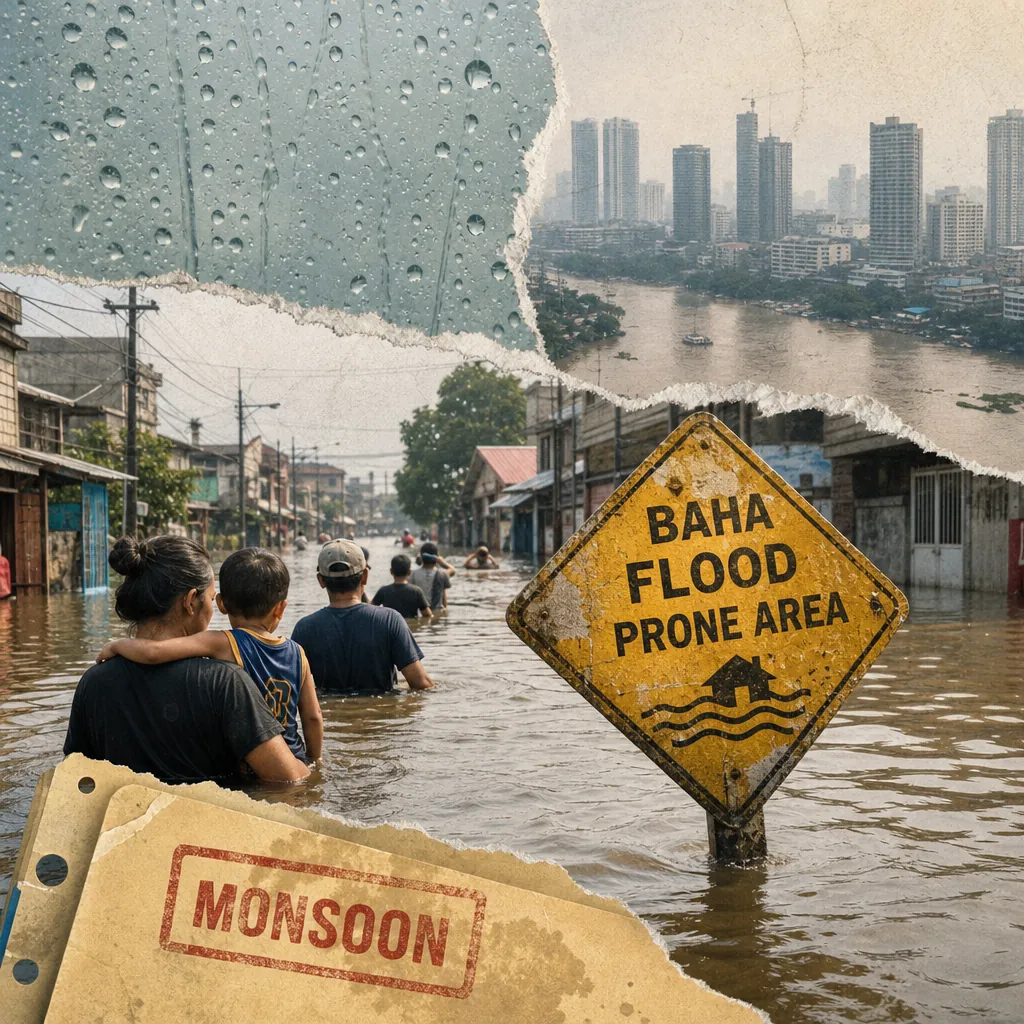
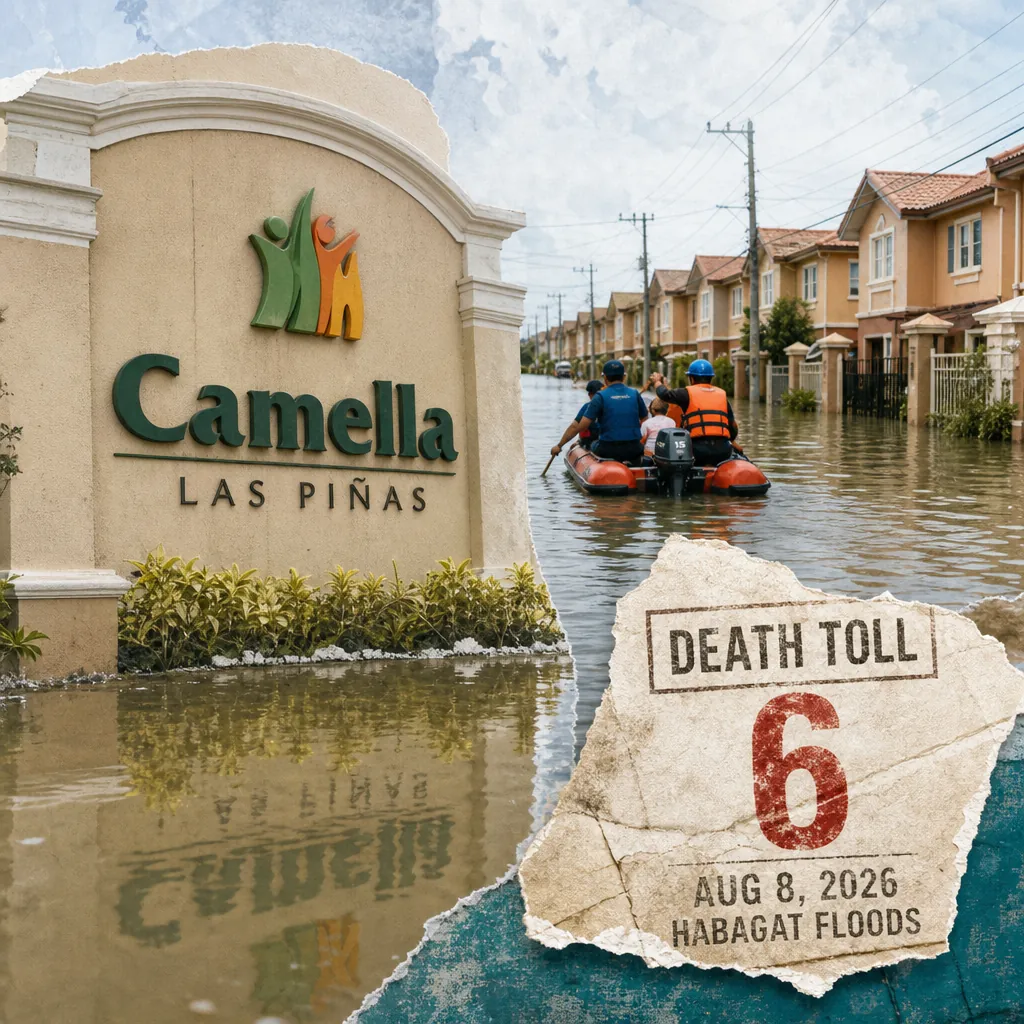
Habagat floods, work suspensions hit property markets
Monsoon floods and government work/class suspensions across key Philippine provinces disrupt real estate operations and sharpen flood-risk concerns, while developers push affordable housing and infrastructure projects.
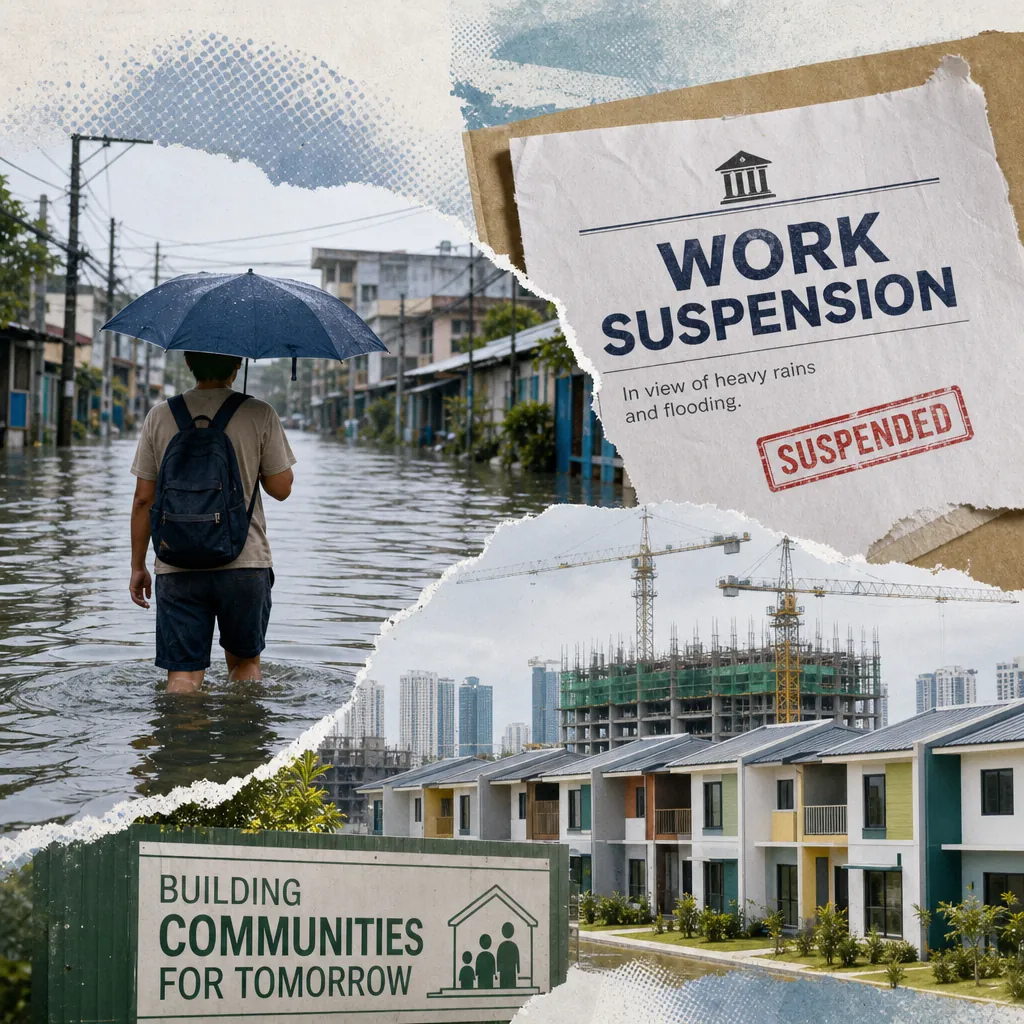
The enhanced southwest monsoon, known locally as the habagat, turned Sunday, August 9, into a day of rising water and shifting plans across Luzon. By evening, the National Disaster Risk Reduction and Management Council (NDRRMC) — the government body that coordinates disaster response — reported that more than 110,000 families, or roughly 382,000 people, had been affected by the rains and the lingering effects of two recent tropical cyclones, Luis and Maymay. At least eight deaths were confirmed, including two siblings killed by a falling boulder in Rodriguez, Rizal, and two people who drowned in La Union. The numbers kept climbing through the day, and the conversation on social media moved from raw shock to a more structured, anxious wait for official guidance.
The most consequential development for the property sector came late Sunday when the Presidential Communications Office (PCO) — the agency that handles the president's public messaging — posted the text of Memorandum Circular No. 123. The circular, signed that day, ordered government offices in Metro Manila and 15 provinces to shift to work-from-home arrangements on Monday, August 10, and directed all public and private schools in those areas to suspend face-to-face classes in favor of modular or online learning. The affected provinces read like a map of the country's busiest residential growth corridors: Cavite, Laguna, Batangas, Rizal, and Bulacan — all home to sprawling subdivisions, township projects, and mid-rise condominium developments — plus Ilocos Sur, La Union, Pangasinan, Benguet, Abra, Zambales, Bataan, Tarlac, Pampanga, Occidental Mindoro, and Oriental Mindoro. The circular explicitly kept essential services running, including health, disaster response, and agencies like the Pag-IBIG Fund, which processes housing loans, and the Department of Human Settlements and Urban Development (DHSUD), which oversees housing policy.
The announcement drew a notably different emotional response than the flood footage that had dominated earlier in the day. The PCO post received 25 likes and 103 shares, with 33 "love" reactions — a sharp contrast to the sadness and frustration that marked posts showing submerged churches and residents wading through knee-deep water. The high share count suggested people were treating the memorandum as practical information to pass along to family and colleagues rather than content to simply acknowledge. A duplicate post of the same announcement, published by the same source to maximize reach, added another 16 likes and 5 shares. Later, the Philippine Daily Inquirer reported that Laguna Governor Sol Aragones had suspended all face-to-face classes across the province, a more absolute directive than the national circular, which left room for local chief executives to make their own calls. That post drew 75 likes and 3 shares, the highest engagement of the day's government-related entries, with a handful of "love" reactions signaling appreciation for decisive local leadership — and a single "haha" reaction hinting at the fatigue some residents feel with repeated class suspensions.
For anyone watching the real estate market, these suspensions are more than a weather inconvenience. They are operational disruptions that can delay site viewings, preselling appointments, and turnover schedules in some of the most active housing markets in the country. They also reinforce a longer-term narrative: that these provinces, despite their popularity with developers and homebuyers, remain vulnerable to flooding. The question now is whether developers will step forward with their own resilience messaging, or whether the silence will let the flood-risk narrative harden into a lasting buyer concern.
Key themes
- Government work and class suspensions create operational friction for property sales. Memorandum Circular No. 123's work-from-home and alternative-learning directives cover provinces where much of the country's affordable and mid-range housing inventory sits. With government offices closed and schools shifted online, foot traffic in showrooms and the pace of preselling activities are likely to slow, at least for the duration of the suspension.
- Flood footage and infrastructure failures dominate the emotional conversation. Videos of submerged roads in Taytay, Rizal, and Biñan, Laguna, and a church in Guiguinto, Bulacan, taking in floodwater drew hundreds of reactions. Reports of damaged flood control structures in Romblon and a collapsed perimeter wall along EDSA in Makati — made, according to Public Works Secretary Vince Dizon, of fiber cement board rather than concrete — fueled public skepticism about infrastructure promises.
- Local government responses are emerging as a key variable for buyer sentiment. The Laguna governor's separate, more absolute class suspension drew higher engagement than the national circular, suggesting that residents look to local leaders for clear, decisive communication. Developers with projects across multiple provinces may face uneven reputational outcomes depending on how responsive each local chief executive appears.
- Affordable housing delivery continues despite the weather. Pag-IBIG Fund, the state-run agency that provides housing loans, signed a partnership with P.A. Alvarez Properties and Development Corp. to finance more than 7,300 affordable housing units in Batangas, Laguna, and Pampanga under the government's Expanded Pambansang Pabahay para sa Pilipino (Expanded 4PH) Program — a national initiative to build millions of socialized and economic housing units. The ₱2.9-billion investment underscores that the long-term housing pipeline remains active even as the immediate weather disrupts operations.
- Infrastructure investment and reclamation controversies add a political layer. The Bases Conversion and Development Authority (BCDA) broke ground on a ₱172-million expansion of the Hacienda Luisita interchange on the Subic-Clark-Tarlac Expressway, while Senator Panfilo Lacson revealed that the Philippine Reclamation Authority (PRA) is moving to forfeit illegally reclaimed land in Taguig City — a move that could reshape waterfront property values and reignite debates about flood control and urban development.
- Retail and commercial real estate show resilience and expansion plans. Golden ABC, the company behind Penshoppe and other clothing brands, announced ₱1 billion in capital spending to open or renovate over 100 stores this year, many in Metro Manila and the Greater Manila Area, following mall openings like SM Nuvali in Laguna. Filinvest Hospitality opened three new restaurants at its Mimosa complex in Clark, signaling continued confidence in leisure and retail destinations.
- Public frustration with "ghost projects" threatens to spill over to private developers. The collapse of the EDSA wall and reports of substandard flood control structures have revived accusations of corruption in government infrastructure spending. While no developer has been directly named, the sentiment could extend to any entity perceived as profiting from high-value urban development in flood-prone areas.
How the narratives stack
Dominant: The government's work and class suspension directive, anchored by Memorandum Circular No. 123, is the single most consequential development for the real estate sector in this captured set. It directly names the provinces where much of the country's housing inventory sits and creates a clear operational baseline for assessing development risk. The circular's broad scope — covering Metro Manila and 15 provinces — and its explicit inclusion of Cavite, Bulacan, Rizal, and Batangas signal an official acknowledgment that these areas remain vulnerable to monsoon flooding. Within the items gathered here, this story drew the most consistent coverage across news outlets, with multiple wire-style reports from the Inquirer, Manila Bulletin, and other online sources, and it anchored the day's social conversation with the highest share counts.
Counter-narrative: Alongside the flood and suspension coverage, a steady stream of positive real estate and infrastructure news continued to flow. Pag-IBIG's affordable housing partnership, BCDA's expressway interchange expansion, Golden ABC's retail expansion, and Filinvest's new restaurant openings all point to a sector that is still investing and growing despite the weather. This counter-narrative is quieter — it does not generate the same emotional engagement as flood footage — but it is persistent and suggests that developers and investors are not treating the monsoon as a reason to pause their long-term plans.
Emerging: The flood-resilience conversation is beginning to shift from general weather complaints toward specific questions about developer accountability. Comments on evacuation coverage and the damaged flood control structures in Romblon — which drew an unusually high number of "haha" reactions, a bitter irony response — indicate growing frustration with perceived lack of preparedness. This trajectory typically peaks five to seven days after sustained flooding, as affected families document their experiences and commentators start asking why residential developments were not better protected. Developers with credible flood mitigation infrastructure may gain a competitive advantage, while those in flood-prone zones face mounting scrutiny.
Suppressed: The voice of the developers themselves is almost entirely absent from the day's conversation. No major developer issued a public statement about the flooding or the suspensions, and no developer-led messaging about community safety or resilience appeared in the captured items. This silence creates a narrative gap: residents and prospective buyers are left to form their own conclusions about whether housing developments in affected areas are safe, and the absence of proactive communication could be interpreted as indifference. The opportunity for developers to step forward with concrete information about drainage systems, elevation standards, and emergency protocols is wide open — but the window is closing as the conversation pivots from weather reporting to accountability.
Platform insights
- Facebook: The primary platform for both official government advisories and user-generated flood documentation. The PCO's memorandum post drew 103 shares, indicating that users treated it as practical guidance to distribute widely. The Laguna class suspension post from the Inquirer drew 75 likes, the highest engagement among government-related entries. Emotional content, such as the Guiguinto church flooding post with 56 sad reactions and 22 care reactions, demonstrated that Facebook users actively seek and share human-interest angles amid the crisis. The platform also hosted the most consequential real estate-related development of the day through the PCO announcement.
- X (formerly Twitter): Carried the same official advisories but with notably lower engagement. The MMDA flood advisory, for example, received only 11 likes and 4 shares despite nearly 7,000 views. Twitter appeared to function more as a secondary distribution channel than a site for active discussion, with no substantive comment threads emerging. For real estate communicators, this suggests that X is useful for broadcasting updates but not for driving engagement or sentiment.
- Reddit: A politically charged anonymous post criticizing political dynasties and corruption in flood control received over 800 upvotes and 80 comments, making it one of the highest-engagement items of the day. The post, which included the line "Pinalaki kayong spoiled gamit ang nakaw na pera. Karma nalang ang bahala sa inyo" (You were raised spoiled with stolen money. Let karma deal with you), framed flooding as a consequence of systemic corruption and elite indifference. While this group does not directly reference real estate developers, the sentiment pattern can spill over to any entity perceived as profiting from high-value urban development in flood-prone areas.
- YouTube: No significant real estate-related activity was captured on YouTube for this window. The platform's role in the conversation appears limited to news outlets republishing video content, but no distinct engagement patterns emerged.
Key voices and communities
- Affected residents and flood victims: Residents from flood-stricken areas across Metro Manila, Cavite, Bulacan, Rizal, Laguna, Romblon, and Ilocos Sur actively shared their experiences through Facebook and Twitter. Their content consistently documents road conditions, creek levels, and evacuation situations, serving as a real-time ground-level reporting network. One widely-shared post described knee-deep flooding in Taytay, Rizal, that rendered roads impassable to vehicles; another showed residents using boats to navigate flooded streets in Biñan, Laguna. For real estate stakeholders, this group surfaces potential reputational risks related to flooding in residential areas, particularly in provinces where major housing developments are located.
- Government and official response agencies: Disaster management offices, local government units, and weather authorities disseminated official advisories and evacuation updates. The MMDA advisory alone generated over 140 comments, while DOST-PAGASA's heavy rainfall advisory detailed rainfall projections across multiple provinces. The Philippine Coast Guard's video coverage of a 102-person evacuation in Imus City, Cavite drew over 100 reactions and 60 comments. The DSWD reported that 3,640 families in Rizal, Cavite, and Batangas were affected, providing official numbers that anchor the crisis narrative. This group serves as an authoritative source that can either validate or challenge narratives surrounding flooding in specific developments.
- News and media outlets: Traditional media organizations and their digital platforms provided coverage and amplification of flood conditions, with UNTV News and Rescue leading several prominent posts. Their video content drew the highest engagement, with the Taytay flooding video alone receiving nearly 250 reactions. Business publications like the Manila Bulletin ran real estate sections featuring developer announcements, revealing a dual narrative landscape where flood coverage and property marketing coexist. This group bridges the gap between crisis narratives and real estate marketing, representing both a risk channel and an opportunity for positive placement.
- Politically engaged critics: A smaller but highly vocal group focused on attributing flood failures to political leadership, particularly targeting those perceived as connected to corruption and privilege. Their content generates outsized engagement relative to volume, with the anonymous Reddit post receiving over 800 upvotes. The messaging is emotionally charged, combining frustration with accusations of entitlement and negligence. While this group does not directly reference real estate developers, the sentiment pattern can spill over to any entity perceived as profiting from high-value urban development in flood-prone areas.
Narrative streams
The work-from-home directive and its operational impact on property markets
Memorandum Circular No. 123, issued by the Office of the President on August 9, is the day's most significant development for the real estate sector. The circular mandates work-from-home arrangements for government offices and alternative learning modes for schools in Metro Manila and 15 provinces, effective August 10. The affected provinces — Ilocos Sur, La Union, Pangasinan, Benguet, Abra, Zambales, Bataan, Tarlac, Pampanga, Bulacan, Rizal, Cavite, Batangas, Occidental Mindoro, and Oriental Mindoro — overlap heavily with the country's most active residential growth corridors. Cavite, Laguna, Batangas, Rizal, and Bulacan are home to substantial inventories of horizontal subdivisions and mid-rise condominium projects, from DMCI Homes' developments in Cavite to Camella's house-and-lot communities in Bulacan.
The circular explicitly leaves private sector work arrangements to company discretion, which gives developers latitude to position themselves as employee-friendly and buyer-considerate by announcing flexible site viewing schedules or digital tour options during weather disruptions. The directive also emphasizes that agencies responsible for basic and health services, disaster preparedness, and response "continue their operations and render the necessary services," signaling that essential functions — including Pag-IBIG fund operations, which are critical for housing loan processing, and DHSUD oversight — will remain active.
For developers with preselling portfolios in the affected regions, the timing is critical. Suspensions often coincide with peak weekend viewing and reservation activities, potentially slowing sales momentum. The repetition of these announcements — this is not the first time these provinces have been named in suspension circulars — reinforces weather vulnerability as an enduring backdrop for provinces like Cavite and Bulacan where major township projects operate. The emotional response to the PCO post, dominated by "love" reactions rather than anger or sadness, suggests that residents may be more receptive to solution-oriented communications from developers who acknowledge the challenges and demonstrate concrete responses to mitigate them.
Flood footage and the emotional toll on communities
The visual documentation of flooding on August 9 was relentless. UNTV News and Rescue provided video evidence of severe flooding in Laguna, Rizal, and Ilocos Sur, including residents in Biñan, Laguna, resorting to boats on submerged roads and knee-deep flooding in Taytay, Rizal, which was impassable to vehicles. The emotional tone crescendoed by early afternoon when the Parokya ni San Ildefonso de Guiguinto in Bulacan posted that floodwaters had entered the church itself, with one official message noting, "Kasalukuyan pong baha sa ating Parokya dulot ng patuloy at malakas na pag-ulan. Hinihikayat po ang lahat na mag-ingat, manatili muna sa ligtas na lugar, at iwasan ang mga bahaging lubog sa tubig" (The parish is currently flooded due to the continuous and heavy rain. Everyone is urged to be careful, stay in a safe place, and avoid areas submerged in water). The post drew 56 sad reactions and 22 care reactions, and the parish continued Sunday mass despite the flooding inside.
A particularly striking story came from Biñan, Laguna, where an 80-year-old woman's funeral procession used a styrofoam boat to ferry the coffin across flooded streets. The Manila Bulletin reported that relatives and mourners walked through the floodwater, pushing and pulling the improvised boat until they reached shallower ground. The barangay captain, Randy Laviña, was thanked by the family for his help. These human-interest stories, while not directly about real estate, shape the emotional context in which property decisions are made. They reinforce the lived reality of flooding in areas where developers are actively selling homes, and they create a reservoir of empathy and concern that can influence buyer sentiment.
The reaction patterns — particularly the mix of sad and "haha" responses to official advisories — suggest that public patience is wearing thin. The MMDA advisory listing impassable roads drew 91 sad reactions and 65 "haha" reactions, a combination that reflects both commiseration and dark humor among residents facing yet another flood event. The damaged flood control structures in Romblon drew 170 "haha" reactions, an unusually high number that suggests public skepticism toward government preparedness claims. For developers, this emotional fatigue means that any future flooding incident will be met with heightened scrutiny and potentially amplified criticism.
Infrastructure failures and the "ghost project" controversy
The collapse of a perimeter wall along EDSA in Makati on Saturday night became a flashpoint for public anger. The wall, which belonged to the exclusive Forbes Park subdivision, collapsed during heavy rain, blocking two northbound lanes of EDSA. Public Works Secretary Vince Dizon inspected the site and said the wall was made of Hardiflex, a fiber cement board typically used for ceilings and wall dividers, rather than concrete. "Hindi ito semento. Hardiflex lang ito, drywall lang ito. Parang, ang nangyari dito, kung sino man ang gumawa nito, pinapalabas nila na semento, pero hindi naman pala semento" (This is not cement. It's just Hardiflex, just drywall. It seems whoever made this made it look like cement, but it's not cement), Dizon said. The incident drew immediate comparisons to the "ghost projects" scandal — a ₱1-trillion corruption case involving alleged nonexistent, substandard, and overpriced flood-control projects that siphoned money meant for infrastructure into kickbacks.
Celebrity Bianca Gonzalez reminded her followers not to forget the anomalies in flood control projects, posting that "nagsimula na naman ang pag-ulan at pagdating ng sunud sunod na bagyo, magkakaalaman na naman ng mga lugar na ghost project lang ang milyones na flood control budget" (The rain has started again, and with the succession of typhoons, we will again find out which areas only had ghost projects for their millions in flood control budget). The post resonated widely, with many agreeing that the money should have gone to help Filipinos struggling to survive day to day.
For the real estate sector, this narrative is a double-edged sword. On one hand, it highlights the importance of robust infrastructure in supporting residential developments. On the other, it creates a climate of skepticism that can extend to private developers if they are perceived as cutting corners on flood mitigation. The EDSA wall collapse, while not a housing development, is a visible reminder that substandard construction can have deadly consequences — and it primes the public to ask harder questions about the quality of all construction, including residential projects.
Affordable housing and the 4PH program
Amid the flood chaos, the government's housing agenda continued to move forward. Pag-IBIG Fund, the state-run agency that provides housing loans to Filipino workers, signed an investment partnership with P.A. Alvarez Properties and Development Corp. to help finance the construction of more than 7,300 affordable housing units in Batangas, Laguna, and Pampanga under the Expanded Pambansang Pabahay para sa Pilipino (Expanded 4PH) Program. The 4PH program is a national initiative to build millions of socialized and economic housing units, with the government providing financing and developers building the projects. Under the agreement, Pag-IBIG will subscribe to ₱2.9 billion worth of preferred shares issued by the developer, with the investment released in tranches and earning a fixed annual return of 9 percent over three years. The 10 housing developments will consist of 80 percent socialized housing units and 20 percent economic housing units.
DHSUD Secretary Jose Ramon Aliling, who concurrently chairs the Pag-IBIG Fund Board of Trustees, said the partnership aims to accelerate housing delivery through collaboration with the private sector while increasing the supply of affordable homes. The announcement is significant because it shows that the government's housing pipeline remains active even as the monsoon disrupts daily operations. It also highlights the importance of Pag-IBIG's continued operations during the work-from-home directive — the agency's ability to process loans is critical for the 4PH program and for the broader housing market.
However, the flooding in the very provinces where these units are being built — Batangas, Laguna, and Pampanga — raises questions about site selection and flood resilience. The 4PH program's goal of providing affordable homes is admirable, but if those homes are in flood-prone areas, the program could face reputational damage. Developers and government agencies will need to demonstrate that these projects are designed with adequate drainage, elevation, and flood mitigation measures to reassure buyers.
Retail and commercial real estate: expansion despite the weather
While residential markets face operational disruptions, the retail and commercial segments showed continued confidence. Golden ABC, the Filipino retailer behind clothing brands like Penshoppe and OXGN, announced it will spend ₱1 billion in capital expenditure this year to support a pipeline of over 100 new and renovated stores across its six brands. Company President and CEO Alice T. Liu said most of the store pipeline is in Metro Manila and the Greater Manila Area, following where malls are opening, including SM Nuvali and the expanded Ayala Malls Nuvali in Laguna. "We follow where the malls are opening," Liu said, underscoring the symbiotic relationship between retail and real estate development.
Filinvest Hospitality also opened three new restaurants at Filinvest Shoppes Mimosa in Clark, marking what executives called the evolution from a hotel and golf course into a fully integrated lifestyle resort destination. The new restaurants — Firehouse Pizza Clark, La Loca, and Recado by Carlos Villaflor — are part of a broader strategy to attract visitors and residents to the Mimosa complex. The company also previewed its Mimosa Lifestyle+ rewards program, set to launch in the coming weeks.
These expansions suggest that commercial real estate developers are betting on continued consumer demand despite the weather disruptions. The retail sector's resilience is notable, especially given that the National Retail Conference and Expo, held at the SMX Convention Center Manila, drew industry leaders who discussed long-term growth strategies. Women executives at the conference, including Robinsons Land Corp. President Maria Socorro Isabelle V. Aragon-GoBio, emphasized the importance of integrity and people-centered leadership in navigating crises.
Infrastructure investment and reclamation controversies
The Bases Conversion and Development Authority (BCDA) broke ground on a ₱172-million expansion of the Hacienda Luisita interchange on the Subic-Clark-Tarlac Expressway (SCTEX). The project includes the construction of a 624-meter two-lane access entry ramp and a 242-meter one-lane additional exit ramp bound for Baguio City or the Tarlac-Pangasinan-La Union Expressway (TPLEX), plus a toll plaza, drainage facilities, and slope protection. BCDA President and CEO Joshua Bingcang said the expansion will provide greater access to key industrial hubs in the area, completing an interchange that currently only allows access from Clark but not from Luisita to Baguio or vice versa.
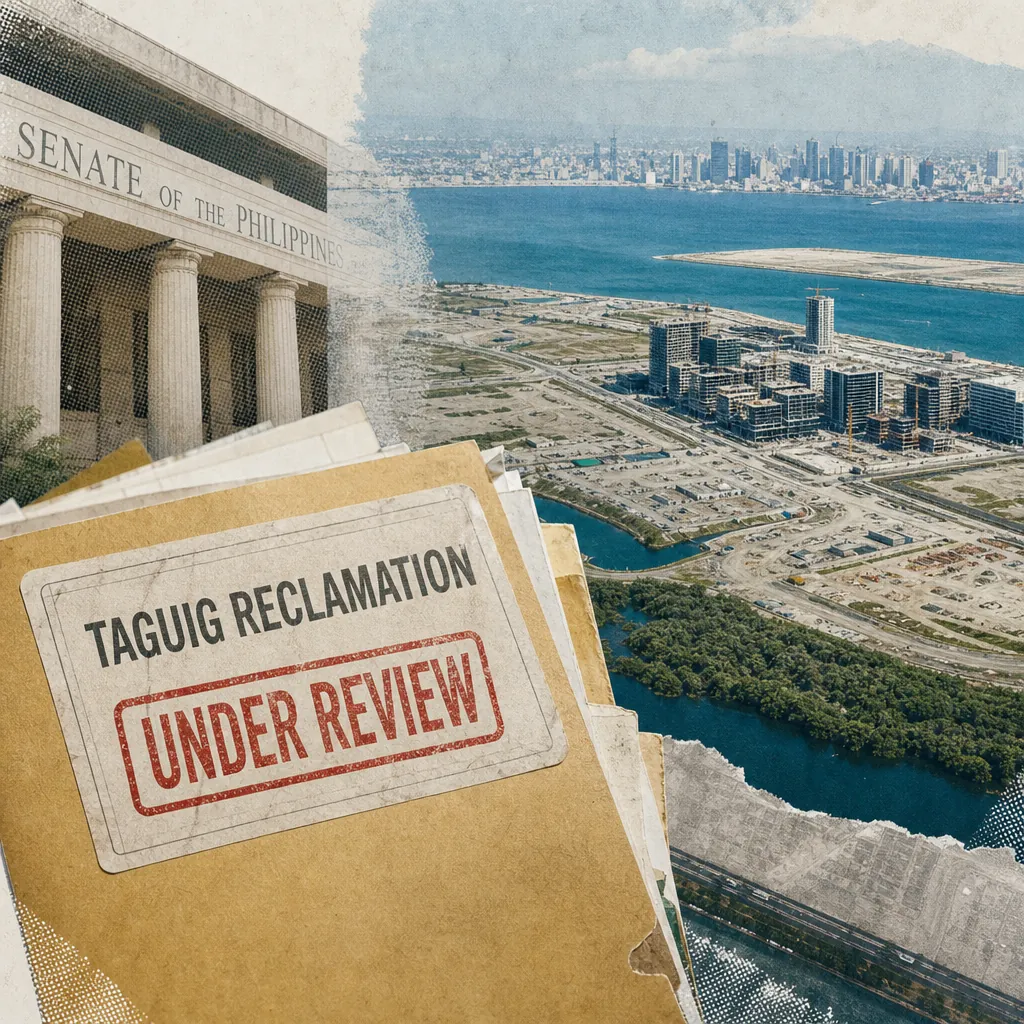
Meanwhile, Senator Panfilo Lacson revealed that the Philippine Reclamation Authority (PRA) is moving to forfeit illegally reclaimed land in Taguig City. Lacson said the PRA confirmed that the Taguig government had not secured a single permit for the reclamation, and the agency is moving toward a board resolution to start forfeiture proceedings. "If reclamation is undertaken without a permit from the PRA, which is the agency mandated to regulate reclamation and issue the necessary permits, the logical conclusion is that the land should be forfeited in favor of the national government," Lacson said. He also alleged that Senate Minority Leader Alan Peter Cayetano pressured the PRA last year to stop an earlier investigation, threatening to suspend budget deliberations for the Office of the President.
The reclamation controversy is directly relevant to real estate because reclaimed land in Taguig, particularly along Laguna Lake, has been the site of major residential and commercial developments. If the PRA forfeits the land, it could affect property values and development plans in the area. The controversy also intersects with flood control, as Lacson noted that some of the reclamation operations have been presented as flood control and mitigation projects.
The Parañaque Spillway revival and long-term flood mitigation
In a sign that the government is looking beyond immediate relief, the Department of Agriculture (DA) and the Laguna Lake Development Authority (LLDA) announced they are reviving the ₱90-billion Parañaque Spillway project. The 10.5-kilometer spillway, first proposed in the 1970s, would run at least 50 meters underground, linking Laguna de Bay and Manila Bay, and is expected to take at least a decade to complete. Agriculture Secretary Francisco P. Tiu Laurel Jr. said the spillway will ease flooding in lakeshore communities across Laguna, Rizal, and Metro Manila, while helping restore the ecological health of Laguna de Bay.
The revival of this decades-old project is a recognition that the region's flood problems require large-scale infrastructure solutions, not just patchwork repairs. For real estate developers, the spillway could be a game-changer if it is actually built, potentially reducing flood risk in lakeshore areas and making them more attractive for development. However, the project's long timeline — at least a decade — means it will not address immediate concerns, and developers cannot rely on it to solve current flood vulnerabilities.
Similarly, Iloilo City is considering turning spaces beneath public plazas into underground catchment basins to temporarily store floodwater, as extreme rainfall increasingly overwhelms the city's drainage system. Mayor Raisa Treñas said the proposed underground reservoirs would form part of a long-term flood mitigation strategy under the city's Comprehensive Drainage Masterplan. These local initiatives reflect a growing awareness that climate change is making historical rainfall patterns obsolete, and that infrastructure must be designed for more extreme weather.
Conversation trajectory
Over the next 48 to 72 hours, the conversation is likely to shift from immediate flood reporting to damage assessment and recovery. The NDRRMC's official figures — currently showing 110,000 families affected and eight deaths — will be updated, and commentators will use these numbers to evaluate the adequacy of the government's response. The work-from-home and class suspension directive will be tested in practice, and any reports of confusion or inconsistency across provinces could fuel criticism.
Within the next one to two weeks, the narrative is expected to pivot toward developer accountability. As affected families document their experiences and recovery efforts unfold, questions will arise about why residential developments in flood-prone areas were not better prepared. Developers with credible flood mitigation infrastructure may gain a competitive advantage, while those in flood-prone zones face mounting scrutiny. The conversation around "safe locations" will intensify, and buyers will increasingly factor commute reliability and flood exposure into property evaluations.
The reclamation controversy in Taguig and the "ghost projects" scandal are likely to remain in the background, resurfacing whenever new flooding occurs. The EDSA wall collapse has already become a symbol of substandard construction, and any similar incident will amplify public anger. For real estate developers, the key is to avoid being associated with these failures by demonstrating proactive flood resilience measures and transparent communication.
Trigger events to watch: the release of updated NDRRMC damage assessments; any new memorandum circulars or localized suspension announcements; the actual impact assessment of August 10 conditions, which will validate or challenge the necessity of the suspensions; and the continuation of the enhanced southwest monsoon, which is expected to persist through mid-August. The development of Tropical Storm Peilou, currently outside the Philippine area of responsibility, could also enhance the monsoon and extend the disruption.
Response guidance
For real estate developers and property managers, the immediate priority is to issue a clear, empathetic advisory that acknowledges the flooding and the government's suspension directive. The advisory should list all affected provinces, confirm that essential site services — security, emergency response, and maintenance — remain operational, and explain how non-essential functions will shift to alternative arrangements. This positions developers as community partners rather than distant corporate entities.
Developers should also prepare location-specific "resilience talking points" for sales teams and digital content that address flood concerns without being defensive. Use official data from PAGASA and MMDA as neutral references, and pivot to project features like elevated ground floors, drainage systems, and flood-resistant construction standards where applicable. This content should be deployed within the next 48 hours, while the flood narrative is still active.
On social media, pause all promotional or marketing content for preselling, ready-for-occupancy, and site viewing activities. Pivot to community support messaging that acknowledges the work-from-home and alternative learning arrangements affecting families. Amplify official announcements from local government units, especially in provinces like Laguna where classes are suspended, to ensure homeowners receive consistent and verified information. Engage with community-level updates by acknowledging the lived experiences of residents in affected areas, demonstrating awareness and empathy without making speculative statements about infrastructure resilience.
Monitor province-specific announcements over the next 48 hours, particularly in Laguna where separate class suspension directives have been issued, and adjust property-level communications accordingly to prevent conflicting information. Track sad and angry reaction counts on flood-related posts as indicators of public frustration that may spill over into discussions about housing conditions and developer accountability.
Finally, consider the long-term implications for site selection and project design. The repeated flooding in key growth corridors like Cavite, Bulacan, and Laguna suggests that flood resilience will become a primary purchasing consideration. Developers should invest in verifiable infrastructure performance — drainage systems, elevation standards, and emergency protocols — and communicate these features clearly to buyers. The window for proactive messaging is open now, before the conversation fully pivots from weather reporting to accountability.
See the full picture behind today's signals.
This report draws from Media Meter's MediaWatch, our real-time monitoring engine tracking 2,470+ Philippine sources across print, broadcast, digital, and social. Explore how the platform turns raw coverage into decision-grade intelligence, then see how it's configured for teams like yours — whether you're in PR agencies, corporate comms, government, or marketing.
Want more? Browse our Report Library for sector and crisis intelligence, or request a demo and we'll have your brand set up before the call.
Want this kind of intelligence on your brand?
This brief is built on the same MediaWatch methodology that runs continuously across every brand we monitor. See your competitive landscape, Impact Score, and narrative trajectory in a 30-minute demo.