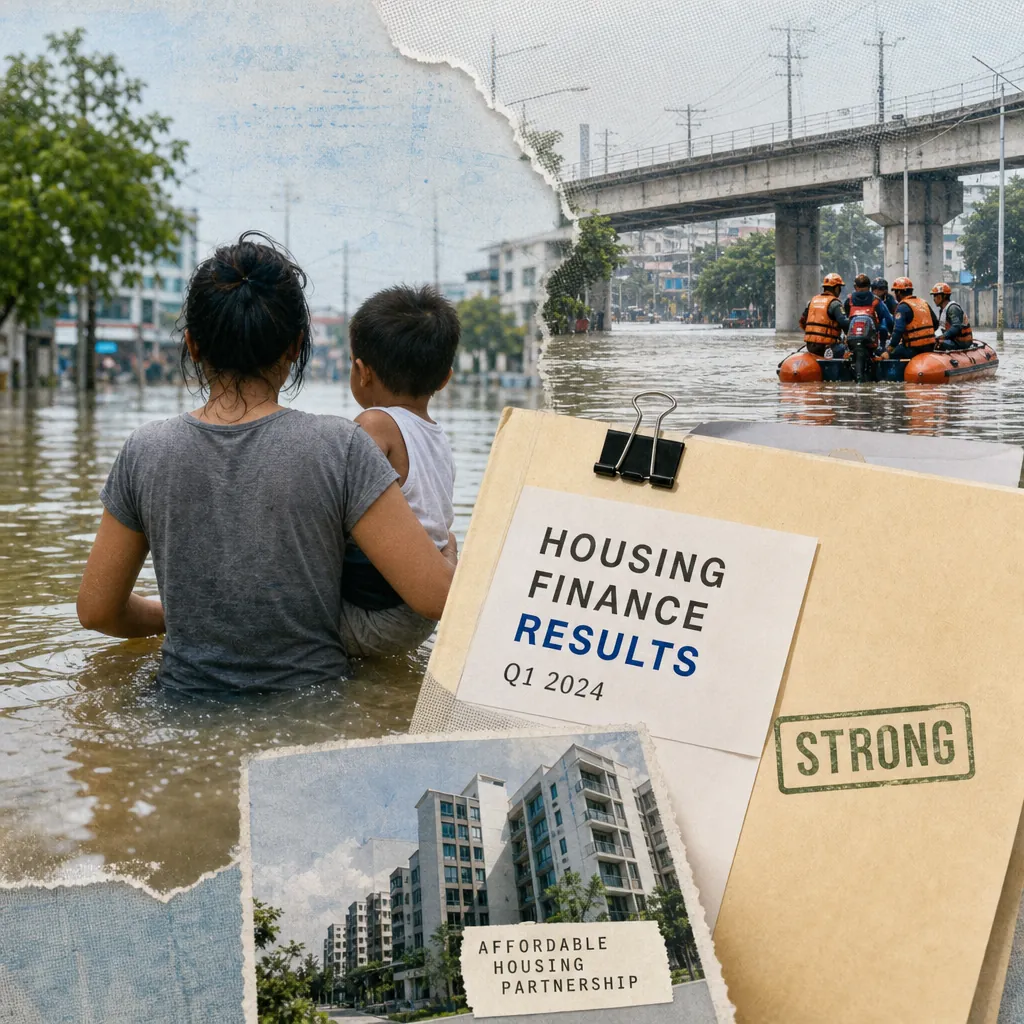
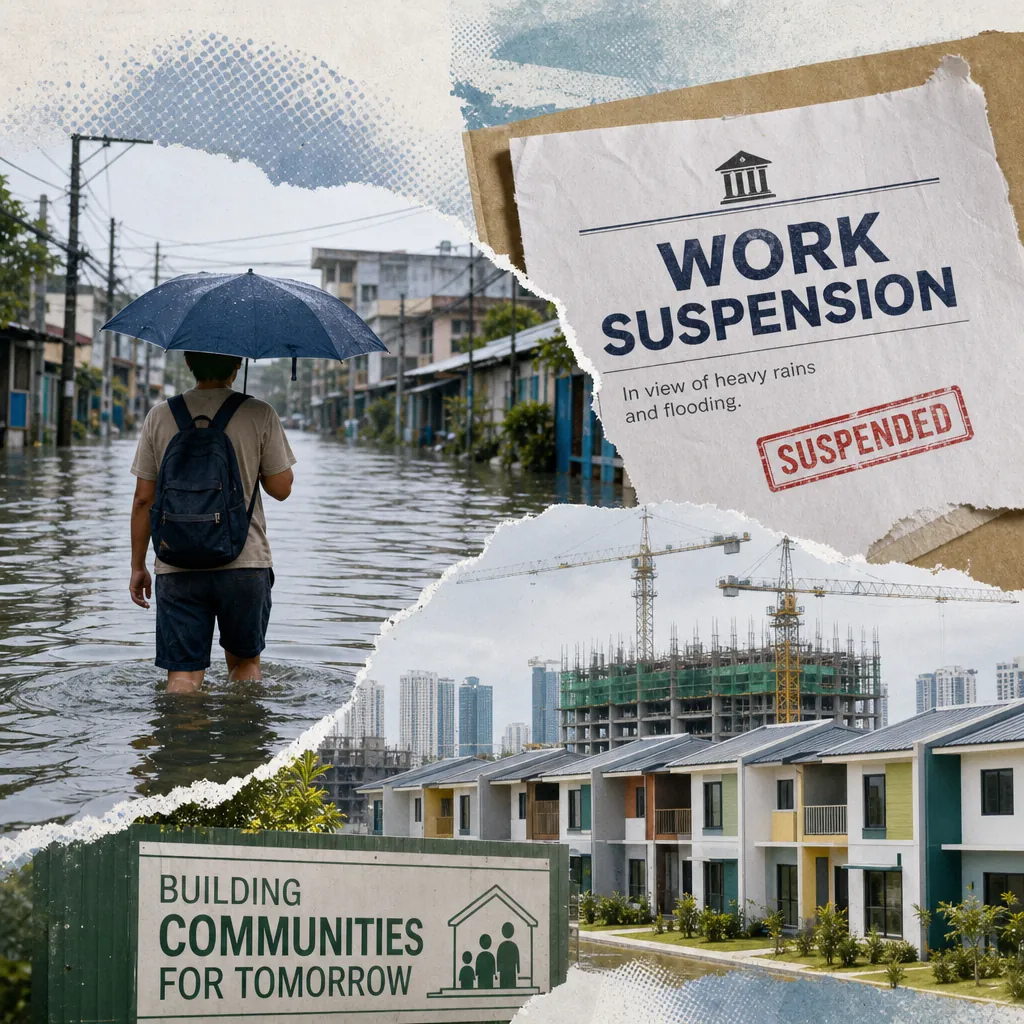
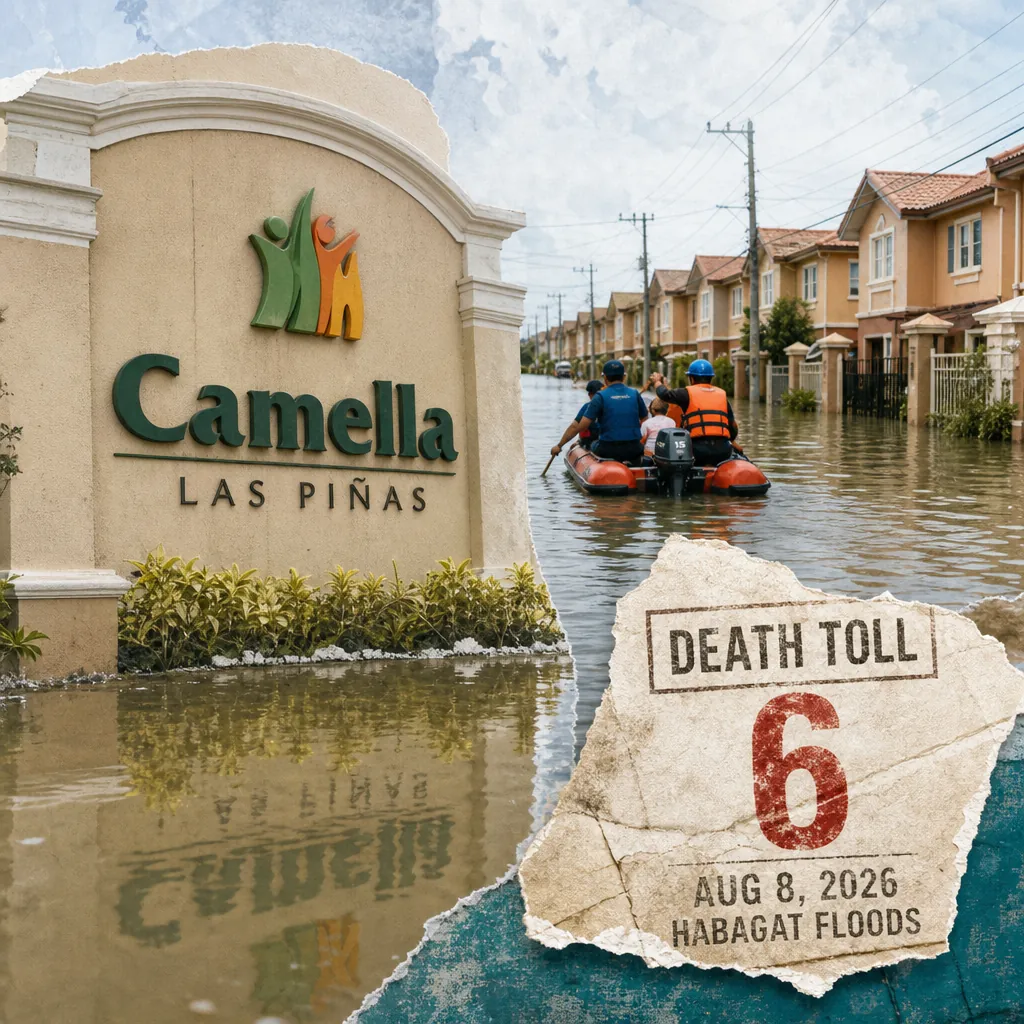
Habagat floods, property earnings, EV push dominate
A daily snapshot of Philippine news and social conversation on August 10, 2026, covering deadly monsoon floods, property sector earnings, the EV incentives program, and a lone Reddit post on water quality in Cavite.
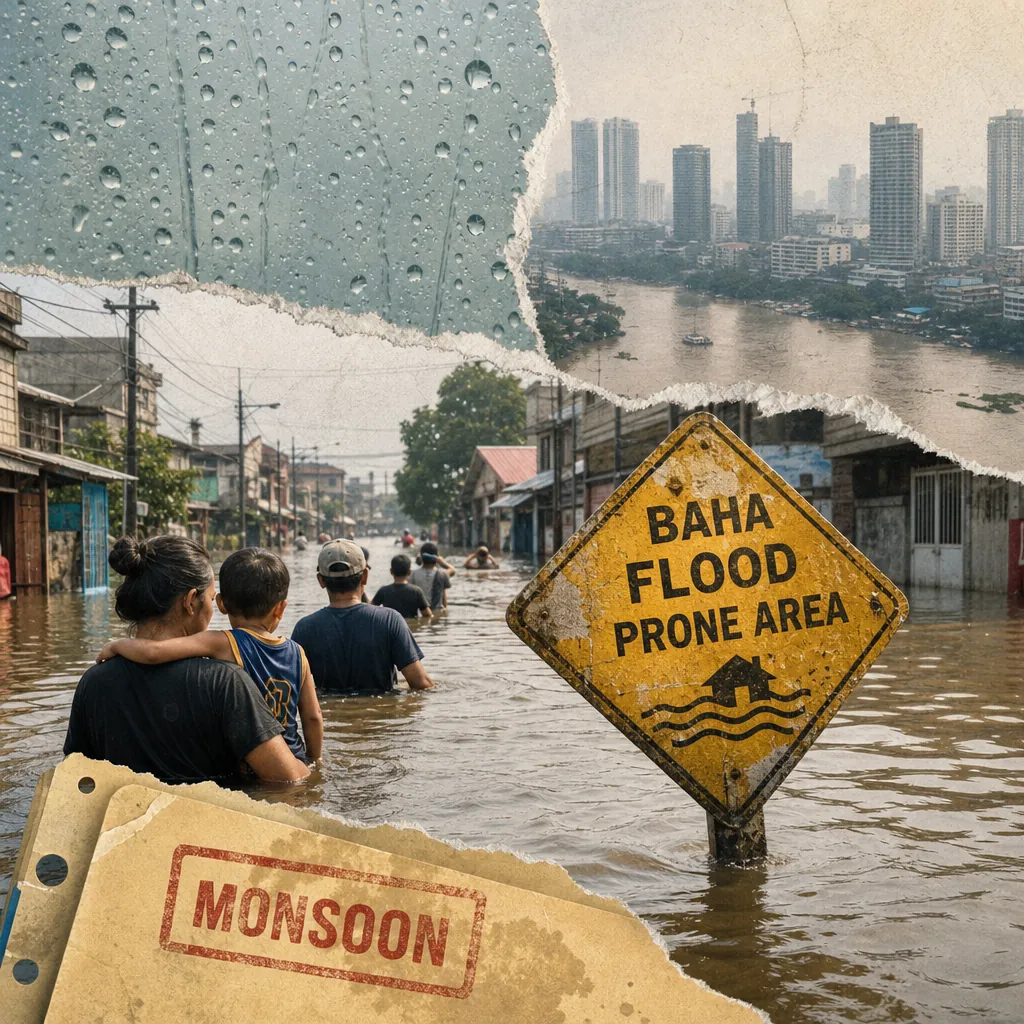
The day's conversation was dominated by the deadly southwest monsoon (habagat) floods that have submerged large parts of Luzon, killing at least 15 people and displacing tens of thousands. Government officials, from the public works secretary to the House Speaker, faced questions about flood control preparedness, while the property sector reported mixed earnings results and the government rolled out a P60-billion electric vehicle incentive program. On social media, a single Reddit post about water quality in a Cavite subdivision offered a quiet but telling glimpse into post-turnover homeowner concerns.
Key themes
- Deadly monsoon floods prompt government response and scrutiny: The enhanced southwest monsoon, worsened by Tropical Depression Maymay and Typhoon Luis, has caused widespread flooding across Luzon, with the death toll climbing to 15 and over 25,000 families affected in Calabarzon alone. Government officials, including Public Works Secretary Vince Dizon, acknowledged the severity and the lack of quick fixes, while the MMDA claimed improvements in Metro Manila due to preemptive drainage efforts.
- Flood control projects under the spotlight amid corruption allegations: The floods have reignited public and political attention on flood control infrastructure, especially as the Ombudsman reviews the bail granted to former Senator Bong Revilla in a case involving alleged ghost flood control projects. Officials like Deputy Speaker Janette Garin argued that good flood control projects should not be demonized because of past anomalies.
- Property developers report mixed first-half earnings: Major developers disclosed their first-half 2026 results: Ayala Land's net income fell 19%, SM Prime's was flat, Robinsons Land grew 5%, and Megawide's housing arm more than doubled sales. The results reflect a challenging operating environment, with high costs and shifting demand.
- Government launches P60-B EV incentive program: President Marcos signed Executive Order 121, creating the Electric Vehicle Incentive Strategy (EVIS), a P60-billion stimulus package to encourage local manufacturing of EVs and hybrids. Mitsubishi Motors Philippines announced a P7-billion proposal to assemble EV batteries and a plug-in hybrid, potentially making the Philippines an export hub.
- Water quality concerns in new subdivisions emerge as a reputational risk: A Reddit post from a recent transferee to Pasong Kawayan, Cavite, described a sewer-like odor in tap water, raising questions about deep well water quality in new developments. While the post drew no engagement, it signals a potential early-warning issue for developers in the area.
- Tax and regulatory relief for storm-hit areas: The BIR extended tax deadlines to August 17 for affected areas, and the LTO announced toll waivers and fuel discounts for public transport. These measures aim to ease the burden on residents and businesses during the crisis.
- Office leasing demand drops, but green and flexible spaces rise: Colliers Philippines reported a 24% year-on-year decline in office leasing transactions in Q2, with provincial markets hit hardest. However, demand for flexible workspaces and green buildings increased, reflecting changing tenant preferences.
- Real estate industry prepares for policy shifts: The Chamber of Real Estate and Builders Associations (Creba) welcomed the deferment of the Real Property Valuation and Assessment Reform Act, while the Subdivision and Housing Developers Association (SHDA) announced its 34th convention to address the shifting housing landscape.
How the narratives stack
Dominant: The deadly monsoon floods and the government's response dominate the news cycle, with multiple articles covering death tolls, evacuations, class suspensions, and infrastructure damage. This is a crisis with immediate human impact, drawing heavy coverage across all outlets. Within the captured set, flood-related stories account for the majority of items and the highest advertising-equivalent value, reflecting the severity of the situation.
Counter-narrative: Amid the flood crisis, some officials and commentators push back against the narrative that flood control projects are inherently corrupt or ineffective. Deputy Speaker Garin argues that good projects should be supported, and MMDA Chair Artes highlights improvements in Metro Manila flooding due to preemptive measures. This counter-narrative seeks to defend government efforts and shift focus to solutions.
Emerging: The property sector's mixed earnings and the government's EV incentive program represent emerging narratives that could shape the economic outlook. Ayala Land's decline and Robinsons Land's growth suggest a diverging performance among developers, while the EV program signals a potential shift in the automotive industry. These stories are gaining traction but are secondary to the flood crisis.
Suppressed: The lone Reddit post about water quality in Cavite is a suppressed story—a single, unengaged post that hints at a broader issue of post-turnover utility quality in new subdivisions. This concern is not covered by mainstream media but could escalate into a reputational issue for developers if more residents report similar problems. The lack of engagement suggests it remains siloed, but it represents an early warning signal worth monitoring.
Platform insights
- Reddit: The only social platform with captured activity, Reddit hosted a single post in a Cavite community subreddit about water odor. The post received zero engagement, indicating either a low-traffic community or a query too localized to attract attention. Reddit remains a valuable source for niche residential issues that may later surface in larger forums.
- Facebook: No direct posts were captured, but the monitoring writeup references Facebook groups and community pages as channels where similar water quality questions might surface. The platform's role is implied rather than observed, but it is likely a key space for community-level discussions.
- X (Twitter): No activity was captured on X, but the platform is often used for real-time updates during disasters. The absence of captured posts may reflect monitoring limitations rather than actual silence.
- YouTube: No activity was captured, but video content from news outlets and vloggers could be significant during the flood crisis. The monitoring window may have missed such content.
Key voices and communities
- Government officials and agencies: Public Works Secretary Vince Dizon, MMDA Chair Romando Artes, and House Speaker Faustino Dy III are prominent voices, providing updates on flood response and infrastructure. Their framing emphasizes ongoing efforts and the need for time, while defending against criticism.
- Property developers and industry groups: Ayala Land, SM Prime, Robinsons Land, and Megawide's PH1 World Developers are key voices in the earnings narrative. Creba and SHDA represent industry interests, advocating for policy adjustments and convening stakeholders to address market shifts.
- Automotive industry players: Mitsubishi Motors Philippines and the government's EV program are central to the emerging EV narrative. Mitsubishi's chair Noriaki Hirakata is a key voice, outlining investment plans and the potential for the Philippines as an export hub.
- Residents and community members: The Reddit poster in Cavite represents a new homeowner voice, raising practical concerns about water quality. While not a formal community, this group's experiences could shape perceptions of development quality.
- Media and commentators: Outlets like the Inquirer, Manila Times, and BusinessWorld provide extensive coverage, while columnists like the Manila Times' "Slow death by drowning" offer critical analysis of the flood response. These voices shape public discourse and hold officials accountable.
Narrative streams
The Flood Crisis: A Test of Infrastructure and Governance
The enhanced southwest monsoon, compounded by Tropical Depression Maymay and Typhoon Luis, has unleashed relentless rain across Luzon, causing severe flooding that has claimed at least 15 lives, with 13 injured and nine missing, according to the Philippine National Police. The Manila Times reported the death toll on August 11, noting that casualties were mainly due to drowning, electrocution, landslides, and fallen trees. In Baguio City alone, four died in a landslide, and the city recorded 1,413.2 millimeters of rain from August 1 to 9—47% above the average for the entire month, as reported by Bombo Radyo. The floods have displaced 11,535 residents in Bulacan, with waters reaching six feet in some areas, and 25,322 families affected across Calabarzon, according to the DSWD. The government's response has been a mix of emergency measures and long-term promises. Public Works Secretary Vince Dizon admitted there is no "overnight solution" to flooding, emphasizing the need to go "project per project, LGU per LGU, province per province." He also inspected the P6-billion EDSA rehabilitation project, which developed potholes due to rainwater pooling—a setback that drew criticism. Meanwhile, MMDA Chair Romando Artes claimed that Metro Manila flooding was less severe than in the past, attributing improvements to the P2-billion Oplan Kontra Baha program, which involved preemptive drainage and waterway clearing. However, residents in Taguig's Barangay San Miguel called for a permanent solution to yearly flooding, expressing frustration with the recurring cycle. The flood crisis has also raised health concerns, with Malacañang urging the public to wash immediately after exposure to floodwater to prevent leptospirosis. The BIR extended tax deadlines to August 17 for affected areas, and the LTO announced toll waivers and fuel discounts for public transport. The coverage of the floods has been extensive, with the Manila Times' banner story and the Inquirer's live updates drawing significant advertising-equivalent value, reflecting the crisis's dominance in the news cycle.
Flood Control Under Fire: Corruption Allegations and Defense
The floods have brought renewed scrutiny to flood control projects, particularly in light of the ongoing corruption case against former Senator Bong Revilla. The Sandiganbayan has subpoenaed former Public Works Secretary Manuel Bonoan to testify against Revilla in the alleged ghost flood control project in Pandi, Bulacan, involving P76.9 million in illegal disbursements. The Ombudsman is also reviewing the court's decision to grant Revilla bail, citing possible bias. Deputy Speaker Janette Garin defended flood control projects, arguing that they should not be "demonized" because of past anomalies, and stressed the need for good projects to receive funding. This narrative stream highlights the tension between public distrust and the need for infrastructure investment. The coverage of the Revilla case and Garin's remarks drew significant media value, indicating the public's interest in accountability. The challenge for the government is to rebuild trust while delivering effective flood control, a task complicated by the current crisis.
Property Sector Earnings: Diverging Fortunes Amid Economic Uncertainty
On August 10, major property developers released their first-half 2026 earnings, revealing a mixed picture. Ayala Land Inc. (ALI) reported a 19% decline in net income to P11.5 billion, attributed to weaker property development revenues, though second-quarter income rose 13% sequentially. SM Prime Holdings kept its net income steady at P24.5 billion, with revenues up 5% to P71.7 billion, but costs rose nearly 6%. Robinsons Land Corp. (RLC) grew its attributable profit by 5% to P7.2 billion, with consolidated net income up 12% to P9 billion, driven by its diversified portfolio. Megawide's housing arm, PH1 World Developers, more than doubled its booked sales to P3.15 billion, citing strong demand outside key business centers. These results reflect a challenging operating environment, with high interest rates and economic uncertainty weighing on property development. The Inquirer's "Biz Buzz" column noted that ALI's goal is to "stabilize" rather than rebound sharply, while RLC's CEO expressed confidence in its resilience. The earnings reports drew substantial coverage, with multiple outlets picking up the stories, indicating the sector's importance to the economy. The divergence between ALI's decline and RLC's growth underscores the varying strategies and market positions of the major players.
The EV Incentive Program: A Bid to Boost Local Manufacturing
President Marcos signed Executive Order 121, establishing the Electric Vehicle Incentive Strategy (EVIS), a P60-billion stimulus package designed to encourage car companies to manufacture EVs and hybrids in the Philippines. The program offers up to P15 billion in fiscal incentives per enrolled EV model, covering locally manufactured battery-electric, hybrid, plug-in hybrid, and fuel-cell vehicles. Mitsubishi Motors Philippines announced it would submit a P7-billion investment proposal to assemble EV batteries and a plug-in hybrid at its Santa Rosa, Laguna plant, potentially making the Philippines an export hub. The program aims to lower vehicle prices and improve access to spare parts for Filipino motorists, though the incentives go to manufacturers, not directly to buyers. The coverage of the EV program was extensive, with the Manila Times providing a detailed explainer and the Inquirer reporting on Mitsubishi's plans. This narrative stream signals a potential shift in the automotive industry, with the Philippines positioning itself as a regional EV manufacturing hub. The success of the program will depend on attracting more manufacturers and ensuring that the benefits translate to consumer savings.
Water Quality Concerns in New Subdivisions: An Early Warning
A single Reddit post on August 10 highlighted a water quality issue in Pasong Kawayan, Cavite, where a recent transferee reported a sewer-like odor in tap water that dissipated after ten seconds. The poster, who moved in a few months ago, asked whether this was normal and whether a plumber was needed. The post received no engagement, but it raises concerns about deep well water quality in new subdivisions, a common issue in areas not yet connected to municipal water lines. For developers, this represents an early warning signal about post-turnover utility quality, which could affect resident satisfaction and brand reputation. The monitoring writeup suggests that developers should proactively educate buyers about water sources and quality expectations, and monitor community forums for similar complaints. While this is a single data point, it aligns with broader concerns about infrastructure reliability in growth corridors like Cavite. The lack of engagement may indicate that such issues are siloed, but they could escalate if multiple residents report similar problems. This narrative stream is under-covered in mainstream media but holds strategic importance for the real estate sector.
Conversation trajectory
- Over the next 1-2 weeks: The flood crisis will continue to dominate, with recovery efforts and disease prevention taking center stage. Expect more reports on the death toll, displacement, and infrastructure damage, as well as government announcements on aid and rehabilitation. The Ombudsman's review of the Revilla bail and the Bonoan testimony on August 12 could reignite corruption discussions.
- Over the next 1-3 months: The property sector's earnings will be analyzed in the context of the economic slowdown, with attention on how developers adapt to changing demand. The EV program may attract more investment announcements, potentially reshaping the automotive landscape. The SHDA convention in September will provide a platform for discussing housing policy shifts.
- Over the next 6-12 months: The implementation of the EVIS program and the deferment of the property valuation reform law will be key policy developments to watch. The flood control masterplans for 2027, as mentioned by Secretary Dizon, will be scrutinized for progress. Water quality issues in new subdivisions could emerge as a reputational risk if not addressed proactively.
Trigger events to watch: The Bonoan testimony on August 12; the release of the final 2027 budget proposal; the next BSP policy decision; the SHDA convention on September 16-17; and any major announcements from Mitsubishi or other automakers regarding EV investments.
Response guidance
For communicators in the real estate and property sector, the current environment demands a balanced approach. During the flood crisis, prioritize messages of empathy and support for affected communities, while highlighting any concrete actions your organization is taking to mitigate flooding or provide relief. Avoid defensive or promotional language; instead, focus on transparency and collaboration with government agencies. For developers with projects in flood-prone areas, proactively communicate your flood resilience measures and any upgrades to infrastructure. In the wake of the earnings reports, frame your company's performance in the context of the broader economic challenges, emphasizing long-term strategies and diversification. For those involved in the EV program, highlight the potential benefits for consumers and the economy, but avoid overpromising on timelines or price reductions. On social media, monitor community forums for water quality or other post-turnover issues, and respond with practical, non-promotional guidance. Establish a protocol for addressing utility-related complaints, and consider publishing educational materials about water sources and maintenance. Finally, stay attuned to policy developments, such as the property valuation reform deferment, and engage with industry groups like Creba and SHDA to advocate for favorable conditions. The key is to build trust through transparency and responsiveness, especially during times of crisis.
See the full picture behind today's signals.
This report draws from Media Meter's MediaWatch, our real-time monitoring engine tracking 2,470+ Philippine sources across print, broadcast, digital, and social. Explore how the platform turns raw coverage into decision-grade intelligence, then see how it's configured for teams like yours — whether you're in PR agencies, corporate comms, government, or marketing.
Want more? Browse our Report Library for sector and crisis intelligence, or request a demo and we'll have your brand set up before the call.
Want this kind of intelligence on your brand?
This brief is built on the same MediaWatch methodology that runs continuously across every brand we monitor. See your competitive landscape, Impact Score, and narrative trajectory in a 30-minute demo.