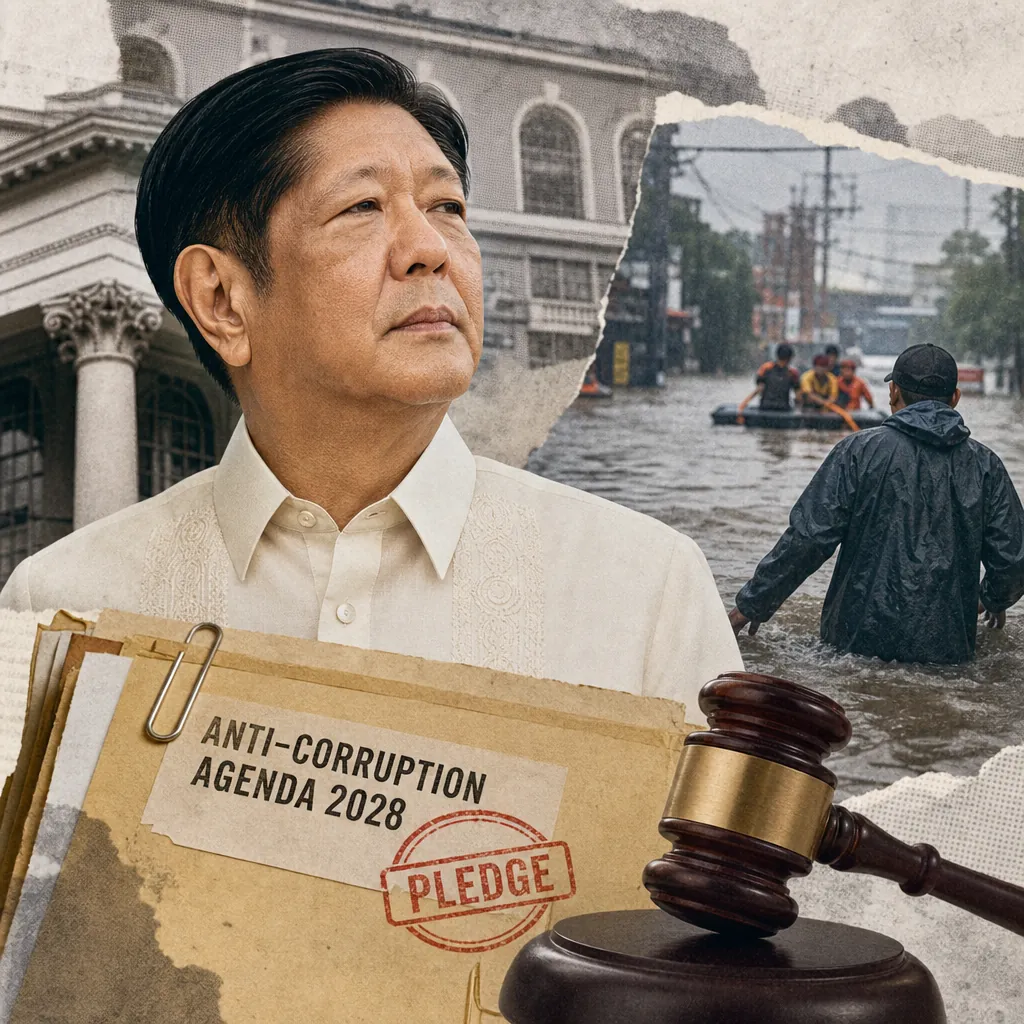
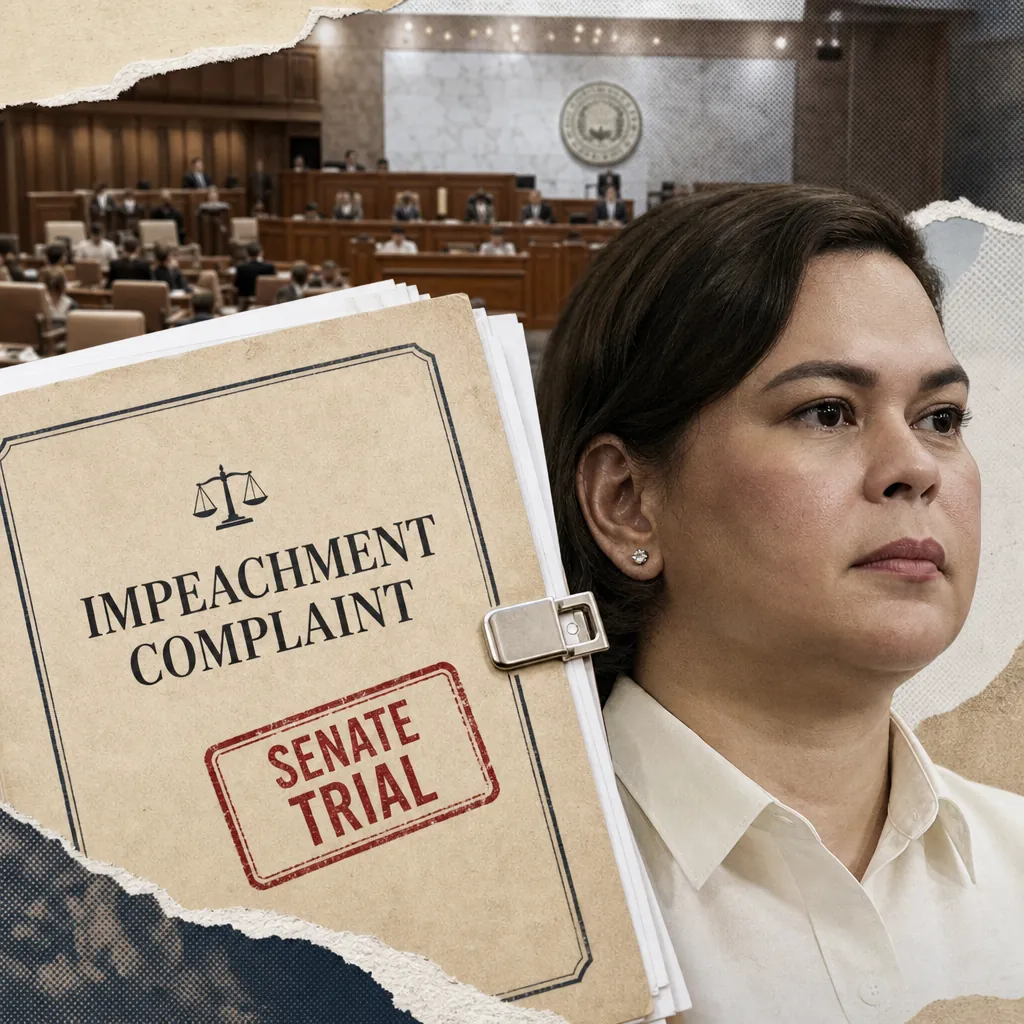
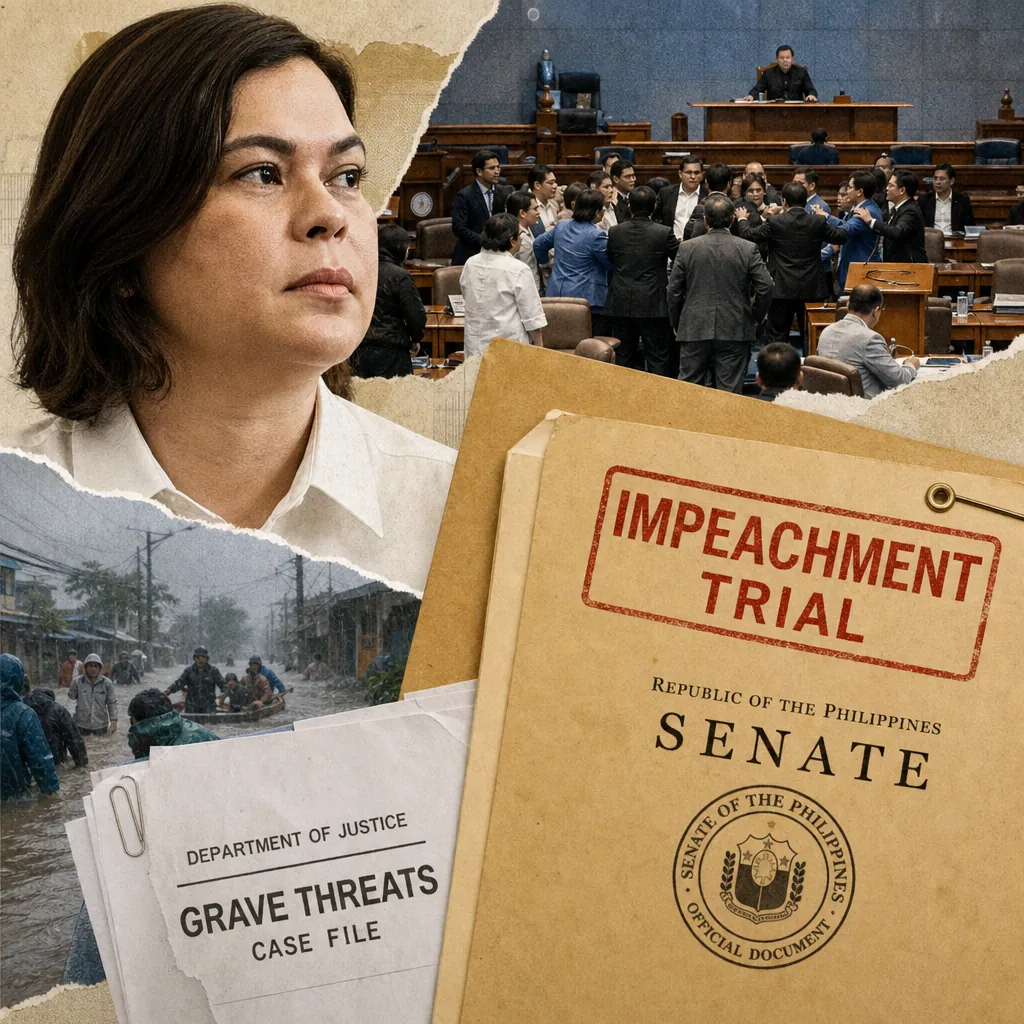
Impeachment, budget scandal, floods dominate PH discourse
A snapshot of August 13, 2026, Philippine conversation: the Sara Duterte impeachment trial, the 'leadership fund' controversy, the 2027 budget backlash, and monsoon flood response.
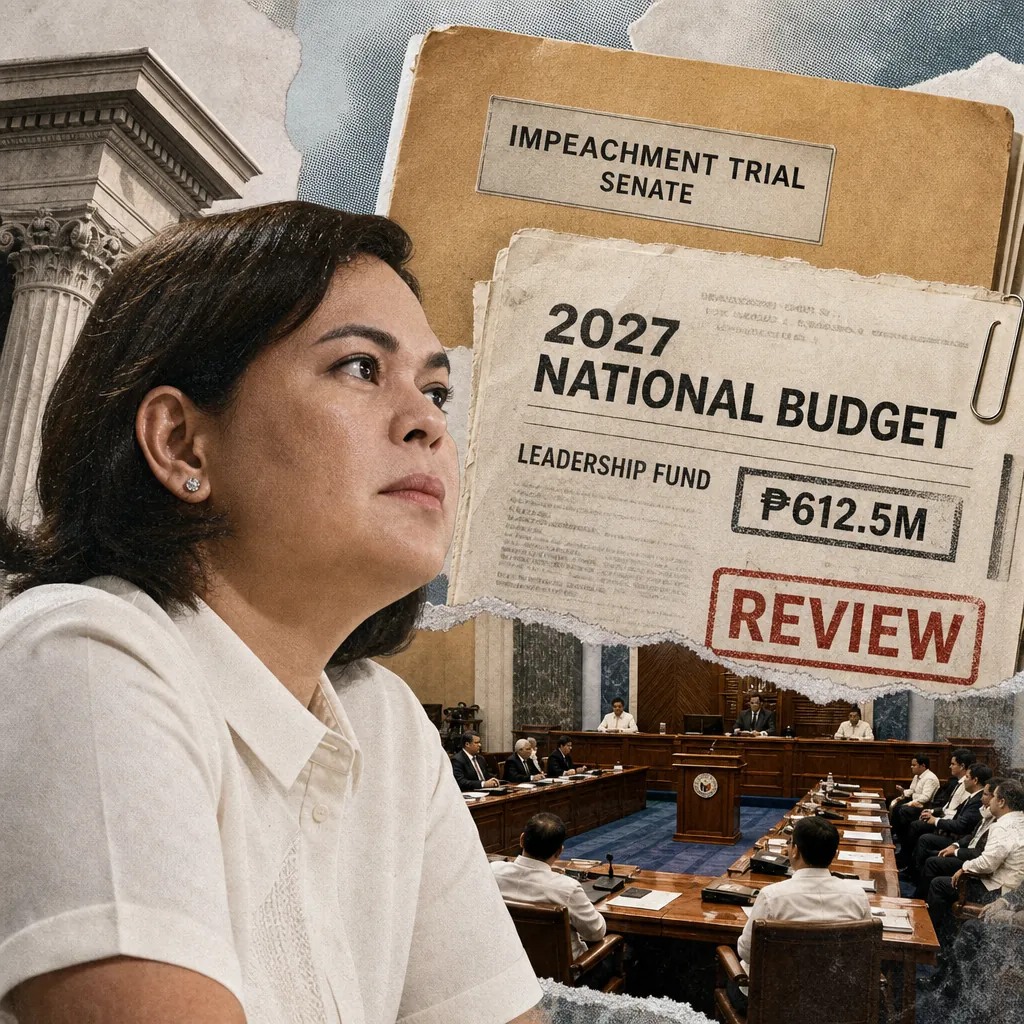
The day's conversation in the Philippines was a storm of overlapping crises. On August 13, 2026, public attention was split between the impeachment trial of Vice President Sara Duterte, a newly exposed 'leadership fund' scandal in the Senate, the public's mocking reception of the proposed ₱7.2-trillion national budget, and the government's response to devastating monsoon floods. Each story fed a growing public skepticism toward institutions, with social media reactions—especially on Facebook—revealing a populace that is both deeply engaged and deeply distrustful.
The impeachment trial of Vice President Sara Duterte continued to dominate the news cycle, with the prosecution and defense locked in procedural battles. The day's key development was the prosecution's push to have Duterte cited for contempt over her claim of 'bending' the law, a move that drew immediate public reaction. At the same time, the defense sought to project stability, with Atty. Michael Poa confirming he would stay on as spokesperson—a decision that earned rare positive engagement. The trial's next phase, featuring testimony from two former special disbursing officers, promises to be a pivotal moment for the confidential funds allegations.
Meanwhile, a separate scandal erupted when former Public Works Secretary Manuel Bonoan disclosed before the anti-graft court Sandiganbayan the existence of a 'leadership fund' allegedly given to senators with committee chairmanships. Malacañang quickly denied President Marcos's knowledge, but the public responded with mockery. Senator Panfilo Lacson's characterization of the fund as 'worse than pork barrel' resonated strongly, drawing significant engagement and framing the issue as a moral failure rather than a procedural one.
The proposed ₱7.2-trillion national budget for 2027, formally turned over to the Senate, became a lightning rod for public frustration. A Facebook post announcing the turnover drew a striking number of 'haha' and 'angry' reactions, signaling widespread derision. Lawmakers from the Makabayan bloc condemned the budget as 'anti-poor,' while the Palace urged critics to study it first. This fiscal skepticism was compounded by the ongoing flood crisis, with Hagonoy, Bulacan, under a state of calamity and President Marcos visiting displaced families in Las Piñas.
Key themes
- Impeachment trial: Prosecution pushes contempt, defense projects stability The trial of Vice President Sara Duterte saw the prosecution demand she be cited for contempt over her 'bending the law' remark, while the defense confirmed Atty. Michael Poa's continued role, drawing positive reactions. The upcoming testimony of two former disbursing officers is positioned as a turning point.
- 'Leadership fund' scandal: Palace denies, Lacson calls it 'worse than pork barrel' Former DPWH Secretary Bonoan's disclosure of a 'leadership fund' for senators triggered a Palace denial and a Senate defense. Senator Lacson's comparison to the outlawed pork barrel system gained traction, with the public rewarding accountability-driven statements.
- 2027 budget backlash: Public mocks ₱7.2-trillion proposal The turnover of the proposed national budget drew disproportionate 'haha' and 'angry' reactions on Facebook, reflecting deep public skepticism. Makabayan lawmakers called it 'anti-poor,' while the Palace defended it.
- Monsoon floods: Government response under scrutiny Heavy rains from the southwest monsoon and Typhoons Luis and Maymay caused flooding in Luzon, with Hagonoy under a state of calamity. President Marcos's visit to displaced families drew positive engagement, but the disaster also highlighted infrastructure and cleanup challenges.
- Social protection measures: Positive but fragile President Marcos's order facilitating voluntary SSS, PhilHealth, and Pag-IBIG contributions for contract workers was received neutrally, but the underlying issue of labor precarity could pivot to criticism. The SSS's ₱1.27-trillion investment milestone offered a rare positive story.
- 2028 election speculation: Early surveys inject political calculations An OCTA Research survey showing a near-tie between the Robredo-Tulfo and Duterte-Marcos tandems drew amusement and skepticism. The Palace warned against 'mind conditioning,' but the discourse signals early positioning for 2028.
- Public health and safety: Vaccination plea and Jatropha poisoning The DOH-7's call for science-based vaccination decisions drew high engagement, while a Jatropha seed poisoning incident in Cadiz City highlighted public health risks. These stories showed the public's responsiveness to health messaging.
- Institutional accountability: NBI probe into fake news, teachers' professionalism The Palace requested an NBI investigation into a Facebook page using the official logo to spread fake news, and reminded teachers to keep students out of online content. These moves reflect a broader effort to manage information integrity.
How the narratives stack
Dominant The impeachment trial of Vice President Sara Duterte is the dominant narrative, both in volume and consequence. Within the captured set, it generated the most sustained coverage across platforms, with the prosecution's contempt push and the upcoming SDO testimony framing the week ahead. The trial's outcome could reshape the political landscape, making it the most significant story of the day.
Counter-narrative The 'leadership fund' scandal serves as a counter-narrative to the administration's claims of clean governance. While the Palace denies presidential knowledge, Senator Lacson's 'worse than pork barrel' framing has gained public traction, threatening to expand into a broader corruption narrative that could damage both the executive and legislative branches.
Emerging The 2028 election speculation, fueled by the OCTA survey, is an emerging narrative that intersects with the impeachment trial. The public's amused reaction to the survey suggests skepticism, but the discourse indicates that electoral calculations are already being made, potentially influencing political behavior in the near term.
Suppressed The flood crisis and its underlying infrastructure failures are under-covered relative to the political scandals. While the government's response drew some positive engagement, the deeper questions about flood control preparedness and the 'leadership fund' connection to public works spending remain underexplored. This could resurface as a major issue if flooding worsens.
Platform insights
- Facebook Facebook was the primary arena for emotional expression, with reaction buttons revealing nuanced sentiment. The budget post's 214 'haha' reactions and 65 'angry' responses showed public derision, while the defense spokesperson's confirmation drew 507 likes and 180 'love' reactions, indicating strong supporter loyalty. Facebook comments sections became battlegrounds for debate, especially on the impeachment and budget stories.
- Twitter Twitter served as the news wire, with rapid dissemination of quotes and legal analysis. The sub judice clarification by Rep. Diokno drew over 1,400 views, and the video of defense lawyer Ligutan's conduct garnered 3,136 views. Twitter users engaged in more analytical discussion, dissecting legal strategies and procedural points.
- YouTube YouTube functioned as a repository for official content, with INQToday videos drawing modest views (e.g., 348 views on the prosecution statement). The platform showed low engagement, suggesting that the primary conversation was happening in real-time text-based discussions rather than video comment sections.
Key voices and communities
- Impeachment trial prosecution allies House prosecutors and affiliated figures, including Reps. Renee Co and Chel Diokno, drive the narrative of accountability. Their posts generate hundreds of interactions, framing the trial as a moment of reckoning for the Vice President.
- Defense team supporters and pro-Duterte voices A network of accounts centered on the Vice President's legal defense, including spokesperson Atty. Michael Poa, maintains a strong Facebook presence. Their messaging emphasizes procedural fairness and legal technicalities, resonating with a loyal base.
- Institutional accountability advocates Figures like Akbayan Rep. Chel Diokno and Bicol Saro Rep. Terry Ridon focus on substantive issues of fund utilization and transparency. Their content reinforces that accountability mechanisms are functioning, supporting public confidence in state institutions.
- Electoral politics watchers A cluster of accounts and commentators focused on the 2028 election landscape, reacting to the OCTA survey with a mix of amusement and skepticism. Their discourse connects the impeachment trial to future electoral mathematics.
- Mainstream media amplifiers Outlets like the Inquirer, UNTV, and Manila Times serve as primary amplifiers, setting the baseline narrative. Their framing choices influence how prosecution and defense narratives are received, and their coverage value is significant.
Narrative streams
The impeachment trial: A battle for public opinion
The impeachment trial of Vice President Sara Duterte is not just a legal proceeding; it is a battle for public opinion. On August 13, the prosecution sought to frame Duterte's own words against her. Rep. Renee Co argued that if anyone should be cited by the impeachment court, it should be Duterte herself, for claiming there was a 'bending' of the law. This statement drew 376 likes and 114 comments on Facebook, indicating immediate emotional investment. The prosecution's confidence in the testimony of COA state auditor Xylene Mae del Campo, who remained unshaken under cross-examination, further reinforced their narrative of evidentiary strength.
The defense, meanwhile, worked to project stability. Atty. Michael Poa's confirmation that he would stay on as spokesperson drew 507 likes and 180 'love' reactions, showing strong public approval for that decision. This move was likely designed to counter any perception of disarray within the defense team. The defense also sought to clarify the sub judice rule, with Rep. Diokno explaining that it does not impose a gag order on public discussion, a point that drew over 1,400 views on Twitter.
The upcoming testimony of two former special disbursing officers is the most anticipated development. The prosecution has framed this as the moment the public will learn the truth about Duterte's confidential funds. This narrative of inevitability prepares the audience for a stronger case in the coming week. The trial's outcome could have profound implications for the political landscape, making it the dominant story of the day.
The 'leadership fund' scandal: A new corruption narrative
The disclosure by former Public Works Secretary Manuel Bonoan of a 'leadership fund' allegedly allocated to senators with committee chairmanships has ignited a new corruption scandal. Malacañang's immediate denial—that President Marcos was unaware—was met with public skepticism, as evidenced by 41 'haha' reactions on one Facebook post. The denial was widely viewed as incredible rather than reassuring.
Senator Panfilo Lacson's intervention escalated the discourse. He described the leadership fund as 'mas malala pa sa pork barrel' (worse than pork barrel), a comparison that resonated strongly with audiences. His post drew 142 likes and 54 comments within hours, with no negative reactions, indicating broad public alignment with abolition over defense. Lacson's framing effectively linked the controversy to historical pork barrel scandals, injecting a moral dimension into what had initially been a procedural dispute.
The Senate's collective defense—that budget changes are legal and transparent—was met with mockery, with one post drawing 34 'haha' reactions versus 24 likes. Senator JV Ejercito's dual role, claiming ignorance of the fund while vowing its abolition, was an attempt to balance individual accountability with institutional legitimacy. The legal subplot involving Senator Jinggoy Estrada's graft case adds another layer, with his legal team opposing the removal of Bonoan as co-accused, arguing it would constitute a 'substantial amendment.'
This scandal has the potential to become a permanent reference point for fiscal accountability narratives, especially as the budget deliberation season approaches. The public's reward for accountability-driven statements and punishment for institutional defensiveness is a clear signal for communicators.
The 2027 budget: Public derision and fiscal skepticism
The proposed ₱7.2-trillion national budget for 2027, formally turned over to the Senate, became a lightning rod for public frustration. A UNTV Facebook post announcing the turnover drew 131 likes, 218 comments, and a striking 214 'haha' reactions alongside 65 'angry' responses. This reaction profile indicates deep public skepticism and mockery of the budgetary process, with humorous reactions outnumbering positive ones by nearly three to one.
The Makabayan bloc rejected the budget, calling it 'anti-poor' and 'anti-people' due to reduced allocations for social services. They accused the administration of prioritizing foreign-funded infrastructure over the needs of the people. The Palace, in response, urged lawmakers to study the budget before commenting, with press officer Claire Castro saying, 'There are no facts, only theories.'
The budget conversation is tied to the day's flooding stories, as the public questions allocations amid disaster response needs and inflation concerns. The high emotional sensitivity around the budget suggests that any mention of allocations for infrastructure, social services, or confidential funds could become a flashpoint. For communicators, the lesson is to frame budget allocations in terms of tangible benefits for ordinary Filipinos, not abstract numbers.
Monsoon floods: Government response and infrastructure gaps
The southwest monsoon, intensified by Typhoons Luis and Maymay, brought heavy rains and flooding to Luzon. Hagonoy, Bulacan, was placed under a state of calamity after floods swamped 26 barangays, while President Marcos and DSWD Secretary Rex Gatchalian checked on 155 families displaced by flooding in Las Piñas City. These posts drew positive engagement, with 'care' reactions and no negative sentiment markers, suggesting public acceptance of the government's crisis response narrative.
However, the disaster also highlighted infrastructure gaps. Education Secretary Angara sought expanded Tupad support for habagat-hit schools, and a lawmaker proposed uniform anti-littering ordinances and 'anti-garbage police' to prevent floods. The Palace also criticized some TUPAD beneficiaries for faking cleanup work, drawing attention to the program's implementation challenges.
The flood narrative is a double-edged sword for the administration. On one hand, on-the-ground presence resonates with the public. On the other, the conversation remains vulnerable to shifting toward criticism of preparedness or response delays. The upcoming typhoon season will likely reset public attention toward disaster response, making this a persistent theme.
Social protection and economic signals
Amid the crises, the administration pushed positive social protection measures. President Marcos issued an order facilitating voluntary SSS, PhilHealth, and Pag-IBIG contributions for contract of service and job order workers, a move amplified by state media. The story gained traction on YouTube, with the Inquirer's video report drawing 250 views. This is a rare positive, non-controversial policy story that can reinforce public trust.
The SSS also reported ₱1.27 trillion in consolidated investments in the first half, with an annualized return on investment of 4.53 percent. This story, which drew 1,636 views on Twitter, offers a counterpoint to fiscal anxiety, reinforcing the stability of state financial institutions. However, the voluntary contribution order also highlights the precarious employment status of government workers, a conversation that could pivot to critiques of contractualization.
On the economic front, the inflation rate in Northern Mindanao for July 2026 was reported at 6.4 percent, down from the previous month but still high. The DSWD-SWS survey showing a drop in involuntary hunger among Walang Gutom Program beneficiaries from 33.6% to 26.9% drew mixed reactions, with some 'haha' responses indicating public disbelief. These economic signals are important context for the budget debate.
Conversation trajectory
The impeachment trial will continue to dominate the news cycle, with the testimony of two former disbursing officers expected within the coming week. This could generate a significant spike in conversation volume, especially if new substantive allegations emerge. The sub judice debate will likely produce periodic flare-ups, and the resolution of the grave threats case dismissal motion could consolidate or fragment narratives.
The 'leadership fund' scandal is likely to escalate as more senators weigh in and the Sandiganbayan legal proceedings progress. The formal start of Senate budget deliberations in September will provide a platform for renewed debate, potentially generating a 3-4x increase in related conversation volume. Any COA findings or audit reports related to DPWH disbursements could serve as an accelerant.
The 2028 election speculation will intensify as the trial progresses, with commentators drawing direct connections between trial outcomes and electoral viability. The Comelec's announcement of an earlier COC filing schedule for 2028 signals the beginning of a prolonged pre-election conversation cycle.
The flood crisis will persist through the typhoon season, and public perception of the administration's disaster management effectiveness will shape how subsequent policy news is received. The next major weather event will likely reset public attention toward disaster response.
Trigger events to watch: the SDO testimony, the Sandiganbayan ruling on the motion to reconsider, the start of Senate budget deliberations, and any new COA findings. These events will reshape the conversation and require proactive communication strategies.
Response guidance
For communicators in the government and public sector, the key is to acknowledge public skepticism and pivot to substantive reform commitments. The 'unaware' framing is not working; instead, emphasize transparency and existing audit controls. For the budget, focus on specific allocations for disaster resilience and social services, not abstract numbers.
For the impeachment trial, maintain procedural neutrality and avoid appearing to favor either side. Emphasize the importance of letting the trial conclude without external interference. For the 'leadership fund' scandal, align with reform-oriented language without directly attacking the Palace. Amplify the Senate Finance Committee's pledge to eliminate the fund as institutional reform.
On social media, use Facebook for emotional engagement, but be prepared for mockery. Twitter is for legal analysis and rapid response. YouTube is for explainer content that adds value beyond text. Develop shareable infographics that distill complex legal arguments into accessible formats.
Sensitive topics to navigate include the 'pork barrel' comparison, the President's 'unawareness,' and the legal proceedings. Avoid debating historical merits; pivot to current oversight protocols. For the budget, avoid defensive language; focus on tangible benefits. For the floods, emphasize response efforts while acknowledging the need for long-term infrastructure investment.
Finally, monitor the intersection of the impeachment trial and 2028 electoral dynamics. The near-tie between potential tandems suggests that trial outcomes could meaningfully shift electoral preferences. Prepare scenario-based briefings that model how the poll data narrative might evolve under different trial outcomes.
See the full picture behind today's signals.
This report draws from Media Meter's MediaWatch, our real-time monitoring engine tracking 2,470+ Philippine sources across print, broadcast, digital, and social. Explore how the platform turns raw coverage into decision-grade intelligence, then see how it's configured for teams like yours — whether you're in PR agencies, corporate comms, government, or marketing.
Want more? Browse our Report Library for sector and crisis intelligence, or request a demo and we'll have your brand set up before the call.
Want this kind of intelligence on your brand?
This brief is built on the same MediaWatch methodology that runs continuously across every brand we monitor. See your competitive landscape, Impact Score, and narrative trajectory in a 30-minute demo.