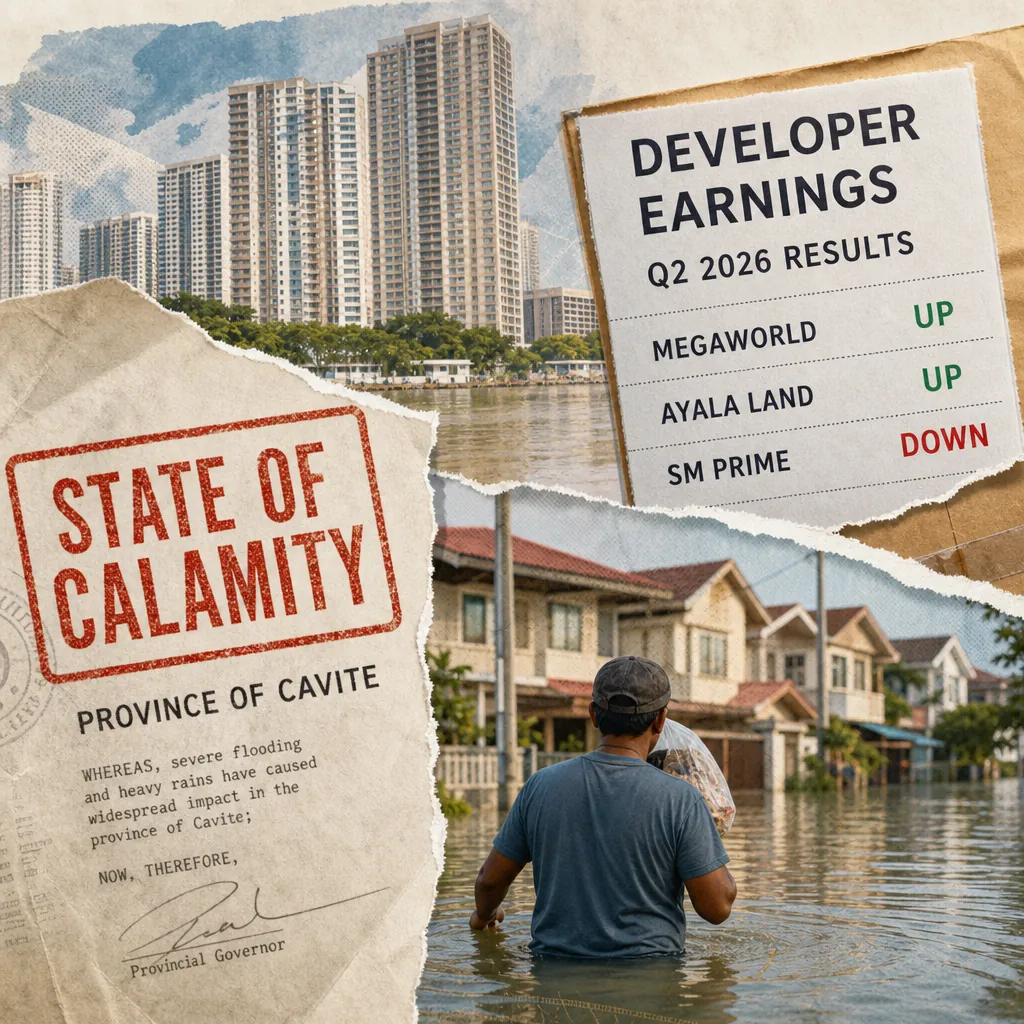
Flood Crisis Dominates as Housing Finance Shows Strength
A day of severe flooding and public skepticism toward government response, contrasted by strong housing finance results and new affordable housing partnerships.
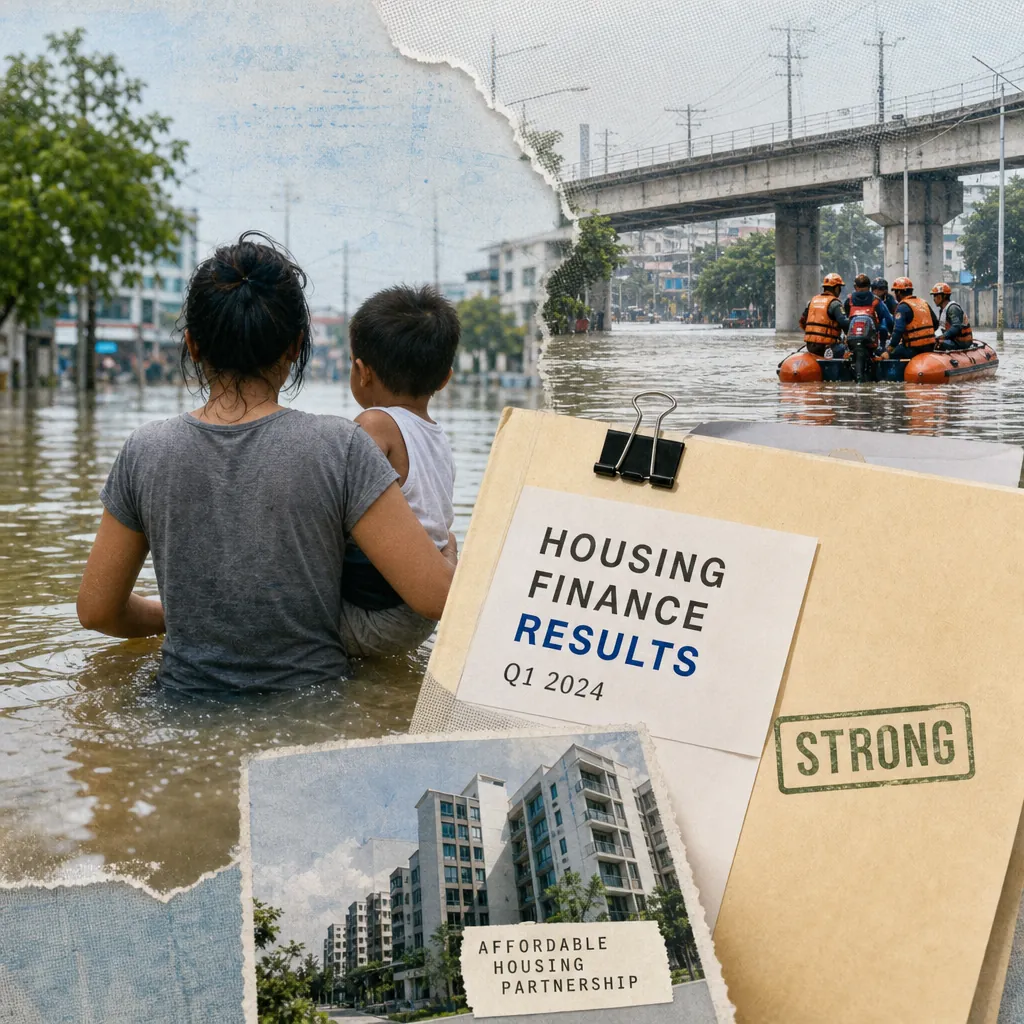
The day's conversation was dominated by the devastating floods caused by the southwest monsoon, with public anger and skepticism toward government response reaching a peak. At the same time, the housing finance sector projected stability, with Pag-IBIG Fund reporting record income and announcing a major affordable housing partnership. This contrast between crisis and institutional strength defined the narrative landscape.
Key themes
- Flood Crisis and Government Accountability: The state of calamity in Calumpit, Bulacan, and the rising death toll from landslides and flooding fueled intense public scrutiny of infrastructure and government preparedness.
- Presidential Communication Backlash: President Marcos Jr.'s "not severe" flood assessment drew overwhelming mockery on social media, signaling eroded public trust.
- Housing Finance Resilience: Pag-IBIG Fund's record P41.35 billion first-half income and its new partnership to build over 7,300 affordable homes offered a counter-narrative of stability.
- Infrastructure Delays and Corruption Allegations: The Villar Group's alleged mortgage on LRT-1 land and the Sandiganbayan's "ghost" flood control case deepened concerns about infrastructure delivery.
- Budget and Debt Concerns: The proposed P7.2-trillion 2027 national budget and projected record debt of P21.48 trillion raised questions about fiscal sustainability.
- Corporate Earnings Show Mixed Signals: Property and energy firms reported strong earnings, but telecom and retail showed pressure, reflecting a bifurcated economy.
- Community Resilience and DIY Solutions: Viral stories of residents building makeshift flood barriers highlighted grassroots ingenuity amid government shortcomings.
How the narratives stack
- Dominant: The flood crisis and its political fallout dominated the day's coverage and social media engagement. The public's emotional response to the president's dismissive remarks, with 480 "haha" reactions on Facebook, underscored a deep credibility gap.
- Counter-narrative: Housing finance stability, led by Pag-IBIG's record income and the new partnership with P.A. Alvarez Properties, provided a positive story about institutional capacity and affordable housing delivery.
- Emerging: The proposed 2027 budget and rising national debt are emerging as significant fiscal narratives, with implications for infrastructure spending and economic growth.
- Suppressed: The positive housing partnership announcement received minimal engagement, overshadowed by the flood crisis. This under-covered story holds potential for future traction.
Platform insights
- Facebook: The primary arena for emotional reaction. The president's flood statement drew 480 "haha" reactions and 117 comments, while a Marikina flood control post drew 89 "haha" reactions. Official statements were met with skepticism and mockery.
- Twitter: Served as a breaking-news channel for the Villar mortgage story, Sandiganbayan order, and Pag-IBIG partnership, but with modest engagement. It functioned more as a verification space than a debate forum.
- Reddit: Provided a more analytical space, with the People's Ville controversy thread drawing 139 likes and 17 comments, focusing on permits and documentation rather than emotional reactions.
Key voices and communities
- Government Infrastructure Watchers: Journalists and officials tracking the Villar mortgage issue and LRT-1 extension, raising concerns about public-private partnership security.
- Government Housing Program Validators: Palace officials and supporters using documentary evidence to claim credit for housing projects, as seen in the People's Ville dispute.
- National Flood Response Critics: Political figures and citizens using humor and anger to signal disbelief in official reassurances, with significant impact on public perception.
- Institutional Housing Finance Watchers: Financial reporters covering Pag-IBIG's income and partnership, providing a bellwether for housing loan availability.
- Affordable Housing Investment Partners: Emerging group focused on government-private developer collaborations, such as the Pag-IBIG-PAAPDC partnership.
Narrative streams
Flood Crisis and the Credibility Gap
The day's most significant narrative was the flood crisis, with the death toll rising to 19 and over 646,000 families affected. The state of calamity in Calumpit, Bulacan, and the La Mesa Dam overflow forcing evacuations in Quezon City highlighted the severity. President Marcos Jr.'s claim that flood control efforts were effective, despite the devastation, drew widespread mockery. His "not severe" assessment on Facebook generated 480 "haha" reactions against just 56 likes, a stark indicator of public distrust. This skepticism extends to any official assurance, including developer claims about flood mitigation. The Palace's defensive posture, exemplified by Press Officer Claire Castro's press conference, further widened the credibility gap.
Housing Finance as a Stability Signal
Amid the crisis, Pag-IBIG Fund reported a record net income of P41.35 billion for the first half of 2026, up 24% from the same period last year. This financial strength, driven by loan portfolio earnings and investment income, supports the agency's capacity to expand home financing. The announcement of a partnership with P.A. Alvarez Properties to build over 7,300 affordable housing units across Batangas, Laguna, and Pampanga signals continued institutional commitment to housing delivery. However, the low engagement on this announcement (102 views on Twitter) suggests it has yet to break through the flood-dominated conversation. This narrative offers a potential counterpoint for developers and government agencies to reassure buyers about housing availability and financing.
Infrastructure Delays and Corruption Allegations
The Villar Group's alleged mortgage on land designated for the LRT-1 Cavite Extension station in Las Piñas raised questions about infrastructure project security. The Light Rail Transit Authority administrator's statement that the parcels may have been pawned within the year cast doubt on project timelines. This development, combined with the Sandiganbayan's order for a former public works secretary to testify on "ghost" flood control projects in Bulacan, shifted public perception from weather-related complaints to governance-focused criticism. For property developers, this signals regulatory and reputational risk, particularly for projects along the LRT-1 corridor.
Budget and Fiscal Sustainability
The proposed P7.2-trillion 2027 national budget, submitted to Congress, prioritizes social services and infrastructure. However, the projected national debt of P21.48 trillion by end-2027, up 8.7% from this year, raises concerns about fiscal sustainability. The government plans to borrow P3.3 trillion next year, equivalent to 46% of the budget. This fiscal narrative, while not as emotionally charged as the flood crisis, has long-term implications for infrastructure spending and economic growth. Investors are watching these developments closely, as reflected in the cautious stock market sentiment.
Corporate Earnings: A Bifurcated Economy
Several listed companies reported first-half earnings, painting a mixed picture. Ayala Land raised its capital spending guidance to P60 billion, signaling confidence despite a challenging market. Filinvest Land grew net income by 4%, driven by a 50% jump in reservation sales. RL Commercial REIT saw a 44% profit surge. However, Converge ICT reported a 6.78% profit decline, and Wilcon Depot's earnings grew only 3.5% amid cost pressures. These results suggest that while some sectors are resilient, others face headwinds from inflation and weak consumer demand.
Conversation trajectory
- Short-term (1-2 weeks): The flood crisis will continue to dominate, with recovery efforts and government response under scrutiny. The Pag-IBIG partnership may gain traction as a positive story if amplified by stakeholders.
- Medium-term (2-4 weeks): The 2027 budget deliberations will shift focus to fiscal priorities and infrastructure spending. The Villar mortgage issue may develop further, affecting investor confidence in public-private partnerships.
- Long-term (1-3 months): The housing finance narrative could strengthen as Pag-IBIG's partnership progresses and loan accessibility improves. However, public skepticism toward government assurances may persist, requiring evidence-based communication.
Trigger events to watch: Groundbreakings or milestones for the Pag-IBIG-PAAPDC housing projects; updates on the LRT-1 land mortgage issue; congressional hearings on the 2027 budget; and any new flood-related developments.
Response guidance
- For developers: Proactively address flood resilience in project communications, especially in flood-prone areas like Bulacan and Cavite. Provide concrete evidence of mitigation measures to counter public skepticism.
- For government agencies: Leverage the Pag-IBIG partnership as a template for evidence-based housing announcements, pairing unit counts with documentary proof. Emphasize institutional financial strength to reassure the public.
- For financial institutions: Monitor the Pag-IBIG partnership's impact on lending and collateral values in Batangas, Laguna, and Pampanga. Use the positive housing finance narrative to reinforce confidence in affordable housing.
- Sensitive topics: Avoid definitive completion claims for housing projects; acknowledge ongoing affordability challenges; and be cautious about perceived favoritism toward specific developers.
See the full picture behind today's signals.
This report draws from Media Meter's MediaWatch, our real-time monitoring engine tracking 2,470+ Philippine sources across print, broadcast, digital, and social. Explore how the platform turns raw coverage into decision-grade intelligence, then see how it's configured for teams like yours — whether you're in PR agencies, corporate comms, government, or marketing.
Want more? Browse our Report Library for sector and crisis intelligence, or request a demo and we'll have your brand set up before the call.
Want this kind of intelligence on your brand?
This brief is built on the same MediaWatch methodology that runs continuously across every brand we monitor. See your competitive landscape, Impact Score, and narrative trajectory in a 30-minute demo.