Impeachment trial dominates as COA testimony, SC ruling shift tide
Day 13 of the Sara Duterte impeachment trial dominates Philippine conversation as COA auditors testify on confidential fund misuse and the Supreme Court dismisses challenges, while a tropical storm and economic news compete for attention.
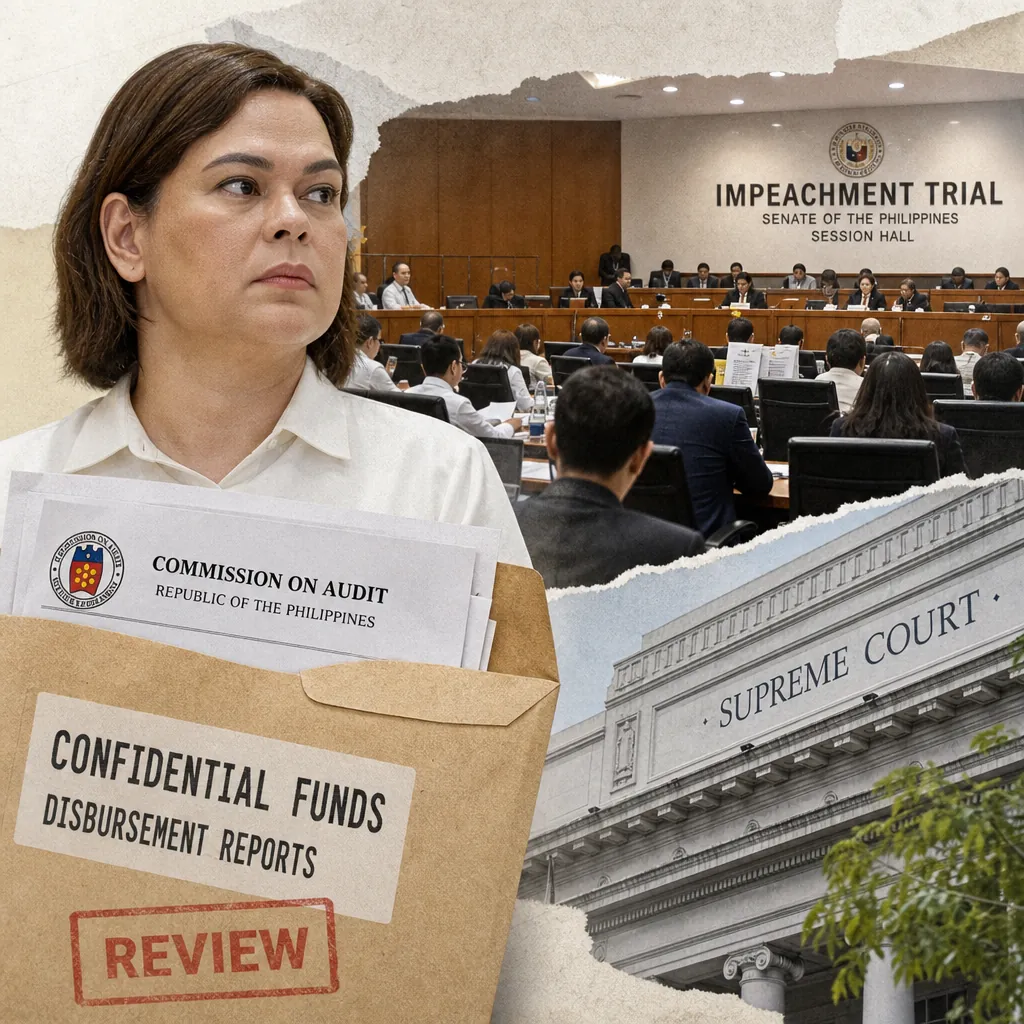
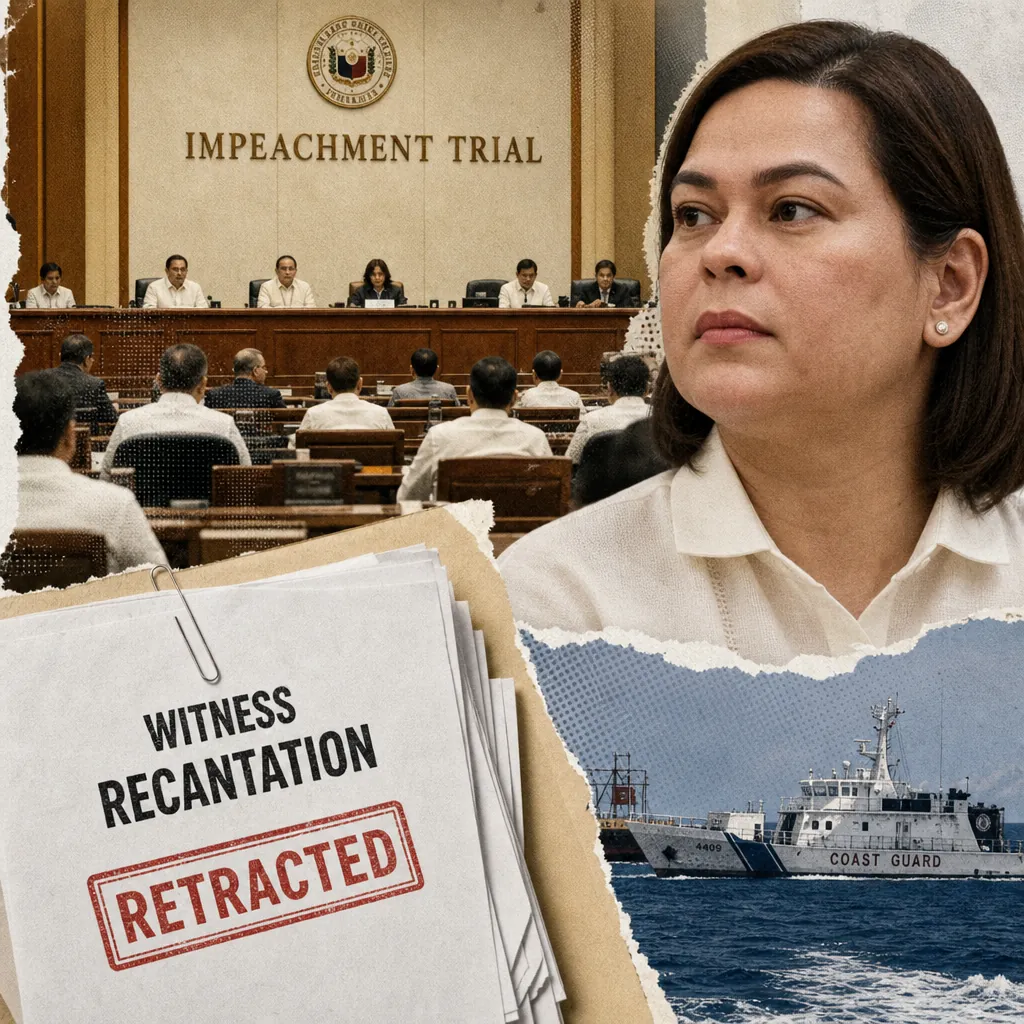
The 13th day of the Senate impeachment trial of Vice President Sara Duterte on August 5, 2026, was the day the legal ground shifted decisively. The Supreme Court dismissed the consolidated petitions filed by Duterte and her lawyer Israelito Torreon that challenged the validity of the House impeachment proceedings, ruling that the issues had become moot once the Articles of Impeachment were transmitted to the Senate. House prosecutor Terry Ridon declared the ruling had "essentially ended all 'propaganda' from Vice President Sara Duterte's camp," while former senator Leila de Lima asserted that "panahon na para humarap si Vice President Sara Duterte sa impeachment court" (it's time for Vice President Sara Duterte to face the impeachment court). The day's proceedings also featured the continued testimony of former Commission on Audit (COA) state auditor Roderick Wamil, who detailed how the Office of the Vice President (OVP) under Duterte was the "first agency to refuse" to receive an Audit Observation Memorandum (AOM) — a formal notice of audit findings — and testified that confidential funds "are still considered as public funds, which must be accounted for properly." The prosecution requested 31 trial days to present its case, signaling the breadth of the evidence it intends to lay out. The defense maintained a posture of procedural compliance, stating it "would comply with the decisions of the Senate impeachment court despite objecting to several motions during the proceedings." But the cumulative weight of the Supreme Court ruling and the auditors' testimony created a narrative of a defense in retreat, with public discourse increasingly framing the proceedings as a straightforward matter of accountability rather than political persecution.
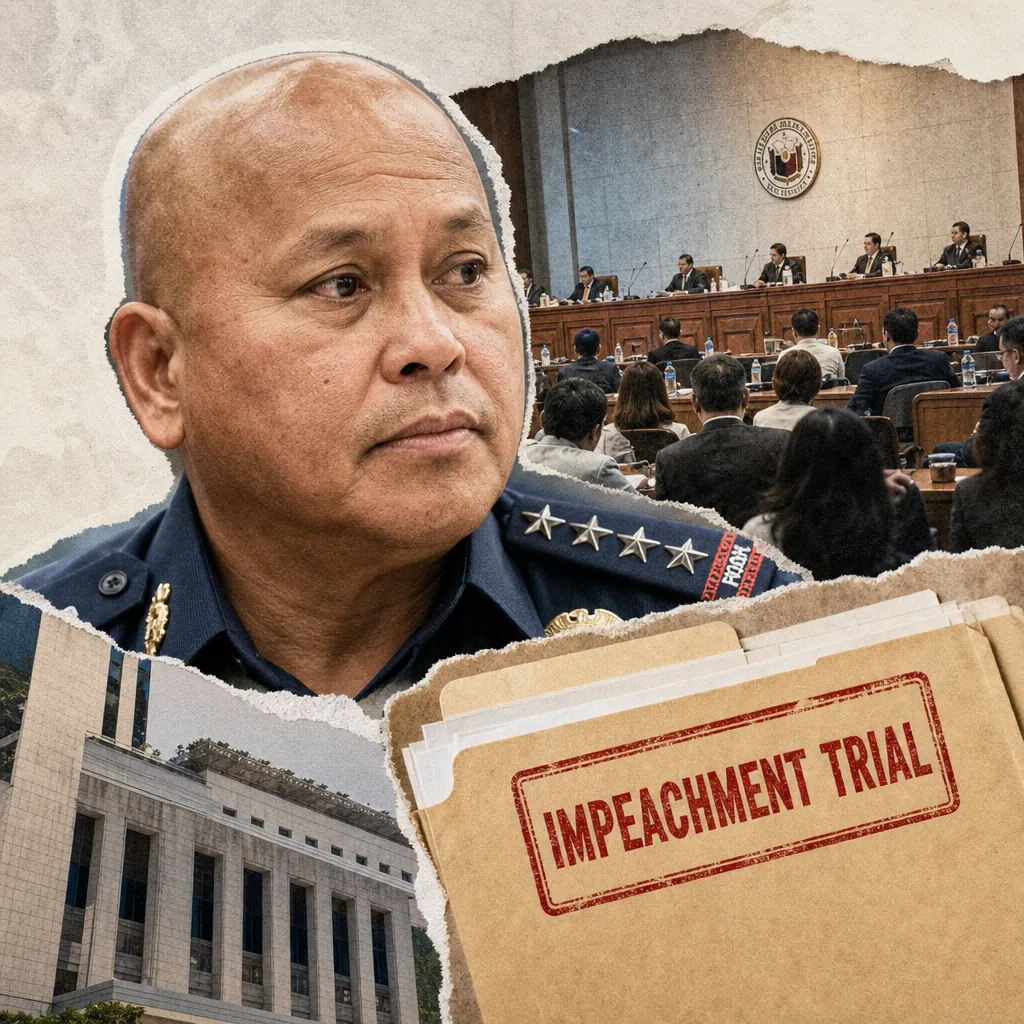
Across social media, the conversation unfolded in near real-time, with Twitter serving as the primary live-update channel. News outlets provided running coverage of trial highlights, with the "Highlights: Day 13" thread accumulating nearly 2,000 views. The Supreme Court decision and a rumor that Senator Bato Dela Rosa had been arrested — quickly denied by the Department of Justice and the Department of the Interior and Local Government — spread rapidly, the arrest story gaining 575 views despite official denials. Facebook conversations were more emotionally charged and partisan, with users posting unsourced graphics and commentary that blurred the line between fact and interpretation. One widely-shared post calculated the opportunity cost of the alleged misuse of P612.5 million in confidential funds, stating the money "could have been used for" 236 new classrooms, 20.4 million textbooks, and 17,500 laptops, drawing 23 likes and 17 comments. Reddit hosted the most substantive legal and procedural debates, with the impeachment mega-thread accumulating 296 upvotes and 166 comments, where users engaged in nuanced examination of the evidence and implications. A highly engaged Reddit thread criticized Senator Robin Padilla's line of questioning, with the top comment noting that "based on his questions, he is definitely implying that those 'foiled' attacks were because of the interventions made by the OVP or DepEd through their confidential funds," while questioning the evidentiary basis for such implications.
Beyond the impeachment trial, the day's conversation was shaped by a range of other developments. The Department of Health (DOH) announced an inspection of alleged "ghost health centers" nationwide, a story that drew modest engagement on Twitter but carried significant reputational weight. Zamboanga City declared a dengue outbreak, reporting 1,241 cases and 12 deaths across 39 barangays. The Bureau of Internal Revenue (BIR) released Revenue Memorandum Circular No. 87-2026, adding 14 new VAT-exempt medicines. Tropical Storm Maymay (international name: Kujira) accelerated toward Ilocos Sur and Ilocos Norte, with Signal No. 2 raised over 10 Luzon areas, and San Juan City Mayor Francis Zamora suspended classes for Thursday, August 6 — an announcement that drew 1,926 views on Twitter, the highest engagement of the day for that story. The inflation rate for July eased to 6.2 percent from 6.4 percent in June, but remained sharply higher than the 0.9 percent recorded in July 2025, feeding a narrative of economic strain. The Trade Union Congress of the Philippines (TUCP) called on the Department of Labor and Employment (DOLE), the Department of Trade and Industry (DTI), and the Department of Budget and Management to defend an P85 daily wage hike, while the Philippine Chamber of Commerce and Industry (PCCI) defended the controversial "Pax Silica" plan as a strategic opportunity for AI and semiconductor manufacturing. A viral Facebook post mistakenly attributed university oversight to the Department of Education, drawing 5,498 "haha" reactions and 1,131 comments, as users mocked the error and highlighted basic bureaucratic knowledge gaps. The day closed with a mix of anxiety and resilience, as the public welcomed the safe return of two Filipino seafarers while digesting news of a P700 million counterfeit goods seizure.
Key themes
- Supreme Court ruling ends legal challenges to impeachment: The high court dismissed Duterte's petitions challenging the House proceedings, ruling the issues were moot after the Articles of Impeachment were transmitted to the Senate. This removed a key legal pillar of the defense's strategy and was widely framed as a validation of the process.
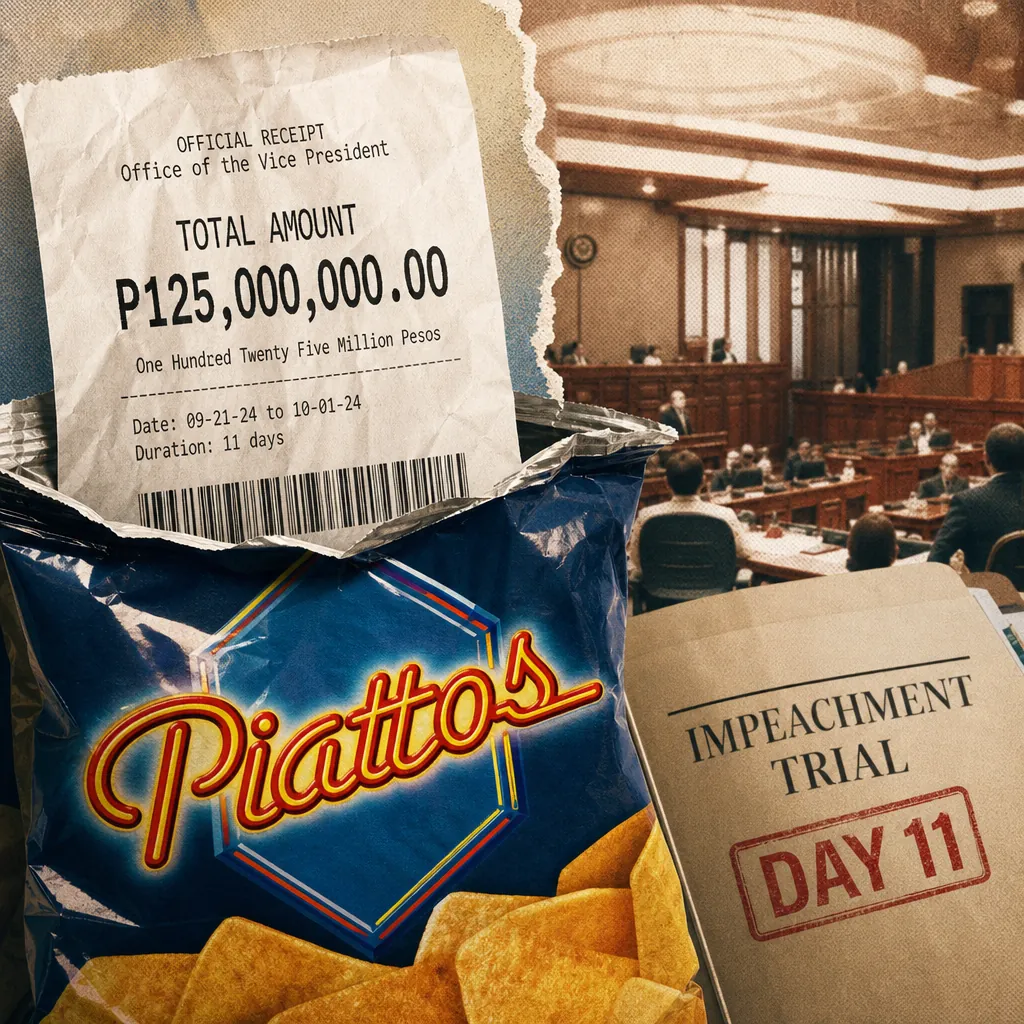
- COA auditor testimony exposes audit refusals and aliases: Former state auditor Roderick Wamil testified that the OVP was the first agency to refuse an Audit Observation Memorandum, and that COA rules do not prohibit the use of aliases like "Mary Grace Piattos" and "Mickey Mouse" in acknowledgment receipts — details that dominated coverage and public discussion.
- Prosecution seeks 31 trial days, signaling lengthy case: The request for 31 days to present witnesses and evidence indicated the breadth of the prosecution's case, projecting a sustained news cycle that will keep the trial in the public eye for weeks.
- Defense counters with procedural objections and persecution framing: The defense maintained compliance with court rulings while contesting substantive claims, and supporters amplified a narrative of political persecution, though this gained limited traction after the Supreme Court ruling.
- Public sentiment polarized but accountability narrative leads: Pro-accountability voices dominated engagement, with viral infographics quantifying the opportunity cost of the alleged misuse, while defense supporters remained active in alternative spaces. An OCTA survey showed Duterte leading Leni Robredo in a hypothetical 2028 matchup, suggesting her base remains intact.
- Tropical Storm Maymay triggers class suspensions and disaster response: The storm's approach toward Ilocos Sur and Ilocos Norte led to widespread class suspensions, with the San Juan City announcement drawing the day's highest engagement on Twitter, highlighting the public's focus on safety and preparedness.
- Economic anxiety persists amid inflation and wage disputes: July inflation eased to 6.2 percent but remained elevated year-on-year, while the Senate called for lifting a temporary restraining order on the P85 minimum wage hike, and the government announced a fuel discount increase for PUV drivers.
- Institutional confusion and governance skepticism surface: A viral post confusing DepEd and CHED drew massive mockery, while Reddit users questioned the motives behind proposed BSKE postponements, reflecting broader distrust in institutional competence and transparency.
How the narratives stack
Dominant: The impeachment trial and its accountability narrative dominated the day's conversation, both in news coverage and social engagement. The Supreme Court ruling and COA testimony provided verifiable, factual anchors that resonated across platforms. Within the captured set of articles, the impeachment-related items drew the highest advertising-equivalent value — the estimated cost of buying the same coverage as advertising — with the "Solons: SC ruling should stop defenses jurisdiction, mini-trial claims" piece carrying an estimated ₱715,932 in ad space, and the "COA rules silent on use of aliases" piece at ₱867,768. This dominance reflects both the significance of the developments and the monitoring scope, which captured a broad range of outlets covering the trial.
Counter-narrative: The defense's framing of the trial as politically motivated and procedurally flawed persisted, particularly among Duterte loyalists on Facebook and in alternative discussion spaces. Posts questioning the consistency of transparency standards — such as one arguing "accountability cannot be selective" and questioning whether Senator Hontiveros's own MOOE funds are confidential — drew significant engagement, including 457 "haha" reactions and 238 comments. However, this counter-narrative struggled to gain mainstream traction after the Supreme Court ruling, which nullified the core legality argument.
Emerging: The "selective transparency" narrative is emerging as a significant thread, with content drawing parallels between the scrutiny applied to the OVP and the internal financial practices of the Senate. This argument could reshape public discourse within 1-2 weeks, potentially forcing a defensive posture from those currently leading oversight messaging. Additionally, the connection between the trial and 2028 electoral prospects is emerging, with the OCTA survey showing Duterte leading Robredo in a hypothetical matchup, and calls for Duterte to "return the money and not run" gaining attention.
Suppressed: The story of the DOH's inspection of alleged ghost health centers received minimal engagement despite its significant accountability implications, drawing only 139 and 242 views on two Twitter posts. This suggests that while corruption and governance issues remain important, they require more substantial narrative framing to capture public interest, especially when competing with the impeachment trial and a tropical storm. Similarly, the BIR's VAT-exempt medicines announcement, a tangible policy win, drew only 188 views, indicating that technical policy updates struggle to break through in a crowded news cycle.
Platform insights
- Twitter: Served as the primary live-update channel for the impeachment trial, with news outlets providing running coverage and the "Highlights: Day 13" thread accumulating nearly 2,000 views. The platform's rapid dissemination of the Supreme Court decision and the Bato Dela Rosa arrest rumor showed how quickly both verified and unverified information traveled. Official agency announcements, such as PAGASA weather updates and NBI statements, drew modest engagement but provided authoritative facts. The class suspension announcement from San Juan City drew 1,926 views, the highest for that story, indicating that actionable, localized updates perform well.
- Facebook: Conversations were more emotionally charged and partisan, with users posting unsourced graphics and commentary. The viral DepEd-CHED confusion post drew 5,498 "haha" reactions and 1,131 comments, while the anti-Hontiveros accountability post drew 457 "haha" reactions and 238 comments. The opportunity-cost infographic about the P612.5 million drew 23 likes and 17 comments, showing that emotional framing resonates. Facebook also hosted positive engagement for the DOH's immunization campaign, with 15 likes and 8 love reactions, indicating receptiveness to health-protective messaging.
- Reddit: Hosted the most substantive legal and procedural debates, with the impeachment mega-thread accumulating 296 upvotes and 166 comments. Users engaged in nuanced examination of evidence and implications, with threads critiquing Senator Padilla's questioning and analyzing the BSKE postponement motives. The platform's discourse remained consistently critical but more measured, often referencing institutional processes. Users were receptive to logical arguments about evidentiary standards and the burden of proof.
- YouTube: No significant activity was captured on YouTube for this day, with the conversation concentrated on Twitter, Facebook, and Reddit. The absence of YouTube engagement suggests that video content was not a major driver of the conversation, though it may reflect the monitoring scope.
Key voices and communities
- Pro-Accountability Voices and Prosecution Supporters: A broad coalition of netizens, political commentators, and civic-minded individuals who amplify the impeachment proceedings narrative. Their content shows high engagement, with analytical posts drawing hundreds of likes and lively comment sections. They frame the confidential funds issue as a matter of public accountability, emphasizing that public funds must be properly accounted for regardless of position or office. Notable content includes detailed breakdowns of potential community benefits from recovered funds, generating over twenty engagements.
- Defense Supporters and Duterte Loyalists: A significant community of steadfast supporters who actively counter accountability narratives through strategic questioning and procedural objections. Their messaging emphasizes the defense's compliance with court rulings and questions the prosecution's evidence basis. They are less visible in mainstream media coverage and more prominent in alternative discussion spaces, with high loyalty and engagement patterns that redirect to procedural matters rather than substantive allegations.
- Institutional and Political Actors: Elected officials, government agency representatives, and appointed officers who serve as both participants and narrators of the impeachment coverage. Their statements generate moderate to high viewership, particularly when referencing Supreme Court decisions or agency actions. This group operates primarily through official channels and media releases, influencing the structural nature of the conversation.
- Media and Information Disseminators: Mainstream news outlets and electronic media accounts form a crucial distribution network, amplifying key developments to broadest audiences. Their content typically achieves the highest viewership numbers, especially for daily trial summaries and breaking news updates. They maintain a neutral tone in reporting but shape the conversation's focus through story selection.
- Civic Watchdog and Opinion Influencers: Civil society representatives, academic voices, and opinion leaders who contextualize the trial within larger governance narratives. Their content often includes historical references, institutional critiques, and speculative analysis about future implications. Engagement from this group tends to be substantive rather than emotional, appealing to audiences interested in systemic analysis.
Narrative streams
The Supreme Court Ruling: A Legal Watershed
The Supreme Court's dismissal of Vice President Sara Duterte's petitions challenging the House impeachment proceedings was the day's most consequential legal development. The high court ruled that the consolidated petitions filed by Duterte and a group of lawyers led by Israelito Torreon had become moot after the House of Representatives transmitted the Articles of Impeachment to the Senate. It said any ruling on the validity of the House Committee on Justice's actions would no longer affect the controversy now pending before the Senate impeachment court. House prosecutors welcomed the ruling, with Terry Ridon declaring it "essentially ended all 'propaganda' from Vice President Sara Duterte's camp." The ruling was covered extensively across the captured set, with the Inquirer's "Solons: SC ruling should stop defenses jurisdiction, mini-trial claims" piece drawing an estimated ₱715,932 in advertising-equivalent value — the estimated cost of buying the same coverage as advertising. The ruling effectively nullified the defense's core argument that the impeachment process was procedurally flawed, shifting the narrative from procedural questions to substantive accountability. For the defense, this meant a loss of a key legal pillar, forcing them to rely on procedural objections within the trial itself. The ruling also reinforced the institutional integrity of the process, a message that resonated with pro-accountability voices and was amplified across social media.
COA Auditor Testimony: The Details That Stuck
Former COA state auditor Roderick Wamil's testimony provided the day's most damaging revelations. Wamil, who served in the COA's Intelligence and Confidential Fund Audit Office, testified that the OVP under Duterte was the "first agency to refuse" to receive an Audit Observation Memorandum (AOM) — a formal notice of audit findings. Under questioning by Senator-Judge Francis "Kiko" Pangilinan, Wamil said it was the first time in his career that an agency refused to accept an AOM, calling it "unusual." He also testified that confidential funds "are still considered as public funds, which must be accounted for properly," directly rebutting defense arguments about their secretive nature. Perhaps most strikingly, Wamil revealed that COA guidelines do not prohibit the use of aliases — even obviously fictional ones such as "Mary Grace Piattos," "Chippy McDonald," and "Mickey Mouse" — in acknowledgment receipts submitted by the OVP for disbursements made between December 21 and 31, 2022. These details became focal points of public discussion, with the "COA rules silent on use of aliases" article drawing an estimated ₱867,768 in advertising-equivalent value, the highest among the captured impeachment-related items. The testimony established a pattern of non-compliance and questionable documentation that the prosecution will likely build upon in the coming weeks. For the public, the aliases became a symbol of alleged misuse, with social media users sharing the names widely and expressing outrage. The testimony also underscored the technical nature of the audit process, which Reddit users engaged with deeply, seeking to understand the rules and implications.
The Defense's Procedural Posture and Counter-Narratives
The defense team maintained a posture of procedural compliance while contesting substantive claims. They stated they "would comply with the decisions of the Senate impeachment court despite objecting to several motions during the proceedings." On the OVP-COA meeting controversy, the defense insisted the meeting was "lawful and intended solely to clarify audit guidelines," addressing allegations of improper influence. However, the defense faced internal credibility challenges, with Senator Raffy Tulfo questioning whether Atty. Michael Poa's representation constituted a conflict of interest, which Senators Escudero and Kapunan defended. The defense's denial that Duterte's camp sought COA audit exemption while at DepEd was met with skepticism, particularly given the prosecution's claim that confidential fund usage for personal benefit could be presumed from the failure to comply with auditing rules. On social media, defense supporters amplified a narrative of political persecution, with posts questioning the consistency of transparency standards and arguing that accountability was being selectively applied. One high-engagement post argued that Senator Hontiveros's own MOOE funds should face the same scrutiny, drawing 457 "haha" reactions and 238 comments. However, this counter-narrative struggled to gain traction after the Supreme Court ruling, which nullified the core legality argument. The defense's attempts to frame the trial as politically motivated were complicated by the COA auditors' documentation of specific audit failures and the court's acceptance of the regularity of House proceedings.
The "Selective Transparency" Counter-Narrative
A notable counter-narrative emerged questioning the consistency of transparency demands across government branches. Content drawing parallels between the scrutiny applied to the Office of the Vice President and the internal financial practices of the Senate received significant engagement, with strong emotional reactions including amusement and approval signals. One post argued "accountability cannot be selective" and questioned whether Senator Hontiveros's own MOOE funds are confidential, drawing 457 "haha" reactions and 238 comments. This "transparency should be uniform" argument could reshape the public discourse within 1-2 weeks, potentially forcing a defensive posture from those currently leading oversight messaging. The narrative resonated with audiences skeptical of political motives, suggesting a fatigue point among the public regarding one-sided attacks. For communications teams, this presents a challenge: while the accountability narrative dominates, the selective transparency argument could undermine its credibility if not addressed. The recommendation is to encourage uniform public audit reporting across all branches, which could defuse accusations of partisan targeting and rebuild trust in oversight mechanisms.
Tropical Storm Maymay and Disaster Response
Tropical Storm Maymay (international name: Kujira) became the dominant non-impeachment story as it accelerated toward Ilocos Sur and Ilocos Norte. PAGASA reported the storm's center was estimated some 145 kilometers west of Sinait, Ilocos Sur, with maximum sustained winds of 75 kilometers per hour and gustiness of up to 90 kilometers per hour, moving north-northwest at 10 kilometers per hour. Tropical Cyclone Wind Signal No. 2 was raised over 10 Luzon areas, including Ilocos Norte, Ilocos Sur, La Union, Pangasinan, Apayao, Abra, Kalinga, and Mountain Province. The storm made landfall over Magsingal, Ilocos Sur at 2 a.m. Thursday, and was expected to weaken into a tropical depression by Thursday morning. The most impactful moment came with the class suspension announcement from San Juan City Mayor Francis Zamora, which received 1,926 views on Twitter — the highest engagement of the day for that story. The announcement was part of a broader wave of class suspensions across the National Capital Region, Cagayan Valley, Cordillera Administrative Region, and Ilocos Region. The storm story showed the evolution from information sharing to tangible civic response, with the government's decision-making becoming the story itself. For communications teams, the storm highlighted the importance of rapid-response coordination across affected LGUs and national agencies, as the storm's impact will determine whether the narrative becomes a success story or a critique of disaster preparedness.
Economic Anxiety: Inflation, Wages, and Fuel Discounts
The economic narrative was driven by the July inflation report, which showed the rate easing to 6.2 percent from 6.4 percent in June, but remaining sharply higher than the 0.9 percent recorded in July 2025. Average inflation from January to July remained elevated at 5 percent, well above the Bangko Sentral ng Pilipinas' (BSP) 3-percent target. The BSP said it "will continue to monitor recent developments and their potential impact on inflation and growth" and is "prepared to take further monetary action as needed." The Senate called for the immediate lifting of a temporary restraining order (TRO) that halted the implementation of the P85 daily minimum wage increase in the National Capital Region, with Senate Majority Leader Juan Miguel Zubiri saying, "We respect the wisdom of the court, but we also call for the immediate lifting of this TRO." The TRO was issued by the Regional Trial Court of Pasig City, suspending Wage Order No. NCR-27. Zubiri cited Article 126 of the Labor Code, which prohibits courts from issuing injunctions or TROs against proceedings before the country's wage-setting bodies. The government also announced a fuel discount for Public Utility Vehicle (PUV) drivers would be raised to P12 per liter starting August 15, replacing the previous P10 discount, aiming to increase savings to up to P1,800 once fully implemented. The TUCP amplified labor concerns by calling on DOLE, DTI, and DepDev to defend the P85 wage hike. Sentiment was largely skeptical, with users wary of both government claims and corporate assurances, but a rare positive note surfaced when two Filipino seafarers returned home safely, drawing expressions of gratitude.
Institutional Confusion and Governance Skepticism
A viral Facebook post mistakenly attributed university oversight to the Department of Education, drawing 5,498 "haha" reactions and 1,131 comments, as users mocked the error and highlighted basic bureaucratic knowledge gaps. The post "Universities? DepEd is for Kindergarten to Grade 12." became a symbol of public misunderstanding, with one commenter sarcastically suggesting "Ibalik sa elem yan nang matutunan pinagkaiba ng DepEd at Ched" (Send them back to elementary so they learn the difference between DepEd and CHED). Reddit users pivoted to a more serious angle, questioning the repeated postponement of Barangay and Sangguniang Kabataan Elections (BSKE), with one user asking "bakit ba ang hilig ng gobyerno natin na ipospone ang BSKE? ano ba talaga ang ulterior motive nila" (why does our government love postponing BSKE? what is their ulterior motive) while suggesting the energy crisis was being used as cover. This thread evolved into a broader critique of government responsiveness, with users citing the NBI's challenge to Rep. Leviste and ex-Sec. Paras to prove their innocence and the Ombudsman's call for graft charges against the new DOH chief. The sentiment shifted from humor to disillusionment, reflecting a growing distrust in institutional competence and integrity. For agencies like DepEd, the viral mockery is a cautionary case study in the reputational cost of perceived incompetence, reinforcing the need for precise public communication.
Conversation trajectory
- Impeachment trial narrative consolidation around procedural fairness: The trial proceedings are generating sustained public interest, with the Supreme Court ruling and COA testimony drawing significant viewership. The conversation is shifting from substantive allegations toward questions about due process and courtroom conduct, particularly highlighted by legal counsel commentary about presentation strategy and timing. This procedural focus will likely intensify over the next 2-3 weeks as more evidentiary rulings are anticipated, creating opportunities for stakeholders to emphasize institutional integrity rather than partisan positions. (Observation window: 2-3 weeks)
- Selective accountability accusations gaining traction: The "transparency should be uniform" argument is gaining traction, with content drawing parallels between the scrutiny applied to the OVP and the internal financial practices of the Senate receiving significant engagement. This could reshape the public discourse within 1-2 weeks, potentially forcing a defensive posture from those currently leading oversight messaging. (Observation window: 1-2 weeks)
- Agency-specific corruption storylines branching into broader anti-graft narratives: The DOJ and Sandiganbayan developments are generating parallel conversations about systemic accountability. The flood control plunder case appeal and the NBI's public statements about due process are receiving measurable audience attention, signaling public appetite for anti-corruption follow-through. Expect this thread to expand significantly with the Ombudsman's recent actions against health sector officials, creating a multi-agency corruption narrative that will be harder for any single institution to contain. (Observation window: 2-4 weeks)
- Public confusion amplifying reputational risks for agencies: The DepEd-CHED confusion and BSKE postponement debate highlight a growing narrative of governmental incompetence, which could be a reputational risk for the Marcos administration if not addressed through clearer public communication. Any agency communication that fails to clearly identify its mandate risks being publicly corrected, potentially undermining trust in institutional messaging. (Observation window: ongoing)
- Disaster preparedness conversation spiking with compounding weather threats: Tropical Storm Maymay's landfall and the ongoing Southwest Monsoon effects have triggered immediate localized response discussions. Expect the narrative to expand from storm tracking toward disaster response effectiveness, particularly comparing agency performance across affected regions. (Observation window: 48-72 hours)
Trigger events to watch: The continuation of COA auditor testimony over the coming week, which will likely solidify or challenge the presumption of misuse narrative depending on witness performance. The rescheduled NBI appearance of key figures in the honeytrap case around mid-August will generate a fresh wave of engagement and potential narrative shifts. The defense's compliance with the court order to review confidential fund documents will signal either procedural cooperation or continued friction, directly impacting public perception of the defense's credibility. The release of updated dengue case data from DOH regional offices could expand the outbreak narrative beyond Zamboanga City if other regions show similar patterns. The expected Sandiganbayan bail ruling on the plunder case could trigger renewed public debate on judicial leniency.
Response guidance
For communicators in the public sector and governance monitoring, the key insight is that the narrative is being driven by verifiable audit testimony and Supreme Court rulings rather than political spin, making it difficult for the defense to control the message. The trial's momentum suggests that public attention will remain on the confidential funds accounting issues, with the 31-day presentation period providing a sustained news cycle that will require careful monitoring of both mainstream coverage and social media sentiment.
Platform approaches: On Twitter, prioritize rapid response to verified information about the impeachment trial and weather updates, as the platform serves as the primary live-update channel. On Facebook, address the emotional framing of opportunity costs with empathetic yet fact-based responses, and monitor comment sections for misinformation about audit rules. On Reddit, engage in discussion threads that critique the defense's line of questioning, amplifying content that clarifies COA rules on confidential funds as public funds subject to accountability.
Key messages: "Confidential funds are public funds and must be properly accounted for, regardless of their sensitive nature." "The impeachment process is proceeding through constitutionally defined channels, with the Supreme Court affirming the legitimacy of the proceedings." "Government funds misused or not properly liquidated represent lost opportunities for public services like education and infrastructure." "All parties have committed to respecting the rulings of the impeachment tribunal and the legal process." "Every peso of public funds carries the obligation of proper liquidation and transparent accounting."
Sensitive topics to navigate: The tension between the legal need for secrecy in confidential fund operations and the public's right to ensure proper use must be carefully balanced. Avoid either dismissing legitimate security concerns or excusing failures in liquidation. Claims that the impeachment is politically driven are circulating among supporter communities; responses should emphasize the legal basis and evidentiary process rather than engaging in partisan counter-attacks. Content using terms like "Inday Lustay" risks polarizing audiences and detracting from substantive discussions; guidance should discourage amplification of such terms while acknowledging the emotional frustration behind them.
Response priorities: Reinforce the legal and evidentiary basis of the proceedings, particularly following the Supreme Court's dismissal of petitions challenging the impeachment. Translate audit irregularities into citizen-impact language, such as the number of classrooms, textbooks, or teachers that could have been funded with the amounts in question. Clarify the distinction between lawful confidential fund use and failure to account, as the defense is raising procedural objections while the prosecution focuses on non-compliance. For agencies like DepEd, use the recent viral miscommunication as a catalyst for a digital literacy and fact-checking campaign, positioning the agency as a proactive leader in combating disinformation rather than a passive victim of mockery. For Malacañang and the DSWD, refine the public communication strategy for the rice distribution program, releasing a clear, searchable portal or hotline with specific schedules and qualifying criteria to demonstrate competent implementation.
See the full picture behind today's signals.
This report draws from Media Meter's MediaWatch, our real-time monitoring engine tracking 2,470+ Philippine sources across print, broadcast, digital, and social. Explore how the platform turns raw coverage into decision-grade intelligence, then see how it's configured for teams like yours — whether you're in PR agencies, corporate comms, government, or marketing.
Want more? Browse our Report Library for sector and crisis intelligence, or request a demo and we'll have your brand set up before the call.
Want this kind of intelligence on your brand?
This brief is built on the same MediaWatch methodology that runs continuously across every brand we monitor. See your competitive landscape, Impact Score, and narrative trajectory in a 30-minute demo.