Jollibee Sells 11% Highlands Coffee Stake for $88M
Jollibee Foods Corp. agreed to sell 11% of Highlands Coffee's holding company for about $88 million, cutting its stake to 49% and handing control back to founder David Thai. The same day, Philippine fuel prices near P100 per liter drove excise-tax and subsidy debates, and fast-food value deals drew scattered consumer posts.
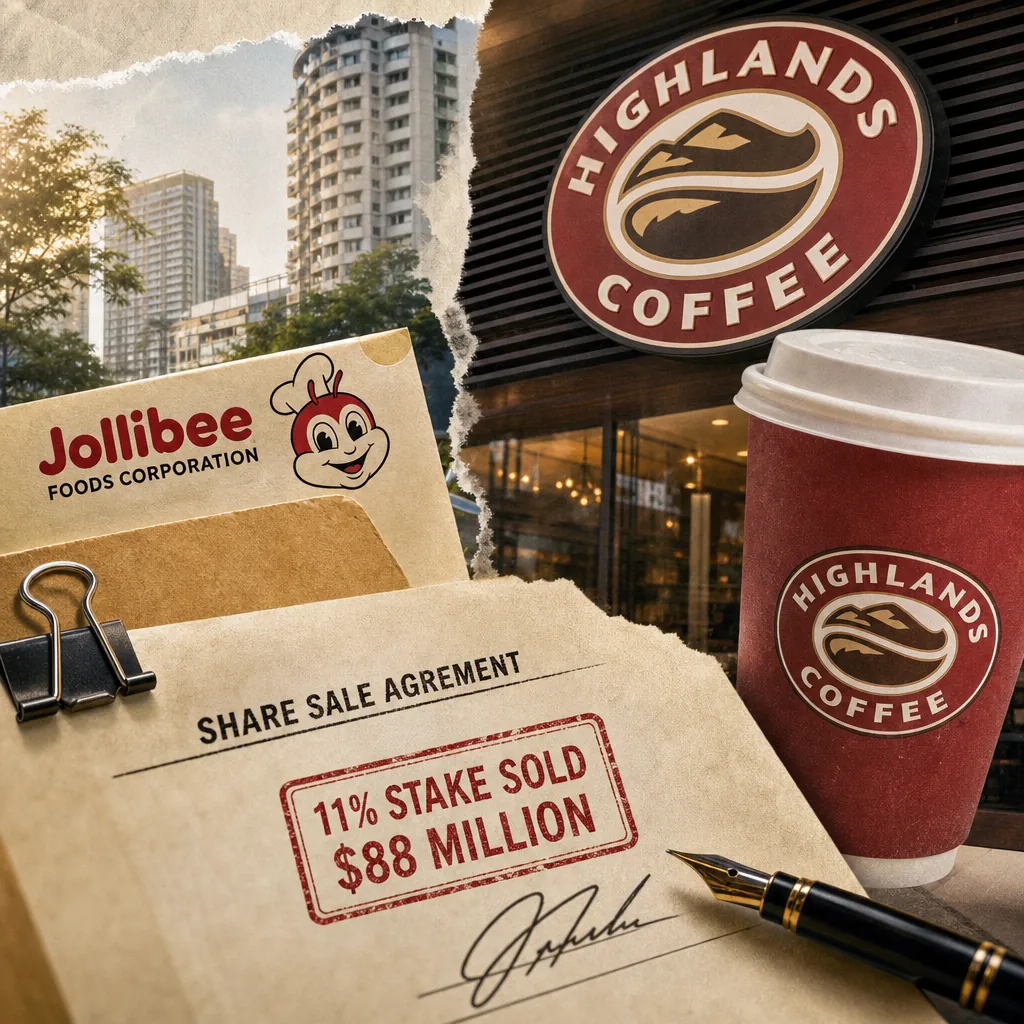
Jollibee Foods Corp. (JFC) agreed on Wednesday to sell an 11% stake in the holding company behind Vietnam's Highlands Coffee for 2.3 trillion Vietnamese dong, about $88 million, in a deal that returns majority control of the coffee chain to its founder and gives the Philippine restaurant group cash to redeploy elsewhere.2662 The transaction, disclosed to the Philippine Stock Exchange, values the entire Highlands Coffee business at an implied equity value of $800 million, which JFC described as a substantial premium to the investment's carrying value on its books.2617 The buyer is Viet Thai International Joint Stock Company (VTI), the founding shareholder of Highlands Coffee and JFC's partner in Vietnam since 2011.62 Upon completion, VTI's stake rises from 40% to 51% while JFC's falls from 60% to 49%, leaving the Philippine company with a minority position and board representation but no longer control.2617
The deal drew immediate coverage across Philippine and Vietnamese business media, from Inquirer and BusinessWorld in Manila to Cafef and Cafebiz in Hanoi, where the story was framed as Highlands Coffee "returning to Vietnamese shareholders."1516172662 The Vietnamese reports noted that VTI is a company established by David Thai, who founded Highlands Coffee in 1999 and remains its chief executive officer.1562 JFC said the coffee chain's management team, brand direction, store operations, franchisee relationships, employees, and customer-facing operations will not change as a result of the transaction.62 The sale is subject to customary closing conditions.17
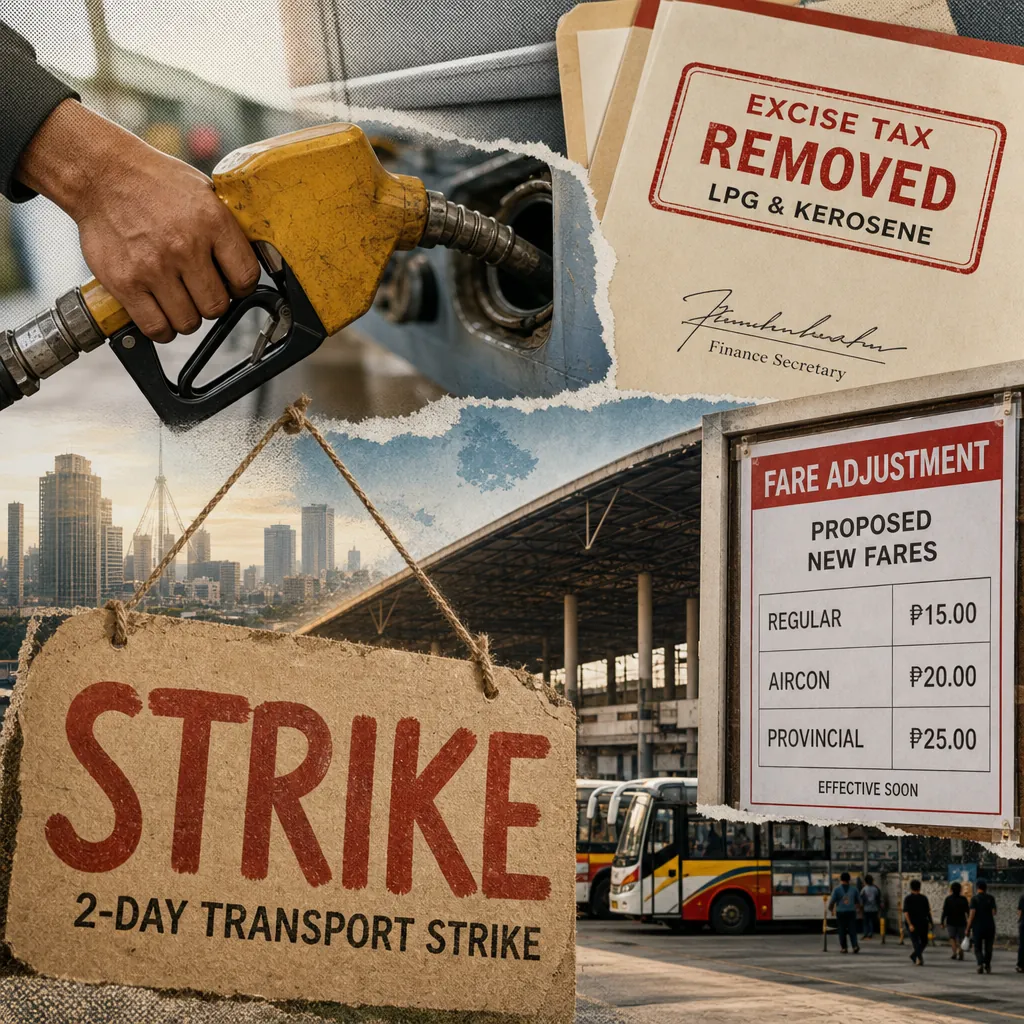
On the same day, the fuel story that has been building for weeks reached a procedural milestone. Bataan Rep. Albert Garcia, speaking during House plenary deliberations on the Office of the President's proposed 2026 budget, said the Department of Finance's recommendation on whether to suspend the excise tax on diesel and other fuel products may reach the President this week, with an announcement "most likely" early next week.1 Finance Secretary Frederick Go signed a resolution on Wednesday cutting excise levies on liquefied petroleum gas (LPG) and kerosene, mirroring an April move when energy prices spiked amid the US-Iran war.1 Go warned that removing duties on diesel and gasoline could cost the government as much as P12 billion in foregone revenue monthly.1 The Philippines imposes P10 per liter on gasoline, P6 per liter on diesel, and P5 per liter on kerosene under the 2017 Tax Reform for Acceleration and Inclusion law.1 Diesel averaged P104.91 per liter across Metro Manila and gasoline P92.59 as of Sept. 22, per Gas Watch PH.1
Key themes
- Jollibee sells 11% of Highlands Coffee for $88 million, ceding control to founder David Thai. The Philippine restaurant group's stake falls from 60% to 49%, while VTI rises to 51%, in a deal that values the Vietnamese coffee chain at $800 million.266217
- Diesel near P100 per liter drives excise-tax and subsidy debates in Manila. Diesel averaged P104.91 per liter in Metro Manila as of Sept. 22, and a GMA Regional TV post reported diesel returning to P100 per liter at some Mindanao stations, with motorists complaining.15
- The Department of Finance is preparing a diesel excise-tax recommendation for the President. Finance Secretary Frederick Go warned that removing duties on diesel and gasoline could cost P12 billion in monthly foregone revenue, while LPG and kerosene excise taxes were already cut.1
- The government is preparing a new round of fuel assistance under the Uplift program. Agriculture Assistant Secretary Arnel de Mesa named farmers and fishermen as initial targets, citing fuel costs for palay harvesters and motorized bancas.270
- Transport groups scheduled strikes for Sept. 28–30 over oil prices. Manibela announced a three-day strike from Sept. 28 to 30, overlapping with PISTON's planned Sept. 29–30 action, demanding lower fuel prices, fare increases, and the removal of excise tax and value-added tax on petroleum products.711
- McDonald's committed $8.5 billion through 2036 to franchisee support and restaurant modernization. The chain reported 0.8% US same-store sales growth in its most recent quarter, its slowest in more than a year, and replaced its US chief in August.58673
- Fast-food value deals and a complaint-escalation question drew scattered consumer posts. A Wendy's B1T1 Cheesy Burger Melt promotion via foodpanda drew 40 upvotes with the poster noting it appeared available only at selected branches, and a Reddit thread asked whether to escalate a McDonald's complaint to headquarters or the Department of Trade and Industry.87
- Pork import policy and tariff questions resurfaced alongside the fuel debate. The Philippine Swine Institute urged a review of the country's pork import policy, while Agriculture Assistant Secretary de Mesa said the government is studying a hog industry proposal to raise pork tariffs and its effect on processed products like hotdogs and luncheon meat.412
How the narratives stack
Dominant: Jollibee's sale of an 11% Highlands Coffee stake for about $88 million was the day's most consequential corporate development in the food and beverage sector, drawing coverage from at least five outlets across two countries.26621517 The deal's significance lies in what it changes: JFC loses control of a business it had consolidated, VTI regains majority ownership, and the $800 million implied valuation gives both sides a reference point for any future initial public offering, which JFC had previously considered for the Vietnamese chain.26 Within the captured set, this story also carried the highest advertising-equivalent value of any single item, with the Inquirer Online report alone representing an estimated P311,472 in advertising-equivalent value — the notional cost of buying the same space as paid advertising, not a measure of readership.26
Counter-narrative: The fuel price story dominated the day's policy conversation and generated more individual items across the captured set than any other topic, but its consequence for the food and beverage sector is indirect and slower-moving. Diesel at P104.91 per liter in Metro Manila and P100 per liter at some Mindanao stations feeds into transport, delivery, and agricultural input costs, which in turn affect food production and retail pricing.15 The government's response — a pending diesel excise-tax recommendation, a new round of Uplift fuel assistance for farmers and fishermen, and consultations on fare increases — addresses the immediate pressure but does not resolve the underlying cost structure.1270 For food and beverage companies, the relevant question is how long elevated fuel prices persist and whether transport strikes on Sept. 28–30 disrupt distribution.71
Emerging: McDonald's $8.5 billion commitment through 2036, announced at its investor day in Chicago, signals where the global category leader is placing its bets: restaurant technology, hand-breaded chicken, artificial intelligence drive-throughs, and a return of 1990s-style restaurant designs.583 The chain's 0.8% US same-store sales growth in its most recent quarter, against Burger King's 8.5% growth, explains the urgency.58 In the Philippines, a McDonald's Happy Meal promotion offering Chicken McNuggets for P100 ran with DTI Fair Trade Permit No. FTEB-252465, Series of 2026, showing the value-menu strategy is being localized.4 The read for the sector is that McDonald's is willing to spend heavily to defend its position, which raises the competitive bar for Jollibee, Chowking, and other Philippine quick-service chains.
Under-covered: The Philippine Swine Institute's call for a review of the country's pork import policy received a single item in the captured set, despite its direct relevance to food security and processed-meat pricing.41 The institute warned that rising dependence on imported pork could undermine long-term recovery of the domestic hog industry if not matched by measures that restore producer confidence and competitiveness.41 Separately, the Department of Agriculture formed a technical working group under Special Order No. 1270 to review existing and prospective free trade agreements and their implications for agriculture, a development that also drew limited attention.27 Both stories matter to food and beverage companies because they shape the cost and availability of key inputs — pork for processed meats, and tariff terms for imported agricultural goods.
Platform insights
- Facebook: The platform carried the day's most geographically specific fuel reporting. A GMA Regional TV post reported diesel returning to P100 per liter at some gasoline stations in Mindanao, with motorists complaining, while a separate GMA post from North Central Luzon reported a possible rollback in petroleum prices the following week based on early trading days.56 A Facebook post also carried the headline that there is no petrol or diesel price hike proposal yet, and that the government may support oil marketing companies if crude stays high.10 These posts reached regional audiences with localized price information that national outlets did not carry.
- Reddit: Consumer frustration and deal-seeking behavior showed up in two distinct threads. A post titled "Should We Escalate Our Complaint to McDonald's HQ or DTI?" drew 3 comments and showed 5 likes against 2 dislikes, with the body deleted, indicating a customer considering formal escalation but not yet receiving community validation.7 A Wendy's B1T1 Cheesy Burger Melt promotion via foodpanda drew 40 upvotes and 7 comments, with the poster noting "Mukhang selected branches lang" — the promotion appeared available only at selected branches.8 The contrast between the two threads is instructive: deal-sharing drew engagement, while complaint escalation drew little.
- X (formerly Twitter): A McDonald's Philippines post advertised a Chicken McNuggets Happy Meal offer at P100, citing DTI Fair Trade Permit No. FTEB-252465, Series of 2026.4 The post is a straightforward promotional item, but it shows the chain using the platform for value-menu messaging in the Philippine market while its US parent announces a major strategic reset.
- YouTube: A GMA Regional TV post on YouTube reported diesel prices returning to P100 per liter at some gasoline stations and motorists complaining.5 The video format gave the fuel story a visual and regional dimension that text posts could not match.
Key voices and communities
Jollibee Foods Corp. and its investors. JFC's disclosure to the Philippine Stock Exchange set the terms of the Highlands Coffee deal and framed it as unlocking funds while retaining board representation and a 49% stake.2662 The company's framing matters because it signals to investors that the sale is a portfolio decision, not a retreat from Vietnam.
Vietnamese business media and the VTI/David Thai camp. Cafef and Cafebiz covered the deal as Highlands Coffee "returning to Vietnamese shareholders," emphasizing VTI's rise to 51% and David Thai's continued role as CEO.1517 This framing positions the transaction as a homecoming for a brand founded in Vietnam in 1999.62
Philippine government economic managers. Finance Secretary Frederick Go, Agriculture Assistant Secretary Arnel de Mesa, and Transportation Secretary Giovanni Lopez are the key voices on fuel tax and subsidy policy.1270 Go's P12 billion monthly foregone revenue estimate frames the fiscal constraint; de Mesa's identification of farmers and fishermen as initial Uplift beneficiaries signals the political priority; Lopez's apology to bus operators and drivers acknowledges the transport sector's pressure.2
Transport groups Manibela and PISTON. Manibela chairman Mar Valbuena called for lower fuel prices, fare increases, and the removal of excise tax and value-added tax on petroleum products, arguing that temporary aid or fuel subsidies are insufficient if the root problem is not addressed.71 PISTON's planned Sept. 29–30 strike and Manibela's Sept. 28–30 action give the labor sector a dated, disruptive lever.171
Reddit consumer communities. The r/LawPH and r/AtinAtinLang threads show consumers using Reddit to share promotions and consider formal complaints.78 The Wendy's thread's 40 upvotes against the McDonald's complaint thread's 3 comments suggests the community rewards deal-sharing more than grievance-airing.
Narrative streams
Jollibee sells Highlands Coffee stake, ceding control to founder
Jollibee Foods Corp.'s decision to sell 11% of SF Vung Tau Joint Stock Company, the holding entity of Highlands Coffee, for 2.3 trillion Vietnamese dong (about $88 million) reduces its stake from 60% to 49% and hands majority control to Viet Thai International Joint Stock Company.2662 The deal values the entire Vietnam coffee platform at an implied equity value of $800 million, which JFC described as a substantial premium to the investment's carrying value.26 VTI is the founding shareholder of Highlands Coffee and has partnered with JFC in Vietnam since 2011; David Thai, who founded the chain in 1999, remains chief executive officer.62 JFC said Highlands Coffee's management team, brand direction, store operations, franchisee relationships, employees, and customer-facing operations will not change.62 The transaction covers 1.46 million shares at approximately 1.6 million Vietnamese dong per share.15 The deal is subject to customary closing conditions.17
The read for the sector is that JFC is converting a controlling stake into cash and a minority position, which gives the Philippine group flexibility to invest elsewhere while retaining exposure to Vietnam's coffee market through board representation.26 For competitors and suppliers in the Philippine food and beverage sector, the deal signals that JFC is willing to monetize non-core assets at a premium, which could free capital for its Philippine brands or other acquisitions. The $800 million valuation also sets a benchmark for Vietnamese coffee chains and could influence how other regional food groups value their own coffee portfolios.
Diesel near P100 per liter drives excise-tax and subsidy debates
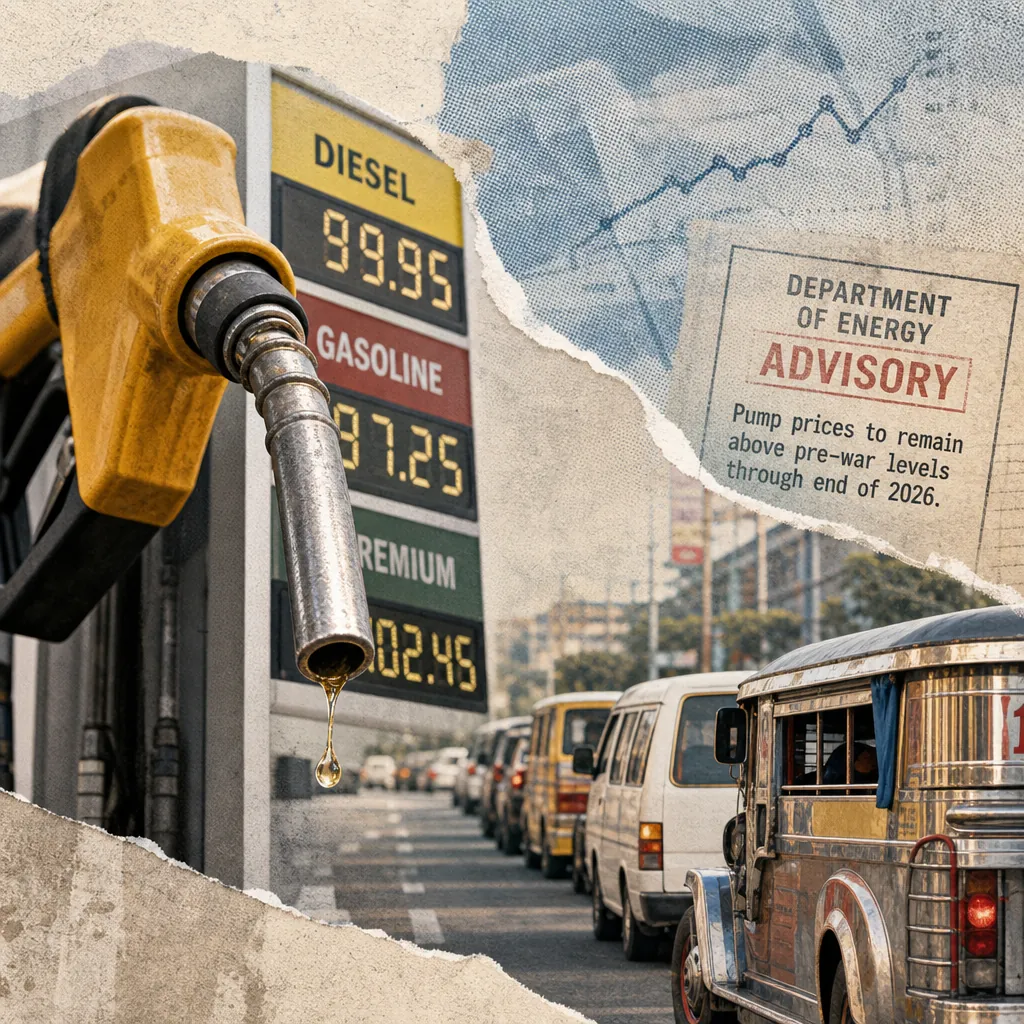
Diesel averaged P104.91 per liter across Metro Manila and gasoline P92.59 as of Sept. 22, per Gas Watch PH, while a GMA Regional TV post reported diesel returning to P100 per liter at some Mindanao stations, with motorists complaining.15 Finance Secretary Frederick Go signed a resolution on Wednesday cutting excise levies on liquefied petroleum gas and kerosene, mirroring an April move when energy prices spiked amid the US-Iran war.1 Go warned that removing duties on diesel and gasoline could cost the government as much as P12 billion in foregone revenue monthly.1 The Philippines imposes P10 per liter on gasoline, P6 per liter on diesel, and P5 per liter on kerosene under the 2017 Tax Reform for Acceleration and Inclusion law, which restructured the country's tax system to fund infrastructure and social programs.1 Bataan Rep. Albert Garcia said the Department of Finance's recommendation on whether to suspend the diesel excise tax may reach the President this week, with an announcement "most likely" early next week.1 Gabriela party-list Rep. Sarah Elago questioned why only LPG and kerosene had their excise tax suspended, not diesel and other fuels.1
The read for the sector is that food and beverage companies face a two-sided cost problem: higher fuel prices raise transport and delivery costs, while the government's fiscal constraint limits how much relief it can provide. The P12 billion monthly foregone revenue figure is the key number because it defines the trade-off — every peso of excise tax suspended is a peso not available for other spending.1 For food manufacturers and retailers, the relevant question is whether diesel prices stay near P100 per liter long enough to force permanent changes in distribution costs or pricing.
Government prepares new round of Uplift fuel assistance for farmers and fishermen
The Marcos administration is preparing a new round of fuel assistance under the Unified Package for Livelihoods, Industry, Food, and Transport (Uplift), a program created by President Ferdinand Marcos Jr. to cushion the impact of oil price increases on key sectors.270 Agriculture Assistant Secretary Arnel de Mesa named farmers and fishermen as initial targets, explaining that a large share of farmers' costs goes to fuel for palay harvesters and motorized bancas.270 De Mesa said the government is also studying restoring toll waivers for agricultural vehicles transporting products from Northern and Southern Luzon to Metro Manila, and weighing the impact of a pork tariff increase on processed products.2 Transportation Secretary Giovanni Lopez said the Department of Transportation is studying extending the fuel subsidy beyond public utility jeepneys and UV express vehicles, while the Land Transportation Franchising and Regulatory Board holds consultations on fare-increase petitions.2 Lopez described the current fuel discount as having gone from P10 to P12 with limited transport modes benefiting.2
The read for the sector is that the Uplift program's expansion to farmers and fishermen addresses the upstream end of the food supply chain, where fuel costs directly affect production. For food and beverage companies, the relevant signal is that the government is willing to intervene at multiple points — fuel subsidies, toll waivers, and tariff reviews — which could stabilize input costs but also introduces policy uncertainty as programs are studied and adjusted.2
Transport strikes scheduled for Sept. 28–30 over oil prices
Manibela announced a three-day transport strike from Sept. 28 to 30, overlapping with PISTON's planned Sept. 29–30 action, to protest continued oil price increases.711 Manibela chairman Mar Valbuena called for lower fuel prices, fare increases for drivers and operators, and the removal of excise tax and value-added tax on petroleum products.71 Valbuena said drivers' and operators' incomes have shrunk because of high diesel prices while trip costs continue to rise, and argued that temporary aid or fuel subsidies are insufficient if the root problem is not addressed.71 The Land Transportation Franchising and Regulatory Board is holding consultations on fare-increase petitions, and Transportation Secretary Lopez apologized to bus operators and drivers while saying the government is exploring what subsidies it can still provide.2
The read for the sector is that the Sept. 28–30 strikes are dated, known disruption events that food and beverage companies with transport or logistics exposure should calendar now. A three-day strike affecting public transport could disrupt deliveries, employee commuting, and consumer foot traffic to restaurants and stores. The strikes also raise the political pressure on the government to act on fuel taxes before the end of September, which could bring the diesel excise-tax decision forward.171
McDonald's commits $8.5 billion through 2036 as US sales growth slows
McDonald's said it is committing approximately $8.5 billion through 2036 in capital support and rent relief for franchisees under its "Next" plan, ahead of its investor day in Chicago.358 The chain reported 0.8% US same-store sales growth in its most recent quarter, its slowest in more than a year, against Burger King's 8.5% growth, and attributed the weakness to value offerings that did not resonate and too many product launches slowing service.583 McDonald's replaced its US chief with Skye Anderson in August to bring "focus and urgency," and targets a 1.5-percentage-point gain in chicken and beverage market share by 2030.3 The company plans to invest roughly $5 billion of the total by 2030, with franchisees encouraged to adopt the plan in phases.58 One franchisee operator told Yahoo Finance they are skating on thin margins with higher ingredient, labor, and rent costs, making another costly redesign difficult, especially in a high-interest-rate environment.58 McDonald's shares fell more than 5% to their lowest since 2022 on the day of the announcement.67 In the Philippines, a McDonald's Happy Meal promotion offering Chicken McNuggets for P100 ran with DTI Fair Trade Permit No. FTEB-252465, Series of 2026.4
The read for the sector is that McDonald's is willing to spend heavily to defend its position, which raises the competitive bar for Jollibee, Chowking, and other Philippine quick-service chains. The 0.8% US same-store sales growth figure is the key number because it shows that even the category leader is struggling to grow traffic in a high-inflation environment.58 For Philippine operators, the relevant question is whether McDonald's will bring the same playbook — value menus, technology investment, and restaurant redesigns — to the local market, and whether local chains can match the spending.
Consumer posts show deal-seeking and complaint escalation
A Wendy's B1T1 Cheesy Burger Melt promotion via foodpanda drew 40 upvotes and 7 comments on Reddit, with the poster noting "Mukhang selected branches lang" — the promotion appeared available only at selected branches.8 A separate Reddit thread titled "Should We Escalate Our Complaint to McDonald's HQ or DTI?" drew 3 comments and showed 5 likes against 2 dislikes, with the body deleted.7 The thread's title indicates a customer considering formal escalation to McDonald's headquarters or the Department of Trade and Industry, the government agency responsible for consumer protection and fair trade enforcement.7 The contrast between the two threads — 40 upvotes for a deal versus 3 comments for a complaint — suggests that Reddit communities reward deal-sharing more than grievance-airing, at least in this window.
The read for the sector is that value promotions drive engagement while complaints struggle to gain traction, which means brands have an incentive to keep promoting deals even as they manage service issues quietly. The McDonald's complaint thread's low engagement does not mean the complaint is invalid; it means the community did not amplify it. For quick-service chains, the relevant signal is that Reddit is a place where promotions spread and complaints are tested, and the community's response — or lack of it — can shape whether an issue escalates.
Pork import policy and tariff questions resurface
The Philippine Swine Institute urged the government to reassess the country's pork import policy from a broader food-security and investment perspective, warning that rising dependence on imported pork could undermine long-term recovery of the domestic hog industry if not matched by measures that restore producer confidence and competitiveness.41 The institute said the issue is no longer simply about whether imported pork is cheaper than locally produced pork, but whether the country is creating the right market conditions for Filipino hog raisers to rebuild production, attract capital, and remain viable over the long term.41 Separately, Agriculture Assistant Secretary Arnel de Mesa said the government is studying a private sector hog industry proposal to raise pork tariffs, weighing the effect on pork prices and processed products like hotdogs and luncheon meat.2 The Department of Agriculture also formed a technical working group under Special Order No. 1270 to review existing and prospective free trade agreements and their implications for agriculture, ensuring that trade pacts consider the country's agri-food and fisheries interests.27
The read for the sector is that pork tariff decisions move the input costs behind processed-meat and food-retail pricing. If tariffs rise, imported pork becomes more expensive, which could raise costs for hotdog and luncheon meat manufacturers but also support domestic hog raisers. If tariffs stay low, consumers get cheaper pork but domestic producers face continued pressure. The Department of Agriculture's new technical working group adds a layer of review to trade negotiations, which could slow new agreements but also give agricultural interests a stronger voice.27
Conversation trajectory
Over the next 1–2 weeks: The Department of Finance's recommendation on diesel excise tax is expected to reach the President this week, with an announcement "most likely" early next week, per Bataan Rep. Albert Garcia.1 Watch for whether the recommendation covers diesel and gasoline or only diesel, and whether the government pairs the tax decision with expanded Uplift assistance. The Sept. 28–30 transport strikes are dated events that could disrupt distribution and consumer traffic; their scale will depend on how many drivers and operators participate.71
Over the next 4–6 weeks: The Highlands Coffee transaction is subject to customary closing conditions, so watch for completion announcements and any regulatory approvals in Vietnam or the Philippines.17 JFC's use of the $88 million proceeds — whether for debt reduction, Philippine brand investment, or new acquisitions — will signal its strategic priorities. McDonald's investor day commitments will be tested by its next quarterly earnings report, which will show whether the 0.8% US same-store sales growth was a trough or a trend.58
Over the next 3–6 months: The Philippine Swine Institute's call for a pork import policy review and the Department of Agriculture's technical working group on free trade agreements could produce policy recommendations or tariff adjustments that affect processed-meat costs.4127 The government's Uplift program expansion to farmers and fishermen will be measured by how quickly assistance reaches beneficiaries and whether it stabilizes production costs.270 Fuel prices will remain the key variable: if Brent crude stays near $100 per barrel, pressure for further excise-tax suspensions or subsidies will continue; if prices fall, the urgency may ease.2
Trigger events to watch: The diesel excise-tax announcement expected early next week; the Sept. 28–30 transport strikes; the closing of the Highlands Coffee transaction; McDonald's next quarterly earnings report; any Department of Agriculture action on pork tariffs or free trade agreements.171175827
Response guidance
For food and beverage companies with transport or logistics exposure: Calendar the Sept. 28–30 transport strikes as known disruption dates and prepare contingency plans for deliveries, employee commuting, and consumer foot traffic. The strikes are dated events, not open-ended trends, so the disruption window is defined.71
For quick-service restaurant operators: Monitor McDonald's Philippine value-menu activity for signs that the chain is bringing its US playbook — value deals, technology investment, and restaurant redesigns — to the local market. The P100 Chicken McNuggets Happy Meal promotion shows the chain is already using value pricing locally.458
For companies with pork or processed-meat exposure: Track the Department of Agriculture's review of pork tariffs and the Philippine Swine Institute's push for an import policy reassessment. A tariff increase would raise input costs for hotdog and luncheon meat manufacturers while supporting domestic hog raisers.412
For brands managing consumer complaints: The Reddit complaint thread's low engagement does not mean the issue is resolved; it means the community did not amplify it. Monitor whether similar complaints accumulate and whether they escalate to the Department of Trade and Industry, which enforces consumer protection laws.7
For companies with Vietnam exposure: The Highlands Coffee deal sets an $800 million valuation benchmark for Vietnamese coffee chains and signals that JFC is willing to monetize non-core assets at a premium. Watch for how JFC uses the proceeds and whether other regional food groups follow with similar portfolio moves.2662
For all food and beverage companies: Fuel prices near P100 per liter and the pending diesel excise-tax decision are the key near-term variables for input costs and consumer spending. The P12 billion monthly foregone revenue figure defines the government's fiscal constraint, which limits how much relief it can provide.15
See the full picture behind today's signals.
This report draws from Media Meter's MediaWatch, our real-time monitoring engine tracking 2,470+ Philippine sources across print, broadcast, digital, and social. Explore how the platform turns raw coverage into decision-grade intelligence, then see how it's configured for teams like yours — whether you're in PR agencies, corporate comms, government, or marketing.
Want more? Browse our Report Library for sector and crisis intelligence, or request a demo and we'll have your brand set up before the call.
Want this kind of intelligence on your brand?
This brief is built on the same MediaWatch methodology that runs continuously across every brand we monitor. See your competitive landscape, Impact Score, and narrative trajectory in a 30-minute demo.