LTFRB and LTO crack down on reckless PUV drivers amid viral incidents and vlogging warnings
A weekend of viral dashcam videos showing reckless jeepney driving triggered swift enforcement actions from the LTO and LTFRB, including license suspensions, vehicle impoundment, and a new memorandum banning vlogging while driving. Meanwhile, a Reddit post about dealer registration waivers exposed consumer frustration with OR/CR delays.
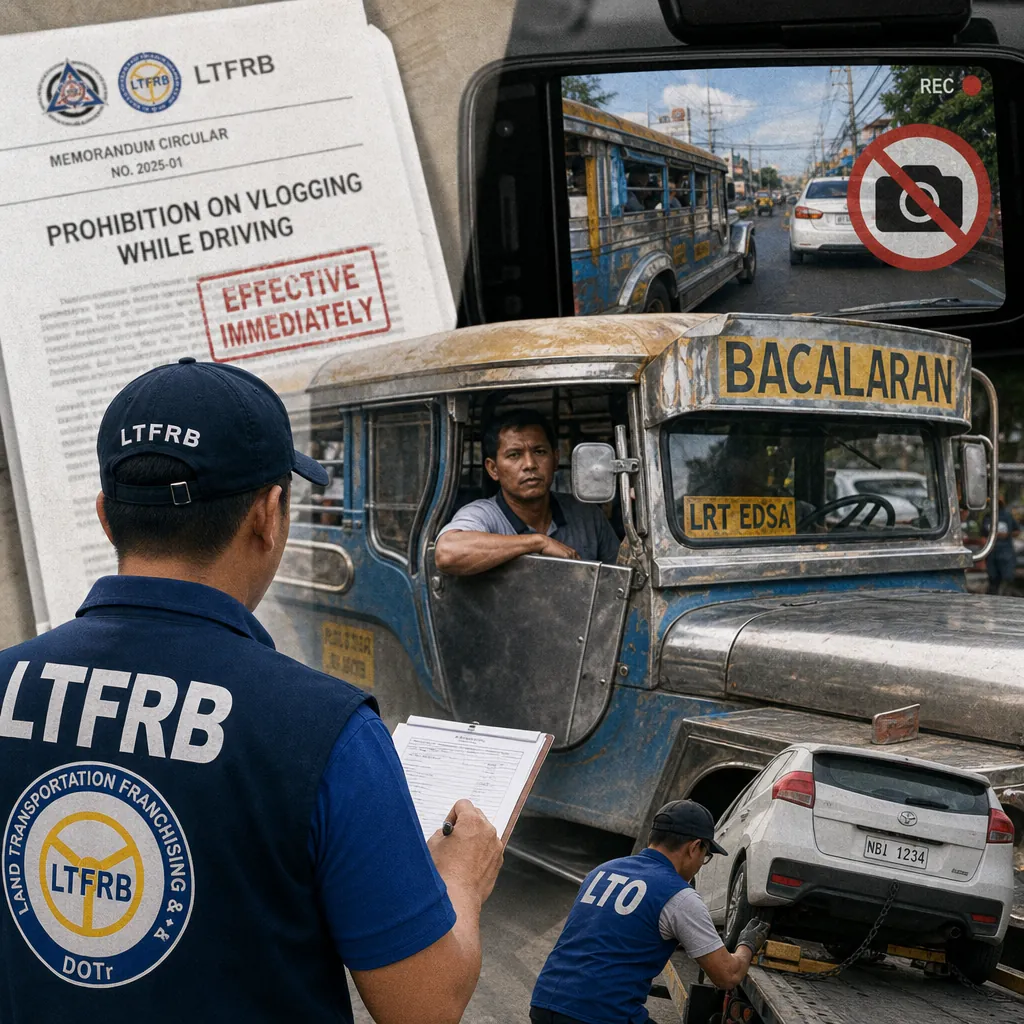
The conversation around public transport safety in the Philippines erupted over the July 3-4 weekend, driven by viral dashcam and mobile phone footage of reckless jeepney driving. On Friday, July 3, the Land Transportation Office (LTO) issued a show cause order against the driver and operator of a viral jeepney that was caught on video speeding and swerving while passengers hung from the rear. The same day, the Land Transportation Franchising and Regulatory Board (LTFRB) ordered a 30-day preventive suspension of the specific jeepney after a separate dashcam video showed a passenger being thrown out of the vehicle due to reckless driving. By Saturday, July 4, the LTO confirmed the jeepney had been impounded and the driver's license placed under a 90-day preventive suspension, with the agency also directing the operator to explain why they should not face charges for employing a reckless driver. The regulatory crackdown broadened significantly that same day when the LTFRB announced it was finalizing a memorandum circular that would impose a ₱5,000 penalty on PUV drivers caught vlogging or creating social media content while driving, explicitly citing the Anti-Distracted Driving Act. Meanwhile, a parallel thread of consumer frustration emerged on Reddit, where a user posted about being forced to sign a waiver at a dealership that nullified the mandated 11-day registration period for a new motorcycle, asking whether such a waiver was valid.
Key themes
- Swift enforcement against reckless PUV drivers: The LTO and LTFRB acted within 48 hours of viral videos surfacing, issuing show cause orders, preventive suspensions, and impounding the vehicle. The LTO imposed a 90-day preventive suspension on the driver's license, while the LTFRB ordered a 30-day suspension of the jeepney's franchise.
- New anti-vlogging regulation for PUV drivers: The LTFRB announced a memorandum circular banning vlogging while driving, with a ₱5,000 penalty under the Anti-Distracted Driving Act. The agency explicitly linked the move to the rise of vloggers and content creators producing content while driving PUVs.
- Consumer frustration with dealer registration delays: A Reddit post detailed a dealership requiring a waiver that nullified the LTO's 11-day registration period for new motorcycles. The post sparked discussion about the legality of such waivers and broader consumer protection concerns.
- Citizen reporting as a catalyst for enforcement: The LTFRB thanked netizens who posted dashcam footage, indicating that social media evidence will continue to trigger swift regulatory action. This creates a feedback loop where viral videos lead to enforcement, encouraging more citizen reporting.
- Carnapping and vehicle theft remain concerns: The Philippine National Police–Highway Patrol Group (PNP-HPG) and Quezon City Police Department (QCPD) reported recovery of four motor vehicles and arrest of a suspect with a prior carnapping case, keeping security issues in the public eye.
- Public demand for actionable guidance: A GMA News Feed video explaining how to report dangerous PUV drivers received strong engagement, indicating public appetite for clear reporting channels.
- Visual content as evidence and risk: Dashcam and smartphone videos continue to drive enforcement, but the new anti-vlogging memorandum creates tension between citizen journalism and distracted driving regulations.
How the narratives stack
Dominant: The regulatory crackdown on reckless PUV driving, driven by viral dashcam videos, dominated the conversation across news media and social platforms. The LTO and LTFRB's coordinated actions—show cause orders, license suspensions, vehicle impoundment, and the new anti-vlogging memorandum—generated significant coverage and engagement. Within the captured set, this narrative accounted for the majority of news articles and social media posts, with the LTFRB's press release receiving over 100 reactions and 105 shares on Facebook. The story was amplified by major outlets including Inquirer Online, Philstar Online, and ABS-CBN News.
Counter-narrative: A distinct but less prominent thread emerged on Reddit, where a consumer questioned the legality of a dealership waiver that nullified the LTO's 11-day registration period for new motorcycles. This narrative challenges the perception that regulatory compliance is straightforward, highlighting systemic issues in dealer practices that could erode consumer trust. While the post had only 1 upvote and 7 comments, it represents a niche but deeply felt grievance among cash buyers.
Emerging: The anti-vlogging regulation is an emerging policy response that could reshape the conversation around distracted driving. The LTFRB's memorandum circular, once finalized, will impose a ₱5,000 penalty on PUV drivers caught vlogging while driving. This development is likely to generate debate about the boundaries between citizen journalism and distracted driving, especially as dashcam footage has been instrumental in prompting enforcement actions.
Suppressed: The broader issue of systemic road safety infrastructure and enforcement capacity remains under-covered. While individual incidents trigger swift responses, there is little discussion of long-term solutions such as improved driver training, vehicle maintenance standards, or traffic law enforcement resources. The conversation focuses on reactive measures rather than preventive reforms.
Platform insights
- Facebook: This platform dominated the conversation with multiple institutional press releases and news outlet posts accumulating significant engagement. The LTFRB's anti-vlogging announcement received 101 likes, 105 shares, and 28 comments, while ABS-CBN News' report of a car falling into a creek in Quezon City garnered 3,994 likes, 377 shares, and 536 comments. The PNP-HPG's anti-carnapping recovery post received 33 likes and 11 comments, while a concerned citizen's video of "patok" jeepneys in Marikina received 54 likes and 18 comments. Facebook served as the primary channel for official announcements and news distribution.
- Twitter: The primary Twitter posts from news outlets had minimal engagement (115 and 98 views respectively with zero likes), suggesting the platform served more as a news broadcast channel than a discussion hub for this particular weekend. However, Twitter remains important for real-time updates and official statements from agencies like LTFRB and LTO.
- Reddit: The lone Reddit post about dealership waiver issues generated the only substantive consumer-to-consumer discussion thread, with 7 commenters sharing experiences about registration delays and the questionable legality of dealership waivers. This platform provides a space for detailed consumer grievances that may not surface on other social media.
Key voices and communities
- Regulatory and enforcement agencies: The LTO, LTFRB, and PNP-HPG are the most authoritative voices, issuing official statements and press releases that dominate the narrative. Their messaging emphasizes public safety and swift punitive actions, generating broad public acknowledgment.
- Mainstream news and broadcaster pages: ABS-CBN News, GMA News, DZRH, DWIZ, Bombo Radyo, and the Philippine Daily Inquirer serve as primary amplifiers, converting official actions into shareable content. Their posts consistently achieve high view counts and engagement, shaping public perception of road safety and enforcement credibility.
- Concerned citizens and affected vehicle owners: A diffuse but vocal group of individual posters on Facebook and Reddit drives real-world accountability through citizen reporting and personal grievance sharing. The Reddit user questioning a dealership waiver and the Facebook user reporting a "patok" jeepney in Marikina exemplify this group's role in surfacing issues that may otherwise go unnoticed.
- Carnapping and public safety watchdogs: Law enforcement units (QCPD, PNP-HPG) and specialized citizen-reporting pages function as real-time monitors of vehicle theft and fraud. Their posts receive moderate but targeted engagement, highlighting vulnerabilities in vehicle security and ownership documentation.
Narrative streams
Regulatory crackdown on reckless PUV driving
The weekend's dominant narrative stream began with viral dashcam videos showing reckless jeepney driving, including passengers hanging from the rear and a passenger being thrown out of a vehicle. Within 48 hours, the LTO and LTFRB issued coordinated enforcement actions: the LTO imposed a 90-day preventive suspension on the driver's license and impounded the vehicle, while the LTFRB ordered a 30-day preventive suspension of the jeepney's franchise and initiated show cause proceedings against the operator. The LTFRB explicitly thanked the netizen who posted the dashcam video, encouraging further citizen reporting. This stream generated significant coverage across news media, with Inquirer Online, Philstar Online, and other outlets reporting on the actions. The coverage value of these articles within the captured set totaled over ₱560,000 in estimated advertising-equivalent value, reflecting the story's prominence in the news cycle. For the automotive sector, this stream signals that traffic enforcement agencies are actively seeking high-visibility enforcement actions, and social media evidence will continue to trigger swift regulatory responses. The LTO and LTFRB's coordinated messaging reinforces a law-and-order narrative that aligns with President Ferdinand Marcos Jr.'s directive on road safety.
Anti-vlogging regulation for PUV drivers
On July 4, the LTFRB announced it was finalizing a memorandum circular that would impose a ₱5,000 penalty on PUV drivers caught vlogging or creating social media content while driving, citing the Anti-Distracted Driving Act (Republic Act No. 10913). The LTFRB Chair Vigor Mendoza stated that vlogging constitutes distracted driving and may endanger passengers and other road users, adding that social media engagements including browsing, scrolling, liking, commenting, or interacting with social media applications are prohibited. The announcement was covered by multiple outlets, including Inquirer Online and Philstar Online, with the LTFRB's own Facebook post receiving 101 likes and 105 shares. The 39 "haha" reactions on the post suggested public skepticism about the enforcement feasibility of a ₱5,000 fine. This stream is significant for the automotive industry as it directly impacts PUV drivers and operators, who may need to adjust their behavior or face penalties. It also creates a tension between citizen journalism (dashcam footage) and distracted driving regulations, as passengers may record for safety while drivers who produce content face penalties. The memorandum circular is expected to be published within 7-10 days, which will likely trigger further debate and media coverage.
Consumer frustration with dealer registration delays
A distinct narrative stream emerged on Reddit on July 4, where a user posted about being forced to sign a waiver at a motorcycle dealership that nullified the LTO's mandated 11-day registration period for new vehicles. The user stated that the dealership verbally told them it would take 1-2 months for the official receipt and certificate of registration (OR/CR) release, while simultaneously displaying signs indicating an 11-day processing time. The post received 1 upvote and 7 comments, suggesting this is a niche but deeply felt issue among consumers who purchase vehicles in cash yet face bureaucratic delays. This stream exposes a growing consumer grievance that could affect brand trust for motorcycle and vehicle dealers, particularly for cash buyers who expect compliance with LTO's 11-day registration mandate. The juxtaposition of "11 days lang ang new registration" signs prominently displayed alongside verbal assurances of 1-2 month delays creates a perception of systematic deception that, if amplified across social platforms, could trigger regulatory scrutiny or consumer protection complaints. For automotive manufacturers and dealer networks, this stream highlights the reputational risk of dealer practices that circumvent regulatory requirements.
Carnapping and vehicle theft concerns
Parallel to the PUV safety narrative, law enforcement agencies reported successful anti-carnapping operations. The PNP-HPG recovered four motor vehicles on July 4, while the QCPD arrested a suspect with a prior carnapping case from November 2025. These posts received moderate engagement (33 likes and 11 comments for the PNP-HPG post, 102 likes and 4 comments for the QCPD post), indicating public interest in vehicle security. For automotive brands and dealers, carnapping stories highlight vulnerabilities in vehicle security and ownership documentation. Positive enforcement narratives can be leveraged in consumer trust campaigns, but they also underscore the need for robust anti-theft measures and clear ownership documentation processes.
Conversation trajectory
Over the next 2-4 weeks, the conversation is expected to evolve along several tracks:
- Escalation of regulatory crackdowns: The LTO and LTFRB's coordinated response to viral incidents signals a sustained enforcement campaign likely to intensify. The formal publication and implementation of the LTFRB's memorandum circular on vlogging (expected within 7-10 days) will likely trigger a new wave of media coverage and public debate. The July 14 hearing on the viral jeepney operator's franchise revocation will set a precedent for franchise enforcement and could drive a 3-4x increase in mentions of PUV safety hashtags.
- Shift from individual incidents to systemic policy questions: Public discourse is already moving beyond specific viral videos toward broader calls for accountability, with posts from concerned citizens and news outlets asking how to report dangerous PUV drivers and reporting on colorum tricycles operating without proper registration. Within the next two weeks, conversations will likely pivot from reactive outrage to demands for systemic reforms, including better enforcement of the Anti-Distracted Driving Act, stricter franchise revocation protocols, and enhanced passenger reporting mechanisms.
- Rising public frustration with consumer protection gaps: The Reddit post about dealership registration waivers is a leading indicator of growing consumer anxiety about documentation security and ownership protection. Expect this conversation to peak in the next 5-7 days, especially as affected buyers seek legal remedies through LTO and Department of Trade and Industry (DTI) channels. This trend is particularly relevant for banking and financing clients whose auto loan portfolios depend on trust in dealer and registration processes.
- Visual content as both evidence and risk: Dashcam and smartphone videos continue to drive enforcement actions, but the new anti-vlogging memorandum creates a tension: passengers may record for safety, but drivers who produce content face penalties. This dual-use dynamic will likely generate debate on social media about the boundaries between citizen journalism and distracted driving, potentially within the next week.
Key trigger events to monitor: the formal publication of the LTFRB's memorandum circular on vlogging (7-10 days), the July 14 hearing on the jeepney operator's franchise revocation, and the potential release of LTO's investigation results from a third reckless driving incident in Camarines Sur. Each event will amplify media coverage and public debate.
Response guidance
For communicators in the automotive sector, the current conversation presents both opportunities and risks:
- Reinforce the "reporting works" narrative: Amplify the swift enforcement actions taken by LTO and LTFRB across all platforms. This converts public anger into a sense of efficacy and encourages continued citizen monitoring. Use before-and-after visual formats (e.g., 15-second Reels showing the dashcam clip followed by the impound footage) to demonstrate regulatory responsiveness.
- Address consumer protection concerns proactively: Publish a clear, easy-to-find guide on OR/CR release rights for new vehicle buyers, directly addressing the Reddit concern. This is a practical, low-effort piece of content that can reduce future complaints and position the brand as consumer-friendly. Reference the LTO's 11-day processing standard and provide information on how to file complaints with LTO's Customer Care division.
- Time the release of safety-related content: Align safety messaging with the peak engagement window of viral incidents. The LTFRB's anti-vlogging memorandum circular release should be timed to coincide with ongoing public attention on PUV safety, framing the rulemaking as a direct, proactive response to an identified trend.
- Leverage citizen reporting trends: Partner with government agencies to promote a "Report & Ride Safe" campaign that highlights how mobile connectivity enables citizens to document and report reckless driving. This aligns network reliability messaging with public safety, and the QCPD's swift arrest based on a victim's call can serve as a case study in mobile-enabled policing.
- Navigate sensitive topics carefully: Avoid language that blames operators alone for reckless driving; instead, frame the message as shared responsibility between drivers, operators, and regulators. When discussing incidents involving injuries or fatalities, focus on enforcement actions and safety reminders rather than graphic descriptions to avoid amplifying public fear.
See the full picture behind today's signals.
This report draws from Media Meter's MediaWatch, our real-time monitoring engine tracking 2,470+ Philippine sources across print, broadcast, digital, and social. Explore how the platform turns raw coverage into decision-grade intelligence, then see how it's configured for teams like yours — whether you're in PR agencies, corporate comms, government, or marketing.
Want more? Browse our Report Library for sector and crisis intelligence, or request a demo and we'll have your brand set up before the call.
Want this kind of intelligence on your brand?
This brief is built on the same MediaWatch methodology that runs continuously across every brand we monitor. See your competitive landscape, Impact Score, and narrative trajectory in a 30-minute demo.