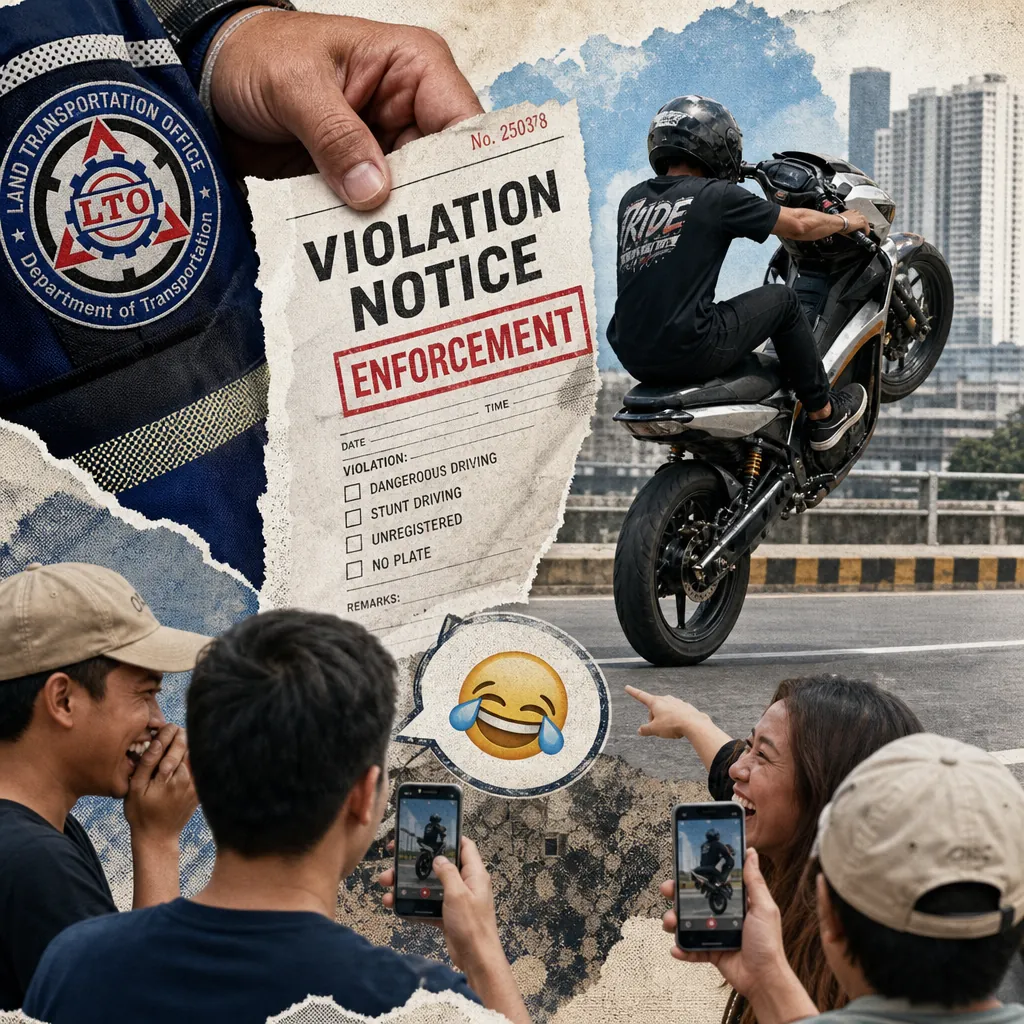
LTFRB and LTO intensify crackdown on reckless driving with bus suspensions and license revocations
A surge in viral videos of reckless driving has triggered swift enforcement actions by Philippine transport regulators, including bus suspensions and license revocations, while public sentiment shifts from outrage to skepticism about consistency.
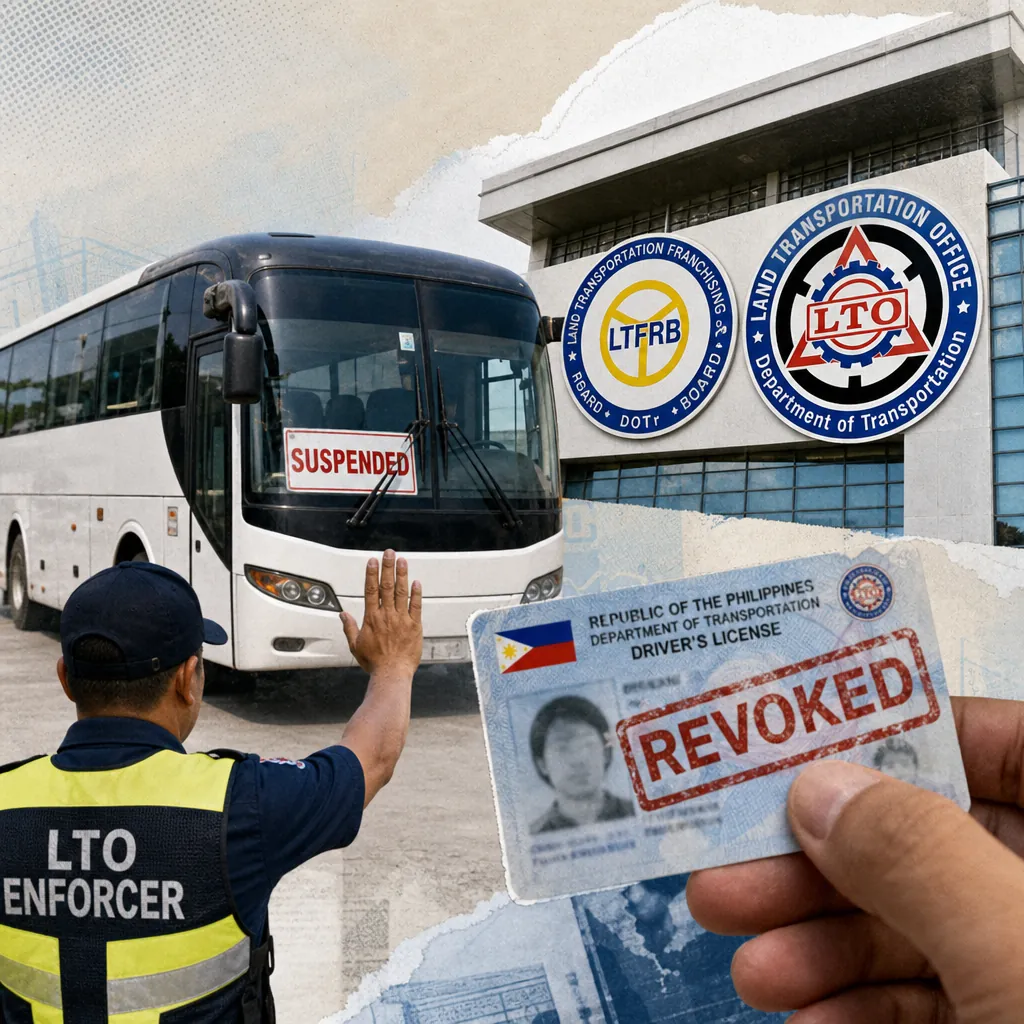
The week of June 22, 2026, saw a surge in social media conversation around road safety and regulatory enforcement in the Philippines, driven by a series of viral videos and subsequent government actions. The narrative began on Monday, June 22, when a video of a bus performing an illegal counterflow overtake in Quezon City circulated widely, prompting immediate netizen tagging of the Land Transportation Franchising and Regulatory Board (LTFRB). That same day, the Land Transportation Office (LTO) issued a show cause order against a Ford Ranger driver caught on video assaulting a cyclist, placing the vehicle under alarm status and suspending the driver's license for 90 days. By Tuesday, June 23, the LTFRB had suspended eight buses from Pangasinan Five Star Bus, Inc. following a fatal crash in Isabela that killed a pedestrian, escalating the conversation from isolated incidents to systemic safety concerns. The narrative quickly evolved into a broader public discourse on accountability, with netizens applauding the swift actions while also questioning the consistency of enforcement across all road users. Further details emerged on the same day: the LTFRB imposed a 30-day preventive suspension on the eight units after the June 11 accident in Santiago City, Isabela, where the driver lost control, hitting a pedestrian and a pickup vehicle. Meanwhile, a separate viral counterflow video featuring a provincial bus prompted AutoIndustriya to publish a story noting the risk of permit revocation for the bus company, generating significant public reaction.
Conversation snapshot. The counterflow bus video gained over 128 likes and 72 shares on the LTFRB's Facebook page, with netizens actively tagging the agency. The LTO's response to the cyclist assault video on a Ford Ranger also went viral, with the agency's 90-day preventive suspension drawing 33 reactions and 1 share on Facebook. By June 23, the narrative had shifted to the LTFRB's suspension of eight buses from Pangasinan Five Star Bus, Inc., with PTVPH's post accumulating 15 likes and 6 comments, many expressing relief that the agency was acting on fatal crashes. Also on June 23, the LTO announced suspension of drivers and vehicle owners involved in multiple viral videos including counterflow driving, road rage, and illegal racing, reinforcing the message that no violator would escape public scrutiny. Meanwhile, an AutoIndustriya Facebook post asking "Ever had an experience on the road when a counterflowing provincial bus forced you to the side of the road?" garnered 378 likes, 36 shares, and 197 "haha" reacts, illustrating public frustration mingled with dark humor. The public's willingness to report via social media was explicitly commended by LTFRB Chairman Vigor Mendoza, reinforcing a new norm of digital citizen enforcement.
Key themes
- Viral incidents triggering rapid enforcement actions – On June 22, the counterflow bus video gained over 128 likes and 72 shares on the LTFRB's Facebook page, with netizens actively tagging the agency. The same day, the LTO's response to the cyclist assault video on a Ford Ranger also went viral, with the agency's 90-day preventive suspension drawing 33 reactions and 1 share on Facebook. By June 23, the narrative had shifted to the LTFRB's suspension of eight buses from Pangasinan Five Star Bus, Inc., with PTVPH's post accumulating 15 likes and 6 comments, many expressing relief that the agency was acting on fatal crashes. Also on June 23, the LTO announced suspension of drivers and vehicle owners involved in multiple viral videos including counterflow driving, road rage, and illegal racing, reinforcing the message that no violator would escape public scrutiny. Meanwhile, an AutoIndustriya Facebook post asking "Ever had an experience on the road when a counterflowing provincial bus forced you to the side of the road?" garnered 378 likes, 36 shares, and 197 "haha" reacts, illustrating public frustration mingled with dark humor. The public's willingness to report via social media was explicitly commended by LTFRB Chairman Vigor Mendoza, reinforcing a new norm of digital citizen enforcement.
- Public sentiment shifts from outrage to skepticism – Early reactions on June 22 were largely supportive, with users like @dadasweetie280 posting a comprehensive YouTube video explaining traffic rules and penalties, which garnered 639 likes and 27,109 views. However, by June 23, comments on the Isabela crash post on LTFRB's Facebook showed a mix of sadness (4 reacts) and anger (0 reacts), but also 57 "haha" reacts on the counterflow post, indicating a degree of public fatigue or cynicism about repeat offenses. The AutoIndustriya post on June 23 saw 197 "haha" reacts, suggesting that many Filipinos find the situation absurd rather than alarming. A commenter on the LTO's Ford Ranger post noted, "Dapat ganyan lagi ang aksyon, hindi lang kapag viral," reflecting a recurring demand for sustained, non-viral enforcement.
- Institutional communication and program rollouts – Amid the enforcement blitz, LTFRB Region VII held a consultation on June 22 for the Tabang PangByahe program, a service contracting initiative aiming to improve public transport in Cebu. This post received only 9 likes and 0 comments, showing that planned, positive initiatives struggle for attention against viral controversy. Similarly, the LTFRB-NCR's Monday inspection of school transport vehicles at St. Mary's College garnered just 2 likes. On June 23, the LTFRB announced a partnership with Maya for the digital distribution of fuel subsidy to public utility vehicle (PUV) drivers and operators, aiming to speed up assistance, but the tweet attracted only 393 views and no engagement, continuing the pattern of positive news being overlooked. Separately, the Transportation Management Authority (TMA) brought road safety training to transport cooperatives, a proactive move that garnered minimal discussion. The contrast between the high engagement on punitive actions and low engagement on proactive programs suggests that the public's emotional trigger is accountability, not prevention.
- Multi-agency coordination and legal process – The LTO's June 22 actions also included suspending drivers for illegal racing and road rage, as reported by CDNDigital on Twitter with 245 views. A Facebook post by @brigadanewsfmmanila detailed the LTO's show cause order (SCO) against a driver who gave a "dirty finger" in another road rage incident, gaining 33 likes and 6 comments. On June 23, a new controversy emerged in Cebu when LTO-7 was accused of improperly confiscating driver's licenses from modern jeep operators; the post by Brigada News Cebu received 100 likes and 22 shares, indicating public concern over enforcement fairness. These posts built a narrative of a unified, multi-agency response—LTO handling private vehicles, LTFRB handling PUVs—which reinforced the government's "Bagong Pilipinas" messaging, though the Cebu case added a layer of scrutiny on the LTO's own procedures.
- Misinformation and confusion on penalties – The comprehensive YouTube video by @dadasweetie280 on June 22 inadvertently sparked confusion, as it listed fines for "counterflow" as illegal counterflow, while the LTFRB's press release used "counter flow" as a violation. Some users in the comments questioned whether the LTFRB and LTO were applying the same penalties. This technical inconsistency did not derail the conversation but introduced a minor thread about the need for clearer public education materials. No new misinformation surfaced on June 23, but the high "haha" reaction count on the AutoIndustriya post suggests that some netizens remain skeptical about the consistency of enforcement language.
How the narratives stack
Dominant narrative – The dominant story is that Philippine transport regulators are aggressively cracking down on reckless driving, using viral videos as evidence to issue show cause orders, suspend licenses, and ground buses. The LTFRB and LTO are portrayed as responsive and decisive, with Chairman Mendoza explicitly thanking netizens for their role in reporting violations. This narrative is reinforced by the high engagement on enforcement posts and the public's demand for accountability.
Counter-narrative – A counter-narrative questions the consistency and fairness of enforcement. The LTO-7 license confiscation controversy in Cebu, where drivers' licenses were allegedly wrongly taken from modern jeep operators, drew 100 likes and 22 shares, signaling that enforcement overreach can generate pushback. Comments like "Dapat ganyan lagi ang aksyon, hindi lang kapag viral" reflect a demand for sustained, non-viral enforcement, implying that current actions are reactive rather than systemic.
Emerging narrative – An emerging narrative centers on the tension between punitive enforcement and proactive programs. Positive initiatives like the Tabang PangByahe consultation, the Maya fuel subsidy partnership, and TMA road safety training receive minimal engagement compared to enforcement actions. This suggests that the public is more emotionally invested in accountability than in prevention, but also that there is an opportunity to shift the conversation toward constructive solutions if they are tied to enforcement stories.
Suppressed narrative – The under-covered story is the role of vehicle manufacturers and dealers in road safety. The Ford Ranger road rage case placed the vehicle under alarm status, yet no statement from the manufacturer surfaced in the conversation. Automotive brands remain largely absent from the discussion, missing an opportunity to align with safety messaging and build public trust. The high engagement on the AutoIndustriya counterflow post (378 likes, 96 comments) indicates that auto-specific outlets can effectively reach car-conscious audiences, but brands are not leveraging this channel.
Platform insights
Facebook – Dominated the narrative with official press releases and news shares. The LTFRB's own page saw the highest engagement on the counterflow post (128 likes, 72 shares), while news outlets like PTVPH and CDNDigital amplified enforcement stories. The AutoIndustriya post on June 23 became the most engaged piece of the day, with 378 likes, 36 shares, and 96 comments, serving as a barometer of public sentiment around bus counterflow incidents. Facebook served as the primary venue for public commentary, with reactions like "haha" and "sad" providing a quick sentiment gauge, and the LTO-7 driver's license issue gaining traction among Cebu-based users.
Twitter – Used mainly for official cross-posting and news summaries. The LTFRB's tweet about the counterflow video had only 33 views but no engagement, suggesting that Twitter is less central for this audience than Facebook. CDNDigital's tweet on LTO suspensions had 245 views, indicating slightly higher interest among Twitter users in multi-case roundups. The fuel subsidy post with Maya on Twitter saw 393 views, the highest on the platform for the day, yet still drew zero likes or shares. Twitter remains a broadcast channel rather than a discussion hub for these topics.
YouTube – A single educational video by @dadasweetie280 accumulated 27,109 views and 639 likes, becoming the go-to resource for understanding traffic laws and penalties. This platform offered long-form context absent from social media snippets, and its high view count suggests deep public curiosity about the rules behind the enforcement actions. No new YouTube content emerged on June 23, but the earlier video continued to serve as a reference point for commenters discussing the week's enforcement news.
Key voices and communities
Regulatory enforcement agencies (LTFRB & LTO) – These official accounts from the Land Transportation Franchising and Regulatory Board and Land Transportation Office are the primary source of enforcement announcements, posting press releases directly on Facebook and Twitter. Their content generates modest yet highly targeted engagement—the viral counterflow video summons received 128 likes and 57 haha reactions, indicating public approval of swift action. Their messaging is authoritative and procedural, consistently framing actions as responses to President Marcos' road safety directives. New posts show the LTFRB issuing a 30-day preventive suspension against eight units of Pangasinan Five Star Bus after a fatal crash in Isabela, with the agency's announcement reaching 247 views on Twitter. Separately, the LTO has suspended drivers involved in viral counterflow, road rage, and illegal racing videos, signaling a shift toward digital evidence-led enforcement. Meanwhile, the LTFRB has partnered with Maya for digital distribution of fuel subsidies to transport operators, indicating a move toward modernized aid delivery. A regional LTO-7 incident—where driver's licenses were allegedly wrongly confiscated from a modern jeep operator—drew 100 likes on Brigada News Cebu, highlighting occasional friction in enforcement practice.
Mainstream news media & digital news outlets – Organizations like PTV, CDN Digital, Brigada News FM, Cebu Daily News, and now DZRH, RadyoPilipinas, Remate Tabloid, AutoIndustriya, SMNI, and The Manila Times syndicate regulatory announcements to broader audiences, often adding contextual frames. Their posts receive moderate engagement—some Twitter posts gain around 260–390 views, while Facebook posts range from 4 to 100 likes—but serve as amplifiers, reaching commuters and drivers who may not follow official government pages. They also mix Tagalog and English to cater to mass audiences. Notably, AutoIndustriya's coverage of a viral counterflow bus incident generated exceptionally high engagement—378 likes, 197 haha reactions, and 96 comments—indicating strong public appetite for news that blends enforcement updates with viral video evidence.
Engaged public / netizens (commentators & viral video posters) – This diffuse group drives conversation through user-generated content—videos of counterflowing buses, road rage incidents, and illegal racing—that then triggers official action. The highest-engagement post in the dataset remains a YouTube explainer on traffic rules (27,109 views, 639 likes), indicating strong appetite for educational content on violations and penalties. Netizens frequently tag LTFRB and LTO in viral videos, creating a feedback loop that accelerates enforcement. The 96 comments on the AutoIndustriya counterflow story further confirm that netizens actively debate such incidents and demand accountability.
Transport operators & bus companies (Pangasinan Five Star Bus, San Jose Del Monte Transport) – Although not posting in the dataset, these firms are the subjects of enforcement actions—receiving show cause orders and 30-day suspensions. New data reinforces this pattern: eight units of Pangasinan Five Star Bus Company were suspended after a fatal crash in Isabela that killed a pedestrian and injured two passengers, with the LTFRB ordering a driver drug test. Their quiet presence is indicated by the need to submit drivers' training programs and compliance proofs, revealing a defensive posture. None of the posts show counter-messaging, suggesting they lack a coordinated digital response.
Local government & regional transport offices (LTFRB Region VII, LTO-7) – This subgroup focuses on service-contracting programs like the Tabang PangByahe initiative in Cebu, promoting accessible and efficient public transport. Their posts receive very low engagement (9 likes, 1 share), indicating limited public awareness of positive initiatives compared to enforcement news. They operate in a more collaborative, consultative mode—meeting with provincial planning teams rather than issuing threats. A new post from Brigada News Cebu about LTO-7's controversial license confiscation from a modern jeep operator introduces a regional enforcement friction point that draws local attention (100 likes, 22 shares).
Narrative streams
Viral enforcement actions and public accountability
The most prominent narrative stream is the rapid escalation from viral video to administrative action. On June 22, a video of a bus performing an illegal counterflow overtake in Quezon City prompted netizens to tag the LTFRB, which issued a show cause order to San Jose Del Monte Transport Corp. the same day. The LTO also acted swiftly on a video showing a Ford Ranger driver assaulting a cyclist, placing the vehicle under alarm status and suspending the driver's license for 90 days. By June 23, the LTFRB had suspended eight buses of Pangasinan Five Star Bus, Inc. after a fatal crash in Isabela that killed a pedestrian. The LTO further announced suspensions of drivers and vehicle owners involved in multiple viral videos, including counterflow driving, road rage, and illegal racing. This stream is characterized by high engagement on Facebook, with the counterflow post receiving 128 likes and 72 shares, and the AutoIndustriya story drawing 378 likes and 96 comments. The public's role as digital enforcers is explicitly acknowledged by LTFRB Chairman Mendoza, who thanked netizens for their vigilance.
Public sentiment: from outrage to skepticism
While initial reactions to enforcement actions were largely supportive, a undercurrent of skepticism emerged by June 23. The counterflow post on LTFRB's Facebook received 57 "haha" reactions, and the AutoIndustriya story garnered 197 "haha" reacts, suggesting that many Filipinos find the situation absurd rather than alarming. Comments like "Dapat ganyan lagi ang aksyon, hindi lang kapag viral" reflect a demand for consistent, non-viral enforcement. The LTO-7 license confiscation controversy in Cebu, where drivers' licenses were allegedly wrongly taken from modern jeep operators, drew 100 likes and 22 shares, signaling that enforcement overreach can generate pushback. This stream indicates that while the public wants accountability, they are also wary of selective or heavy-handed enforcement.
Positive initiatives overshadowed by enforcement
Amid the enforcement blitz, several positive programs received minimal attention. The LTFRB Region VII's consultation on the Tabang PangByahe program, a service contracting initiative to improve public transport in Cebu, garnered only 9 likes and 0 comments. The LTFRB's partnership with Maya for digital fuel subsidy distribution attracted 393 views on Twitter but zero engagement. The TMA's road safety training for transport cooperatives also saw low discussion. This stream highlights a communication challenge: proactive, constructive programs struggle to gain traction against the emotional pull of enforcement stories. For industry stakeholders, this suggests that positive messaging must be tied to enforcement narratives to achieve visibility.
Regional enforcement friction and fairness concerns
The LTO-7 license confiscation controversy introduces a new layer of scrutiny on enforcement procedures. Brigada News Cebu's post about the incident received 100 likes and 22 shares, indicating significant local concern. This stream complicates the dominant narrative of effective enforcement by raising questions about due process and fairness. It also underscores the importance of transparent protocols for maintaining public trust, especially as enforcement actions expand to cover more vehicle types and regions.
Conversation trajectory
The conversation is likely to intensify over the next 30 days as more citizens record and submit footage of road incidents. The LTFRB's scheduled hearings on July 7 (Isabela bus crash) and July 9 (counterflow bus case) will generate fresh content cycles as outcomes are announced. The rollout of the Tabang PangByahe digital fuel subsidy distribution in Cebu and other regions, tentatively in late June to early July, will trigger discussion about modernization funding efficiency and its link to safety compliance. Additionally, any new viral road rage or PUV incident during the next 2-4 weeks could amplify scrutiny, especially if it involves fatalities, while the LTO-7 license controversy may escalate into a broader conversation about enforcement fairness if further incidents emerge.
Key trigger events that will reshape this conversation include: the scheduled LTFRB hearings on July 7 (Isabela bus crash) and July 9 (counterflow bus case), which will generate fresh content cycles as outcomes are announced. The rollout of the Tabang PangByahe digital fuel subsidy distribution in Cebu and other regions, tentatively in late June to early July, will trigger discussion about modernization funding efficiency and its link to safety compliance. Additionally, any new viral road rage or PUV incident during the next 2-4 weeks could amplify scrutiny, especially if it involves fatalities, while the LTO-7 license controversy may escalate into a broader conversation about enforcement fairness if further incidents emerge.
Response guidance
For communicators tracking this conversation, the immediate opportunity lies in bridging the gap between enforcement actions and proactive safety messaging. The high engagement on enforcement posts suggests that the public is emotionally invested in accountability, but the muted reception of positive programs indicates that constructive initiatives need to be tied to enforcement narratives to gain visibility.
Platform approaches: On Facebook, publish a dedicated road safety awareness campaign post that highlights the auto industry's commitment to safe driving, referencing recent LTFRB actions on bus accidents and viral counterflow incidents as evidence of the need for responsible vehicle operation. Use infographics summarizing key traffic rules and penalties to educate motorists. Engage in comment sections of viral enforcement posts with a non-confrontational, educational tone—acknowledge the seriousness of infractions like counterflow and road rage, and reiterate that safe road use benefits all stakeholders, including vehicle manufacturers. On Twitter, create a short thread summarizing road safety best practices for both professional drivers and private motorists, linking to official government advisories on recent enforcement actions against bus operators and individual violators. Use hashtags like #RoadSafetyPH and #DriveResponsibly to increase reach. On YouTube, produce a short explainer video on the consequences of reckless driving (license suspension, vehicle impoundment, legal liability) using recent bus accident and viral counterflow cases as teachable moments. Keep the tone informative, not accusatory.
Key messages: Road safety is a shared responsibility among drivers, regulators, and vehicle manufacturers—everyone must do their part to protect lives on Philippine roads, whether driving private cars or operating public utility vehicles. The auto industry fully supports regulatory actions that enforce traffic laws, as they help build a safer and more predictable driving environment for all road users, including the recent suspensions imposed on bus companies and individual violators. Modern vehicles come with advanced safety features, but these are complements—not substitutes—for responsible driver behavior and adherence to traffic rules. Violations like counterflow, road rage, and illegal racing erode public confidence in road safety; we urge all motorists to report such incidents through proper channels. Digital innovations in fuel subsidy distribution and road safety training programs demonstrate how technology and industry collaboration can directly improve conditions for transport operators and drivers.
Sensitive topics to navigate: Avoid blaming only private vehicle drivers or PUV operators—acknowledge that unsafe behavior exists across all vehicle types, including private cars, motorcycles, and public utility vehicles—recent bus accidents and viral counterflow videos illustrate this shared challenge. When discussing LTFRB/LTO actions, avoid language that could be interpreted as downplaying systemic issues (e.g., corruption, understaffing). Instead, focus on the positive impact of visible enforcement and encourage continued improvements, while also acknowledging positive steps like the digital fuel subsidy partnership. Tread carefully when commenting on incidents with casualties, such as the Five Star Bus accident that killed a pedestrian and injured two passengers. Always express condolences first, emphasize the need for accountability, and avoid speculative statements about fault until official investigations conclude. The LTO-7 license confiscation issue involving modern jeep operators highlights tensions between enforcement and operational realities. Frame enforcement as necessary for safety while acknowledging the need for clear and fair implementation procedures.
See the full picture behind today's signals.
This report draws from Media Meter's MediaWatch, our real-time monitoring engine tracking 2,470+ Philippine sources across print, broadcast, digital, and social. Explore how the platform turns raw coverage into decision-grade intelligence, then see how it's configured for teams like yours — whether you're in PR agencies, corporate comms, government, or marketing.
Want more? Browse our Report Library for sector and crisis intelligence, or request a demo and we'll have your brand set up before the call.
Want this kind of intelligence on your brand?
This brief is built on the same MediaWatch methodology that runs continuously across every brand we monitor. See your competitive landscape, Impact Score, and narrative trajectory in a 30-minute demo.