Viral jeepney incidents, LTO crackdowns, and consumer trust issues dominate Philippine auto conversation
A day of high engagement around reckless PUV driving, regulatory suspensions, fixer arrests, and consumer grievances over dealer practices and vehicle reliability, with implications for road safety, institutional trust, and brand reputation.
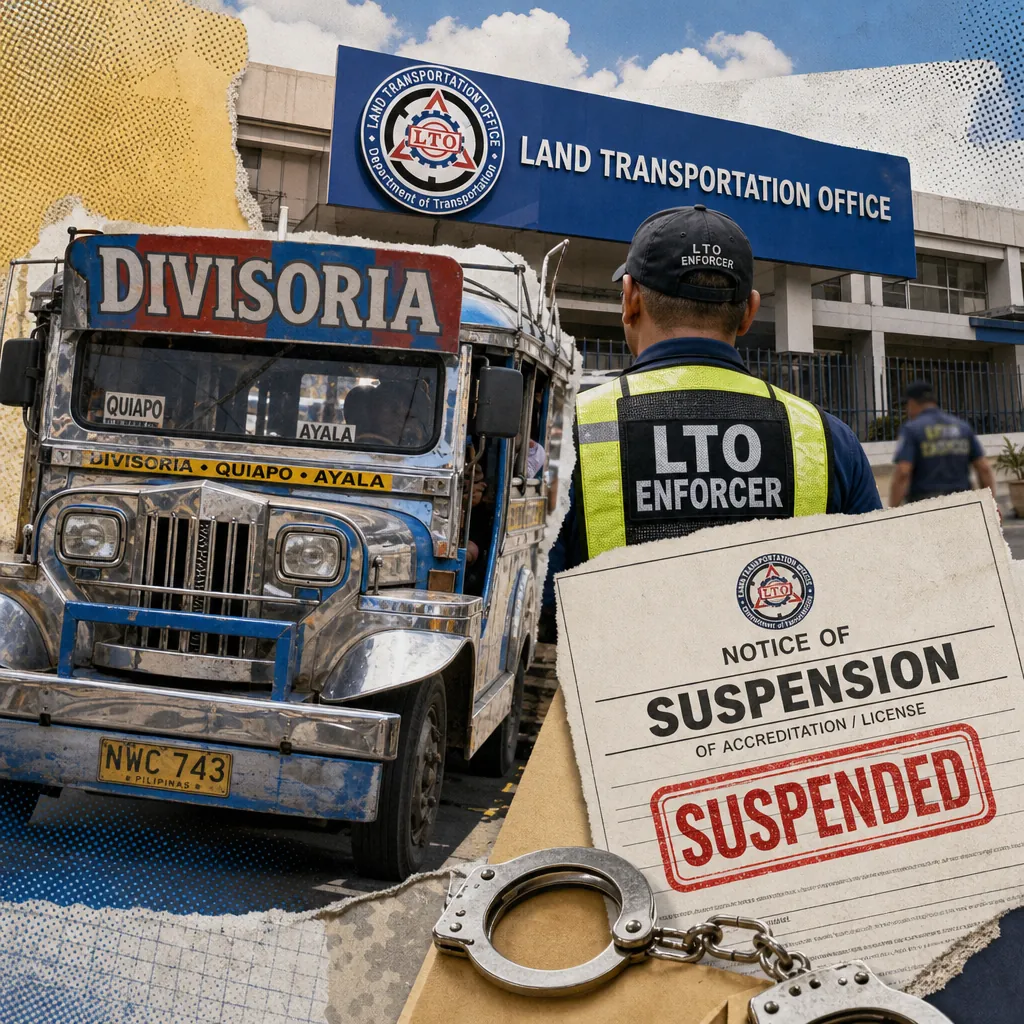
The conversation on July 3, 2026, was dominated by a viral jeepney reckless driving incident and subsequent regulatory crackdowns, with multiple agencies issuing statements throughout the day. Early morning coverage by broadcasters like dzrhnews reported that the Land Transportation Office (LTO) had issued a show cause order and suspended the driver's license for reckless driving caught on video, while also noting passengers were hanging from the vehicle. By mid-morning, the Land Transportation Franchising and Regulatory Board (LTFRB) entered the narrative with a 30-day preventive suspension of the jeepney's operations, as reported by inquirerdotnet, which immediately garnered 3,576 views and sparked public outrage. The story rapidly escalated when 24orasgma posted a follow-up video showing another "patok" jeepney swerving dangerously, accumulating 4,793 likes and 825 comments, signaling that a single incident had triggered a broader public demand for systemic action against reckless public utility vehicle (PUV) drivers.
By the afternoon, the narrative expanded beyond the initial incident as the LTO region V office released its own show cause order for a separate viral case in Camarines Sur, adding geographic depth to the story. The LTFRB's formal press release, shared by a Facebook user, detailed the specific violations and penalties, receiving 141 likes and 43 comments, many of which expressed frustration that such incidents keep recurring despite regulations. Meanwhile, a separate but related thread emerged regarding LTO fixers: the Criminal Investigation and Detection Group (CIDG) and the Anti-Red Tape Authority (ARTA) officers arrested three individuals at LTO offices in Manila and Quezon City on June 29, but the news broke on July 3 via gmanews, accumulating 745 likes and 91 comments as citizens voiced longstanding frustrations with corruption. The day's conversation thus moved from a single viral video to a multi-threaded discourse on enforcement, accountability, and institutional integrity.
Parallel to the jeepney story, a hit-and-run incident in Cebu City involving an SUV driver and a traffic enforcer continued to generate discussion. The LTO Central Visayas (LTO-7) had issued a 90-day preventive license suspension on July 2, but on July 3, major news outlets amplified the story, shifting focus to the driver's motive and the legal process ahead. A key turning point came when Cebu Daily News and CDNDigital clarified that the suspension was "not a final penalty" but a preventive measure, attempting to temper public anger while the administrative case proceeds. The incident also drew attention to the vehicle type (SUV), with some posts suggesting possible intentional harm, which could spill over into broader critiques of driver entitlement and vehicle regulation.
A third major thread involved a police officer's failure to protect a motorcycle rider during an Iglesia Ni Cristo (INC) rally along EDSA on June 30. Senator Raffy Tulfo publicly called for the officer to be identified and retrained, stating, "Gusto ko 'yung pulis na 'yon, isalang siya sa retraining, pagalitan siya, kasi mali 'yon". The Philippine National Police (PNP) held a press briefing on July 3, announcing that the officer had been relieved from his post, while also emphasizing that the three-day assembly had been "generally peaceful". The official Quezon City Police District (QCPD) statement defended the officer's actions under the principle of maximum tolerance, but the public narrative had already shifted toward demanding accountability. Within 24 hours, the PNP relief announcement was widely shared, with TV Patrol reporting "Sinibak sa puwesto ang pulis" as the dominant headline.
Beyond these high-profile incidents, consumer-focused conversations emerged on Reddit and Facebook. A detailed Reddit post described a "top-up" system for the Toyota RAV4 HEV, where third-party agents offer quicker unit releases above the regular dealer price, drawing 31 comments and raising questions about fairness and legality. Another Reddit user shared a failed LTO practical exam experience, highlighting inconsistencies between driving school training and actual testing conditions, which garnered 39 comments. Meanwhile, a post about a 2024 Honda BRV with a sudden steering problem expressed fear that the casa would dismiss the concern because the car still drives, reflecting widespread distrust of dealership after-sales service. These posts, though lower in volume, signal underlying consumer anxiety about vehicle quality, dealer transparency, and regulatory processes.
Key themes
- Swift regulatory response to viral PUV incidents — The LTO and LTFRB issued show cause orders, license suspensions, and franchise suspensions within hours of viral videos surfacing, demonstrating that digital evidence now drives enforcement actions. The LTFRB's 30-day preventive suspension and the LTO's 90-day license suspension were widely reported, with the LTFRB chairman stating, "We will not tolerate this kind of reckless behavior of the driver and will make sure that he will learn his lesson from this incident". This creates a higher reputational risk for any PUV operator or manufacturer whose vehicles are involved in visible incidents.
- Public frustration with reactive enforcement — Despite swift actions, commenters on the LTFRB press release asked, "bakit laging after viral lang kumikilos?" (why do they only act after it goes viral?), indicating deep public skepticism that enforcement is only triggered by social media exposure rather than proactive monitoring. This sentiment could undermine the government's PUV modernization program if left unaddressed.
- LTO fixer crackdown signals anti-corruption drive — The arrest of three fixers at LTO offices in Manila and Quezon City by CIDG and ARTA resonated with citizens who shared personal experiences of extortion. The gmanews post accumulated 745 likes and 91 comments, with many using terms like "buti naman at may aksyon na" (good thing there's action now) and linking corruption to the overall failure of road safety enforcement. This could reduce transaction costs for legitimate vehicle registration and licensing.
- Cebu hit-and-run raises questions about driver accountability and SUV stigma — The LTO-7's 90-day preventive suspension of the SUV driver who hit a traffic enforcer was initially reported as a final penalty, causing confusion. Clarifications from Cebu Daily News and CDNDigital emphasized it was only a preventive measure. The vehicle type (SUV) was repeatedly highlighted, and some posts suggested intentional harm, potentially fueling calls for stricter penalties or higher excise taxes on large vehicles.
- Police accountability and rider safety during protests — The viral incident of a police officer failing to protect a motorcycle rider during the INC rally triggered massive engagement, with the PNP press briefing post garnering 6,627 likes and 3,634 comments. Senator Tulfo's demand for retraining drew 4,175 likes and 1,059 comments. The PNP's swift relief of the officer partially mitigated damage, but public skepticism remains high.
- Consumer distrust in dealership practices and vehicle quality — A Reddit post about third-party agents offering Toyota RAV4 HEV units with "top-up" charges above the regular price described the practice as "parang nagiging bidding system" (like it's becoming a bidding system). Another post about a 2024 Honda BRV with a steering issue expressed fear that the casa would dismiss the concern because the car still drives. These threads signal potential reputational risk for automotive brands and their financing partners.
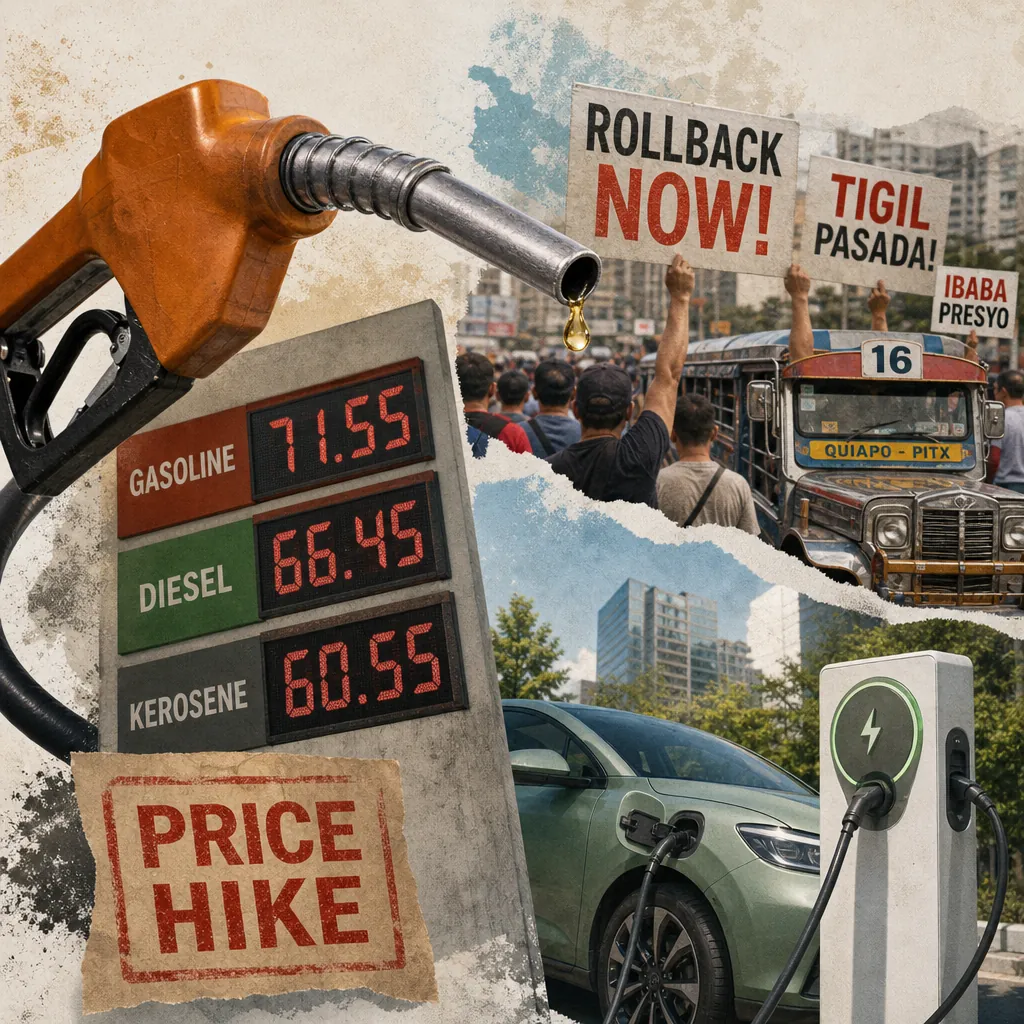
- Fuel price sensitivity and its impact on purchasing decisions — An industry source projected a diesel price hike of P1 to P3 per liter on July 7, citing renewed hostilities in the Gulf region. This reinforces that motorists remain highly sensitive to fuel costs, which may influence purchasing decisions toward more fuel-efficient or EV models, especially given ongoing excise tax discussions.
- BYD's nationwide expansion and EV accessibility — BYD Cars Philippines announced the launch of multiple new dealerships across the country in the second quarter of 2026, reflecting its commitment to making pure electric and plug-in hybrid vehicles accessible. This expansion aligns with growing consumer interest in EVs, though the conversation around EV incentives and total cost of ownership remains nuanced.
How the narratives stack
Dominant — Within the captured set, the dominant narrative is the viral jeepney incidents and the coordinated regulatory response from LTO and LTFRB. This story generated the highest engagement across platforms, with multiple posts accumulating thousands of likes, shares, and comments. The narrative moved from a single incident to a broader discourse on systemic enforcement failures, with public sentiment oscillating between support for swift penalties and frustration that action only follows viral exposure. The LTO fixer arrests and the Cebu hit-and-run also contributed to this dominant stream, reinforcing themes of accountability and institutional integrity.
Counter-narrative — A counter-narrative emerged around the police officer's handling of the motorcycle rider during the INC rally. While the dominant narrative focused on PUV driver behavior, this story shifted attention to law enforcement conduct and rider safety during public assemblies. The PNP's relief of the officer and Senator Tulfo's call for retraining created a parallel conversation about the limits of "maximum tolerance" and the need for better crowd control protocols. This narrative also intersected with broader political discourse, as the INC rally context added religious and political dimensions.
Emerging — Consumer grievances around dealership practices and vehicle quality are an emerging narrative that could gain traction. The Toyota RAV4 "top-up" thread and the Honda BRV steering issue, while currently confined to Reddit and lower engagement, signal growing consumer awareness of potential exploitation and quality concerns. If these issues are picked up by mainstream media or consumer protection agencies like the Department of Trade and Industry (DTI), they could escalate into a significant reputational challenge for automotive brands.
Suppressed — The story of BYD's nationwide expansion and the broader push for electric vehicle (EV) adoption received relatively little attention compared to the safety and enforcement narratives. While BYD's announcement of new dealerships and the Federal Land-ACEN renewable energy deal are positive developments for the industry, they were overshadowed by the day's high-emotion incidents. This suggests that positive industry news may struggle to break through when public attention is captured by viral controversies.
Platform insights
- Facebook — Dominated the conversation with high-engagement posts from major news outlets and official pages. The trajectory started with breaking news from dzrhnews and inquirerdotnet, quickly shifting to emotion-driven reactions on 24orasgma and autoindustriya posts, where the 42 "haha" reactions on the latter's post (alongside 14 angry) indicated a mix of mockery and anger toward the driver's behavior. By evening, the parkeserye page added lighthearted but pointed posts about parking violations, showing how the broader road-use conversation expanded beyond PUVs. The PNP press briefing post on the rider incident garnered 6,627 likes and 3,634 comments, making it the single highest-engagement item of the day.
- Twitter (X) — Served as a real-time news feed with lower engagement but faster updates. Cebu Daily News posted mixed fuel price adjustments (diesel up, gasoline flat) as a secondary narrative thread that briefly diverted attention, with only 131 views but indicating ongoing consumer cost sensitivity. The platform lacked the deep comment threads of Facebook but provided rapid dissemination of official statements. TV Patrol's tweet on the officer's removal got 5,931 views, and ABS-CBN News' retweet drove reach to 7,322 views.
- Reddit — Hosted niche but detailed user concerns, particularly around vehicle defects, financing, and dealer practices. The Toyota RAV4 top-up thread drew 31 comments, with users sharing similar experiences and questioning whether to report to DTI. The LTO practical exam failure post garnered 39 comments, with many expressing frustration over inconsistencies between driving school training and actual testing conditions. Another user asked about RCBC autoloan terms for EVs, questioning hidden fees like LTO registration and third-party liability (TPL) insurance—a sign that EV buyers are scrutinizing total cost of ownership amidst government incentive shifts.
Key voices and communities
- Traditional news media and official news outlets — Major national and regional news organizations such as dzrhnews, inquirerdotnet, gmanews, abscbnnews, and cebudailynews dominate the conversation with high viewership and broad reach. Their reporting sets the agenda for public discourse on automotive regulation and traffic enforcement. The most viral jeepney story alone accumulated over 3,500 views on Twitter and 4,800 reactions on Facebook. These outlets are primary channels for disseminating regulatory updates and public safety messages.
- Regulatory agencies and government-affiliated accounts — Official accounts of the LTO (e.g., LTO Bicol, PNA govph) and LTFRB generate moderate but highly authoritative content. Their statements on show cause orders, license suspensions, and franchise revocations are directly cited and reshared by major media, extending their influence beyond their relatively modest engagement numbers. The LTO Region V's show cause order post received 95 likes and 18 shares, while the official LTFRB press release on Facebook garnered over 140 reactions.
- Consumer communities and citizen watchdog accounts — Informal community pages and individual Reddit users (e.g., leheslie, AudienceCapable9398, parkeserye) drive ground-level conversation about vehicle quality, dealer practices, and everyday traffic frustrations. Their posts receive modest upvotes or likes but generate highly engaged comment sections where peers offer advice and share experiences. A single post about a "talon-casa" car scam arrest reached 133 views, while parking violation reports attracted dozens of amused reactions.
- Automotive enthusiast media and industry advocacy pages — Specialized accounts such as autoindustriya and topgearph generate content that bridges news reporting with expert analysis and new vehicle impressions. Their audience skews toward more informed consumers and industry professionals. A topgearph post about the new Toyota Land Cruiser FJ and Hilux received 31 likes, while autoindustriya's LTFRB story garnered 75 reactions and 44 comments, indicating engaged readership that values technical detail.
- Lawmakers and public figures — Senator Raffy Tulfo emerged as a key voice in the police-rider incident, with his call for retraining drawing nearly 4,200 likes and 1,000 comments. His statements resonate strongly with both riders and the general public, and could lead to legislative proposals affecting traffic enforcement and vehicle registration.
Narrative streams
Viral jeepney incidents and regulatory crackdown
The day's most prominent narrative stream began with a viral video of a jeepney passenger being thrown from the vehicle, triggering an immediate and coordinated response from both LTO and LTFRB. The LTO issued a show cause order and suspended the driver's license for reckless driving, while the LTFRB imposed a 30-day preventive suspension of the jeepney's operations. The LTFRB chairman's statement—"We will not tolerate this kind of reckless behavior of the driver and will make sure that he will learn his lesson from this incident"—was widely quoted and received positive engagement, reinforcing a tough-on-safety stance. However, the narrative quickly expanded as a second video of another "patok" jeepney swerving dangerously surfaced, accumulating 4,793 likes and 825 comments on 24orasgma's post. This suggested that a single incident had triggered a broader public demand for systemic action against reckless PUV drivers.
The conversation on this stream was primarily driven by Facebook, where emotional reactions dominated. The autoindustriya post on the LTFRB suspension featured 14 angry reactions and 32 haha reactions, showing polarized audience response—some supporting strict penalties and others mocking the situation. Commenters on the LTFRB press release expressed frustration that such incidents keep recurring despite regulations, with one asking, "bakit laging after viral lang kumikilos?". This sentiment could undercut the government's PUV modernization program if left unaddressed, as it suggests a perception that enforcement is reactive rather than preventive.
The coverage value of this stream was substantial. The Inquirer Online article on the LTFRB suspension had an estimated advertising-equivalent value of ₱168,744, while GMA News Online's video coverage of the patok jeepney investigation was valued at ₱27,720. The combined coverage across multiple outlets indicates that this story dominated the business and news pages.
LTO fixer arrests and anti-corruption drive
Running parallel to the jeepney story, the arrest of three fixers at LTO offices in Manila and Quezon City on June 29 broke publicly on July 3 via radyopilipinas and gmanews. The CIDG-led operation, with ARTA involvement, resonated deeply with users who shared personal experiences of extortion. The gmanews post accumulated 745 likes and 91 comments, with many using terms like "buti naman at may aksyon na" and linking the corruption to the overall failure of road safety enforcement.
This stream directly supports anti-corruption messaging and reinforces the LTO's commitment to clean governance under new leadership. For stakeholders in the automotive industry, this could reduce transaction costs for legitimate vehicle registration and licensing—a positive signal for dealers and consumers alike. The GMA News Online video coverage of the fixer arrests was valued at ₱27,720, indicating moderate but significant coverage within the captured set.
Cebu hit-and-run: SUV driver and traffic enforcer
The conversation around the Cebu City hit-and-run incident unfolded rapidly over two days, beginning with initial news reports on July 2 and escalating into a nationwide discussion about driver accountability and regulatory response by July 3. The narrative was sparked by a viral CCTV clip showing an SUV striking a traffic enforcer on July 1, and the LTO-7's swift action—issuing a show cause order and a 90-day preventive license suspension on July 2—dominated early posts.
By July 3, major news outlets including Unang Hirit, DZMM Teleradyo, and TV Patrol had amplified the story, shifting the focus from the immediate penalty to the driver's motive and the legal process ahead. A key turning point came when Cebu Daily News and CDNDigital clarified that the suspension was "not a final penalty" but a preventive measure, attempting to temper public anger while the administrative case proceeds. The Manila Times Online article on the LTO-7 suspension had an estimated advertising-equivalent value of ₱427,840, making it one of the highest-value items in the captured set.
The vehicle type (SUV) was repeatedly highlighted in headlines and posts, with DZMM Teleradyo's suggestion of intentional harm amplifying calls for stricter penalties. This could spill over into public demands for higher excise taxes or tougher licensing requirements for large vehicles, posing a reputational risk for SUV manufacturers and dealers.
Police-rider incident during INC rally
The viral video of a police officer failing to protect a motorcycle rider during the INC rally along EDSA on June 30 triggered massive engagement on July 3. Senator Raffy Tulfo publicly called for the officer to be identified and retrained, stating, "Gusto ko 'yung pulis na 'yon, isalang siya sa retraining, pagalitan siya, kasi mali 'yon". The PNP held a press briefing on July 3, led by Police Colonel Allen Rae F. Co, where they acknowledged the incident and announced that the officer had been relieved from his post, while also emphasizing that the three-day assembly had been "generally peaceful".
The QCPD official statement released on July 2 defended the officer's actions under the principle of maximum tolerance, citing Batas Pambansa Blg. 880 (the Public Assembly Act), which allows law enforcement to use discretion in de-escalating situations. However, the public narrative had already shifted toward demanding accountability. Within 24 hours, the PNP relief announcement was widely shared, with TV Patrol reporting "Sinibak sa puwesto ang pulis" as the dominant headline.
Engagement levels were extreme: the PNP press briefing post garnered 6,627 likes and 3,634 comments, while Tulfo's rebuke via Interaksyon drew 4,175 likes and 1,059 comments. The Daily Tribune Online article on the QCPD investigation was valued at ₱107,640, indicating significant coverage within the captured set.
This stream directly threatens the "order and safety" narrative that government and law enforcement clients rely on for public trust. The swift relief of the officer served as a model crisis response that partially mitigated damage, but the high volume of critical comments indicates that public skepticism remains high.
Consumer grievances: dealer practices and vehicle quality
A quieter but significant stream involved individual vehicle issues and dealer practices. On Reddit, user leheslie posted about a 2024 Honda BRV with a sudden steering problem, noting "Bigla gumaan manibela - ano kaya problema nito?" and expressing fear that the casa would dismiss their concern because the car still drives. This post, though low in engagement (2 upvotes, 3 comments), signals a potential emerging narrative around vehicle reliability, especially for models within warranty.
Another Reddit user, AudienceCapable9398, asked about RCBC autoloan terms for EVs, questioning hidden fees like LTO registration and TPL insurance. This indicates that EV buyers are scrutinizing total cost of ownership amidst government incentive shifts. Meanwhile, a post about the "talon-casa" modus—selling vehicles still under financing—and the NBI arrest of two suspects in Pasay City accumulated 133 views and 2 likes, indicating growing public awareness of dealer-related fraud.
The most significant consumer grievance stream was the Toyota RAV4 HEV "top-up" thread, where user ad_testificandum described third-party agents offering faster unit releases with payments above the dealer price. The user asked specifically whether to report to DTI, signaling a potential escalation from online discussion to regulatory action. This thread drew 31 comments, with many sharing similar experiences and describing the practice as "parang nagiging bidding system." For automotive brands like Toyota, this represents a clear early warning to review dealer allocation transparency and prepare a public-facing response.
Fuel price sensitivity and EV adoption
An industry source projected a diesel price hike of P1 to P3 per liter on July 7, citing renewed hostilities in the Gulf region that have shaken the fragile US-Iran ceasefire. Gasoline prices, meanwhile, could either increase or decrease by up to P1 per liter. The disruptions have been keenly felt in the Philippines, which relies on the region for about 98 percent of its crude oil requirements. Energy Secretary Sharon Garin renewed her call for energy conservation and the use of alternative fuels.
This stream reinforces that motorists remain highly sensitive to fuel costs, which may influence purchasing decisions toward more fuel-efficient or EV models. The Philstar Online article on the diesel price hike had an estimated advertising-equivalent value of ₱191,109, indicating significant coverage. The BYD Cars Philippines announcement of nationwide expansion, with multiple new dealerships launched in the second quarter of 2026, aligns with this trend. BYD's managing director Bob Palanca stated, "Our focus goes far beyond simply offering great new energy vehicles. We are dedicated to making electric ownership attainable through our expansive dealership network nationwide." The 2nd Opinion article on BYD's expansion was valued at ₱174,300.
Infrastructure and road closures
The Department of Transportation (DOTr) announced that the southbound lane of East Service Road toward Bicutan, from Arca Boulevard to Narra Street in Parañaque City, will be temporarily closed starting July 18, 2026, for construction works on the North-South Commuter Railway Extension (NSCR Extension) project. The DOTr said that the temporary traffic rerouting plan will be implemented for the construction of the FTI Station East diaphragm wall for the railway project. The Inquirer Online article on this closure had an estimated advertising-equivalent value of ₱168,744.
Conversation trajectory
- Escalation of public vigilance and citizen-driven enforcement — The viral dashcam video of a jeepney passenger being thrown from the vehicle has triggered an unusually coordinated response from both regulators and the public. Multiple news outlets and social media accounts amplified the incident, and the LTFRB and LTO issued show cause orders, suspensions, and fines within days. The conversation is shifting from isolated complaints toward systematic reporting—posts by citizen reporters (e.g., the parkeserye account) now regularly document parking violations, reckless driving, and even suspected misuse of government vehicles. This trend will accelerate over the next two to three weeks as more dashcam and smartphone footage surfaces, creating reputational risk for any client whose fleet or service vehicles are involved. For government stakeholders, this reinforces the need for proactive messaging around road safety enforcement; for banking and telecom clients, it highlights the importance of monitoring employee or contractor driving behavior.
- Deepening consumer focus on hidden costs and fraud in vehicle transactions — Posts about the "talon-casa" modus and the arrest of NBI suspects in Pasay City are gaining traction, alongside Reddit queries about auto loan terms and LTO registration fees for EVs. The conversation is evolving from general frustration to specific, actionable scrutiny of dealer practices, bank financing fine print, and government registration processes. Within the next one to two months, expect amplified discussion around "hidden charges," "lemon car" situations, and insurance claim denials—especially as fuel price increases tighten household budgets. This directly impacts auto loan portfolios (trust in financing terms) and vehicle-related service contracts.
- PUV safety and modernization debate intensifying as a political and regulatory flashpoint — The LTFRB's 30-day suspension of the jeepney operator, the LTO's 90-day license suspension, and the upcoming July 14 hearing have created a concentrated conversation around traditional jeepney viability, driver accountability, and the broader PUV modernization program. Engagement metrics on posts from major outlets and regulatory pages show high shares and emotional reactions—anger and "haha" reactions on the LTFRB press release indicate mixed public sentiment (support for punishment mixed with cynicism about enforcement consistency). This trend will not fade quickly; it will be amplified by the July 14 hearing and by any subsequent viral incidents of "patok" jeepneys. For government clients, this is a central narrative requiring coordinated messaging on modernization progress and driver discipline.
- Rider protection and police accountability becoming a dominant narrative — The viral incident involving a police officer and a motorcycle rider during the INC rally has generated massive engagement, with the original PNP press briefing receiving over 6,600 likes and 3,600 comments. This trajectory indicates that rider safety and law enforcement conduct are now deeply intertwined with broader political discourse, creating reputational risks for any brand or organization associated with motorcyclists. Within the next two weeks, expect demands for clearer protocols on rider protection during public assemblies to intensify, particularly as the PNP investigation progresses.
Key trigger events that will reshape this conversation include: the LTFRB hearing on July 14 for the jeepney operator (will determine whether penalties escalate and whether the passenger receives compensation); the next fuel price adjustment announcement (typically every Monday) which will renew cost-of-driving discussions and amplify EV incentive chatter; and any new viral road incident—especially involving a "colorum" or "patok" vehicle—which could trigger further regulatory crackdowns and public outrage cycles. The LTO fixer arrests also signal sustained anti-corruption attention that may resurface after the Bureau of Customs or NBI releases further details.
Response guidance
Platform-specific approaches:
- Facebook — Monitor high-engagement posts from major news outlets about reckless driving incidents and regulatory actions, then prepare proactive comment responses that emphasize industry commitment to safety standards and driver education programs. Avoid responding directly to emotionally charged threads; instead, engage in balanced discussions where factual clarifications about vehicle safety features or franchise compliance can be added. Leverage positive human-interest stories like the motorist who helped a patient through traffic to reinforce the responsible driver narrative. Share these as "community spotlights" on official brand pages to counterbalance the negative viral incidents.
- Twitter — Create a curated "Myth vs. Fact" thread addressing common consumer misconceptions highlighted in the data, such as the belief that LTO registration fees for EVs are always borne by buyers or that "talon-casa" modus is a widespread dealer practice. Use the brand account to link to official LTO or bank guidelines. Rapidly retweet and quote LTFRB and LTO announcements with added context on how the industry cooperates with regulators—for example, after the jeepney suspension and LTO fixer arrests. Keep replies factual and avoid defending or attacking specific operators.
- Reddit — Engage in r/CarsPH or r/Philippines threads where users discuss vehicle defects or loan terms. For the thread about a 2024 Honda BRV experiencing a "clunk" and light steering, a brand representative could acknowledge the concern, explain potential causes (e.g., loose steering rack, suspension issue) and advise visiting an authorized service center for proper diagnosis. Avoid diagnosing remotely or promising specific repairs. Address the RCBC autoloan query by providing general insight into typical EV registration fee structures and "free insurance" fine print, without naming the bank.
Key messages:
- "Road safety is a shared responsibility. We fully support regulatory actions that enforce compliance and protect passengers, and we continuously invest in driver training and vehicle safety technologies."
- "Consumer protection is paramount. We encourage buyers to always transact with accredited dealers and verify all charges—from LTO registration to insurance—to avoid hidden fees or fraudulent schemes."
- "Our dealerships and service centers are ready to assist with genuine parts, certified technicians, and transparent pricing. If you experience any vehicle issue, visit us for a proper inspection rather than relying on online advice alone."
- "We collaborate with government agencies like LTO and LTFRB to ensure our vehicles meet all standards and that our after-sales service supports long-term reliability."
Sensitive topics to navigate:
- Discussion of reckless driving incidents involving PUVs: Avoid blaming any specific driver or operator. Instead, focus on systemic improvements, driver education, and cooperation with regulators. Do not use terms like "colorum" or "patok" in brand messaging to avoid stigmatizing an entire sector.
- Consumer complaints about vehicle defects: Acknowledge the customer's concern without admitting liability. Never dismiss the issue or suggest the car is safe to drive if the customer reported a steering problem. Use language that encourages professional diagnosis.
- Arrests of LTO fixers: Avoid commenting on corruption allegations. Instead, commend the government's enforcement efforts and reiterate the importance of using official channels for vehicle registration and licensing.
Response priorities:
- Immediately monitor and prepare reactive statements for any viral incident involving a brand model—such as the Honda BRV steering complaint—by coordinating with the local distributor's customer service team to ensure a timely, consistent reply in the comment section.
- Proactively publish a short "Consumer Tips" guide on social channels covering how to verify legitimate dealers, understand loan terms, and identify modus operandi like "talon-casa" and fixers. This educates buyers and reinforces the brand's role as a trustworthy industry leader.
- Engage with positive traffic assistance stories (e.g., the Good Samaritan motorist) by sharing them with a branded tagline such as "We commend drivers who prioritize safety and compassion. #RoadHeroesPH"—this builds goodwill during a week dominated by negative news.
See the full picture behind today's signals.
This report draws from Media Meter's MediaWatch, our real-time monitoring engine tracking 2,470+ Philippine sources across print, broadcast, digital, and social. Explore how the platform turns raw coverage into decision-grade intelligence, then see how it's configured for teams like yours — whether you're in PR agencies, corporate comms, government, or marketing.
Want more? Browse our Report Library for sector and crisis intelligence, or request a demo and we'll have your brand set up before the call.
Want this kind of intelligence on your brand?
This brief is built on the same MediaWatch methodology that runs continuously across every brand we monitor. See your competitive landscape, Impact Score, and narrative trajectory in a 30-minute demo.