LTO Corruption and Road Safety Crisis Dominate Transport News
A wave of corruption arrests at the Land Transportation Office and a series of deadly road accidents have intensified public scrutiny of the Philippines' transport sector, highlighting systemic failures in enforcement and safety.
The conversation around Philippine transportation on June 19, 2026, was dominated by two interconnected crises: the arrest of nine Land Transportation Office (LTO) enforcers for extortion and a spate of deadly road accidents. The day's coverage, drawn from major news outlets, painted a picture of an agency struggling to reform itself even as its chief vows to root out corruption, and of a public bearing the human cost of systemic failures in road safety.
Conversation snapshot. The day's most prominent story was the arrest of nine LTO enforcers in Agusan del Norte, covered by the Philippine Daily Inquirer, the Manila Times, and Philstar. The Manila Times article quoting LTO chief Assistant Secretary Marcus Lacanilao vowing to file charges drew significant attention, as did an opinion piece in the same outlet titled "To LTO: Address these issues," which criticized the agency's reform efforts. The Inquirer's report on the arrests was published at 8:28 p.m., while Philstar's version appeared at 4 p.m. The Remate Online article on road accidents, published at 8:12 p.m., catalogued multiple fatalities, including a dump truck hitting a senior citizen in Quezon City and a motorcycle crash in Cebu City. The Daily Tribune reported on a body found in an abandoned SUV, later linked to a possible murder, adding a layer of crime to the transport narrative. The Manila Times also covered the Department of Transportation's (DOTr) call for ASEAN support for railway expansion, a more forward-looking story that contrasted with the day's negative headlines.
Key themes
- LTO corruption persists despite reform promises. The arrest of nine enforcers for extortion in Caraga region, following a similar complaint in November 2025, shows that corruption remains entrenched in the LTO's field operations. The agency's chief, Lacanilao, who took office in October 2025 with a seven-point reform agenda, has vowed to file administrative and criminal charges, but the repeat incidents suggest reforms have not yet reached the ground level.
- Road accidents highlight enforcement failures. A series of fatal accidents, including a dump truck killing a senior citizen in Quezon City and a motorcycle crash in Cebu City, underscore the lack of effective road safety enforcement. The Department of Health reported over 1,384 road crash injuries during the recent holiday period, indicating a broader public health crisis.
- LTO's digitalization and RFID rollout lag. The opinion piece in the Manila Times criticized the LTO's slow progress on digitalization, particularly the radio-frequency identification (RFID) system for toll roads. As of mid-2024, about 100,000 motorists still lacked RFID tags, and penalties for noncompliance were repeatedly deferred, reflecting regulatory delays.
- DOTr pushes for railway expansion. Amid the negative news, the DOTr called on ASEAN partners to support the expansion of the Philippine railway network, including the North-South Commuter Railway and Metro Manila Subway Project. This signals a long-term vision for transport infrastructure, but it remains overshadowed by immediate crises.
- Crime and transport intersect. The discovery of a body in an abandoned SUV in Nueva Ecija, and another in Tarlac, raised concerns about vehicles being used in crimes. Police are investigating links between the incidents, adding a security dimension to transport governance.
- Public trust in LTO erodes. The repeated corruption cases and accident toll are eroding public confidence in the LTO. The opinion piece explicitly questioned whether Lacanilao's reforms are sufficient, noting that "good intentions at the top are no substitute for real agency-wide reforms."
- Media scrutiny intensifies. Multiple major outlets covered the LTO arrests and accidents, indicating sustained media interest. The Manila Times ran both a news article and an opinion piece on the LTO, while Philstar and Inquirer also gave prominent coverage.
How the narratives stack
Dominant narrative — The dominant narrative is that the LTO is failing in its core mandate: to enforce traffic laws and ensure road safety. The arrest of nine enforcers for extortion is the latest evidence of systemic corruption, and the series of fatal accidents shows that enforcement is ineffective. The public is bearing the cost, and reform efforts have not yet produced results.
Counter-narrative — The counter-narrative, voiced by LTO chief Lacanilao, is that the agency is actively cleaning house. He has vowed to prosecute the arrested enforcers and has a reform agenda. The DOTr's push for railway expansion also offers a positive vision. However, this narrative is weakened by the repeat nature of the corruption and the lack of visible improvement in road safety.
Emerging narrative — An emerging narrative is the link between transport and crime. The discovery of bodies in abandoned vehicles suggests that vehicles are being used in criminal activities, and the LTO's role in vehicle registration and law enforcement is being questioned. This could expand the conversation beyond traffic violations to public safety.
Suppressed narrative — The suppressed narrative is the long-term infrastructure investment story. The DOTr's call for ASEAN support for railway projects is a significant development, but it received less attention than the corruption and accident stories. This narrative could reshape the transport sector if it gains traction, but for now, it is overshadowed by immediate crises.
Platform insights
Online news platforms dominated the conversation, with the Manila Times, Philstar, Inquirer, and Remate Online all publishing multiple articles. The Manila Times had the most comprehensive coverage, including both news and opinion pieces. The engagement on these articles is not publicly available, but the number of articles and the prominence of the outlets suggest high readership. Social media platforms like Facebook and Twitter likely amplified the stories, but no specific engagement data is available from the provided media. The absence of broadcast or radio coverage in the sample may indicate that the conversation is primarily text-based, but it could also reflect the limitations of the monitoring window.
Key voices and communities
- LTO leadership — Assistant Secretary Marcus Lacanilao is the primary voice from the agency, vowing to prosecute the arrested enforcers and defend his reform agenda. His statements are covered by the Manila Times and Philstar.
- Media outlets — The Manila Times, Philstar, Inquirer, and Remate Online are the key voices shaping the narrative. The Manila Times' opinion piece is particularly influential, offering a critical assessment of the LTO's reforms.
- Law enforcement — The Police Regional Office 13 (PRO13) and the Buenavista police are key voices in the arrest story, providing details of the operation and evidence recovered.
- Public and victims — The victims of road accidents and the complainants in the extortion case are represented indirectly through media reports. Their voices are crucial in humanizing the statistics and driving public outrage.
- DOTr officials — Transportation Secretary Giovanni Lopez is a key voice in the railway expansion narrative, calling for ASEAN support. His voice represents the government's long-term vision.
Narrative streams
LTO corruption arrests
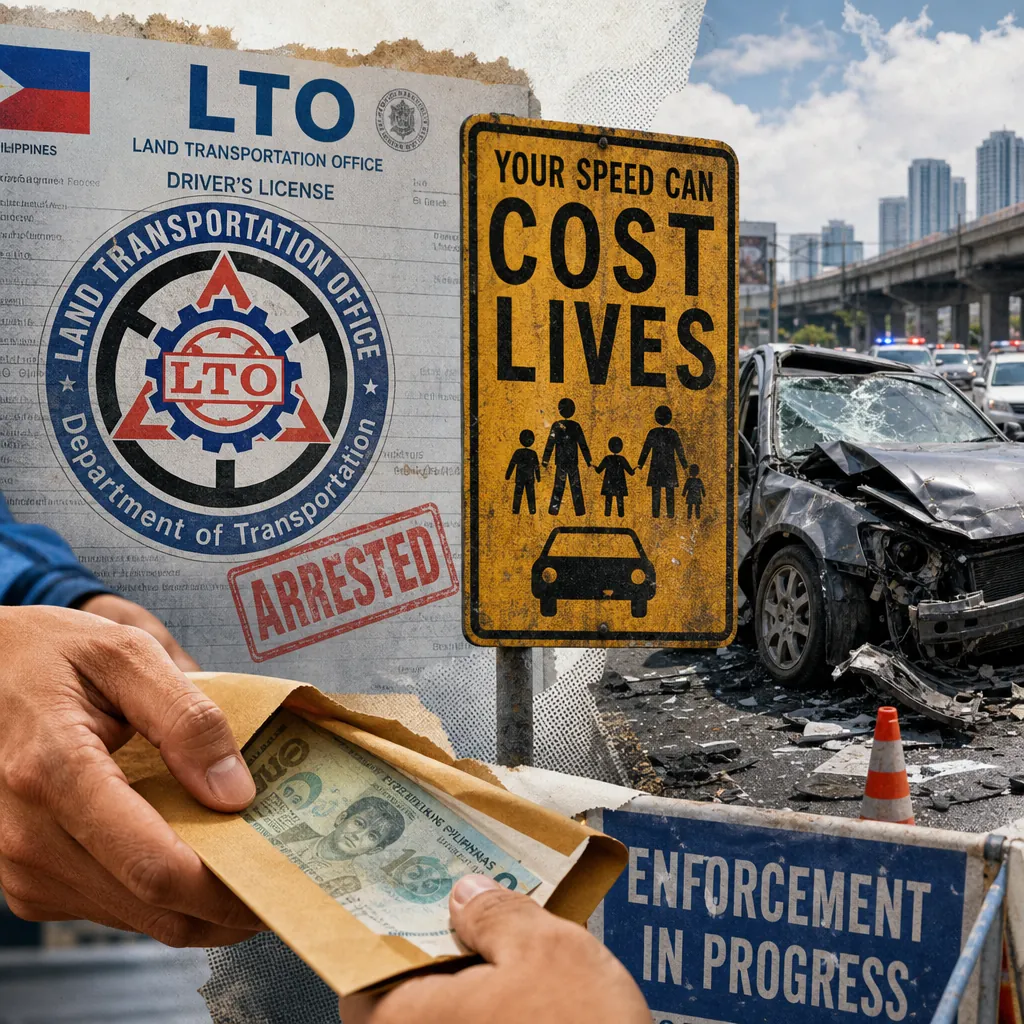
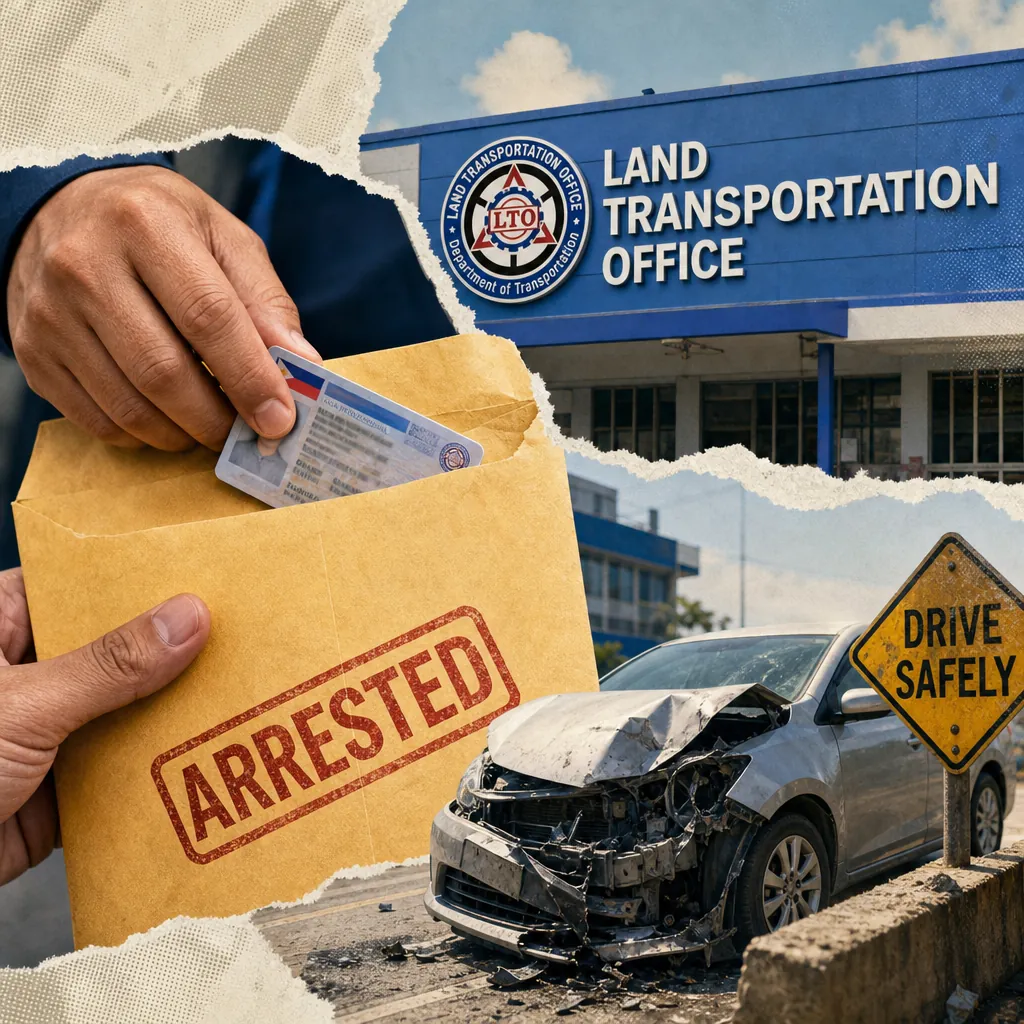
On June 18, 2026, nine personnel of the LTO Caraga Regional Law Enforcement Section were arrested in an entrapment operation in Buenavista, Agusan del Norte, for allegedly extorting money from truck drivers. The operation was conducted jointly by LTO agents and the Caraga police at around 6 a.m. in Barangay Alubijid. Authorities recovered marked money, handheld radios, phones, traffic apprehension forms, and an unregistered gun from the suspects. This follows a similar complaint in November 2025, when an LTO enforcement team leader in Trento, Agusan del Sur was accused of extorting "grease money" from a truck driver, leading to a show cause order from LTO leadership. LTO chief Lacanilao has vowed to file administrative and criminal charges, stating, "The LTO has a clear policy against corruption. Anyone proven to have broken the law and public trust will face administrative and criminal charges." The arrests highlight the challenge of rooting out corruption in an agency with field personnel operating far from central oversight.
Road accidents and safety crisis
A series of road accidents in mid-June 2026 has raised alarm. On June 15, a dump truck hit and killed a senior citizen crossing Commonwealth Avenue in Quezon City. On June 13, a motorcycle rider and passenger died after being hit by an off-road pickup truck in Cebu City. On June 12, a private car struck and killed an elderly woman in the same city. The Department of Health reported over 1,384 road crash injuries during the recent holiday period. These incidents underscore the lack of effective enforcement of traffic laws and the need for better road safety measures. The LTO, as the agency responsible for driver licensing and vehicle registration, faces scrutiny over its role in preventing such tragedies.
LTO reform under scrutiny
An opinion piece in the Manila Times titled "To LTO: Address these issues" critically assessed Lacanilao's reform agenda. It noted that while his seven-point plan — zero corruption, elimination of unnecessary processes, full digitalization, and mainstreaming road safety — was ambitious, implementation has been slow. The piece specifically criticized the Toll Regulatory Board's management of the RFID rollout, noting that as of mid-2024, about 100,000 motorists still lacked RFID tags, and penalties for noncompliance were repeatedly deferred. The article argued that "good intentions at the top of an agency are no substitute for real agency-wide reforms." This narrative stream questions whether the LTO can reform itself from within.
DOTr's railway expansion push
At the ASEAN RailCon 2026 held at the Asian Development Bank headquarters, Transportation Secretary Giovanni Lopez called on ASEAN member states to support the expansion of the Philippine railway network. He highlighted key projects: the North-South Commuter Railway, the Metro Manila Subway Project, and MRT-7. Lopez emphasized the role of the Philippine Railways Institute in developing a skilled workforce. This narrative stream offers a positive, forward-looking vision for Philippine transportation, but it received less coverage than the corruption and accident stories.
Crime and transport nexus
Two incidents of bodies found in abandoned vehicles added a crime dimension to the transport conversation. On June 17, a dead man was found inside a Ford Everest parked in General Tinio, Nueva Ecija. The body was wrapped in a blanket and lying in the front passenger seat. Earlier that day, a man and a woman were found dead in an SUV at a gasoline station along the Tarlac-Pangasinan-La Union Expressway in Tarlac. Police are investigating possible links between the incidents. These cases raise questions about vehicle security and the LTO's role in tracking vehicle ownership and registration.
Conversation trajectory
The conversation is likely to continue focusing on LTO corruption and road safety in the near term. The filing of charges against the nine arrested enforcers will be a key event to watch, as will any further accidents or corruption cases. The DOTr's railway expansion push may gain more attention if concrete progress is made, but it will likely remain a secondary story. The crime-transport nexus could become a bigger issue if more bodies are found or if investigations reveal systemic problems. Trigger events that could reshape the conversation include: a major policy announcement from Lacanilao, a high-profile accident involving a public vehicle, or a successful prosecution of corrupt enforcers. The public's trust in the LTO will depend on whether reforms lead to visible improvements in enforcement and safety.
Response guidance
Communicators in the transport sector should acknowledge the seriousness of the corruption and safety issues. For the LTO, a proactive approach is needed: regularly update the public on reform progress, highlight disciplinary actions taken, and demonstrate tangible improvements in enforcement. For the DOTr, the railway expansion story should be promoted as a long-term solution, but it must be paired with immediate actions on road safety. Avoid defensive messaging; instead, focus on accountability and concrete steps. Sensitive topics include the RFID rollout delays and the handling of accident investigations. Transparency and regular communication will be key to rebuilding trust.
See the full picture behind today's signals.
This report draws from Media Meter's MediaWatch, our real-time monitoring engine tracking 2,470+ Philippine sources across print, broadcast, digital, and social. Explore how the platform turns raw coverage into decision-grade intelligence, then see how it's configured for teams like yours — whether you're in PR agencies, corporate comms, government, or marketing.
Want more? Browse our Report Library for sector and crisis intelligence, or request a demo and we'll have your brand set up before the call.
Want this kind of intelligence on your brand?
This brief is built on the same MediaWatch methodology that runs continuously across every brand we monitor. See your competitive landscape, Impact Score, and narrative trajectory in a 30-minute demo.