Marcos Backs Robotics Push for MSME Manufacturers
President Marcos inspected a Laguna steel processor that added welding robots through a government upgrading program and pledged wider support for automation. The day's other coverage spanned a Supreme Court ruling on sequestered Marcos-era assets, a new housing modality for condominium inventory, and a Bangsamoro election analysis.

The Conversation
President Ferdinand Marcos Jr. stood inside the Nuvali Steel Processing Center Inc. (NSPCI) in Biñan City, Laguna on Saturday and watched two arc-welding robots work metal into automobile parts, accessories, aluminum devices and other components. "It is fascinating to see the state-of-the-art robotics actually in an industrial setting. We see robots that are merely for display. This is the kind they actually use to manufacture parts," he said, in English and Filipino, before pledging that his administration would put more money into automation at other companies as well.3740 The visit was framed as an inspection of the Department of Science and Technology's (DOST) Assistance to Align the Company with Industry 4.0, a program that helps manufacturers adopt so-called smart manufacturing — networked machines, sensors and robots that run production lines with less manual labor.37
The robotics story was the most substantive economic item in a day of coverage that otherwise ranged widely. The Manila Times and Philstar both carried the visit, with Philstar noting that NSPCI became a beneficiary in 2023 of the DOST's Small Enterprise Technology Upgrading Program (SETUP), a grant-and-technical-assistance scheme that helps small and medium manufacturers buy equipment they could not otherwise afford. The two welding robots the company acquired after joining SETUP improved its productivity, quality, precision and workplace safety, according to the report.48 Marcos used the stop to promise more help for micro, small and medium enterprises (MSMEs), the business category that employs the largest share of Filipino workers.48
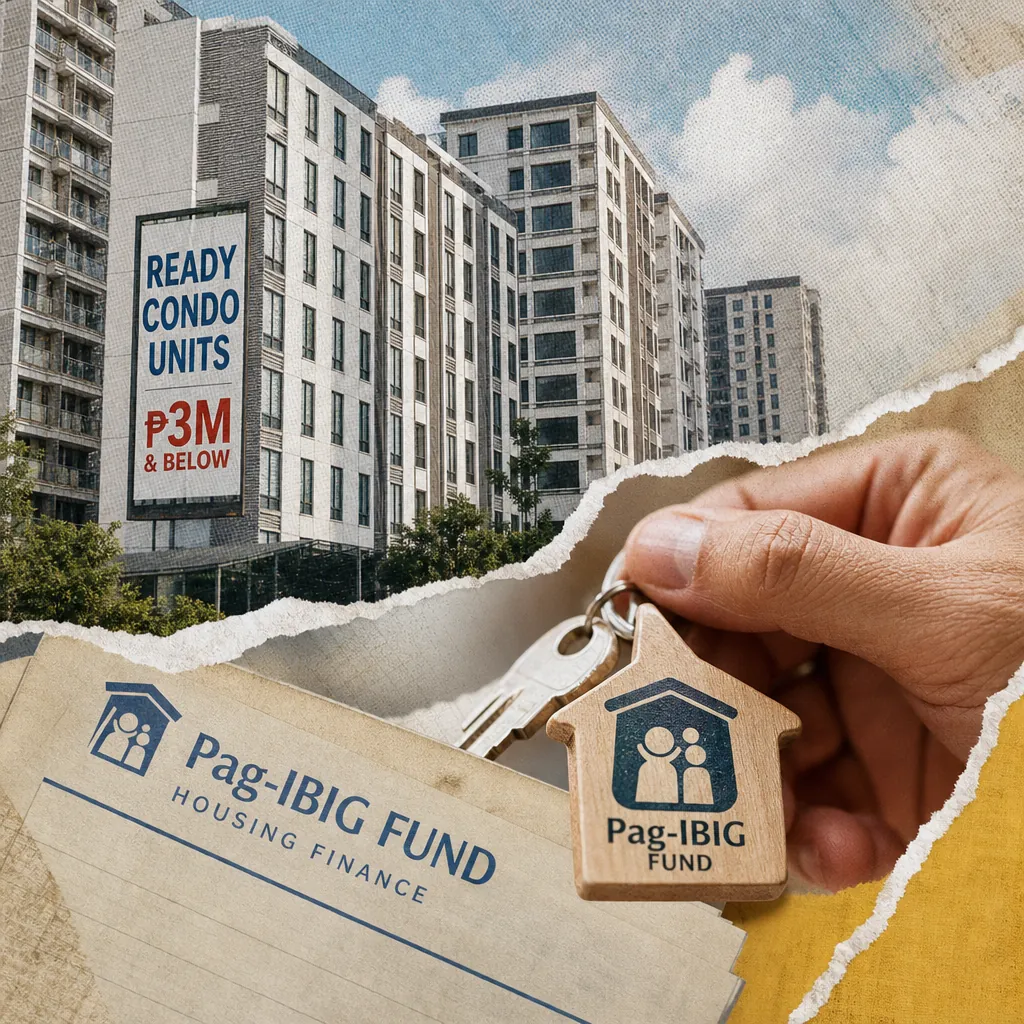
Elsewhere in the captured coverage, the Supreme Court's First Division ruled that the Presidential Commission on Good Government (PCGG) does not owe interest or damages on funds it sequestered from companies linked to the late Benjamin "Kokoy" Romualdez, the brother of former first lady Imelda Marcos. The decision, written by Associate Justice Ramon Paul Hernando and dated Aug. 26, 2026, denied a petition by Palm Avenue Holding Co. Inc. and Palm Avenue Realty Development Corp. seeking interest on Benguet Corp. shares seized in 1986.630 The Manila Times and the Daily Tribune both reported the ruling, and the Tribune's column argued it strengthened the case for abolishing the PCGG altogether.12 Separately, the Department of Human Settlements and Urban Development (DHSUD) said it will soon launch a new modality under the Pambansang Pabahay Para sa Pilipino (4PH) program that lets private developers sell reserved condominium units to homebuyers through the Pag-IBIG Fund, a move aimed at easing a reported condominium glut in Metro Manila.4
Key themes
- Marcos ties robotics to MSME support after inspecting a Laguna steel plant. The President inspected NSPCI's DOST-assisted automation and said government would invest more in robotics at other manufacturers, framing automation as a way to keep local producers competitive.3740
- A SETUP beneficiary added two welding robots and improved output. NSPCI joined the DOST's Small Enterprise Technology Upgrading Program in 2023 and used the assistance to buy robots that raised productivity, quality, precision and safety, according to Philstar.48
- The Supreme Court shielded the PCGG from paying interest on sequestered assets. The First Division ruled the agency's mandate is to preserve seized assets, not grow them, denying Palm Avenue's claim to interest earned on Benguet Corp. shares taken in 1986.630
- A new 4PH modality will let developers sell reserved condominium units through Pag-IBIG. DHSUD Secretary Jose Ramon Aliling said the approach covers prime-located units priced at ₱3 million and below and will give buyers lower prices and low interest rates.4
- Cebu province plans on-site housing for informal settlers on its Sudlon property. The provincial government is considering a scheme similar to 4PH to avoid displacing families as it develops the site into an innovation and technology district.44
- The National Housing Authority will relocate 49 Tunnel Community families to Bulacan. NHA General Manager Joeben Tai said the agency met with the Department of Social Welfare and Development to arrange the move.45
- A Laguna court dismissed election offense charges against Albay Governor Noel Rosal. The court found an unexplained delay violated his constitutional right to a speedy trial and set aside its earlier ruling denying his motion to quash.1938
- A columnist argued pork barrel road projects enabled land grabbing on agrarian reform land. The Manila Times opinion piece said lawmakers with real estate interests directed public funds into roads along prime agricultural land, then acquired the land from farmer-beneficiaries through intermediaries.1841
How the narratives stack
Dominant. The Marcos robotics inspection carried the most weight among the items captured here, appearing in both The Manila Times and Philstar and tying directly to a named government program with a measurable outcome — two welding robots installed at a manufacturer that joined SETUP in 2023.374048 The story's dominance rests on the breadth of its coverage within this set and the fact that it involved the President, a specific company and a specific program. It is a sector signal rather than a crisis: the government is signalling that automation subsidies will expand, which matters to manufacturers weighing whether to invest in equipment.
Counter-narrative. The Supreme Court's PCGG ruling ran as a second, quieter legal story. The Manila Times and the Daily Tribune both covered it, and the Tribune's column used it to argue the agency should be scrapped.61230 The counter-narrative here is that a ruling protecting the PCGG from paying interest is being read by some as evidence the agency has outlived its purpose, even though the decision itself is a narrow procedural win for the government.
Emerging. Housing policy produced two distinct threads: the DHSUD's new 4PH modality for condominium inventory and Cebu province's plan for on-site housing at Sudlon.444 Both point to a government trying to match unsold or underused housing stock with families that need it, and both are still at the guideline or planning stage. The NHA's plan to relocate 49 Tunnel Community families to Bulacan is a smaller, more concrete version of the same impulse.45
Suppressed. The most under-covered story in this set is the Manila Times column alleging that pork barrel road projects were used to move agrarian reform land into private residential development.1841 It appeared as an opinion piece and a Head Topics aggregation, not as a news report, and no other outlet in the captured set picked it up. The allegation is serious — it describes public money translating into private gain — but it remained confined to commentary.
Platform insights
- Facebook. The day's most visible social thread was not a corporate or government post but a school-safety scare. Threats of mass shootings were posted on Facebook against two Calabarzon schools: a message targeting Kolehiyo ng Lungsod ng Lipa in Batangas, and a photograph of a former student holding a gun that circulated among students and faculty at Kapayapaan Integrated School in Calamba, Laguna.47 The Lipa threat was reported to police at around 3 p.m.; the Laguna photo was posted around 8:20 p.m. Thursday and seen by students an hour later.47 These posts spread through group pages and student networks, which is how school threats typically travel — fast, locally, and with little verification before they reach officials.
- X. No social posts from X appeared in the captured material for this window, so there is no engagement pattern to report from that platform.
- Reddit. No Reddit activity appeared in the captured material for this window.
- YouTube. No YouTube activity appeared in the captured material for this window.
Key voices and communities
The Marcos administration and economic agencies. The President's remarks at NSPCI, the DOST's SETUP and Industry 4.0 programs, and the DHSUD's 4PH announcement all come from the executive branch. Their framing is consistent: government assistance should help local manufacturers modernize and should help families buy homes. This group matters because it controls the subsidies and guidelines that determine whether the robotics and housing plans move from speeches to implementation.43748
The Supreme Court and the PCGG. The First Division's ruling, written by Justice Hernando, defines the PCGG's mandate as preservation rather than growth of sequestered assets.630 The PCGG is the agency created after the 1986 EDSA People Power Revolution to recover wealth allegedly amassed by the Marcos family and its associates. Its supporters see the ruling as a necessary limit on claims against it; its critics, including the Daily Tribune columnist, see it as further evidence the agency should be abolished.12
Housing agencies and local governments. DHSUD, the Pag-IBIG Fund, the NHA, the Cebu provincial government and the Manila city government all appear in the housing threads.44445 Their framing centres on avoiding displacement and matching inventory to need. They matter because the mechanics they design — pricing caps, interest rates, relocation sites — determine whether the programs reach the families they are meant to serve.
Legal and opinion commentators. The Manila Times column on pork barrel land grabbing and the Daily Tribune column on the PCGG represent a commentary layer that interprets court rulings and policy for readers.1218 Their framing tends to be critical of institutions and focused on accountability.
School communities and local police. The Facebook threats against Batangas and Laguna schools drew in students, faculty, barangay officials and the Lipa police.47 This group matters because school-safety scares are handled locally and quickly, and the response — reporting to police, alerting barangay officials — is the first line of defence.
Narrative streams
Marcos inspects a DOST-assisted steel plant and promises more robotics support
The Nuvali Steel Processing Center in Biñan City makes automobile parts, accessories, aluminum devices and metal components, and it became a beneficiary of the DOST's Small Enterprise Technology Upgrading Program in 2023.48 SETUP is a government program that gives small and medium manufacturers grants and technical help to buy better equipment; for NSPCI, that meant two arc-welding robots that improved productivity, quality, precision and workplace safety.48 Marcos toured the plant on Saturday as part of the DOST's Assistance to Align the Company with Industry 4.0, a separate effort to help firms adopt networked, automated manufacturing.37 "The advances that have been made in robotics are really quite impressive. So, it's very good to see. We will do more of this, not only for Nuvali Steel, but also for the other companies," he said.37 He also promised more assistance to MSMEs, the enterprises that employ the most Filipino workers.48 The read for the sector: manufacturers that have been hesitant to automate now have a clearer signal that government assistance for robots and smart-manufacturing equipment will continue and possibly expand, which lowers the cost of upgrading for firms that qualify. The context is that the Philippines has lagged regional peers in factory automation, and programs like SETUP are small relative to the capital needed for full Industry 4.0 adoption — so the question is whether the promised expansion comes with enough funding to matter.
The Supreme Court rules the PCGG need not pay interest on sequestered assets
The Presidential Commission on Good Government was created in 1986 to recover wealth allegedly acquired improperly by former president Ferdinand Marcos, his family and associates. In 1986 it sequestered Benguet Corp. shares registered under Palm Avenue Holding Co. Inc. and Palm Avenue Realty Development Corp., acting on a letter identifying Benjamin "Kokoy" Romualdez as the beneficial owner.6 The shares generated income and some were sold; the proceeds went into an escrow account and a Comprehensive Agrarian Reform Program (CARP) account, where they earned more than ₱273 million and over ₱4 million in interest respectively.6 Palm Avenue sued for that interest. The Supreme Court's First Division, in a decision by Justice Hernando dated Aug. 26, 2026, denied the petition, ruling that the PCGG's mandate is to preserve sequestered assets, not to grow them, so it cannot be held liable for interest or damages.630 The Inquirer described the ruling as a rare victory in the government's four-decade campaign to recover the Marcoses' alleged ill-gotten wealth, and noted the PCGG had seized ₱110.8 million from the Romualdez-linked companies.30 The Daily Tribune's column went further, saying the ruling "only sharpened the argument for finally scrapping the agency."12 The read for the sector: government lawyers and asset-recovery agencies now have a clearer boundary — sequestered funds are held, not invested, and the agency cannot be treated as a fund manager — which may reduce the risk of similar claims but also gives ammunition to those who argue the PCGG has outlived its usefulness. The context is that the PCGG has been the subject of abolition proposals for years, and this ruling gives both sides material: the government a legal shield, critics a reason to say the agency's work is done.
A new 4PH modality will let developers sell reserved condominium units through Pag-IBIG
The Pambansang Pabahay Para sa Pilipino (4PH) program is the government's flagship housing initiative, aimed at building affordable homes for Filipino families. DHSUD Secretary Jose Ramon Aliling said on Saturday that a new expanded 4PH approach will allow private developers to dispose of current inventory, easing a reported condominium glut, particularly in Metro Manila.4 The modality covers prime-located condominium units priced at ₱3 million and below and will give homebuyers wider options at lower prices and low interest rates through the Pag-IBIG Fund, the state-run mutual fund that provides housing loans to members.4 Aliling told The Manila Times that DHSUD and Pag-IBIG will soon release the guidelines, which will also help developers comply with the balanced housing program — a requirement that developers build a share of socialized housing alongside market-rate projects.4 The read for the sector: developers sitting on unsold condominium units gain a new exit channel, and buyers who could not afford market-rate units gain access to discounted stock with government-backed financing, but the program's reach depends on the guidelines and on how many units actually fall under the ₱3 million cap. The context is that Metro Manila's condominium market has been oversupplied since the pandemic, and the government is trying to turn that oversupply into affordable housing rather than let it sit empty.
Cebu province plans on-site housing for informal settlers at Sudlon
The Cebu provincial government is looking to build housing within its Sudlon property in Cebu City for informal settlers occupying portions of the area, as the Capitol moves to develop the site into an innovation and technology district.44 Paulo Uy, head of the Cebu Provincial Investment and Promotions Office, said the province is considering an on-site housing scheme similar to the government's 4PH program to avoid displacing families from the area where they have established homes and livelihoods.44 The read for the sector: local governments planning redevelopment now have a model that keeps residents in place rather than relocating them, which reduces the social friction that usually accompanies displacement. The context is that on-site housing is more expensive and logistically harder than relocation, so the province's ability to execute will depend on financing and on whether the innovation district can coexist with residential units.
The NHA will relocate 49 Tunnel Community families to Bulacan
The National Housing Authority (NHA), the government agency responsible for socialized housing, plans to relocate families from the "Tunnel Community" in Manila's Barangays 738 and 79 to Bulacan.45 NHA General Manager Joeben Tai said the agency met with the Department of Social Welfare and Development (DSWD) to arrange the relocation, led by DSWD Secretary Rex Gatchalian, along with Manila Department of Social Welfare Director Jay Dela Fuente, representing Manila Mayor Francisco "Isko Moreno" Domagoso, and other local officials.45 Tai said the NHA is ready to move 49 families to St. Ildephonsus Village.45 The read for the sector: relocation remains the government's default tool for informal settler families in high-value urban areas, and the 49-family move is small enough to be a test case for how the DSWD and NHA coordinate. The context is that relocation programs have historically drawn criticism when new sites lack jobs, schools and transport, so the outcome in Bulacan will be watched by housing advocates.
A Laguna court dismisses election offense charges against Albay Governor Noel Rosal
A Regional Trial Court in Santa Cruz, Laguna dismissed election offense charges against Albay Governor Noel Rosal, ruling that an unexplained delay in the proceedings violated his constitutional right to a speedy trial.1938 Judge Mary Jean Cajandab-Ong, in a decision dated Aug. 7, granted Rosal's motion for reconsideration and set aside her May 7 ruling that had denied his motion to quash.38 The court cited "the substantial and unexplained delay proceeding the commencement of the preliminary investigation, the prosecution's failure to justify such delay, the timely assertion of the constitutional right by accused and the prejudice reasonably attendant to the prolonged pendency of the matter."38 The case was filed by the Commission on Elections (Comelec), the agency that administers elections and prosecutes election offenses.38 The read for the sector: the ruling reinforces that courts will dismiss cases when prosecutors let them sit too long, which puts pressure on Comelec and the justice system to move election cases faster. The context is that election offense cases often involve local officials and can drag on for years, and speedy-trial dismissals are a recurring outcome.
A columnist alleges pork barrel road projects enabled land grabbing on agrarian reform land
A Manila Times opinion column alleged that more than 20 years ago, powerful lawmakers with real estate interests directed pork barrel funds — discretionary public money allocated to legislators for local projects — into massive roadbuilding projects along prime agricultural lands.1841 Using local agents and intermediaries, the column said, these politicians-then-developers acquired the prime lands along the new road networks from the owners, mostly agrarian reform beneficiaries, and built residential developments on them.18 The column said agents lured farmer-beneficiaries into selling by telling them to "think of what you can do with all that money," and that a sizable portion of the proceeds went to the usual "barikan" and "tupadas" — local terms for drinking sessions and gambling.18 The read for the sector: the allegation, if substantiated, describes a mechanism by which the Comprehensive Agrarian Reform Program (CARP) — the law meant to distribute agricultural land to farmers — was undermined by public infrastructure spending that raised land values and pushed beneficiaries to sell. The context is that CARP has long faced criticism for allowing beneficiaries to sell their land, and the column argues the problem predates a recent Department of Justice opinion on the program.
Conversation trajectory
Watch the DOST's next budget and program announcements (observation window: the next national budget cycle). Marcos said government will "do more of this" for other companies, but the scale of any expansion will show up in the DOST's budget for SETUP and Industry 4.0 programs. If funding rises, more manufacturers can qualify; if it stays flat, the pledge remains rhetorical.3748
Watch for the DHSUD and Pag-IBIG guidelines on the new 4PH modality (observation window: the next 4–6 weeks). Aliling said the guidelines will be released soon. The details — the ₱3 million price cap, interest rates, and which units qualify — will determine whether the program actually moves condominium inventory and helps buyers.4
Watch for follow-up on the PCGG ruling (observation window: the next 2–3 months). The Supreme Court decision is final, but the Daily Tribune column's call to abolish the PCGG could revive legislative proposals. Watch whether any lawmaker files a bill or whether the agency issues a statement on its future.1230
Watch for the NHA relocation of Tunnel Community families (observation window: the next 1–2 months). The NHA said it is ready to move 49 families to Bulacan. Watch whether the relocation proceeds smoothly and whether the new site has basic services, which will shape how similar relocations are received.45
Watch for school-safety responses in Calabarzon (observation window: the next 1–2 weeks). The Facebook threats against schools in Batangas and Laguna were reported to police, but the incidents raise questions about how schools monitor social media and coordinate with law enforcement. Watch whether the schools or the Department of Education announce new protocols.47
Trigger events. The release of the 4PH guidelines, any DOST budget announcement, a PCGG abolition bill, the actual relocation of the Tunnel Community families, and any arrest or charge related to the school threats are the concrete events that will move these stories forward.
Response guidance
For manufacturers and industry associations: treat the robotics signal as a cue to review your own automation readiness. The President's visit to a SETUP beneficiary and his pledge to expand support suggest that government assistance for robots and smart-manufacturing equipment will continue. Companies that have deferred automation should check whether they qualify for SETUP or Industry 4.0 assistance and prepare applications before any new funding round is announced.3748
For housing developers: prepare for the 4PH modality guidelines now. The new approach will let developers sell reserved condominium units priced at ₱3 million and below through Pag-IBIG. Developers with unsold inventory in Metro Manila should review their stock against the price cap and get ready to comply with the balanced housing requirement, because the guidelines are expected soon.4
For local government units: on-site housing is a viable alternative to relocation, but plan for the cost. Cebu's Sudlon plan shows that keeping informal settlers in place is politically and socially easier than moving them. LGUs considering redevelopment should budget for on-site construction and services, and coordinate early with the DHSUD and Pag-IBIG.44
For legal and compliance teams: the PCGG ruling clarifies the boundary between preservation and investment of sequestered assets. Agencies and lawyers handling similar claims should note that the Supreme Court will not treat the PCGG as a fund manager. This reduces the risk of interest claims but does not resolve the broader debate about the agency's future.630
For schools and local police: social media threats require fast, coordinated responses. The Batangas and Laguna incidents show that threats posted on Facebook can reach students within hours. Schools should have a clear reporting channel to police and barangay officials, and should communicate with parents quickly to avoid panic.47
For communicators in the housing sector: explain the difference between the 4PH modality and the NHA relocation. The two stories are both about housing but involve different agencies, different beneficiaries and different mechanics. Clear, plain-language explanations will help families understand which program applies to them.445
See the full picture behind today's signals.
This report draws from Media Meter's MediaWatch, our real-time monitoring engine tracking 2,470+ Philippine sources across print, broadcast, digital, and social. Explore how the platform turns raw coverage into decision-grade intelligence, then see how it's configured for teams like yours — whether you're in PR agencies, corporate comms, government, or marketing.
Want more? Browse our Report Library for sector and crisis intelligence, or request a demo and we'll have your brand set up before the call.
Want this kind of intelligence on your brand?
This brief is built on the same MediaWatch methodology that runs continuously across every brand we monitor. See your competitive landscape, Impact Score, and narrative trajectory in a 30-minute demo.