Fuel price hikes, GCash IPO, MSME summit lead PH business news
Philippine business coverage on Sept. 17 centered on looming fuel price increases, the planned GCash parent-company listing, and an ASEAN small-business summit, alongside state-worker allowance and coal auction decisions.

The Conversation
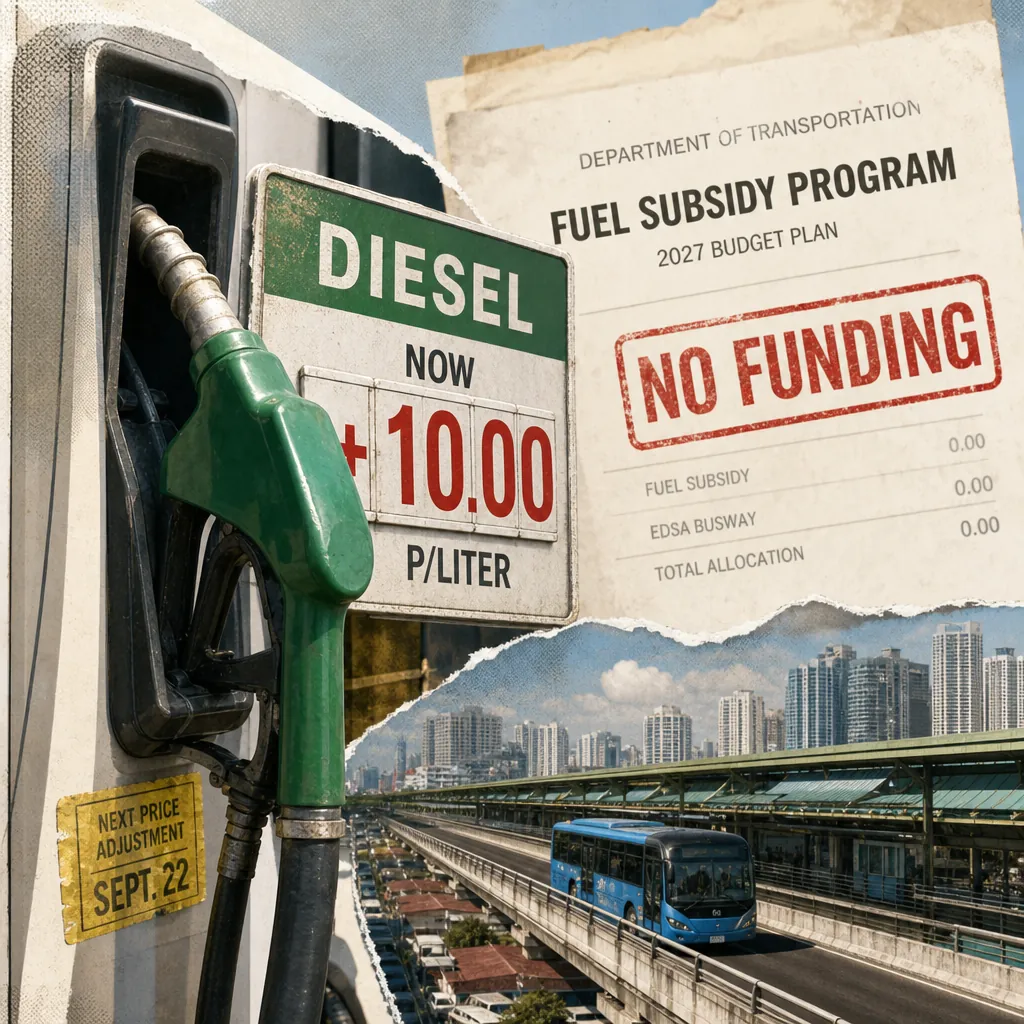
A looming round of fuel price increases dominated Philippine business coverage on Thursday, Sept. 17, with Abante Tonite reporting that diesel could rise by ₱10.50 to ₱11 per liter and gasoline by ₱4.50 to ₱5 per liter in the coming week, citing oil industry sources and Energy Secretary Sharon Garin, who attributed the expected adjustment to continuing unrest in the Middle East.17 The same day, the Department of Transportation gave the Land Transportation Franchising and Regulatory Board one month to decide on transport groups' fare-hike petition, with Transportation Secretary Giovanni Lopez saying a decision is needed by October because of rising oil prices.28 Together, the two stories framed the day's most consequential thread for ordinary Filipinos: the cost of moving people and goods is about to rise again, and the government is trying to get ahead of the political fallout.
On the capital-markets side, a lawmaker's estimate that 49 million Filipinos — roughly 42 percent of the population — use GCash gave fresh weight to the planned initial public offering of Mynt Inc., the e-wallet's parent company. Rep. Jan "JP" Padiernos, a member of the House Committee on Banks and Financial Intermediaries, said the listing could pull millions of first-time retail investors into the Philippine stock market, and both Abante Tonite and Philstar Online carried the story.1940 The GCash angle drew the heaviest coverage value in the captured set, with the Philstar item alone carrying an estimated ₱555,861 in advertising-equivalent value — the notional cost of buying the same space as paid advertising, not a measure of readership.
Elsewhere, the Department of Trade and Industry confirmed it will host the ASEAN Micro, Small and Medium Enterprise Summit on Sept. 21 in Pasay City, with about 400 trade officials, business leaders and entrepreneurs expected, followed by the 9th ASEAN Inclusive Business Forum on Sept. 22.2430 The Department of Energy scrapped its 2026 coal block auction, which would have included the country's largest mine, operated by Semirara Mining and Power Corp.25 And a ₱500 increase in the monthly allowance for state workers, confirmed by the Department of Budget and Management, drew criticism from a lawmaker who called it inadequate after a 17-year freeze.2 The day's business conversation, in short, was about costs rising, capital markets opening, and small enterprises getting a regional stage.
Key themes
- Fuel prices are set to rise sharply next week. Diesel could increase by ₱10.50 to ₱11 per liter and gasoline by ₱4.50 to ₱5 per liter, according to oil industry sources cited by Abante Tonite, with Energy Secretary Sharon Garin pointing to Middle East tensions.17 Over the previous two weeks, diesel and gasoline prices had already risen by about ₱10 per liter.
- The transport regulator has until October to rule on fare hikes. Transportation Secretary Giovanni Lopez gave the LTFRB a one-month deadline to decide on transport groups' petition, citing rising oil prices, while noting the government has raised the fuel discount for passenger vehicles to ₱12 per liter, which could save drivers an estimated ₱1,800 per week.28
- GCash's parent company could bring millions of Filipinos into the stock market. Rep. Jan "JP" Padiernos estimated that 49 million Filipinos, or about 42 percent of the population, use GCash, and said the planned Mynt Inc. IPO could broaden retail participation in the Philippine capital market.1940
- The Philippines will host two ASEAN business forums for small enterprises. The ASEAN MSME Summit on Sept. 21 and the 9th ASEAN Inclusive Business Forum on Sept. 22 will gather about 400 and 300 delegates respectively in Pasay City to discuss access to capital, markets, mentorship and digital tools.2430
- The Department of Energy cancelled its 2026 coal auction. The DoE scrapped the bidding round for three pre-determined coal areas, including Semirara island, citing stakeholder concerns over water seepage and legal considerations, and said it would review its evaluation framework.25
- A ₱500 state-worker allowance increase drew criticism as insufficient. ACT Teachers Rep. Antonio Tinio called the increase in the Personnel Economic Relief Allowance "woefully inadequate" after a nearly 17-year impasse, noting only ₱11.79 billion of the ₱55.865-billion Miscellaneous Personnel Benefits Fund was allotted to the program.2
- Nestlé named the Philippines among its top global growth markets. The Swiss food and beverage company cited the country's young population and economic growth, with Nestlé Philippines generating $3.2 billion in sales.35
- Davao cacao and Quezon farmers featured in agricultural development stories. A Manila Times piece profiled a 24-year-old CEO's kitchen partnerships to boost Davao cacao, while a Manila Bulletin column highlighted a Quezon municipality's efforts to ensure farmers turn a profit.2633
How the narratives stack
Dominant: The fuel price increase and its knock-on effects on transport fares dominated the day's business coverage in the captured set. Abante Tonite's report on the expected ₱10.50–₱11 per liter diesel hike and ₱4.50–₱5 per liter gasoline hike was the most direct consumer-facing story, and the Department of Transportation's deadline for the LTFRB to rule on fare hikes followed immediately.1728 The two stories are linked: transport groups are seeking higher fares precisely because fuel costs are rising, and the government is trying to balance driver and commuter welfare. The coverage value of these items was modest compared to some other stories — the Abante Tonite fuel item carried an estimated ₱41,223 in advertising-equivalent value, and the transport item ₱63,420 — but their consequence for household budgets is immediate and broad.1728
Counter-narrative: The GCash IPO story offered a contrasting narrative of opportunity and inclusion. While fuel prices threaten to squeeze consumers, the planned listing of Mynt Inc. was framed as a chance to bring ordinary Filipinos into the stock market. Rep. Padiernos's estimate that 49 million Filipinos use GCash — about 42 percent of the population — gave the story scale, and the Philstar Online item carried an estimated ₱555,861 in advertising-equivalent value, the highest in the captured set.40 The Abante Tonite version added context that economic growth momentum is weakening, citing Philippine Statistics Authority data, which makes the IPO's potential to broaden retail participation more significant.19 The two narratives — rising costs and expanding access — coexisted without one cancelling the other.
Emerging: The ASEAN MSME Summit and Inclusive Business Forum, set for Sept. 21 and 22, represent an emerging story about regional support for small businesses. The DTI's announcement, covered by Daily Guardian and NewsCentral, outlined a gathering of about 400 trade officials and entrepreneurs to discuss access to capital, markets, mentorship and digital tools.2430 The summit is a forward-looking event, and its outcomes are not yet known, but it signals government attention to the MSME sector, which accounts for the vast majority of Philippine businesses and employment. The Inclusive Business Forum, with about 300 delegates, will focus on integrating smaller enterprises into regional supply chains.30
Under-covered: The Department of Energy's cancellation of the 2026 coal block auction received limited attention in the captured set, appearing only in BusinessWorld. The decision to scrap the bidding round for three coal areas, including Semirara island, was attributed to stakeholder concerns over water seepage and legal considerations, and the DoE said it would review its evaluation framework.25 The story matters for energy security and for Semirara Mining and Power Corp., the country's largest coal producer, but it did not generate the same volume of coverage as the fuel price or GCash stories. Similarly, the ₱500 state-worker allowance increase, covered by Inquirer Online, was a single-item story in the captured set, despite its significance for millions of government employees.2
Platform insights
The monitoring writeup for this window did not include social-media engagement data, so platform-level insights are limited to the news coverage captured. The stories that travelled furthest in the captured set were those with direct consumer impact — fuel prices and transport fares — and those with a large, recognizable brand at their center, namely GCash. The GCash IPO story, carried by both Abante Tonite and Philstar Online, had the highest combined coverage value in the set, suggesting it resonated with editors as a story about ordinary Filipinos and the stock market.1940 The fuel price story, while lower in coverage value, is the kind of item that typically drives high engagement on social platforms because it affects daily budgets; the absence of engagement figures here means that pattern cannot be confirmed for this window.
Key voices and communities
Government economic managers and regulators: Energy Secretary Sharon Garin attributed the expected fuel price hike to Middle East tensions, while Transportation Secretary Giovanni Lopez set the October deadline for the LTFRB's fare decision and highlighted the ₱12 per liter fuel discount for passenger vehicles.1728 Their statements framed the government's response as both reactive (acknowledging price pressures) and proactive (subsidies, deadlines).
Legislators: Rep. Jan "JP" Padiernos of the House Committee on Banks and Financial Intermediaries positioned the GCash IPO as a tool for broadening retail investment, while ACT Teachers Rep. Antonio Tinio criticized the ₱500 allowance increase as insufficient.192 Their comments represent two sides of the same coin: one sees market-opening as progress, the other sees inadequate support for state workers.
Business and industry groups: The Department of Trade and Industry, alongside the ASEAN Business Advisory Council Philippines, is organizing the MSME summit, signaling a push to integrate smaller enterprises into regional markets.2430 Nestlé's CEO Philipp Navratil, following a visit to the country, called the Philippines "one of Nestlé's most dynamic and promising markets," reinforcing the view of the Philippines as a growth economy.35
Agricultural and community stakeholders: Ethan Kyle Lim, CEO of Cacao de Davao, is leading kitchen partnerships to increase demand for Davao cacao, while Mayor Cesar J. Isaac III of Guinayangan, Quezon, described a local government push to support farmers.2633 These voices represent the ground-level economic activity that national policy aims to support.
Narrative streams
Fuel price hikes and the transport fare decision
The most immediate economic story of the day was the expected fuel price increase. Abante Tonite reported that diesel prices could rise by ₱10.50 to ₱11 per liter and gasoline by ₱4.50 to ₱5 per liter in the coming week, citing oil industry sources. Energy Secretary Sharon Garin attributed the adjustment to continuing tensions in the Middle East.17 The report noted that over the previous two weeks, diesel and gasoline prices had already risen by about ₱10 per liter, meaning the cumulative increase would be substantial. For a jeepney driver consuming 20 liters of diesel a day, an ₱11 per liter increase would add ₱220 to daily costs — a figure that explains why transport groups are pressing for fare hikes.
The Department of Transportation's response came the same day: Secretary Giovanni Lopez gave the Land Transportation Franchising and Regulatory Board one month to decide on the fare-hike petition, saying a decision is needed by October because of rising oil prices.28 The LTFRB is the agency that sets fares for public utility vehicles, and its decisions directly affect both drivers' incomes and commuters' expenses. Lopez said the government must balance the welfare of drivers and operators with that of commuters, and noted that the fuel discount for passenger vehicles has been raised to ₱12 per liter, which could save drivers an estimated ₱1,800 per week.28 That discount is a government subsidy intended to cushion the impact of oil price increases on the transport sector.
The read for the sector: transport operators and commuters face a period of adjustment. If the LTFRB grants a fare increase, commuters will pay more; if it does not, drivers will absorb higher fuel costs. The government's fuel discount provides some relief but may not fully offset the expected increases. For businesses that rely on transport — from food delivery to logistics — the cost of moving goods is likely to rise, adding to inflationary pressure.
GCash IPO and retail participation in the capital market
The planned initial public offering of Mynt Inc., the parent company of GCash, was framed by a lawmaker as a potential turning point for retail investment in the Philippines. Rep. Jan "JP" Padiernos said that with an estimated 49 million Filipinos — about 42 percent of the population — using GCash, the IPO could give millions of ordinary users the chance to invest in a publicly listed company.1940 An IPO is the process by which a private company sells shares to the public for the first time, listing them on a stock exchange; it allows the company to raise capital and gives investors a chance to own a piece of the business.
Padiernos, a member of the House Committee on Banks and Financial Intermediaries, said the breadth of GCash's user base could help bring more ordinary Filipinos into the stock market as Mynt prepares for one of the largest IPOs in Philippine corporate history.19 The Abante Tonite report added that the potential is significant because economic growth momentum is weakening, citing Philippine Statistics Authority data.19 The Philippine Statistics Authority is the government agency responsible for official statistics, including gross domestic product, the total value of goods and services produced in the country.
The read for the sector: if the IPO proceeds, it could deepen retail participation in the Philippine Stock Exchange, which has historically been dominated by institutional and wealthy investors. For GCash users, it offers a familiar brand to invest in, potentially lowering the psychological barrier to stock-market entry. For the broader capital market, a successful listing could encourage other technology companies to follow. The risks include market volatility and the possibility that retail investors may not fully understand the risks of equity investing.
ASEAN MSME Summit and inclusive business forum
The Department of Trade and Industry will host two regional business forums in Manila next week, aimed at expanding market access, financing, mentorship and supply-chain opportunities for micro, small and medium enterprises across Southeast Asia. The ASEAN MSME Summit is set for Sept. 21 at the Likhang Filipino Exhibition Hall in Pasay City, with about 400 trade officials, business leaders and entrepreneurs expected. The 9th ASEAN Inclusive Business Forum will follow on Sept. 22, with about 300 delegates.2430
MSMEs — micro, small and medium enterprises — are businesses below a certain size threshold, typically defined by assets or number of employees. In the Philippines, they make up the overwhelming majority of registered businesses and employ a large share of the workforce. The summit, organized by the DTI with the ASEAN Business Advisory Council Philippines, will focus on access to capital, markets, mentorship and digital tools under the theme "Navigating the Future Together: Building Future-ready ASEAN MSMEs."24 The ASEAN Business Advisory Council is a regional body that advises ASEAN leaders on private-sector issues.
The read for the sector: small businesses in the Philippines and across Southeast Asia often struggle to access financing and international markets. The summit is a chance to push for concrete support, but its outcomes will depend on follow-through. For entrepreneurs, the event may offer networking and learning opportunities; for policymakers, it is a platform to showcase commitment to the sector.
Department of Energy cancels coal auction
The Department of Energy has scrapped its 2026 Coal Bid Round, which would have awarded coal operating contracts for three pre-determined areas, including the country's largest mine operated by Semirara Mining and Power Corp. In an advisory dated Sept. 15, the DoE cited concerns raised by stakeholders during the pre-submission conference, including continuing water seepage on Semirara island and legal considerations.25 The department said the termination would allow it to review and develop a "fair, equitable, transparent, and comprehensive evaluation framework" for awarding coal operating contracts.25
Coal operating contracts are agreements that give companies the right to explore, develop and produce coal in specific areas. Semirara Mining and Power Corp. is the Philippines' largest coal producer, and its mine on Semirara island in Antique is a major source of fuel for power generation. The cancellation of the auction means the government will not award new contracts this year, potentially delaying new coal projects.
The read for the sector: energy companies planning to bid for coal areas will need to wait for the DoE's revised framework. The decision may also signal a more cautious approach to coal development amid environmental and social concerns. For consumers, the delay could affect future coal supply, though existing mines continue to operate.
State-worker allowance increase criticized as insufficient
A ₱500 increase in the monthly Personnel Economic Relief Allowance (Pera) for state workers, confirmed by the Department of Budget and Management for 2027, drew criticism from ACT Teachers Rep. Antonio Tinio, who called it "woefully inadequate" after a nearly 17-year impasse.2 Pera is a monthly allowance paid to government employees on top of their basic salary, intended to help cover living expenses. Tinio noted that only ₱11.79 billion of the ₱55.865-billion Miscellaneous Personnel Benefits Fund (MPBF) was allotted to the program.2 The MPBF is a budget line item that funds various personnel benefits across government agencies.
Tinio's remarks came after the DBM affirmed on Sept. 15 that an increase in Pera would be scheduled for next year. He argued that the ₱500 increase is not enough amid rising commodity costs, saying in Filipino that after 17 years, ₱500 is insufficient and inhumane.2
The read for the sector: government employees, particularly teachers and other low-paid state workers, will see only a modest increase in their allowances next year. The criticism highlights the gap between the rising cost of living and the pace of adjustments in public-sector compensation. For the DBM, the challenge is balancing fiscal constraints with the need to support workers.
Nestlé names Philippines a top growth market
Swiss food and beverage company Nestlé S.A. said the Philippines remains one of its top growth markets globally, citing demand for its brands and the country's demographic and economic conditions. Nestlé Group CEO Philipp Navratil, following a recent visit, said the Philippines "has strong fundamentals, talented people and significant potential for further growth," and that the company is committed to investing behind its brands, capabilities and operations.35 Nestlé Philippines generated $3.2 billion in sales, and its brands include Nescafé, Milo, Bear Brand, KitKat, Maggi and Purina.35
The read for the sector: Nestlé's vote of confidence signals that multinational consumer goods companies see the Philippines as a growing market, driven by a young population and economic expansion. For local suppliers and retailers, Nestlé's investment could mean more business opportunities, but also more competition. For consumers, it suggests continued availability of familiar brands, though pricing will depend on input costs and exchange rates.
Agricultural development: Davao cacao and Quezon farmers
Two stories highlighted agricultural development efforts. In Davao City, 24-year-old Ethan Kyle Lim, CEO of Cacao de Davao, is spearheading "kitchen partnerships" with restaurants like Ikao to increase the visibility and volume of Davao-sourced chocolate. Lim said such collaborations will help farmers because of the volume partners will order, and will raise the profile of the Davao cacao industry.26 Davao is known for its cacao, sometimes called "black gold," and the story illustrates efforts to move the crop from commodity sacks to premium menus.
In Quezon province, a Manila Bulletin column profiled the municipality of Guinayangan, where Mayor Cesar J. Isaac III said 70 percent of the town's land is devoted to farming, with coconut as the top product, followed by rice, corn and other high-value crops. The column, by Dr. Julian Gonsalves of the International Institute for Rural Reconstruction, noted that farmers were optimistic about economic growth, helped by a supportive local government.33
The read for the sector: these stories show that agricultural development depends on both market linkages (like Lim's kitchen partnerships) and local government support (like Guinayangan's programs). For farmers, higher demand and better support can translate into higher incomes. For the food industry, locally sourced ingredients can differentiate products and support regional economies.
Conversation trajectory
Fuel prices and transport fares (next 1–2 weeks): The expected fuel price increase will be implemented in the coming week, and the LTFRB has until October to decide on fare hikes. Watch for the actual price adjustment announcement from oil companies and the LTFRB's decision, which will determine whether commuters face higher fares. The government's fuel discount and any additional subsidies will be part of the response.1728
GCash IPO (next 1–3 months): Mynt Inc.'s IPO is expected to be one of the largest in Philippine history. Watch for the filing of the registration statement with the Securities and Exchange Commission, the setting of the offer price, and the listing date. The IPO's success will depend on market conditions and investor demand, and it could encourage other tech companies to list.1940
ASEAN MSME Summit (Sept. 21–22): The summit and forum will produce statements and possibly agreements on MSME support. Watch for announcements on financing facilities, market-access initiatives, and digital tools. The outcomes will indicate whether regional cooperation on small-business support is translating into concrete action.2430
Coal auction cancellation (next 3–6 months): The DoE will review its evaluation framework for coal operating contracts. Watch for the release of new guidelines and the possibility of a re-auction. The delay could affect coal supply and investment in the sector.25
State-worker allowance (2027 budget cycle): The ₱500 Pera increase will be included in the 2027 budget. Watch for congressional deliberations and possible attempts to increase the allocation. The issue may gain traction if inflation remains high.2
Trigger events: The actual fuel price adjustment, the LTFRB fare decision, the GCash IPO filing, and the ASEAN MSME Summit are the near-term events that will shape the next phase of these stories.
Response guidance
For communicators in the transport and energy sectors: Prepare clear, plain-language explanations of how fuel price adjustments are calculated and what they mean for fares. When the LTFRB decides on the fare petition, be ready to communicate the rationale and the support measures available to drivers and commuters. Avoid jargon; use specific numbers (e.g., ₱11 per liter increase, ₱1,800 weekly savings from the fuel discount) to make the impact tangible.1728
For financial institutions and fintech companies: The GCash IPO is an opportunity to educate customers about investing. Develop simple materials explaining what an IPO is, how to participate, and the risks involved. Emphasize that investing in stocks carries risk and that past performance does not guarantee future results. Use GCash's own platform to reach users where they are.1940
For MSME advocates and government agencies: The ASEAN MSME Summit is a platform to showcase success stories and announce new support programs. Communicate in plain language what MSMEs can access — financing, mentorship, digital tools — and how to apply. Follow up after the summit with concrete steps and timelines.2430
For energy companies and the DoE: The cancellation of the coal auction may raise questions about energy security and investment. Be transparent about the reasons for the delay and the timeline for the revised framework. Communicate the importance of a fair and transparent process for awarding contracts.25
For government agencies handling state-worker benefits: The criticism of the ₱500 Pera increase reflects broader concerns about public-sector pay. Communicate the constraints and the rationale for the increase, and be prepared to discuss additional support measures. Acknowledge the rising cost of living and explain how the government is addressing it.2
For multinational consumer goods companies: Nestlé's positive outlook on the Philippines is a signal that the market is attractive. Communicate your own investments and commitments to the country, and highlight how you are supporting local suppliers and communities. Be mindful of pricing sensitivities amid inflation.35
See the full picture behind today's signals.
This report draws from Media Meter's MediaWatch, our real-time monitoring engine tracking 2,470+ Philippine sources across print, broadcast, digital, and social. Explore how the platform turns raw coverage into decision-grade intelligence, then see how it's configured for teams like yours — whether you're in PR agencies, corporate comms, government, or marketing.
Want more? Browse our Report Library for sector and crisis intelligence, or request a demo and we'll have your brand set up before the call.
Want this kind of intelligence on your brand?
This brief is built on the same MediaWatch methodology that runs continuously across every brand we monitor. See your competitive landscape, Impact Score, and narrative trajectory in a 30-minute demo.