Michelin Adds Flow as Peso Hits P64
The Michelin Guide's 2027 Philippine selection added Flow as the country's tenth starred restaurant, while a record-low peso pushed the agriculture department to warn of costlier imported rice and fertilizer.

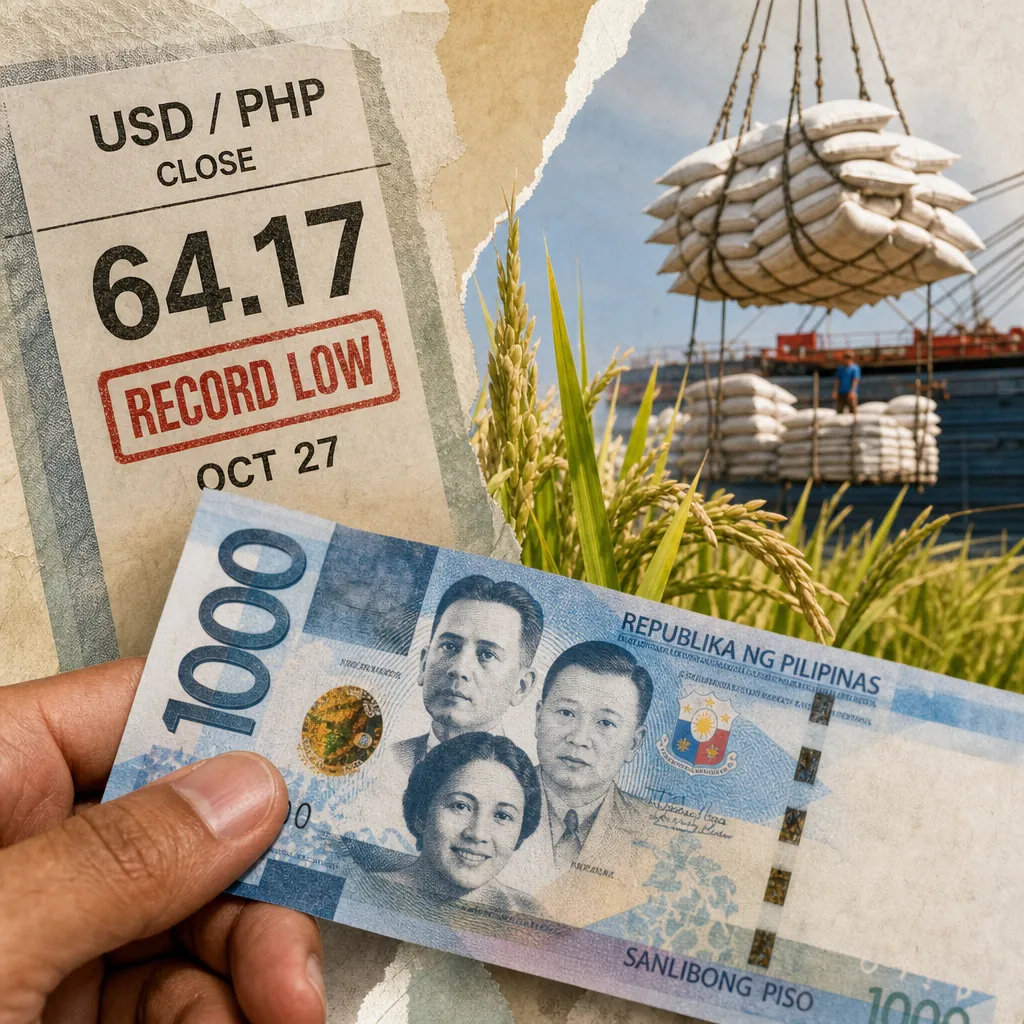
The Michelin Guide's 2027 Philippine selection, unveiled at a ceremony at the Manila Marriott Hotel on Thursday, added one new one-star restaurant and eight new Bib Gourmand entries, bringing the country's starred roster to ten12. Flow, a fine-dining room on Chino Roces Avenue in Makati that pairs Philippine and Peruvian cooking, was the lone newcomer to the one-star tier; Helm kept its two stars and eight others retained one12. President Ferdinand Marcos Jr. and First Lady Liza Araneta-Marcos attended, and the Manila Standard put the story on its front page2. The same day, Agriculture Assistant Secretary Arnel De Mesa told reporters that the peso's slide to P64 to the dollar would raise the cost of imported rice and fertilizer, with possible price movements in imported rice by November2829. The two stories describe the same food economy from opposite ends: a dining scene collecting international accolades, and a supply chain whose imported inputs are getting more expensive by the week.
Around those two poles the day's food and agriculture coverage spread widely. Jollibee Foods Corp. said it had identified more than 1,500 potential store sites for 2027 to 2030, about 71 percent of them outside Metro Manila1630. The British Chamber of Commerce of the Philippines urged the government to keep imported pork accessible while local herds rebuild from African swine fever31. Panay News reported that not one slaughterhouse in Iloilo province holds national accreditation4145. The Food and Drug Administration warned against squishy toys sold in malls and stalls2774. A blog post flagged that 57.9 percent of Filipino families get drinking water from refilling stations20. And a Manila Times column laid out a rice arithmetic problem: flooding in Bulacan, Nueva Ecija and Mindoro plus an El Niño expected to peak late this year could leave the country short by more than four million metric tons of rice17.
No social-media monitoring writeup accompanied this set, so the engagement picture — likes, shares, views — is not available for the day. What the captured items do carry is coverage value: the estimated peso cost of buying the same space as advertising, adjusted upward for the credibility of independent editorial placement. The Michelin front-page story in the Manila Standard carried an estimated P306,398 in advertising-equivalent value2; the Inquirer's online report on Flow carried P452,8441. The rice-shortage column in the Manila Times carried P843,54817. These figures measure the cost of the coverage, not how many people read it, and they are properties of the items gathered here rather than of the day's coverage as a whole.
Key themes
- Michelin's 2027 list adds Flow and eight Bib Gourmand entries, bringing starred restaurants to ten. Helm retained two stars; Asador Alfonso, Celera, Flow, Gallery by Chele, Hapag, Inato, Kasa Palma, Linamnam and Toyo Eatery hold one each12. The guide also introduced a new award for restaurant openings2.
- The peso at P64 to the dollar will raise imported rice and fertilizer costs, the agriculture department said. De Mesa said importers need more pesos for the same dollar-priced goods, and fertilizer — entirely imported — has already climbed from about P1,500 to between P2,800 and P2,9002829.
- Flooding and El Niño could push the rice deficit past four million metric tons this year. A Manila Times column estimates the palay harvest falling about one million metric tons below the 19.8-million average, which converts to under 12 million metric tons of rice against consumption above 16 million17.
- Jollibee identified more than 1,500 potential Philippine store sites for 2027–2030, 71 percent outside Metro Manila. The company had more than 3,500 Philippine stores as of the first half of 2026, and systemwide sales grew 10 percent year on year in both 2024 and 2025163054.
- No Iloilo slaughterhouse holds National Meat Inspection Service accreditation. All 43 local government units' facilities remain locally registered, restricting their meat to their own municipalities4145.
- The FDA warned that squishy toys may contain hazardous substances. The agency cited foreign safety findings and noted the toys are sold widely in malls and stalls, popular with Gen Z buyers2774.
- The British Chamber asked for a pork-policy review before new import restrictions. Executive director Chris Nelson cited a Pulse Asia survey in which 71 percent of respondents named inflation a key concern31.
- Nearly six in ten Filipino families draw drinking water from refilling stations. The Philippine Statistics Authority's Annual Poverty Indicators Survey puts the share at 57.9 percent20.
How the narratives stack
Dominant. The Michelin announcement is the most broadly covered single event in this set, appearing in a front-page broadsheet story and an online business report, with the President and First Lady in attendance12. Within the captured items it drew the heaviest editorial placement of any food-industry story, and the front-page position in the Manila Standard — worth an estimated P306,398 in advertising-equivalent terms — reflects an editorial judgment that the list mattered to a general readership, not only to diners2. The peso warning runs alongside it as the day's second major thread, carried by both a broadsheet business page and an online wire report2829.
Counter-narrative. The rice-shortage arithmetic in the Manila Times sits against the celebratory tone of the Michelin coverage and against the agriculture department's more measured language. De Mesa said the peso would have "a slight effect" on rice prices29; the column projects a deficit of more than four million metric tons17. Both are in the record; they measure different things — one is a price effect on imports, the other a volume gap between harvest and consumption — and neither cancels the other.
Emerging. The Iloilo slaughterhouse story and the British Chamber's pork comments point at the same underlying problem: a domestic livestock sector still rebuilding from African swine fever while import policy remains unsettled3141. The Manila Standard's livestock-program page lists the government's repopulation and distribution programs — the Swine Repopulation Project, the Animal Production and Distribution Program, and others — as the current policy answer32. Whether those programs close the gap is not yet visible in the data here.
Under-covered. The drinking-water finding — 57.9 percent of families relying on refilling stations — appeared in a single blog post tied to a company executive's comments, not in the news pages20. It is a significant household fact with no broader coverage in this set. The FDA's squishy-toy warning ran in a tabloid-language online item and a two-part broadsheet feature, but the consumer-safety angle drew less space than the Michelin list2774.
Platform insights
- Facebook. No engagement data was captured for this window, so the platform picture cannot be described in terms of likes, shares, or comments. What the items show is that Facebook remains the assumed venue for small-business advertising in the Philippines: convert.ph launched a self-serve tool that turns a short form into a complete Facebook Messages campaign, aimed at owners who "freeze the moment they open Ads Manager," in the words of co-founder John David Hernandez18.
- X. No posts or engagement figures from X appear in the captured material.
- Reddit. No posts or engagement figures from Reddit appear in the captured material.
- YouTube. No posts or engagement figures from YouTube appear in the captured material. The Philippine National Volleyball Federation's naturalization discussion was carried on a Daily Tribune online sports show, not on a social platform with measurable engagement35.
Key voices and communities
The fine-dining sector and its chefs. Flow's co-owners, Kevin Jonathan Uy and Gabriel Ong, are Enderun Culinary Arts alumni; Uy worked in Peru1. The Michelin list is the sector's main international validation, and the ceremony drew the President, which gives the guide's judgments a quasi-official weight in the Philippines that they do not carry everywhere.
Agricultural producers and their representatives. Negros Occidental Fifth District Rep. Emilio Bernardino Yulo backed a mill-gate price of P2,900 per 50-kilogram bag of sugar against the current P2,600, citing labor, fuel and fertilizer costs plus the red-striped soft scale insect infestation and a projected Super El Niño8. Sugar farmers, rice farmers and hog raisers are all making cost arguments to government in the same week.
Government agencies setting the terms. The Department of Agriculture on import costs28, the Department of Trade and Industry on price stability and consumer protection1034, the Food and Drug Administration on toys27, and the Philippine Statistics Authority as the source of the inflation and poverty data all appear1020.
Small business and digital-payment advocates. The DTI's partnership with Mastercard, signed October 26, aims to help micro, small and medium enterprises adopt secure digital payments63. A GCash user in Bacolod described the shift in everyday terms: "Daw halos tanan ara na sa GCash. Indi na need mag linya pa to pay bills"69.
Consumer-safety and public-health voices. The FDA's toy warning and the Iloilo slaughterhouse findings both raise questions about what reaches households, and both were reported in regional and national outlets274145.
Narrative streams
Michelin's 2027 list puts Flow on the map and keeps nine others starred
The 2027 selection, announced October 29 at the Manila Marriott Hotel, kept Helm at two stars and confirmed one star each for Asador Alfonso, Celera, Flow, Gallery by Chele, Hapag, Inato, Kasa Palma, Linamnam and Toyo Eatery2. Flow, co-owned by Uy and Ong, blends Philippine and Peruvian flavors; Uy previously worked in Peru and both men studied at Enderun1. The guide added eight restaurants to its Bib Gourmand list, which recognizes good food at good value, and introduced a new award for restaurant openings2. The Inquirer's online report carried an estimated P452,844 in advertising-equivalent value and the Manila Standard's front-page story an estimated P306,398, making the announcement the most heavily placed food story in this set12.
For the restaurant sector, the practical effect of a Michelin star is pricing power and booking pressure. A starred room can raise menu prices, fill seats weeks out, and anchor a neighborhood's dining reputation; a Bib Gourmand listing does the same at lower price points. The guide's second Philippine edition also signals that international rating bodies now treat Manila and Cebu as a standing market rather than a one-off visit, which matters to suppliers, hoteliers and tourism promoters. The presence of the President and First Lady at the ceremony ties the list to national branding, and the new-openings award gives restaurateurs a second path to recognition beyond the star itself2.
A record-low peso turns into a food-cost warning
The peso touched P64 to the dollar on Wednesday, and on Thursday De Mesa said the effect on imported rice and fertilizer was coming2829. "Number one, it will affect our imported items. For example, rice and fertilizer. Of course, we will need more pesos to buy them, so it will be more expensive," he told reporters28. He described "possible movements" in imported rice prices by November and said the department would assess each peso movement against the dollar2829. Fertilizer, entirely imported, has already risen from about P1,500 to between P2,800 and P2,900, and the department has deferred or rescheduled some procurement as a result29.
The read for the sector is that import-dependent input costs are now the binding constraint on Philippine food prices, and the peso is the transmission channel. Rice importers, fertilizer distributors and the farmers who buy from them will feel the change first; retailers and consumers follow with a lag of weeks to months. The agriculture department's own language — "a slight effect" — suggests it does not expect an immediate shock, but the direction is set29. The Manila Standard's business-page treatment and the online wire report both carried the warning, giving it substantial placement across the captured items2829.
Rice arithmetic: flooding, El Niño and a four-million-ton gap
A Manila Times column lays out the volume problem behind the price problem17. Flooding in Bulacan, Nueva Ecija and Mindoro damaged crops about to be harvested, and the column estimates the palay harvest falling about one million metric tons below the 19.8-million average. At a 65 percent palay-to-rice conversion, that is under 12 million metric tons of rice against annual consumption above 16 million — a deficit of more than four million metric tons17. The El Niño phenomenon, which the Philippine Atmospheric, Geophysical and Astronomical Services Administration projects will peak late this year and persist into the first half of 2027, coincides with the dry planting season from December 2026 to February 202717.
For rice traders, millers and the National Food Authority's buffer-stocking decisions, the arithmetic points to heavier import requirements in 2027 at exactly the moment the peso makes imports more expensive. For farmers, the combination of flood losses and a dry planting season compresses two consecutive cropping cycles. The column carried an estimated P843,548 in advertising-equivalent value, the heaviest placement of any agriculture item in this set17.
Jollibee bets on the provinces with 1,500 potential sites
Jollibee Foods Corp. said Thursday it had identified more than 1,500 potential trade areas for expansion from 2027 to 2030, about 71 percent outside Metro Manila, supporting the Jollibee, Mang Inasal and Chowking brands, which together account for nearly 90 percent of the group's Philippine systemwide sales16. The company had more than 3,500 Philippine stores as of the first half of 20261630. "We will pursue these opportunities through aggressive but disciplined expansion, guided by site viability and sustainable returns," said Joseph Tanbuntiong, chief executive of Jollibee Group Philippines16. The identified areas are not confirmed openings; site availability, commercial viability and investment criteria will decide1630. Systemwide sales grew 10 percent year on year in both 2024 and 2025, and same-store sales grew eight percent in 2024 and five percent in 202554.
The read for the sector is that the country's largest restaurant operator sees provincial and second-tier urban markets as its growth engine, which pulls suppliers, franchisees, cold-chain logistics and commercial real-estate developers toward those areas. The Manila Standard and Manila Times both carried the story on their business pages, and the Inquirer's online report added an estimated P257,040 in advertising-equivalent value163054.
Iloilo's slaughterhouses fail national standards, and the meat stays local
Not one slaughterhouse in Iloilo province holds accreditation from the National Meat Inspection Service, the agency that certifies meat establishments meet national sanitary standards41. Provincial Veterinarian Dr. Darel Tabuada said all facilities remain Locally Registered Meat Establishments, which restricts their meat to their own municipalities: "So, ang movement sang karne dira sina sa slaughterhouse is within sa sina lang nga munisipyo"41. Deficiencies range from inadequate equipment and sanitation to shortages of trained personnel; some facilities reportedly cannot fully comply with the ban on floor dressing45. Panay News ran both a news report and an opinion column calling it "a bloody failure of governance"4145.
For consumers in Iloilo's 43 local government units, the practical effect is that meat processed locally cannot legally be sold beyond municipal lines, which limits supply, keeps prices higher than they need to be, and leaves sanitary standards uneven. For the provincial government, the fix requires capital investment in facilities and trained inspectors. The story lived entirely in a regional outlet, which is where most local public-health and food-safety reporting in the Philippines appears.
Pork policy and the ASF rebuild
The British Chamber of Commerce of the Philippines urged the government to assess domestic pork conditions before imposing additional trade restrictions or safeguards, warning that unpredictable import policies could disrupt supply and add to inflation31. Executive director Chris Nelson cited a Pulse Asia survey in which 71 percent of respondents identified inflation as a key issue: "Your number one consideration is inflation"31. He pointed to continued African swine fever outbreaks and declining domestic hog production as reasons to maintain access to imported pork while local herds rebuild31. Separately, the Manila Standard ran a page on the government's livestock programs — the Swine Repopulation Project, the Animal Production and Distribution Program, the Livestock Economic Enterprise Development program and others — as the policy response32. In Negros Oriental, 247 hog raisers in Bais City, Manjuyod and Valencia received P6,128,000 in ASF indemnification on October 22, covering 2023 and 2024 losses only, with 2026 losses still being documented11.
The read for the sector is that the pork supply chain is being managed through a patchwork of import access, indemnification and repopulation grants, and each piece moves on its own timetable. Importers and meat processors need policy predictability; hog raisers need the indemnification and repopulation money to arrive before they restock. The British Chamber's intervention suggests import policy is the piece most at risk of sudden change.
Sugar farmers ask for P2,900 a bag as costs climb
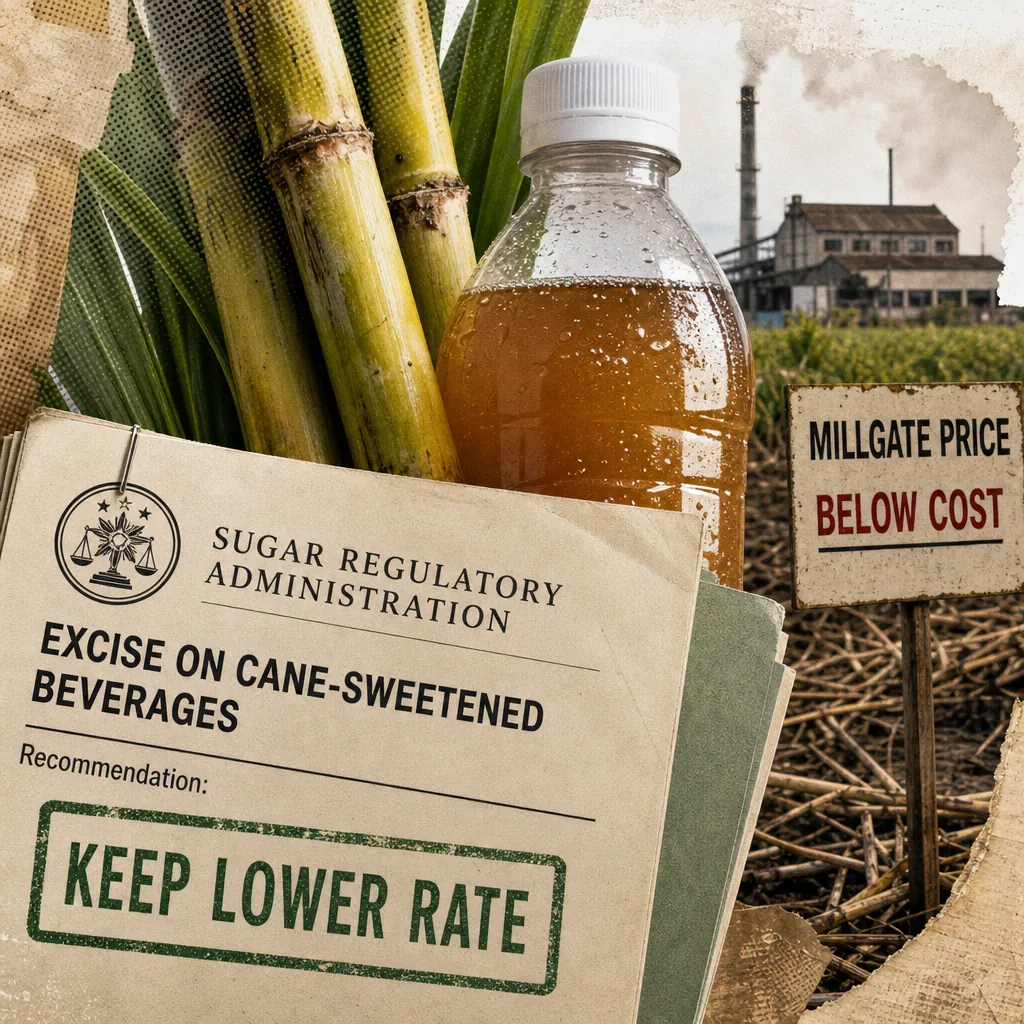
Negros Occidental Fifth District Rep. Emilio Bernardino Yulo backed a proposed mill-gate price of P2,900 per 50-kilogram bag of sugar, saying the current P2,600 no longer covers production costs8. He cited labor costs that have risen twice, higher fuel and fertilizer prices, the red-striped soft scale insect infestation — which adds P4,000 to P5,000 per hectare in control costs — and the projected Super El Niño, whose effects farmers could feel as early as the start of the sugarcane planting season8. Production costs previously estimated at P2,400 to P2,500 per bag have risen8.
The read for the sector is that mill-gate pricing is the lever that decides whether sugarcane farmers plant again next season. If the price stays at P2,600 while costs climb, marginal farmers in Negros will shift land to other crops or leave it idle, which tightens domestic sugar supply in 2027 and 2028. Beverage makers, bakers and confectioners who buy domestic sugar should expect pressure on contract prices.
The FDA warns on squishy toys as a Gen Z side business grows
The Food and Drug Administration warned Thursday against buying and using squishy toys, the soft, squeezable items sold in malls and stalls, citing concerns raised by safety authorities in other countries about potentially hazardous substances27. The Philippine Star's feature profiled a student, Elisse Reyes (not her real name), who has been selling squishies for P80 apiece for three months, buying them at P850 a dozen from a supplier of fragrances and cosmetics74. The toys come in shapes from xiao long bao to butter to animals, and are popular among Gen Z74.
For retailers and online sellers, the warning creates a compliance question: the FDA has not banned the toys, but it has put sellers on notice. For parents, the practical advice is to check for strong chemical smells and loose small parts. The story ran in a tabloid-language online item and a two-part broadsheet feature, giving it more space than most consumer-safety warnings receive2774.
Water refilling stations serve 57.9 percent of families
A blog post tied to PUREAL Philippines president Vince Ngo cited the Philippine Statistics Authority's Annual Poverty Indicators Survey finding that 57.9 percent of Filipino families obtain drinking water from refilling stations20. The post frames the figure around convenience — ordering refills, waiting for deliveries, storing containers — and around a company pitch for a different approach20. The statistic itself is the news: a majority of households depend on a commercial refilling network for daily drinking water, which makes water quality regulation and refilling-station inspection a mass-market public-health issue rather than a niche one. The item appeared only in a blog, with no news-page treatment in this set.
Digital payments reach the smallest businesses
The Department of Trade and Industry signed a memorandum of understanding with Mastercard on October 26 to help micro, small and medium enterprises adopt secure digital payments and expand online63. The partnership targets gaps in digital skills, payment security and technology adoption63. A GCash user in Bacolod described the change in daily life: "Daw halos tanan ara na sa GCash. Indi na need mag linya pa to pay bills"69. The DTI also held its Consumer Congress 2026 in Bacnotan, La Union, on October 28, covering consumer rights, financial protection, digital payments and online-fraud reporting34.
For sari-sari store owners and home-based sellers, the read is that accepting digital payment is becoming a condition of participating in the broader market, and the government is now subsidizing the learning curve through partnerships rather than leaving it to the platforms. The DTI-Aklan office separately said it would monitor commodity prices, with inflation in Aklan averaging 7.1 percent from January to September 2026 and food and alcoholic beverages contributing 10.5 percent inflation and 37.4 percent of the uptrend10.
Conversation trajectory
The November rice price movement. De Mesa said imported rice prices could move in November28. Watch the Department of Agriculture's weekly price monitoring and the Philippine Statistics Authority's November inflation release for the rice component. If the peso stays near P64, the pass-through should be visible within one to two months.
The December-to-February dry planting season. PAGASA projects El Niño peaking late this year and persisting into the first half of 2027, overlapping the dry palay planting window17. Watch PAGASA's El Niño advisories and the Department of Agriculture's planting-intent reports through the first quarter of 2027.
Jollibee's 2027 store-opening guidance. The company identified sites for 2027 to 2030 but has not confirmed openings16. Watch Jollibee's full-year 2026 results and its 2027 capital-expenditure guidance for the first concrete conversion of those sites into stores.
Pork import policy. The British Chamber's call for a review precedes any government decision on safeguards31. Watch the Department of Agriculture's import clearance schedule and any safeguard hearings over the next quarter.
Iloilo slaughterhouse accreditation. The provincial government has not announced a timeline for upgrading facilities41. Watch the Provincial Veterinarian's office and the National Meat Inspection Service for accreditation applications from Iloilo facilities.
Trigger events. The Michelin Guide's next edition announcement, expected in late 2027, will show whether Flow retains its star and whether the Bib Gourmand list keeps growing12. The Department of Agriculture's next fertilizer procurement round will show how the peso is affecting input costs29.
Response guidance
Restaurant and hospitality communicators. Treat the Michelin list as a booking and pricing event, not a one-day news item. Starred and Bib Gourmand restaurants should have reservation capacity, staffing and supplier contracts ready for the demand increase that follows the announcement, and should brief front-of-house staff on the guide's categories so they can explain them to guests.
Food manufacturers and importers. Prepare customer-facing explanations of price changes tied to the peso before November, when imported rice and fertilizer costs are expected to move28. State the input, the currency movement and the peso effect plainly rather than attributing increases to "market conditions."
Agricultural suppliers and cooperatives. Farmers facing both flood losses and a dry planting season need planting-decision information now17. Cooperatives and input suppliers should coordinate with municipal agriculture offices on seed and fertilizer availability for the December-to-February window.
Retailers and online sellers of toys and consumer goods. Review squishy-toy inventory against the FDA warning and be ready to answer customer questions about product safety27. Sellers sourcing from overseas suppliers should ask for material safety documentation.
Small business and fintech communicators. The DTI-Mastercard partnership and the GCash adoption story show that digital-payment education is now a government-supported message6369. Frame adoption around specific tasks — paying bills, receiving remittances, accepting card and QR payments — rather than abstract digital transformation.
Public-health and local-government communicators. The Iloilo slaughterhouse findings and the drinking-water statistic both concern what reaches households daily2041. Local governments should publish inspection results and accreditation status in plain language, and refilling-station operators should expect closer scrutiny of water-quality testing.
All food-sector communicators. Avoid tying brand messaging to the Michelin list or to price warnings without checking the facts; the two stories are moving in opposite directions and a message that conflates them will read as tone-deaf to whichever audience it reaches first.
See the full picture behind today's signals.
This report draws from Media Meter's MediaWatch, our real-time monitoring engine tracking 2,470+ Philippine sources across print, broadcast, digital, and social. Explore how the platform turns raw coverage into decision-grade intelligence, then see how it's configured for teams like yours — whether you're in PR agencies, corporate comms, government, or marketing.
Want more? Browse our Report Library for sector and crisis intelligence, or request a demo and we'll have your brand set up before the call.
Want this kind of intelligence on your brand?
This brief is built on the same MediaWatch methodology that runs continuously across every brand we monitor. See your competitive landscape, Impact Score, and narrative trajectory in a 30-minute demo.