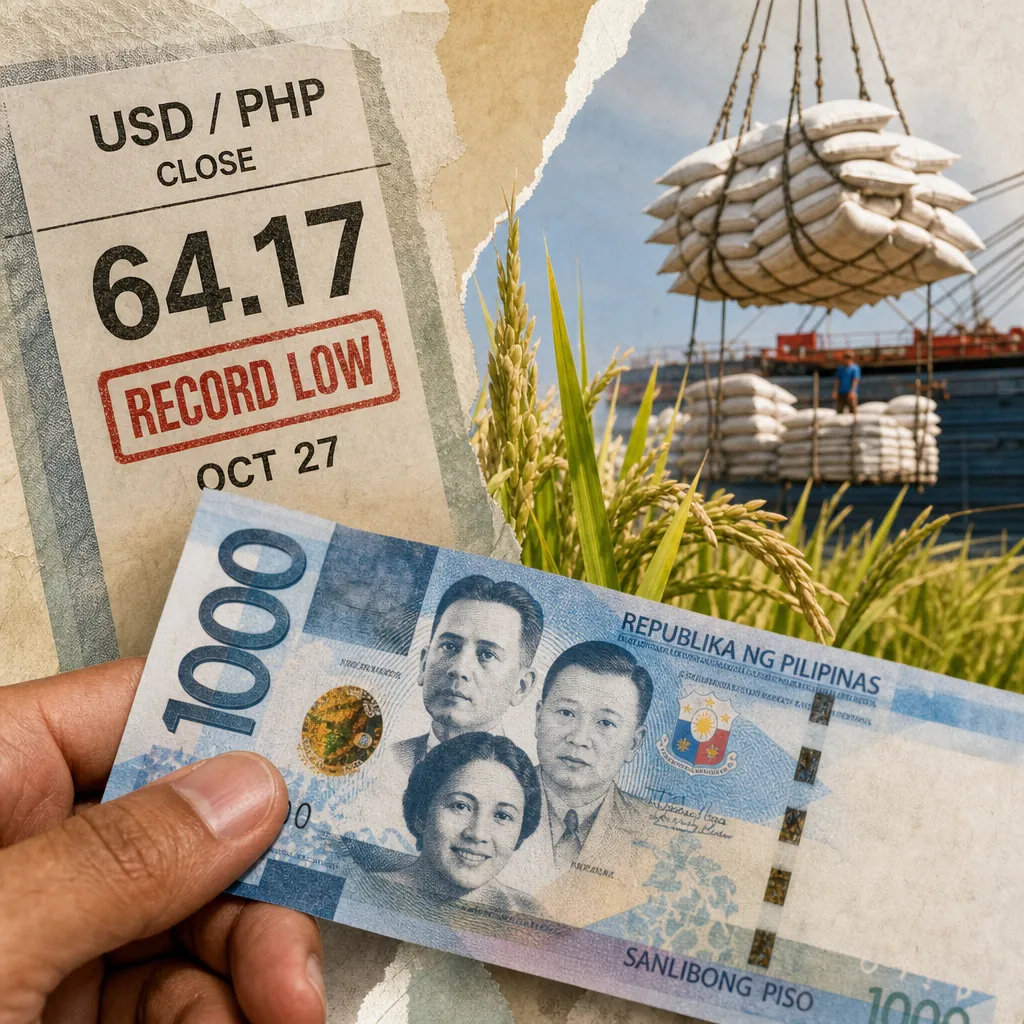
Palay Output Falls 17.8% as Rice Imports Hit Record
Philippine palay production dropped 17.77% in the third quarter of 2026 while rice imports already exceeded the whole of 2025, and the central bank projected October inflation at 7.1% to 8.1%. Vendors at Cubao bus terminals reported weak sales despite the Undas travel rush.
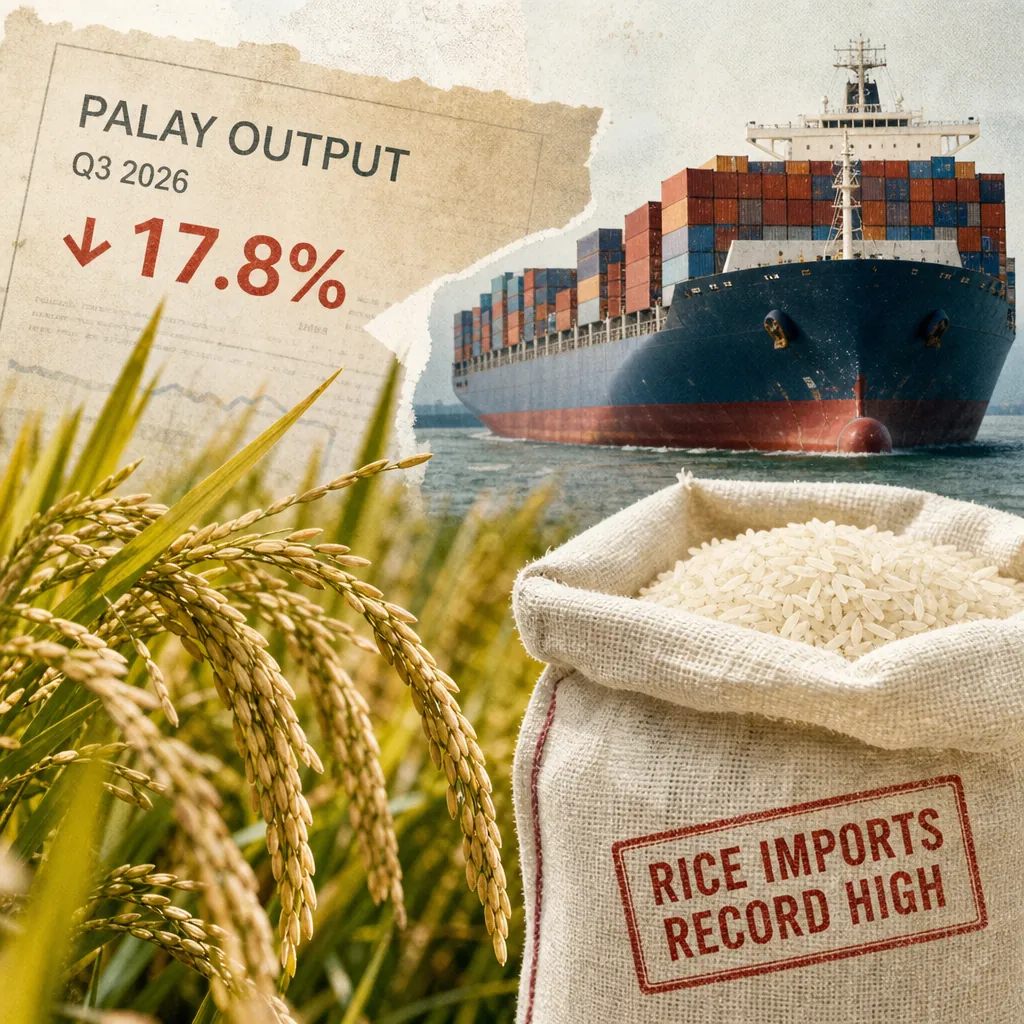
Palay (unmilled rice) output for July to September 2026 came in at 3.082 million metric tons, 17.77 percent below the 3.748 million metric tons harvested in the same three months of 2025, according to Philippine Statistics Authority (PSA) data released late Thursday and reported Friday3. Over the first nine months of the year the decline is smaller but still material: 12.10 million metric tons against 12.82 million, a drop of 5.61 percent3. The same Friday, a regional planning official in the Cordillera said the country's rice imports had already reached roughly 3.77 million metric tons in 2026, more than the 3.50 million metric tons recorded for the whole of 202523.
Agriculture Secretary Francisco Tiu Laurel Jr. told The Manila Times the drop was expected, citing "high fertilizer prices, less planting intention due to high prices of fuel and fertilizer, plus habagat effects"3. Habagat is the southwest monsoon, the rainy season that runs roughly from June to September and brings the typhoon-enhanced downpours that can flood or flatten standing rice fields. The Bangko Sentral ng Pilipinas (BSP), the central bank, separately projected that October inflation would land between 7.1 percent and 8.1 percent, with higher fuel and electricity prices and transport fares pushing costs up and cheaper rice, vegetables, meat and fish pulling them down9.
On the ground, the squeeze showed up in small transactions. At the Cubao bus terminals in Quezon City, where travelers massed on Friday ahead of Undas — the November 1 and 2 observance when Filipinos return to their hometowns to honor the dead — food vendor Yolanda Reynoso said business had not followed the crowds. "Matumal po ang benta, ang daming tao pero walang pera," she told the Inquirer, describing sales as poor because travelers were spending on fares first15.
Key themes
- Third-quarter palay output fell 17.77 percent year on year to 3.082 million metric tons. The July-to-September window is one of the country's two main rice harvests, so a decline of this size in a single quarter is the largest single number in the day's agricultural coverage3.
- Rice imports in 2026 already exceed the whole of 2025 at about 3.77 million metric tons. A Department of Economy, Planning and Development (DEPDev) official in the Cordillera said imports must continue to prevent shortages and price spikes while local production costs come down23.
- The central bank put October inflation at 7.1 to 8.1 percent. The BSP's month-ahead forecast named fuel, power and transport fares as upward pressures and cheaper agricultural goods as the offset9.
- The Sugar Regulatory Administration allocated P30 million for cloud seeding in the Visayas. The money is meant to blunt prolonged dry conditions on sugarcane farms in Negros and Panay ahead of a projected super El Niño, the periodic warming of the Pacific that typically brings drier-than-normal weather to the Philippines37.
- Retail fuel prices are set to move in opposite directions. Gasoline is expected to rise by P2.90 to P3.20 per liter while diesel falls by P0.40 to P0.60 per liter, based on four days of Mean of Platts Singapore trading and foreign exchange averages40.
- A senator pressed the state oil company to build a strategic petroleum reserve with Abu Dhabi's national oil company. Senate President Sherwin Gatchalian said the Philippine National Oil Company (PNOC) should move quickly on land it already owns, with the Abu Dhabi National Oil Company (ADNOC) covering much of the facility's operating requirements in exchange for the site10.
- Food-safety enforcement continued in Baguio City. Inspectors confiscated 81.55 kilograms of spoiled fish and issued violation notices to a supermarket over deceptive lighting and the joint display of meat and fish21.
- The Board of Investments approved P900.06 billion in projects from January to September. The figure is 53.05 percent above the same period last year and equals 90 percent of the agency's full-year target, across 207 projects expected to generate 21,524 jobs35.
How the narratives stack
Dominant. The palay and import numbers carried the day's agricultural coverage in this set. The PSA release gave the story its hard figure — a 17.77 percent third-quarter decline — and the DEPDev-CAR interview supplied the policy response: keep importing while helping farmers cut costs323. The BSP's inflation forecast, published on its Facebook page and picked up by Manila Bulletin's Tagalog-language Balita site, tied the harvest shortfall to household prices9. Together these three items formed a chain a reader can follow from farm to market stall: less palay harvested, more rice bought abroad, and a central bank watching whether the two net out in the inflation print.
Counter-narrative. The official explanation for the harvest decline is cost-driven, not weather-driven alone. Tiu Laurel pointed first to fertilizer and fuel prices reducing planting intentions, with the monsoon as an additional factor3. That framing matters because it puts the remedy in input costs and farmer financing rather than in disaster response. The DEPDev official's argument runs the same way: imports are a bridge, and government assistance should target production costs so local farmers can compete23.
Emerging. The sugar industry's P30 million cloud-seeding program is the clearest forward-looking item in the set. The Sugar Regulatory Administration (SRA), the agency that manages the domestic sugar supply and sets production policy, confirmed the allocation in a letter dated October 26 to United Sugar Producers Federation (UNIFED) president Manuel Lamata, with operations expected to begin in November37. Cloud seeding disperses particles into clouds to encourage rain, and it is a stopgap measure that depends on there being clouds to seed. Its appearance now signals that the dry spell is being treated as a production risk rather than a forecast.
Under-covered. The connection between fuel prices and food prices got less attention than either topic separately. The expected P2.90 to P3.20 per liter gasoline increase40 and the senator's push for a petroleum reserve10 ran as energy stories, while the palay decline ran as an agriculture story. For a rice farmer, fertilizer and diesel are the same cost problem, and the two threads were not joined in the coverage reviewed here.
Platform insights
- Facebook. The BSP published its October inflation forecast on its Facebook page, and Manila Bulletin's Balita outlet built a story around it in Tagalog9. The choice of platform and language put a technical forecast in front of a mass Filipino-speaking audience rather than the business pages. The Department of Health (DOH) also used Facebook to announce its Code White Alert for Undas, running from October 30 to November 3, which puts health facilities and regional offices on standby for accidents and injuries during the holiday travel period7.
- X. No posts from X appeared in the material reviewed for this snapshot.
- Reddit. No posts from Reddit appeared in the material reviewed for this snapshot.
- YouTube. No posts from YouTube appeared in the material reviewed for this snapshot.
Key voices and communities
The Department of Agriculture. Secretary Tiu Laurel's comment set the official frame for the harvest decline: input costs and monsoon effects, described as expected rather than alarming3. His department's assessment of projected harvests is also what triggers advance rice purchases from exporting countries, according to the DEPDev official23.
Regional planning officials. Jose Dado Jr., officer-in-charge assistant regional director of DEPDev in the Cordillera, made the case for continued imports in an interview with the Baguio Herald Express, arguing that shipments and distribution take time and must be arranged months ahead23. Regional officials rarely set national policy, but their interviews are where the mechanics of import timing get explained in plain terms.
The central bank. The BSP's month-ahead forecast is a routine release, but at 7.1 to 8.1 percent it lands in a range that keeps inflation a live household concern9. The bank said it would remain watchful and be guided by incoming data.
Producer groups. UNIFED's Manuel Lamata confirmed the cloud-seeding funding and thanked the SRA for acting early, saying the industry hopes the program eases the dry spell's impact37. Producer federations are the channel through which government support reaches growers, and their public statements signal whether a program is landing.
Small vendors. Reynoso's comment at the Cubao terminal is the consumer-side voice in the set: crowds without spending power, and fares taking priority over food15.
Narrative streams
Palay output falls 17.77 percent in the third quarter
The PSA data divides the harvest into irrigated and rain-fed. Irrigated palay, which depends on managed water systems rather than rainfall, fell 15.82 percent in the third quarter to 2.348 million metric tons from 2.790 million a year earlier3. That irrigated fields declined almost as sharply as the total points to decisions made before planting — farmers choosing to plant less because fertilizer and fuel cost too much — rather than a single weather event wiping out a crop. The first-nine-months figure, down 5.61 percent, is milder because the earlier quarters of 2026 held up better than the third3.
The read for the sector: rice farmers who cut planting this quarter will have less to sell into the last months of the year, when demand peaks around the holidays, and millers and traders will be sourcing more of their volume from imports. For consumers, the BSP's forecast already assumes cheaper rice is helping hold inflation down9; a smaller domestic harvest narrows that cushion. The Department of Agriculture's practice of projecting harvests and arranging imports months ahead is the mechanism meant to keep shelves stocked in exactly this situation23.
Rice imports pass the whole of 2025 with two months to spare
The 3.77 million metric tons imported in 2026 compares with 3.50 million for all of 2025, according to PSA data relayed by DEPDev-CAR23. The report did not specify the exact period the 2026 figure covers, so the comparison should be read as approximate. Dado's explanation of the import pipeline is the useful part: the Department of Agriculture estimates the coming harvest, identifies a potential deficit, and buys from exporting countries early because ships and distribution take time23.
The read for the sector: importers, shipping lines and warehouse operators face a heavier second half than last year, while local farmers face import competition at the same moment their own output is down. The policy tension is straightforward — imports protect consumers from price spikes and protect farmers from nothing. Dado's answer is that government assistance should lower production costs so local growers can compete on price23. Whether that assistance arrives at the scale of the cost gap is the open question.
Inflation projected at 7.1 to 8.1 percent for October
The BSP's forecast range is wide by the standards of a month-ahead estimate, which itself signals uncertainty about how fuel and food are netting out9. The bank named higher petroleum prices, electricity charges and transport fares as upward pressures, and lower prices for rice, vegetables, meat and fish, attributed to adequate supply, as the downward pull9. The final October figure will be published by the PSA in the coming weeks and will settle the question.
The read for the sector: a range topping 8 percent keeps pressure on the central bank's interest-rate stance and on household budgets. For food retailers and manufacturers, the forecast implies input costs that are still rising on the energy side and easing on the agricultural side, which complicates pricing decisions going into the holiday quarter.
Sugar growers get P30 million for cloud seeding
The SRA's allocation covers cloud-seeding operations in Negros Island and Panay, the country's main sugarcane areas, starting in November37. The trigger is a projected super El Niño, which typically brings below-normal rainfall to the western Pacific and has historically hurt sugar yields. Cloud seeding is not a guarantee of rain; it works only when suitable clouds are present, which is why the program is described as easing the impact rather than preventing a shortfall.
The read for the sector: sugar millers and refiners should plan for a crop exposed to dry conditions through the first half of 2027, and beverage and food manufacturers that depend on domestic sugar have a reason to lock in supply earlier than usual. The P30 million is small relative to the value of the crop, so its effect will be measured in whether it buys the industry time, not in tons of additional cane.
Fuel prices move in opposite directions next week
Gasoline is expected to rise by P2.90 to P3.20 per liter, while diesel is expected to fall by P0.40 to P0.60 per liter, according to an oil industry source cited by Philstar, based on four days of Mean of Platts Singapore trading and foreign exchange averages40. The Mean of Platts Singapore is the regional benchmark price against which Philippine fuel is priced. Final adjustments are typically announced Monday and take effect Tuesday40.
The read for the sector: transport operators, who burn diesel, get a small reprieve, while private motorists and gasoline-dependent businesses absorb an increase of nearly P3 per liter. Because fuel is an input to fertilizer and to hauling food, the gasoline increase feeds back into the cost problem the Agriculture Secretary identified as the cause of the palay decline3.
A senator pushes for a strategic petroleum reserve
Senate President Sherwin Gatchalian urged the PNOC, the state-owned oil company, to build strategic petroleum reserves using land it already owns, in partnership with ADNOC10. Under the arrangement described, ADNOC would cover a large share of the facility's operating requirements in exchange for the land, and the Philippines would hold a first-refusal right to buy stored oil when needed10. A strategic reserve is a government-held stockpile meant to cushion the country against supply disruptions and price shocks, the same logic other oil-importing countries apply to their own stockpiles.
The read for the sector: refiners and importers would gain a buffer against global supply interruptions, but the project depends on land, financing and a foreign partner's terms, none of which are settled. Gatchalian's argument is that the window is open now and should not be allowed to close10.
Food-safety enforcement continues in Baguio
A joint inspection by the Meat and Fishery Products Monitoring Task Force in Baguio City's central business district and along Magsaysay Avenue confiscated 81.55 kilograms of spoiled fish and issued notices of violation to a supermarket for allegedly using deceptive lighting and displaying meat and fish together21. The City Veterinary and Agriculture Office issued the notices. Deceptive lighting means using lamps that make meat or fish look fresher than it is; displaying raw meat beside fish risks cross-contamination.
The read for the sector: supermarkets and wet-market vendors in tourist-heavy cities face active inspection through the holiday season, and the penalties attach to display practices as much as to the condition of the goods. For consumers, the inspection is the visible end of a supply chain that starts with the same cost pressures affecting farmers.
Investment approvals run 53 percent ahead of last year
The Board of Investments, the agency that grants incentives to qualified projects, approved P900.06 billion from January to September 2026, up 53.05 percent from the same period last year and equal to 90 percent of its annual target, across 207 projects expected to create 21,524 jobs35. The Department of Trade and Industry frames investment, exports and financing as connected priorities.
The read for the sector: approved investment is a commitment, not yet a factory or a payroll, so the jobs figure is a projection tied to projects that must still be built. For suppliers and local governments in the host areas, the pipeline is the signal to watch.
Conversation trajectory
October inflation release, PSA, first half of November (observation window: 1–2 weeks). The BSP's 7.1 to 8.1 percent forecast will be replaced by the actual October figure. If the print lands at the top of the range, expect renewed attention to fuel and transport costs; if it lands near the bottom, the easing in rice and vegetable prices becomes the story9.
November fuel price adjustment, announced Monday and effective Tuesday (observation window: 1 week). The expected gasoline increase of P2.90 to P3.20 per liter and diesel rollback of P0.40 to P0.60 per liter will be confirmed or revised against the final week of trading40. A larger-than-expected gasoline increase would sharpen the transport-cost angle in the inflation story.
Cloud-seeding operations begin in November (observation window: 4–8 weeks). The SRA program in Negros and Panay will be judged on whether rain falls and whether growers report relief. Watch for statements from UNIFED and the SRA on the number of sorties flown and areas covered37.
Fourth-quarter palay harvest and import arrivals (observation window: 6–10 weeks). The next PSA production data will show whether the third-quarter decline carried into the main harvest, and import arrivals will show whether the 3.77 million metric ton pace continues323.
PNOC–ADNOC petroleum reserve talks (observation window: 1–3 months). Gatchalian's push depends on the PNOC moving on land it owns and on ADNOC's terms. A formal agreement or a public statement from either party would confirm the project is advancing10.
Trigger events. The PSA's October inflation release, the weekly fuel price announcement, the first SRA cloud-seeding report, and any PNOC statement on the reserve site are the checkable moments ahead.
Response guidance
Agricultural input suppliers. Communicate fertilizer and fuel price trends in plain terms and in advance of planting seasons, because farmers are making planting decisions months before harvest and are citing input costs as the reason for cutting acreage3.
Rice traders and importers. Expect public scrutiny of import volumes against domestic harvest figures. Explain the timing logic — why purchases are arranged months ahead — before the next PSA release, not after23.
Food retailers and market vendors. Inspections are active in tourist cities and holiday destinations, and violations attach to display practices such as lighting and product placement21. Review display standards now rather than during an inspection.
Transport and fuel-dependent businesses. The gasoline increase and diesel rollback will affect different cost lines. Communicate pass-through decisions to customers with the per-liter figures and the effective date, since the adjustment is announced Monday and applied Tuesday40.
Sugar and beverage manufacturers. Plan procurement around a dry-weather risk through the first half of 2027 and track the SRA's cloud-seeding reports as an early indicator of crop conditions37.
Consumer-facing brands during Undas. Crowds at terminals and destinations do not automatically translate into sales when travelers are prioritizing fares15. Promotions pitched at travelers should account for tight budgets rather than assume holiday spending.
Health and safety communicators. The DOH's Code White Alert runs through November 3, with the operations center on 24/7 monitoring for mass-gathering incidents7. Coordinate public advisories with regional health offices during the travel peak.
See the full picture behind today's signals.
This report draws from Media Meter's MediaWatch, our real-time monitoring engine tracking 2,470+ Philippine sources across print, broadcast, digital, and social. Explore how the platform turns raw coverage into decision-grade intelligence, then see how it's configured for teams like yours — whether you're in PR agencies, corporate comms, government, or marketing.
Want more? Browse our Report Library for sector and crisis intelligence, or request a demo and we'll have your brand set up before the call.
Want this kind of intelligence on your brand?
This brief is built on the same MediaWatch methodology that runs continuously across every brand we monitor. See your competitive landscape, Impact Score, and narrative trajectory in a 30-minute demo.