Motorcycle crashes and LTO crackdown dominate road safety talk
On August 23, 2026, Philippine road safety conversations were dominated by motorcycle accidents, regulatory criticism of the LTO, and a new crackdown on replica plates. Meanwhile, EV interest grew with BYD's chairman visit and new hybrid launches.
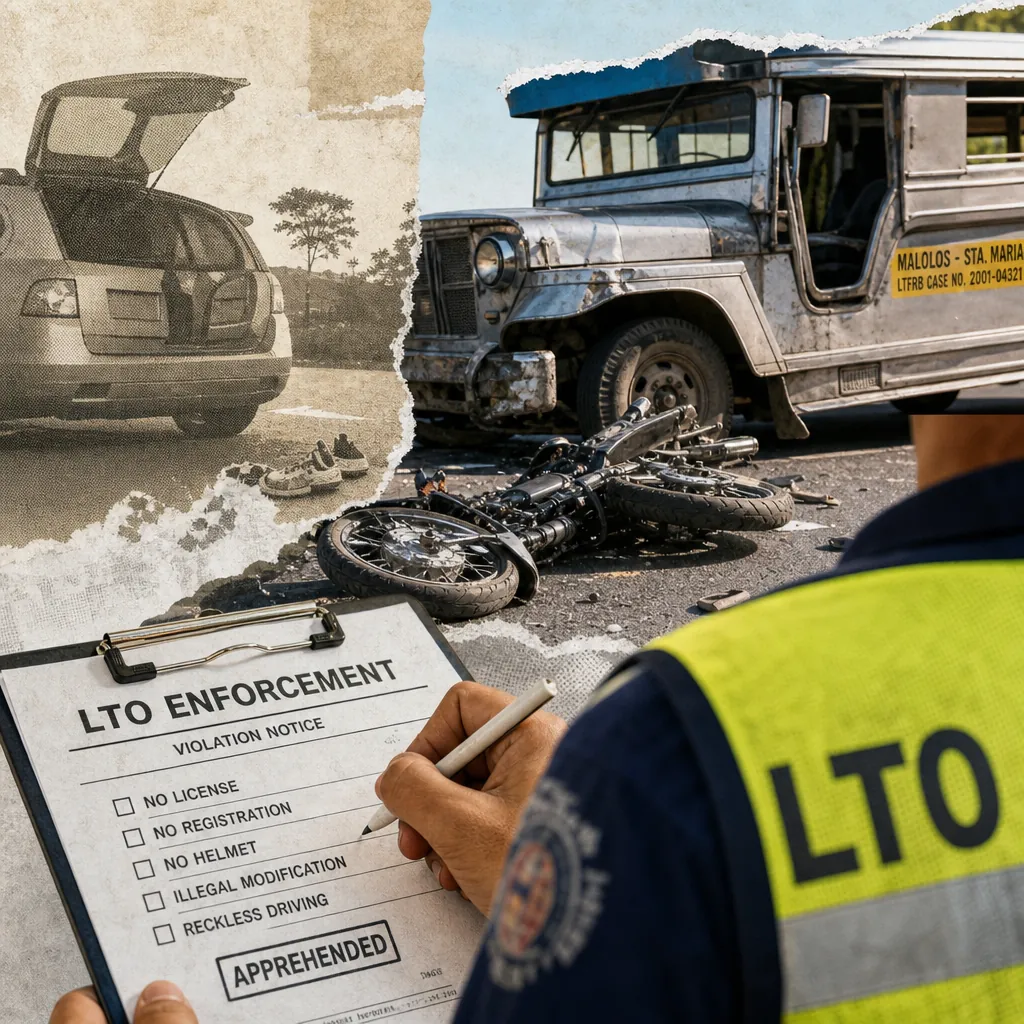
Two motorcycle accidents on August 23 set the tone for the day's road safety conversation. In Cebu City, a rider was left in critical condition after colliding with another motorcycle in Barangay San Antonio, a story broken by ABS-CBN and relayed across Twitter and Facebook, drawing over 3,000 views and 78 reactions on the primary post. Hours earlier, UNTV reported that a 36-year-old woman lost control of her motorcycle on Marcos Highway, requiring rescue responders to splint her before taking her to hospital. These incidents framed the day's discourse, but the conversation quickly expanded beyond raw accident reporting into questions of rider skill, regulatory enforcement, and institutional accountability.
On Reddit, a new rider—a former cyclist who bought their first motorcycle in early August—asked for advice on handling traffic and the "tipping" sensation when braking with a passenger. The post drew 77 upvotes and 34 comments, revealing a practical skill gap among beginners. A separate Reddit thread criticized a TNVS driver's dangerous interpretation of a yellow traffic light, but quickly escalated into a broader attack on the Land Transportation Office (LTO), with the user writing, "To LTO, sa totoo lang, kasalanan nyo din to eh" (honestly, this is your fault too), and blaming the agency for lax enforcement and the failure of the NCAP system to issue penalties. This sentiment echoed in a separate discussion about LED headlight legality, where a new Keeway Cafe Racer owner cited conflicting advice from TikTok personalities and MMDA officials.
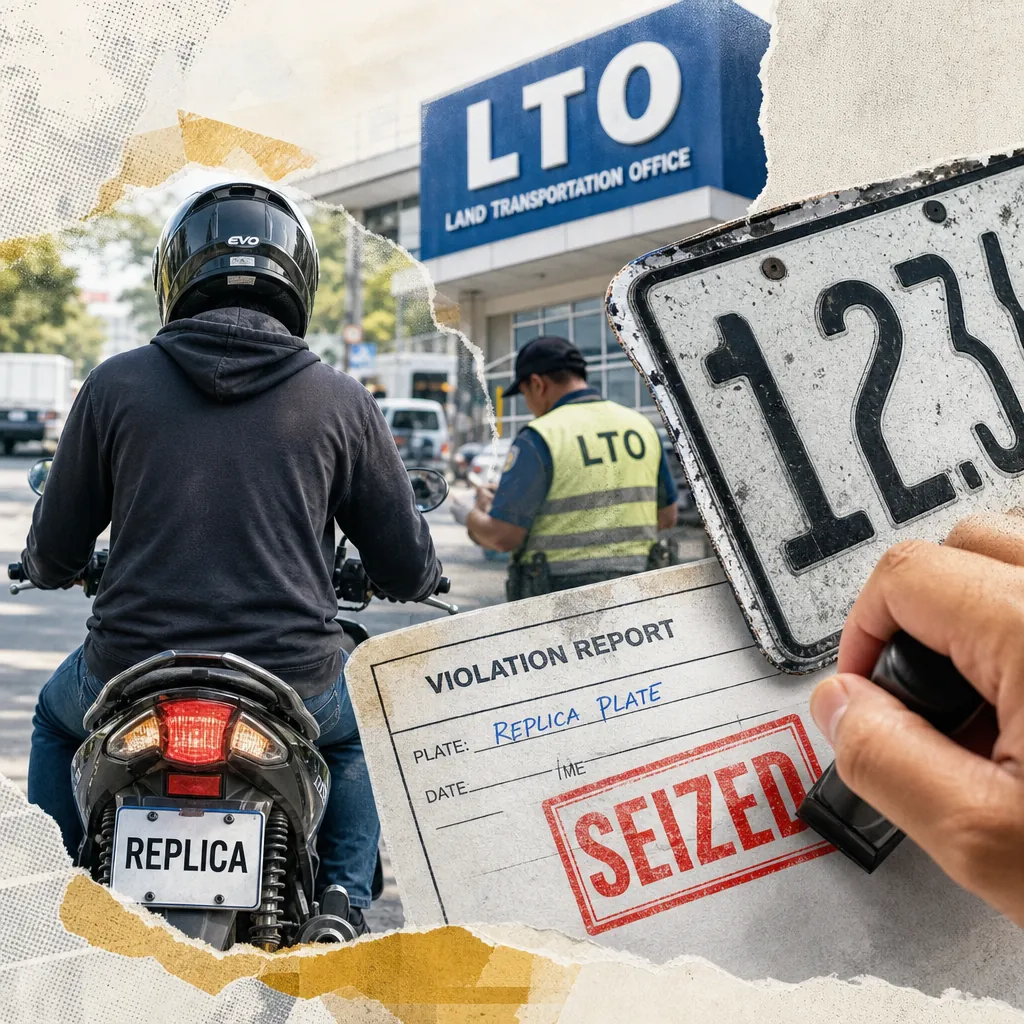
Institutional responses emerged by afternoon. The Metropolitan Manila Development Authority (MMDA) promoted its free Motorcycle Riding Academy on Facebook for two consecutive days, with a post on August 23 receiving 2 likes and 2 shares. A YouTube vlog by "CHERRIDES," a Filipino lady rider, documenting her two-day basic training at the academy, resurfaced and accumulated 3,316 views. The NPTC-LTO Defensive Driving Seminar held on August 21 for vehicle rental drivers also signaled a push for professional driver education. Meanwhile, the LTO announced a crackdown on improvised and replica license plates starting September 1, warning motorists and manufacturers alike.
Beyond safety, the day saw notable EV developments. BYD Chairman Wang Chuanfu visited the Philippines, touring dealerships and charging hubs, reaffirming the company's commitment to the local market. JAECOO introduced its J5 HEV and J5 EV in Cebu, while GAC launched the GS4 Max hybrid. A YouTube review of the VinFast VF3, titled "One Week with the Vinfast VF3 | I MIGHT BUY ONE!", documented real-world usability in Metro Manila traffic, accumulating 46 views. These signals point to growing consumer interest in electrified mobility, even as the dominant narrative remained safety and enforcement.
Key themes
- Motorcycle accidents drive urgent safety discourse — Two serious crashes on August 23—one in Cebu City, one on Marcos Highway—dominated news and social media, drawing thousands of views and hundreds of reactions. The incidents underscored the human cost of road incidents and prompted calls for better rider training.
- New riders seek practical skills, not just warnings — A Reddit post from a beginner rider asking about passenger handling and braking drew 77 upvotes and 34 comments, showing a demand for hands-on advice. This contrasts with the passive consumption of accident news and suggests an opportunity for structured training programs.
- LTO faces public criticism over enforcement gaps — Reddit users blamed the LTO for lax standards, citing dangerous driving philosophies and the failure of the NCAP system to catch violators. While engagement was modest (1 like, 10 comments), the critique reflects a persistent distrust of regulatory bodies.
- Free riding academies gain traction as a counter-narrative — The MMDA's Motorcycle Riding Academy and similar programs received positive attention, with a YouTube vlog documenting the training experience amassing 3,316 views. These initiatives position institutions as proactive on safety.
- LTO announces crackdown on replica plates starting September 1 — The agency warned motorists and manufacturers against using or producing improvised plates without authorization, signaling stricter enforcement. This could affect many vehicle owners and aftermarket sellers.
- EV interest grows with BYD chairman visit and new hybrid launches — BYD's Wang Chuanfu toured Philippine facilities, while JAECOO and GAC introduced new hybrid models. A VinFast VF3 review drew modest but engaged viewership, indicating early-stage consumer curiosity.
- Headlight glare emerges as a safety concern — A Daily Tribune opinion piece highlighted the blinding effect of modern LED headlights, citing a US survey where six in ten drivers considered it a problem. This adds to the regulatory confusion around aftermarket modifications.
- Celebrity and viral content still capture attention — A GMA YouScoop video of a car splashing water on a motorcycle's windshield drew 1,798 reactions and 55 shares, showing that lighter content can outperform serious safety news in engagement.
How the narratives stack
Dominant — Motorcycle safety and regulatory enforcement dominated the captured conversation. The two accidents on August 23 generated the most news coverage and social engagement, with ABS-CBN, UNTV, and regional outlets amplifying the incidents. The LTO's replica plate crackdown added a regulatory dimension, while the Reddit criticism of LTO enforcement provided a counterpoint. Within the captured set, these safety and enforcement stories accounted for the majority of items and engagement, though the monitoring scope may have weighted toward news outlets.
Counter-narrative — Institutional safety promotion, particularly the MMDA's free riding academy, offered a proactive counter to accident coverage. The academy's promotion and the resurfaced vlog presented a constructive path forward, suggesting that institutions are not merely reacting to failures but actively educating riders. This narrative, while smaller in volume, provided a positive frame that could be amplified.
Emerging — EV adoption is an emerging narrative, with BYD's chairman visit, new hybrid launches, and a VinFast VF3 review signaling growing consumer interest. While engagement numbers are modest, the strategic significance is high, as manufacturers position for the electrified future. The conversation is shifting from spec-sheet comparisons to real-world ownership experiences, which could accelerate as more owners document their daily use.
Under-covered — The headlight glare issue, raised in a Daily Tribune opinion piece, received little attention in the captured set despite being a widespread concern. The piece cited a US survey where six in ten drivers found glare a problem, and the issue ties directly to the LED legality confusion. This topic could gain traction if picked up by mainstream media, especially as the LTO's crackdown on replica plates draws attention to vehicle modifications.
Platform insights
- Facebook — The primary breaking-news hub, with ABS-CBN, GMA, and UNTV using it for initial reports. The Cebu City accident drew 78 reactions, while the GMA YouScoop water-splash video achieved 1,798 reactions and 55 shares, showing that lighter content still captures attention. Facebook also hosted numerous used motorcycle sales posts, indicating a vibrant secondhand market.
- Reddit — The critical-thinking space, where users shared personal struggles with riding mechanics and regulatory frustrations. The new rider's plea for help and the LTO critique provided organic, anecdotal data that quantitative news reports lacked. Engagement was low (0-77 upvotes per relevant post), but the depth of discussion was high, serving as a grassroots "voice of the rider".
- YouTube — Primarily used for longer-form content, hosting both institutional advertiser content like the MMDA academy vlog and creator-led reviews like the VinFast VF3 test. Engagement ranged from 26 to 51 interactions, suggesting a niche but engaged audience seeking deep-dive information over breaking news.
- Twitter — Used for relaying breaking news, with ABS-CBN's Cebu City accident post drawing over 3,000 views and 78 reactions across platforms. Twitter served as a secondary amplifier for news outlets, though engagement was lower than Facebook.
Key voices and communities
- Traffic Safety & Enforcement Skeptics — Active on Reddit and Facebook, this group questions LTO enforcement consistency and driver education quality. Their posts generate moderate engagement but high relevance, with one traffic observation thread drawing 34 comments and another critique of driver behavior earning 10 comments. They frame complaints around personal experience rather than abstract policy, making them a persistent undercurrent of distrust.
- Motorcycle Safety Advocates & Institutional Promoters — Includes news organizations, police information offices, and government-affiliated programs promoting rider safety. Their content on accidents and training consistently generates engagement, with the MMDA academy vlog amassing 3,316 views. They align with safety messaging and present opportunities for automakers to associate with proactive training content.
- Motorcycle Enthusiasts & EV Curious Commuters — Comprises motorcycle owners exchanging buying, maintenance, and modification advice, and EV-curious commuters evaluating Chinese and Vietnamese brands. Active on Reddit and YouTube, their engagement is higher on topics combining practical ownership with regulatory questions. The VF3 review drew 46 views and 6 likes, while a query comparing BAIC, Jetour, and Haval hybrids generated targeted discussion.
- Local News & Public Safety Responders — Regional news desks, rescue teams, and community reporters amplify traffic incidents and safety concerns. Their posts generate reliable engagement, particularly when involving severe accidents or celebrities. The Cebu City crash was picked up by ABS-CBN's TV Patrol, showing how local incidents become national stories.
- Brand-Connected Riding Communities & Premium Motorcycle Enthusiasts — A smaller but highly engaged set of riders participates in brand-led educational events, such as the BMW Motorrad-backed Bike Care Talk, which drew 30 likes and 19 loves on Facebook. Their content is lifestyle-oriented, focusing on ownership satisfaction and riding preparedness, providing a counterpoint to critical safety conversations.
Narrative streams
Motorcycle accidents highlight the human cost of road incidents
On August 23, two motorcycle accidents dominated the news cycle. In Cebu City, a rider was critically injured after colliding with another motorcycle in Barangay San Antonio, a story broken by ABS-CBN and relayed across Twitter and Facebook, drawing over 3,000 views and 78 reactions on the primary post. Hours earlier, UNTV reported that a 36-year-old woman lost control of her motorcycle on Marcos Highway, requiring rescue responders to splint her before taking her to hospital. These incidents set a somber tone, but the reaction volume was moderate, suggesting a desensitized audience. The emotional weight was significant, yet the engagement did not match the severity, indicating that accident fatigue may be setting in. For the sector, this means that simply reporting accidents may no longer drive engagement; instead, audiences are looking for solutions, as evidenced by the subsequent interest in training programs.
New riders seek practical skills, not just warnings
A Reddit post from a new rider, a former cyclist who bought their first motorcycle in early August, asked for advice on handling traffic and the "tipping" sensation when braking with a passenger. The post drew 77 upvotes and 34 comments, with practical tips on braking and balance dominating the discussion. This highlights a gap between the theoretical knowledge imparted in licensing tests and the real-world skills needed to ride safely. The high comment-to-like ratio suggests an information vacuum that institutional programs could fill. For the sector, this is an opportunity for manufacturers and dealers to offer supplementary training or partner with riding academies to build customer confidence and loyalty.
LTO faces public criticism over enforcement gaps
A Reddit user, initially posting about a TNVS driver's dangerous interpretation of a yellow traffic light, launched into a broader tirade against the LTO. The user wrote, "To LTO, sa totoo lang, kasalanan nyo din to eh," and criticized enforcement and the NCAP system for failing to issue penalties. The post, while modest in engagement (1 like, 10 comments), articulated a broader sentiment that resurfaced in a separate discussion on LED headlight legality, where a prospective buyer cited conflicting information from TikTok personalities and MMDA officials. This perception of inconsistent regulatory guidance poses a reputational risk to government agencies and, by extension, to the policy environment within which automotive clients operate. For the sector, this suggests that brands can differentiate by providing clear, authoritative compliance guidance, positioning themselves as trusted sources of information.
Free riding academies gain traction as a counter-narrative
The MMDA promoted its free Motorcycle Riding Academy on Facebook for two consecutive days, with a post on August 23 receiving 2 likes and 2 shares. A YouTube vlog by "CHERRIDES," documenting her two-day basic training at the academy, resurfaced and accumulated 3,316 views. This content style—authentic, first-person, educational—resonates with new riders, as evidenced by the engagement. The NPTC-LTO Defensive Driving Seminar held on August 21 for vehicle rental drivers also signaled a push for professional driver education. For the sector, this presents an opportunity for brands to co-create or sponsor similar educational content, associating themselves with responsible riding without defensive messaging.
LTO announces crackdown on replica plates starting September 1
LTO Chief Assistant Secretary Markus Lacanilao announced that starting September 1, the agency will crack down on motorists using improvised or replica plates without authorization. "Starting September 1 po kasi, lahat po ng gumagawa ng improvised plate o 'yung mga replica plate, 'yung eksaktong ginagaya po nila 'yung plaka ng LTO, bawal po iyon," he said. The crackdown also targets manufacturers of these plates. This move could affect many vehicle owners who use replica plates for various reasons, and it may generate confusion and concern. For the sector, this is a regulatory change that brands should communicate clearly to customers, offering guidance on compliance to avoid penalties.
EV interest grows with BYD chairman visit and new hybrid launches
BYD Chairman Wang Chuanfu visited the Philippines, touring dealerships, Denza showrooms, and ACMobility Charging Hubs, reaffirming the company's commitment to the local market. JAECOO introduced its J5 HEV and J5 EV in Cebu, with prices at P1.179 million and P1.469 million respectively. GAC launched the GS4 Max hybrid at P1.298 million, with an introductory price of P1.218 million. A YouTube review of the VinFast VF3, titled "One Week with the Vinfast VF3 | I MIGHT BUY ONE!", documented real-world usability in Metro Manila traffic, accumulating 46 views. These developments signal growing consumer interest in electrified mobility, though the conversation remains early-stage. For the sector, this is a strategic window for manufacturers to facilitate long-term review content that addresses charging realities and daily usability, filling a content gap that currently relies on individual creators.
Headlight glare emerges as a safety concern
A Daily Tribune opinion piece highlighted the blinding effect of modern LED headlights, citing a US survey where six in ten drivers considered it a problem after dark, and nearly three quarters of those affected believed it had become worse over the past decade. The piece noted that rain makes the glare worse, and the issue is familiar to anyone driving at night in Metro Manila. This ties directly to the LED legality confusion, where a new Keeway Cafe Racer owner asked whether replacing the stock bulb headlight with LED is LTO legal. For the sector, this is an opportunity for manufacturers to provide clear guidance on compliant lighting options and to advocate for sensible regulations that balance visibility and safety.
Conversation trajectory
- Motorcycle safety discourse shifting from awareness to systemic criticism — The conversation is moving beyond individual accident reporting toward institutional accountability, with public frustration targeting regulatory enforcement gaps. A single ride-sharing experience where a driver misinterpreted yellow-light protocol triggered a broader critique of licensing standards and traffic law enforcement. This trajectory will likely intensify within 2-4 weeks as accident-related coverage continues, creating reputational exposure for LTO and related government stakeholders.
- New rider safety education demand accelerating — Multiple beginner-focused posts are gaining traction, from inquiries about handling motorcycles with passengers to questions about aftermarket modifications legality. The engagement pattern—high comment-to-like ratios on practical skill questions—suggests an information vacuum that institutional programs could fill. Expect continued growth in how-to and regulatory compliance queries over the next 1-2 months, especially among first-time buyers.
- Chinese and emerging brand consideration rising among value-oriented buyers — Purchase consideration threads are increasingly featuring Chinese brands alongside established Japanese models, with buyers weighing hybrid options like the BAIC B30e, Jetour T1, and Haval H7. This indicates growing acceptance of newer entrants as viable alternatives, likely driven by price sensitivity and feature expectations. The trajectory suggests within 3-6 months, brand comparison content will expand significantly, making competitive intelligence on these emerging players more critical.
- EV content shifting from specification reviews to ownership-experience narratives — Recent electric vehicle coverage emphasizes real-world practicality—charging realities, daily ergonomics, and structural trade-offs—over theoretical performance metrics. This content style is gaining engagement traction, signaling that consumer skepticism is being addressed through lived experiences rather than marketing claims. As more owners document daily usage, expect this narrative to accelerate within 4-8 weeks, providing opportunities for EV-focused messaging that acknowledges limitations while framing them within urban mobility contexts.
Trigger events to watch:
- The LTO's replica plate crackdown on September 1 will likely generate public discussion and potential confusion, especially among vehicle owners and aftermarket sellers.
- The upcoming Typhoon Saudel landfall forecast may amplify flood-related vehicle damage discussions and safety concerns across motorcycle and car communities.
- The scheduled PIMS 2026 exhibition season will likely provide a focal point for brand-comparison and purchase-intent discourse within the next quarter.
- The ongoing investigation into the Ateneo de Zamboanga shooting, which involves a vehicle as part of the incident narrative, may trigger renewed debates about vehicle access and gun control, indirectly affecting automotive brand perceptions.
Response guidance
Safety education as a brand differentiator — Given the elevated visibility of motorcycle accidents, automotive and motorcycle clients should amplify their existing safety training content or partner with agencies like MMDA and LTO to promote free riding academies. The strong engagement with the MMDA academy vlog demonstrates audience receptivity to practical, accessible safety instruction. Brands that co-create or sponsor such content can associate themselves with responsible riding without defensive messaging.
Authoritative regulatory clarification content — The conflicting advice regarding LED headlight legality and the broader critique of LTO enforcement creates an information vacuum. Clients, particularly those selling vehicles with aftermarket customization potential, should publish plain-language guides on compliance requirements—covering bulb replacements, plate visibility, and registration rules—to position themselves as trusted sources of regulatory information and reduce customer uncertainty.
Leverage early EV ownership narratives for market education — The positive reception of the compact EV week-long review, alongside the hybrid model comparisons, indicates a segment of early adopters actively seeking practical ownership insights. Brands should consider facilitating or sponsoring similar long-term review content that addresses charging infrastructure realities and daily usability, thereby filling a content gap that currently relies on individual creators rather than manufacturer-led storytelling.
Monitor and respond to regulatory criticism — The conversations around LTO enforcement and the NCAP system carry direct reputational risk for government clients and indirect risk for industry players who may be seen as enabling lax standards. Prepare a holding statement that acknowledges the concern, commits to reviewing feedback, and references ongoing digital transformation initiatives. Avoid directly defending the agency, as that will amplify negativity.
Consumer protection content for the used vehicle market — Given the volume of second-hand listings and the potential for scams, a short, digestible series on verifying LTO plate numbers, checking for alarm systems, and understanding open deed of sale risks would position clients as trusted advisors. This content should be platform-agnostic and easily shareable, focusing on the "how-to" not the "who's at fault."
See the full picture behind today's signals.
This report draws from Media Meter's MediaWatch, our real-time monitoring engine tracking 2,470+ Philippine sources across print, broadcast, digital, and social. Explore how the platform turns raw coverage into decision-grade intelligence, then see how it's configured for teams like yours — whether you're in PR agencies, corporate comms, government, or marketing.
Want more? Browse our Report Library for sector and crisis intelligence, or request a demo and we'll have your brand set up before the call.
Want this kind of intelligence on your brand?
This brief is built on the same MediaWatch methodology that runs continuously across every brand we monitor. See your competitive landscape, Impact Score, and narrative trajectory in a 30-minute demo.