Customs seizes Derek Ramsay's misdeclared Porsche, to auction supercar
The Bureau of Customs will seize and auction actor Derek Ramsay's Porsche 918 Spyder after it was misdeclared as a lower-value model, drawing heavy public engagement and raising questions about buyer liability. The day also saw actor Niño Muhlach admit to falling asleep at the wheel in a crash, alongside a wave of plug-in hybrid and EV launches from Mitsubishi, MG, GAC, and Nissan.
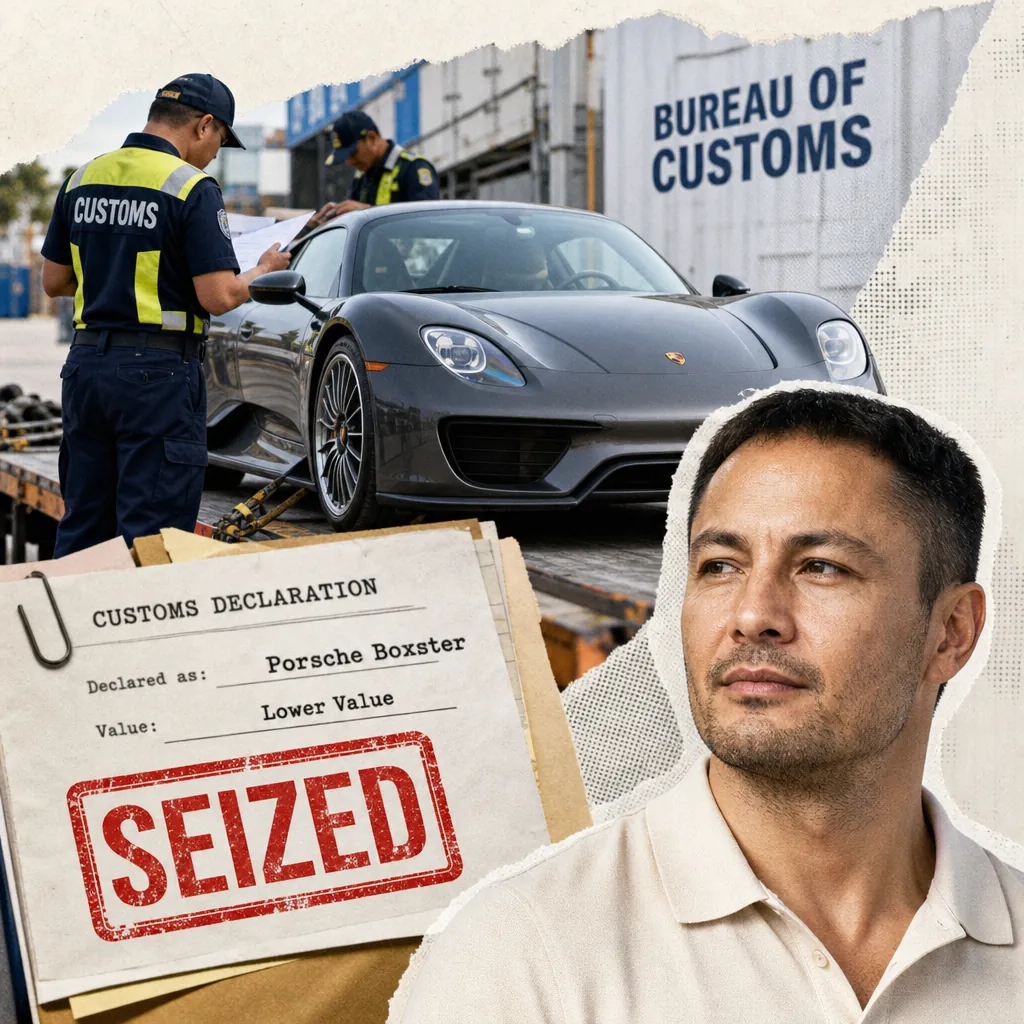
The Bureau of Customs (BOC) announced it would seize and auction a Porsche 918 Spyder owned by actor Derek Ramsay after discovering the supercar was illegally imported and misdeclared as a far cheaper model, a decision that dominated the day's automotive conversation across news media and social platforms. The vehicle, declared as a Porsche Boxster valued at P6 million to P10 million instead of the 918 Spyder's actual worth of P75 million to P100 million, became the center of a fast-moving story that shifted from a straightforward smuggling case to a debate about buyer liability and due diligence. Customs Commissioner Ariel Nepomuceno said the physical vehicle was a Porsche 918 Spyder but the documents described a Porsche Boxster, and that the car would be forfeited in favor of the government and auctioned. The case drew heavy newspaper and online coverage, including a Philstar report worth an estimated P374,306 in advertising-equivalent value, and generated thousands of views and hundreds of reactions on social media.
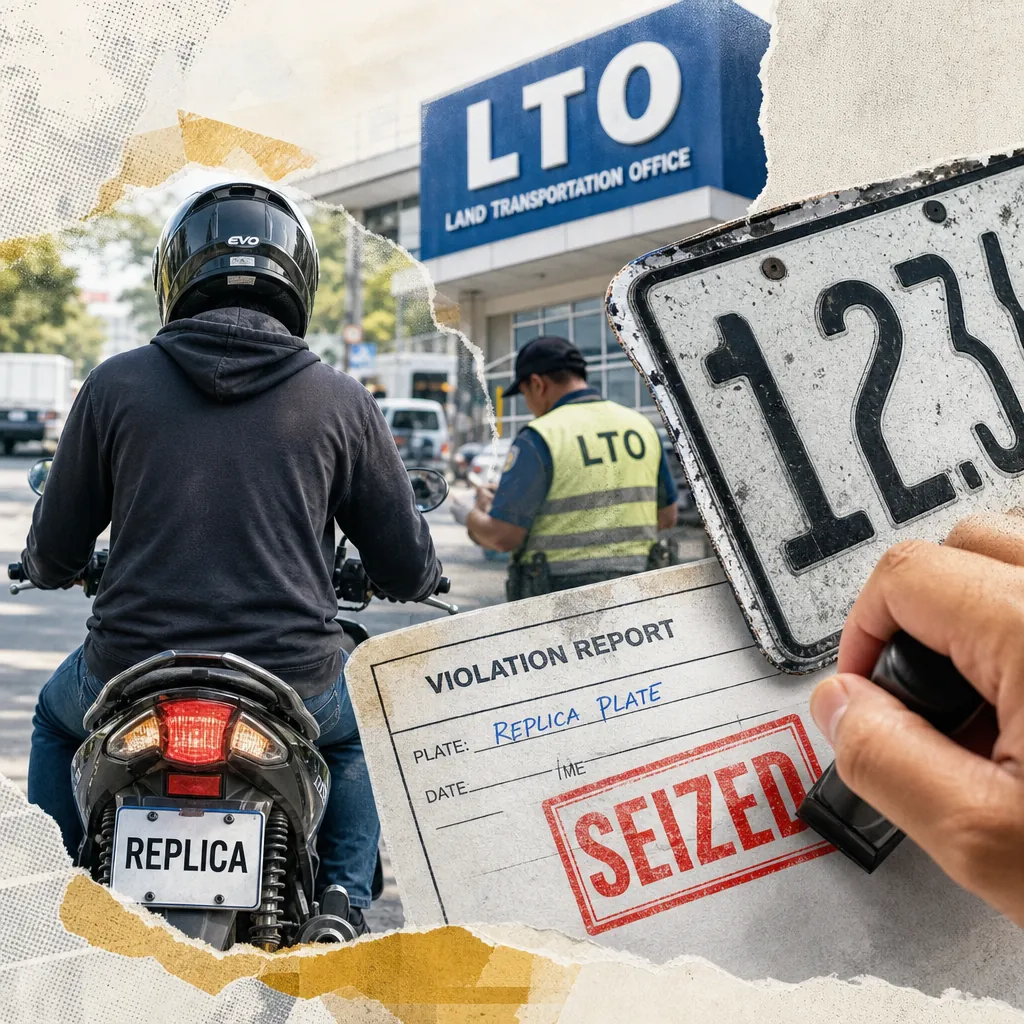
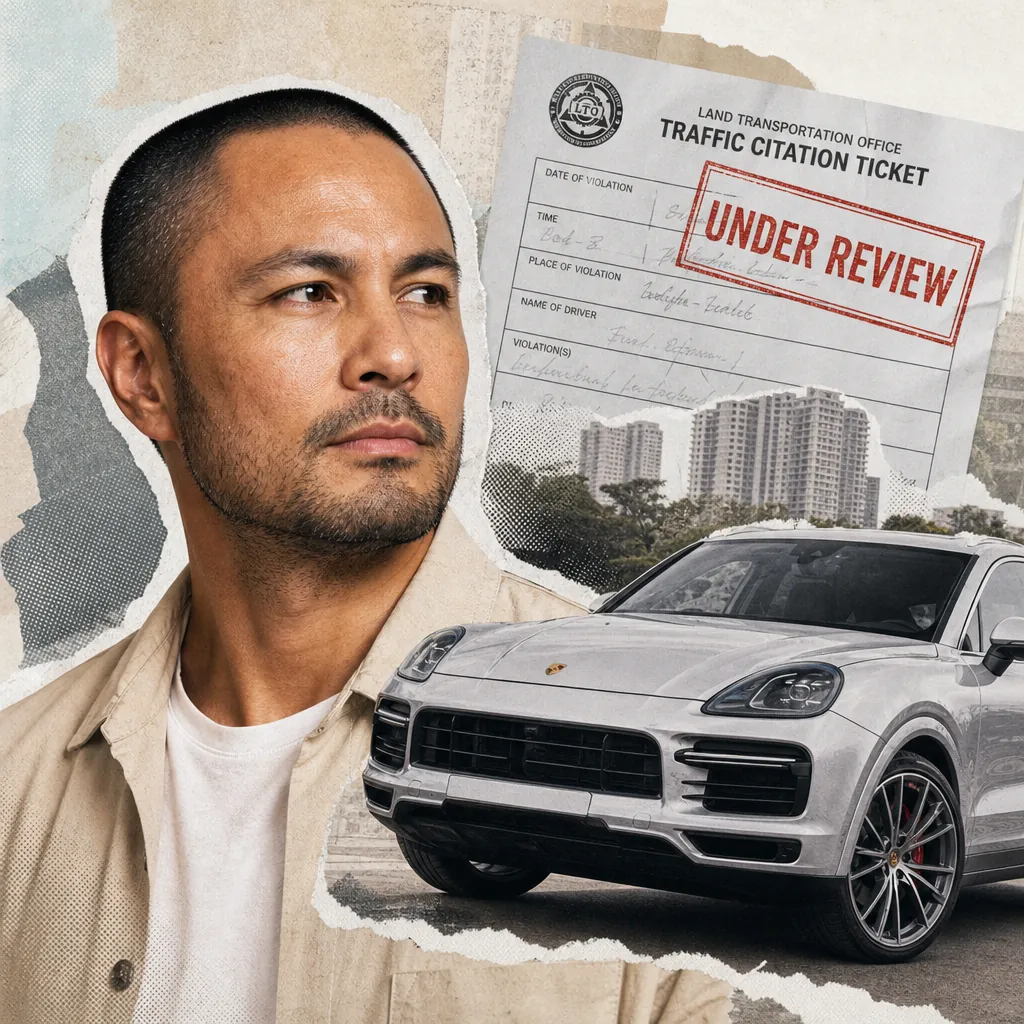
Ramsay, in a public statement, said he purchased the vehicle four years ago from a certain Jhon Lee of JWorks, believing taxes were already paid, introducing a "good faith buyer" angle that would dominate subsequent discussion. By the afternoon, TV Patrol reports confirmed the BOC would seize and auction the vehicle, while Commissioner Nepomuceno hinted that Ramsay might be a victim rather than a perpetrator. The narrative gained further complexity when reports emerged that the supercar was initially impounded by the Land Transportation Office (LTO) for using a fake plate, adding a second regulatory violation to the story and shifting public perception from celebrity indulgence to systemic enforcement concerns. The LTO chief and the Customs commissioner jointly inspected the surrendered vehicle at the LTO central office in Quezon City as the fake license plate probe continued.
A second narrative thread emerged simultaneously when actor and businessman Niño Muhlach admitted to falling asleep while driving his SUV, causing an accident that injured one person and damaged several establishments along Marcos Highway in Antipolo City. This story gained traction through GMA News' "24 Oras" report and subsequent confirmation posts on social media, where Muhlach's admission became a focal point for discussions about driver fatigue and road safety accountability. In a statement posted on his Instagram account, Muhlach took full responsibility for the accident, saying he dozed off at the wheel, and pledged to shoulder the victim's medical costs. The crash, which occurred on August 23, saw his SUV cross to the other side of the road and hit three shops, including a paresan where the injured man was eating, and also struck a motorcycle that got trapped under the vehicle.
A third thread developed on Reddit where a user asked for legal judgment on a road rage incident involving a Magnolia employee who cut them off after being denied a merge on the North Luzon Expressway (NLEX) southbound. Additionally, an LTO Region 6 report in Iloilo detailed how three motorcycle riders surrendered after a viral video showed them kicking traffic cones during a running event, with one rider admitting they had been drinking. A late-evening crash involving five vehicles including two jeepneys and a motorcycle taxi on the Legarda Flyover in Manila injured at least ten people, rounding out a day dominated by celebrity incidents and public road safety failures.
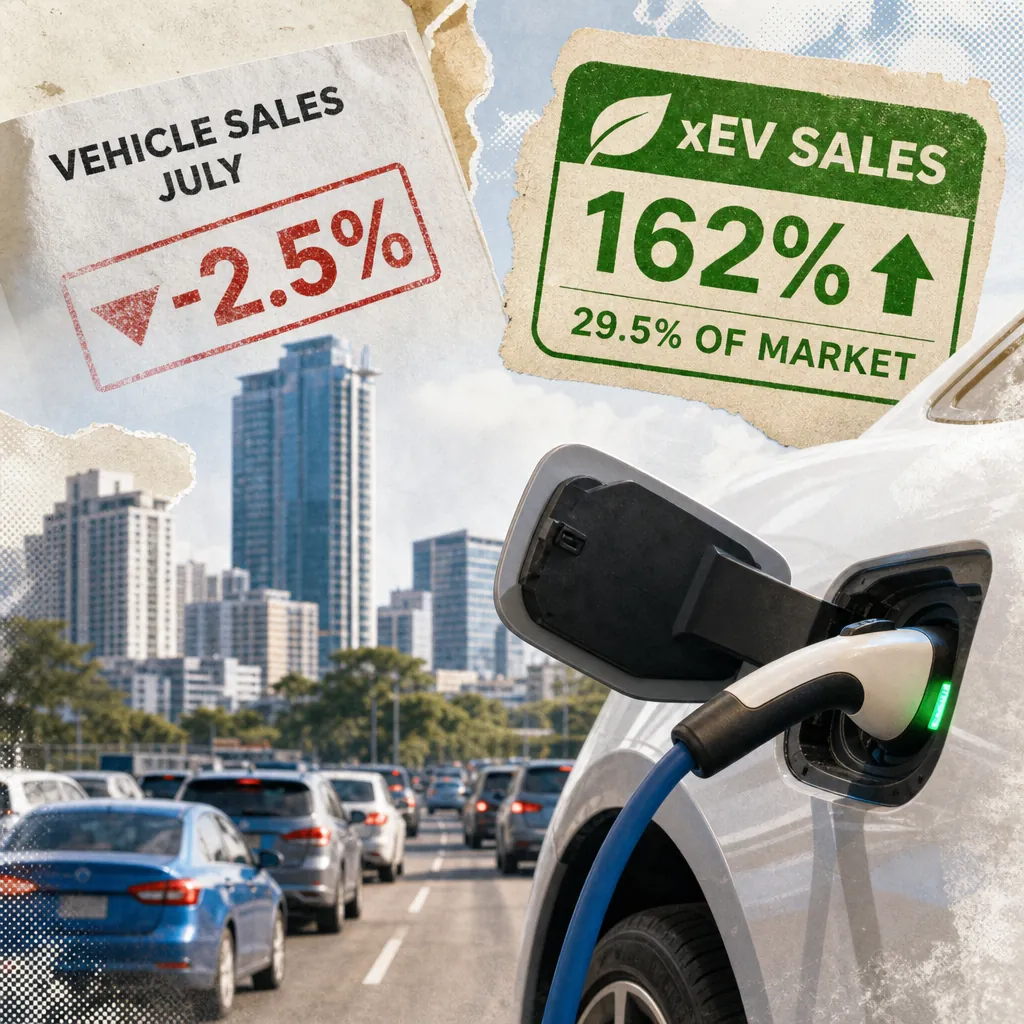
Running parallel to these enforcement and safety stories was a wave of product launches and reviews in the electrified vehicle segment. Mitsubishi Motors Philippines officially launched the all-new Outlander PHEV, its first plug-in hybrid offering in the country, priced at P2.848 million, with a claimed combined driving range of nearly 1,000 kilometers. The launch drew coverage from The Manila Times worth an estimated P646,328 in advertising-equivalent value, and generated a wave of reviews from local and international creators. MG Motor Philippines announced it would publicly launch the S5 EV on August 27 at the Trinoma Activity Center, with a claimed range of up to 415 kilometers on a full charge. GAC Motor Philippines started accepting pre-orders for the GS4 Max HEV, a hybrid SUV priced at P1.298 million, with an introductory price of P1.218 million. Nissan Philippines invited the public to experience the All-New Nissan Kicks e-POWER at a three-day event starting August 28 at the Glorietta Palm Drive Activity Center.
Key themes
- Customs to seize and auction Derek Ramsay's Porsche 918 Spyder over misdeclaration — The Bureau of Customs announced it would file a warrant of seizure and detention on the supercar, which was declared as a Porsche Boxster worth P6M-P10M instead of its actual P75M-P100M value, and auction it after forfeiture. The case drew heavy coverage across news media and social platforms, with a Philstar report worth an estimated P374,306 in advertising-equivalent value.
- Ramsay's "good faith buyer" defense shifts scrutiny to seller Jhon Lee — The actor said he purchased the vehicle four years ago from Jhon Lee of JWorks, believing taxes were already paid, and Customs Commissioner Nepomuceno said Ramsay was "possibly also a victim," redirecting public attention toward the seller. A TV Patrol Facebook post noting Ramsay had "no involvement in importing the vehicle" accumulated 263 likes and 43 comments.
- Niño Muhlach admits falling asleep at the wheel in Antipolo crash — The actor took full responsibility for the August 23 accident that injured one person and damaged several shops along Marcos Highway, saying he dozed off while driving. His admission shifted the discussion from the accident's details to the broader issue of driver fatigue and whether celebrities receive preferential treatment.
- Viral video leads to swift LTO action against motorcycle riders in Iloilo — Three riders surrendered to LTO Region 6 after a video of them kicking traffic cones during a running event went viral, with the driver receiving a 90-day preventive license suspension. LTO Assistant Director Jeck Conlu said the riders were "alarmed because it went viral on social media," highlighting the growing power of citizen-generated content in driving enforcement.
- Plug-in hybrid and EV launches accelerate across multiple brands — Mitsubishi launched the Outlander PHEV at P2.848 million, MG announced the S5 EV launch for August 27, GAC opened pre-orders for the GS4 Max HEV at P1.298 million, and Nissan scheduled the Kicks e-POWER debut for August 28. Reviews of the Geely EX5 EM-i and a BYD eMAX 9 versus Kia Carnival comparison drew over 32,000 combined views, signaling strong consumer interest in cost-per-kilometer comparisons.
- Fuel prices rise again, with diesel up P2.31 and gasoline up P1.08 per liter — The Department of Energy announced the increase effective August 25, while assuring motorists that the rise reflects price pressure, not a supply shortage. Energy Undersecretary Alessandro Sales said the probability of a double-digit increase in the coming weeks is relatively low, citing the US-Iran conflict settling into "grinding attrition."
- Multiple road accidents and safety incidents dominate regional news — A five-vehicle collision on the Legarda Flyover injured at least ten people, a Pinay caregiver was killed in a traffic collision in Taiwan, and regional broadcasters reported several motorcycle accidents across Mindanao and Visayas. These incidents reinforced a persistent safety narrative around driver behavior and infrastructure gaps.
- Chinese brands intensify competitive pressure on established automakers — China exported 1.043 million vehicles in July 2026, an 81.3 percent year-on-year increase, and the Geely Group overtook BYD Group in first-half sales with over 1.02 million vehicles. A Manila Times column called the shift "a wake-up call for everyone in the local automotive business."
How the narratives stack
Dominant — The Derek Ramsay Porsche seizure case was the day's most significant story, judged by both the consequence of the regulatory action and the breadth of public response. The Bureau of Customs' decision to seize and auction a celebrity's supercar over misdeclaration drew heavy coverage across news media, with a Philstar report worth an estimated P374,306 in advertising-equivalent value, and generated thousands of views and hundreds of reactions on social media. The story's evolution from a straightforward smuggling case to a debate about buyer liability and due diligence kept it at the top of the news cycle throughout the day. Within the captured set, this story drew the most items and the highest engagement, though the monitoring scope may have weighted toward broadsheets and major online outlets.
Counter-narrative — The "good faith buyer" framing, advanced by Ramsay's statement and echoed by Customs Commissioner Nepomuceno, positioned the actor as a potential victim rather than a perpetrator. This counter-narrative redirected public scrutiny toward the seller Jhon Lee and JWorks, and raised questions about whether ordinary buyers could face similar seizure scenarios despite allegedly proper documentation. The mixed emotional reactions on Facebook — including 22 "haha" reactions on one ABS-CBN post — suggested a segment of the audience found the celebrity's situation absurd rather than tragic, complicating the victim framing.
Emerging — The plug-in hybrid and EV launch wave, with Mitsubishi, MG, GAC, and Nissan all announcing or launching electrified models within days of each other, signals a shift from "EV curiosity" to "PHEV value-war." Reviews comparing Chinese and Japanese PHEVs on price and features drew over 32,000 combined views, indicating consumers are actively weighing total cost of ownership. This emerging narrative could reshape competitive positioning in the Philippine market over the coming months.
Under-covered — The fuel price hike, with diesel up P2.31 and gasoline up P1.08 per liter effective August 25, received relatively modest coverage compared to the celebrity stories, despite its direct impact on millions of motorists. The Department of Energy's assurance that the increase reflects price pressure rather than supply shortage, and the extension of the fuel subsidy for public utility vehicle operators to P12 per liter, were reported but drew limited public engagement. This story placed low in the captured set, possibly because it lacked the celebrity and drama of the other narratives.
Platform insights
- YouTube — The Ramsay story dominated YouTube with two UNTV videos and one ABS-CBN video, with the primary UNTV coverage drawing 4,872 views and 70 likes, while a follow-up video on the confiscation process added another 378 views and 16 likes. These videos served as the primary source of detailed reporting, with zero comments on the ABS-CBN video indicating that viewers were primarily consuming rather than discussing the content. YouTube also emerged as the primary vehicle for deep-dive PHEV reviews, with the Geely EX5 EM-i review dominating engagement at 20,253 views and 549 likes, while the Outlander PHEV reviews across UK and regional channels accumulated a combined 25,000+ views.
- Facebook — Facebook became the primary discussion forum, with multiple broadcasters posting updates that generated significant engagement. The most engaged post on DZMM's page accumulated 185 likes and 53 comments, while TV Patrol's coverage on ABS-CBN's page drew 83 likes and 13 comments. Notably, sentiment on Facebook was more critical than on other platforms, with one post receiving 22 "haha" reactions out of 92 total reactions, indicating that some users found the celebrity situation absurd rather than tragic. Facebook also functioned as the activation layer for dealerships and official brand messaging, though engagement on these posts remained thin.
- Twitter/X — Twitter saw rapid dissemination of the Muhlach admission and Ramsay seizure news through multiple posts from ABS-CBN and UNTV news handles. The Ramsay confiscation posts each gained over 3,200 views within hours, while the Muhlach admission received more modest engagement but established the driver fatigue narrative that fueled subsequent discussions. The Legarda Flyover accident post from UNTV accumulated nearly 4,000 views, marking it as the most-viewed news post on the platform for the day.
- Reddit — The platform hosted more niche discussions, including the road rage liability question that drew 23 comments from users analyzing the situation from legal and practical perspectives. Another Reddit thread about delivering packages via Lalamove or Grab to Mactan Airport showed a different facet of transportation conversations, with users discussing logistics and rider access. Reddit also hosted the most analytically sophisticated automotive conversations, including a detailed owner review of RacePower R Pro shocks for a Honda ADV 160 that earned 5 likes with substantive commentary on the gap between laboratory data and real-world performance.
Key voices and communities
Mainstream news media and broadcast networks — ABS-CBN, UNTV, GMA News, and Philstar dominated the conversation volume, with their coverage generating the highest individual engagement metrics observed. These outlets set the public narrative agenda for all other stakeholder groups, with their framing of enforcement actions directly shaping reputational outcomes for brands and government agencies alike. Their content pattern showed heavy reliance on institutional government sources for initial reporting.
Government regulatory agencies — The Bureau of Customs and Land Transportation Office functioned as the central institutional actors driving both storylines. BOC Commissioner Ariel Nepomuceno publicly positioned Ramsay as a potential victim, while the LTO's active role in impounding vehicles, suspending licenses, and issuing show cause orders demonstrated a coordinated enforcement posture across agencies. The LTO's swift response to the viral video in Iloilo, combined with the public's engagement with the Muhlach case, suggests that agencies are increasingly responsive to online pressure.
Celebrity figures and high-profile individuals — Actor Derek Ramsay and actor-businessman Niño Muhlach served as the human interest anchors driving maximum engagement across platforms. Ramsay's public statement asserted he purchased the Porsche 918 Spyder "in good faith" four years ago, with documentation he believed valid. Muhlach acknowledged falling asleep while driving, triggering a one-injury crash in Antipolo. Both figures emphasized cooperation with authorities while maintaining their innocence or mitigating circumstances, occupying an intermediary position between public sympathy and government enforcement.
Automotive media and review creators — Professional automotive publishers, independent YouTube reviewers, and visual content creators produced comparative analyses that generated substantial engagement. A single Geely EX5 EM-i review amassed over 20,000 views and 549 likes within a day of publication. This group operates across YouTube, Facebook, and Twitter, with a mix of established outlets and independent creators driving conversation around new model launches, particularly plug-in hybrids and electric vehicles. Their comparative content directly shapes consumer consideration sets.
Enthusiast and owner communities — Active riders and owners formed a highly engaged but fragmented audience across Reddit and Facebook, sharing first-hand experiences with specific models, parts, and dealership practices. While individual posts may show modest metrics, the community's influence is deep and trusts peer-generated content over marketing materials. One owner explicitly stated "Data-based suspension tuning is useful, but the road is also data" after documenting issues with an aftermarket shock absorber.
Narrative streams
Customs seizes Derek Ramsay's Porsche 918 Spyder over misdeclaration
The Bureau of Customs announced it would file a warrant of seizure and detention on the Porsche 918 Spyder registered to actor Derek Ramsay, after discovering the supercar was misdeclared as a Porsche Boxster valued at P6 million to P10 million instead of its actual worth of P75 million to P100 million. Customs Commissioner Ariel Nepomuceno said the physical vehicle was a Porsche 918 Spyder, but the documents described a Porsche Boxster, and that the car would be forfeited in favor of the government and auctioned. The case drew heavy newspaper and online coverage, including a Philstar report worth an estimated P374,306 in advertising-equivalent value, and a Manila Times report on the broader EV market that referenced the case.
The story evolved rapidly from a straightforward smuggling case into a broader conversation about liability and due diligence in vehicle purchases. Ramsay, in a public statement, said he purchased the vehicle four years ago from a certain Jhon Lee of JWorks, believing taxes were already paid. Commissioner Nepomuceno's statement that Ramsay was "possibly also a victim" became the dominant framing across all platforms by day's end, redirecting public scrutiny toward the seller. The narrative gained further complexity when reports emerged that the supercar was initially impounded by the LTO for using a fake plate, adding a second regulatory violation to the story.
The case's rapid escalation demonstrates that misdeclaration issues can quickly become public relations crises affecting not just importers but also end-users and registered owners. For the automotive sector, the core message is that verified documentation and compliance with LTO and Customs regulations are the only foolproof defenses against legal action and financial loss. The BOC's decision to pursue seizure despite Ramsay's claimed good faith purchase underscores the need for buyers to verify the complete documentation history of high-value assets before acquisition. The mixed emotional responses on Facebook — including both support and derision — also suggest that celebrity involvement can complicate messaging strategies, requiring careful monitoring of sentiment across reactions beyond likes alone.
Niño Muhlach admits falling asleep at the wheel in Antipolo crash
Actor and businessman Niño Muhlach admitted he fell asleep behind the wheel before his SUV plowed into shops along Marcos Highway in Antipolo City on August 23, injuring one person. In a statement posted on his Instagram account, Muhlach took full responsibility for the accident, saying he dozed off at the wheel, and pledged to shoulder the victim's medical costs. The crash saw his SUV cross to the other side of the road and hit three shops, including a paresan where the injured man was eating, and also struck a motorcycle that got trapped under the vehicle.
The story gained traction through GMA News' "24 Oras" report and subsequent confirmation posts on social media, where Muhlach's admission became a focal point for discussions about driver fatigue and road safety accountability. The turning point came when Muhlach publicly admitted to falling asleep, which shifted the discussion from the accident's details to the broader issue of driver fitness and whether celebrities receive preferential treatment in such cases. This thread remained smaller in volume compared to the Ramsay case but generated sustained engagement across Facebook and Twitter, with the admission posts each receiving over 100 views and multiple shares within hours.
Road-safety groups treat fatigue driving as impaired driving: reaction time drops and micro-sleeps at highway speed cover entire bus lengths. The LTO has been tightening enforcement all year, and this incident reinforces the importance of safety messaging, particularly as it relates to driver behavior and vehicle operation. For the automotive sector, this case is a cautionary tale about driver fatigue and celebrity accountability, reinforcing the need to avoid any messaging that appears to joke about or trivialize road safety incidents. The actor's admission and pledge to cover medical costs also demonstrated a template for personal accountability that public figures can follow in such situations.
Viral video leads to swift LTO action against motorcycle riders in Iloilo
Three motorcycle riders voluntarily surrendered to LTO Region 6 after a video of them kicking traffic cones during a running event went viral, with the driver receiving a 90-day preventive license suspension. LTO Assistant Director Jeck Conlu detailed that the riders were "alarmed because it went viral on social media," prompting their surrender. The post accumulated 34 likes and 19 "haha" reactions, suggesting public amusement at the riders' swift comeuppance, while the underlying message about accountability resonated with commenters who noted that "excess passengers" and lack of helmets compounded the violations.
This case highlighted the growing power of social media in driving regulatory enforcement, with the LTO leveraging public video evidence to initiate proceedings that might otherwise have gone unnoticed. The pattern — viral video, swift government action, public approval — is establishing a template that will likely encourage more citizens to record and report traffic violations, creating an environment where any visible infraction involving commercial vehicles or company-branded trucks carries elevated reputational risk for the organization involved.
For the automotive sector, this signals that "viral accountability" is now a factor in enforcement. The speed of the riders' surrender indicates that public shaming is now a powerful enforcement tool. Brands should advise their dealerships and affiliated riders that they may be dragged into future viral videos if involved in violations, and recommend proactive safety messaging. The LTO's swift response also demonstrates that agencies are increasingly responsive to online pressure and that proactive communication about enforcement actions can shape favorable narratives.
Plug-in hybrid and EV launches accelerate across multiple brands
Mitsubishi Motors Philippines officially launched the all-new Outlander PHEV, its first plug-in hybrid offering in the country, priced at P2.848 million, with a claimed combined driving range of nearly 1,000 kilometers. The launch drew coverage from The Manila Times worth an estimated P646,328 in advertising-equivalent value. MG Motor Philippines announced it would publicly launch the S5 EV on August 27 at the Trinoma Activity Center, with a claimed range of up to 415 kilometers on a full charge. GAC Motor Philippines started accepting pre-orders for the GS4 Max HEV, a hybrid SUV priced at P1.298 million, with an introductory price of P1.218 million. Nissan Philippines invited the public to experience the All-New Nissan Kicks e-POWER at a three-day event starting August 28 at the Glorietta Palm Drive Activity Center.
The conversation around these launches shifted from brand awareness toward purchase-decision content, with reviews comparing Chinese and Japanese PHEVs on price and features drawing over 32,000 combined views. A detailed BYD eMAX 9 versus Kia Carnival comparison video drew nearly 12,000 views, reflecting strong audience appetite for head-to-head cost-per-kilometer analyses. The Geely EX5 EM-i review directly challenged BYD Sealion 6 and Chery Tiggo rEV, showing that the market has moved from "what is PHEV" to "which PHEV offers the best value."
The competitive set is no longer just Japanese or Korean; it now includes Chinese PHEVs that are generating substantial organic interest. China exported 1.043 million vehicles in July 2026, an 81.3 percent year-on-year increase, and the Geely Group overtook BYD Group in first-half sales with over 1.02 million vehicles. A Manila Times column called the shift "a wake-up call for everyone in the local automotive business." For traditional automakers, this means they must address the value proposition of their electrified offerings against Chinese entrants that are actively targeting the same mid-tier PHEV buyer. The affordability calculus is becoming the dominant narrative lens, with consumers seeking peso-per-kilometer data to justify electrified purchases.
Fuel prices rise again, with diesel up P2.31 and gasoline up P1.08 per liter
The Department of Energy announced another week of pump price increases effective August 25, with gasoline prices up P1.08 per liter across all grades and diesel prices up P2.31 per liter. Kerosene saw a P0.95 increase per liter. The DOE assured that price increases do not mean a shortage of fuel supply, with Energy Secretary Sharon Garin saying, "What we are seeing is pressure on prices and not a shortage of supply." The government earlier raised the fuel discount for public utility vehicle operators and drivers from P10 per liter to P12 per liter starting August 15, with the subsidy extended until September.
Energy Undersecretary Alessandro Sales said the probability of a double-digit increase in the coming weeks is relatively low, citing the US-Iran conflict settling into "grinding attrition" as it approaches its sixth month. Sales noted that "the biggest signal that could happen is if there is an escalation and a port or pipelines in the Middle East are hit," which would drive prices higher.
The fuel price hike received relatively modest coverage compared to the celebrity stories, despite its direct impact on millions of motorists. For the automotive sector, rising fuel prices reinforce the value proposition of electrified vehicles, as consumers weigh total cost of ownership against pump prices. The extension of the fuel subsidy for PUV operators also signals continued government support for public transport, which could affect demand for commercial vehicles.
Conversation trajectory
Celebrity vehicle controversies will dominate near-term public discourse — The Derek Ramsay Porsche 918 Spyder case has generated substantial multi-platform traction, with high engagement across video and social formats. The Bureau of Customs' seizure and planned auction narrative, combined with Ramsay's "good faith" purchase claim, creates sustained public interest that will likely continue for several weeks as legal proceedings unfold and the auction date approaches. The revelation that the vehicle was misdeclared as a Porsche Boxster — a fraction of its actual value — has amplified scrutiny on import documentation practices, which could ripple into broader conversations about luxury vehicle imports and dealer accountability. Observation window: 2-4 weeks, until the warrant of seizure is formally issued and the auction date is set.
Road safety incidents involving public figures will trigger heightened regulatory scrutiny — Multiple accident stories emerged on the same day, including the Niño Muhlach SUV incident in Antipolo and a five-vehicle collision on Legarda Flyover, creating a concentrated narrative cluster around road safety and driver behavior. Muhlach's admission of falling asleep while driving adds a personal accountability dimension that outperforms generic accident coverage, generating significantly higher engagement than routine traffic reports. Within the next 1-2 weeks, expect comment sections to shift toward demands for stricter enforcement, potential LTO policy discussions, and possible comparisons with the viral motorcycle cone-kicking incident in Iloilo where immediate LTO action was taken. Observation window: 1-2 weeks.
Viral enforcement actions will reshape public perception of LTO responsiveness — The Iloilo incident, where three motorcycle riders surrendered after their traffic cone-kicking video went viral, demonstrates the accelerating power of citizen-generated content to trigger rapid regulatory response. This pattern — viral video, swift government action, public approval — is establishing a template that will likely encourage more citizens to record and report traffic violations, creating an environment where any visible infraction involving commercial vehicles or company-branded trucks carries elevated reputational risk for the organization involved. Observation window: ongoing, with each new viral incident reinforcing the pattern.
Plug-in hybrid momentum shifting from novelty to mainstream consideration — The Mitsubishi Outlander PHEV is generating coordinated visibility across multiple platforms, from cinematic walkaround content to dealer-level announcements in General Santos, signaling a deliberate market penetration push nearing completion. Concurrently, comparative content such as the Geely EX5 EM-i review has drawn substantial attention, with the BYD eMAX 9 versus Kia Carnival cost-per-kilometer analysis gaining strong traction. This indicates a shift from brand awareness toward purchase-decision content, likely accelerating over the next 2-3 months as more PHEV and EV options arrive in Philippine showrooms. The anticipated release of August 2026 CAMPI and AVID sales data, likely in early September, will provide the first concrete measurement of PHEV adoption trends. Observation window: 2-3 months.
Trigger events to watch — The formal issuance of the warrant of seizure against the Ramsay vehicle will generate another news cycle and potentially prompt reaction content from the actor or his representatives. The planned auction date for the seized vehicle will serve as a FOMO-driving event that reignites interest in the broader issue of smuggled luxury goods. The filing of charges against the seller and other involved parties will shift the narrative focus from Ramsay's personal responsibility to systemic import enforcement failures. The MG S5 EV launch on August 27, the Nissan Kicks e-POWER debut on August 28, and the release of August sales data in early September will shape the electrified vehicle conversation.
Response guidance
Import compliance and documentation integrity — The Derek Ramsay case has elevated public scrutiny on how vehicles get registered, so automotive brands should reinforce their own compliance standards and emphasize transparent sourcing to differentiate themselves from the negative narrative. Develop a "Buyer Beware" educational framework for the secondary vehicle market, given the case centers on the purchase of a luxury car from a private seller that was later found to be smuggled. This content is brand-neutral and positions any client as a helpful industry voice. Key message: "The recent enforcement actions demonstrate that all imported vehicles must have complete and accurate documentation from the point of entry. Buyers should always request proof of customs clearance and verify LTO registration independently before completing any purchase, regardless of the seller's assurances."
Road safety and driver accountability — Given the celebrity involvement in the crash and the viral enforcement case, there may be increased calls for stricter driver accountability. Brands should be ready to respond with safety-first messaging that aligns with public expectations and regulatory trends. Emphasize fatigue as a serious impairment — equivalent to distracted or drunk driving — without turning the incident into a spectacle. Key message: "Driver fatigue is a serious and preventable cause of accidents. The recent incident in Antipolo serves as a reminder that all motorists must prioritize rest and alertness before getting behind the wheel. There is no excuse for driving while drowsy, and the consequences can affect innocent bystanders."
Viral accountability and enforcement responsiveness — The Iloilo incident demonstrates that public shaming is now a powerful enforcement tool. Advise clients that their brands may be dragged into future viral videos if their dealerships or affiliated riders are involved, and recommend proactive safety messaging. Monitor comment sections on Ramsay-related content closely — they're revealing public sentiment about both luxury imports and government enforcement that could inform risk assessments for premium brand clients. Key message: "Recent events show that traffic and customs regulations are being actively enforced, and the public plays a role in holding violators accountable. Compliance with LTO regulations — from helmet laws to proper registration — is not optional, and enforcement actions are swift once violations are brought to light."
Electrified vehicle value proposition — The conversation is increasingly framed around peso-per-kilometer economics rather than environmental benefits alone. For automotive clients, this indicates that financing and total cost of ownership discussions will likely expand, creating opportunities for financial literacy content partnerships. Prepare response content that highlights warranty, aftersales network, and total cost of ownership — factors where established brands hold structural advantages — while avoiding direct disparagement of competitors. Key message: "The new generation of plug-in hybrids offers Filipino buyers unprecedented choice. We believe our model stands out through its combination of specific features, efficiency metrics, and pricing advantage, which directly addresses what consumers have told us they value most in daily driving conditions."
Sensitive topics to navigate — Avoid any client commentary that either validates or dismisses the celebrity's "good faith" defense, as this is a legal matter under active investigation. Focus only on the general principle of buyer diligence. For the Muhlach incident, any automotive or safety-related content must emphasize fatigue as a serious impairment without turning the incident into a spectacle. For the Iloilo motorcycle video, avoid mocking tone and instead highlight the seriousness of the violations (no helmet, excess passengers) that prompted the response. Brands should refrain from commenting on active investigations and instead focus on general road safety messaging that does not reference specific incidents.
See the full picture behind today's signals.
This report draws from Media Meter's MediaWatch, our real-time monitoring engine tracking 2,470+ Philippine sources across print, broadcast, digital, and social. Explore how the platform turns raw coverage into decision-grade intelligence, then see how it's configured for teams like yours — whether you're in PR agencies, corporate comms, government, or marketing.
Want more? Browse our Report Library for sector and crisis intelligence, or request a demo and we'll have your brand set up before the call.
Want this kind of intelligence on your brand?
This brief is built on the same MediaWatch methodology that runs continuously across every brand we monitor. See your competitive landscape, Impact Score, and narrative trajectory in a 30-minute demo.