PH July auto sales dip 2.5% as xEVs surge 162%
Philippine vehicle sales fell 2.5% year-on-year in July, but electrified vehicle sales more than doubled, reaching 29.5% of the market. The day's coverage also centered on a cluster of fatal motorcycle crashes and the LTO's 90-day license suspension of actor Niño Muhlach after a fatigue-related crash.
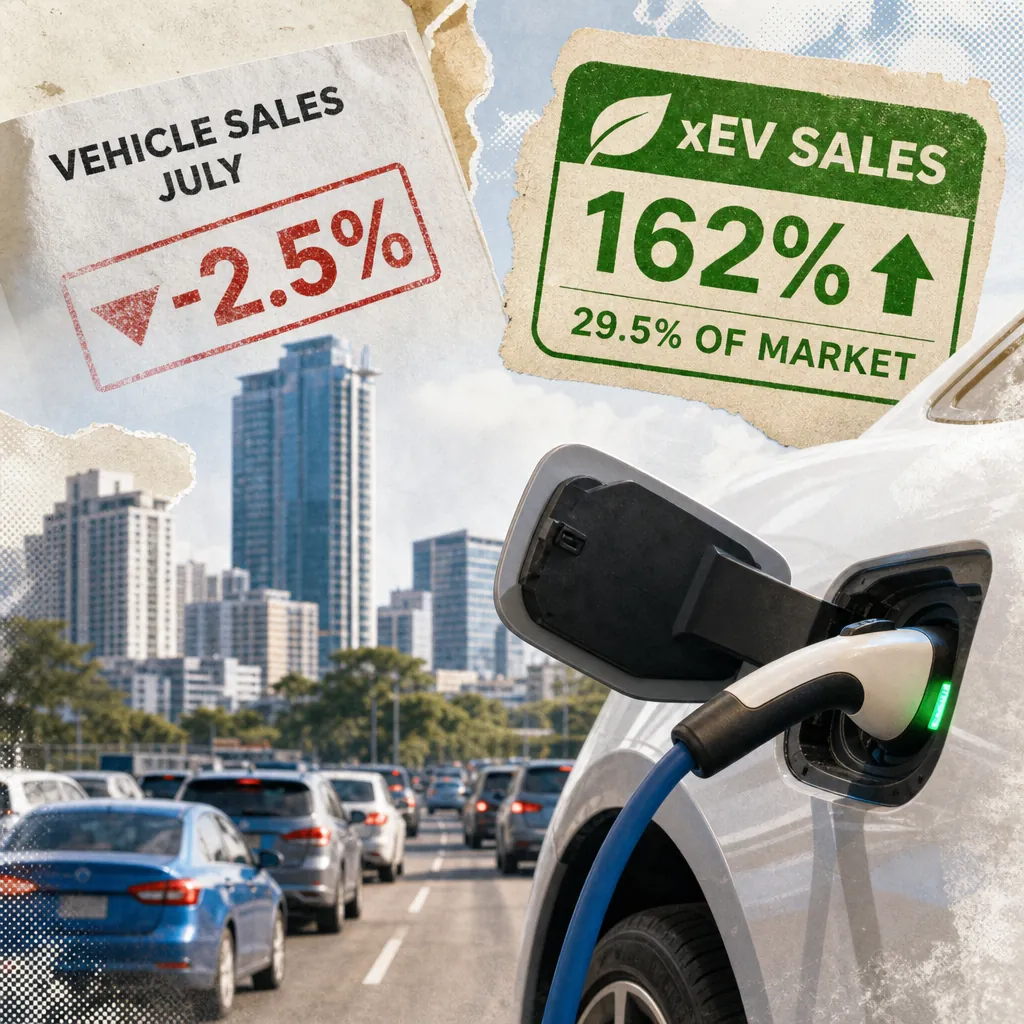
The Philippine automotive industry's July sales report landed on Tuesday, August 25, against a backdrop of grim road-safety news. The Chamber of Automotive Manufacturers of the Philippines (CAMPI) and the Truck Manufacturers Association (TMA) reported that combined member sales fell 2.5% year-on-year to 37,319 units, but electrified vehicles (xEVs) — a category covering hybrids, plug-in hybrids, and battery-electric cars — jumped 162% to 38,286 units in the first seven months of 2026, with xEVs accounting for 29.5% of the July market, up 18 percentage points from a year earlier. The same day, broadcast and online outlets carried a wave of fatal motorcycle crashes across the country, and the Land Transportation Office (LTO) suspended actor Niño Muhlach's license for 90 days after he admitted falling asleep at the wheel in a crash that injured a pedestrian.
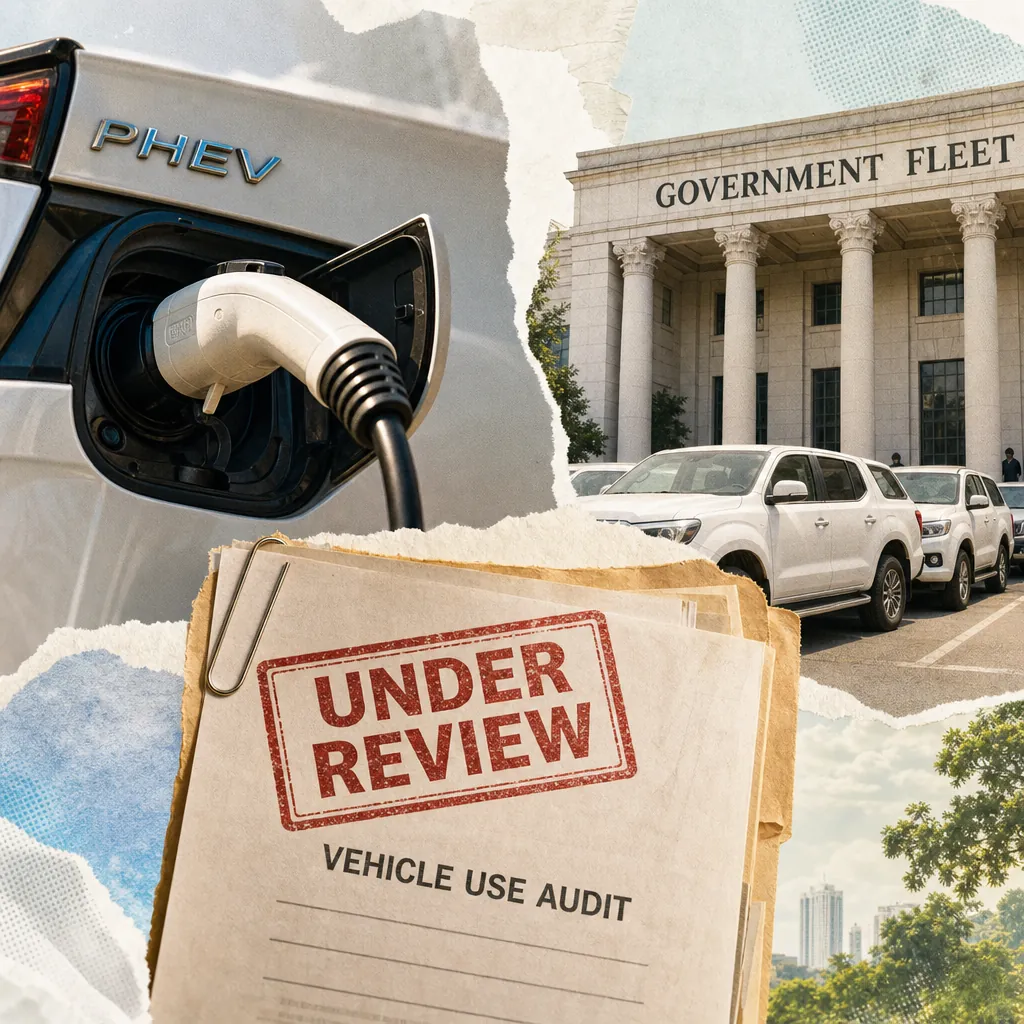
The sales data gave the industry its first piece of unambiguously positive news in months. July's 42,880 total industry sales — which includes estimates for non-member brands — was the highest monthly tally of 2026 and the first month to post annual growth this year, ending a six-month run of declines. CAMPI president Jose Maria Atienza credited the turnaround to increased availability of electrified vehicles, saying, "With this continuous growth, the industry is riding on a good momentum". The electrification story extended beyond the sales report: GAC Philippines launched the GS4 Max HEV hybrid SUV at an introductory price of ₱1.218 million, Mitsubishi Motors Philippines introduced its first plug-in hybrid, the Outlander PHEV, and Mazda Philippines debuted an all-new hybrid CX-5. President Ferdinand Marcos Jr. also visited MD Juan Enterprises in Caloocan City, saying he wants the company — known for producing metal parts for World War II-era jeeps — to lead domestic production of all-Filipino electric tricycles and electric jeepneys.
The positive sales and product news competed for attention with a concentrated cluster of road fatalities. Between August 23 and 25, broadcasters reported at least five separate fatal motorcycle crashes: two 19-year-olds killed on Marilaque Highway in Rizal, a rider and passenger killed after colliding with a carabao in Silay City, a 21-year-old female rider run over by a 10-wheeler truck in Negros Oriental, a 34-year-old construction worker killed in a collision with a passenger bus in Quezon, and a tricycle driver killed when an acacia tree fell on his vehicle in Ilocos Sur. The Marilaque Highway crash drew the most attention, with a Twitter post about it accumulating 31,307 views. A separate enforcement story — a rider whose license was suspended after a viral video showed him kicking traffic cones meant for runners — drew 4,168 views and 48 likes on YouTube, with commenters approving the swift regulatory action.
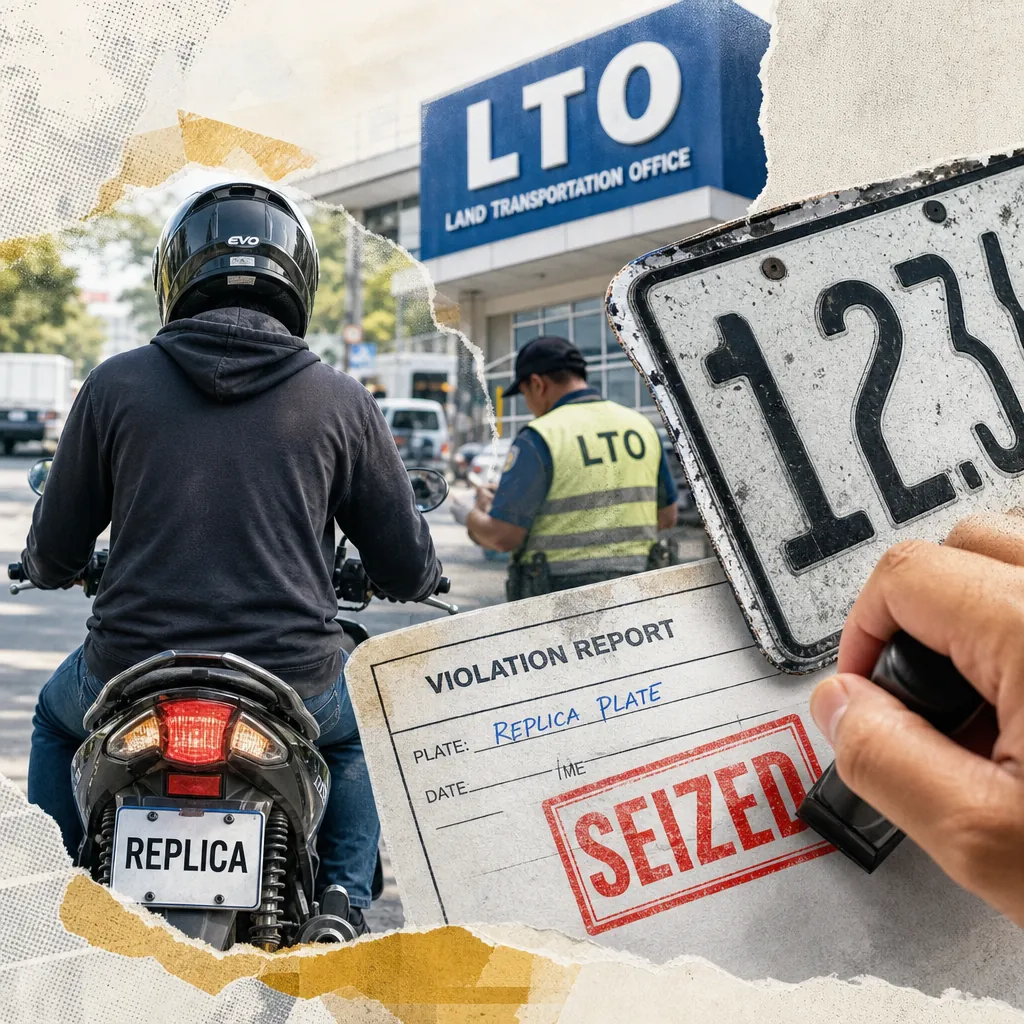
The LTO's action against Muhlach added a celebrity dimension to the enforcement narrative. The agency issued a show-cause order and a 90-day preventive suspension of his license after he admitted falling asleep while driving his SUV on Marcos Highway in Antipolo, causing it to hit several establishments and injure a pedestrian. LTO Chief Markus Lacanilao's warning — "If you are tired or sleepy, do not force yourself to drive because you are putting not only yourself at risk, but also other motorists and people around you" — was quoted across multiple outlets. A Manila Times tweet about the suspension drew 8,268 views, the single most-seen piece of content in the captured set.
Key themes
- July sales fell 2.5% year-on-year but posted the first monthly growth of 2026: CAMPI-TMA member sales dropped to 37,319 units in July from 38,295 a year earlier, but total industry sales — including non-member estimates — reached 42,880 units, the highest monthly figure of the year and the first to beat the same month last year.
- Electrified vehicle sales more than doubled, reaching 29.5% of the July market: xEV sales jumped 162% year-on-year in July, and the category accounted for 29.5% of the market, up 18 percentage points from the same month last year. Hybrids led with 20,716 units sold from January to July, followed by battery-electric vehicles at 10,476 units.
- A cluster of fatal motorcycle crashes dominated road-safety coverage: At least five separate fatal motorcycle incidents were reported between August 23 and 25, including two 19-year-olds killed on Marilaque Highway, a 21-year-old female rider in Negros Oriental, and a 34-year-old construction worker in Quezon. The Marilaque crash drew the highest engagement, with a Twitter post accumulating 31,307 views.
- LTO suspended actor Niño Muhlach's license for 90 days after a fatigue-related crash: The agency issued a show-cause order and preventive suspension after Muhlach admitted falling asleep while driving, hitting several establishments and injuring a pedestrian in Antipolo. A Manila Times tweet about the suspension drew 8,268 views.
- Enforcement actions against reckless riders drew public approval: A rider whose license was suspended after a viral video showed him kicking traffic cones drew 4,168 views and 48 likes on YouTube, with commenters supporting the swift action. The LTO also served a show-cause order on a tricycle driver in Himamaylan who allegedly punched a traffic enforcer.
- New hybrid and plug-in hybrid models launched across the market: GAC Philippines launched the GS4 Max HEV at ₱1.218 million, Mitsubishi introduced the Outlander PHEV, and Mazda debuted an all-new hybrid CX-5. These launches align with the broader shift toward electrification reflected in the sales data.
- President Marcos pushed for all-Filipino electric tricycle and jeepney production: Marcos visited MD Juan Enterprises in Caloocan, saying he wants the company to lead domestic EV production, a move that would support the government's PUV modernization program.
- Fuel price hikes continued to pressure motorists, with no subsidy for private drivers: Fuel retailers raised prices by up to ₱2.31 per liter on August 25, and Malacañang said it has not discussed a fuel subsidy for private motorists. The Electric Vehicle Association of the Philippines met with Senate President Sherwin Gatchalian to discuss building on the EV Industry Development Act, citing the fuel price crisis as a driver of EV demand.
How the narratives stack
Dominant: The July sales report and the electrification surge formed the day's central business story, carried across multiple outlets including the Inquirer, BusinessWorld, Philstar, and Manila Times. The 162% jump in xEV sales and the 29.5% market share figure gave the industry a concrete, positive data point after months of decline. Within the captured set, this story drew the most coverage by item count and advertising-equivalent value, with the Inquirer's report alone worth an estimated ₱396,144 in ad space.
Counter-narrative: The cluster of fatal motorcycle crashes provided a stark counterpoint to the sales optimism. Broadcasters including GMA Regional TV, ABS-CBN, and News5 carried the incidents across YouTube, Facebook, and Twitter, with the Marilaque Highway crash drawing the highest single-post engagement in the set at 31,307 views. This narrative emphasized the human cost of road transport and raised questions about enforcement and infrastructure, particularly outside Metro Manila.
Emerging: The LTO's enforcement actions — the Muhlach suspension, the cone-kicking rider's license suspension, and the show-cause order on the Himamaylan tricycle driver — point to a regulator taking a more visible, zero-tolerance posture on driver behavior. The public's largely supportive reaction, including 188 reactions on a Facebook post about the Muhlach suspension, suggests this enforcement narrative could gain traction as a broader "responsible driving" campaign.
Under-covered: The PUV modernization program's positive developments received comparatively little attention. The Isuzu Philippines turnover of two NPR85 Class III public utility vehicles to a Batangas transport cooperative drew only 17 likes on Facebook, and President Marcos's push for all-Filipino e-trike and e-jeepney production was covered mainly by the Manila Times. These stories offer a constructive counter-narrative to the accident coverage but remain under-amplified relative to their policy significance.
Platform insights
- Twitter: The platform served as the primary breaking-news channel, with the Marilaque Highway crash post drawing 31,307 views — the highest single-post engagement in the captured set. The Manila Times tweet about the Muhlach suspension drew 8,268 views, the second-highest. Twitter users largely consumed news passively, with minimal comments or retweets on most posts.
- YouTube: Broadcast news segments dominated the platform, with News5's Frontline Pilipinas report on the cone-kicking rider drawing 4,168 views and 48 likes — the highest engagement on any YouTube item in the set. TV Patrol's report on the Muhlach suspension drew 2,462 views and 26 likes. Viewers primarily sought information rather than engaging in debate.
- Facebook: The platform hosted the most emotionally varied reactions. A post about the Muhlach suspension drew 188 reactions and 13 comments, with a mix of haha, sad, and angry reactions reflecting polarized public sentiment. The Ilocos Sur tricycle driver's death drew 8 sad reactions, while the Isuzu PUV turnover drew 17 likes and one wow reaction.
- Reddit: Discussion was minimal, with a single post capturing the LTO's show-cause order on Muhlach. The platform's potential for deeper procedural discussion on LTO processes remains untapped.
Key voices and communities
- Mainstream broadcast news desks: ABS-CBN, GMA, and News5 drove the road-safety narrative, with their regional and national platforms generating the bulk of reach through YouTube and Twitter. Their coverage framed motorcycle safety as a recurring public concern, emphasizing fatal crashes and enforcement outcomes.
- Motorcycle rider and commuter communities: The most active audience segment engaged with accident stories through Facebook and Twitter, amplifying concerns about road infrastructure and enforcement. Their reaction to the Marilaque fatalities — two 19-year-olds — signaled grief and frustration over preventable deaths.
- Automotive trade and industry pages: AutoIndustriya, ZIGWHEELS, and Wheels Ph provided the constructive industry development content, covering the Isuzu PUV turnover, the GAC GS4 Max HEV launch, and the July sales data. Their role was informative and supportive of industry progress.
- Regulatory and government communication channels: The LTO's official statements, distributed through news wires and verified social media accounts, anchored the enforcement narrative. LTO Chief Markus Lacanilao's public warnings were quoted verbatim across multiple outlets, positioning the agency as the voice of authority on driver responsibility.
- Regional and vernacular news networks: GMA Regional TV and Balitang Bisdak covered accidents in Silay City, Negros Oriental, and Ilocos Sur with more localized framing than national broadcasts. Their stories attracted lower view counts individually but reached audiences that national networks do not.
Narrative streams
July sales end six-month decline as electrified vehicles surge 162%
The July sales report, released Tuesday, marked a turning point for the Philippine auto industry. CAMPI-TMA member sales fell 2.5% year-on-year to 37,319 units, but total industry sales — including estimates for non-member brands — reached 42,880 units, the highest monthly figure of 2026 and the first to post annual growth this year. The growth came almost entirely from electrified vehicles, which more than doubled year-on-year and accounted for 29.5% of the July market, up 18 percentage points from a year earlier. Hybrids led the category with 20,716 units sold from January to July, followed by battery-electric vehicles at 10,476 units. CAMPI president Jose Maria Atienza said, "With this continuous growth, the industry is riding on a good momentum," adding, "We are hopeful that the positive trend will continue for the remainder of the year". The report drew heavy coverage across the business press, with the Inquirer's report worth an estimated ₱396,144 in ad space and BusinessWorld's worth an estimated ₱456,949. For the sector, the data signals that electrification is no longer a niche — it is the primary growth driver, and manufacturers that expand their hybrid and EV lineups are best positioned to capture the recovery.
A cluster of fatal motorcycle crashes puts road safety back in focus
Between August 23 and 25, broadcasters reported at least five separate fatal motorcycle crashes, creating a concentrated news wave that dominated regional and national coverage. The most prominent was the Marilaque Highway crash in Baras, Rizal, where two 19-year-olds died after their motorcycle struck an oncoming utility van in the early morning of August 23. A Twitter post about the crash accumulated 31,307 views, the highest single-post engagement in the captured set. Other incidents included a rider and passenger killed after colliding with a carabao in Silay City, a 21-year-old female rider run over by a 10-wheeler truck in Negros Oriental, a 34-year-old construction worker killed in a collision with a passenger bus in Quezon, and a tricycle driver killed when an acacia tree fell on his vehicle in Ilocos Sur. The Negros Oriental story received particular attention, appearing in both GMA's Ratsada Balita and State of the Nation programs. The clustering of these incidents within a single news cycle may amplify perceived risk beyond statistical reality, but it also highlights regional disparities in road safety enforcement and infrastructure. For motorcycle manufacturers and the industry as a whole, the coverage creates an urgent opportunity to demonstrate advocacy for rider safety — particularly for the youth demographic represented by the Marilaque victims.
LTO's 90-day suspension of Niño Muhlach signals a zero-tolerance enforcement posture
The LTO's action against actor Niño Muhlach transformed a celebrity mishap into a regulatory enforcement story within 48 hours. Muhlach admitted falling asleep while driving his SUV on Marcos Highway in Antipolo on August 23, causing it to hit several establishments and injure a pedestrian. The LTO issued a show-cause order and a 90-day preventive suspension of his license, requiring him to appear for a hearing on August 28. LTO Chief Markus Lacanilao's warning — "If you are tired or sleepy, do not force yourself to drive because you are putting not only yourself at risk, but also other motorists and people around you" — was quoted across multiple outlets. A Manila Times tweet about the suspension drew 8,268 views, the most-seen piece of content in the captured set. Public reaction on Facebook was polarized, with one post drawing 188 reactions including haha, sad, and angry reactions. The swift action — within two days of the incident — demonstrates a zero-tolerance posture that could signal stricter enforcement ahead for all motorists. For automotive brands, the case underscores the reputational risks associated with driver behavior and the speed at which regulator-led narratives can dominate public discourse.
New hybrid and plug-in hybrid launches accelerate the electrification shift
The July sales data was reinforced by a wave of new electrified model launches. GAC Philippines launched the GS4 Max HEV hybrid SUV at an introductory price of ₱1.218 million, featuring a 2.0-liter Atkinson-cycle hybrid engine and a 2-speed dedicated hybrid transmission. Mitsubishi Motors Philippines introduced its first plug-in hybrid, the Outlander PHEV, which the company described as Japan's best-selling PHEV in the SUV segment. Mazda Philippines debuted an all-new hybrid CX-5, its third-generation model. These launches align with the broader shift toward electrification reflected in the sales data, and they give Filipino consumers a wider range of hybrid options at various price points. The GAC launch, in particular, targets the growing demand for affordable hybrids, with its introductory price undercutting many competitors. For the sector, the rapid expansion of hybrid offerings suggests that manufacturers are betting on hybrids as the bridge technology for Filipino consumers who remain wary of full battery-electric vehicles due to range and charging concerns.
President Marcos pushes for all-Filipino electric tricycle and jeepney production
President Ferdinand Marcos Jr. visited MD Juan Enterprises in Caloocan City on Tuesday, saying he wants the company — known for producing metal parts for World War II-era and civilian jeeps — to lead domestic production of all-Filipino electric tricycles and electric jeepneys. "The reason we are here now is to assess what needs to be done so that they will be capable of fabricating all-Filipino electric tricycles and electric jeepneys, should the need arise," Marcos said. The visit aligns with the government's PUV modernization program, which aims to replace aging jeepneys and tricycles with safer, cleaner vehicles. The story drew coverage from the Manila Times, worth an estimated ₱226,976 in ad space. For the industry, the president's push signals potential government support for domestic EV manufacturing, which could create opportunities for local parts suppliers and assemblers. However, the story received relatively modest attention compared to the accident coverage, suggesting that the policy implications have yet to fully penetrate public discourse.
Fuel price hikes and the EV policy push
Fuel retailers raised prices by up to ₱2.31 per liter on August 25, and Malacañang said it has not discussed a fuel subsidy for private motorists. The price hike, attributed to the ongoing Middle East conflict, adds pressure on motorists already facing high transport costs. The Electric Vehicle Association of the Philippines (EVAP) met with Senate President Sherwin Gatchalian to discuss strengthening the EV Industry Development Act (EVIDA), the law that provides incentives for EV adoption and manufacturing. The meeting cited the fuel price crisis as a factor pushing more Filipinos toward electric alternatives. For the sector, the combination of rising fuel prices and government support for EVs could accelerate the shift toward electrification, particularly in the commercial vehicle segment where operating costs are a major consideration.
Conversation trajectory
The July sales data provides a clear near-term signal: the industry is recovering, but the recovery is driven almost entirely by electrified vehicles. Over the next 4–6 weeks, expect continued coverage of new hybrid and EV launches as manufacturers race to capture the growing demand. The August sales report, due in late September, will show whether the July momentum held — a key test given that July was the first month of annual growth this year.
The road-safety narrative is likely to intensify over the next 3–5 days as broadcasters continue to cover the aftermath of the fatal crashes. The Marilaque Highway crash, in particular, may evolve into a broader discussion about infrastructure and road design, with potential calls for safety audits or riding curfews. The youth of the victims — both 19 years old — could make youth rider safety a dominant sub-theme.
The LTO's enforcement actions — the Muhlach suspension, the cone-kicking rider's license suspension, and the Himamaylan show-cause order — point to a regulator taking a more visible posture. The August 28 hearing on Muhlach's case will be a key trigger event; depending on the outcome, the story could escalate from regulatory news to potential criminal case coverage. Any statement from the injured party or new video evidence could also shift public sympathy dynamics.
Trigger events to watch: the LTO hearing on August 28; the release of August motorcycle sales data, which may show whether safety concerns correlate with sales shifts; any LTO or MMDA statements responding to the viral rider incidents; and the potential scheduling of road safety forums or PUV modernization milestones.
Response guidance
Road-safety messaging: For automotive manufacturers, the concentrated coverage of fatal motorcycle crashes creates an urgent opportunity to demonstrate advocacy for rider safety. Prepare proactive statements emphasizing brand commitment to safety programs, partnerships with riding academies, and distribution of free safety gear at popular riding spots. Avoid any language that could be perceived as victim-blaming, particularly given the youth of the Marilaque victims.
Enforcement amplification: For LTO and MMDA communicators, the license suspension stories — the cone-kicking rider and the Muhlach case — provide demonstrable proof of active enforcement. Leverage these as examples of digital-era policing, but pivot toward a broader "responsible riding" public education message. Pair with visual infographics of road safety statistics to preempt criticism that the agency only reacts to viral content.
Electrification narrative: The July sales data and the wave of new hybrid launches provide a strong positive story. Amplify the 162% xEV sales growth and the 29.5% market share figure across client channels. For manufacturers, emphasize how new hybrid models offer a practical bridge for consumers wary of full battery-electric vehicles.
PUV modernization: The Isuzu PUV turnover and President Marcos's push for all-Filipino e-trike and e-jeepney production offer clean, positive material in an otherwise grim news cycle. Develop focused communications around provincial-level successes, including driver testimonials and passenger feedback. Coordinate with manufacturers to co-produce content showcasing the tangible benefits of modernization.
Fuel price sensitivity: With fuel prices rising and no subsidy for private motorists, communicators should acknowledge the financial pressure on consumers. For EV and hybrid brands, frame the fuel savings as a key selling point, but avoid appearing to exploit the crisis.
Sensitive topics: Avoid engaging in debates about motorcycle lane usage or helmet enforcement in comment sections, as these can become politically charged. For the Muhlach case, maintain a serious tone regarding public safety rather than adopting the lighter sentiment seen in some reactions. Do not speculate on fault in accident coverage; rely solely on official police reports.
See the full picture behind today's signals.
This report draws from Media Meter's MediaWatch, our real-time monitoring engine tracking 2,470+ Philippine sources across print, broadcast, digital, and social. Explore how the platform turns raw coverage into decision-grade intelligence, then see how it's configured for teams like yours — whether you're in PR agencies, corporate comms, government, or marketing.
Want more? Browse our Report Library for sector and crisis intelligence, or request a demo and we'll have your brand set up before the call.
Want this kind of intelligence on your brand?
This brief is built on the same MediaWatch methodology that runs continuously across every brand we monitor. See your competitive landscape, Impact Score, and narrative trajectory in a 30-minute demo.