Philippine telcos face twin pressures: consumer trust crisis and security vulnerabilities as DITO gains ground
A snapshot of the Philippine telecommunications conversation from July 1–10, 2026, covering industry collaboration against illegal network operators, Converge's digital diplomacy with South Korea, PLDT's service and billing complaints, eSIM friction, and DITO's streaming-centric market push.
The Philippine telecommunications conversation over the first ten days of July 2026 unfolded on two distinct tracks. On one side, corporate narratives from PLDT and Converge highlighted industry collaboration against illegal network operators and high-level digital partnerships with South Korea. On the other, a persistent undercurrent of consumer frustration over service reliability, billing disputes, and security vulnerabilities—including SMS spoofing via fake cell towers—dominated social platforms. The period also saw DITO Telecommunity aggressively promote its streaming-centric prepaid plans, positioning itself as a fresh alternative amid incumbent struggles.
Key themes
- Industry unity against illegal network operators – On July 1, Converge ICT founder Dennis Anthony Uy announced that leading telcos and regulators had agreed to strengthen enforcement against unauthorized fiber tapping and illegal internet connections. The posts garnered modest engagement (1,639 and 1,999 views on Twitter, with only a handful of likes), and no follow-up from regulators or other telcos emerged in the subsequent nine days, leaving the narrative as an isolated flashpoint rather than a sustained campaign.
- Converge's digital diplomacy with South Korea – On July 10, Uy publicly credited outgoing South Korean Ambassador Lee Sang-hwa for connecting the Philippines to tech giants like Naver, KT, and Samsung, citing a mandate from President Marcos Jr. to "bring home world-class technologies." The story received consistent pickup across Facebook and Twitter, with one Facebook post earning 16 likes and 2 shares, reflecting a deliberate effort to associate Converge with high-level digital transformation.
- PLDT's corporate performance and low engagement – PLDT Global Corporation announced a 26% year-on-year net service revenue growth for Q1 2026, a post that reached 1,449 views on Twitter but zero likes. PLDT's corporate storytelling posts on Facebook averaged only 8 likes and 2 shares, while a YouTube masterclass video on entrepreneurship received zero views. The contrast with Converge's more engaging narratives suggests PLDT's owned media content is not breaking through.
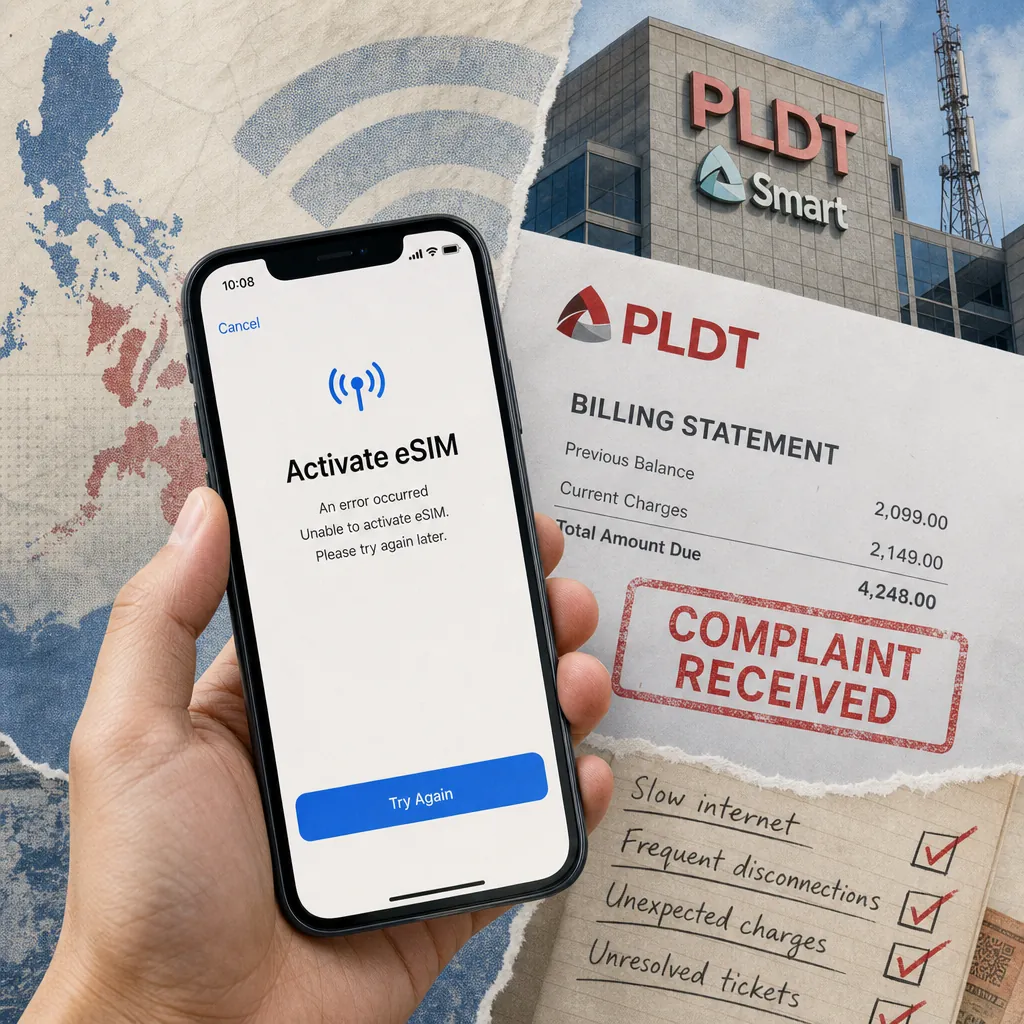
- Consumer backlash over service degradation and billing disputes – A cascade of Reddit and Facebook posts documented persistent speed throttling, months-long disconnection battles, and billing that continued after termination. One user described how their PLDT Plan 2999 repeatedly dropped from 600 Mbps to 10–100 Mbps, only to be restored after complaining, fueling a narrative of deliberate throttling. Another reported being charged for four months after requesting disconnection, with the NTC escalation process appearing ineffective.
- SMS spoofing and fake cell tower security panic – On July 9, a Reddit user near Davao Airport reported receiving a phishing SMS under the legitimate BDO sender ID, suspecting a rogue GSM tower (IMSI catcher) broadcast on the Smart/TNT network. This triggered cross-platform discussion, with BPI issuing a widely shared advisory (#BPIcybersecuriTips) that gained 199 likes and 137 shares, and the PNP Cebu Provincial Office amplifying smishing alerts. The conversation moved from personal anecdotes to coordinated calls for action, linking telco infrastructure vulnerabilities to financial fraud.
- DITO's aggressive streaming-centric market play – DITO Telecommunity launched an offensive marketing campaign around its StreamZone 199 plan, bundling streaming apps (Prime Video, iWant, BlastTV) with 22GB data and unlimited calls/texts. A YouTube ad garnered over 756,000 views, and partnerships with esports organization Team Liquid and influencer Gelo Rivera targeted younger demographics. This created a stark narrative contrast: while incumbents faced service and security crises, DITO positioned itself as a fresh, entertainment-focused alternative.
- eSIM adoption generating user friction – Multiple Reddit threads and Twitter exchanges highlighted user concerns about eSIM profile loss when switching devices or operating systems, with one user asking if flashing GrapheneOS erases an eSIM and another reporting "can't reach the internet while installing eSIM." While originating from non-Philippine users, these discussions reflect growing user anxiety around eSIM reliability—a topic relevant as local carriers promote eSIM in prepaid and postpaid offerings.
- Prepaid migration as a consumer escape valve – Multiple Reddit users explicitly chose PLDT Prepaid over postpaid to avoid lock-in periods and ongoing charges. One user who finally disconnected and switched wrote, "Hopefully, it'll be a hassle-free experience from now on." This consumer behavior shift challenges the incumbent lock-in strategy and signals growing demand for flexible, no-commitment connectivity options.
How the narratives stack
Dominant – Within the captured set, the consumer trust crisis around PLDT's service reliability and billing practices generated the highest volume and most detailed complaint threads, particularly on Reddit. The narrative of deliberate throttling, unresolved disconnection requests, and continued billing after termination accumulated dozens of comments and upvotes, signaling widespread validation. This was amplified by the security panic around SMS spoofing and fake cell towers, which drew institutional responses from BPI and the PNP, moving the conversation from anecdotal to systemic.
Counter-narrative – Converge's digital diplomacy story and the industry unity against illegal operators offered a positive, collaborative framing of the sector. However, these narratives were driven almost entirely by corporate-owned channels and lacked the grassroots engagement of the complaint threads. DITO's streaming campaign also provided a counterpoint, but its engagement was largely passive (high views on ads, low comment activity), suggesting it has not yet built an engaged community.
Emerging – The prepaid migration trend and the growing technical discussion around eSIM friction are emerging narratives that could reshape consumer expectations. The shift toward no-commitment plans and the demand for seamless eSIM provisioning represent both a threat to incumbent lock-in models and an opportunity for carriers that address these pain points proactively.
Suppressed – The industry collaboration against illegal network operators, announced on July 1, received no follow-up from regulators (NTC, DICT) or other telcos in the subsequent nine days. This narrative, which could have reinforced network integrity and consumer protection, was left undeveloped—a missed opportunity for PLDT and Smart to claim co-leadership in security.
Platform insights
- Facebook – Served as the primary distribution channel for positive corporate narratives and institutional security advisories. PLDT's corporate storytelling posts achieved low engagement (8 likes, 2 shares), while BPI's smishing advisory gained 199 likes and 137 shares, demonstrating that security content resonates strongly. DITO's promotional posts received high love and laugh reactions, but comment sections often remained empty, suggesting passive consumption rather than active discussion. Third-party agent posts promoting PLDT fiber plans generated minimal organic engagement but created noise that confused consumers.
- Twitter – Conversation began with relatively high view counts for Uy's statement about illegal operators (1,639 and 1,999 views) but stalled due to zero quotes or significant likes. By July 10, views dropped sharply on the Converge-Korea post (556 views) and the PLDT Global revenue tweet (1,449 views), suggesting Twitter's algorithmic distribution favored the earlier announcement over later corporate updates. The platform also hosted eSIM troubleshooting exchanges between users and the GrapheneOS account, reflecting a technically sophisticated but niche audience.
- Reddit – The primary hub for detailed, prolonged complaint threads and technical analysis. Discussions evolved from isolated speed test anecdotes to coordinated reports of fake cell towers and systemic billing failures. The platform enabled deep dives into issues like LAN port throttling and eSIM data problems, often referencing NTC escalation processes. Community upvotes signaled widespread validation, with one post about PLDT being down accumulating 67 upvotes. The chronological shift was from "#PLDTDown" complaints to actionable how-to guides for termination and dispute filing.
- YouTube – Content creators like Kuya I.T. and Jess Basics provided independent technical education—router configuration, speed boosting, prepaid reviews—with one PLDT Fibr review video gaining over 26,000 views and 244 comments. DITO's StreamZone 199 ad achieved nearly 1 million views within weeks, indicating strong interest in value bundles. The platform showed a split: practical, user-generated content for PLDT and Smart users facing problems, versus polished DITO marketing for aspirational streaming experiences.
Key voices and communities
- Frustrated subscribers and service refuseniks – This group dominates discussion volume across Reddit and Facebook, expressing sustained dissatisfaction with PLDT's service reliability, billing practices, and customer support responsiveness. Their influence is driven by high comment counts—some posts garnering over 90 comments—and repeated narratives of unresolved disconnection requests, unexplained speed throttling, and billing disputes that persist for months. They often share step-by-step guides on how to escalate complaints to the NTC or switch to prepaid alternatives.
- SMS spam and security-aware users – A smaller but highly engaged community focuses on phishing, smishing, and the technical methods behind fraudulent SMS, including IMSI catcher attacks. These users span Reddit and Facebook, often cross-posting warnings with screenshots of fake BDO or BPI messages. Their influence is amplified by law enforcement and official brand accounts that echo their alerts, as seen when the PNP Cebu Provincial Office amplified a smishing advisory that gained 96 reactions and 51 shares.
- Tech enthusiasts and DIY router hobbyists – A technical community on YouTube and Facebook provides detailed tutorials on unlocking PLDT router admin access, band-locking, and optimizing speeds. These creators attract moderate viewership (some videos exceeding 4,800 views) and high comment counts. Their content often includes affiliate links to networking hardware, indicating a commercial motive as well as genuine troubleshooting expertise. They argue that many speed problems are not PLDT's fault but stem from misconfigured routers or device limitations.
- Promotional agents and third-party sellers – Numerous Facebook posts from individuals presenting as authorized PLDT or Converge agents aggressively promote sign-ups with free installation and no-lock-in assurances. These accounts generate minimal organic engagement but are numerous and repetitive, creating noise that can confuse consumers. Their claims sometimes misrepresent terms—one customer reported being scammed by an agent who promised no lock-in but delivered a postpaid contract.
- Industry competitors and their promotional campaigns – Posts from competitors—DITO, Globe, and Converge—appear regularly, particularly DITO's stream-focused prepaid plans and Converge's back-to-school bundles. DITO's StreamZone 199 campaign achieved a video with over 756,000 views, while Converge's agent posts promote speeds up to 1 Gbps with free installation offers. These posts draw user comparisons, indicating a battleground for subscriber mindshare.
Narrative streams
The throttling and billing crisis: a systemic trust breakdown
The most damaging narrative stream centers on PLDT's service reliability and billing practices. A Reddit post from May 2024 detailed how a user's PLDT Plan 2999 would periodically drop from 600 Mbps to 10–100 Mbps, only to be restored after complaining, leading the user to suspect deliberate throttling. This pattern continued into July 2026, with multiple users reporting identical experiences. One user described how their Globe at Home outage started May 20 and persisted through July 10—50 days without service despite advance payment—with the user writing "Hindi naman ako makapagpatech visit sa kasi hindi daw pwede sabi sa globeone app." The cumulative effect was a growing chorus of users seeking NTC intervention, with one post accumulating 12 likes in just hours as a user lamented "na scam kami ni PLDT, magbayad daw muna ng overpay bago mag terminate."
The "billing hostage" situation is particularly damaging. Users report being charged for months after requesting disconnection, with refunds never returned. One user described how PLDT demands overpayment before terminating, then fails to refund while continuing to bill. The NTC escalation process appears ineffective, with regulators merely passing the complaint back to PLDT. Another user shared "I still receive current charges for this month despite requesting this for 4 months already," highlighting a systemic failure in account management. These stories generate high engagement—one Facebook post about disconnection forms garnered 32 comments and an angry reaction.
This stream directly undermines PLDT's value proposition for premium postpaid plans. The narrative of "throttle-until-you-complain" erodes trust faster than any marketing can rebuild, and the billing disputes create a perception that the company is unwilling to correct errors. The stream is concentrated on Reddit and Facebook, where users share detailed timelines and screenshots, making the complaints verifiable and shareable.
SMS spoofing and IMSI catchers: security as a telco liability
On July 9, a Reddit user near Davao Airport reported receiving a phishing SMS under the legitimate BDO sender ID, suspecting a rogue GSM tower (IMSI catcher) broadcast on the Smart/TNT network. The user wrote, "I strongly suspect this is an SMS spoofing attack, and it's also possible that a fake GSM/cell tower was used to broadcast these messages." This post, with 40 likes and 18 comments, triggered a wave of smishing and spoofing reports that quickly spread across platforms.
BPI immediately amplified this narrative with a detailed Facebook post under the hashtag #BPIcybersecuriTips, warning about text hijacking and advising customers not to click links in unexpected SMS. The post garnered 199 likes, 137 shares, and significant community engagement. The PNP Cebu Police Provincial Office also joined, posting smishing alerts with 96 likes and 31 comments. This synchronized institutional response suggests recognition that SMS spoofing via IMSI catchers—a technique exploiting weaknesses in telco networks—had become a systemic threat, not just isolated incidents.
The conversation moved from personal anecdotes to a coordinated call for action, with multiple users sharing their own encounters with text hijacking. The narrative implicates telcos directly: if fake cell towers can broadcast messages under legitimate sender IDs, then the SIM Registration Act's enforcement is being bypassed, and carriers are failing to secure their networks. For Smart and TNT, this is a reputational risk that could intensify unless proactive security updates are communicated. The stream is notable for its cross-sector collaboration—banks and law enforcement are leading the conversation, while telcos are largely absent, creating a perception that they are not taking the threat seriously.
DITO's streaming gambit: capturing the youth market
Amid the service and security chaos, DITO Telecommunity launched an offensive marketing campaign centered on the StreamZone 199 plan, which bundled streaming apps (Prime Video, iWant, BlastTV) with 22GB data and unlimited calls/texts. A YouTube ad posted on May 22 racked up over 756,000 views, and the phrase "Hindi ka na mabibitin sa kilig" was repeated across multiple Facebook and YouTube posts between June and July. DITO also partnered with esports organization Team Liquid and influencer Gelo Rivera of BGYO to target the younger gaming and streaming demographic.
This created a stark narrative contrast: while PLDT and Globe were dealing with billing disputes, slow speeds, and smishing vulnerabilities, DITO was positioning itself as a fresh, entertainment-focused alternative. The StreamZone 199 plan, with its 30-day validity and bundled streaming, directly addresses the growing consumer preference for flexible, no-commitment models. One Facebook post alone garnered over 350 love reactions and 224 likes in a single day, indicating strong positive sentiment.
However, the conversation also revealed lingering questions about DITO's network reliability. The Davao fake tower report involved a TNT (Smart) user—not DITO—but the overall ecosystem of SIM registration and security concerns touched all players. DITO's promotional content generates high views but low comment activity, suggesting the brand is still building an engaged community. The stream is concentrated on YouTube and Facebook, where polished ads and influencer partnerships drive passive consumption rather than active discussion.
The prepaid pivot: consumer agency in a locked-in market
A distinct micro-narrative emerged around the sheer difficulty of disconnecting from PLDT and the growing appeal of prepaid alternatives. From a February 2026 guide video on terminating accounts to July 2026 Reddit posts, users documented a Kafkaesque process where billing continued after disconnection, and refunds were never returned. One user wrote "patuloy pa rin ang billing" after months of requests. Another user, after successfully disconnecting in July 2026, switched to PLDT Prepaid to avoid lock-in periods, saying "The only thing I'll miss is the landline, although I barely used it anyway."
This stream is driven by a sense of consumer agency: users are actively seeking ways to escape postpaid contracts and are sharing their experiences to help others. The positive reception to PLDT's prepaid fiber offering—praised for having no lock-in period—indicates that simpler, no-commitment products can rebuild goodwill. One user who finally disconnected and switched wrote, "Hopefully, it'll be a hassle-free experience from now on." The stream is concentrated on Reddit, where users share detailed guides on how to terminate accounts and avoid penalties, and on YouTube, where creators review prepaid plans and compare them to postpaid options.
This consumer behavior shift challenges the incumbent lock-in strategy and signals that for Malacañang's digital inclusion agenda, flexible and affordable connectivity options are becoming a public demand. The DITO StreamZone 199 plan, with its 30-day validity and bundled streaming, directly addresses this preference. For Smart and PLDT, the data suggests that postpaid plans with extended contracts are increasingly seen as traps rather than benefits.
Converge's digital diplomacy: owning the innovation narrative
On July 10, Converge CEO Dennis Anthony Uy posted a tribute to outgoing South Korean Ambassador Lee Sang-hwa, crediting him for connecting the Philippines to tech giants like Naver, KT, SK Telecom, Samsung, and LG CNS through KOICA grants. Uy explicitly cited his mandate from President Marcos Jr. to "bring home world-class technologies." The story received consistent pickup across Twitter and Facebook, with one Facebook post earning 16 likes and 2 shares, and another tweet reaching 556 views.
This stream is notable for its careful emotional framing—using terms like "true champion" and "friendship"—and its one-directional nature: corporate storytelling without public debate. The conversation here was controlled and celebratory, with the only comment on the Facebook version engaging positively. The stream positions Converge as a bridge to world-class technology partners, potentially overshadowing PLDT's own long-standing international alliances.
The stream is concentrated on Facebook and Twitter, where Uy's personal accounts serve as the primary distribution channels. The lack of critical comments suggests a brand-safe environment, but the moderate engagement (16 likes, 2 shares) indicates that the narrative has not yet reached a mass audience. For PLDT and Smart, this stream represents a competitive threat: Converge is shaping the public agenda around innovation and digital transformation, while PLDT's corporate content is not breaking through.
Conversation trajectory
- Deepening frustration with legacy postpaid models, particularly PLDT's termination and billing practices – A significant cluster of discussions revolves around subscribers trapped in accounts they cannot easily leave, with posts describing months-long attempts to secure disconnection while billing continues. Multiple users report receiving confirmation of termination yet still seeing active charges and penalties. This frustration is now driving measurable migration toward prepaid alternatives. Expect this shift to strengthen over the next 2–3 months, especially if more agents are found misrepresenting postpaid terms. The repricing of PLDT Home's entry-level plans (e.g., ₱899 plan gaining traction) may moderate outflow but will not fully stem the demand for contract-free options.
- Escalation of SMS spoofing and financial scam awareness, now moving from anecdotal to institutional responses – Multiple posts detail phishing messages arriving under legitimate sender IDs like BDO, with one Reddit user recounting a suspected IMSI catcher attack near Davao Airport. This is no longer fringe—major brands like BPI are now issuing official warnings, and law enforcement (PNP Cebu) and the National Privacy Commission are amplifying smishing advisories. The conversation is evolving from "I got a suspicious text" to "which telco is allowing fake cell towers?" With the SIM Registration Act's enforcement still incomplete, expect renewed public pressure on telcos (Smart/TNT, Globe, DITO) to explain how IMSI catchers bypass registration—a reputational risk that will intensify within 4–6 weeks unless proactive security updates are communicated.
- DITO's aggressive streaming-centric bundling is gaining momentum and driving positive brand engagement – DITO's StreamZone 199 plan has generated a surge of promotional content across Facebook and YouTube, with posts receiving high love and laugh reactions. The partnership with Team Liquid for esports further diversifies their appeal. This positions DITO as a value-driven alternative for younger, media-hungry subscribers, especially during back-to-school and rainy-season streaming peaks. Competitors like Globe and Smart are absent from this specific price-point content, leaving DITO room to own the "affordable binge" narrative through Q3 2026.
- Recurring speed throttling and diagnostic frustration is fueling third-party technical education content – A persistent pattern—users noticing speeds drop from 600Mbps to 10–100Mbps, then returning to normal after a complaint without a technician visit—has spawned a new sub-conversation: "Is PLDT deliberately slowing me down?" This mistrust is driving viewers to YouTube tutorials that teach router admin access, band locking, and modem resets. One such video about full admin access on PLDT routers has amassed nearly 5,000 views and 38 comments, many from users seeking to bypass ISP-side congestion. Expect this DIY troubleshooting trend to grow as more subscribers conclude that customer service cannot fix underlying network management practices.
Key trigger events that will reshape this conversation include: the extension of DITO's StreamZone promo to December 31, 2026 (already generating sustaining ad buys), any new NTC circular tightening SIM registration enforcement or tower-sharing rules (which would revive debate on fake base stations), and the looming Q3 telecom financial reports where churn and ARPU shifts will validate the prepaid migration narrative. Additionally, the one-year anniversary of the PLDT Prepaid Fiber relaunch (around August–September 2026) could spur media comparisons between postpaid and no-contract value.
Response guidance
Platform-specific approaches:
- Facebook – Leverage official brand pages to proactively acknowledge recurring service issues when they trend. Given the volume of complaint threads about disconnection forms, billing disputes, and repeated slowdowns, a pinned post with a clear escalation path (dedicated hotline, myPLDT app chat) can reduce fragmented anger. Use a "we hear you" tone before directing users to private channels for account-specific resolution. Deploy scam-awareness content in partnership with law enforcement, as seen in existing PNP and BPI posts. Co-branded infographics about SMS spoofing and fake cell towers—framed as consumer protection—can build trust while reinforcing network security. Moderate third-party agent posts by flagging misleading offers; a formal disclaimer should be pinned on the official PLDT Facebook page clarifying which promotions are legitimate.
- Reddit – Establish a structured response cadence on r/InternetPH and r/Philippines where detailed outage and billing threads concentrate. Instead of one-off replies, assign a dedicated support liaison to reply with case numbers and timelines, mimicking the model used by some banks. Create an official "Known Issues & Updates" megathread that is refreshed weekly, directly addressing the frequent "anyone else experiencing slow speed/downtime?" posts. Address agent fraud reports directly by publishing a guide on how to verify an agent's credentials and a channel to report misrepresentation.
- YouTube – Monitor high-view tutorial-style videos about third-party router modifications and disconnection guides. Instead of commenting defensively, produce official short videos that explain common speed inconsistencies (e.g., LAN port negotiation, router settings) without naming individual creators. Use YouTube's community tab to share quick tips on topics trending in the comments of review videos.
Key messages:
- "We are upgrading our network to deliver more consistent speeds, and we encourage users to report persistent issues so we can investigate specific areas or account configurations."
- "Your account security is our priority. PLDT and Smart will never send you a link to claim an upgrade or ask for your OTP via text. Report suspicious messages to our hotline or the NTC."
- "We are streamlining our disconnection and billing processes. If you experience continued charges after cancellation, contact our digital care team immediately—we will fast-track refunds for verified cases."
- "Only apply through official PLDT channels or verified agents. You can verify an agent's ID using our online portal before making any payment to avoid scams."
Sensitive topics to navigate:
- Suspected throttling narrative – Avoid flat denials; instead, explain that network management (e.g., congestion relief, firmware updates) can cause temporary adjustments, and invite users to share their account details for a technical review.
- Billing after disconnection – Any response must first validate the customer's experience without blaming them. Avoid legalistic language about lock-in periods or penalties; focus on creating a clear refund or waiver process for verified cases.
- Agent misrepresentation – Do not simply say "we will investigate"; proactively announce a new agent verification system and a whistleblower channel. Publicly naming agents is risky—stick to process improvements.
Response priorities:
- Triage the billing/disconnection crisis – Aggregated posts show customers being charged months after service ends, and NTC complaints being ignored. Immediate priority should be a dedicated email queue (e.g., disconnecthelp@pldt.com) with a 48-hour acknowledgment SLA. This directly addresses the highest-emotion and most business-risk conversations.
- Counter the "throttle" narrative with transparency – Publish a short, jargon-free explainer on normal network maintenance behaviors (speed rebalancing, legacy plan provisioning). Link to it in all comment replies that mention deliberate slowdowns. This is a low-cost way to preempt conspiracy theories that have traction on Reddit and Facebook.
- Amplify scam awareness with co-branded content – Use the existing BPI and PNP scam alerts as templates. Telcos are natural partners for anti-smishing campaigns. A unified "Scam Watch" series featuring PLDT, Smart, BPI, and PNP logos would position the brand as a protector, not just a utility.
See the full picture behind today's signals.
This report draws from Media Meter's MediaWatch, our real-time monitoring engine tracking 2,470+ Philippine sources across print, broadcast, digital, and social. Explore how the platform turns raw coverage into decision-grade intelligence, then see how it's configured for teams like yours — whether you're in PR agencies, corporate comms, government, or marketing.
Want more? Browse our Report Library for sector and crisis intelligence, or request a demo and we'll have your brand set up before the call.
Want this kind of intelligence on your brand?
This brief is built on the same MediaWatch methodology that runs continuously across every brand we monitor. See your competitive landscape, Impact Score, and narrative trajectory in a 30-minute demo.