PHLPost smishing alert, Reddit moderation shift mark quiet telco day
On August 24, 2026, the Philippine Postal Corporation warned the public against smishing scams impersonating its identity, while the r/Philippines subreddit tightened content moderation rules affecting how telecom incidents are discussed. Both developments carry implications for telecom carriers amid ongoing fraud concerns.
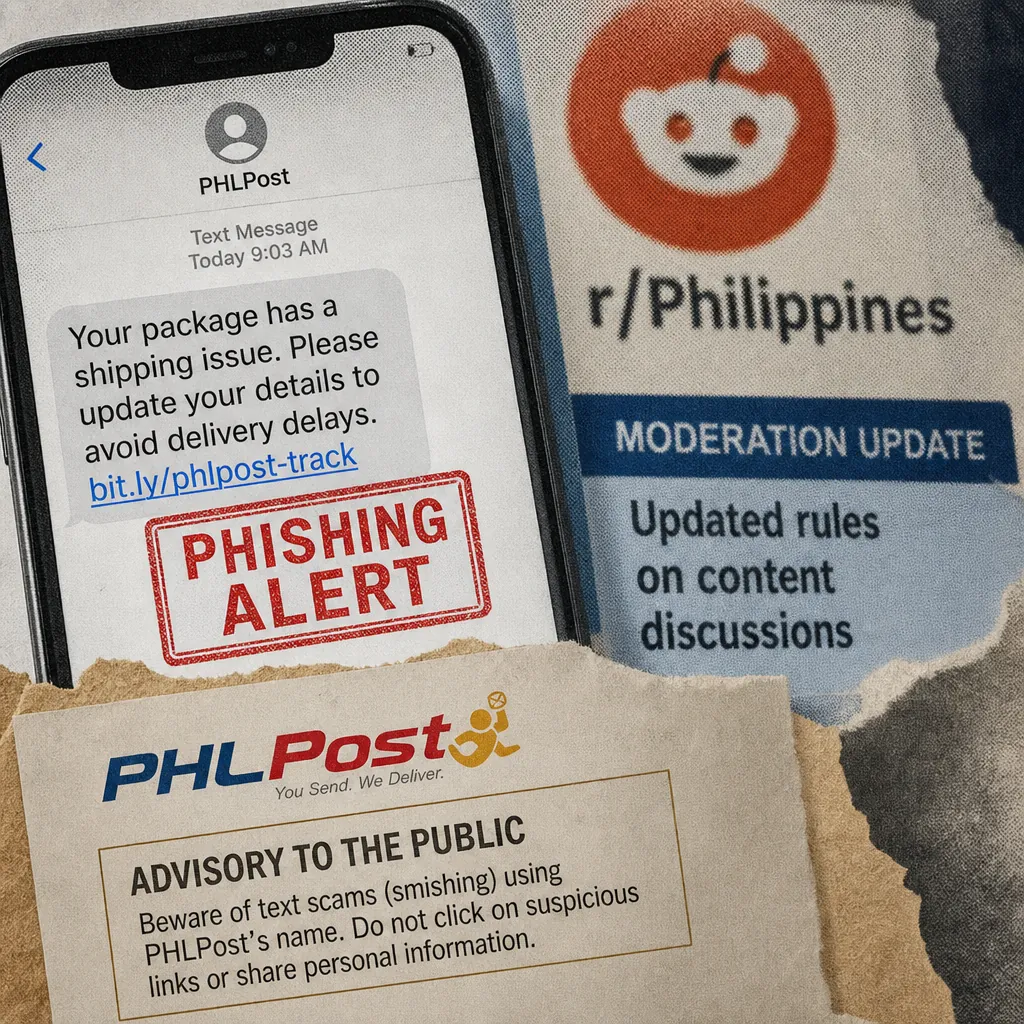
The Philippine Postal Corporation (PHLPost) issued a public advisory on August 24 warning consumers against “smishing” schemes that use the postal service’s name to harvest personal and financial data. Posted on PHLPost’s official Twitter account, the advisory drew almost no engagement—85 views, zero likes, shares, or comments—but its substance lands squarely in the middle of the country’s ongoing fight against text-based fraud, a fight that directly involves telecom carriers as the delivery channel for such scams. On the same day, the moderators of the r/Philippines subreddit posted a policy clarification tightening rules on violent content and personal information, a move that will shape how users discuss telecom outages and incidents on one of the country’s largest online communities. Together, these two developments frame a quiet but structurally significant day for the telecommunications sector: one that signals growing institutional attention to smishing and a platform-level shift in how service disruptions and related content are moderated.
The PHLPost advisory, written in Filipino, warns the public against fraudulent text messages that request sensitive financial information, explicitly aligning with the national campaign against smishing under the SIM Registration Act. The SIM Registration Act, signed into law in 2022, requires all SIM cards to be registered with their owners’ identities, ostensibly to curb scams and other illegal activities. Despite this, smishing—fraudulent text messages that trick recipients into revealing personal or financial details—remains a persistent problem, and carriers like PLDT, Smart, Globe, and DITO are often caught in the crossfire when such scams surface. The advisory’s low engagement is itself a finding: official warnings about smishing are not reaching critical mass on Twitter, suggesting that regulators and carriers cannot rely on organic social media momentum to spread these alerts.
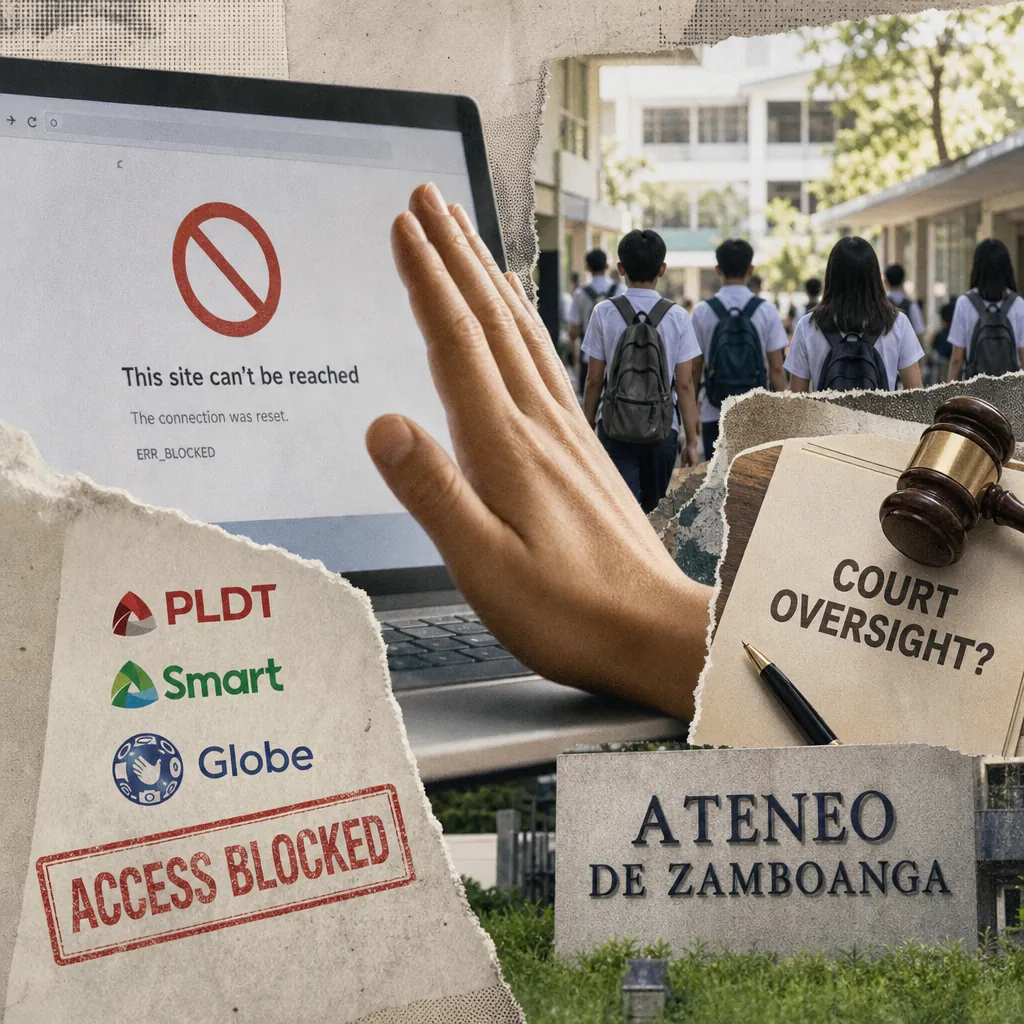
Running parallel to the smishing advisory was the r/Philippines moderation update, posted by user “uchocolatemeringue” on behalf of the mod team. The post, which accumulated 38 upvotes and 5 downvotes against 5 comments, codifies stricter rules on violent content—triggered by the AdZU incident, a reference to a violent event at Ateneo de Zamboanga University—and clarifies that the “for awareness only” framing does not exempt posts from removal. The new rules explicitly prohibit sharing footage filmed by perpetrators during attacks, even under the guise of awareness, and mandate redaction of private individuals’ personal information while exempting public officials. For telecom brands, this means that user-generated documentation of service failures—such as video of damaged cell towers or posts identifying employees involved in disputes—will now face tighter scrutiny, potentially reducing the volume of raw, uncensored content that surfaces during crises. The mod team’s stance on retroactive enforcement also signals that older posts, including those about telco incidents, could be removed if they violate these clarified policies.
The moderation post also surfaced a notable governance limitation: the mod team cannot see why Reddit’s admins remove certain content, as admin-initiated actions appear simply as [Removed by Reddit] without explanation. This acknowledged blind spot creates a reporting gap for telco-related discussions, where viral posts about outages or fraud could be silently removed by site admins without community visibility or mod justification. The mod team’s call for users to submit reports directly to Reddit via a provided link reflects a layered enforcement approach—an evolution in how platform-level moderation interacts with community-level discussion about sensitive topics like network failures or SIM swap fraud.
Beyond these two social posts, the day’s news media carried a range of stories touching on telecommunications and adjacent sectors. Globe Telecom expanded its 5G network in Pavia, Iloilo, with more than 10 new 5G sites complementing over 15 existing cell sites, part of its continuing network investments in the Visayas. Cebu Cable Internet and TechBridge announced a partnership to deploy a fiber-neutral hosting model in vertical developments, allowing multiple internet service providers to use shared fiber infrastructure inside participating properties. Meralco reinforced its North Port Substation in Tondo, Manila, upgrading power circuit breakers and disconnect switches to improve network reliability for customers including hospitals and universities. These infrastructure stories, while not directly about fraud or moderation, underscore the sector’s ongoing investment in network resilience and capacity.
Meanwhile, the Armed Forces of the Philippines (AFP) backed calls for regulatory action against foreign state-sponsored information campaigns targeting the West Philippine Sea, with lawmakers urging the National Telecommunications Commission (NTC) to restrict online channels allegedly spreading Chinese propaganda. This story intersects with telecommunications because it involves the NTC’s regulatory authority over online content and the broader issue of digital security. A Philstar opinion piece titled “The invasion that will not come by sea” argued that the likelier threat to the Philippines is a cyberattack on critical infrastructure, including the power grid, hospitals, and government databases, rather than a maritime invasion. The piece cited rehearsals of such attacks on Estonia, Ukraine, and hospitals in Britain, and called for greater preparedness. This narrative, while not directly about telecom carriers, positions the sector as part of the national security conversation around digital resilience.
In the broader news landscape, the House of Representatives began deliberating the proposed P7.2-trillion national budget for 2027, with several stories emerging from budget hearings. ACT Teachers party-list Rep. Antonio Tinio criticized the P1.5 billion in confidential funds allocated to the Department of Justice (DOJ) in 2025, questioning the ballooning from P168 million. Justice Secretary Frederick Vida confirmed the breakdown, including P1.184 billion for the Office of the Secretary and P319 million for the Witness Protection Program. The DOJ also reported that the owner of a gun used in the Tacloban shooting last June has been indicted for criminal negligence, and that the DOJ and NBI are monitoring online “groomers” who target minors through online games, with a group traveling to Singapore to meet with Meta officials. The Commission on Elections (Comelec) increased security following the ambush of BARMM interim Chief Minister Abdulraof Macacua, and the Senate subcommittee approved a bill postponing the Barangay and Sangguniang Kabataan Elections (BSKE) from November 2, 2026, to a later date. The Department of Education (DepEd) asked Congress for a separate budget line for school safety, and postponed nationwide active school shooting drills following opposition from psychiatric associations. The Securities and Exchange Commission (SEC) proposed a “One Business Start Date” to allow companies to begin operations once they secure their primary regulatory license, even while other permits are being processed. In showbiz news, Bea Alonzo’s former manager Shirley Kuan broke her silence on their split, and the prosecution team in Vice President Sara Duterte’s impeachment trial described former OVP disbursing officer Gina Acosta as evasive but not dumb.
Key themes
- PHLPost smishing advisory draws minimal engagement but signals institutional focus on text fraud. The advisory, posted on Twitter, received only 85 views and zero interactions, indicating that official warnings are not reaching a wide audience organically. This matters for telecom carriers because it suggests a gap in public awareness that carriers could help fill.
- r/Philippines tightens moderation rules, affecting how telco incidents are discussed. The new rules ban perpetrator footage, require redaction of personal information, and allow retroactive removal of posts. This will likely reduce the spread of graphic or unverified content during service disruptions, but also risks suppressing legitimate complaints.
- Reddit admins’ opaque content removal creates a blind spot for crisis monitoring. The mod team cannot see why admins remove content, meaning viral posts about outages could vanish without explanation, complicating social listening and early warning efforts.
- Globe expands 5G in Iloilo, highlighting continued network investment. Globe added more than 10 5G sites in Pavia, Iloilo, part of its broader push in the Visayas to meet rising mobile data demand. This reflects the sector’s focus on capacity and customer experience.
- Cebu Cable Internet and TechBridge partner on fiber-neutral infrastructure. The partnership will allow multiple ISPs to share fiber infrastructure in vertical developments, a model that could lower costs and increase competition in underserved areas.
- AFP and lawmakers push for action against foreign online disinformation. The AFP supports restricting online channels allegedly spreading Chinese propaganda on the West Philippine Sea, a move that would involve the NTC and could affect how telecom carriers handle content.
- Opinion piece warns of cyberattack threat to critical infrastructure. A Philstar column argues that the Philippines is more likely to face a cyberattack than a maritime invasion, citing attacks on Estonia, Ukraine, and hospitals in Britain. This frames telecom networks as part of national security infrastructure.
- Meralco upgrades substation in Manila to improve reliability. The reinforcement of the North Port Substation in Tondo upgrades circuit breakers and disconnect switches to withstand higher fault currents, benefiting hospitals, universities, and LRT stations.
How the narratives stack
Dominant: The dominant narrative in the captured set is the smishing and fraud awareness thread, anchored by the PHLPost advisory. While the advisory itself drew minimal engagement, it is part of a cumulative pattern of government agencies warning against text-based scams that impersonate trusted institutions. This narrative directly implicates telecom carriers as the delivery vector for such scams, even when the fraud originates externally. The low engagement on the advisory is notable because it suggests that official warnings are not breaking through to the public, which could leave carriers vulnerable to blame when a major smishing incident occurs. Within the captured set, this story is the most consequential for the telecom sector, as it touches on regulatory, reputational, and consumer-protection dimensions.
Counter-narrative: A counter-narrative emerges from the infrastructure investment stories, particularly Globe’s 5G expansion and Cebu Cable’s fiber-neutral partnership. These stories present the telecom sector as proactive and forward-looking, investing in network capacity and resilience to support economic growth. This contrasts with the fraud narrative, which positions carriers as passive conduits for scams. The infrastructure stories, while less prominent in terms of engagement, offer a positive framing that carriers can leverage to counter negative perceptions.
Emerging: An emerging narrative is the cybersecurity and disinformation thread, highlighted by the AFP’s call to block foreign misinformation and the Philstar opinion piece on cyberattacks. This narrative is still developing but has the potential to reshape how telecom carriers are viewed in the context of national security. If the government moves to restrict online channels or mandate cybersecurity measures, carriers will be directly affected. The opinion piece’s warning about cyberattacks on critical infrastructure, including telecom networks, adds urgency to this emerging story.
Under-covered: A story that placed low in the captured set but deserves attention is the SEC’s “One Business Start Date” proposal. While not directly about telecom, this reform could affect how quickly new businesses, including those in the digital economy, can begin operations, potentially increasing demand for telecom services. The story received moderate coverage but was overshadowed by more sensational news. For telecom stakeholders, this represents a potential growth opportunity that is currently under-discussed.
Platform insights
- Reddit: The r/Philippines moderation post received 38 upvotes and 5 downvotes, with 5 comments, indicating moderate acknowledgment but not active debate. The post’s detailed guidance on violent content and personal information redaction establishes a new operating framework for future telco incident threads, where users historically shared screenshots of outage maps or customer service exchanges. The platform’s moderation evolution suggests that future telco conversations will be more heavily curated, with a lower tolerance for unverified or graphic content. The mod team’s acknowledgement that Reddit admins can remove content without notice introduces an unpredictable variable in crisis monitoring: a viral post about a PLDT outage could vanish without trace, complicating social listening efforts.
- Twitter: The PHLPost smishing alert on Twitter represents the day’s only direct consumer-protection messaging, but its zero-engagement metrics—0 likes, 0 retweets, 0 quotes, 85 views—indicate the alert failed to penetrate beyond its immediate follower base. This low engagement is itself a finding: official advisories on smishing are not reaching critical mass on Twitter, despite the platform being a primary vector for scam-related complaints and viral warnings about text fraud. The lack of amplification means that carriers and regulators cannot rely on organic Twitter momentum for such alerts and may need coordinated amplification strategies.
- Facebook: While no direct Facebook posts were captured in the monitoring writeup, the platform remains a significant venue for scam discussions and community groups. The PHLPost advisory was likely shared on Facebook, but engagement data is not available. Carriers should prepare response templates for comments on their own pages where users share smishing examples, ensuring responses do not request sensitive information publicly and instead guide users to private customer service channels.
- YouTube: No YouTube activity was captured in the monitoring window, but the platform is relevant for long-form educational content on scam prevention. Carriers could consider producing explainer videos on how to identify smishing attempts, using general examples rather than specific phone numbers or screenshots, to align with platform norms and avoid moderation pitfalls.
Key voices and communities
- Community Moderators of Philippine Subreddits: This group functions as the primary gatekeeper of conversation quality and topic legitimacy across Reddit’s Philippine ecosystem. Their influence is structural rather than volume-driven, as they shape which discussions gain visibility and which get suppressed, making them a critical stakeholder for monitoring public sentiment around telecom issues. They have demonstrated proactive coordination with other subreddit moderation teams and direct engagement with Reddit admins on content policy enforcement. Their messaging emphasizes sitewide policy compliance, user safety, and the distinction between legitimate public discourse and harmful content, with a notable tolerance for criticism directed at government officials while maintaining strict rules against hate speech and unredacted personal information.
- Government and Regulatory Agency Accounts: Official institutional accounts hold outsized influence in the current conversation landscape, particularly when issuing public warnings or policy clarifications that get picked up by mainstream media and citizen watchdogs. While direct telecom mentions are absent in the immediate dataset, adjacent agencies like PHLPost are active in warning the public against smishing and fraud schemes, indicating a broader institutional focus on digital security threats that telecom stakeholders must track. Their messaging centers on consumer protection and fraud prevention, with the Philippine Postal Corporation’s recent warning clarifying that scammers are impersonating official government channels to extract sensitive financial data.
- Consumer Advocacy and Fraud Awareness Activists: Individual users and small community groups who actively share scam alerts and amplify institutional warnings form a distributed but persistent voice in the conversation. Their influence comes from rapid information relay across platforms, often translating government advisories into more accessible formats for everyday consumers. Engagement levels on these relayed warnings remain low-to-moderate at present, but their role as trusted intermediaries within local communities is significant. Their framing consistently focuses on personal financial safety, urging vigilance against text scams that impersonate trusted institutions, which creates reputational spillover risks for telecom providers whose networks enable these fraudulent messages.
- Digital Security and Privacy Commentators: A smaller, more specialized group of commentators who contextualize fraud warnings and privacy issues within the broader regulatory framework of the Data Privacy Act, National Privacy Commission directives, and emerging cybercrime legislation. Their influence is niche but impactful, as they shape how policy-aware consumers interpret institutional actions and corporate responsibilities. They are the group most likely to link telecom service issues to compliance failures, creating substantive reputational risk narratives. Their commentary emphasizes accountability and transparency, particularly regarding how public-facing institutions handle sensitive data and how private companies like telecom operators protect their customers from fraud.
Narrative streams
PHLPost smishing advisory: a low-engagement warning with high-stakes implications
The Philippine Postal Corporation’s advisory, posted on Twitter on August 24, warns the public against smishing schemes that impersonate the postal service to steal personal and financial data. The advisory, written in Filipino, aligns with the national campaign against smishing under the SIM Registration Act, which requires all SIM cards to be registered with owners’ identities to curb scams. Despite the importance of the message, the post drew only 85 views and zero interactions, indicating that it failed to reach a wide audience. This low engagement is a finding in itself: official warnings about smishing are not breaking through on Twitter, a platform where scam complaints and viral warnings often circulate. For telecom carriers, this represents both a risk and an opportunity. The risk is that without effective public awareness, consumers remain vulnerable to scams, and when a major incident occurs, carriers may be blamed for not doing enough. The opportunity is for carriers to step into the gap by issuing their own proactive advisories, coordinating with government agencies like PHLPost and banks to amplify a unified “verify before you click” message. The read for the sector is that carriers should treat this advisory as a lead indicator: when government agencies intensify smishing warnings, public scrutiny of how carriers handle spam and scam traffic tends to follow within days, often prompting media queries about filtering measures and reporting mechanisms.
r/Philippines moderation overhaul: new rules for discussing telco incidents
The r/Philippines subreddit’s moderation update, posted on August 24, establishes stricter rules on violent content and personal information, directly affecting how users discuss telecom service disruptions and incidents. The post, which received 38 upvotes and 5 downvotes, explicitly prohibits sharing footage filmed by perpetrators during attacks, even under the guise of awareness, and mandates redaction of private individuals’ personal information while exempting public officials. For telecom brands, this means that user-generated documentation of service failures—such as video of damaged cell towers or posts identifying employees involved in disputes—will now face tighter scrutiny, potentially reducing the volume of raw, uncensored content that surfaces during crises. The mod team’s stance on retroactive enforcement also signals that older posts, including those about telco incidents, could be removed if they violate these clarified policies. This moderation shift could paradoxically reduce the speed of public awareness during genuine crises while also lowering the risk of reputational damage from unverified graphic claims. The read for the sector is that carriers should institutionalize a fast-response protocol for content removals in crisis scenarios, ensuring official statements are issued before raw footage or unverified claims dominate sentiment, and partner with community moderators to ensure accurate service updates are flagged.
Reddit admin opacity: a blind spot for crisis monitoring
The r/Philippines mod team acknowledged that they cannot see why Reddit’s admins remove certain content, as admin-initiated actions appear simply as [Removed by Reddit] without explanation. This creates a reporting gap for telco-related discussions, where viral posts about outages or fraud could be silently removed by site admins without community visibility or mod justification. For telecom stakeholders, this means that a viral post about a PLDT outage could vanish without trace, complicating social listening efforts and making pre-emptive intelligence gathering more critical. The mod team’s call for users to submit reports directly to Reddit via a provided link reflects a layered enforcement approach—an evolution in how platform-level moderation interacts with community-level discussion about sensitive topics like network failures or SIM swap fraud. The read for the sector is that carriers should maintain direct monitoring channels beyond Reddit and prepare for scenarios where platform-level removals obscure public sentiment signals during service disruptions.
Globe’s 5G expansion in Iloilo: network investment as a counter-narrative
Globe Telecom announced on August 24 that it has expanded its 5G network in Pavia, Iloilo, with more than 10 new 5G sites complementing over 15 existing cell sites serving the municipality. The rollout is part of Globe’s continuing network investments in Iloilo and across the Visayas to meet rising mobile data demand and improve customer experience. Jimbo Cordero, Globe general manager for the Visayas, said, “Pavia continues to grow as a center for business and livelihood in Iloilo, and we want our network to grow with it. By strengthening 5G connectivity in the municipality, we are helping give residents and businesses a better mobile experience while supporting the opportunities that come with Pavia’s continued development.” This story, covered by BusinessWorld Online, presents the telecom sector as proactive and forward-looking, investing in network capacity to support economic growth. It contrasts with the fraud narrative, which positions carriers as passive conduits for scams. The read for the sector is that infrastructure investment stories offer a positive framing that carriers can leverage to counter negative perceptions, but they must be paired with consumer protection messaging to address the smishing concern.
Cebu’s fiber-neutral infrastructure: a model for shared connectivity
Cebu Cable Internet and TechBridge announced a partnership to deploy a fiber-neutral hosting model in vertical developments, allowing multiple internet service providers to use shared fiber infrastructure inside participating properties. Cebu Cable Internet President and CEO Goering Paderanga Jr. said, “Digital connectivity is no longer simply about having internet access. It is becoming fundamental to how businesses operate, how government delivers services and how communities participate in the economy.” This initiative comes as internet connectivity becomes increasingly critical to Cebu’s economy, supporting cloud computing, remote work, e-commerce, and artificial intelligence. The fiber-neutral model could lower costs and increase competition in underserved areas, potentially expanding access to high-speed internet. The read for the sector is that shared infrastructure models may become more common as a way to accelerate digital inclusion, and carriers should explore partnerships that allow them to expand reach without duplicating physical infrastructure.
AFP and lawmakers target foreign disinformation: telecom as a national security front
The Armed Forces of the Philippines (AFP) backed calls on August 24 for regulatory authorities to take decisive action against foreign state-sponsored information campaigns targeting the West Philippine Sea. Rear Adm. Roy Vincent Trinidad, military spokesperson for the WPS, confirmed support for lawmakers urging action, led by House Spokesperson Representative Robert Ace Barbers. Trinidad said that defending national sovereignty extends beyond maritime and aerial domains into digital networks. Congressional leaders are urging the National Telecommunications Commission (NTC) and related agencies to restrict online channels allegedly spreading Chinese propaganda, specifically citing the Facebook page “Media.” This story, covered by Daily Tribune Online, intersects with telecommunications because it involves the NTC’s regulatory authority over online content and the broader issue of digital security. The read for the sector is that carriers may face new regulatory obligations to block or restrict content deemed as foreign disinformation, which could raise concerns about censorship and operational complexity. Carriers should prepare for potential directives from the NTC and engage in policy discussions to ensure balanced implementation.
Opinion: The cyberattack threat that could dwarf maritime disputes
A Philstar opinion piece titled “The invasion that will not come by sea” argued that the Philippines is more likely to face a cyberattack on critical infrastructure than a maritime invasion. The piece described a scenario where the power grid fails, hospitals cannot access patient records, and government payroll systems are held for ransom, all without a single shot fired. It cited rehearsals of such attacks on Estonia, Ukraine, and hospitals in Britain, and warned that government databases in the Philippines have already been raided. The piece called for greater preparedness, asking whether anyone will be “at the keyboard when it happens.” This narrative, while not directly about telecom carriers, positions the sector as part of the national security conversation around digital resilience. The read for the sector is that telecom networks are critical infrastructure that could be targeted in a cyberattack, and carriers should invest in robust cybersecurity measures and collaborate with government agencies to protect against such threats.
Conversation trajectory
- Escalation of smishing and fraud narratives toward institutional trust (2-3 weeks): The PHLPost smishing warning marks a point where government agencies are now actively publicly warning against text-based scams that impersonate official entities. This pattern typically cascades within 2-3 weeks to telecom providers, as consumers begin questioning why carriers allow these messages to reach their devices. Expect a shift from generic “text scam” complaints toward targeted demands for telco accountability, particularly regarding SIM registration effectiveness and filtering mechanisms. For PLDT and Smart, this represents both a reputational risk and an opportunity to position proactive blocking features as consumer protection leadership.
- Moderation tightening creating downstream conversation suppression effects (2-4 weeks): The recent policy reinforcement on the largest Philippine subreddit regarding violent content and personal information signals a broader platform-level crackdown that will affect how telecom service disruptions are discussed. While not directly telco-related, this moderation shift will likely suppress the most inflammatory outage reporting while encouraging more measured complaint documentation—particularly relevant for incidents involving workplace or public-space filming of service failures. Expect a gradual normalization of outage discussions over the next 2-4 weeks, with more emphasis on official reporting channels rather than viral documentation.
- Cross-sector amplification of scam warnings driving telecom policy scrutiny (1-2 months): The pattern of government agencies issuing individual smishing advisories—now including PHLPost—creates a compounding narrative that increasingly implicates the telecommunications infrastructure enabling these scams. This is particularly salient given the SIM Registration Act framework and recent NPC pronouncements on data breaches. The conversation trajectory suggests that within 1-2 months, media and public discourse will pivot from individual agency warnings toward systemic questions about why SIMs registered under the anti-fraud law remain vectors for smishing, directly affecting PLDT, Smart, Globe, and DITO. Early indicators show this institutional warning receiving low engagement currently (under 100 views), but government-issued security advisories historically show delayed uptake before rapid amplification when a connected incident occurs.
- Trigger events to watch: The next major phishing or smishing incident involving a bank or government agency will retroactively amplify all prior warnings and intensify demands for telco action. The National Privacy Commission’s upcoming enforcement actions or public statements on text scams will typically generate substantial coverage across both traditional and digital media. The potential release of NTC or DICT regulatory guidance on SMS filtering and anti-scam protocols would directly position telecom companies as either compliant partners or regulatory targets.
Response guidance
Proactive smishing advisory: Issue a proactive, public advisory on smishing recognition and reporting specifically tied to SIM registration and OTP-related scams. Coordinate with institutions like PHLPost and banks to amplify a unified “verify before you click” message, positioning carriers as leading defenders of consumer financial safety rather than passive conduits. Use general examples rather than specific phone numbers or screenshots to avoid triggering privacy-related content removal.
Fast-response protocol for content removals: Institutionalize a fast-response protocol for content removals in crisis scenarios, given the strict moderation rules on violent or graphic content. Ensure official statements from carriers are issued before raw footage or unverified claims dominate sentiment, especially during incidents that could involve injury or property damage. Partner with community moderators to ensure accurate service updates are flagged, rather than relying solely on channel-owned accounts.
Community education campaign: Launch a targeted community education campaign that avoids triggering privacy-related content removal. Craft explainer materials on scams that use generic examples instead of encouraging users to post uncensored screenshots, which would now be subject to stricter moderation. This preserves user-generated evidence collection while aligning with platform policy, reducing the risk of losing valuable consumer reporting channels.
Reddit engagement: Monitor the subreddit for emerging threads on smishing or scam text messages impersonating government agencies, as the mod team has signaled a stricter policy on personal information and harmful content that can shape how such topics are discussed. Use this as an opportunity to provide factual clarifications in comment sections without violating the sub’s rules on unredacted personal data. Engage indirectly by sharing official advisories from relevant agencies in response to user queries about suspicious texts, framing responses with a “here’s how to verify” approach rather than amplifying the scam itself.
Twitter amplification: Track and retweet official advisories from government and corporate accounts when they warn about smishing, especially those referencing PHLPost, since these posts carry high credibility and are easily shareable in real-time response to user queries. The low engagement on the sample tweet suggests a need for amplification through strategic replies to relevant conversations. Deploy a rapid-response framework for mentions of telecom-related scams, using pre-approved language that directs users to official verification channels without endorsing third-party advice that could conflict with client interests.
Facebook response templates: Prepare a response template for comments on client-owned pages where users share smishing examples, ensuring that responses do not request sensitive information publicly and instead guide users to private customer service channels. Coordinate with client communications teams to post infographics on recognizing phishing texts, emphasizing that legitimate agencies like PHLPost will never request financial details via SMS. Engage in community groups where such scams are frequently discussed, but only through brand accounts with a clear spokesperson role, avoiding any direct engagement with individual critics or users who amplify panic.
Key messages: “Legitimate government agencies and service providers will never ask for your personal financial information through text messages, and any such request should be treated as a potential scam.” “If you receive a suspicious message claiming to be from a trusted organization, verify directly through official hotlines or websites before responding, as scammers often use recognizable names like PHLPost to build false trust.” “Report smishing attempts to the proper authorities, including the NTC and relevant agencies, so that they can take action against fraudulent numbers and protect other consumers.” “Our clients are committed to safeguarding customer data and actively work with regulators to combat text scams, which is why public awareness is a shared responsibility.”
Sensitive topics to navigate: Avoid discussing specific personal information that may have been compromised, as the Reddit post highlights the sensitivity around uncensored data sharing; instead, focus on general prevention advice without referencing any victims’ details. Be cautious when advising on how to handle scams that may involve government agency names, as this could be perceived as criticizing agency response times; frame recommendations constructively around consumer action rather than institutional failure. Balance the need to inform consumers about scams against platform rules on sharing content that includes private information or violent imagery, as the Reddit mod guidance shows that “for awareness” is not a valid justification for policy breaches, so ensure all shared examples are sanitized.
See the full picture behind today's signals.
This report draws from Media Meter's MediaWatch, our real-time monitoring engine tracking 2,470+ Philippine sources across print, broadcast, digital, and social. Explore how the platform turns raw coverage into decision-grade intelligence, then see how it's configured for teams like yours — whether you're in PR agencies, corporate comms, government, or marketing.
Want more? Browse our Report Library for sector and crisis intelligence, or request a demo and we'll have your brand set up before the call.
Want this kind of intelligence on your brand?
This brief is built on the same MediaWatch methodology that runs continuously across every brand we monitor. See your competitive landscape, Impact Score, and narrative trajectory in a 30-minute demo.