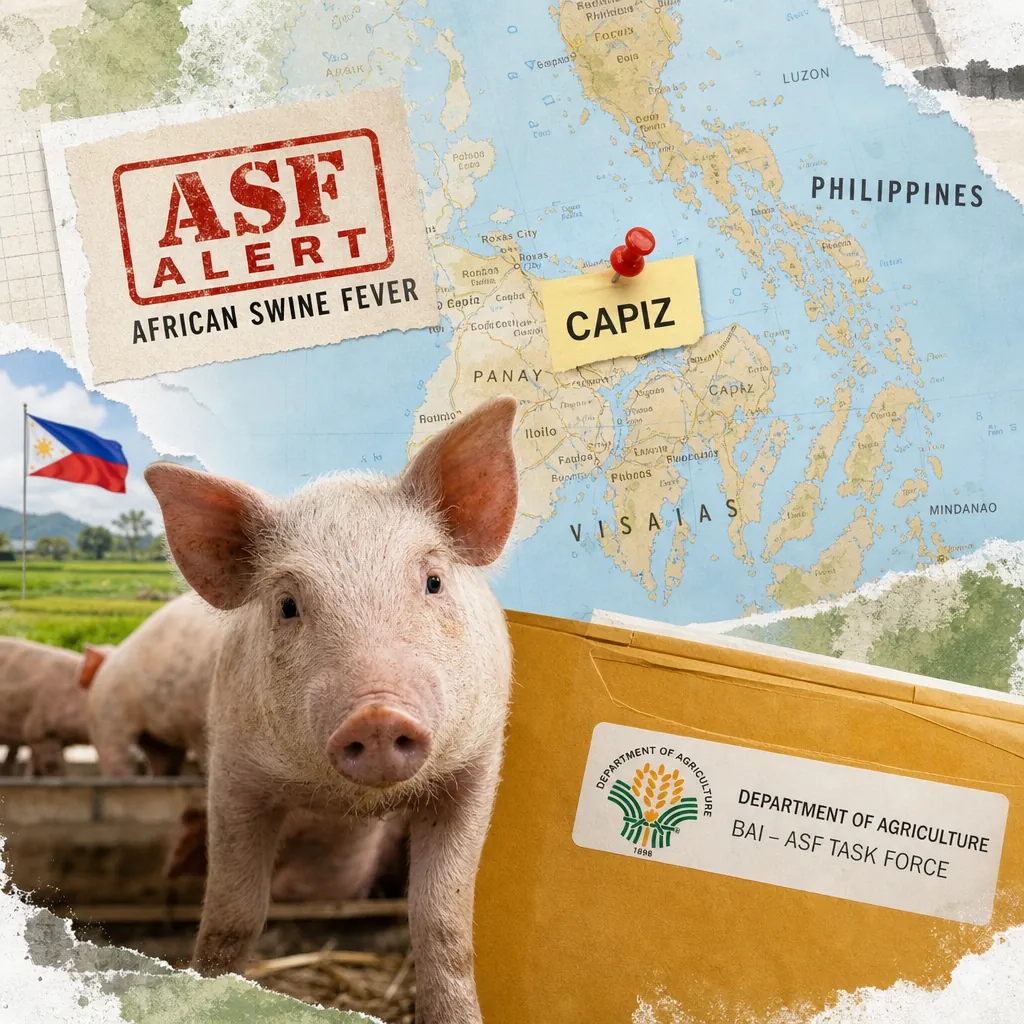
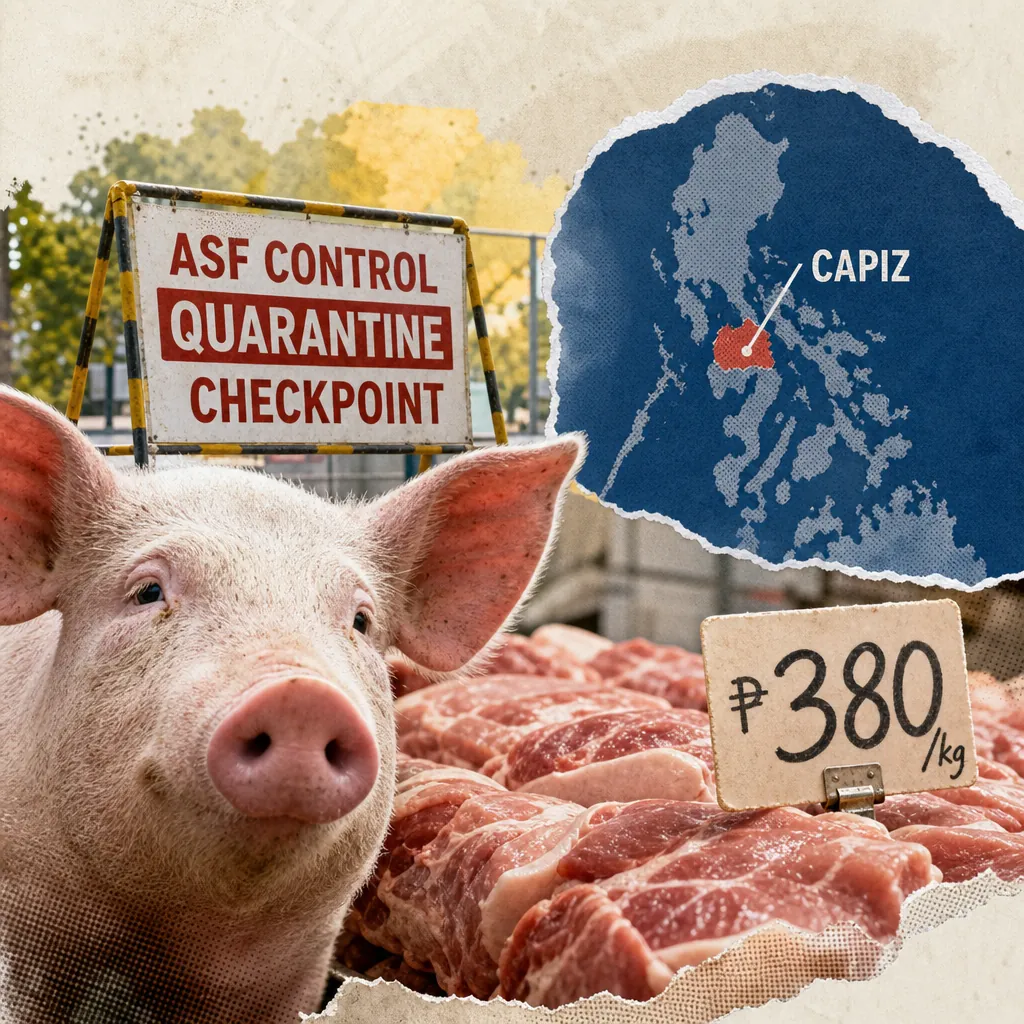
ASF outbreak in Negros Occidental threatens pork supply and prices
African Swine Fever resurges in Negros Occidental, killing over 500 pigs and prompting border controls, with implications for pork supply, prices, and food industry stakeholders.
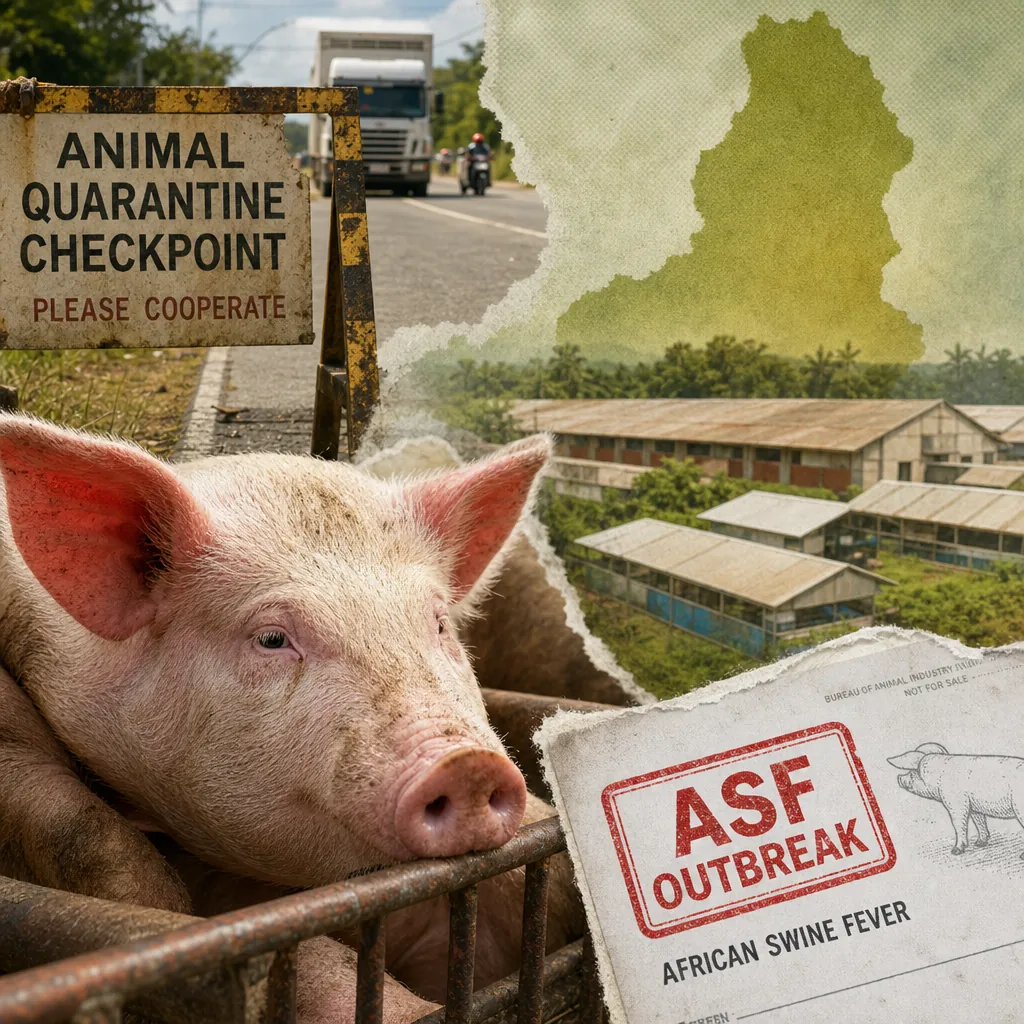
The social media conversation on June 22–23, 2026, was dominated by the resurgence of African Swine Fever (ASF) in Negros Occidental, with confirmed cases and hog deaths drawing widespread attention from local governments, media, and the public. The outbreak, which killed over 500 pigs in San Enrique alone, triggered a cascade of official announcements, preventive measures, and emotional reactions, while other food industry topics—such as price hikes, brand promotions, or product launches—were largely absent from the monitored conversation. The single food-related post, a Jollibee community event at SM Marikina, generated positive but shallow engagement, indicating that consumer attention was diverted by the unfolding animal health crisis.
Conversation snapshot. On June 22, the only food-industry post was a Jollibee event announcement on Facebook by user iammarideleon, which received 19 likes and 30 love reactions but zero comments—showing appreciation without debate. The following day, the conversation shifted entirely to ASF. A post by pnvmediaonline confirming 500 hog deaths in San Enrique drew 4 sad reactions and 1 wow. Inquirer.net’s report on the same story garnered 10 sad reactions and 10 likes. Watchmendailyjournal’s post quoting Governor Eugenio Jose Lacson received 8 likes and 5 shares. The most engaged post was a video statement from Bago City’s veterinarian on thecitybridge, which earned 169 likes and 47 love reactions, indicating strong community trust in transparent communication. Bacolod City’s plan to reconvene the ASF Task Force, reported by rmnbacolod747, got 22 likes and zero comments. A separate post about Foodpanda bike deliveries in Myanmar due to fuel prices hinted at broader supply chain pressures.
Key themes
- ASF confirmation and localized panic – On June 23, news of San Enrique’s 500 hog deaths and confirmed ASF cases spread rapidly, with posts from pnvmediaonline and Inquirer.net drawing sad reactions and shares, reflecting public shock and grief. Governor Lacson’s confirmation added official weight, prompting calls for stricter controls.
- Government response and prevention measures – Starting June 22, Moises Padilla’s local government unit posted a temporary ban on live hogs and raw pork products, framing it as preventive. By June 23, Bacolod City announced plans to reconvene the ASF Task Force and implement border controls, receiving community approval. Bago City’s veterinarian provided educational content that earned high positive engagement.
- Economic and supply chain implications – The ASF outbreak directly threatens pork supply, critical for Filipino food staples and quick-service restaurant (QSR) chains using pork. The Foodpanda Myanmar post, while geographically distinct, reinforces a broader narrative of food logistics stress under rising costs—a pattern Filipinos watching pork prices would recognize.
- Absence of consumer food discourse – No posts referencing price hikes, value meals, or brand expansions appeared in the dataset. The single Jollibee post served as a branded event announcement devoid of critical commentary, and its zero-comment count suggests the audience did not engage in typical cost-conscious discussions. This stands in contrast to periods where topics like “presyo” or “onion price” trigger hundreds of reactions.
- Emotional shift from caution to alarm – The narrative evolved from preventive measures (June 22) to crisis response (June 23), with emotional reactions shifting from neutral to sad and care icons. This indicates growing public anxiety about food affordability and safety.
- Trust in official sources – Government and veterinary authority posts received predominantly positive reactions (likes, love, care) with no angry or haha reactions, suggesting the public trusts local government unit and Department of Agriculture advisories. No misinformation was detected in the sample.
How the narratives stack
Dominant narrative – The dominant story is that African Swine Fever has returned to Negros Occidental, with confirmed cases in San Enrique killing over 500 pigs across all barangays. Local governments are responding with border controls, biosecurity measures, and task force reactivations, while the provincial government urges strict compliance. The public is reacting with concern (sad reactions) and seeking reassurance from authorities.
Counter-narrative – Some local governments, like Iloilo province, are choosing not to close borders despite nearby ASF cases, arguing that strict farm biosecurity—not border shutdowns—is the primary defense. This suggests a divergence in strategy: some areas favor containment through movement bans, while others emphasize on-farm prevention. The Bago City veterinarian’s educational video, which received high engagement, reinforces the counter-narrative that transparent communication can build trust and reduce panic.
Emerging narrative – The economic impact of ASF on pork supply and prices is beginning to surface, though not yet dominant. The Foodpanda Myanmar post hints at parallel logistics pressures, and historical patterns suggest that pork price spikes and substitution toward chicken, fish, and plant-based proteins will follow. Consumer conversations about “shrinkflation” and “budget meals” are likely to intensify in the coming weeks.
Suppressed narrative – The potential role of processed and canned pork products as safe alternatives is under-covered. While local bans exempt commercially processed items with valid FDA permits, consumer anxiety may still associate all pork with risk. Brands that proactively communicate their sourcing and safety protocols could fill this gap but have not yet done so in the monitored conversation.
Platform insights
Facebook – The primary platform for official announcements and community reactions. Engagement was highest on educational and transparent content (the Bago City veterinarian’s video with 169 likes and 47 love reactions). News outlet posts (Inquirer.net, watchmendailyjournal) drew moderate engagement with sad reactions, indicating passive consumption rather than debate. Local government pages received mostly positive reactions, reinforcing trust.
Twitter – Only one relevant tweet appeared: a retweet of the earthquake aftershock report from dwar1494, which generated 78 views but zero likes or comments. No food-brand threads were detected, suggesting Twitter was not a significant platform for this conversation.
YouTube – An earthquake compilation video from lindunow1 received only 2 views and no comments, confirming that video-based food content was entirely absent from the sample.
Key voices and communities
- Local government and veterinary authorities – Municipal and city-level officials, including mayors and veterinary officers, are central to the conversation. They post official statements, executive orders, and situation updates, generating the highest total engagement. Their content consistently emphasizes biosecurity protocols, border controls, and coordination with national agencies. The Bago City veterinarian’s video became the most-shared piece, indicating high community trust.
- Regional news media outlets – Traditional and digital-native media based in Negros—such as RMN Bacolod, Watchmen Daily Journal, and the Philippine Daily Inquirer—act as amplifiers of official information. They distribute summarized reports and breaking news, with each post averaging moderate likes but significant shares. Their coverage shapes public perception of risk and supply stability.
- Hog raisers and the livestock industry – Though not directly posting in the sampled content, hog raisers are the implied primary audience and affected party. Posts from local government units and media frequently address this group directly, calling for cooperation and compliance. The high number of “care” and “sad” reactions on government posts suggests that smallholders and commercial raisers are actively following updates.
- National and provincial government agencies – The Department of Agriculture (DA) and Bureau of Animal Industry (BAI) appear as referenced authorities but do not directly author content in this sample. Their advisories are echoed by local government units and media, forming an authoritative layer that validates local actions.
Narrative streams
ASF outbreak in Negros Occidental
The central narrative stream is the confirmation of African Swine Fever in San Enrique, Negros Occidental, with laboratory tests confirming infections in all 10 barangays and over 500 pig deaths. Mayor Jilson Tubillara announced the outbreak on June 23, ordering stricter biosecurity measures and border checkpoints. Governor Eugenio Jose Lacson confirmed that cases are concentrated in southern Negros and urged strict compliance with protocols, noting that the mortality rate had reached 4.06% as of June 18. The provincial government has reactivated containment measures, including the immediate burial of dead pigs and disinfection of affected areas.
This narrative is significant because Negros Occidental is a key agricultural region for pork production in the Philippines. ASF outbreaks historically lead to supply shortages, price spikes, and shifts in consumer demand toward alternative proteins. The emotional reactions—predominantly sad and care icons—indicate public anxiety about food affordability and safety, which could amplify demand for affordable protein alternatives such as chicken, fish, and canned goods.
Preventive measures and border controls
In response to the outbreak, several local governments have implemented preventive measures. Moises Padilla issued executive orders banning live hogs and raw pork products, while exempting commercially processed items with valid FDA permits. Bacolod City announced plans to reconvene the ASF Task Force and set up border controls, receiving community approval. However, Iloilo province stated it will not close its borders, emphasizing farm biosecurity instead. This divergence in strategy creates a patchwork of regulations that could disrupt inter-island pork logistics and pressure wholesale prices upward.
Absence of consumer food discourse
Notably, the monitored conversation contained no posts about food price increases, shrinkflation, product recalls, or brand expansions—topics that typically generate buzz in Philippine social media. The single Jollibee post, a community event at SM Marikina, received positive but shallow engagement (19 likes, 30 loves, zero comments). This absence suggests that the ASF outbreak has temporarily displaced consumer attention from routine food industry chatter. However, this silence should not be interpreted as consumer satisfaction; rather, it reflects a reallocation of attention toward safety information. Brands should prepare for delayed complaints to surface once public attention returns to normal consumption patterns.
Broader supply chain pressures
A separate post about Foodpanda pivoting to bike deliveries in Myanmar due to fuel price surges hints at parallel cost inflation dynamics in the region. While geographically distinct, this story reinforces the theme of food logistics stress under rising costs—a pattern that Filipino consumers watching pork and fuel prices would recognize. Delivery platforms in the Philippines may also face margin pressure, potentially raising fees just as consumers seek affordable meal options.
Conversation trajectory
Escalating consumer fears about pork supply and pricing (next 2–3 weeks) – Confirmed ASF cases and 500 hog deaths in San Enrique are rapidly shifting public discourse from localized alerts to broader concerns about pork availability and cost. Social mentions of “pork price” and “budget meals” are projected to increase significantly as consumers anticipate shortages. This will likely trigger comparisons with other proteins and drive demand for value-oriented QSR offerings.
Shrinkflation and substitution narratives gaining traction (next 30–45 days) – As pork supply tightens, conversations around shrinkflation—smaller servings or higher prices for pork-based products—will surface across major food brand mentions. The confirmed ASF spread and subsequent border controls will accelerate this, particularly in urban centers reliant on Negros pork supply. Expect increased scrutiny of portion sizes and price points for pork-heavy items like lechon, sisig, and pork sinigang.
Shift toward chicken, fish, and plant-based proteins (next 2 months) – Historical ASF outbreaks caused a 15–20% volume shift away from pork in household spending. Similar patterns are likely here, with conversations around “chicken price,” “galunggong,” and “plant-based” alternatives intensifying. Food vloggers and mukbang content will pivot to non-pork dishes, creating opportunities for brands to highlight affordable chicken or tuna-based value meals.
Delivery and cloud kitchen adaptations (next 4–6 weeks) – As pork prices rise, consumers will increasingly rely on GrabFood, foodpanda, and cloud kitchens for affordable alternatives. Expect a significant increase in search volume for “budget meals delivery,” with implications for QSRs and FMCG brands to offer bundled pork-substitute options.
Key trigger events – The conversation will be reshaped by: official confirmation of ASF cases in additional provinces (strong likelihood within 2–3 weeks), release of the next Food Price Index by the Philippine Statistics Authority (projected July–August 2026), and any new executive orders expanding import tariffs on frozen pork or rice. Each event will amplify consumer sensitivity to price hikes and push replacement-protein discussions into mainstream media.
Response guidance
Platform-specific approaches:
- Facebook: Publish a proactive statement acknowledging the ASF situation and reaffirm commitment to sourcing pork only from ASF-free zones. Use short, mobile-optimized infographics to explain biosecurity measures. Set up pinned comments on high-engagement posts linking to a FAQ page addressing pork safety, product availability, and price stability. Monitor reactions (sad/angry) as triggers for direct replies from a trained customer care team.
- X (formerly Twitter): Release a concise thread with bullet-point updates: “We source pork only from DA-certified suppliers; all products remain safe; we are in close coordination with LGUs.” Use a branded hashtag (e.g., #SafePorkPH) to aggregate official responses.
- YouTube: Produce a short “Behind the Kitchen” video featuring a quality assurance manager explaining how pork is tested and traced, filmed at a processing plant. Reference HACCP and FDA LTO compliance.
Key messages:
- “The safety of our products remains our top priority. We source pork exclusively from suppliers that comply with DA and FDA regulations, and we do not accept hogs from ASF-affected areas.”
- “We are actively coordinating with local governments and industry groups to monitor the ASF situation and will adjust our sourcing as needed to ensure uninterrupted supply of safe, affordable products.”
- “Processed and canned pork products from FDA-registered facilities remain safe and are not affected by the current ASF outbreak. Consumers can continue to trust our brands.”
- “We understand the concern among hog raisers and consumers. Our company is committed to supporting industry recovery through responsible sourcing and partnerships with local farmers who follow strict biosecurity.”
Sensitive topics to navigate:
- Fear of price spikes and shrinkflation: Avoid promising price freezes unless cost data confirms sustainability. Instead, emphasize value-meal options and portion transparency. Acknowledge that market forces may affect pricing but commit to fair trade practices.
- Blame on specific LGUs or municipalities: Do not single out areas with confirmed ASF. Refer generally to “affected zones” and highlight that the company complies with all provincial and municipal bans.
- Potential backlash from plant-based or “avoid pork” advocates: Stay neutral on dietary choices. Frame the response as a food-safety issue, not a debate on meat consumption.
Response priorities:
- Immediate reassurance to consumers in Negros Occidental and neighboring areas – A rapid statement on pork sourcing policy will prevent rumor-driven boycotts.
- Coordinate with the ASF Task Force and DA – Join or support reconvened task forces to provide credible third-party endorsement of safety protocols.
- Supply chain contingency planning (silent priority) – Internally audit pork inventory from Negros Occidental and secure alternative suppliers from ASF-clear regions (e.g., Luzon, Mindanao) to ensure continuity.
See the full picture behind today's signals.
This report draws from Media Meter's MediaWatch, our real-time monitoring engine tracking 2,470+ Philippine sources across print, broadcast, digital, and social. Explore how the platform turns raw coverage into decision-grade intelligence, then see how it's configured for teams like yours — whether you're in PR agencies, corporate comms, government, or marketing.
Want more? Browse our Report Library for sector and crisis intelligence, or request a demo and we'll have your brand set up before the call.
Want this kind of intelligence on your brand?
This brief is built on the same MediaWatch methodology that runs continuously across every brand we monitor. See your competitive landscape, Impact Score, and narrative trajectory in a 30-minute demo.