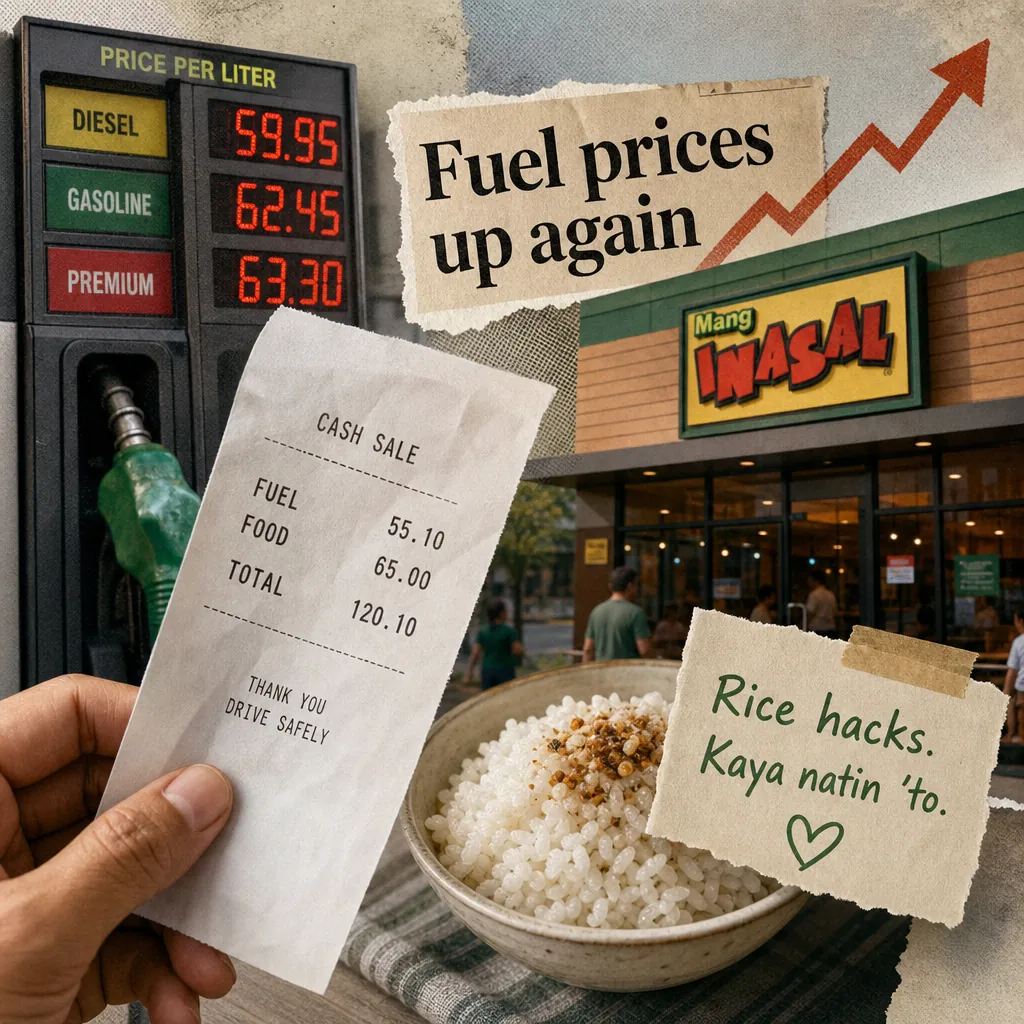
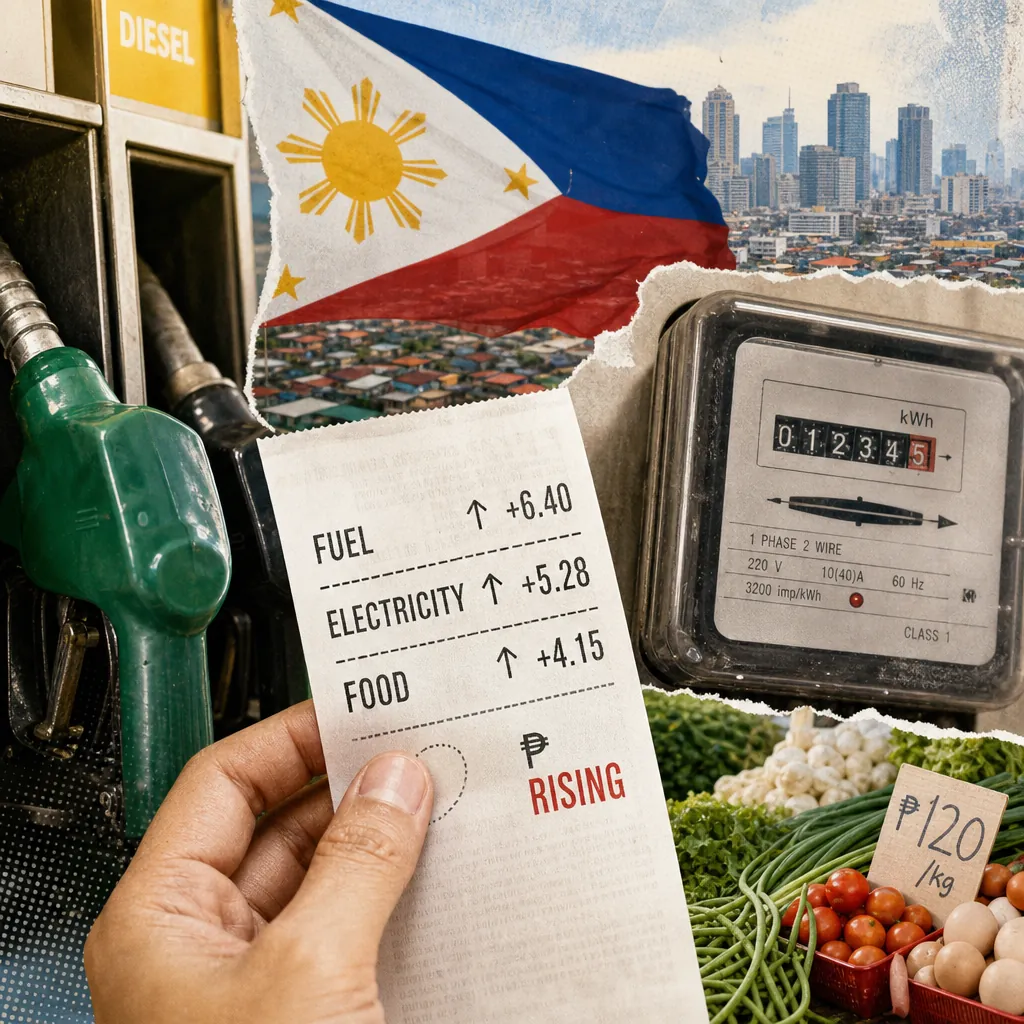
ASF outbreaks spread across Visayas as rice price cap debate intensifies
African Swine Fever cases confirmed in Iloilo, Capiz, Bacolod, and Negros Oriental threaten pork supply, while the DA pushes to extend the P50/kilo rice price cap amid retailer backlash and public skepticism.
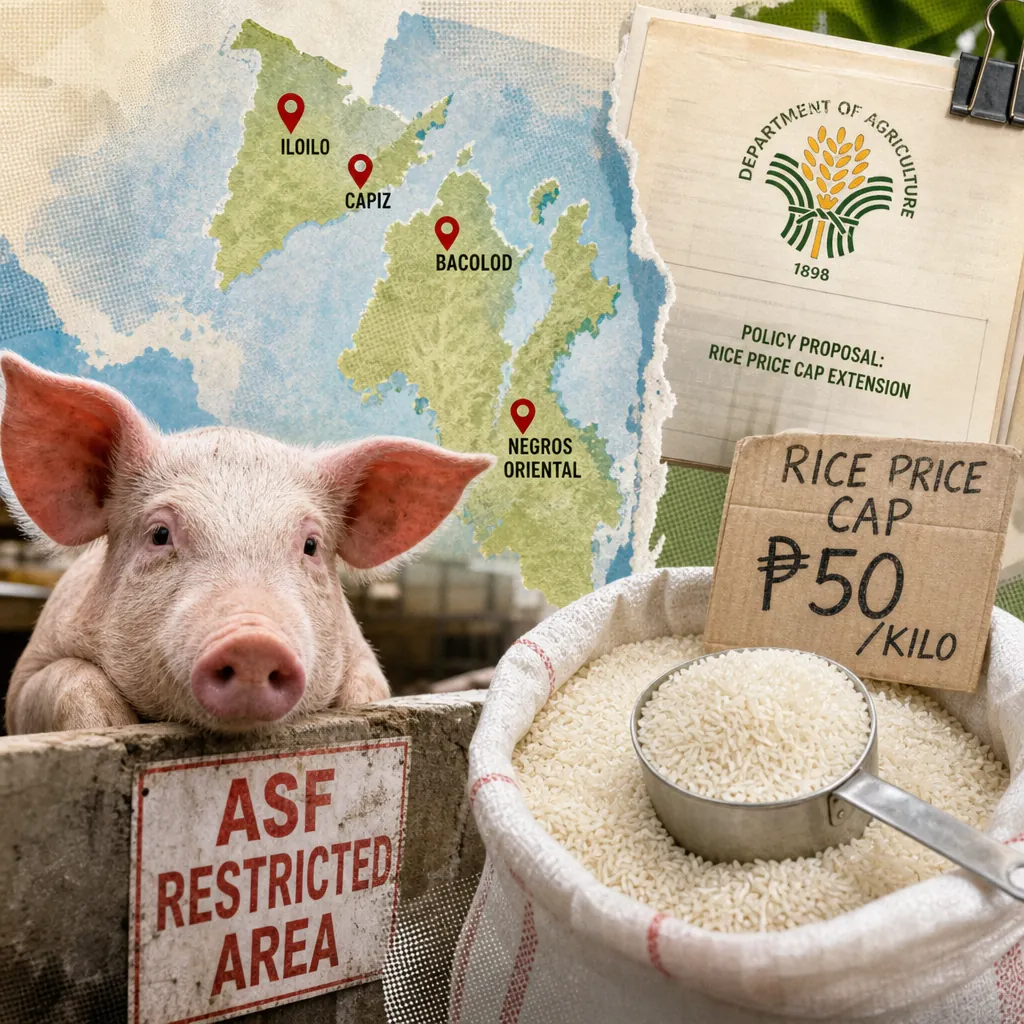
The conversation around food prices and supply chain disruptions in the Philippines escalated rapidly in early July 2026, driven by two interconnected developments. On July 1, the Department of Agriculture (DA) announced it was pushing for another 60-day implementation of the P50-per-kilo price cap on imported rice, a measure that had already expired early the previous month. That same day, Malacañang confirmed that President Ferdinand Marcos Jr. was studying the recommendation, with ==politics.com.ph== reporting that officials were considering the extension beyond June 30. The public reaction on Facebook was overwhelmingly skeptical—the post from ==politics.com.ph== drew 36 "haha" reactions, indicating widespread disbelief in the policy's effectiveness. By July 2, however, the story shifted dramatically as multiple local news outlets began reporting fresh outbreaks of African Swine Fever (ASF) across Western Visayas, creating a second front in the food price narrative—one that directly threatened pork supply and household budgets.
African Swine Fever Resurgence in Western Visayas
The ASF thread gained urgency on July 2 when the Iloilo Provincial Veterinary Office confirmed the province's first case of the year in Barotac Viejo, Iloilo. Local authorities stressed that the outbreak was isolated and under control, with ==dyrirmniloilo== quoting Provincial Veterinarian Dr. Darel Tabuada: =="Gin-athag sang Provincial Veterinary Office nga kontrolado na nila ang kumpirmado nga kaso sang African Swine Fever ukon ASF sa banwa sang Barotac Viejo, Iloilo."== The post from ==bomboiloilo837== received 131 likes and 21 comments, reflecting strong local engagement. However, the high volume of "sad" reactions across multiple posts—251 on ==dyrirmniloilo=='s post alone—revealed deep public anxiety. Reports quickly expanded beyond Iloilo: ==onewesternvisayas== noted five areas in Capiz with ASF cases and two barangays in Bacolod City, while ==pnagovph== confirmed the Bacolod cases involved hogs in Barangay Alijis and Barangay Taculing. The spread of the disease across multiple provinces—from Iloilo to Capiz to Negros Occidental—signaled a broader resurgence that could tighten pork supplies and push prices higher.
Rice Price Cap Extension and Retailer Concerns
Parallel to the ASF news, the rice price cap debate evolved from a policy announcement into a contentious public discussion. On July 2, ==gmaregionaltvnews== reported that the DA's recommendation aimed to keep rice affordable while local supply remained limited. However, a counter-narrative emerged from ==onenorthcentralluzon==, which highlighted that rice retailers feared losses from imported rice already purchased at higher prices. This tension between consumer protection and retailer viability dominated the commentary. The National Price Coordinating Council (NPCC) was also considering extending the nationwide price ceiling for 5 percent broken imported rice, as reported by ==dailytribunebiz==. The overall sentiment remained cynical—the 36 "haha" reactions on the Malacañang post suggested that many Filipinos viewed the price cap as a temporary fix rather than a sustainable solution.
Foodie Optimism Amid Economic Worry
A lighter, consumer-focused thread appeared on July 2 from ==chubbyguymnl2023==, who posted enthusiastically about a samgyupsal restaurant: =="Still one of the best places for quality samgyupsal. And all-you-can-eat dito ah. Gusto ko na bumalik para sa dry aged samgyup nila!"== This post, along with a follow-up =="Unlimited samgyupsal na para kang kumain sa Korea!"==, accumulated 166 combined likes and 11 shares. While seemingly unrelated, this content reveals a persistent consumer appetite for dining out and premium food experiences—a counterpoint to the inflation narrative. The simultaneous presence of ASF price threats and samgyupsal cravings illustrates the dual reality of Filipino food culture: concerns about staple costs coexist with aspirational food spending.
Key themes
- ASF resurgence threatens pork supply across Visayas — Confirmed cases in Iloilo, Capiz, Bacolod, and Negros Oriental have triggered quarantine measures and heightened public anxiety. The disease is spreading beyond initial containment zones, raising the risk of pork price spikes and supply disruptions.
- Rice price cap extension faces retailer backlash and public skepticism — The DA's push to reinstate the P50/kilo cap for another 60 days is met with retailer fears of losses on high-cost inventory and widespread public disbelief, as reflected in mocking reactions on social media.
- Government credibility on food security under strain — The combination of ASF outbreaks and a contested rice cap is testing public trust in the administration's ability to manage staple food prices. The emotional reactions (sad, angry, haha) on official posts indicate a skeptical and anxious public.
- Wage-inflation disconnect gains traction as a macro-narrative — A Gabriela Women's Party post arguing that proposed wage hikes will be "eaten" by VAT and rising food prices amplifies a populist critique that resonates with the broader cost-of-living discourse.
- Premium dining trends remain resilient but face headwinds — Despite inflation concerns, posts about unlimited samgyupsal continue to generate positive engagement, suggesting that aspirational food spending persists, though it may shift toward value-oriented positioning.
- Regional media networks are key amplifiers of food price and disease news — Local outlets like Bombo Radyo, RMN Iloilo, and GMA Regional TV drive engagement on ASF and rice cap stories, making them critical channels for crisis communication.
- Philippine economy gets a boost from World Bank upgrade — The reclassification to upper-middle-income status and positive PMI data lifted the stock market, but editorial commentary questions whether ordinary Filipinos feel the progress.
- QR Ph payments surge, signaling digital shift — PayMongo data shows QR Ph now dominates payment volume, overtaking cards and e-wallets, reflecting growing adoption of mobile-native payment methods among merchants.
How the narratives stack
Dominant — Within the captured set, the ASF resurgence and the rice price cap extension are the two dominant narratives, each generating substantial coverage and engagement. The ASF story is more emotionally charged, with sad reactions and shares of containment updates, while the rice cap story is more politically contentious, with retailer backlash and public skepticism. Together, they form a dual food-price anxiety narrative that dominates the conversation.
Counter-narrative — A counter-narrative emerges from rice retailers who fear losses from the price cap, arguing that it will destroy their margins. This is amplified by regional news outlets and contrasts with the government's consumer-protection framing. Additionally, the positive economic news (World Bank upgrade, PMI, stock market gains) provides a counterpoint to the food price anxiety, though editorial pieces question whether the benefits are felt by ordinary Filipinos.
Emerging — The wage-inflation disconnect narrative, driven by consumer advocates like Gabriela Women's Party, is gaining traction and could intensify alongside ASF and rice stories. The QR Ph payment surge is an emerging digital trend that may reshape merchant-consumer transactions. The sugar industry pest infestation (Red-Striped Soft-Scale Insect) is an emerging agricultural crisis that could compound food supply issues.
Suppressed — The story of the Philippines' upper-middle-income upgrade and its potential long-term benefits is relatively under-covered compared to the immediate food price anxieties. While the stock market reaction was positive, the broader public discourse remains focused on affordability rather than macroeconomic achievements. The sugar pest infestation in Negros Occidental, though serious, has received less attention than ASF.
Platform insights
- Facebook: The dominant platform for both local news and public reaction. ASF updates from regional stations like ==bomboiloilo837== and ==dyrirmniloilo== generated the highest engagement, with the latter receiving 486 likes and 280 shares. The platform facilitated rapid dissemination of official statements alongside emotional reactions (sad, angry, care), making it the primary space for gauging public sentiment.
- Twitter: Served as an early alert system. The global ASF update from ==woah== on March 18 predated the local outbreaks by months, while ==gmanews=='s rice cap tweet on July 1 provided the initial policy trigger. However, deeper community engagement was limited—the rice cap tweet had only 1 like and 1 share, suggesting Twitter functions more as a news distribution channel than a discussion hub for these topics.
- YouTube: Local TV news coverage from ==@gmaregionaltv== delivered ASF and rice cap updates in video format, but viewership was low (60 views for the ASF report, 20 for the rice cap video). This suggests that for food price and disease news, text and image posts on Facebook and Twitter remain more accessible than video content.
Key voices and communities
- Government Agricultural Authorities — Provincial and national veterinary offices, along with the Department of Agriculture, are driving authoritative updates on food chain disruptions. Their posts on ASF containment and rice price caps are widely shared, reflecting public trust. A single ASF confirmation post from an Iloilo provincial office garnered over 480 reactions and 280 shares.
- Consumer Advocates and Political Groups — Groups like Gabriela Women's Party frame food price increases as a wage erosion issue, connecting inflation to broader economic justice. Their content reaches audiences frustrated with rising costs, and they leverage video clips of legislative statements to amplify their message.
- Regional Media Networks — Local and regional news outlets (GMA Regional TV, Bombo Radyo, RMN Iloilo, etc.) are the primary amplifiers of both government announcements and consumer reactions. They broadcast ASF updates, rice price cap news, and food safety recalls to hyper-local audiences. Their Facebook posts regularly generate hundreds of shares and reactions.
- Food Business Operators (Hog Raisers and Rice Retailers) — Backyard hog raisers, commercial pig farmers, and rice retailers are directly affected by ASF outbreaks and price controls. Their concerns surface through comments on official posts and through secondary reports citing their anxieties. One post notes that rice retailers "nangangamba sa pagkalugi" (fear losses) because they bought imported rice at higher prices before the cap was reinstated.
- Economic Optimists — Investors and market commentators who focus on positive macroeconomic indicators like the World Bank upgrade, PMI data, and stock market gains. They provide a counterpoint to the food price anxiety, though their voice is less prominent in the social conversation.
Narrative streams
ASF resurgence: a multi-province threat to pork supply
The African Swine Fever narrative is the most urgent food security story in the captured set. Confirmed cases have been reported across four provinces in the Visayas: Iloilo (Barotac Viejo), Capiz (five areas), Negros Occidental (Bacolod City), and Negros Oriental (La Libertad). The Manila Times reported that Bacolod City confirmed four cases in Barangays Alijis and Taculing, with Mayor Greg Gasataya ordering full operation of border checkpoints and movement controls. Philstar added that Negros Oriental Governor Manuel Sagarbarria confirmed positive samples from La Libertad, and that Negros Occidental had recorded 2,130 hog deaths across 13 local government units as of June 30. The Daily Guardian reported that the Iloilo case was confirmed on June 29 after a backyard raiser reported five pig deaths, and that authorities consider it an isolated case but have tightened surveillance. The emotional weight of these reports is evident: a single post from dyrirmniloilo received 251 sad reactions, indicating deep public anxiety about the disease's spread and its economic impact on hog raisers and pork prices. For the food sector, this means potential pork supply constraints that could drive up prices for pork-dependent products, affecting QSRs and processed meat manufacturers. The government's containment messaging—emphasizing that cases are isolated and under control—is being challenged by the geographic spread, and any further expansion could trigger panic buying or hoarding.
Rice price cap extension: consumer protection vs. retailer viability
The debate over extending the P50/kilo price cap on imported rice is a parallel narrative that pits consumer affordability against retailer profitability. The DA's recommendation for another 60-day implementation was reported by multiple outlets, with Philstar noting that Agriculture Secretary Francisco Tiu Laurel Jr. also asked traders to stop importing 5% broken rice varieties to protect the local harvest. The National Price Coordinating Council is considering the extension, but rice retailers have expressed fear of losses on inventory purchased at higher prices before the cap expired. The public's reaction on social media has been cynical: a post from politics.com.ph about the extension received 36 "haha" reactions, suggesting that many Filipinos view the price cap as a temporary fix rather than a sustainable solution. This narrative is critical for the government's reputation on food security, as it directly affects the staple food of Filipino households. The tension between protecting consumers and supporting retailers will likely intensify as the NPCC deliberates, and any decision will be scrutinized for its impact on both groups.
Wage-inflation disconnect: a growing macro-narrative
A Gabriela Women's Party post arguing that the proposed PHP85 minimum wage hike will be "consumed" by VAT and rising food/utility prices received substantial engagement, amplifying a populist critique that resonates with the broader cost-of-living discourse. This narrative connects food price increases to structural economic issues, framing government price controls as insufficient without income reform. The post's moderate engagement (16 likes, 4 shares) suggests a dedicated but not yet mainstream audience, but the narrative is likely to gain traction as ASF and rice stories keep food prices in the spotlight. For brands and policymakers, this means that any price increases—whether from supply shocks or policy changes—will be interpreted through the lens of wage stagnation, increasing pressure to demonstrate value and affordability.
Positive economic signals: World Bank upgrade and market rally
Amid the food price anxiety, positive macroeconomic news provided a counterpoint. The World Bank upgraded the Philippines to upper-middle-income economy status, a move that cheered the stock market. The Philippine Stock Exchange index rose 0.93% to 6,125.72, with Jollibee Foods Corp. as the top gainer, climbing 6.29%. The S&P Global Philippines Manufacturing PMI edged up to 50.9 in June, signaling continued expansion in factory activity. However, an editorial in Philstar questioned whether ordinary Filipinos feel the progress, noting that GNI per capita is an average that masks inequality. This tension between macroeconomic optimism and lived experience is a key undercurrent that will shape public sentiment. For the food sector, the positive signals may boost investor confidence, but consumer-facing brands must remain attuned to the affordability concerns that dominate household budgets.
QR Ph payment surge: digital shift in merchant transactions
PayMongo data showed that QR Ph accounted for 55% of total payment volume on its platform in the first half of 2026, up from 16% a year earlier, representing a 510% year-on-year growth. This shift marks a major turnaround from 2025, when cards led with a 38% share. The growth is attributed to rising adoption among online stores, physical retailers, and service businesses. For the food sector, this trend has implications for how consumers pay for meals and groceries, potentially enabling faster checkout and better data for merchants. It also signals a broader digitalization of the economy that could affect everything from food delivery to sari-sari store transactions.
Sugar pest infestation: an emerging agricultural crisis
The General Alliance of Workers Associations (GAWA) called for government intervention to halt a Red-Striped Soft-Scale Insect (RSSI) infestation that has affected more than 32% of sugarcane fields in Negros Occidental, with spread to South Cotabato and Bukidnon. GAWA secretary general Wennie Sancho warned that further delay would worsen the crisis and bring "widespread despair, uncertainty, and social disorder" to families reliant on the sugar industry. This infestation compounds the agricultural challenges facing the Philippines, adding to the ASF and rice price concerns. For the food sector, sugar is a key input for many products, and a supply disruption could push up costs for confectionery, beverages, and processed foods.
Conversation trajectory
- ASF spread likely to accelerate within 2-4 weeks: With confirmed cases now in four provinces and ongoing surveillance, the disease is likely to spread further, especially if biosecurity measures are not strictly enforced. This will tighten pork supply and push up retail prices, affecting QSRs and processed meat manufacturers. The DA's quarterly ASF surveillance report, expected soon, will be a key trigger.
- Rice price cap decision expected within two weeks: The NPCC's final decision on the extension will be a high-impact event. If the cap is extended, retailer backlash may intensify; if not, consumer prices could rise. Either outcome will shape public perception of the government's food security management.
- Wage-inflation narrative to intensify alongside food price stories: The Senate labor committee hearings on wage adjustments will provide a platform for this narrative to gain national airtime, potentially amplifying pressure on brands to demonstrate affordability.
- Sugar pest infestation may worsen before it improves: Without immediate intervention, the RSSI infestation could spread further, affecting sugar output and prices. This will add to the overall food inflation picture.
- Positive economic momentum may be overshadowed by food price anxiety: The World Bank upgrade and PMI data are positive, but if food prices continue to rise, consumer sentiment may sour, dampening the impact of macroeconomic gains.
Trigger events to watch: NPCC decision on rice price cap (next two weeks); DA quarterly ASF surveillance report; Senate labor committee hearings on wage adjustments; further ASF confirmations in new areas; government response to sugar pest infestation.
Response guidance
- For government communicators: Proactively amplify ASF containment success stories through regional media partners to preempt panic. Prepare a coordinated messaging framework for the rice price cap extension that acknowledges retailer concerns while emphasizing consumer protection. Use localized social media pushes to address skepticism seen in mocking reactions.
- For food brands: Monitor ASF developments closely through provincial veterinary reports. Prepare value meal communications and "budget-friendly" positioning as the wage-inflation narrative builds. Consider partnering with regional media for accurate crisis messaging and positive food stories.
- For financial institutions: Develop content that ties financial resilience to food budget management, such as tips on using digital payments to track grocery spending. Position financial planning content or flexible payment options for essential goods as a counter-narrative to price hike complaints.
- For telecom companies: Monitor regional ASF discussions for early warning of local price spikes that might affect subscriber churn in lower-income segments. Consider data promos for recipe videos or food budgeting apps.
- Sensitive topics to navigate: Rice retailer losses (avoid dismissing their concerns); ASF panic and backyard farmers (emphasize compensation and technical support); inflation and wage concerns (acknowledge broader cost-of-living context without making promises).
See the full picture behind today's signals.
This report draws from Media Meter's MediaWatch, our real-time monitoring engine tracking 2,470+ Philippine sources across print, broadcast, digital, and social. Explore how the platform turns raw coverage into decision-grade intelligence, then see how it's configured for teams like yours — whether you're in PR agencies, corporate comms, government, or marketing.
Want more? Browse our Report Library for sector and crisis intelligence, or request a demo and we'll have your brand set up before the call.
Want this kind of intelligence on your brand?
This brief is built on the same MediaWatch methodology that runs continuously across every brand we monitor. See your competitive landscape, Impact Score, and narrative trajectory in a 30-minute demo.