Bank fraud crackdown, digital banking rules tighten
Vietnam's police pursue a 6,000-account bank fraud ring while the Philippines sets a P1-billion capital floor for banks shifting to digital models and new device-security rules take effect. Consumer sentiment improves but stays negative.
The Conversation
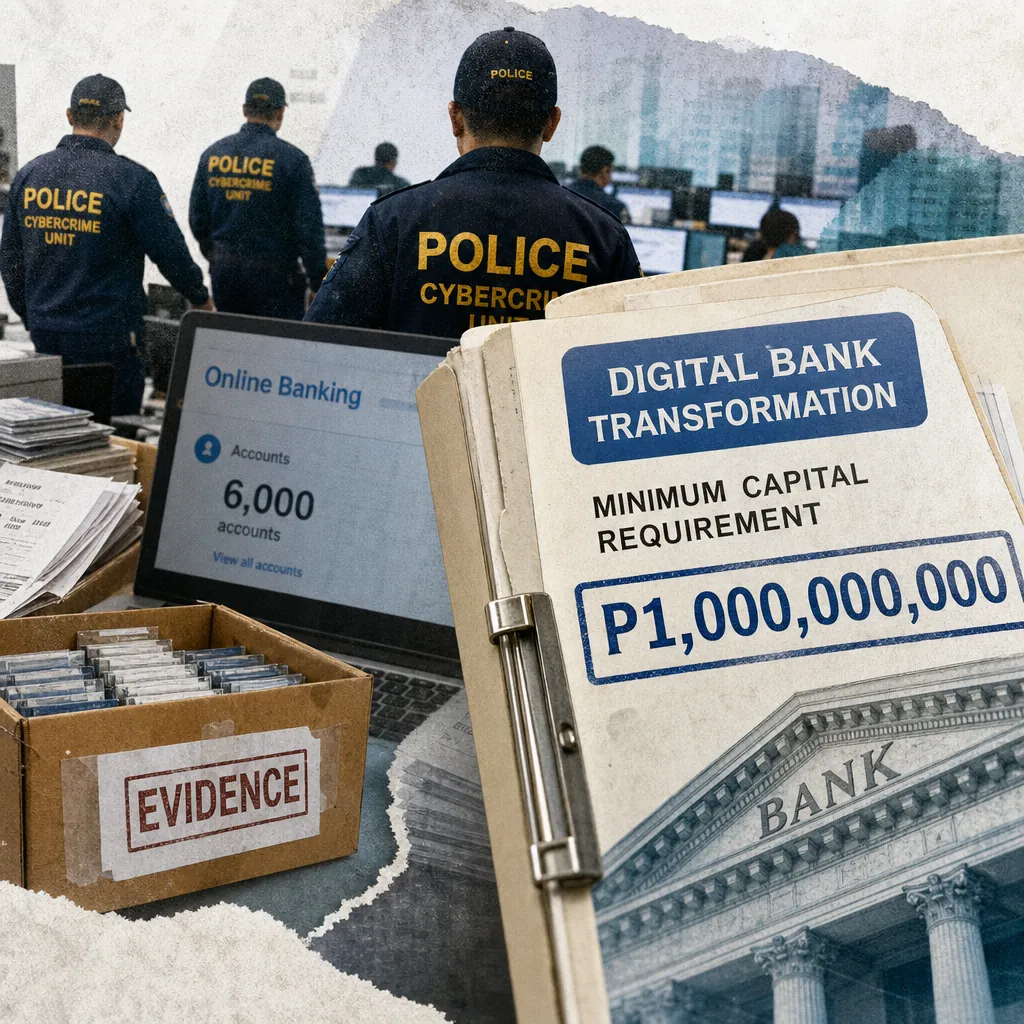
Vietnamese police will investigate bank accounts showing suspicious transfer and withdrawal patterns, following a prosecution in Da Nang that charged a husband-and-wife team with buying and selling 6,000 bank accounts, forging identity documents, and laundering money for fraud operations across the border in Bavet, Cambodia1. The case, announced on the official fanpage of the Ministry of Public Security's Cybersecurity Department, names Bui Trong Tan and his wife Le Thi My Duyen, along with Doan Viet Ha and 94 other defendants, on charges including illegal trading of bank account information, forgery of seals and documents, and money laundering1.
On the same day, Vietnamese online outlets reported that from March 1, 2026, Circular 77/2025/TT-NHNN — a State Bank of Vietnam regulation on safety and security for online banking services — took effect, requiring banking apps to automatically log out, halt operations, and warn users when they detect security risks2. Devices running debuggers, emulators, virtual machines, or Android Debug Bridge (ADB) connections will be blocked from transactions, as will apps that have been injected with unauthorized code, had their functions tracked, or been repackaged2.
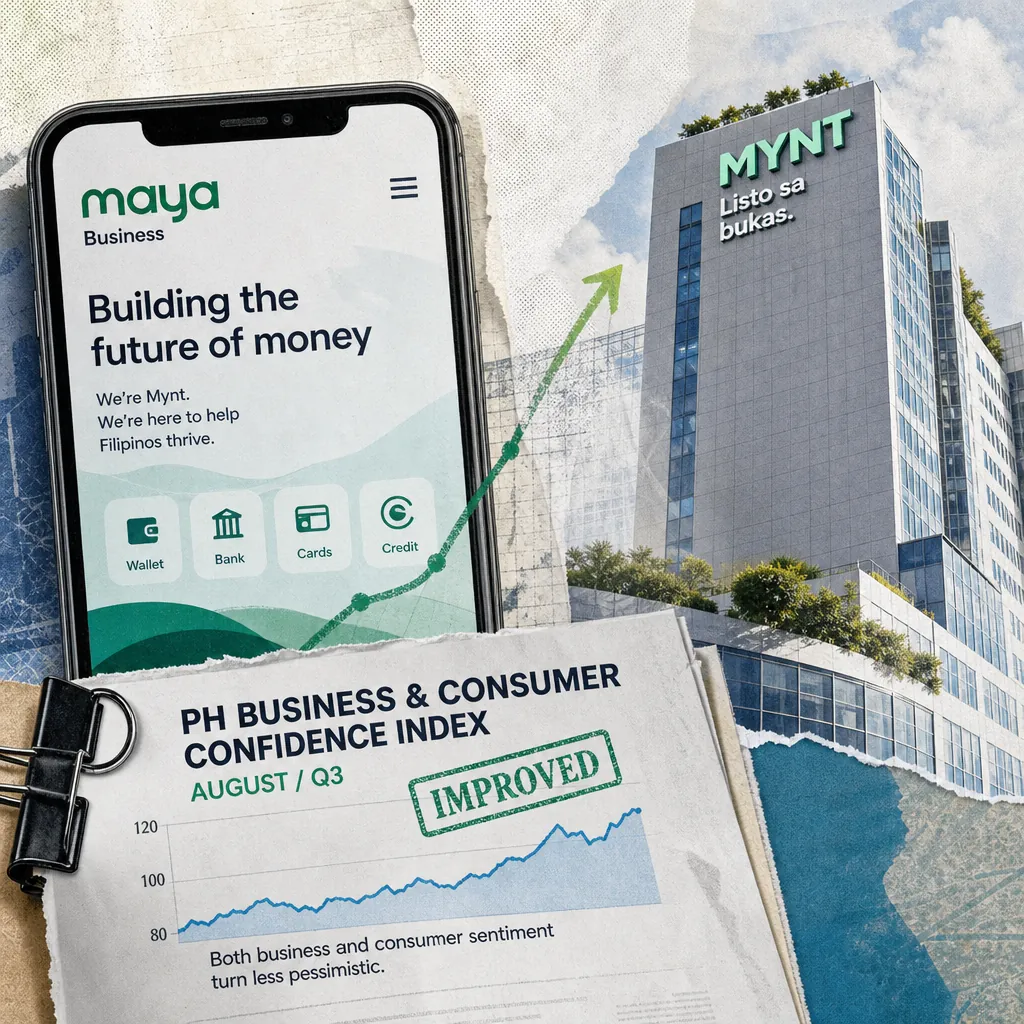
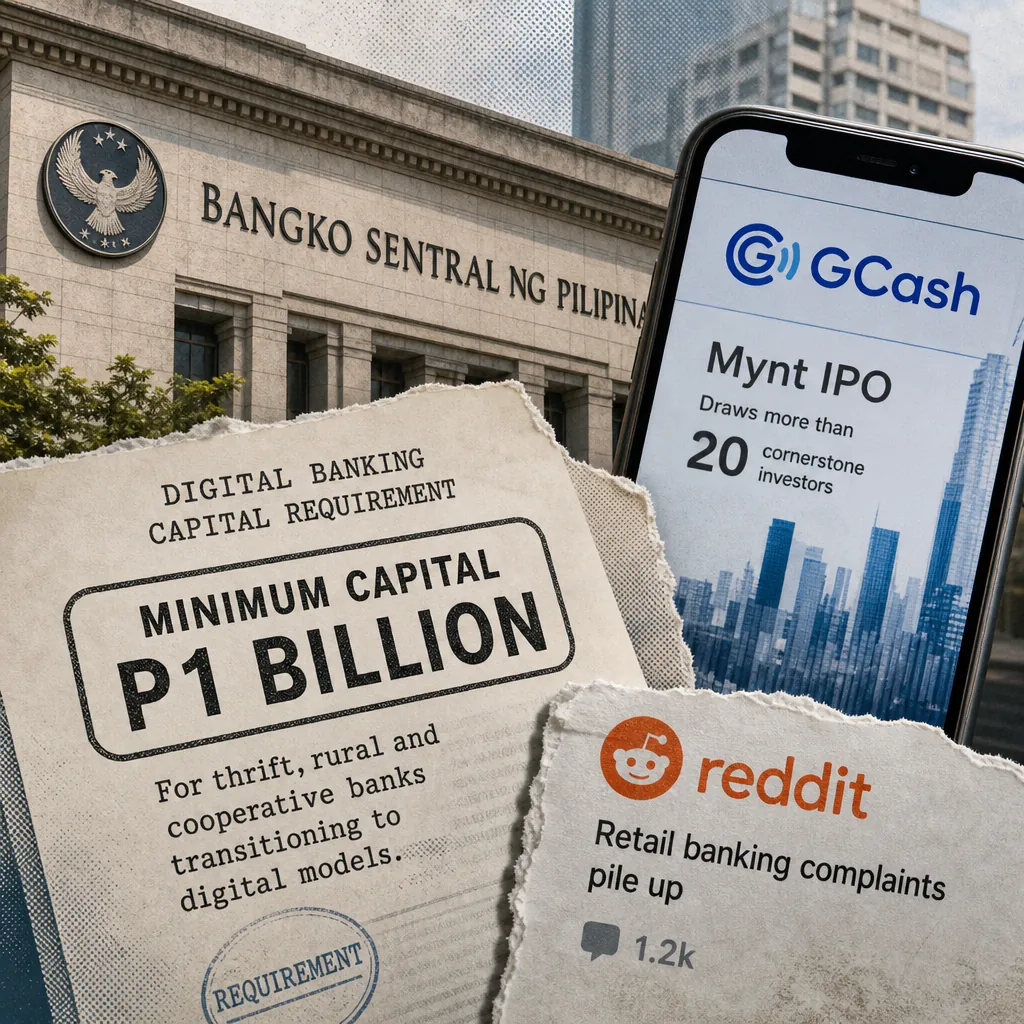
In the Philippines, the Bangko Sentral ng Pilipinas (BSP) — the country's central bank — issued Circular 1240, requiring thrift, rural, and cooperative banks that operate like digital banks to maintain at least P1 billion in capital, the same threshold imposed on licensed digital banks37. Existing banks found to have digital-bank-like business models will have six months from receipt of the central bank's notice to comply37. The BSP also released its latest Business Expectations Survey (BES), showing that business confidence improved in August, with the confidence index rising to -10.9 from -20.3 in July, while firms' outlook for three and 12 months ahead turned positive at 24.6 and 36.4 respectively9. A positive confidence index means more respondents were optimistic than pessimistic; a negative reading indicates the reverse9.
Key themes
- Vietnam prosecutes 6,000-account bank fraud ring. Authorities charged Bui Trong Tan, his wife Le Thi My Duyen, Doan Viet Ha, and 94 others with illegally trading bank account information, forging identity documents, and money laundering, with accounts sold for 28 million dong each to fraud groups operating in Bavet, Cambodia1.
- Vietnam's new banking app security rules block compromised devices. Circular 77/2025/TT-NHNN, effective March 1, 2026, requires banking apps to detect and block transactions on devices running debuggers, emulators, or ADB connections, and on apps that have been repackaged or injected with unauthorized code2.
- Philippines sets P1-billion capital floor for digital-model banks. The BSP's Circular 1240 requires thrift, rural, and cooperative banks with digital-bank-like business models to hold at least P1 billion in capital, with six months to comply from notice37.
- Philippine business and consumer sentiment improves but remains negative. The BSP's August Business Expectations Survey showed the business confidence index rising to -10.9 from -20.3 in July, while the 12-month ahead index turned positive at 36.49.
- GCash operator Mynt's upcoming IPO draws attention as a potential market catalyst. GCash has 94 million registered accounts and over 40.4 million monthly active users as of early 2026, making it the dominant e-wallet in the Philippines31.
- Identity fraud involving new-account openings rises sharply in the US. Javelin Strategy & Research found new-account fraud victims jumped 31% in 2025, from 4.2 million to 5.4 million, the sharpest increase among fraud types tracked12.
- PNB Holdings lists on the Philippine Stock Exchange. PNB Holdings Corp. listed 46.93 billion shares by way of introduction, including 23.9 billion shares distributed as property dividends by parent Philippine National Bank, with trading opening at P1.20 per share7.
- Brand growth requires meaningful difference, not just recall. Kantar's 2026 BrandZ Spotlight report found that Philippine brands best positioned for growth go beyond salience to build relevance and significance, as consumers become more selective36.
How the narratives stack
Dominant: The Vietnamese bank fraud prosecution and the new banking app security rules dominated the day's financial-crime conversation. The prosecution of 96 defendants across multiple charges — illegal trading of bank account information, document forgery, and money laundering — represents one of the largest such cases reported in the region, with accounts sold at 28 million dong each to fraud operations in Bavet1. The simultaneous implementation of Circular 77/2025/TT-NHNN adds a regulatory layer, requiring banks to block transactions on devices showing signs of tampering, including debuggers, emulators, and repackaged apps2. Together, these stories signal that both law enforcement and regulators in Vietnam are treating bank account fraud and digital banking security as connected problems requiring coordinated responses.
Counter-narrative: In the Philippines, the BSP's Circular 1240 takes a different approach to digital banking risk — not by restricting device access, but by imposing capital requirements on banks that increasingly operate like digital banks37. The P1-billion floor is the same threshold already applied to licensed digital banks, and the six-month compliance window suggests the central bank wants to ensure that technology-driven expansion does not outpace risk management capacity37. This is a prudential measure rather than a security measure, reflecting a regulatory philosophy that focuses on institutional resilience rather than transaction-level controls.
Emerging: The BSP's August Business Expectations Survey showed improvement in both business and consumer sentiment, though the overall business confidence index remained negative at -10.99. The positive 12-month ahead index of 36.4 suggests firms expect conditions to improve, but the current negative reading indicates that more businesses are still pessimistic than optimistic about present conditions9. This gap between current sentiment and future expectations is worth tracking as an indicator of whether the improvement translates into actual economic activity.
Under-covered: Several stories in the captured set received less attention than their potential significance warrants. The PNB Holdings listing on the Philippine Stock Exchange — 46.93 billion shares by way of introduction, with trading opening at P1.20 per share — represents a significant corporate action but drew limited coverage7. Similarly, Kantar's finding that Philippine brands need meaningful difference rather than mere salience to grow has implications for marketing and brand strategy across sectors, yet it appeared in only one outlet36. The GCash IPO discussion, while drawing attention, remains speculative31.
Platform insights
Facebook: The primary distribution channel for the Vietnamese bank fraud story was the official fanpage of the Ministry of Public Security's Cybersecurity Department, which announced the prosecution of Bui Trong Tan, Le Thi My Duyen, Doan Viet Ha, and 94 others1. This official channel gave the story authoritative weight and likely drove shares among Vietnamese users concerned about bank account security.
X (formerly Twitter): The banking security rules under Circular 77/2025/TT-NHNN generated discussion among technology-focused users, particularly around the specific technical requirements — debugger detection, emulator blocking, and ADB connection restrictions2. These technical details resonated with developers and security professionals who understand the implications for app integrity.
Reddit: Discussions around the GCash IPO and its potential impact on the Philippine stock market appeared in investment-focused communities, where users debated whether the offering could revive a market that has been described as being in a deep slumber31. The 94 million registered accounts and 40.4 million monthly active users provided concrete figures for these discussions31.
YouTube: The identity fraud story from Fox News, citing Javelin Strategy & Research's finding that new-account fraud victims jumped 31% in 2025, likely generated engagement through video commentary and explainer content, as the topic lends itself to visual demonstrations of how fraudsters open accounts using stolen personal information12.
Key voices and communities
Vietnamese law enforcement and cybersecurity authorities: The Ministry of Public Security's Cybersecurity Department used its official fanpage to announce the prosecution, signaling a coordinated effort to publicize the crackdown on bank account fraud1. The Da Nang People's Procuracy issued the indictment, naming specific defendants and detailing the scheme1.
Philippine banking regulators: The Bangko Sentral ng Pilipinas issued Circular 1240 setting the P1-billion capital floor for digital-model banks, and released the August Business Expectations Survey showing improved but still negative business sentiment379. These actions position the BSP as an active regulator shaping the digital banking landscape.
Philippine stock market participants: PSE President and CEO Ramon S. Monzon commented on the PNB Holdings listing, saying it could mark the start of further expansion for the property company7. Market observers are also watching the GCash IPO, with industry sources debating whether it could be a good long-term investment31.
Brand strategy professionals: Kantar's 2026 BrandZ Spotlight report provided a framework for Philippine brands, finding that salience without relevance is just noise, relevance evolves with meaningful value, and relevance without difference stalls growth36. This framing is likely to influence marketing strategies across sectors.
Consumer safety advocates: The Fox News report on identity fraud, citing Javelin Strategy & Research, highlighted the growing problem of new-account fraud and provided practical advice for consumers to check whether accounts have been opened in their names12.
Narrative streams
Vietnam's bank fraud prosecution targets 6,000 accounts and cross-border money laundering
The Da Nang People's Procuracy indicted Bui Trong Tan, his wife Le Thi My Duyen, Doan Viet Ha, and 94 other defendants on charges of illegally trading bank account information, forging seals and documents of agencies and organizations, and money laundering1. According to the indictment, from 2022, Ha discussed with Tan the purchase of bank account information from individuals, forging citizen identity cards of sellers, and transferring them to fraud and money laundering groups in Bavet, Cambodia1. The two agreed that Tan would find people to open accounts, forge identity cards, and transfer them to Ha at 28 million dong per case1.
The scale of the operation — 6,000 accounts — illustrates how organized fraud groups in Southeast Asia have industrialized the acquisition of bank accounts, using forged identity documents to bypass know-your-customer checks. The involvement of 96 defendants across multiple charges suggests a network rather than isolated actors. For banks and payment providers in the region, this case underscores the importance of robust identity verification and transaction monitoring, particularly for accounts that show patterns of rapid transfers and withdrawals. The read for the sector is that account-opening controls and ongoing monitoring remain the primary defense against this type of fraud, and that cross-border coordination between Vietnamese and Cambodian authorities is essential given the Bavet connection1.
Vietnam's new banking app security rules block compromised devices
Circular 77/2025/TT-NHNN, effective March 1, 2026, requires banking apps to automatically log out, stop operations, and warn users immediately upon detecting security risks2. Devices will be blocked from transactions if the system detects an active debugger, an app running in an emulator or virtual machine, or a phone with Android Debug Bridge (ADB) enabled2. Apps that have been injected with unauthorized code, had their functions tracked, data transmitted through APIs recorded, or been interfered with, modified, or repackaged are also subject to deactivation2.
The regulation addresses a specific attack vector: fraudsters who use emulators, debuggers, and repackaged apps to automate transactions, intercept data, or bypass security controls. By requiring banks to detect and block these environments, the State Bank of Vietnam is pushing security responsibility onto the app layer. For consumers, the practical effect is that older phones or devices with developer options enabled may find themselves unable to access banking services. For banks, the compliance burden involves implementing detection capabilities and managing customer communications when legitimate users are affected. The read for the sector is that device-level security controls are becoming a standard requirement for digital banking, and institutions that have not yet implemented such measures will need to do so to maintain regulatory compliance and customer trust2.
Philippines sets P1-billion capital floor for banks shifting to digital models
The Bangko Sentral ng Pilipinas issued Circular 1240, requiring thrift, rural, and cooperative banks determined to have a business model similar to a digital bank to maintain at least P1 billion in capital37. Existing banks will have six months from receipt of the central bank's notice to comply with prudential requirements applicable to digital banks37. The P1-billion minimum is the same threshold currently imposed on licensed digital banks37.
This rule addresses a regulatory gap: as smaller banks adopt digital-first operating models, they take on risks — cybersecurity, operational resilience, liquidity management — that resemble those of digital banks, but without necessarily holding the same capital buffers. The six-month compliance window gives affected banks time to raise capital or adjust their business models. For the sector, the read is that the BSP is signaling that digital transformation does not exempt institutions from prudential standards, and that banks unable to meet the capital requirement may need to consolidate, partner with larger institutions, or revert to traditional operating models37.
Philippine business and consumer sentiment improves but remains negative
The BSP's August Business Expectations Survey showed the business confidence index rising to -10.9 from -20.3 in July9. Firms became more optimistic about the outlook three and 12 months ahead, with the corresponding indices rising to 24.6 from 3.7 and 36.4 from 29.4, respectively9. A positive confidence index means more respondents were optimistic than pessimistic, while a negative reading indicates the reverse9. Firms attributed the improvement to expectations of higher demand for essential commodities, loan products, and construction activities9.
The improvement in sentiment, while notable, leaves the current index in negative territory, meaning more businesses remain pessimistic than optimistic about present conditions. The gap between current sentiment and future expectations — negative now, positive for the year ahead — suggests firms see improvement coming but are not yet experiencing it. For the sector, the read is that lending and investment decisions may remain cautious in the near term even as expectations improve, and that the BSP will be watching whether the positive forward-looking indices translate into actual economic activity9.
GCash IPO draws attention as potential market catalyst
The upcoming initial public offering of GCash operator Mynt has drawn attention as a potential catalyst for the Philippine stock market, which has been described as being in a deep slumber31. GCash has 94 million registered accounts and over 40.4 million monthly active users by early 2026, establishing it as the dominant market leader in the e-wallet space31. Industry sources cited in the report suggest the IPO could be a good long-term investment for retail and institutional investors31.
The scale of GCash's user base — 94 million registered accounts in a country with a population of roughly 115 million — illustrates how deeply digital payments have penetrated daily commerce, from street vendors to online transactions31. An IPO of this size could draw significant retail participation and potentially revive trading activity on the Philippine Stock Exchange. For the sector, the read is that the offering will test investor appetite for Philippine technology and fintech assets, and its performance could influence whether other digital-first companies consider listing31.
PNB Holdings lists on the Philippine Stock Exchange
PNB Holdings Corp. listed 46.93 billion shares on the Philippine Stock Exchange on September 25, including 23.9 billion shares distributed to shareholders as property dividends by parent Philippine National Bank7. The listing was conducted by way of introduction, a mechanism allowed under the PSE's Listing Rules for securities of an unlisted company distributed as property dividends by a listed issuer to its shareholders7. LTL began trading at an initial listing price of P1.20 per share7. The company owns the PNB Financial Center, PNB Makati Center, and a prime lot in Makati City earmarked for development, with business covering leasing of office, retail, and commercial spaces, coworking spaces, parking concessions, and event venues7. PSE President and CEO Ramon S. Monzon said the listing could mark the start of further expansion for the property company7.
For shareholders of Philippine National Bank, the listing converts a property dividend into a tradeable asset, providing liquidity and a market-determined valuation for the bank's real estate holdings. For the sector, the read is that this type of corporate action — separating property assets from banking operations — can unlock value and provide investors with a clearer view of each business's performance7.
Identity fraud involving new-account openings rises sharply
Javelin Strategy & Research found that new-account fraud victims jumped 31% in 2025, rising from 4.2 million to 5.4 million, the sharpest increase among the fraud types tracked12. This type of fraud involves a criminal using someone's name, Social Security number, birthdate, or other personal information to open a brand-new account — a credit card sent to an address the victim has never lived at, a phone or utility account with a company they have never used, or a buy now, pay later account12. The criminal may never touch an account the victim already monitors, making it harder to detect12.
For consumers, the practical implication is that monitoring existing accounts is not sufficient; they should also check whether new accounts have been opened in their names. For financial institutions, the read is that account-opening controls and identity verification processes are critical points of defense, and that the rise in new-account fraud suggests fraudsters are finding ways to bypass these controls12.
Brand growth requires meaningful difference, not just recall
Kantar's 2026 Kantar BrandZ Spotlight report found that Philippine brands best positioned for growth go beyond salience to build meaningful difference36. The consulting firm identified three realities: salience without relevance is just noise, relevance evolves with meaningful value, and relevance without difference stalls growth36. The report noted that Filipino consumers have become more selective about the brands they choose and follow36.
For brands operating in the Philippines, the read is that awareness alone does not drive growth; brands must demonstrate relevance to consumers' lives and differentiate themselves from competitors. This has implications for marketing budgets, which may need to shift from broad awareness campaigns to more targeted efforts that build meaningful connections with specific consumer segments36.
Conversation trajectory
Over the next 4–6 weeks: The Vietnamese bank fraud prosecution will proceed through the court system, with the indictment of 96 defendants likely generating further news as trial dates are set and details emerge. The scale of the case — 6,000 accounts and cross-border connections to Bavet — suggests it may prompt additional investigations or regulatory responses in Vietnam and Cambodia. Watch for announcements from the State Bank of Vietnam or the Ministry of Public Security about follow-up actions or new guidance for banks on account-opening procedures.
By March 2026: The full implementation of Circular 77/2025/TT-NHNN will test whether Vietnamese banks can effectively detect and block compromised devices without disrupting legitimate customers. Watch for reports of customer complaints or technical issues as the rules take effect, and for any adjustments or clarifications from the State Bank of Vietnam.
Within six months of BSP notices: Philippine thrift, rural, and cooperative banks that receive notices under Circular 1240 will need to meet the P1-billion capital requirement or adjust their business models. Watch for announcements of capital-raising activities, mergers, or partnerships as affected banks respond to the new rules37.
In the coming months: The GCash IPO will test investor appetite for Philippine fintech assets. Watch for the final offering price, subscription rates, and first-day trading performance as indicators of market demand31.
Trigger events: The release of MARINA's report on the June Aster fire, expected in the next few days, could renew attention to maritime safety and cargo handling regulations33. The BSP's next Business Expectations Survey, typically released quarterly, will show whether the improvement in sentiment continues or reverses9.
Response guidance
For banks and financial institutions in Vietnam: Review account-opening procedures and transaction monitoring systems in light of the 6,000-account fraud case. Ensure that identity verification processes can detect forged documents and that monitoring flags accounts showing rapid transfers or withdrawals consistent with money laundering patterns1. Prepare customer communications explaining the new device security requirements under Circular 77/2025/TT-NHNN, particularly for users with older devices or developer options enabled2.
For banks in the Philippines: Assess whether your business model could be deemed similar to a digital bank under Circular 1240 and begin planning for compliance with the P1-billion capital requirement if applicable37. Communicate proactively with customers about any changes to services or fees that may result from compliance efforts.
For financial institutions globally: The rise in new-account fraud, up 31% in 2025 according to Javelin Strategy & Research, suggests that identity verification at account opening is a critical control point12. Consider implementing additional checks, such as verifying phone numbers or addresses, and provide customers with tools to monitor whether accounts have been opened in their names.
For brands operating in the Philippines: Kantar's finding that meaningful difference drives growth suggests that marketing strategies should focus on demonstrating relevance and differentiation rather than broad awareness36. Consider how your brand's value proposition addresses specific consumer needs and how it stands apart from competitors.
For communicators covering financial crime: The Vietnamese case illustrates the importance of cross-border coordination in combating bank account fraud and money laundering. When reporting on similar cases, provide context on how fraudsters acquire accounts, the role of forged documents, and the destinations for illicit funds1. Avoid speculating about the outcome of ongoing legal proceedings.
For consumer safety advocates: The identity fraud story provides practical guidance for consumers to check whether accounts have been opened in their names12. Consider developing or promoting tools that make it easy for consumers to conduct these checks, and educate the public about the signs of new-account fraud.
See the full picture behind today's signals.
This report draws from Media Meter's MediaWatch, our real-time monitoring engine tracking 2,470+ Philippine sources across print, broadcast, digital, and social. Explore how the platform turns raw coverage into decision-grade intelligence, then see how it's configured for teams like yours — whether you're in PR agencies, corporate comms, government, or marketing.
Want more? Browse our Report Library for sector and crisis intelligence, or request a demo and we'll have your brand set up before the call.
Want this kind of intelligence on your brand?
This brief is built on the same MediaWatch methodology that runs continuously across every brand we monitor. See your competitive landscape, Impact Score, and narrative trajectory in a 30-minute demo.