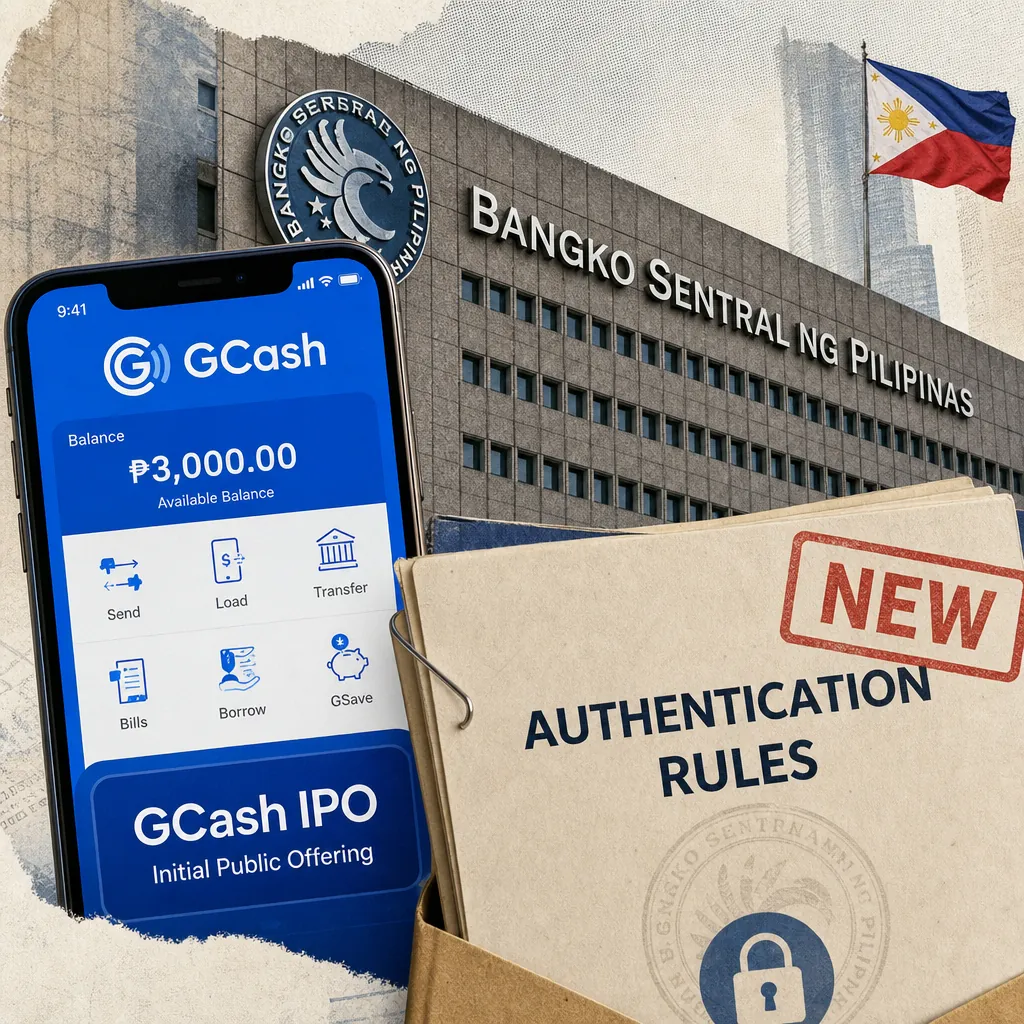
BSP OTP ban takes effect as banks race to meet security deadline
The Bangko Sentral ng Pilipinas enforces a ban on SMS-based one-time passwords for financial transactions, pushing banks to adopt biometric and passkey authentication. Consumer confusion over deadlines and app glitches mark the transition.
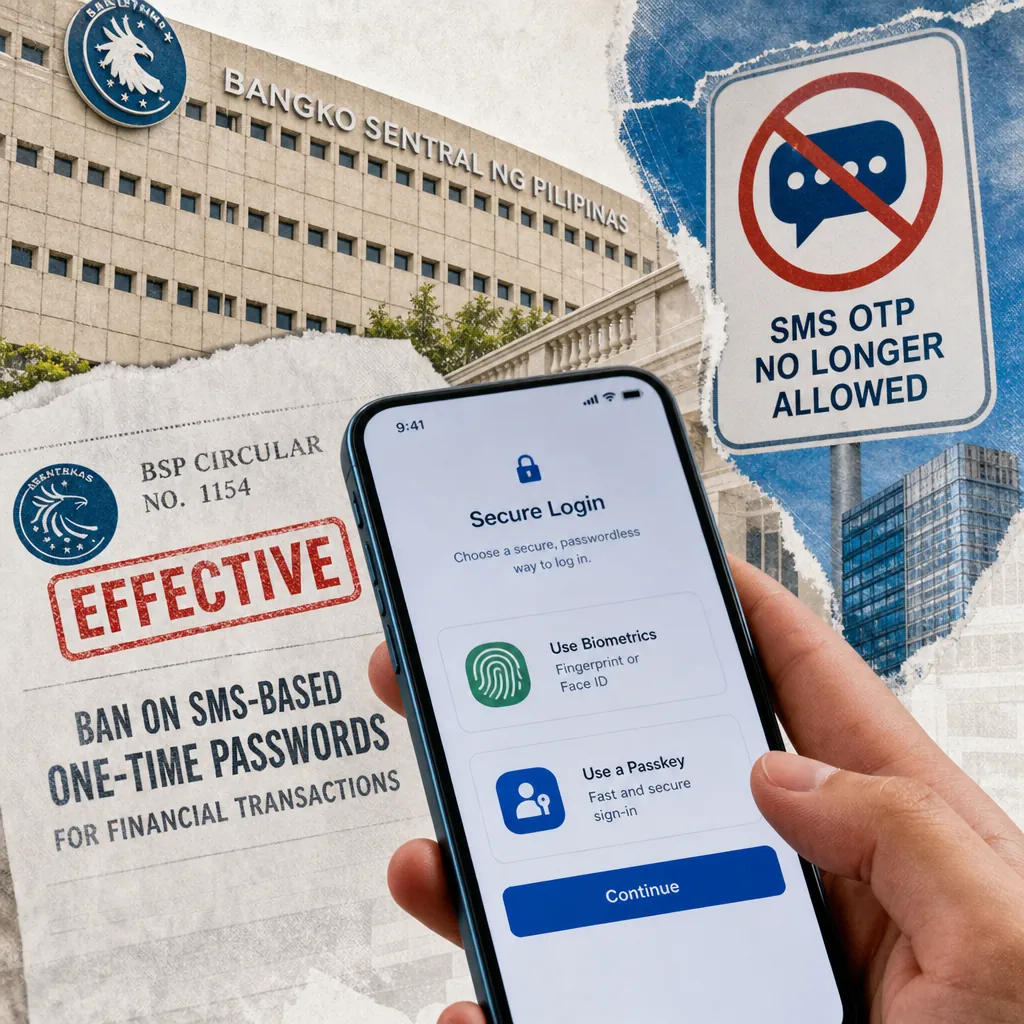
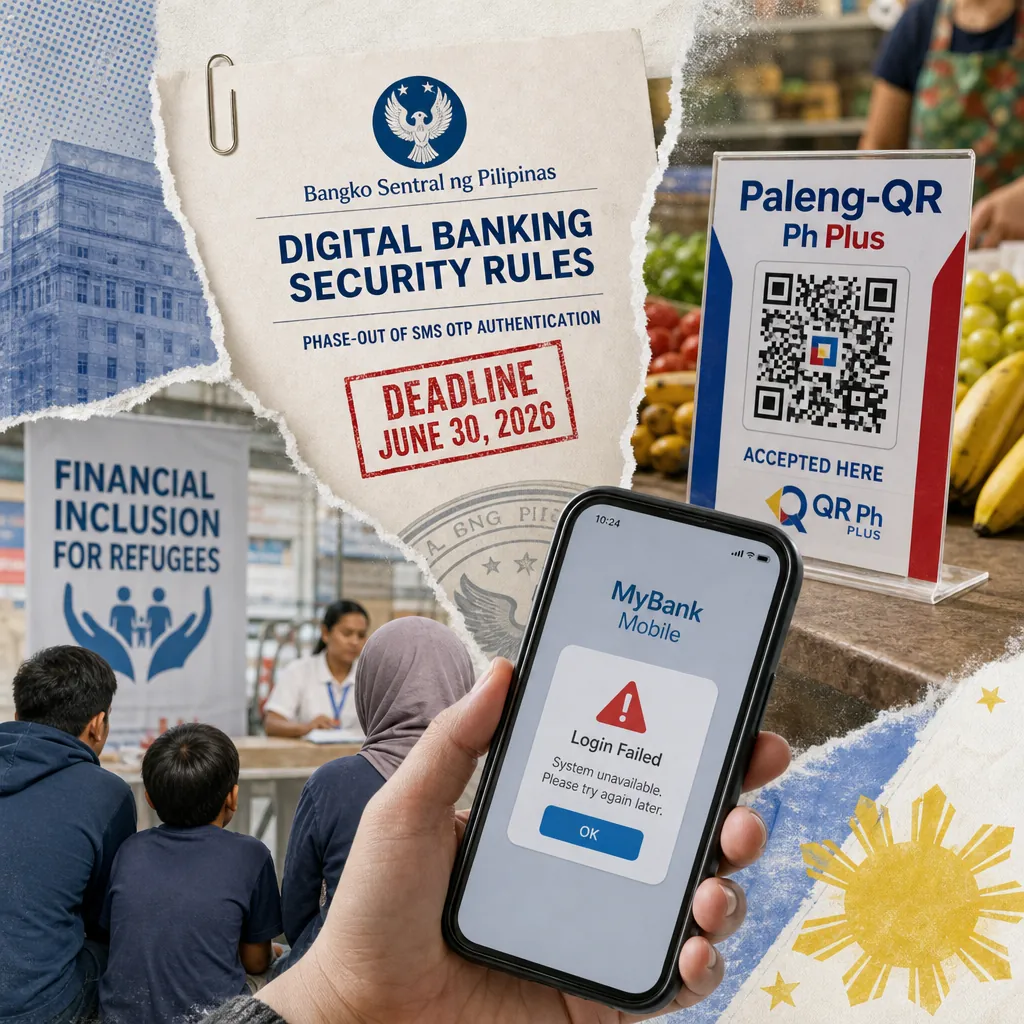
The conversation around Philippine digital banking security sharpened on June 24 as the Bangko Sentral ng Pilipinas (BSP) enforced its ban on SMS-based one-time passwords (OTPs) for high-risk financial transactions, a move that had been building for weeks. The central bank's Circular No. 1213, issued under the Anti-Financial Account Scamming Act (AFASA) — a law that took effect in June 2025 to combat phishing and fraud — requires banks and e-wallet operators to replace SMS and email OTPs with stronger authentication methods such as biometrics, in-app push notifications, and passwordless authentication. The deadline was June 25, though some outlets had reported July 1, creating confusion among consumers.
On Reddit, users had been reporting problems with banking apps days before the deadline. On June 23, a user posted that BPI's card control feature had been inaccessible for days, calling it "napakabulok naman" (very broken) and noting it was preventing online purchases. Another user reported that after the latest BPI app update on June 23, the card tab disappeared and debit card controls became unresponsive, a thread where at least five other users confirmed similar glitches. These early issues set the stage for broader concerns about bank readiness as the OTP ban approached.
By June 24, the narrative had crystallized into three distinct threads. The first centered on the BSP's enforcement of the OTP ban. A detailed post by radarphmedia explaining the three new authentication methods — in-app push notifications, server-side biometrics, and silent network authentication — received 40 likes and 54 shares, indicating strong public interest in the practical rollout. However, confusion arose when Chinabank announced on June 24 that its passkey system would become mandatory on June 25, directly aligning with the BSP's timeline, while other sources cited July 1 as the hard deadline. This discrepancy triggered user questions about exactly when their banks would enforce the change, with some expressing anxiety about locking themselves out if they didn't update apps in time.
The second thread unfolded around the BPI-Robinsons Bank integration, which reached its final stage. On June 23, BPI officially tweeted that Robinsons Bank online banking and the RBank digital app would no longer be accessible starting July 1, 2026, a move that accumulated over 47,500 views on Twitter. On Reddit, a user shared a personal timeline of frustration: despite an April advisory that a replacement BPI Robinsons Cashback Visa card would arrive within 60 days, no card had been received by June 23, and the user feared their RBank digital app would be disabled before the new card reflected in the BPI app. This resonated widely, with the post receiving 6 upvotes and a comment echoing similar delays. By June 24, another user posted a consolidated list of all RBank channels going offline — including contact centers, website, and social media — and urged customers to transition to BPI's platforms, generating 27 upvotes and 12 comments as users shared migration tips and complaints.
A third, more speculative thread emerged around potential Apple Pay availability in the Philippines. On June 24, the Digital Banks PH Facebook page reported that several finance apps — EastWest Bank, BPI, Chinabank, GoTyme Bank, Atome, and Wise — were now showing "Supports Wallet" on the App Store as of that date. The post received robust engagement: 341 likes, 439 love reactions, and 144 shares, signaling strong consumer appetite for tap-to-pay convenience with iPhone. While the post cautioned that this did not automatically confirm Apple Pay's arrival, commenters immediately began speculating which banks would be first to support it, drawing parallels to the simultaneous push for more secure authentication under AFASA. The timing of this rumor — coinciding with the OTP ban rollout — created an interesting juxtaposition: consumers were both excited about new frictionless payments and anxious about losing the familiar SMS OTP security they'd relied on.
Key themes
- BSP's OTP ban creates confusion over deadlines – The conversation began on June 23 with scattered Reddit complaints about broken app features, but by June 24, radarphmedia's detailed explainer of AFASA requirements crystallized the discussion. Chinabank's proactive passkey announcement on the same day, which garnered 18 likes and 22 shares, showed one bank's effort to smooth the transition. However, confusion over deadlines (June 25 vs. July 1) led to a surge of questions in comments, with users sharing articles that reinforced the June 25 start date for high-risk transactions, deepening the split in public understanding.
- BPI-Robinsons Bank integration disruptions frustrate customers – Starting June 23, the integration narrative was driven by Reddit users documenting real delays and system failures. A user's card delay story on June 23 set the tone. By June 24, BPI's official tweet (47,565 views) and a comprehensive Reddit post formalized the timeline, shifting the discussion from frustration to practical migration strategies. The sentiment remained mixed: some users expressed relief that the merger was finally completing, while others complained about still waiting for replacement cards.
- Apple Pay speculation generates strong positive engagement – This theme emerged purely on June 24 via the Digital Banks PH Facebook post, which became the most positively engaged post of the day with 439 love reactions. Unlike the security and integration threads that carried anxious undertones, this narrative was aspirational, with users in comments eagerly naming which banks they hoped would support Apple Pay. The post's timing — the same day the OTP ban was rolling out — highlighted a consumer desire for both security and simplicity, suggesting that the next frontier of digital banking in the Philippines would be contactless payments.
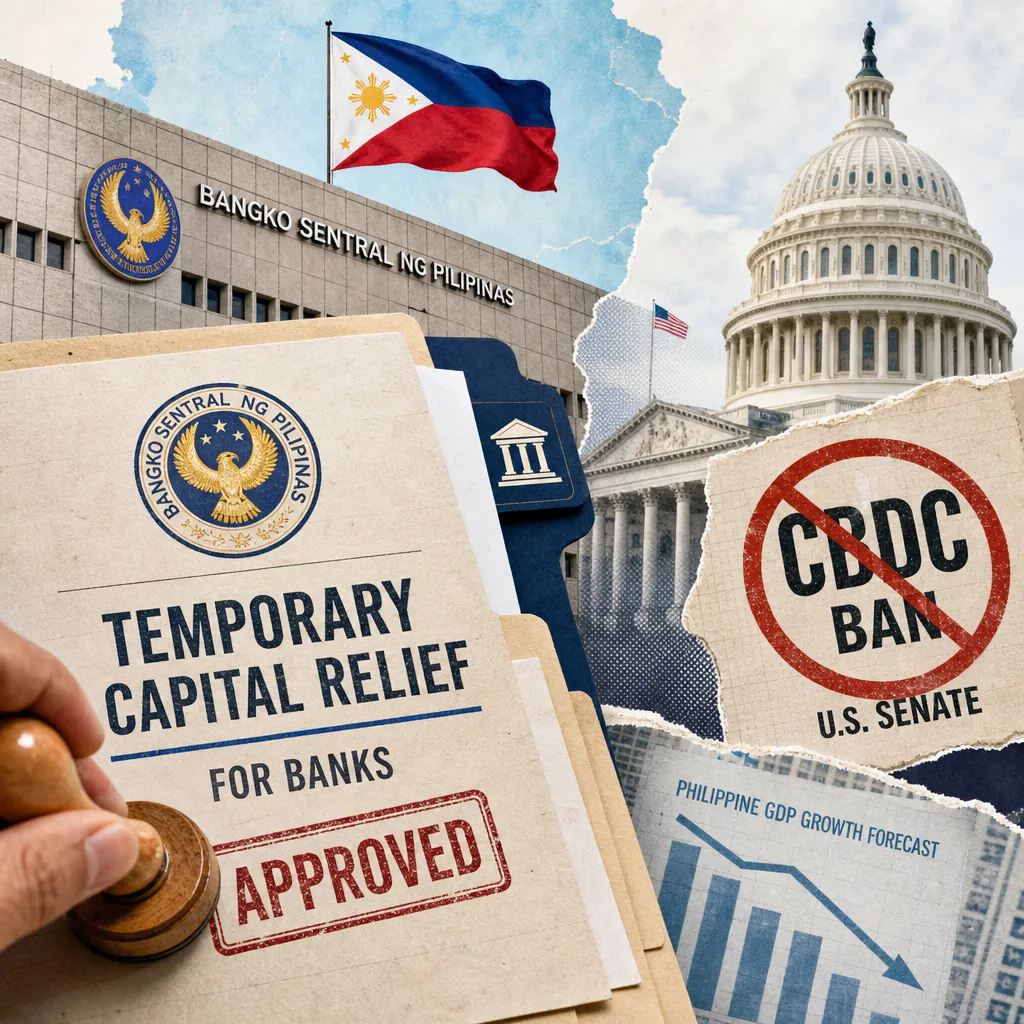
- Moody's flags BSP capital relief as credit negative – Moody's Ratings said the BSP's move to let banks exclude government securities-related losses from capital calculations is "credit negative," as it could mask pressure from rising interest rates and inflation on lenders' balance sheets. The measure was designed to shield banks' Common Equity Tier 1 (CET1) ratios from declines caused by unrealized losses on government securities, whose market values have fallen as bond yields have surged since the Middle East war. Government securities accounted for about 30 percent of banking system assets as of March — among the highest shares in Asia.
- S&P slashes Philippines growth forecast – S&P Global Ratings sharply lowered its 2026 growth forecast for the Philippines to 4.1% from 5.8%, citing the impact of the energy shock from the Middle East war and reduced government infrastructure spending following last year's flood control project scandal. This was the largest downward revision S&P made across the Asia-Pacific region. The revised outlook falls below the 4.4% expansion seen for the region and within the government's downwardly revised 3.5- to 4.5-percent target.
- Globe secures P5-billion loan from BDO for capex – Globe Telecom Inc. secured a P5-billion term loan from BDO Unibank Inc. to fund its 2026 capital expenditure program, refinance debt, and support general corporate requirements. The telco invested P12.7 billion in capex during the first quarter, up 51% from a year earlier, primarily for network expansion and capacity enhancements. About 91% of cash capex was allocated to data-related initiatives.
- Pre-need industry profit plunges 88% in Q1 – The Philippine pre-need industry saw its combined net income drop by 88.05% in the first quarter to P140 million from P1.17 billion previously, due to lower income generated from trust funds amid increased market volatility and geopolitical tensions. The Insurance Commission attributed the decline to global economic uncertainty and inflationary pressures affecting financial markets and investment performance.
- BSP extends deadline for updated prudential reports – The BSP gave banks an additional year to comply with its updated prudential reporting guidelines, extending the deadline for submission of version 16 of the financial reporting package via the PRIME facility to June 30, 2027 from the original due date of the end of this month. The extension aims to provide banks additional time to prepare their people, processes, and systems for the updated report version.
How the narratives stack
- Dominant narrative – The dominant story is the BSP's enforcement of the OTP ban and the transition to stronger authentication methods. This is the most widely discussed topic across platforms, with official announcements from the BSP, bank-specific updates (Chinabank's passkey rollout), and consumer-facing explainers generating high engagement. The narrative is framed as a necessary step to combat phishing and fraud, but consumer anxiety is evident in questions about device binding and app readiness. The BSP's statement that "many are already implementing the enhancements" reinforces the message that the industry is moving in the right direction, even as confusion over deadlines persists.
- Counter-narrative – A counter-narrative emerges from Moody's warning that the BSP's capital relief measure is "credit negative" because it could mask the true impact of rising interest rates and inflation on banks' balance sheets. While the BSP frames the relief as a temporary measure to prevent transitory market movements from unduly affecting capital ratios, Moody's argues that it reduces transparency and could allow problems to build up. This tension between regulatory support and credit risk adds a layer of complexity to the otherwise positive story of enhanced security.
- Emerging narrative – The Apple Pay speculation is an emerging narrative that could reshape consumer expectations around digital payments. The strong positive engagement on the Digital Banks PH post — 439 love reactions — signals that Filipinos are eager for contactless payment options on iPhone. If Apple Pay officially launches in the Philippines, it would create a significant brand differentiation opportunity for the first banks to support it. This narrative is still speculative, but it aligns with the broader push for more secure and convenient authentication methods under AFASA.
- Suppressed narrative – The under-covered story is the broader economic headwinds facing the Philippine banking sector. S&P's sharp downward revision of the country's growth forecast to 4.1% — the largest cut in the Asia-Pacific region — received coverage in business media but little discussion in consumer-facing conversations. Similarly, the pre-need industry's 88% profit plunge due to market volatility and geopolitical tensions was reported but not widely debated. These macroeconomic pressures could eventually affect consumer confidence and loan demand, but they remain in the background of the more immediate OTP ban and integration stories.
Platform insights
- Facebook – Facebook was the platform for the highest emotional engagement, driven by the Digital Banks PH post about Apple Pay speculation, which attracted 439 love reactions and 144 shares. This indicates that Facebook users respond strongly to aspirational, convenience-oriented content. Chinabank's security announcement also performed well, with 18 likes and 22 shares, suggesting that clear, practical updates about authentication changes resonate with the platform's audience. The platform's community-style posts (like those from phdigitalbanks) serve as trusted information hubs for regulatory and product news.
- Reddit – Reddit served as the primary venue for troubleshooting and technical discussion. On June 23, complaints about BPI app glitches and card delays dominated; by June 24, the conversation had shifted to integration timelines and passbook/account access questions. The tone was pragmatic and slightly frustrated, but users actively helped each other navigate the changes. Reddit threads typically had modest upvotes (5–27) but generated substantive comments, reflecting a community focused on problem-solving rather than viral sharing.
- Twitter – While lower in raw engagement, Twitter was where official announcements landed first. BPI's tweet about Robinsons Bank channel shutdown reached over 47,000 views, and news outlets like dzrhnews and phbankero leveraged the platform for breaking news on the scam hub raid and BDO-Globe loan, respectively. The platform's real-time nature meant that early adopters could quickly amplify official timelines, which then migrated to Reddit for deeper analysis.
- YouTube – The two videos posted on June 23–24 were low-traffic (2 and 1 views), suggesting that video content was not a primary source of discussion during this period. This may reflect the technical nature of the topics, which are better suited to text-based explainers and community discussions.
Key voices and communities
- Digital banking communities – Aggregator pages like phdigitalbanks and active Reddit communities (e.g., r/PHCreditCards, r/DigitalBanksPh) collectively drive high engagement across Facebook and Reddit. Their content often breaks regulatory or product news, with posts about Apple Pay speculation and BSP's OTP ban receiving over 400 loves and 96 wows on a single post. They act as both information distributors and discussion catalysts, shaping consumer expectations around digital finance innovation. Their primary narrative focuses on practical implications of regulatory changes and product rollouts, with a tone that balances enthusiasm for innovation with caution about transition pains.
- Security and regulatory advocates – Media outlets and specialized accounts focusing on cybersecurity and financial regulation (e.g., radarphmedia, The Filipino Times) produce authoritative content on fraud prevention and BSP directives. Their posts typically have lower raw engagement but higher authority signals, sharing detailed explanations of mandates like the OTP phaseout. They serve as trusted sources for consumers and banks alike, often citing official circulars. Their primary narrative emphasizes consumer protection and compliance urgency, framing the OTP ban as a critical step against phishing and SIM swap scams.
- Official bank accounts – Banks' verified social media channels (BPI, Metrobank, RCBC, Chinabank) consistently post promotional content, policy updates, and educational material. While engagement per post varies, their cumulative reach is substantial due to large follower bases. They use these platforms for product launches, integration updates (BPI-RBank shutdown), and security awareness. The messaging is overwhelmingly positive and forward-looking, emphasizing innovation, sustainability, and customer convenience. However, integration-related posts (like BPI-RBank channel closure) also trigger practical questions from users about card delivery and access.
- Consumer voices on Reddit – Individual users on Reddit (subreddits like r/PHCreditCards, r/Philippines) share personal experiences, complaints, and detailed inquiries. Though each thread has modest upvotes, the collective volume is high. Topics range from BPI app bugs to Metrobank World Mastercard rewards verification to BPI Visa Signature annual fee waivers. These users serve as real-world testers of banking products and provide unfiltered feedback loops. Their primary narrative is frustration with technical issues and uncertainty about new features, with a strong DIY research culture.
- Institutional and remittance ecosystem players – Accounts like phbankero, The News Channel, and BDO's remittance partners (Xoom) drive conversation around corporate banking and OFW financial inclusion. Their content has lower engagement but reaches a more targeted audience of industry professionals and migrant workers. BDO's P5 billion loan to Globe Telecom was covered across multiple outlets with minimal interaction from general consumers. These posts emphasize economic growth, infrastructure investment, and long-term financial planning for overseas workers.
Narrative streams
BSP OTP ban and authentication transition
The BSP's enforcement of Circular No. 1213 under the Anti-Financial Account Scamming Act (AFASA) requires banks and e-wallets to replace SMS-based one-time passwords with phishing-resistant authentication starting June 25 (originally reported as July 1 by some outlets). The circular applies to institutions with an average of more than P75 million monthly online transactions, covering most universal and commercial banks, all digital banks, and selected cooperative, thrift, and rural banks. The three new authentication methods are in-app push notifications, server-side biometrics, and silent network authentication.
Consumer confusion over deadlines (June 25 vs. July 1) led to a surge of questions in comments, with users like @filipinotimes sharing articles that reinforced the June 25 start date for high-risk transactions, deepening the split in public understanding. Chinabank's proactive passkey announcement on June 24, which garnered 18 likes and 22 shares, showed one bank's effort to smooth the transition. The bank framed Passkey as "something you already know how to use," effectively reducing perceived friction. The BSP stated that "many are already implementing the enhancements in the lead-up to the deadline," reinforcing the message that the industry is moving in the right direction.
For the sector, this transition represents both a deadline risk and a narrative opportunity. Consumer confusion about device binding and push notification settings could lead to transaction failures and support surges if not addressed with timely educational content. Banks that communicate clearly and provide step-by-step guides will likely earn consumer trust, while those that leave customers in the dark may face backlash.
BPI-Robinsons Bank integration disruptions
The BPI-Robinsons Bank integration reached its final stage as BPI officially tweeted that RBank online banking and the RBank digital app would no longer be accessible starting July 1, 2026, a move that accumulated over 47,500 views on Twitter. On Reddit, a user shared a personal timeline of frustration: despite an April advisory that a replacement BPI Robinsons Cashback Visa card would arrive within 60 days, no card had been received by June 23, and the user feared their RBank digital app would be disabled before the new card reflected in the BPI app. This resonated widely, with the post receiving 6 upvotes and a comment echoing similar delays. By June 24, another user posted a consolidated list of all RBank channels going offline — including contact centers, website, and social media — and urged customers to transition to BPI's platforms, generating 27 upvotes and 12 comments as users shared migration tips and complaints.
The integration is part of BPI's acquisition of Robinsons Bank, which was approved by the BSP in 2024. The merger aims to consolidate operations and expand BPI's customer base, but the transition has been rocky. Users reported delays in receiving replacement cards, app glitches, and confusion about account access. The sentiment remained mixed: some users expressed relief that the merger was finally completing, while others complained about still waiting for replacement cards.
For the sector, this integration serves as a case study in the challenges of large-scale bank mergers. The visible consumer frustration — documented in real-time on social media — highlights the importance of clear communication and seamless technical execution. Competitors may seize on these disruptions to attract dissatisfied customers.
Apple Pay speculation and digital payment optimism
On June 24, the Digital Banks PH Facebook page reported that several finance apps — EastWest Bank, BPI, Chinabank, GoTyme Bank, Atome, and Wise — were now showing "Supports Wallet" on the App Store as of that date. The post received robust engagement: 341 likes, 439 love reactions, and 144 shares, signaling strong consumer appetite for tap-to-pay convenience with iPhone. While the post cautioned that this did not automatically confirm Apple Pay's arrival, commenters immediately began speculating which banks would be first to support it, drawing parallels to the simultaneous push for more secure authentication under AFASA.
The timing of this rumor — coinciding with the OTP ban rollout — created an interesting juxtaposition: consumers were both excited about new frictionless payments and anxious about losing the familiar SMS OTP security they'd relied on. The strong positive engagement suggests that the market is primed for contactless payments, and banks that successfully align enhanced security (passkeys) with convenience (tap-to-pay) will likely earn strong consumer trust.
For the sector, the Apple Pay speculation presents a brand differentiation opportunity. The first bank to publicly confirm Apple Pay integration will likely capture outsized positive sentiment and new account openings. However, banks must manage expectations carefully to avoid overpromising.
Moody's flags BSP capital relief as credit negative
Moody's Ratings said the BSP's move to let banks exclude government securities-related losses from capital calculations is "credit negative," as it could mask pressure from rising interest rates and inflation on lenders' balance sheets. The measure, outlined in BSP Memorandum No. 2026-027 signed by BSP Governor Eli M. Remolona, Jr. on June 19, allows banks and quasi-banks to temporarily exclude unrealized or paper losses on peso government securities resulting from market volatility from the computation of their regulatory capital. This relief measure will be in effect until year-end; usual capital rules will apply starting January next year.
The pressure is seen as significant because Philippine banks are heavily invested in government debt. Government securities accounted for about 30 percent of banking system assets as of March — among the highest shares in Asia — while roughly 40 percent of those holdings were classified as fair value through other comprehensive income. The BSP said the relief is "aimed at preventing transitory market movements from unduly affecting the reported capital strength of banks and quasi-banks."
For the sector, this tension between regulatory support and credit risk adds a layer of complexity. While the relief measure provides short-term stability, Moody's warning suggests that underlying vulnerabilities remain. Investors and analysts will be watching closely to see how banks manage their capital positions once the relief expires.
S&P slashes Philippines growth forecast
S&P Global Ratings sharply lowered its 2026 growth forecast for the Philippines to 4.1% from 5.8%, citing the impact of the energy shock from the Middle East war and reduced government infrastructure spending following last year's flood control project scandal. This was the largest downward revision S&P made across the Asia-Pacific region. The revised outlook falls below the 4.4% expansion seen for the region and within the government's downwardly revised 3.5- to 4.5-percent target.
S&P Asia-Pacific chief economist Vishrut Rana said the pullback in public infrastructure spending has remained "sharp and prolonged," citing data from the Department of Budget and Management. The energy shock from the Middle East war has also weighed on consumer demand and business confidence.
For the banking sector, slower economic growth could dampen loan demand and increase credit risk. The BSP has already indicated that lending growth may remain subdued throughout the year amid higher borrowing costs and risk aversion. The combination of slower growth, higher interest rates, and geopolitical uncertainty creates a challenging environment for banks.
Conversation trajectory
- Next 1–2 weeks: OTP ban enforcement and support surge – The June 25 deadline for the OTP ban will likely trigger a sharp increase in help-seeking and complaint posts as consumers encounter issues with the new authentication methods. Banks that have not proactively communicated the changes may face a surge in support calls and social media complaints. The confusion over deadlines (June 25 vs. July 1) may persist, leading to transaction lockouts for some users. Banks should prepare step-by-step guides and FAQs to address common issues.
- Next 2–4 weeks: BPI-Robinsons integration cutover – The July 1 shutdown of Robinsons Bank channels will concentrate public attention on the merger. Users who have not yet received replacement cards or migrated to BPI platforms may face disruptions. This creates a vulnerability window for competitors to highlight their seamless digital experiences. BPI should proactively communicate replacement card timelines and provide clear migration instructions.
- Next 30–60 days: Apple Pay speculation and potential launch – The Apple Pay speculation is likely to intensify if more banks appear on the "Supports Wallet" list or if an official announcement is made. The first bank to confirm Apple Pay integration will likely capture outsized positive sentiment and new account openings. Even without a launch, banks can leverage the speculation by emphasizing existing tap-to-pay alternatives (e.g., Visa payWave, Mastercard Contactless).
- Next 3–6 months: Macroeconomic headwinds and credit risk – S&P's growth downgrade and Moody's warning on capital relief point to a challenging environment for banks. Slower economic growth, higher interest rates, and geopolitical uncertainty could dampen loan demand and increase credit risk. The BSP's lending growth outlook suggests that credit expansion will remain muted. Banks with strong capital positions and diversified revenue streams will be better positioned to weather the headwinds.
Trigger events that would reshape the conversation:
- Official launch of Apple Pay in the Philippines
- Major bank reporting a data breach or security incident related to the OTP transition
- BSP announcing further regulatory relief or tightening
- Escalation of the Middle East war causing further energy price shocks
- A significant bank merger or acquisition announcement
Response guidance
For communicators tracking the Philippine digital banking and payment security conversation, the following guidance is based on observed engagement patterns and content evolution:
Platform approaches:
- Facebook: Leverage the high engagement around the BSP OTP ban by posting clear, visual step-by-step guides on enabling push notifications and updating apps, directly addressing the confusion seen in comments. Use community-style posts (like those from phdigitalbanks) to preview new features with a "what we know so far" format to manage expectations and reduce speculation. For promotional content, pair the offer with a customer testimonial or a simple "how it works" infographic to drive conversions without sounding overly salesy. Actively monitor and respond to negative service feedback with empathetic, solution-oriented replies, redirecting to direct support channels to de-escalate public frustration.
- Twitter: Use short, high-impact threads to explain complex regulatory changes like the OTP ban, linking to detailed blog posts or FAQ pages. Hashtags like #BSP #AFASA #DigitalBankingPH can amplify reach. Engage with industry news by retweeting or quoting with a brief analysis of what it means for consumers, reinforcing expertise. Quickly address technical issues by acknowledging the report and providing a status update, using a consistent handle for support. Avoid engaging in speculation about future products (e.g., Apple Pay) unless official confirmation exists; instead, share "no comment" or "we will keep you posted" to maintain credibility.
- Reddit: In r/PHCreditCards and similar subreddits, provide authoritative, data-backed answers to detailed questions to build reputation as a trusted source. Avoid generic responses; offer specific policy clarifications. Address integration pain points with direct, helpful information on migration steps and timelines, using a calm, informative tone. Do not post promotional content on Reddit unless genuinely responding to an ask; instead, let community managers participate as knowledgeable individuals (with flair) to offer value without self-promotion. Monitor threads about scams to correct misinformation and direct users to official fraud reporting channels.
Key messages:
- "Security is non-negotiable: the shift to phishing-resistant authentication protects your money and data." This aligns with the OTP ban rollout and addresses consumer anxiety.
- "We make integration seamless: as channels merge, our priority is keeping your access uninterrupted with clear steps and support." This covers BPI-Robinsons and similar migrations.
- "Your financial goals drive our innovation: from green financing to rewards that fit your lifestyle, we're building tools that work for you." Reinforces product launches and sustainability.
- "Every transaction counts — especially for our OFWs: we partner with global providers to turn remittances into lasting investments." Addresses the BDO-Xoom narrative and long-term planning.
Sensitive topics to navigate:
- App glitches and service outages: Users report BPI card control issues and app update problems. Response must acknowledge frustration without making excuses; avoid blaming third parties or promising fixes without a timeline.
- Integration delays: RBank customers face card replacement and channel shutdown timelines that feel mismatched. Communicate realistic expectations and offer concrete guarantees (e.g., "all pending replacements will be issued by X date") to rebuild trust.
- Security transition friction: Consumers may resist new authentication methods (e.g., passkeys) due to inconvenience or device incompatibility. Reassure that the goal is protection, and provide offline fallback options for edge cases like lost phones.
Response priorities:
- Own the OTP transition narrative. Within the next 48 hours, publish a consolidated FAQ on social media explaining the three new authentication workflows (in-app OTP, biometrics, silent network), with device-specific setup videos. This preempts panic and reduces support tickets.
- Address BPI app stability concerns immediately. Acknowledge the card control and update issues publicly with a status update and estimated resolution time. Follow up with affected users via direct message to gather details and offer compensation if justified.
- Leverage the BDO-Globe and OFW stories for positive brand association. Amplify coverage of BDO's P5B loan to Globe and the OFW Kabuhayan Expo on LinkedIn and Twitter, framing them as evidence of commitment to national development and financial inclusion.
See the full picture behind today's signals.
This report draws from Media Meter's MediaWatch, our real-time monitoring engine tracking 2,470+ Philippine sources across print, broadcast, digital, and social. Explore how the platform turns raw coverage into decision-grade intelligence, then see how it's configured for teams like yours — whether you're in PR agencies, corporate comms, government, or marketing.
Want more? Browse our Report Library for sector and crisis intelligence, or request a demo and we'll have your brand set up before the call.
Want this kind of intelligence on your brand?
This brief is built on the same MediaWatch methodology that runs continuously across every brand we monitor. See your competitive landscape, Impact Score, and narrative trajectory in a 30-minute demo.