Cement demand flat as infra spending lags
Cement manufacturers expect full-year demand to match last year's 34 million metric tons after a 2 to 3 percent decline in the first nine months, as public and private construction stays slow. The day's Philippine coverage also carried the peso's record low, the Duterte impeachment trial, and Undas travel preparations.

Cement demand in the Philippines is running 2 to 3 percent below last year's level for the January-to-September period, and the industry's umbrella group now expects the full year to close roughly flat rather than grow. Reinier Dizon, president of the Cement Manufacturers Association of the Philippines (Cemap), gave the figure to reporters on the sidelines of a business summit organized by the Federation of Philippine Industries, and said the group is counting on a fourth-quarter pickup in construction to bring demand back to last year's estimated 34 million metric tons, equivalent to about 85 million bags 5.
The number matters beyond the cement plants. Cement is one of the clearest early readings on how much building is actually happening in the country, because it is bought at the start of a project and consumed within weeks. A flat year means the public works program and private developers together are not laying any more concrete than they did in 2025, and the association's own framing — "Perhaps that's not a bad thing considering what we've gone through this year" — suggests the industry is treating stability as the achievement 5.
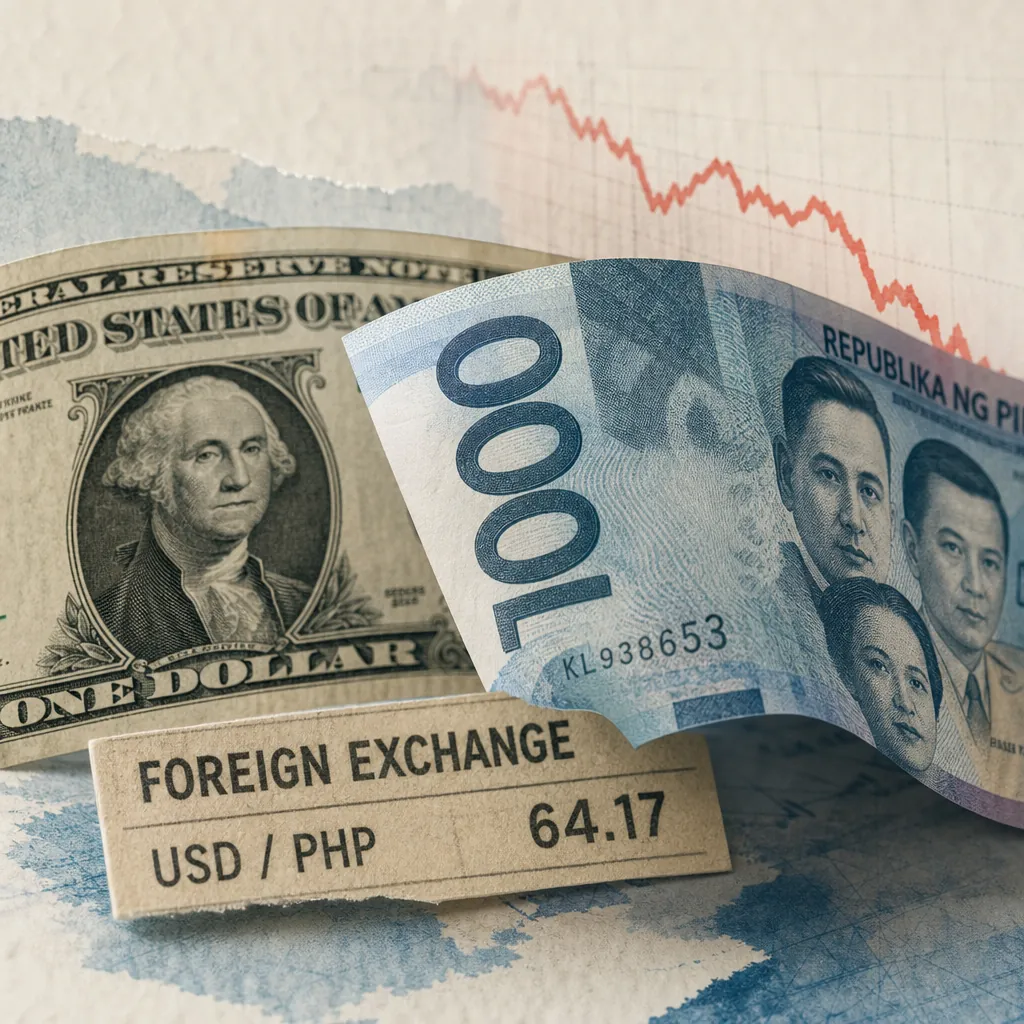
The same day's Philippine coverage put several pressures on the construction outlook in plain view. President Ferdinand Marcos Jr. said authorities would defend the peso "as hard as we possibly can" after the currency hit a record low of 64.17 to the dollar on Tuesday, and urged the public not to panic; the peso has lost more than 8 percent against the dollar so far this year, and gross international reserves fell to $99.5 billion in September, the lowest since September 2023 39. A weaker peso raises the cost of imported inputs — cement plants in the Philippines burn imported coal and import clinker components — and makes imported steel and equipment more expensive for builders. Separately, the Philippine National Police said it had tightened market surveillance against theft, robbery and fraud, explicitly citing the peso's decline and directing units to prevent economic anxiety from turning into public panic 97.
On the government spending side, the day produced no new infrastructure outlay announcement. What it did produce was testimony that goes to how public works money is spent: former Department of Public Works and Highways (DPWH) undersecretary Roberto Bernardo told the Sandiganbayan Third Division, during the bail hearing of former Speaker Martin Romualdez on plunder charges over alleged kickbacks worth P7.44 billion, that all DPWH projects nationwide allegedly carry kickbacks 26, and that he never had dealings with Romualdez, mentioning him once in an affidavit in connection with a birthday party 22. The Sandiganbayan is the special anti-graft court that tries public officials for corruption offenses. For an industry whose order book depends on the DPWH pipeline, a witness alleging that every project carries a kickback is a direct statement about the reliability and cost of that pipeline, whatever the court eventually finds.
Key themes
- Cement demand fell 2 to 3 percent in the first nine months and the industry expects a flat full year. Cemap president Reinier Dizon said demand from January to September was down 2 to 3 percent from the same period in 2025, and the group hopes fourth-quarter construction brings the year back to last year's 34 million metric tons, or about 85 million bags 5.
- The peso's record low of 64.17 to the dollar raises the cost of imported building inputs. The currency has lost more than 8 percent against the dollar this year, and the central bank has intervened in the foreign exchange market to smooth sharp moves 39. Cement, steel and fuel are import-exposed, so a weaker peso raises project costs even when volumes are flat.
- A state witness told the anti-graft court that all DPWH projects allegedly carry kickbacks. Roberto Bernardo's testimony came in the plunder bail hearing of former Speaker Martin Romualdez over P7.44 billion in alleged kickbacks 26; Bernardo also said he had no dealings with Romualdez 22.
- The government's environment agency launched a nationwide restoration program for wetlands, rivers and reefs ahead of a strong El Niño. The Department of Environment and Natural Resources (DENR) said the program aims to keep ecosystems functioning as buffers against extreme heat, and cited nearly 100 metric tons of waste extracted from Manila Bay tributaries 43.
- A provincial board in Zamboanga del Sur opened an inquiry into a gold-mining operator's taxes, environmental compliance and ore shipments. The Sangguniang Panlalawigan's ad hoc committee is examining TVI Resource Development Philippines Inc.'s Balabag Gold-Silver Project in Bayog, including benefit distribution to affected Indigenous Peoples 18.
- Two Chinese nationals were arrested in Cebu with about 47 tons of copper ore allegedly moved on falsified permits. The Criminal Investigation and Detection Group valued the shipment at P1.5 million and said the operation ran under Oplan Kalikasan 11.
- The transport secretary promised stricter enforcement against shipping firms after a ferry fire killed 77 people. Vince Dizon said he would take up tougher measures with the Philippine Ports Authority, the Maritime Industry Authority and the Philippine Coast Guard following the September 9 fire in Palawan 27.
- Undas travel preparations dominated the day's public-service news. The Philippine Coast Guard counted more than 80,000 passengers at ports between noon and 6 p.m. on Thursday, with more than 1.9 million expected through the holiday 15; the Philippine Red Cross is deploying 1,848 personnel and 65 ambulances 16; and Manila announced road closures near the North Cemetery from midnight on October 30 17.
How the narratives stack
Dominant. Within the items captured here, the largest single business story was the cement association's flat-demand forecast, carried by the Inquirer's business desk and built around a named industry figure and a specific volume comparison 5. It is dominant in this set because it is the one item that speaks directly to construction output, the sector this snapshot covers, and because it arrived with a number — 34 million metric tons, about 85 million bags — that gives the year a benchmark. The peso story sits alongside it as the macro backdrop: a record low of 64.17 to the dollar, more than 8 percent weaker this year, reserves at $99.5 billion in September 39. Neither item is large in volume; the set is a general news feed rather than a construction-industry feed, so the dominance described here is dominance among the items gathered, not a claim about where the country's attention sat.
Counter-narrative. The most direct challenge to the industry's preferred reading of the year came from the Sandiganbayan, where a former DPWH undersecretary testified that kickbacks allegedly run through all the department's projects nationwide 26. That is a counter-narrative in a precise sense: the cement association's forecast assumes the public works pipeline will deliver a fourth-quarter pickup, and the witness's testimony is about how that pipeline is alleged to work. Bernardo's statement that he had no dealings with Romualdez and mentioned him once, in connection with a birthday party, cuts the other way for the specific plunder case 22. Both statements are testimony in an ongoing bail hearing, not findings of guilt.
Emerging. Two threads are forming rather than resolved. The first is the peso. Marcos's commitment to defend it "as hard as we possibly can" and his assurance that reserves are healthy 39 set up a test over the coming weeks: either the currency stabilizes or the central bank spends more reserves doing it. The second is the environmental and regulatory scrutiny of extractive projects — the DENR's restoration program ahead of a strong El Niño 43, the Zamboanga del Sur board's inquiry into a gold operator's taxes and ore shipments 18, and the Cebu copper-ore arrests 11. Each is a separate action, but together they show regulators and local legislatures moving on mining and environment in the same week.
Under-covered. The shipping-safety story placed low in this set despite its scale: 77 people died in the September 9 ferry fire in Palawan, and the new transport secretary's response was a promise to crack down on erring firms at his first executive committee meeting 27. A death toll of that size would normally carry more follow-through coverage than a single report of a meeting. The same is true of the Zamboanga del Sur mining inquiry, which concerns tax liabilities and benefit-sharing with Indigenous Peoples and drew one item 18.
Platform insights
The day's material is almost entirely from news outlets' online editions, with no social-platform engagement figures supplied for any post. What can be said about distribution is therefore about where items ran, not how audiences responded.
- Online news portals. Every item in this set ran online, and the Philippine items cluster on the Inquirer's news and business sites, with regional and specialist outlets — Negros Now Daily, Daily Tribune, the Philippine Information Agency, Maharlika News, Head Topics — carrying local and policy angles. The Inquirer's business desk carried the cement forecast 5 and the Michelin announcement 25; its news desk carried the peso, impeachment and Undas stories.
- Regional and community outlets. Negros Now Daily carried a cluster of provincial stories with direct construction and agriculture relevance: a P80-million Department of Health allocation to rebuild and upgrade Bago City Hospital 69, a P2,900-per-bag millgate sugar price proposal backed by a Negros Occidental congressman 79, and P6.1 million in African swine fever indemnification for 247 hog raisers 90. These are the kind of local spending decisions that feed into construction demand.
- Blogs. One blog item, on a Singapore gaming and entertainment festival in December, ran on Gizmo Manila 73. It carries no construction relevance and is noted for completeness.
- International wires and foreign outlets. AFP, The Straits Times, The Globe and Mail, the Washington Post, Axios and others supplied the day's foreign coverage, from a Spanish train crash that killed 69 40 to a US federal debt milestone 54. None of it bears on the Philippine construction sector.
Key voices and communities
Cement manufacturers. Cemap, led by Reinier Dizon, is the industry's collective voice and the source of the day's only hard demand figure. Its framing — flat is acceptable given the year — is a signal that manufacturers are managing expectations rather than forecasting recovery 5.
The DPWH and its former officials. Roberto Bernardo's testimony puts the public works department's procurement at the center of the day's corruption news 2622. For contractors and suppliers, the department is both the largest client and the institution whose reputation determines how freely its budget is released.
Macroeconomic policymakers. President Marcos and the Bangko Sentral ng Pilipinas are the day's other decisive voices on construction costs. The commitment to defend the peso and the confirmation that the central bank intervened in the foreign exchange market 39 tell importers what to expect: continued volatility management, not a fixed rate.
Local legislators and regulators. The Zamboanga del Sur provincial board 18, the DENR 43 and the Criminal Investigation and Detection Group 11 represent the layer of government that decides whether individual projects proceed, are taxed differently, or are halted.
Transport and safety agencies. Transportation Secretary Vince Dizon, the Philippine Ports Authority, the Maritime Industry Authority and the Philippine Coast Guard are the group that will determine whether the post-ferry-fire enforcement push changes operating rules for shippers 27.
Narrative streams
Cement demand ends the year flat at about 34 million metric tons
Cemap's forecast is the most concrete data point in the day's coverage. Demand from January to September was 2 to 3 percent lower than in the same months of 2025, and the association expects the fourth quarter to make up the difference so the year matches last year's 34 million metric tons, or roughly 85 million bags 5. Dizon's remark that a flat year is "not a bad thing considering what we've gone through this year" is worth reading carefully: it implies the industry entered 2026 expecting worse, and that the absence of a decline is itself the good news.
Cement consumption tracks construction with a short lag because it is purchased at the start of a pour. A flat year therefore means the volume of building — public roads, bridges, schools, private residential and commercial — was roughly unchanged from 2025. The fourth-quarter pickup the association is counting on would have to come from projects already funded and contracted, since new appropriations take longer than a quarter to reach a site.
The read for the sector: cement producers, ready-mix suppliers, haulers and hardware retailers should plan for a year of flat volumes and margin pressure from imported input costs, not for growth. A weaker peso raises the peso cost of coal, clinker and spare parts, so even a flat volume year can produce lower margins. Contractors bidding on 2027 work should expect cement prices to hold or rise with the exchange rate rather than fall with demand.
The peso hits a record low and the government promises to defend it
The peso closed at a record low of 64.17 to the dollar on Tuesday, and by Wednesday the President was telling reporters the policy is "to continue to defend the peso as hard as we possibly can," adding that reserves are healthy and there is no reason to panic 39. The currency has lost more than 8 percent against the dollar this year. Gross international reserves — the central bank's stock of foreign currency it can sell to support the peso — fell to $99.5 billion in September, the lowest since September 2023, and the Bangko Sentral ng Pilipinas said last week it had intervened in the foreign exchange market to smooth sharp fluctuations 39.
For construction, the exchange rate is a cost channel. Cement is made from limestone and clay dug locally, but the kilns run on imported coal and the industry imports clinker and gypsum; steel rebar is largely imported or priced off imported billet; heavy equipment and spare parts are imported. An 8 percent depreciation over a year is roughly an 8 percent increase in the peso cost of anything bought abroad, before any change in world prices.
The read for the sector: project budgets set in 2025 and 2026 on the assumption of a stronger peso are now under strain, and contractors with fixed-price government contracts carry that strain themselves. The government's commitment to defend the currency reduces the risk of a sudden further slide but does not reverse the cost increase already booked.
A state witness says all DPWH projects allegedly carry kickbacks
Testifying before the Sandiganbayan Third Division in the bail hearing of former Speaker Martin Romualdez, who faces plunder charges over alleged kickbacks worth P7.44 billion, former DPWH undersecretary Roberto Bernardo said all DPWH projects nationwide allegedly have kickbacks 26. Under cross-examination, he said he never had dealings with Romualdez and mentioned him only once in an affidavit, recalling a meeting at a birthday party 22. Plunder is a criminal offense in the Philippines carrying a life sentence, and a bail hearing turns on whether the evidence of guilt is strong; the court has not ruled on the charges.
The significance for construction is structural. The DPWH is the single largest buyer of civil works in the country, and its budget is the main channel through which public infrastructure spending reaches contractors. If kickbacks are alleged to be universal, the implication is that the effective cost of public works is higher than the appropriated amount, and that the share reaching actual construction is lower. That is one plausible explanation for why cement demand can be flat while the government announces large infrastructure budgets.
The read for the sector: contractors, suppliers and cement producers should expect continued scrutiny of DPWH procurement and possible delays in project awards and payments while the cases proceed. Firms that bid on public works should keep documentation of their own pricing and subcontracting clean, because the investigation has shown it can reach back years.
Environmental and mining enforcement moves on three fronts in one day
The DENR launched a nationwide ecosystem restoration program covering wetlands, rivers and coral reefs, framed as protection against the extreme heat expected from a strong El Niño. Secretary Juan Miguel Cuna said the aim is to keep ecosystems "functional buffers against extreme heat," and the agency cited nearly 100 metric tons of waste extracted from Manila Bay tributaries 43. El Niño is the periodic warming of the Pacific that brings drier conditions to the Philippines; a strong one raises the risk of drought, water shortages and crop losses.
In Zamboanga del Sur, the provincial board's ad hoc committee, chaired by Board Member Hernan dela Cruz, is investigating TVI Resource Development Philippines Inc.'s Balabag Gold-Silver Project in Bayog, looking at environmental compliance, tax liabilities, mineral transport transparency, production output and benefit distribution to affected Indigenous Peoples 18. In Cebu, the Criminal Investigation and Detection Group arrested two Chinese nationals and seized about 47,040 kilograms of copper ore valued at P1.5 million from two trucks at Pier 4, alleging falsified permits; the operation ran under Oplan Kalikasan, a law enforcement campaign against illegal logging, mining and fishing 11.
The read for the sector: mining and quarrying firms, and the construction firms that buy their aggregates and metals, face a period of tighter documentation requirements on transport permits, tax payments and community benefit agreements. Local government inquiries can halt shipments faster than national regulation, so firms operating in provinces with active boards should expect delays.
Undas travel puts the transport network under its annual stress test
The Philippine Coast Guard counted 40,503 outbound and 43,593 inbound passengers at ports nationwide between noon and 6 p.m. on Thursday, deployed 6,082 frontline personnel, inspected 526 vessels and 441 motor bancas, and placed all districts on heightened alert from October 29 to November 3 15. The Philippine Ports Authority expects more than 1.9 million passengers through the holiday 15. The Philippine Red Cross is deploying 1,848 personnel, including 1,600 volunteers, with 314 first aid stations, 65 ambulances and 19 emergency vehicles at cemeteries, terminals, seaports and airports 16. Manila will close roads around the North Cemetery from midnight on October 30 until 11:59 a.m. on November 1 17, and several local governments suspended classes on October 30 20.
Undas — the observance of All Saints' Day on November 1 and All Souls' Day on November 2 — is the year's largest domestic travel event, and the infrastructure it stresses is the same one construction depends on: ports, roads, terminals and bridges.
The read for the sector: construction firms working near cemeteries, terminals or major roads should expect restricted access and delivery delays through November 3, and should schedule concrete pours and heavy deliveries outside the closure windows.
A new Michelin star and the consumer economy around it
The Michelin Guide unveiled its second Philippine edition, bringing the country's starred restaurants to 10. Flow, a fine-dining restaurant on Chino Roces Avenue in Makati blending Philippine and Peruvian flavors, was the lone newcomer, co-owned by chefs Kevin Jonathan Uy and Gabriel Ong 25. The story is a consumer and tourism signal rather than a construction one, but restaurant openings and fit-outs are part of the commercial construction pipeline, and a starred restaurant typically triggers renovation and expansion spending.
The read for the sector: commercial fit-out contractors and food-service equipment suppliers in Makati and Cebu should see continued demand from the fine-dining segment, which is small in volume but high in spend per square meter.
Conversation trajectory
Cement volumes through the fourth quarter — watch to the first quarter 2027 data release. Cemap's flat-year forecast depends on a fourth-quarter construction pickup. The checkable signal is the association's own year-end figure and the Philippine Statistics Authority's construction statistics, which will show whether the fourth quarter actually delivered. If demand comes in below 34 million metric tons, the industry's "not a bad thing" framing will not survive the data.
The peso — watch weekly through November. The currency hit 64.17 to the dollar and the government promised to defend it 39. The next checkable points are the central bank's policy meeting and its monthly reserves data; a further fall in reserves alongside a stable peso would indicate the defense is costing real money.
The Romualdez bail hearing and DPWH cases — watch the Sandiganbayan's ruling. The court will decide whether evidence of guilt is strong enough to deny bail. A denial would keep the procurement allegations in the news and could slow DPWH awards; a grant would reduce the immediate pressure.
The Zamboanga del Sur mining inquiry — watch for the committee's report. The provincial board's findings on TVI Resource Development's taxes, environmental compliance and Indigenous Peoples benefit-sharing will set a precedent for how provincial governments treat large mining operations 18.
Post-ferry-fire shipping enforcement — watch the Department of Transportation's executive committee output. Secretary Dizon promised stricter enforcement after the September 9 fire killed 77 27. Concrete measures — fines, suspensions, new inspection rules — would show whether the promise translates into operating changes for shippers and, by extension, for the movement of construction materials by sea.
Trigger events. The November 9 resumption of the impeachment trial 37 will keep public attention on the Duterte case and away from economic stories. The November 3 end of the Undas transport alert 15 will release road and port capacity. The release of October inflation data, following the 7.1 percent average from January to September reported in Aklan 89, will show whether the peso's slide is feeding through to consumer prices.
Response guidance
Cement and building-materials producers: publish a clear volume outlook with the assumptions behind it. Cemap's flat-year forecast is the number contractors will plan around 5. State plainly that it assumes a fourth-quarter construction pickup, and update it when the quarter's data arrives, so that buyers are not surprised by a shortfall or a price move.
Contractors with fixed-price public works contracts: document input-cost exposure now. The peso's 8 percent decline this year 39 raises the cost of imported steel, fuel and equipment. Firms should record the exchange rate at which each contract was priced and raise cost-escalation claims early, while the government is publicly focused on defending the currency.
Firms bidding on DPWH projects: tighten procurement documentation. With a state witness alleging kickbacks on all DPWH projects 26, bidders should keep clean records of pricing, subcontracting and change orders. The practical risk is not only legal exposure but award delays while agencies review their processes.
Mining and quarrying operators: prepare transport and tax paperwork for inspection. The Cebu copper-ore arrests 11 and the Zamboanga del Sur inquiry 18 both turn on permits, taxes and shipment records. Operators should ensure permits match actual cargo and that local government benefit agreements are documented.
Construction firms working near cemeteries and terminals: plan around Undas closures. Road closures near Manila North Cemetery run from midnight October 30 to 11:59 a.m. November 1 17, and port and terminal traffic peaks through November 3 15. Schedule deliveries and pours outside those windows.
Communicators across the sector: separate the peso story from the demand story. The two are being reported together, but they affect the industry differently — the peso raises costs, demand determines volumes. Messages that conflate them will confuse buyers and investors about what is actually changing.
On sensitive topics: do not comment on the merits of the Romualdez or Duterte cases. The impeachment trial resumes November 9 37 and the Sandiganbayan bail hearing is ongoing 22. Sector voices should speak to procurement process and project continuity, not to the guilt or innocence of named officials.
See the full picture behind today's signals.
This report draws from Media Meter's MediaWatch, our real-time monitoring engine tracking 2,470+ Philippine sources across print, broadcast, digital, and social. Explore how the platform turns raw coverage into decision-grade intelligence, then see how it's configured for teams like yours — whether you're in PR agencies, corporate comms, government, or marketing.
Want more? Browse our Report Library for sector and crisis intelligence, or request a demo and we'll have your brand set up before the call.
Want this kind of intelligence on your brand?
This brief is built on the same MediaWatch methodology that runs continuously across every brand we monitor. See your competitive landscape, Impact Score, and narrative trajectory in a 30-minute demo.