Flood control scandal, Senate crisis, and impeachment trial converge
A daily snapshot of the Philippine political conversation on June 15-16, 2026, covering the flood control corruption scandal, the Senate leadership crisis, the impeachment trial of Vice President Sara Duterte, and the special session called by President Marcos.
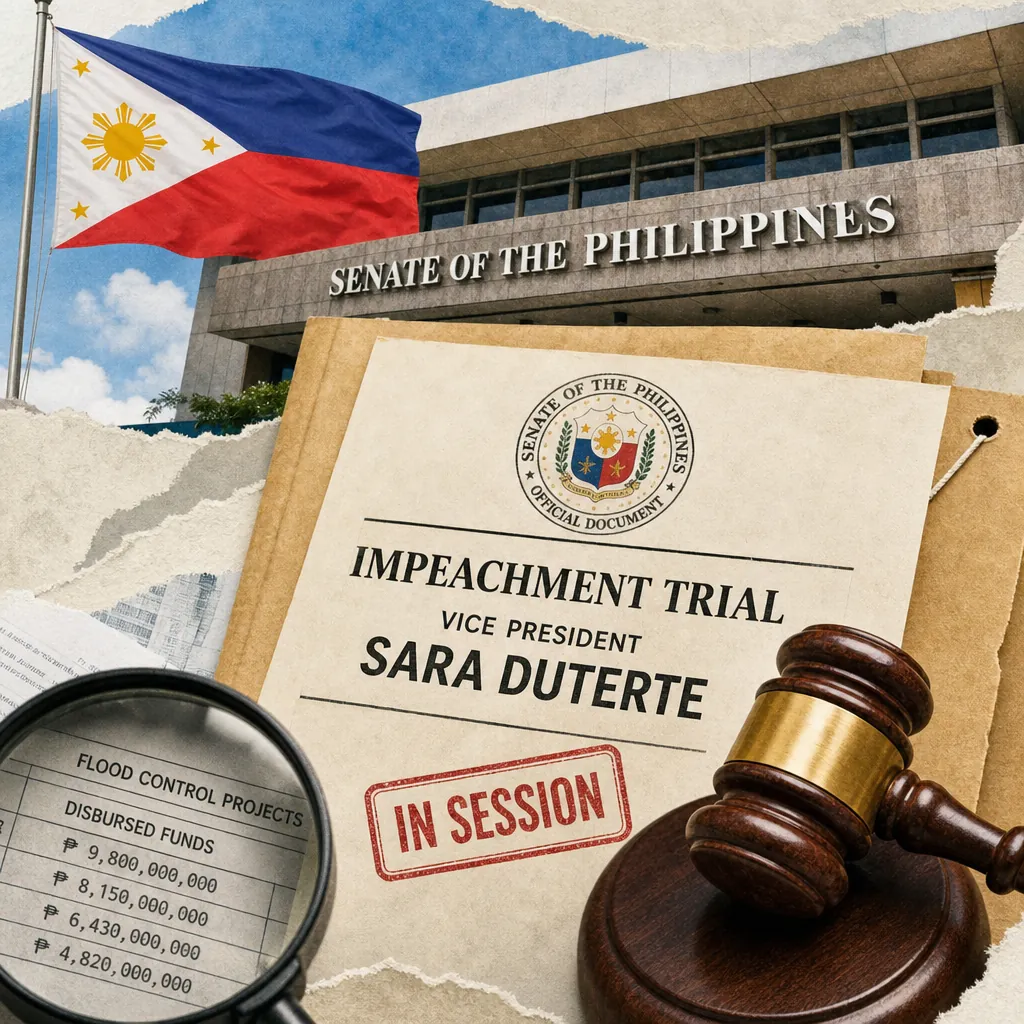
The conversation on June 15-16, 2026, was dominated by three interlocking political crises: the escalating flood control corruption scandal, the Senate leadership crisis, and the impeachment trial of Vice President Sara Duterte. The narrative began on Sunday, June 14, when former Ilocos Sur Governor Chavit Singson released a defiant statement following his arrest on a cyber libel complaint, explicitly framing the legal action as retaliation for his calls to investigate the flood control controversy. That same day, Senator Alan Peter Cayetano launched a series of lengthy Facebook posts under the #batasph campaign, accusing unidentified forces of orchestrating a cover-up and famously declaring, "This is not Game of Thrones," while alleging that the real issue was not the Senate leadership dispute but the "maletas all around" corruption in flood control projects. By Monday, June 15, the conversation had consolidated around parallel tracks: the formal submission of pre-trial briefs for the Sara Duterte impeachment trial and President Bongbong Marcos's call for a special congressional session on June 17, a move that many interpreted as a direct response to the legislative paralysis caused by the Senate leadership row.
Conversation snapshot. The flood control scandal generated the highest emotional engagement, with Chavit Singson's statement receiving 2,452 likes and 1,063 love reactions on Facebook. Senator Erwin Tulfo's revelation that a female senator confronted him for signing a Blue Ribbon Committee report accumulated 1,517 haha reactions. The Peanut Gallery Media Network's viral episode targeting former House Speaker Martin Romualdez generated 2.5 million combined views across Facebook and YouTube within four days. The impeachment trial pre-trial brief submission drew 48,167 views on YouTube for the House prosecution panel's press conference. President Marcos's special session call received 1,193 love reactions alongside 941 haha reactions on a Philippine Star post, indicating polarized sentiment. On Reddit, a post praising Atty. Jesus Falcis's legal analysis accumulated 4,338 upvotes, the highest engagement for analytical content.
Key themes
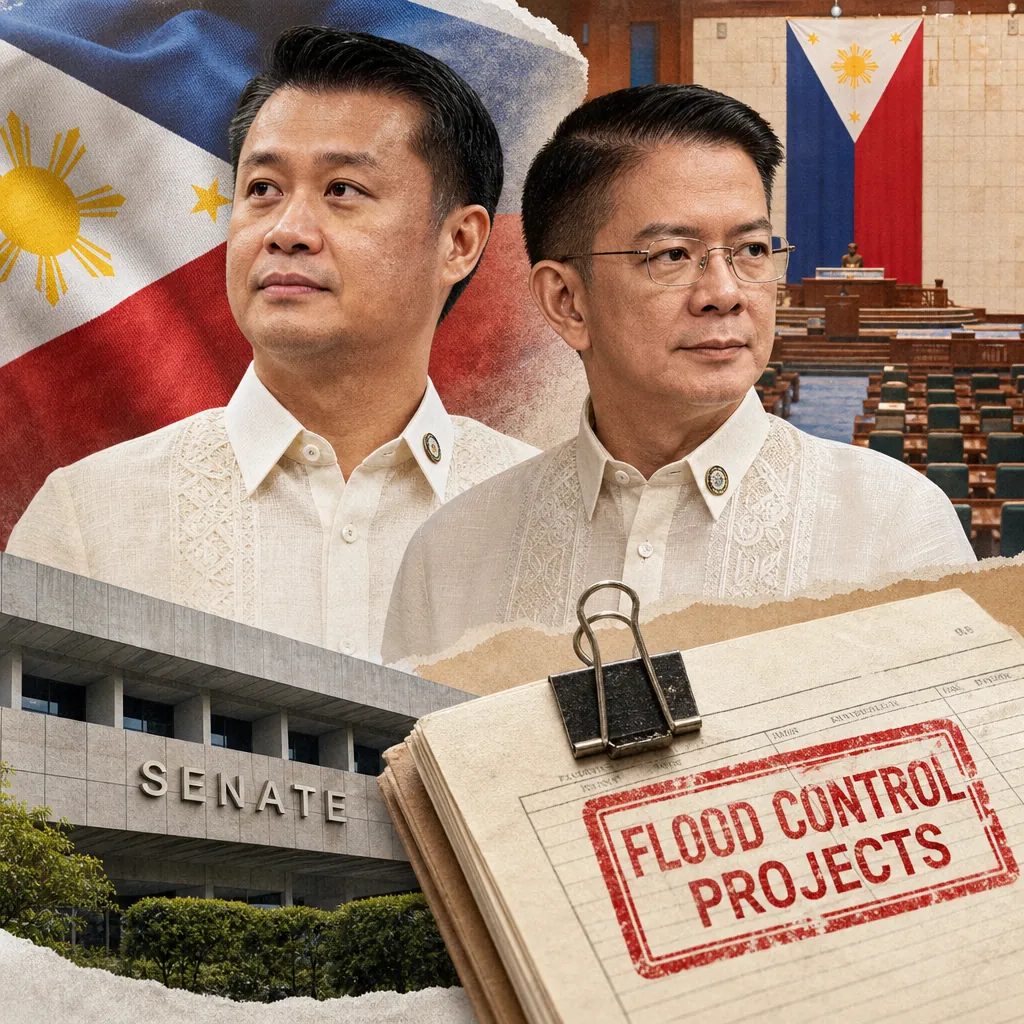
- Flood control scandal as a unifying narrative thread – The corruption probe into multibillion-peso flood control projects served as the gravitational center of the conversation. Senator Tulfo's disclosure that a female senator confronted him for signing the Blue Ribbon report went viral, sparking widespread speculation about which senator had pressured him. A detailed Facebook post traced the scandal's origins back to 2016, noting that former President Rodrigo Duterte himself acknowledged "widespread corruption within the DPWH" in 2020, followed by the mysterious death of whistleblower Rolando Andaya Jr. in June 2022. By June 15, Peanut Gallery Media Network had directly linked the scandal to former House Speaker Martin Romualdez, calling him "the most corrupt Filipino politician of the 21st century" and alleging a coordinated troll farm operation to protect him.
- Impeachment trial of Sara Duterte as procedural theater – The conversation around Vice President Sara Duterte's impeachment evolved from procedural updates to strategic analysis. Lead prosecutor Rep. Gerville Luistro revealed that the prosecution would present "more than 30 witnesses" and sought to use Filipino and regional language translations to make proceedings accessible. An anonymous analysis on Facebook broke down the constitutional math: the prosecution needed 16 votes for conviction, while Vice President Duterte only needed 9 senators to block removal, concluding that "the impeachment trial will act as a massive political platform that will ultimately end in her legal acquittal." The defense team filed its 60-page pre-trial brief, while the prosecution submitted a 57-page document, setting the stage for the June 18 pre-trial conference.
- Senate leadership crisis as a proxy war – The Senate leadership dispute emerged as the third major thread. The turning point came on June 14 when a post reminded readers that Cayetano had orchestrated his own "Senate coup" by convincing Senator Ronald "Bato" dela Rosa to emerge from hiding to secure the decisive vote for the Senate presidency. By June 15, Senator Tulfo disclosed that the Gatchalian-led majority could potentially grow to 15 members, but that "fear of being branded traitors" and "basher fear" were keeping Cayetano's allies from crossing over, highlighting how social media backlash had become a tangible political deterrent.
- Special session as a legislative lifeline – President Marcos's call for a special session on June 17 was widely interpreted as an attempt to bypass the Senate deadlock. The legislative agenda included the Anti-Political Dynasty Bill, amendments to the GASTPE and Universal Access to Tertiary Education Acts, and the National Center for Geriatric Health. However, the public's reaction was mixed: the announcement drew nearly 1,200 love reactions alongside over 950 haha reactions, indicating both support and derision.
- Digital media accountability movement gaining momentum – Peanut Gallery Media Network's rapid growth—surpassing 750,000 Facebook followers within 19 months and generating over 1.2 billion lifetime views—represents a new force in anti-corruption discourse. The network's viral episodes and its founder's accusations of a "frame-up" have created a parallel public inquiry that traditional media cannot ignore.
- Convergence of crises eroding public trust – The impeachment trial, flood control scandal, and Senate leadership crisis are increasingly intertwined, creating a single volatile accountability narrative. Posts from both Cayetano and Singson explicitly frame their arrest and the leadership struggle as part of a coordinated effort to suppress scrutiny of flood control irregularities.
- Anti-political dynasty bill as a wedge issue – The inclusion of the Anti-Political Dynasty Law in the special session agenda has sparked polarized reactions, with the Senate leadership dispute providing immediate context. The measure will likely serve as a strategic proxy war, with pro- and anti-dynasty camps using it to test coalition strength ahead of the 2028 elections.
How the narratives stack
Dominant narrative – The flood control corruption scandal is the central story, with the Senate leadership crisis and impeachment trial viewed as either distractions or consequences of the same systemic rot. The public is most emotionally engaged with allegations of cash-filled suitcases, whistleblower intimidation, and the apparent paralysis of accountability institutions. The Peanut Gallery Media Network's exposé on Speaker Romualdez has given this narrative a specific villain and a massive audience, with 2.5 million views in four days.
Counter-narrative – The Gatchalian bloc and administration supporters argue that the special session demonstrates decisive governance and that the priority bills (geriatric health, education assistance, anti-political dynasty) must not be delayed by partisan conflicts. They frame the Cayetano-led flood control hearings as unauthorized and potentially illegal, with Senator Tulfo warning that any hearing conducted outside the duly constituted Blue Ribbon Committee would carry "zero legal weight or institutional authority." This narrative emphasizes legislative productivity and stability over scandal.
Emerging narrative – The impeachment trial of Vice President Sara Duterte is increasingly seen as a political spectacle rather than a genuine accountability mechanism. The constitutional math—16 votes needed for conviction, only 9 needed to block—suggests the trial will end in acquittal, leading many to view it as a platform for the Vice President rather than a removal proceeding. This narrative is gaining traction among both supporters and critics, who see the trial as a strategic maneuver rather than a legal process.
Suppressed narrative – The structural damage caused by the Mindanao earthquake and the ongoing energy crisis are being overshadowed by the political drama. While the special session's agenda includes disaster response and energy measures, these issues receive minimal attention compared to the flood control scandal and impeachment trial. The public's focus on political infighting may delay urgent action on reconstruction and energy security.
Platform insights
Facebook – The dominant platform for narrative construction and political positioning. Official accounts from senators, news organizations, and advocacy groups published lengthy statements that set the day's agenda. Chavit Singson's statement garnered 2,452 likes and 1,063 love reactions, signaling strong public sympathy for his defiance narrative. Peanut Gallery Media Network's merchandise appeal generated 4,775 likes and 5,103 haha reactions, reflecting both support and cynical amusement. The platform showed high emotional engagement but also deep polarization, with love and haha reactions often competing on the same post.
Reddit – Served as the analytical counterweight to Facebook's emotionally charged posts. Users dissected the legal and political intricacies of the impeachment trial, with one post praising Atty. Jesus Falcis's legal analysis accumulating 4,338 upvotes and 186 comments. Another post titled "Vico Sotto Pushes for Stronger Ideology-Based Parties" received 1,472 upvotes, indicating growing public appetite for structural political reform beyond personality-driven politics. Reddit's upvote system amplified narratives that aligned with the community's anti-establishment lean.
YouTube – Functioned as the broadcast arm, with news networks like ABS-CBN, GMA, and One News providing live coverage and analysis. The House Prosecution Panel's press conference livestream drew 48,167 views and 835 likes. TV Patrol's evening coverage attracted substantial viewership, confirming that traditional media still commanded authority for real-time updates even as social platforms drove the interpretive framing of events. Peanut Gallery Media Network's long-form videos generated millions of views, demonstrating the power of independent digital media.
Twitter – Served as a rapid-response hub for breaking news and political commentary. Official accounts from senators and news organizations provided real-time updates on the special session and impeachment filings. The platform was used for quick reactions and hashtag campaigns, but engagement was lower than on Facebook and YouTube.
Key voices and communities
Anti-corruption accountability advocates – This group comprises senators, former officials, and watchdog entities driving the flood control scandal investigation. Senator Alan Peter Cayetano's page combines privilege speeches and pointed critiques of diversion tactics, receiving thousands of reactions and comments. Their messaging emphasizes systemic corruption rather than personalities, and they frequently reference the need to trace billions in infrastructure funds. The group's investigative momentum aligns with transparency goals, but their anti-administration posture may create friction with the current leadership.
Administration and Gatchalian bloc supporters – Accounts aligned with Acting Senate President Sherwin Gatchalian and President Marcos dominate the conversation around the special session and impeachment trial logistics. This group emphasizes legislative productivity and stability, framing the leadership row as an obstacle to governance. They argue that priority bills must not be delayed by partisan conflicts and that President Marcos's call for a special session demonstrates decisive leadership. Their content generates predominantly love and haha reactions, indicating both support and skepticism.
Peanut Gallery Media Network and anti-Romualdez digital activists – A rapidly growing digital media outlet with over 1.5 million total followers across platforms, PGMN has positioned itself as the most vocal critic of former Speaker Martin Romualdez. Their long-form videos and investigative episodes generate millions of views rapidly. The network frames its legal battles as suppression of free media and uses direct appeals to mobilize supporters. Their influence makes them a powerful ally for anti-corruption narratives, but their aggressive style and legal entanglements may be a liability for institutional stakeholders.
Civil society and public accountability networks – Church and civil society groups have launched initiatives like "Bantay Impeachment" to demand transparency in the Sara Duterte trial, though their reach remains modest compared to political blocs. This stakeholder set also includes grassroots advocates for anti-political dynasty legislation. Their messaging centers on accountability and institutional reform, largely detached from partisan loyalty. They represent the persuadable middle—deeply concerned with process and integrity but not loyal to any administration bloc.
Mainstream media and news organizations – Major networks like ABS-CBN, GMA, Philstar, Rappler, and DZMM dominate the information ecosystem with cross-platform reach and high engagement on breaking news. Their coverage frames the special session as President Marcos's decisive intervention to break the Senate leadership deadlock and fast-track social protection laws. They serve as the primary gatekeepers for public understanding, and any stakeholder aiming to influence the narrative must provide clear, on-record information to ensure the session is framed as a governance necessity rather than a mere power play.
Narrative streams
Flood control scandal and the "maleta" allegations
The flood control corruption probe is the most emotionally charged narrative, with allegations that billions of pesos meant for infrastructure projects were diverted to politicians and media personalities. On June 16, 18 former bodyguards of former Ako Bicol Party-list Representative Zaldy Co held a press conference alleging they delivered cash-filled suitcases to numerous officials, including Senator Francis "Chiz" Escudero, Senator Francis "Kiko" Pangilinan, Commission on Elections Chairman George Garcia, and media personalities like Arnold Clavio and Ramon Tulfo. The witnesses claimed they delivered suitcases of varying sizes to Escudero's house, with one individual saying they even ate shrimp inside Escudero's home. Senator Pangilinan and his wife, actress Sharon Cuneta, vehemently denied the allegations, with Cuneta calling the witnesses "liars" and Pangilinan hinting at filing slander charges. Comelec Chairman Garcia also denied receiving P10 million, calling the allegations "lies." The press conference was led by former Rep. Mike Defensor, who has been accused of bribing the 18 supposed bagmen P5 million to give testimonies against government officials. The Sandiganbayan placed Senator Jinggoy Estrada under a 90-day preventive suspension over alleged kickbacks linked to the flood control mess, further intensifying the scandal. The Ombudsman revealed that 209 complaints related to the flood control scam are undergoing fact-finding investigation, with four cases already filed in court.
Senate leadership crisis and the special session
The Senate leadership dispute between the Cayetano and Gatchalian blocs reached a new level of legal confrontation on June 16, when the Cayetano bloc filed a petition before the Supreme Court seeking to nullify the June 3 session that installed Senator Win Gatchalian as acting Senate President. The petition asked the Court to determine whether the actions taken during the June 3 session complied with the Constitution and the Rules of the Senate. Senator Loren Legarda, who insists she is still the Senate president pro tempore, said the petition is not a fight over positions but a necessary constitutional stand. Notably, Senators Joel Villanueva and Mark Villar were not included in the list of petitioners, signaling possible defections from the Cayetano bloc. Senator Alan Peter Cayetano responded to ouster talks by saying, "If they already have 13, congratulations. We know how you got it—through intimidation, bribery, and threats of imprisonment." Meanwhile, Senator Gatchalian confirmed he has not yet spoken to any Cayetano-bloc senator about attending the special session on June 17, but he issued a statement encouraging all senators to attend regardless of affiliation. Senator Robin Padilla reminded his colleagues that the Senate belongs to the Filipino people, not to any faction.
Impeachment trial of Vice President Sara Duterte
The impeachment trial of Vice President Sara Duterte moved into its pre-trial phase on June 15-16, with both the House prosecution and the defense submitting their pre-trial briefs. The prosecution revealed it would present more than 30 witnesses and sought to use Filipino and regional languages to make proceedings accessible to ordinary Filipinos. The defense, led by Atty. Michael Poa, filed a 60-page pre-trial brief and indicated it wants to call former Senator Antonio Trillanes IV, former aide Ramil Madriaga, and over 40 other individuals as witnesses. The prosecution also signaled it may call officials from the Office of the Vice President and the Department of Education as hostile witnesses. A key procedural debate emerged over the conviction threshold: House "Young Guns" bloc members argued that only 15 senator votes should be needed to convict, given that only 22 senators are capable of participating due to the suspension of Senator Jinggoy Estrada and the absence of Senator Bato Dela Rosa. The Sandiganbayan's 90-day preventive suspension of Estrada explicitly bars him from participating in the impeachment trial, further reducing the pool of senator-judges.
Earthquake response and disaster relief
Amid the political turmoil, the government continued its response to the magnitude 7.8 earthquake that struck Mindanao on June 8. Military forces deployed air assets to deliver critical relief supplies to isolated communities in Sarangani and Davao Occidental after landslides rendered major road networks impassable. The Philippine Air Force conducted multiple sorties from June 11 to 15, delivering 4,925 food packs, 800 five-kilogram rice packs, 3,400 bottles of water, and other supplies. The Philippine Space Agency noted the return of nighttime lights in parts of Mindanao, indicating progress in restoring power and infrastructure. The FPJ Panday Bayanihan Party-List and FPJ Youth also conducted relief operations in Glan, Sarangani, providing food and clean drinking water to over 700 residents. However, the evacuation of 2,000 residents in Jose Abad Santos due to the threat of a landslide dam collapse highlighted the ongoing risks.
International developments and foreign policy
President Marcos held a joint press conference with visiting German President Frank-Walter Steinmeier, during which he expressed openness to a visiting forces agreement with Germany and pledged to deepen cooperation in defense, trade, maritime security, infrastructure, and renewable energy. Marcos also emphasized that the fight against corruption remains a top priority of his administration, stating that public funds lost to graft deprive Filipinos of essential services and opportunities. Meanwhile, the US-Iran peace deal continued to dominate global economic news, with oil prices falling further as talks on a final agreement were set to begin. The International Energy Agency warned that the Iran war has exposed major risks for fossil fuel-dependent Southeast Asia, urging the region to diversify energy sources more quickly.
Conversation trajectory
Convergence of impeachment and flood control narratives into a single accountability crisis – The impeachment trial of Vice President Sara Duterte is increasingly intertwined with the Senate Blue Ribbon investigation into the flood control scandal, as both involve allegations of corruption and misuse of public funds. Posts from both Cayetano and Singson explicitly frame their arrest and the leadership struggle as part of a coordinated effort to suppress scrutiny of flood control irregularities. This convergence will intensify as the impeachment trial proceeds, with prosecution witnesses likely to reference the same DPWH budget issues, creating a single, volatile accountability narrative that could dominate public discourse through Q3 2026. (Observation window: next 4-6 weeks)
Anti-political dynasty bill as a wedge issue and legislative test – The inclusion of the Anti-Political Dynasty Law in President Marcos's special session agenda has already sparked polarized reactions, with the Senate leadership dispute providing immediate context. This measure will likely serve as a strategic proxy war, with pro- and anti-dynasty camps using it to test coalition strength ahead of the 2028 elections. Its progress or failure will shape broader reform narratives. (Observation window: next 2-4 weeks)
Digital media accountability movement gaining institutional momentum – Peanut Gallery Media Network's rapid growth represents a new force in anti-corruption discourse, directly targeting former House Speaker Martin Romualdez. The network's viral episodes and its founder's accusations of a "frame-up" have created a parallel public inquiry that traditional media cannot ignore. This trend will likely accelerate as the impeachment trial provides new material for accountability content, potentially shifting public perception of Romualdez and the House leadership ahead of budget deliberations. (Observation window: next 4-8 weeks)
Senate leadership crisis paralyzing legislative output but creating opening for executive intervention – The standoff between Gatchalian's 12-member bloc and Cayetano's group has stalled key inquiries, with Senator Tulfo revealing that fear of online backlash is preventing defections. President Marcos's special session is designed to bypass this paralysis on priority bills, but the competing Blue Ribbon hearings create confusion over which is legitimate. This fragmentation may force the administration to rely more heavily on executive orders or House-driven legislation, reducing the Senate's oversight role in the near term. (Observation window: next 2-4 weeks)
Key trigger events – The June 17 special session of Congress, where the fate of the anti-political dynasty bill and other priority measures will signal the administration's ability to govern amid the Senate crisis. The June 18 pre-trial conference for the Sara Duterte impeachment, which will clarify evidence, witnesses, and trial rules. The July 6 start of the impeachment trial proper, which will dominate national airtime and social media discourse for weeks. The Supreme Court's response to the Cayetano bloc's petition on the Senate leadership, which could either resolve or further inflame the crisis.
Response guidance
Platform approaches – On Facebook, deploy informational graphics that summarize key developments in the impeachment pre-trial process and the flood control scandal timeline to reduce confusion and speculation. Use reactive engagement in high-comment threads to correct recurring misconceptions, such as the conviction threshold. On Twitter, thread rapid factual updates during the special session and pre-trial conference, using a consistent hashtag like #BatasPH to anchor official communications. On YouTube, produce concise explainer videos on how the impeachment trial works and the constitutional voting threshold, using on-screen citations to official sources. On Reddit, contribute to relevant discussion threads by posting context comments that concisely link to official sources without endorsing any side.
Key messages – Accountability for public funds is non-negotiable: the flood control investigation must proceed transparently, regardless of leadership changes. The impeachment trial against the Vice President will adhere strictly to the Constitution, requiring 16 votes for conviction; no procedural shortcuts can reduce this threshold. Good governance continues even amid political disputes—priority legislation such as the Anti-Political Dynasty Bill, universal pension, and education reforms remain on the agenda under the President's call for a special session. Public engagement in these processes is vital: citizens are encouraged to follow official channels, verify information, and demand direct answers from their representatives.
Sensitive topics to navigate – Avoid characterizing one Senate bloc as "illegitimate" or the other as "coup-plotters." Instead, consistently frame it as a parliamentary matter that should be resolved through Senate rules, while emphasizing that the flood control investigation must not be derailed. Do not validate or dismiss the allegations of political persecution from Chavit Singson; instead, note that the legal process is ongoing and that credible allegations of corruption should be investigated separately. The Peanut Gallery Media Network's reporting and the extortion charges remain contested; official communications should neither endorse nor dismiss their claims, but rather call for due process.
See the full picture behind today's signals.
This report draws from Media Meter's MediaWatch, our real-time monitoring engine tracking 2,470+ Philippine sources across print, broadcast, digital, and social. Explore how the platform turns raw coverage into decision-grade intelligence, then see how it's configured for teams like yours — whether you're in PR agencies, corporate comms, government, or marketing.
Want more? Browse our Report Library for sector and crisis intelligence, or request a demo and we'll have your brand set up before the call.
Want this kind of intelligence on your brand?
This brief is built on the same MediaWatch methodology that runs continuously across every brand we monitor. See your competitive landscape, Impact Score, and narrative trajectory in a 30-minute demo.