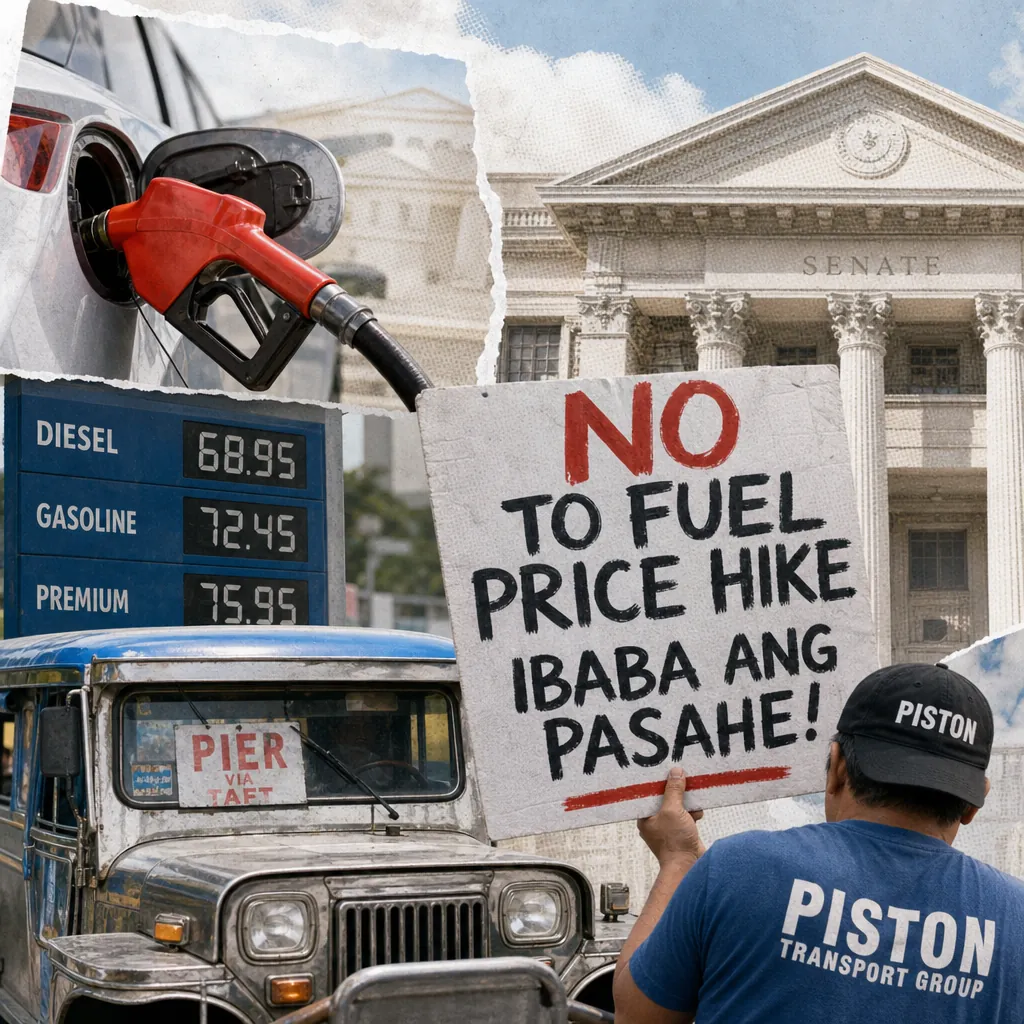
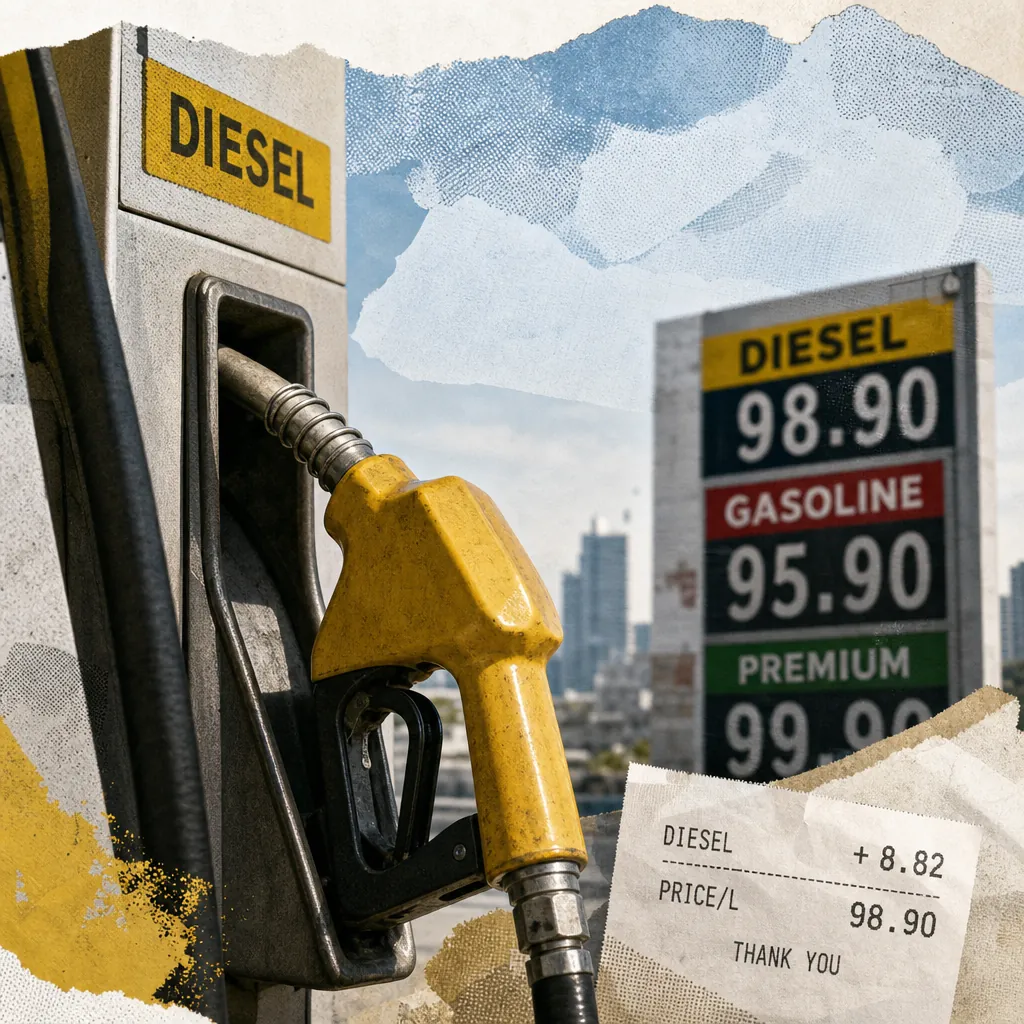
Fuel Hikes Push Bus Firms to Cut Trips as Palace Blocks Fare Rise
Provincial bus operators cut trips and asked President Marcos to restore a suspended fare increase as diesel rose another P8.82 per liter, while the Palace called a fare hike a last resort and the transport regulator won an election-period exemption for its fuel subsidy programs. A viral video of an Eat Bulaga host driving without a seatbelt drew a show cause order and a suspended license.
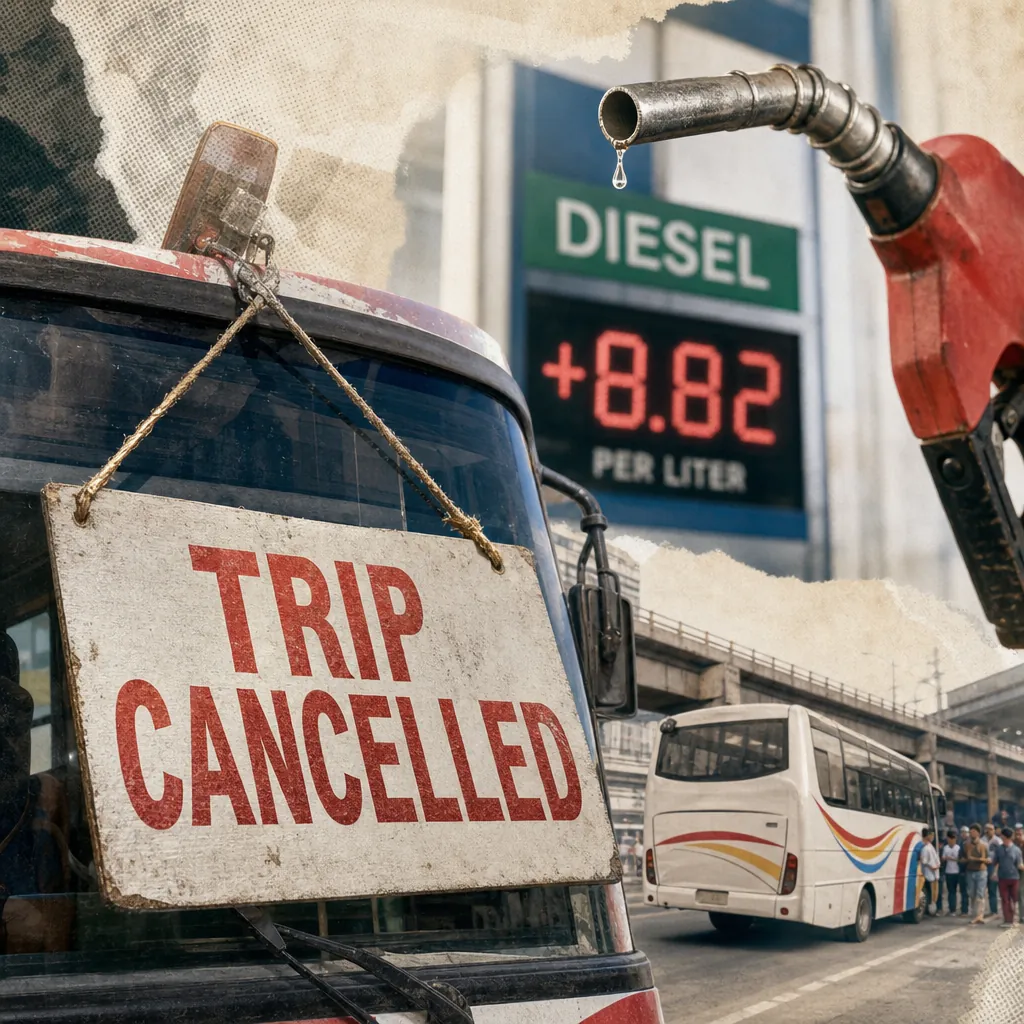
Diesel rose by another P8.82 per liter on Tuesday, and by that afternoon the country's provincial bus operators had begun parking vehicles instead of dispatching them. Alex Yague, a director of the Provincial Bus Operators Association of the Philippines (PBOAP), told GMA News' "24 Oras" that terminals across the country are holding buses with no scheduled trips. "Lahat ng mga operator ngayon, nagbabawas na ng biyahe," he said — all operators are cutting trips — adding that a walk through any terminal shows rows of parked buses with nowhere to go.39 The group, joined by Victory Liner, asked President Ferdinand Marcos Jr. to restore a fare increase the Land Transportation Franchising and Regulatory Board (LTFRB) approved in March and the President suspended a day later. Fuel now accounts for 45% to 60% of bus operating expenses, the operators said, and regulated fares have not kept pace. "No industry can survive when its regulated revenue is lower than the actual cost of delivering service," their statement read.46 A separate group representing bus lines nationwide warned that "operations may soon become impossible."36
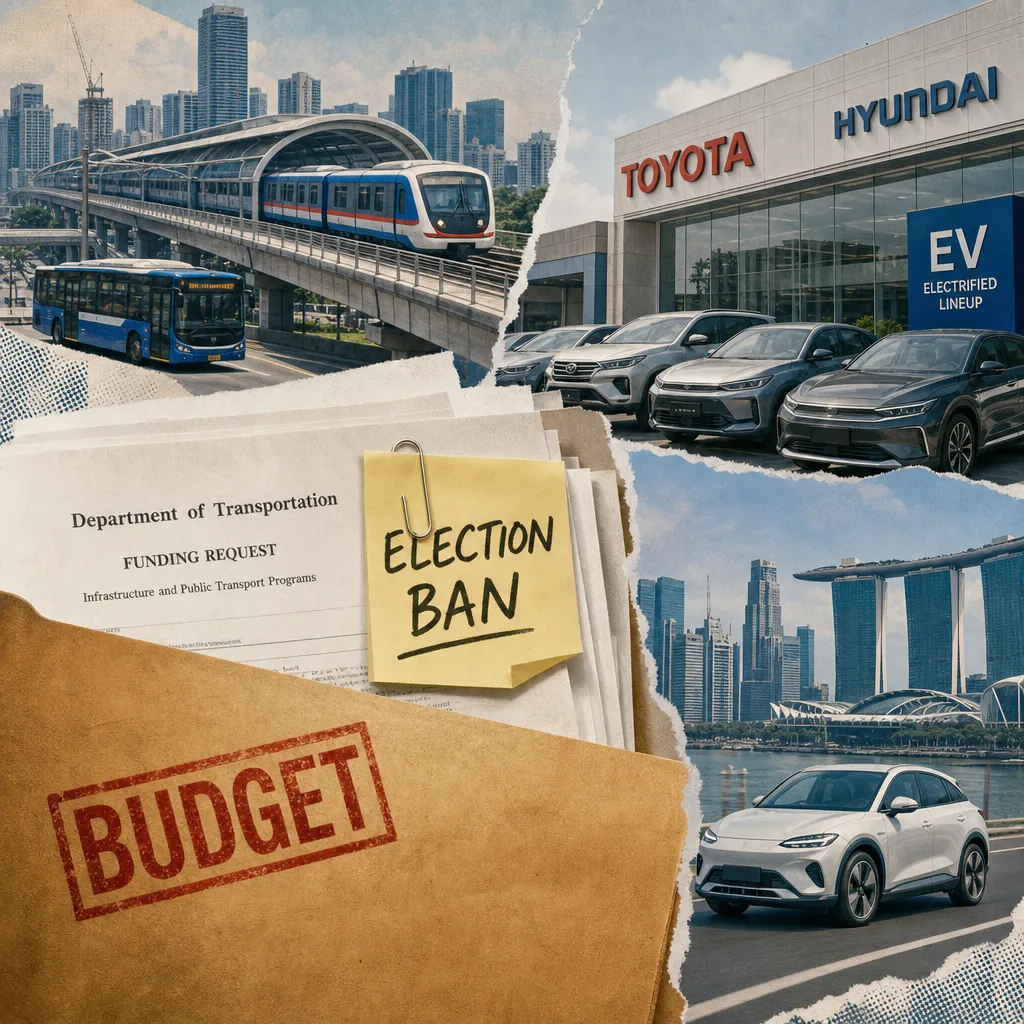
The government's answer, delivered the same day from two directions, was that commuters will not absorb the increase yet. Palace press officer Claire Castro said the administration is "exhausting every measure" so the burden does not pass to passengers, quoting Transportation Secretary Giovanni Lopez's position that a fare hike should be a "last resort."73 Lopez himself said the LTFRB's hearing on the pending fare petitions is ongoing and that "at this point in time po, pinipiga pa rin natin ang gobyerno" — the government is still being squeezed for options.35 The LTFRB separately secured an exemption from the Commission on Elections (Comelec) spending ban for its fuel-relief programs, clearing the way for service contracting, the Love Bus, free rides, a fuel subsidy, a P12-per-liter fuel discount for public utility vehicle drivers, and the public transport modernization program to keep running through the November 2 barangay and Sangguniang Kabataan elections.78 The Comelec ban freezes the release of public funds during an election period to prevent incumbents from using state money for campaigning; the exemption means the fuel aid continues.
The day's loudest single item was not about fuel at all. A video of television hosts singing inside a moving SUV, posted and then circulated widely, drew a show cause order from the Land Transportation Office (LTO) against the vehicle's registered owner and driver, and by evening the agency had suspended the driver's license. The LTO identified the driver in its own account as Eat Bulaga host Ian Red, who was seen driving without a seatbelt and, at the end of the clip, stepping out of the vehicle while it was on the road, leaving the door open before getting back in.77 The agency ordered the owner and driver to appear before its Intelligence and Investigation Division on September 29 and to submit a sworn statement and supporting documents.7 The story ran across Inquirer Online, Manila Bulletin Online, Bandera Inquirer Online, and Philstar Online, and it was the most-read item on the Inquirer's entertainment page the same day.42 The LTO's action came on the directive of Assistant Secretary Markus V. Lacanilao, according to the agency's Facebook page.7
Key themes
- Diesel's P8.82-per-liter jump pushed bus operators to cut trips. The increase, reported Tuesday, followed a doubling of diesel prices since the first US-Israeli strikes on Iran in February, and operators say fuel is now 45% to 60% of their costs.3646
- The Palace refused to commit to a fare increase. Press officer Claire Castro said the government is maximizing subsidies and other measures so commuters do not carry the burden, and called a fare hike a last resort.73
- The LTFRB won a Comelec exemption to keep fuel aid flowing through the election period. Service contracting, free rides, the P12-per-liter PUV fuel discount, and the modernization program's three-month amortization aid are covered.78
- A viral driving video cost a TV host his license, at least temporarily. The LTO suspended Ian Red's license and summoned the SUV's owner and driver to a September 29 hearing over the missing seatbelt and the mid-road stop.777
- Manibela pressed Malacañang directly on behalf of jeepney drivers. Chairman Mar Valbuena's open letter asked the President and agencies for concrete measures, arguing jeepney drivers absorb fuel costs more directly than other transport workers.5
- Carmakers and motorcycle brands kept launching and promoting through the fuel squeeze. Jetour opened a Bonifacio Global City dealership with a P5.188-million Topfire Edition, Suzuki drew about 500 Raider owners to Cebu, and GWM published fuel-economy test results.1263
- The Electric Vehicle Association of the Philippines tied its summit pitch to pump prices. EVAP kept early-bird passes at P50 and opened free entry to students for the October 22–24 Philippine EV Summit, saying every price jump brings new buyers asking where to start.70
- Road safety and enforcement stories ran alongside the fuel story. The LTO's Region 6 office sought the permanent revocation of a rider's license over a fatal Aklan crash, and a Cebu SUV collision that killed a pedestrian circulated as video.5774
How the narratives stack
Dominant: the fuel-price squeeze on public transport. This is the day's consequential story, and it is dominant on consequence rather than on any single outlet's volume. Diesel rose P8.82 per liter on Tuesday; the increase compounds a doubling of diesel prices since February, when the first US-Israeli strikes on Iran set off the current conflict and disrupted global refining and fuel supply.36 Bus operators responded by cutting trips and asking the President to restore the March fare adjustment the LTFRB had approved and Marcos suspended.46 The Palace and the Department of Transportation (DOTr) responded by holding the line on fares while pointing to subsidies.7335 The LTFRB's Comelec exemption is the concrete administrative step that keeps those subsidies alive through the November 2 elections.78 Within the items captured here, this story also carried the heaviest coverage value: the Manila Times' report on the Palace position drew an estimated P523,844 in advertising-equivalent value, and the Philstar report on the same position P458,285 — figures that estimate what it would have cost to buy the same space as advertising, not how many people read the stories.3673
Counter-narrative: the viral driving video. The LTO's action against a television host generated the day's most-read entertainment item and coverage across four outlets in this set, and it is the story most likely to have reached Filipinos who do not follow fuel prices.427784 It is a counter-narrative in the sense that it competed for attention with a story of far greater economic consequence, and in places it won that competition. The LTO's own framing was enforcement-focused: the agency said it acted on the directive of Assistant Secretary Lacanilao after the video reached it, and it treated the missing seatbelt and the mid-road stop as violations serious enough to suspend a license and require a hearing.7 The two stories are not unrelated — both are about who bears the cost of the road — but they drew different audiences.
Emerging: the electric-vehicle pitch as a fuel-price response. EVAP's decision to hold early-bird passes at P50 and admit students free to the October 22–24 Philippine EV Summit is a small item, but it is a deliberate attempt to convert pump-price pain into EV consideration. EVAP President Willy Tee Ten said the association sees "a new wave of Filipinos asking us where to start in their EV journey" every time prices jump.70 The same logic runs through the day's automotive coverage: GWM Philippines published "Go 1000 More" fuel-economy results for its Haval H7 plug-in hybrid, Haval H9, and Cannon, with the H7 recording 15.73 kilometers per liter over 932.4 kilometers on a route observed by the Automobile Association of the Philippines.3 Whether fuel prices actually move buyers toward electrified vehicles is not yet visible in this set; what is visible is that sellers are positioning that way.
Under-covered: the jeepney drivers' own account. Manibela's open letter to the President, posted to social media on Tuesday, got a fraction of the coverage the bus operators' statement received, even though jeepney drivers are the group most directly exposed to pump prices and least able to pass costs through. Chairman Mar Valbuena wrote that "the impact on drivers is different because we are directly affected by the rising prices of petroleum products."5 The letter is the clearest statement in the day's material of who absorbs the cost when fares are frozen, and it placed well below the bus operators' warning in the coverage captured here.
Platform insights
- Facebook: The LTO used its own Facebook page to announce the show cause order against the SUV's owner and driver, which is how the enforcement story reached most of its audience before news outlets picked it up.7 Manibela posted its open letter to the President on Facebook, making the platform the primary channel for the jeepney group's appeal.5 The Cebu SUV collision that killed a pedestrian also circulated as video on social media before it became a news story.74
- X: No post-level engagement figures for X appear in the material reviewed here, so the platform's role in the day's conversation cannot be characterized from this set.
- Reddit: No post-level engagement figures for Reddit appear in the material reviewed here.
- YouTube: No post-level engagement figures for YouTube appear in the material reviewed here.
Key voices and communities
Provincial bus operators. PBOAP and Victory Liner are the most organized industry voice in the day's coverage, and their argument is arithmetic: fuel is 45% to 60% of operating costs, fares are regulated, and the gap is now unbridgeable without either a fare increase or state support.46 Their threat to cut trips is already visible in terminals, according to Yague.39 They matter because they move the majority of interprovincial passengers and because their costs are the clearest measure of how fuel prices translate into service reductions.
The Palace and the Department of Transportation. President Marcos, press officer Claire Castro, and Secretary Lopez are the day's decision-makers, and their position is that fares stay frozen while subsidies and discounts absorb the shock.7335 Their constraint is fiscal and political: the Comelec spending ban would have frozen the relief programs had the LTFRB not obtained an exemption.78
Manibela and jeepney drivers. Chairman Mar Valbuena's group speaks for the smallest operators, who own their units and have no corporate balance sheet to absorb losses.5 Their framing is livelihood protection rather than industry sustainability, and it is the framing least represented in the day's coverage.
The Land Transportation Office. The LTO appears in two roles on the same day: as the enforcer that suspended a TV host's license over a viral video, and as the agency whose regional office sought the permanent revocation of a rider's license over a fatal Aklan crash.7757 Its enforcement actions are the day's most-shared regulatory content.
Carmakers and motorcycle brands. Jetour, Suzuki, GWM, and EVAP all published or staged something on Tuesday, from a P5.188-million Topfire Edition launch at a new Bonifacio Global City dealership to a 500-rider Raider gathering in Cebu.126370 Their collective message is that the market is still buying.
Narrative streams
Diesel's P8.82-per-liter rise forces bus operators to park vehicles
The mechanics of the squeeze are simple and the operators stated them plainly. Diesel, which powers most Philippine buses, has effectively doubled since the first US-Israeli strikes on Iran in February triggered the current conflict, and on Tuesday it rose another P8.82 per liter.36 Because fares are set by the LTFRB rather than by the market, operators cannot pass the increase through, and the March adjustment that would have narrowed the gap was approved and then suspended by the President a day later. Ticket prices have been static since.36 The result, per PBOAP's Yague, is visible in terminals: buses parked with no trips scheduled.39 Victory Liner, in a statement backed by PBOAP, put the cost share at 45% to 60% of operating expenses and warned that "no industry can survive when its regulated revenue is lower than the actual cost of delivering service."46 A separate group of bus lines told the President that "operations may soon become impossible."36
For commuters, the read is direct: fewer dispatched buses mean longer waits and fuller vehicles on provincial routes, and the operators have said as much.46 For the sector, the pressure point is the LTFRB's fare-setting process, which is now the subject of a hearing involving concerned agencies and transport groups.35 The government's counter-position is that subsidies — fuel discounts, free tolls for buses, service contracting — can close enough of the gap to keep fares frozen.73 Whether that holds depends on how long diesel stays at current levels and whether the relief programs survive the election period, which the Comelec exemption now allows.78
The Palace holds fares down and keeps fuel aid running through the election
The administrative story behind the day's headlines is the Comelec exemption. The Commission on Elections imposes a spending ban during the election period to prevent public funds from being used for partisan advantage; without an exemption, the LTFRB's fuel-relief programs would have had to stop during the run-up to the November 2 barangay and Sangguniang Kabataan elections. Acting LTFRB Chairman Greg Pua Jr. said the exemption covers service contracting, the Love Bus, free rides, the fuel subsidy, the P12-per-liter fuel discount for public utility vehicle drivers, and the public transport modernization program, including three months of aid for PUV operators' monthly amortization and operating expenses.78 Service contracting pays operators to run routes at set service levels, which is how the state keeps buses on the road when fares do not cover costs.
The political calculation is equally clear. Castro said the government is "exhausting every measure" so that "the burden will not be passed on to commuters," and quoted Lopez's line that a fare hike should be the "last resort."73 Lopez said the government is looking for initiatives beyond existing programs to support PUV, bus, and jeepney operators and commuters.35 The read for the sector is that the state has chosen to subsidize supply rather than raise prices, which protects commuters in the short term but leaves operators dependent on programs that must be renewed and funded each cycle. If diesel stays elevated past the election, the same request returns with a larger gap.
A viral driving video ends in a suspended license
The LTO's response to the video was fast and public. The agency issued a show cause order against the registered owner and driver of the SUV after receiving footage of people recording themselves singing inside a moving vehicle, with the driver unbelted and, at the end, stepping out onto the road with the door left open.8 The agency ordered them to appear before its Intelligence and Investigation Division on September 29 and to submit a sworn statement and supporting documents.7 By evening, Philstar reported that the LTO had suspended the driver's license and identified the driver as Eat Bulaga host Ian Red.77 The story was carried by Inquirer Online, Manila Bulletin Online, Bandera Inquirer Online, and Philstar Online, and it topped the Inquirer entertainment page's most-read list.42874
The read for the sector is about enforcement visibility. The LTO treated a social-media clip as sufficient basis to open a case, suspend a license, and require a hearing within a week, which signals that public driving behavior captured on video will be acted on. For media personalities and brands whose vehicles or employees appear in content, the practical consequence is that on-camera driving is now an enforcement surface. The same enforcement posture appeared in the LTO's Region 6 office, which recommended the permanent revocation of a 24-year-old rider's license over the August 30 crash in Tangalan, Aklan that killed motorcycle vlogger and photographer Gerald Carel Roldan, known online as "Petix Akean."57 In Cebu, a separate collision in which a Toyota Fortuner struck two pedestrians on Gen. Maxilom Avenue, killing 27-year-old Criza Jean Concha and injuring American John Charles Livingstone, also circulated as video and led to the driver's arrest.74
Jeepney drivers ask the President directly, and get less attention
Manibela's open letter, posted to social media on Tuesday, asked President Marcos and concerned agencies for concrete measures to protect jeepney drivers' livelihoods. Chairman Mar Valbuena wrote that jeepney drivers are among those most directly affected by oil price hikes because they own or operate their units and cannot absorb the increases the way larger operators can.5 The letter is the day's clearest statement of who actually pays when fares are frozen: the driver, not the commuter and not the state, until a subsidy reaches them.
The read for the sector is that the smallest operators have the least cushion and the weakest voice in the fare-setting process. Bus operators have an association, a legal team, and a statement that gets picked up by national outlets; jeepney drivers have an open letter. The government's relief programs — the P12-per-liter fuel discount and service contracting — are designed to reach them, and the Comelec exemption keeps those running.78 Whether the discount is enough at current diesel prices is the question the letter poses and the day's coverage does not answer.
Carmakers keep selling into the fuel squeeze
The automotive industry's own coverage on Tuesday was promotional, and it clustered around two ideas: capability and cost of ownership. Jetour, through distributor United Asia Automotive Group Incorporated (UAAGI), launched the GAIA G700 Topfire Edition at P5.188 million during the opening of its Jetour GAIA Space Global City dealership at 7th Avenue and 30th Street in Bonifacio Global City. The Topfire Edition is 52 millimeters longer, 110 millimeters wider, and 94 millimeters taller than the standard model, with 55.6 millimeters more ground clearance and a widened wheel track.1 Suzuki Philippines drew about 500 Raider owners to Cebu for the Raider Underground Battle, including a 200-strong motorcade on the Cebu-Cordova Link Expressway that Suzuki says is the event's largest to date.26 GWM Philippines published "Go 1000 More" fuel-economy results observed by the Automobile Association of the Philippines: the Haval H7 plug-in hybrid recorded 15.73 kilometers per liter over 932.4 kilometers, the Haval H9 Lux 4x4 13.06 kilometers per liter over 1,270 kilometers, and the Cannon Lux 4x4 14.01 kilometers per liter over 1,213 kilometers.3
The read for the sector is that fuel economy has become a marketing claim rather than a specification. GWM's decision to have an independent motoring body observe the test, and to publish distance and consumption together, is a response to buyers who are now calculating cost per kilometer. EVAP's summit pricing — early-bird passes held at P50, free entry for students with valid IDs, for the October 22–24 event at the SMX Convention Center — is the same calculation applied to electric vehicles.70 Honda Philippines' plan to retire the carburetor-type RS125 while selling 20,000 units of a "Final Edition" through March 2028 shows the other end of the market: a commuter motorcycle nameplate being phased out on a two-year runway.2
Conversation trajectory
Watch the LTFRB's fare decision, expected within weeks. The board's hearing on pending fare petitions is ongoing, and the Palace has said a hike would be a last resort rather than a refusal.3573 If the LTFRB recommends an increase, the President's response will determine whether operators restore trips or continue parking vehicles. Observation window: the next four to six weeks, ahead of the November 2 elections.
Watch diesel prices at the next weekly adjustment. Diesel rose P8.82 per liter on Tuesday, and the operators' cost math depends on whether that level holds.36 A second consecutive increase of similar size would make the current subsidy package insufficient on the operators' own arithmetic. Observation window: the next two to three weekly price adjustments.
Watch the September 29 LTO hearing. The SUV's registered owner and driver must appear before the Intelligence and Investigation Division, and the license suspension is already in effect.777 The outcome will indicate how the agency treats viral driving footage as evidence and whether the suspension becomes a revocation. Observation window: September 29 and the weeks after.
Watch the October 22–24 Philippine EV Summit for demand signals. EVAP's early-bird pricing and free student entry are designed to convert fuel-price frustration into EV consideration, and attendance will be the first measurable sign of whether that conversion is happening.70 Observation window: late October.
Watch the Comelec spending ban's effect on transport subsidies. The exemption keeps the LTFRB's programs running through the election period, but the programs still need funding releases to reach drivers.78 Any delay in disbursement would show up first as complaints from jeepney and bus operators. Observation window: through November 2.
Response guidance
For transport operators: document the cost gap in numbers, not adjectives. The operators' strongest material on Tuesday was arithmetic — fuel at 45% to 60% of operating expenses, fares frozen since March — and it traveled further than general warnings about sustainability.46 Operators preparing statements for the LTFRB hearing should lead with per-trip cost and revenue figures that a commuter can follow.
For government communicators: explain what the subsidies actually pay for. The Comelec exemption covers service contracting, free rides, the P12-per-liter fuel discount, and modernization amortization aid, but the day's coverage described these as a list rather than as relief a driver would recognize.78 Naming the peso amount a jeepney driver receives per liter, and how to claim it, would make the programs visible to the people they are meant to reach.
For the LTO and enforcement agencies: expect video to set the agenda. The agency's own Facebook post drove the day's most-read story, and its regional offices are acting on footage from fatal crashes weeks old.757 Agencies should be prepared to explain the legal basis for each action — show cause order, hearing date, penalty range — in the same post that announces it, because the audience arrives through the video, not the press release.
For carmakers and motorcycle brands: fuel economy claims need third-party observation. GWM's decision to publish consumption figures from a test observed by the Automobile Association of the Philippines gave its numbers a credibility that self-reported figures lack.3 Brands making efficiency claims in this market should expect buyers to ask who verified them.
For EV and mobility advocates: connect the pitch to a specific monthly cost. EVAP's framing — that every pump-price jump brings new buyers asking where to start — is the right hook, but the conversion depends on showing a total cost of ownership against a jeepney or motorcycle commute.70 Summit materials that compare monthly fuel spend with monthly charging or financing cost will do more than specifications.
For media personalities and their employers: treat on-camera driving as a compliance matter. The LTO opened a case, suspended a license, and scheduled a hearing within a week of a video circulating.777 Production teams that film inside moving vehicles should confirm seatbelt use and traffic compliance before publishing, because the footage itself becomes the evidence.
See the full picture behind today's signals.
This report draws from Media Meter's MediaWatch, our real-time monitoring engine tracking 2,470+ Philippine sources across print, broadcast, digital, and social. Explore how the platform turns raw coverage into decision-grade intelligence, then see how it's configured for teams like yours — whether you're in PR agencies, corporate comms, government, or marketing.
Want more? Browse our Report Library for sector and crisis intelligence, or request a demo and we'll have your brand set up before the call.
Want this kind of intelligence on your brand?
This brief is built on the same MediaWatch methodology that runs continuously across every brand we monitor. See your competitive landscape, Impact Score, and narrative trajectory in a 30-minute demo.