LTFRB opens 8,750 ride-hailing slots, EVs only in NCR
The Land Transportation Franchising and Regulatory Board opened 8,750 new ride-hailing slots, with all 7,500 Metro Manila slots reserved for electric vehicles. The electric vehicle industry also pushed for extended tariff incentives through 2040, while Honda and Nissan launched new models and support programs.
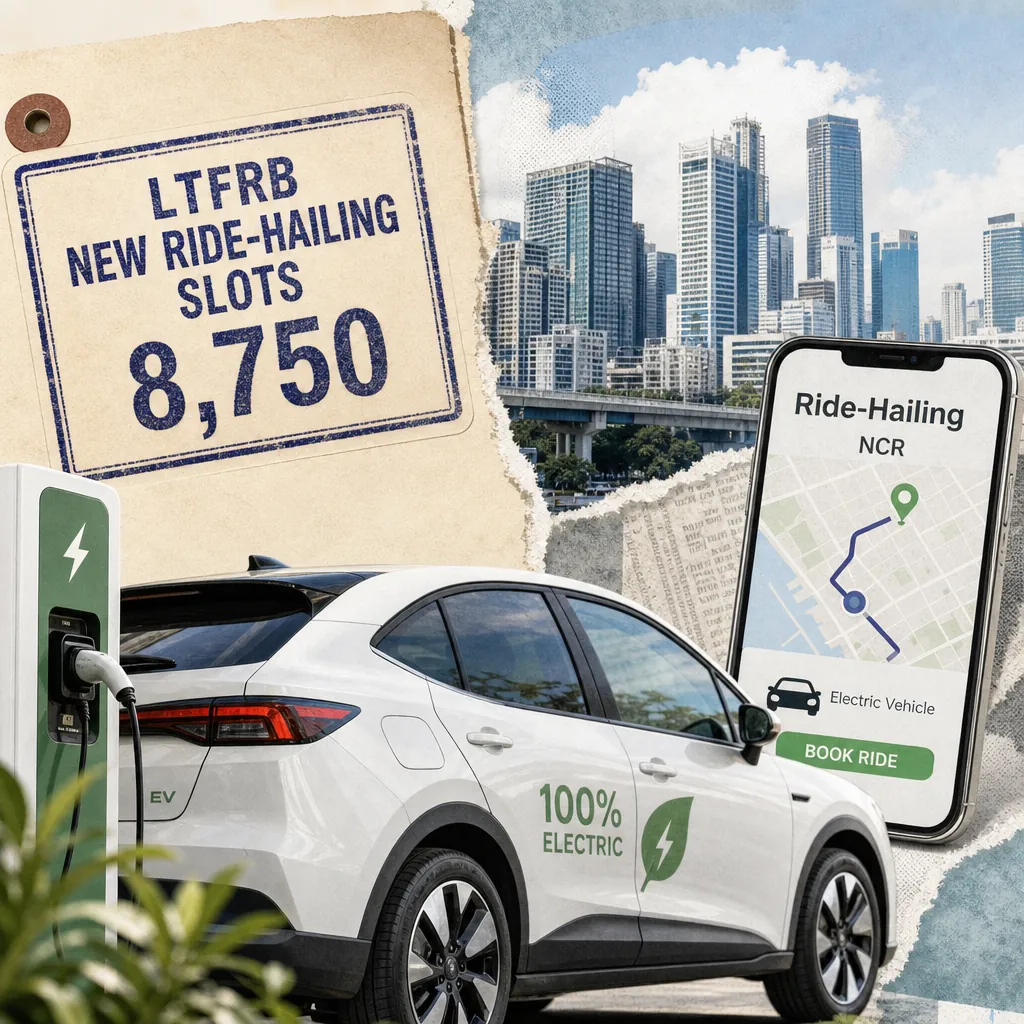
The Land Transportation Franchising and Regulatory Board (LTFRB) opened 8,750 new ride-hailing slots on Sunday, reserving all 7,500 Metro Manila slots exclusively for electric vehicles (EVs), a move that signals a firm regulatory push toward electrified public transport 141720. The announcement came alongside a coordinated industry push for extended EV incentives, new model launches from Honda and Nissan, and continued fallout from severe flooding that has disrupted transport across Luzon.
The LTFRB's Memorandum Circular 2026-084 allocates 7,500 slots for the National Capital Region, all restricted to battery electric vehicles (BEVs) and plug-in hybrid electric vehicles (PHEVs). Conventional internal combustion engine (ICE) vehicles, standard hybrids, and other technologies are explicitly barred from these slots 1720. The remaining 1,250 slots are split between the Ilocos Region (650 slots, with 325 for EVs) and the Bicol Region (600 slots, with 300 for EVs) 17. LTFRB acting Chair Greg Pua framed the decision as aligned with the government's directive toward "modern and environment-friendly public transportation" 14.
The regulatory push comes as the Electric Vehicle Association of the Philippines (EVAP) urged the government to extend tariff incentives for EV imports through 2040, arguing that sustained policy support is essential to meet the Department of Energy's (DOE) target of EVs comprising half of the country's vehicle fleet by that year 1619. EVAP Vice President Carla Buencamino, who also heads mobility infrastructure at AC Mobility Holdings Inc., said the industry welcomed Senate Bill 2270, filed by Senate President Sherwin Gatchalian, which proposes extending incentives under Republic Act 11697 (the Electric Vehicle Industry Development Act) and lowering import costs 19.
Meanwhile, the automotive market showed signs of adapting to both the electrification push and the practical realities of severe weather. Honda Cars Philippines extended its "Honda Helps" program through September, offering up to 30% discounts on parts for vehicles damaged by flooding 2128. Honda also introduced a limited-edition Click125 Smart Edition White scooter, with 20,000 units allotted to mark its 10-millionth unit production milestone 3. Nissan Philippines launched the all-new Kicks e-Power, a hybrid that uses an electric motor to drive the wheels and a gasoline engine solely to charge the battery, priced from P1.499 million 2227.
Key themes
- LTFRB reserves all 7,500 Metro Manila ride-hailing slots for electric vehicles — The regulatory board's new memorandum circular restricts the largest allocation of new transport network vehicle service (TNVS) slots to battery electric and plug-in hybrid vehicles, explicitly excluding conventional internal combustion engine cars and standard hybrids 141720. This is a decisive regulatory signal that the government intends to use franchise allocation as a lever to force electrification of ride-hailing.
- EV industry seeks tariff incentives through 2040 — The Electric Vehicle Association of the Philippines is lobbying for extended fiscal and non-fiscal incentives, arguing that the Department of Energy's targets extend to 2040 and policy support must match 1619. Senate Bill 2270, filed by Senate President Sherwin Gatchalian, would extend incentives under the Electric Vehicle Industry Development Act and lower import costs 19.
- Honda extends flood-damage support program — Honda Cars Philippines extended "Honda Helps" through September, offering up to 30% discounts on electronic and safety components for vehicles inundated by the prolonged flooding in Luzon and Metro Manila 2128. The program covers parts like the engine control unit, airbag modules, and fuse boxes — the components most vulnerable to water damage.
- Nissan launches Kicks e-Power hybrid in the Philippines — The all-new Nissan Kicks e-Power, priced from P1.499 million, uses an electric motor to drive the wheels while a 1.2-liter gasoline engine charges the battery, offering a hybrid approach that avoids range anxiety 2227. The vehicle is engineered and produced in Thailand specifically for the ASEAN market.
- Honda marks 10-millionth unit with limited-edition scooter — Honda Philippines added the Click125 Smart Edition White, a limited run of 20,000 units in Pearl Arctic White, to celebrate its production milestone 3. The scooter retains the standard Click125's 125cc liquid-cooled engine with programmed fuel injection.
- Flood defense works completed on NLEX San Simon stretch — NLEX Corp. and the Metropolitan Manila Development Authority (MMDA) completed flood-defense installations along the San Simon stretch of the North Luzon Expressway in Pampanga, including impounding works, continuous flood barriers, and high-capacity pumps 2. The MMDA deployed equipment outside its home jurisdiction to assist.
- Road safety enforcement intensifies — The Land Transportation Office (LTO) summoned a driver involved in a road rage incident in Greenhills, suspending his license for 90 days and placing his vehicle under alarm status 31. Separately, three jeepneys in Mandaue City remain impounded for using cloned license plates, awaiting LTFRB action 36.
- Transportation budget criticized as a "zombie budget" — The Department of Transportation's proposed P251.93-billion budget for 2027 was criticized as a rehash of past submissions that over-prioritizes railways at the expense of urgent maritime and road transport needs 23. The critique highlights ongoing tension between long-term infrastructure ambitions and immediate public transport requirements.
How the narratives stack
Dominant — The LTFRB's EV-only ride-hailing slots dominated the day's transport news, appearing across multiple outlets including Business Mirror, Inquirer, and United News 141720. Within the captured set, this regulatory development drew the most consistent multi-outlet coverage, with the EV industry's parallel push for extended incentives reinforcing the electrification narrative 1619. The story matters because it directly affects how ride-hailing operators must invest — forcing them toward more expensive electric vehicles — and signals the government's willingness to use franchise power to drive environmental policy.
Counter-narrative — The practical challenges of electrification and severe weather complications emerged as a counterpoint. Honda's flood-damage support program and the completion of NLEX flood-defense works highlight that the immediate transport crisis is water, not electrification 22128. The "zombie budget" critique of the Department of Transportation adds a fiscal counterweight, arguing that the government's transport priorities are misaligned with urgent needs 23. These stories suggest that while regulators push an ambitious EV agenda, the sector's immediate problems are flooding, aging infrastructure, and budget allocation.
Emerging — The geography of electrified mobility is shifting, with BusinessWorld noting that interest in electrified vehicles surged partly due to the USA-Iran war and its effect on fuel prices 2425. This suggests that external shocks — not just policy — are accelerating EV adoption. The Nissan Kicks e-Power launch and Honda's limited-edition scooter indicate that manufacturers are responding with a range of electrified options beyond pure battery EVs, including hybrids that address range anxiety 32227.
Under-covered — The LTO's investigation into two questionable computerization projects worth P1.5 billion, which were submitted to the now-defunct Independent Commission for Infrastructure, received relatively limited attention despite its significance for transport governance 34. The story involves alleged graft in the agency responsible for vehicle registration and licensing, a matter of direct relevance to every motorist. Its placement in an opinion column rather than as a news report suggests the full details have yet to be fully investigated or reported.
Platform insights
- Facebook — Community pages and automotive groups likely carried the LTFRB announcement and the Nissan Kicks launch, with users sharing the news and debating the practicality of EV-only ride-hailing slots. The flood-related stories, particularly Honda's support program and the NLEX flood defenses, would resonate with affected motorists sharing their experiences and seeking advice on damaged vehicles.
- X (formerly Twitter) — The road rage incident in Greenhills and the LTO's response generated discussion, with users sharing the video and debating appropriate penalties 31. The Gilas Pilipinas basketball losses to South Korea also drew sports-focused commentary 35. The EV slot announcement would attract policy-focused discussion, with ride-hailing drivers and operators weighing in on the cost implications.
- YouTube — The Nissan Kicks e-Power launch and the Honda Click125 Smart Edition White would likely generate review content from automotive channels. The ABS-CBN entertainment story about the action series "Coco Martin's Sigabo" indicates that entertainment content continues to draw significant viewership 7.
- Reddit — Automotive and Philippines-focused subreddits would carry discussion of the EV-only slots, with users debating the readiness of charging infrastructure and the affordability of electric vehicles for ride-hailing operators. The "vibe coding" story from Engadget, while not transport-related, suggests broader technology discussions that occasionally intersect with automotive topics 6.
Key voices and communities
- Regulatory agencies — The LTFRB, LTO, and DOE are central voices shaping the transport narrative. LTFRB acting Chair Greg Pua announced the EV-only slots, while LTO officials handled the road rage case and the computerization project investigation 143134. Their statements define the regulatory environment that ride-hailing operators and motorists must navigate.
- Electric vehicle industry associations — EVAP, represented by Vice President Carla Buencamino, is the primary industry voice advocating for extended incentives 1619. The association bridges the gap between government policy and industry capability, arguing that sustained support is needed to meet ambitious adoption targets.
- Automotive manufacturers — Honda and Nissan are active voices, with Honda extending flood support and launching a limited-edition scooter, while Nissan launched the Kicks e-Power 321222728. Their product and service decisions reflect how manufacturers are responding to both the electrification push and the practical needs of Filipino motorists.
- Transport advocacy and critique voices — Columnists and commentators, including those at Philstar and BusinessWorld, provide critical perspectives on transport policy. The "zombie budget" critique and the "outlier taipan" column on John Gokongwei Jr.'s industrial vision represent a broader conversation about transport infrastructure priorities and economic development 2330.
- Local government and enforcement agencies — The MMDA's role in NLEX flood defense and the Traffic Enforcement Agency of Mandaue City's impounding of jeepneys with cloned plates highlight the local dimension of transport governance 236. These agencies are often the first responders to transport problems and the enforcers of regulations on the ground.
Narrative streams
LTFRB opens 8,750 ride-hailing slots with EV-only Metro Manila allocation
The Land Transportation Franchising and Regulatory Board (LTFRB) announced Sunday that it has opened 8,750 new slots for transport network vehicle service (TNVS) — the franchise category covering ride-hailing services like Grab — across Metro Manila, the Ilocos Region, and the Bicol Region 141720. The largest allocation, 7,500 slots for the National Capital Region, is restricted exclusively to battery electric vehicles (BEVs) and plug-in hybrid electric vehicles (PHEVs). The memorandum circular explicitly states that "conventional internal combustion engine (ICE) vehicles, hybrid electric vehicles (HEVs) other than PHEVs, and other vehicle technologies that do not fall within the BEV or PHEV classifications shall not be eligible" 1720.
The decision reflects the government's directive to shift toward "modern and environment-friendly public transportation," according to LTFRB acting Chair Greg Pua 14. Vehicle classification will be based on registration with the Land Transportation Office (LTO) and other government standards 17. The Ilocos Region receives 650 slots with 325 reserved for EVs, while Bicol receives 600 slots with 300 for EVs 17.
This regulatory move is significant because it uses franchise allocation — the government's power to decide who can operate ride-hailing services — as a direct instrument to force electrification. Ride-hailing operators who want to expand their fleets in Metro Manila must now invest in electric or plug-in hybrid vehicles, which carry higher upfront costs than conventional cars. The policy also creates a two-tier market: existing operators with ICE vehicles can continue, but growth is reserved for those willing to transition to electric.
The read for the sector is that ride-hailing operators face a clear choice: invest in electric vehicles to capture new franchise slots, or cede growth to competitors who do. This will likely accelerate fleet electrification among major operators while potentially squeezing smaller players who cannot afford the capital outlay. The policy also signals that the government views ride-hailing as a testbed for broader transport electrification, with lessons that could extend to public buses and jeepneys.
EV industry pushes for tariff incentives through 2040
The Electric Vehicle Association of the Philippines (EVAP) is urging the government to extend tariff incentives for EV imports through 2040, arguing that the Department of Energy's (DOE) clean transport targets require matching policy support 1619. EVAP Vice President Carla Buencamino, who also serves as Mobility Infrastructure Head at AC Mobility Holdings Inc. (the Ayala group's mobility arm), said the industry welcomed Senate Bill 2270 filed by Senate President Sherwin Gatchalian 19.
The bill proposes extending the validity of fiscal and non-fiscal incentives under Republic Act 11697, also known as the Electric Vehicle Industry Development Act, which established the legal framework for EV adoption in the Philippines. The DOE's Philippine Energy Plan targets EVs to make up half of the country's vehicle fleet by 2040 and 60% by 2050 16. "The DOE's targets extend until 2040. So, for the industry, we hope that the incentives are granted until 2040 also so more people can adopt EVs," Buencamino told reporters 16.
The push for extended incentives comes at a critical moment. The LTFRB's EV-only ride-hailing slots create immediate demand for electric vehicles, but the higher cost of EVs compared to conventional cars remains a barrier. Tariff incentives — which reduce the import duties on EVs and their components — directly address this cost gap. Without them, the industry argues, the government's own adoption targets become harder to reach.
The read for the sector is that the EV industry is positioning itself for a long-term transition that depends on sustained government support. The combination of regulatory mandates (EV-only ride-hailing slots) and fiscal incentives (tariff reductions) creates a policy environment where electrification becomes economically viable. If the incentives lapse before the market reaches scale, the transition could stall. The industry's coordinated messaging — from EVAP, AC Mobility, and supportive senators — suggests a concerted effort to lock in policy support through 2040.
Honda and Nissan respond to flooding and electrification with new programs and models
Honda Cars Philippines extended its "Honda Helps" customer support program through the end of September, offering up to 30% discounts on parts for vehicles damaged by the prolonged inclement weather and flooding affecting Luzon and Metro Manila 2128. The program covers components most vulnerable to water damage: the engine control unit (ECU), throttle body, alternator, starter motor, radiator fan motor, cooling fan motor, SRS unit (airbag system), air bag module, cable reel, fuse box, accelerator pedal, meter assembly, EPS (electric power steering), seater control, and seatbelt pre-tensioner 2128.
"A vital part of providing meaningful customer service is being able to adapt to the dynamic needs of the customer," Honda said in a release. "As the inclement weather continues to affect Honda owners, the extension of this program provides practical assistance in getting these vehicles back on the road efficiently and safely, helping ease customers' burden during this time" 28.
The program addresses a real and immediate problem: flooded vehicles often suffer electrical damage that is expensive to repair. By discounting the most commonly affected parts, Honda is helping affected owners get their cars back on the road while also protecting its reputation for customer service. The extension through September acknowledges that the flooding crisis is ongoing.
Meanwhile, Nissan Philippines launched the all-new Kicks e-Power, priced from P1.499 million, at a public event in Makati City 2227. The vehicle represents Nissan's unique approach to electrification: an electric motor drives the wheels, while a 1.2-liter three-cylinder gasoline engine serves solely to charge the battery. This "series hybrid" design offers the driving experience of an electric vehicle without the range anxiety, since the gasoline engine can recharge the battery on the go 2227.
Engineered and produced in Thailand specifically for the ASEAN market, the Kicks e-Power uses a 2.06-kWh lithium-ion battery 27. Nissan Philippines President Yoshinori Kanazawa presented the vehicle at its launch 2227. The model targets buyers who want electrified mobility but are not ready for a pure battery electric vehicle, positioning it between conventional hybrids and full EVs.
Honda also introduced the Click125 Smart Edition White, a limited-edition scooter with 20,000 units allotted for sale through Honda Exclusive Shops nationwide 3. The model, finished in Pearl Arctic White, celebrates Honda's 10-millionth unit production milestone in the Philippines. It retains the standard Click125's 125cc liquid-cooled engine with Honda's Programmed Fuel Injection system 3. The company did not announce a price or specific retail start date.
The read for the sector is that manufacturers are responding to two simultaneous pressures: the immediate need to support customers affected by flooding, and the longer-term shift toward electrified mobility. Honda's flood program addresses customer loyalty and practical needs, while its limited-edition scooter maintains market presence in the two-wheeler segment. Nissan's Kicks e-Power launch expands the electrified options available to Filipino buyers, offering a middle path between conventional hybrids and full EVs. Together, these moves suggest that the Philippine market is transitioning toward electrification through multiple technology paths, not just pure battery EVs.
Flood defense and infrastructure response to severe weather
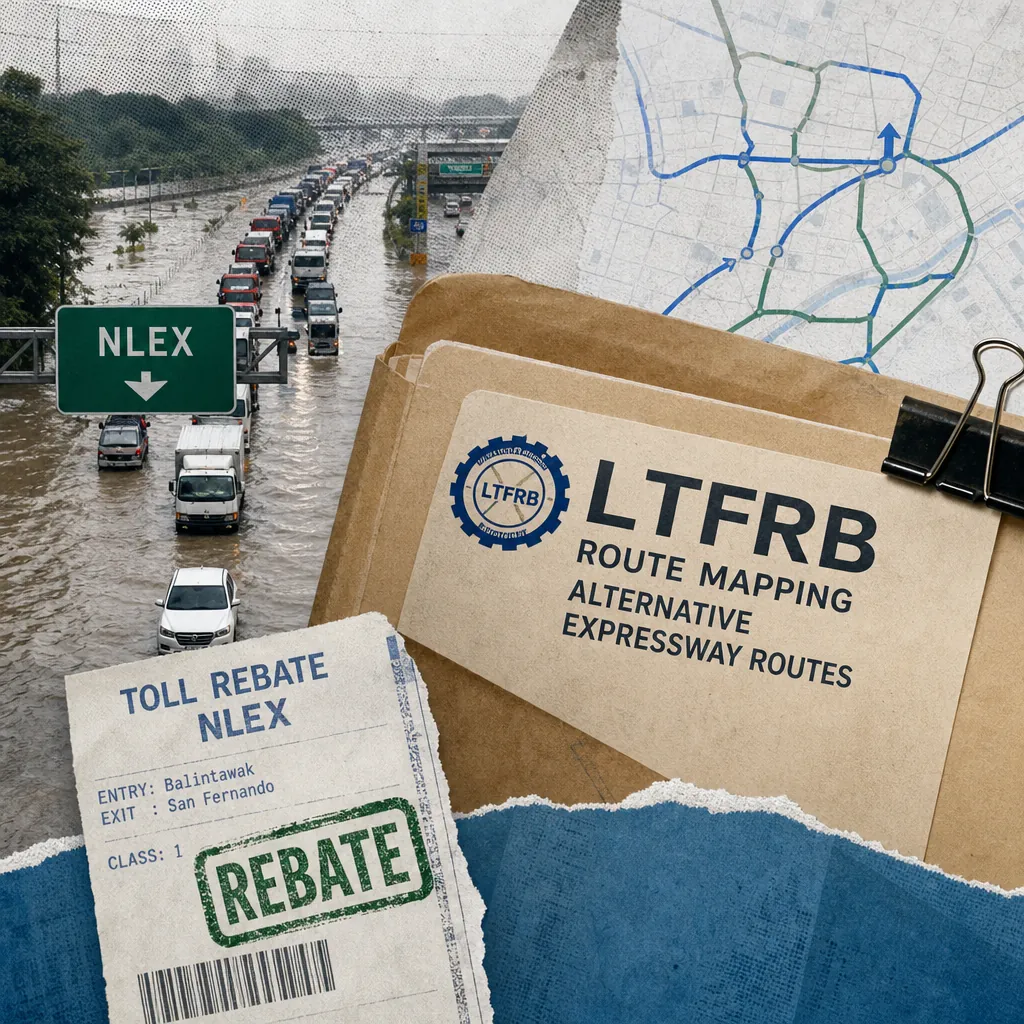
NLEX Corp. and the Metropolitan Manila Development Authority (MMDA) completed flood-defense works on the San Simon stretch of the North Luzon Expressway in Pampanga 2. The works include shoulder impounding and lining, continuous flood barrier lines along the affected stretch, and a combined fleet of high-capacity pumps 2. The MMDA sent equipment outside its home jurisdiction to assist, positioning a pump unit at the Kilometer 56 marker with its suction line running over the guardrail to draw floodwater off the carriageway 2. Crews also installed L-type interlocking flood barriers, ballasted and backed with sandbags, along with modular mesh-and-liner barrier units 2.
The completion of these works addresses a recurring problem: the NLEX San Simon stretch has been prone to flooding during heavy rains, disrupting travel between Metro Manila and northern Luzon. The MMDA's involvement is notable because the agency typically operates within Metro Manila; its deployment to Pampanga reflects the severity of the flooding problem and the need for inter-agency cooperation.
The flooding has had cascading effects on the transport sector. Honda's extended "Honda Helps" program directly responds to the number of vehicles damaged by floodwaters 2128. The prolonged inclement weather has also affected road conditions and travel safety across Luzon.
The read for the sector is that severe weather is now a recurring operational challenge for transport infrastructure and vehicle owners alike. The completion of flood-defense works on a key expressway segment is a positive step, but the broader vulnerability of the transport network to extreme weather remains. For automakers, the flooding creates both a service opportunity (repairing damaged vehicles) and a reminder that vehicle design and owner education must account for tropical weather conditions.
Road safety enforcement and governance issues surface
The Land Transportation Office (LTO) summoned a driver involved in a road rage incident along Ortigas Avenue in Greenhills, San Juan 31. The driver, recorded on video in a heated confrontation with another motorist, received a show-cause order requiring him to appear at the LTO's Intelligence and Investigation Division. His license has been suspended for 90 days, and his vehicle placed under alarm status pending investigation 31.
"Anger or any misunderstanding should not be brought to the road. Regardless of the cause, it should not escalate into aggression or any action that could endanger other motorists and road users," the LTO said 31. The agency's action reflects a broader effort to address road rage incidents, which have become more visible with the prevalence of dashboard cameras and smartphone videos.
Separately, three jeepneys impounded by the Traffic Enforcement Agency of Mandaue City (TEAM) remain in custody for using cloned or duplicate license plates 36. The vehicles, which were plying the Compostela-Liloan-Mandaue route in Cebu, were apprehended in August. TEAM head Hyll Retuya said verification showed their confirmation documents with the LTFRB had expired, meaning the units were operating without valid authorization 36. The case awaits LTFRB action.
These enforcement stories reflect ongoing governance challenges in the transport sector. The LTO's road rage response shows the agency using its disciplinary powers to address driver behavior, while the cloned plate case highlights the problem of unauthorized vehicles operating in public transport. Both cases involve the LTO and LTFRB exercising their regulatory authority, suggesting a more active enforcement posture.
The read for the sector is that regulatory enforcement is becoming more visible and more proactive. Drivers who engage in dangerous behavior face concrete consequences, including license suspension and vehicle impoundment. For ride-hailing operators and public transport providers, this means compliance with registration and franchising requirements is increasingly important. The LTO's investigation into two questionable computerization projects worth P1.5 billion adds a governance dimension, suggesting that the agency itself is also under scrutiny 34.
The geography of electrified mobility and external market forces
BusinessWorld's analysis of the Philippine automotive market noted that interest in electrified vehicles (xEVs) has surged — but not primarily because of policy or marketing 2425. The acceleration came "entirely by circumstance": the USA-Iran war and its effect on global fuel prices drove motorists toward electrified options 2425. The column draws a parallel to the 1997 film "Wag the Dog," noting that the conflict is real and its economic consequences are devastating, but the result has been increased interest in vehicles that reduce dependence on gasoline.
The analysis suggests that external shocks — geopolitical conflicts, fuel price spikes — can accelerate EV adoption faster than policy incentives alone. This is a crucial insight for the Philippine market, where fuel prices are a significant factor in vehicle operating costs. When gasoline becomes expensive or supply is uncertain, the value proposition of electrified vehicles improves dramatically.
The read for the sector is that the EV transition in the Philippines will be driven by a combination of policy (LTFRB mandates, tariff incentives) and market forces (fuel prices, geopolitical events). Manufacturers and policymakers should recognize that external events can create windows of opportunity for accelerating adoption. The challenge is sustaining momentum when fuel prices stabilize and the immediate urgency fades. The LTFRB's EV-only ride-hailing slots and the industry's push for extended incentives are attempts to create structural momentum that does not depend on external shocks.
Conversation trajectory
EV-only ride-hailing slots will reshape operator investment decisions (observation window: 3–6 months) — The LTFRB's decision to restrict new Metro Manila slots to electric vehicles will force ride-hailing operators to make significant capital decisions. Over the next quarter, expect announcements from major operators about EV fleet acquisitions, charging infrastructure partnerships, or adjustments to their service models. The actual uptake of the 7,500 slots will reveal whether operators can source sufficient EVs and whether the economics work. Watch for the LTFRB's next slot opening to see if the EV-only policy becomes the standard or an exception.
Senate Bill 2270's progress will determine the pace of EV adoption (observation window: 6–12 months) — The bill extending EV incentives through 2040 is now a key legislative priority for the industry. Its passage would provide long-term certainty for manufacturers, importers, and buyers. Its failure or delay would create a policy cliff, with incentives potentially expiring before the market reaches scale. The bill's progress through committee and floor debates will signal the government's commitment to the EV transition.
Flood season will test the durability of transport infrastructure and vehicle support programs (observation window: 1–3 months) — The completion of NLEX flood-defense works and Honda's extended support program respond to the current flooding crisis. Whether these measures hold through the remainder of the rainy season will determine their effectiveness. Additional flooding could expose gaps in the response and drive further infrastructure investment or customer support programs from other automakers.
Fuel price movements will influence EV demand independent of policy (observation window: 3–6 months) — The BusinessWorld analysis linking EV interest to the USA-Iran war highlights the role of external factors. If fuel prices remain elevated or volatile, demand for electrified vehicles — including hybrids like the Nissan Kicks e-Power — will likely stay strong. A sustained drop in fuel prices could soften this demand, making policy support more critical.
Trigger events to watch:
- LTFRB announcements on slot utilization and any additional slot openings
- Senate committee hearings and votes on Senate Bill 2270
- DOE updates on the Philippine Energy Plan and EV adoption targets
- Major ride-hailing operator announcements about EV fleet investments
- Further flooding events and their impact on transport infrastructure
- Fuel price movements and any geopolitical developments affecting oil supply
Response guidance
EV adoption messaging — Frame the LTFRB's EV-only slots and the push for extended incentives as complementary parts of a coherent transition strategy. Emphasize the total cost of ownership benefits of EVs — lower fuel and maintenance costs over time — rather than just the environmental benefits. Acknowledge the higher upfront cost honestly and point to the incentives and financing options that address it.
Flood response communication — For automakers and dealers, communicate clearly and practically about flood-damage support programs. List exactly which parts are covered, what the discount is, and how customers can access the program. Use multiple channels — social media, SMS, dealer networks — to reach affected owners. Consider creating content that helps owners assess flood damage and understand what to do before bringing their vehicle to a shop.
Regulatory compliance messaging — For ride-hailing operators and public transport providers, emphasize the importance of compliance with new regulations. The LTFRB's EV-only slots and the LTO's enforcement actions signal a more active regulatory posture. Communicate clearly about what the new rules mean for operators, what the deadlines are, and what support is available for transitioning to compliant vehicles.
Infrastructure and safety messaging — For government agencies and infrastructure operators, communicate progress on flood defenses and other resilience measures transparently. Share before-and-after information about what has been completed and what remains. Acknowledge the ongoing challenges honestly while highlighting concrete actions taken. For road safety, reinforce the message that aggressive driving has consequences, as demonstrated by the LTO's road rage enforcement.
Sensitive topics — Avoid overpromising on EV adoption timelines or understating the challenges of charging infrastructure and vehicle affordability. Do not dismiss the concerns of ride-hailing operators who face higher costs under the EV-only policy. When discussing flooding, be careful not to minimize the impact on affected communities or to claim that infrastructure improvements have fully solved the problem. Acknowledge the human and economic costs of severe weather events.
See the full picture behind today's signals.
This report draws from Media Meter's MediaWatch, our real-time monitoring engine tracking 2,470+ Philippine sources across print, broadcast, digital, and social. Explore how the platform turns raw coverage into decision-grade intelligence, then see how it's configured for teams like yours — whether you're in PR agencies, corporate comms, government, or marketing.
Want more? Browse our Report Library for sector and crisis intelligence, or request a demo and we'll have your brand set up before the call.
Want this kind of intelligence on your brand?
This brief is built on the same MediaWatch methodology that runs continuously across every brand we monitor. See your competitive landscape, Impact Score, and narrative trajectory in a 30-minute demo.