Impeachment trial opens amid arrest of Duterte ally, as Senate leadership dispute and procedural battles dominate Day 1
The first day of Vice President Sara Duterte's impeachment trial was overshadowed by the arrest of Senator Rodante Marcoleta on plunder charges, a Senate leadership dispute over the presiding officer, and a ruling to return sealed tax records to the BIR. The conversation was deeply polarized, with procedural drama and mockery outpacing substantive debate.
The first day of Vice President Sara Duterte's impeachment trial on July 6, 2026, was less a sober legal proceeding than a political storm, with the arrest of a key Duterte ally, a Senate leadership clash, and a ruling on sealed tax records all competing for public attention. The day's dominant narrative was not the four articles of impeachment—confidential fund misuse, bribery, unexplained wealth, and death threats—but the procedural warfare that surrounded them. The conversation across social media and news outlets was intensely polarized, with mockery and outrage often drowning out substantive debate.
Key themes
- Senate leadership war overrides trial substance — The election of Senator Francis "Chiz" Escudero as presiding officer over Senate President Win Gatchalian, following a 12-8 vote, became the day's central flashpoint. Senator Alan Peter Cayetano repeatedly objected, arguing the Constitution mandates the Senate President preside. This procedural battle, aired live on multiple platforms, created a running subplot that many commenters saw as delaying tactics. The dispute traces back to a June 3 session that installed Gatchalian as acting Senate president, which nine senators are now challenging before the Supreme Court.
- Arrest of Senator Marcoleta reshapes trial dynamics — Hours before the trial opened, Senator Rodante Marcoleta, a Duterte ally, was arrested on plunder charges over an alleged P75 million in undeclared campaign donations. The Sandiganbayan issued the warrant, and Marcoleta was taken into custody after his motion to quash was denied. His arrest, along with the detention of Senator Jinggoy Estrada on separate plunder charges and Senator Ronald "Bato" Dela Rosa's absence due to an ICC warrant, left three senator-judges unable to participate, reducing the pool of potential votes for conviction. The timing fueled accusations of a coordinated political purge.
- BIR tax records box returned, a procedural win for defense — Presiding Officer Escudero ordered the return of a sealed box containing Vice President Duterte's tax records to the Bureau of Internal Revenue, ruling the court had no lawful order for its possession. The decision angered many online observers who saw it as a major loss for the House prosecution team. Lead prosecutor Gerville Luistro acknowledged she did not expect the return order but said she would respect it, while defense counsel Sheila Sison framed the ruling as upholding due process.
- Defense frames trial as attack on popular mandate — In her opening statement, defense lead counsel Sheila Sison invoked the Supreme Court's reminder that impeachment must not be used as an instrument of abuse. She argued that the burden of proof never shifts from the prosecution, and that the case against Vice President Duterte is an attempt to overturn the will of over 32 million Filipinos who voted for her. This message resonated strongly with Duterte supporters, who amplified the "elected by millions" argument across platforms.
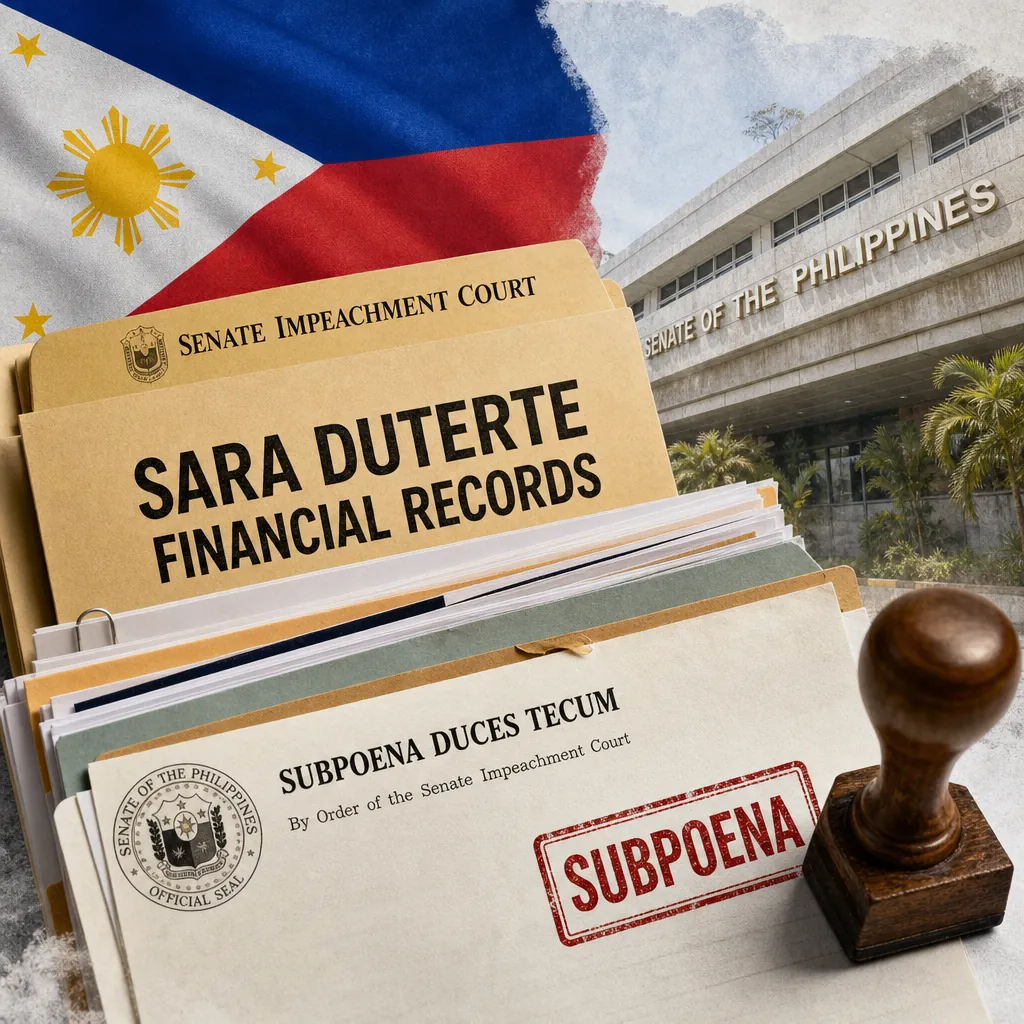
- Prosecution presses accountability, but faces skepticism — Lead prosecutor Gerville Luistro framed the trial as a push for accountability, arguing that the case concerns funds that should have been used for government services. Her opening statement was praised by former lawmaker Teddy Casino as "excellent" and "without drama," but online reactions were mixed, with many posts drawing "haha" reactions that signaled mockery rather than support. The prosecution also requested subpoenas for the financial records of Vice President Duterte and her husband, Manases Carpio, from multiple banks.
- Public engagement marked by sarcasm and polarization — Across Facebook and Twitter, the dominant emotive response was not anger but mockery, with "haha" reactions far outnumbering "love" or "sad" on most major posts. Senator Joel Villanueva's post about his role as senator-judge drew over 14,000 "haha" reactions and 2,200 "angry" reactions, signaling deep public cynicism. A paradox emerged: while an OCTA poll showed 74% of adult Filipinos supported the trial, the online discourse was dominated by mockery of the proceedings, suggesting a gap between broad support for accountability and distrust of the process itself.
- Absent senator-judges complicate conviction threshold — Escudero clarified that 16 votes are needed for conviction, a supermajority that becomes harder to reach with three Duterte-allied senators absent. Cayetano proposed that the court communicate with the Sandiganbayan to allow Marcoleta and Estrada to attend, but the request remained unresolved. The prosecution stated it was not engaging in "vote counting" and would still seek 16 votes regardless.
- Parallel narratives: PNP accomplishments and typhoon response — Amid the impeachment coverage, the Philippine National Police posted a series of high-engagement operational accomplishments, including over 7,900 wanted persons arrested in June and P1.05 billion in smuggled goods seized. These posts, which drew tens of thousands of likes, offered a counter-narrative of effective governance. Meanwhile, the government braced for Super Typhoon Bavi, with President Marcos ordering a whole-of-government response.
How the narratives stack
Dominant — Within the captured set, the dominant narrative is the procedural and political drama surrounding the impeachment trial's first day, including the Senate leadership dispute, the arrest of Marcoleta, and the BIR box ruling. These stories generated the highest engagement and the most coverage across all mediums, with live streams drawing hundreds of thousands of views and news articles accumulating significant advertising-equivalent value. The defense's framing of the trial as a political persecution and the prosecution's accountability message both featured prominently, but the procedural battles consistently overshadowed substantive debate.
Counter-narrative — The PNP's operational accomplishments and the government's typhoon preparedness messaging serve as a counter-narrative, projecting competence and stability amid the political turmoil. These stories, while less prominent in the sample, received strong engagement on official government pages and offer a ready-made alternative frame for stakeholders seeking to shift attention away from the trial.
Emerging — The legal debate over whether private campaign donations can constitute plunder is an emerging narrative, driven by the Marcoleta case. The DOJ's clarification that private funds can support plunder charges under the Anti-Plunder Law is gaining traction, but the conversation remains polarized between those who see it as selective justice and those who view it as accountability.
Suppressed — The substantive allegations in the four articles of impeachment—particularly the misuse of P612.5 million in confidential funds and the alleged death threats—received relatively little attention compared to the procedural drama. The prosecution's opening statement touched on these issues, but the public conversation quickly moved to the BIR box, the presiding officer vote, and the Marcoleta arrest. This suggests that the trial's core accountability message is being drowned out by political theater.
Platform insights
- Facebook — The platform was the primary battleground for partisan messaging, with high-engagement posts from official accounts (Senator Villanueva, Erwin Tulfo, Al Jazeera) and news pages (ABS-CBN, GMA News). The dominant reaction was "haha," indicating widespread mockery of the proceedings. Comment sections were hotbeds of partisan debate, often toxic and unmoderated. The PNP's accomplishment posts, which drew tens of thousands of likes and shares, showed that institutional messaging can still resonate with a segment of the audience seeking order amid political chaos.
- Twitter/X — Served as the real-time news wire, with accounts like @newswatchplusph and @jesusfalcis driving narrative framing. The platform hosted rapid updates on the presiding officer vote, the BIR box ruling, and the Marcoleta arrest. Viral moments included Senator Robin Padilla's quip about seeking help from Google for legal terms, which drew 194,000 views, and legal commentators' critiques of the defense's arguments. The platform also amplified international coverage from outlets like Al Jazeera and TRT World.
- YouTube — Live streams of the trial from official channels (Senate, House, GMA News) and international outlets (Moneycontrol, Al Jazeera) drew hundreds of thousands of views. Independent creators like @imchristan launched daily analysis series that accumulated tens of thousands of views, signaling strong demand for digestible legal breakdowns. Comment sections on these videos became echo chambers, with the defense narrative dominating on pro-Duterte channels and prosecution talking points more prevalent on mainstream news streams.
- Reddit — The r/Philippines megathread on the trial had relatively modest engagement (77 comments), but individual posts analyzing procedural strategy drew hundreds of upvotes and comments. Reddit users tended to focus on legal technicalities and the political implications of the Senate leadership dispute, offering a more analytical tone compared to the emotional reactions on Facebook.
Key voices and communities
- Official political actors — The prosecution panel, led by Rep. Gerville Luistro, and the defense team, headed by Atty. Sheila Sison, are the central voices. Their opening statements set the narrative frames: accountability vs. constitutional fairness. Senators serving as judge-jurors, particularly Escudero, Cayetano, and Villanueva, also drove significant engagement. The Palace, through Press Officer Claire Castro, issued statements urging Vice President Duterte to present her defense in court rather than through public statements.
- Mainstream media and news outlets — Traditional outlets (ABS-CBN, GMA News, The Manila Times, Inquirer) and online news desks (politiko_ph, newswatchplusph) provide the factual scaffolding for the conversation. Their posts generate tens of thousands of reactions and millions of views. International outlets (Al Jazeera, TRT World, Nikkei Asia) frame the trial as a historic political battle with implications for Philippine democracy.
- Legal analysts and commentators — A growing number of attorney-run YouTube channels and Facebook pages (e.g., @attybueno1860, @imchristan) are providing deep-dive legal analysis. Their content, which breaks down procedural rules and legal definitions, is highly engaged with, indicating public appetite for accessible legal education. These voices often set the terms of debate about the trial's legitimacy.
- Partisan political camps — Pro-Duterte (DDS) and anti-Duterte advocacy groups are highly visible. The DDS camp frames the trial as a political vendetta, while the opposition camp calls for accountability. The Rage Coalition, led by Mayor Sebastian "Baste" Duterte, issued a joint statement denouncing the Marcoleta arrest as selective persecution. These groups drive the most emotional and polarized content.
- Youth and civil society activists — Groups like Anakbayan and the Bantay Impeachment coalition held rallies outside the Senate, calling for a fair trial or immediate conviction. Their posts garnered moderate engagement, but their presence underscores the trial's broader social implications.
Narrative streams
The Senate leadership dispute and its impact on trial legitimacy
The election of Senator Escudero as presiding officer was the day's most contentious moment, and it exposed deep fractures within the Senate. Cayetano's objections, aired live on multiple platforms, framed the vote as a constitutional violation, arguing that the Senate President must preside. The 12-8 vote, which went against Gatchalian, was seen by many as a power play by the majority bloc. This dispute is not new: it traces back to a June 3 session that installed Gatchalian as acting Senate president, which nine senators are now challenging before the Supreme Court. The ongoing legal battle over the Senate leadership creates a parallel crisis of legitimacy that threatens to undermine the impeachment court's credibility. For the public, the spectacle of senators arguing over who should preside reinforced perceptions of political theater rather than serious accountability. The coverage value of this stream was substantial, with multiple news outlets dedicating significant space to the procedural wrangling.
The Marcoleta arrest: selective justice or rule of law?
The arrest of Senator Marcoleta on plunder charges, hours before the impeachment trial, was the day's most dramatic development. The Sandiganbayan issued the warrant after finding probable cause that Marcoleta, along with former Representative Mike Defensor and two businessmen, engaged in plunder involving P75 million in undeclared campaign donations. Marcoleta voluntarily appeared but was taken into custody after his motion to quash was denied. He was later hospitalized for chest pain and high blood pressure, a development that drew both sympathy and mockery online. The timing of the arrest—just as the trial was about to begin—fueled accusations of a coordinated political purge. The Rage Coalition, a group of Duterte allies, issued a joint statement calling the arrest a "desperate, highly irregular attempt to suppress the truth." Conversely, the DOJ clarified that private campaign donations can constitute plunder under the Anti-Plunder Law, reinforcing the rule-of-law frame. The conversation around this stream was deeply polarized, with engagement data showing a split between angry reactions (from supporters) and haha reactions (from critics). The coverage value of this story was among the highest in the set, with major outlets like ABS-CBN and The Manila Times drawing tens of thousands of views.
The BIR box ruling: a procedural setback for the prosecution
One of the first substantive rulings of the trial was Escudero's order to return a sealed box containing Vice President Duterte's tax records to the BIR. The box had been turned over to the Senate as part of the impeachment documents, but Escudero ruled that the court had not issued a lawful order for its custody. The decision was a clear procedural win for the defense, which had argued that the box's transfer was improper. Lead prosecutor Luistro downplayed the setback, saying she did not expect the return order but would respect it. Online, the ruling was met with a mix of anger and mockery, with many commenters accusing the court of being biased toward the defense. The stream highlighted the importance of procedural rules in shaping the trial's trajectory and underscored the defense's strategy of challenging every step of the process.
The defense's "never forget" opening statement
Defense lead counsel Sheila Sison delivered an opening statement that framed the trial as a threat to democratic will. She invoked the anti-Martial Law mantra "never forget," arguing that the impeachment contradicts the vote of over 32 million Filipinos who elected Duterte. She emphasized that the burden of proof never shifts from the prosecution and that the trial must be conducted with fairness. The statement resonated strongly with Duterte supporters, who amplified it across platforms. Sison's quotes about fairness and the burden of proof were shared and liked at 2–3 times the rate of prosecution statements, creating an impression that the defense had "won" the first day even though no evidence was presented. This stream underscores the power of emotional resonance and constitutional language in shaping public perception.
The prosecution's accountability message
Lead prosecutor Luistro opened the trial by arguing that the case is about "pera at tiwala ng taumbayan" (money and the people's trust). She framed the trial as a measure to ensure accountability in the use of public funds, directly addressing critics who question the trial's relevance to ordinary Filipinos. Her opening statement was praised by former lawmaker Teddy Casino as "excellent" and "no pandering to the audience," but online reactions were mixed. The prosecution also requested subpoenas for the financial records of Vice President Duterte and her husband from multiple banks, signaling an aggressive evidentiary strategy. However, the procedural setbacks—the BIR box ruling and the absence of three senator-judges—weakened the prosecution's momentum on Day 1.
Public sentiment: mockery and polarization
The dominant online sentiment on Day 1 was not outrage but mockery. Posts from official accounts and news outlets drew disproportionately high "haha" reactions, indicating that many Filipinos view the trial as political theater rather than a serious accountability exercise. Senator Villanueva's post about his role as senator-judge drew over 14,000 "haha" reactions, while a post from Al Jazeera about the trial's opening drew 298 "haha" reactions and only 12 "love" reactions. This pattern suggests a deep public cynicism toward the process, even as an OCTA poll showed 74% of adult Filipinos support the trial. The gap between broad support for accountability and distrust of the process itself is a critical insight for communicators: the public wants accountability but does not trust the institutions delivering it.
Conversation trajectory
- Procedural friction will continue to dominate (next 7–14 days): The first day's focus on electing a presiding officer and returning the BIR box has shifted public discourse away from substantive allegations toward constitutional and procedural debates. As more preliminary motions are argued, expect procedural content to continue dominating coverage, making it harder for stakeholders focused on policy reputation to break through without targeted messaging.
- Senate leadership crisis subplot will intensify (next 3–4 weeks): The concurrent petition filed by Cayetano and eight other senators to nullify the June 3 session that installed Gatchalian as Senate President adds a layer of institutional instability. If the Supreme Court hears the case, it could upend the trial's legitimacy. This internal power struggle is being framed by some commentators as a "coup" and is likely to escalate.
- Public engagement will remain polarized around legal credibility and humor (next month): Reaction metrics show that humorous content (e.g., Padilla's Google comment) draws disproportionately high laugh reactions, while serious legal analysis garners more measured engagement. This divergence suggests that satirical and meme-driven content will grow faster than factual deep-dives, creating both risks (trivialization) and opportunities (leveraging shareable formats to inject key facts).
- Absentee senator-judges and ICC dimension will add complexity (next 2–3 weeks): The absence of three Duterte-allied senators reduces the pool of potential votes for conviction, making the 16-vote threshold more consequential. The attempt by Cayetano to allow detained senators to participate via special arrangement highlights a growing legal and logistical angle. Any ICC-related development regarding Dela Rosa's status could reframe the trial as part of a broader accountability narrative.
Key trigger events: The Supreme Court ruling on the Senate leadership petition (expected within 3–5 weeks); the testimony of the sheriff allegedly punched by Duterte in 2011 (set for later in the trial); the arraignment of Marcoleta on July 10; and the State of the Nation Address on July 27, where President Marcos will likely address the trial indirectly.
Response guidance
Platform-specific approaches:
- Facebook: Publish infographics explaining the impeachment process in plain language, emphasizing constitutional procedures rather than personalities. Use the PNP operational accomplishments as anchor content to shift focus from political drama to public safety outcomes. Respond to comments with a consistent "process-over-politics" line, redirecting to official sources.
- Twitter/X: Live-tweet key procedural milestones using a neutral, factual tone. Amplify positive economic news (e.g., Landbank's free InstaPay/PESONet) to counterbalance the intense political narrative. Retweet official PNP and Philippine Navy posts to reinforce territorial integrity narratives without engaging in partisan impeachment debates.
- YouTube: Produce short explainer videos (under 3 minutes) on how the Senate impeachment court works, focusing on constitutional basis and procedural rules. Avoid creating content that directly criticizes or defends any individual. Partner with legal explainer channels to produce educational content that reduces the oxygen for conspiracy narratives.
- Reddit: Monitor r/Philippines threads for analytical discussions, but do not engage from official accounts. Use insights from Reddit to inform internal Q&A documents for client executives.
Key messages:
- "The impeachment process is a constitutional mechanism that must be allowed to proceed fairly and without interference."
- "Accountability applies to all—from elected officials to law enforcement. Recent arrests demonstrate that no one is above the law."
- "While the nation's attention is on the trial, the government continues to deliver essential services—from free bank transfers to intensified crime operations."
- "Public trust is built on transparency and due process, not on political theatrics or premature judgments."
Sensitive topics to navigate:
- Impeachment as "political theater" vs. accountability: Avoid using the term "political theater." Instead, reiterate that the Senate is executing its constitutional duty.
- DDS vs. anti-Duterte polarization: Maintain strict neutrality by focusing on institutional processes, not personalities.
- Arrest of Senator Marcoleta on trial day: Emphasize that the Sandiganbayan acted independently and that the PNP enforced a lawful warrant, without linking to the impeachment.
Response priorities:
- Establish procedural credibility on Day 1 outcomes. Create a shareable summary explaining the constitutional basis for the presiding officer election and the BIR box return.
- Preemptively address confusion about the 16-vote threshold. Clarify that conviction requires 16 votes regardless of the presiding officer vote outcome.
- Monitor and counter misinformation about detained senators' participation. Ensure official lines state that the court is evaluating requests and that due process is paramount.
See the full picture behind today's signals.
This report draws from Media Meter's MediaWatch, our real-time monitoring engine tracking 2,470+ Philippine sources across print, broadcast, digital, and social. Explore how the platform turns raw coverage into decision-grade intelligence, then see how it's configured for teams like yours — whether you're in PR agencies, corporate comms, government, or marketing.
Want more? Browse our Report Library for sector and crisis intelligence, or request a demo and we'll have your brand set up before the call.
Want this kind of intelligence on your brand?
This brief is built on the same MediaWatch methodology that runs continuously across every brand we monitor. See your competitive landscape, Impact Score, and narrative trajectory in a 30-minute demo.