Monsoon floods paralyze Luzon, damage nears P4B
Severe southwest monsoon rains have caused widespread flooding across Central Luzon and Metro Manila, with damage nearing P4 billion and over four million people affected. The flooding has triggered public anger over government response and infrastructure, while businesses and government agencies respond to the crisis.
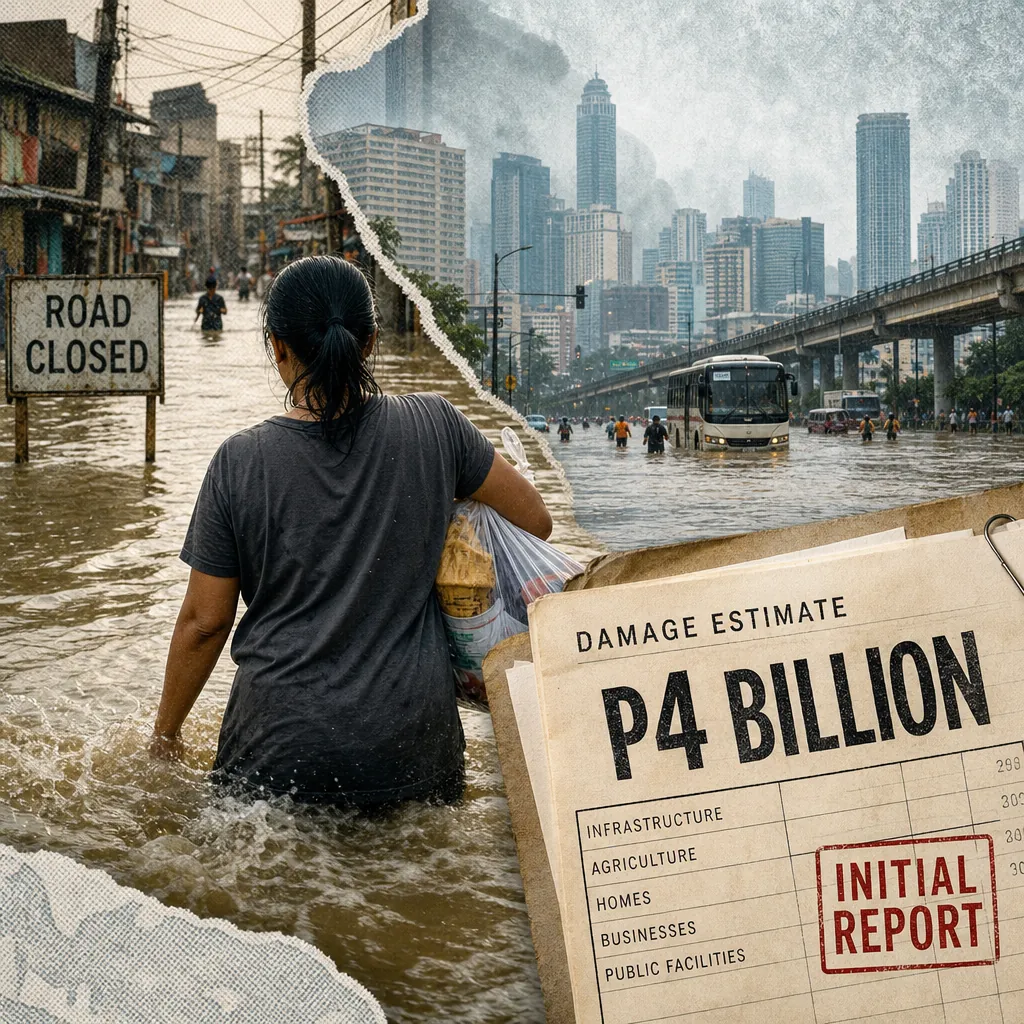
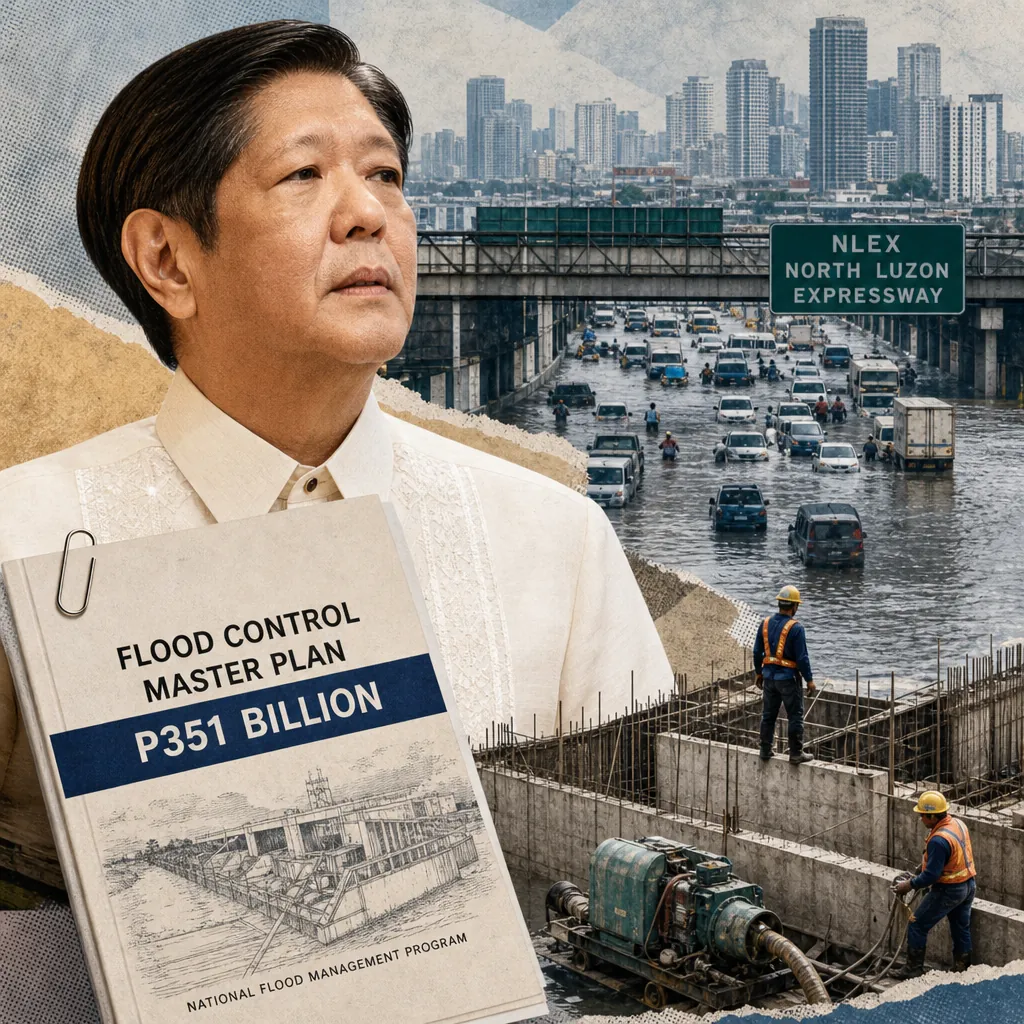
The southwest monsoon, known locally as Habagat, has submerged much of Central Luzon and parts of Metro Manila, with damage nearing P4 billion and more than four million people affected, according to the Office of Civil Defense. 83 The flooding has paralyzed the North Luzon Expressway (NLEX), forced class suspensions, and displaced thousands of families, while triggering public anger over what many see as inadequate government response and long-standing infrastructure failures. 87
The scale of the disaster became clear on Friday as the Philippine Atmospheric, Geophysical and Astronomical Services Administration (PAGASA) issued orange rainfall warnings — the second-highest alert level, indicating flooding is threatening — for Bataan, parts of Zambales, Batangas, Cavite, and Pampanga, with yellow warnings covering Metro Manila and surrounding provinces. 11 14 The weather bureau forecast 100 to 200 millimeters of rain over Zambales and Bataan through Saturday afternoon, with similar amounts expected over Occidental Mindoro the following day. 37
The human and economic toll is mounting. The Office of Civil Defense reported P3.89 billion in damage to agriculture and infrastructure across Bataan, Bulacan, Nueva Ecija, Pampanga, Tarlac, and Zambales, with agricultural losses alone reaching P1.88 billion and affecting 33,762 farmers and fisherfolk. 83 Ninety local government units have declared a state of calamity, a formal step that unlocks emergency funds and accelerates relief efforts. 83 In Laguna, 29 lakeshore barangays remain flooded, affecting communities from San Pedro to Paete. 36
Public frustration has boiled over into protest and cultural expression. Rappers have launched a "Baha Rap Challenge," using music to slam government corruption and demand accountability for the recurring floods. 15 Columnists have decried the government's response as "helpless, unresponsive and insensitive," pointing to what they describe as a pattern of neglect and mismanagement. 84 The flooding has also exposed the fragility of critical infrastructure, with the NLEX — a major artery connecting Metro Manila to Central and Northern Luzon — reduced to two lanes in some sections as floodwaters recede. 49
Key themes
- Flood damage in Central Luzon nears P4 billion, affecting over 4 million people — The Office of Civil Defense reported P3.89 billion in damage to agriculture and infrastructure across six provinces, with agricultural losses at P1.88 billion affecting 33,762 farmers and fisherfolk. 83
- Orange rainfall warnings remain in effect as monsoon persists — PAGASA forecast 100 to 200 millimeters of rain over Zambales and Bataan through Saturday, with heavy rain expected to continue over parts of Luzon until Monday. 37 11
- NLEX flooding disrupts critical transport artery — Flooding at the San Simon, Pampanga section of the North Luzon Expressway has caused gridlock, with the Metropolitan Manila Development Authority deploying mobile pumps and flood barriers to ease congestion. 89 49
- Public anger grows over government response and infrastructure failures — Columnists and citizens have criticized the government's handling of the crisis, with some questioning why people lined up at flooded NLEX sections and others calling for long-term solutions like dredging Laguna de Bay. 84 87 36
- Businesses and government agencies respond with relief and recovery efforts — Globe Telecom restored services disrupted by the monsoon, Honda extended its flood-assistance program for affected vehicles, and the MMDA deployed mobile pumping stations to NLEX. 29 45 89
- Flooding exposes governance and infrastructure gaps — Editorials and opinion pieces have linked the flooding to deeper issues of corruption, poor urban planning, and inadequate flood control, with some pointing to the flood control corruption scandal as evidence of systemic failure. 78 84
- Cultural and community responses reflect public sentiment — Rappers launched the "Baha Rap Challenge" to voice frustration over corruption, while social media personalities like Ivana Alawi shared their relief efforts and earnings to demonstrate transparency. 15 81
- Government announces 30-day resolution of housing complaints — The Department of Human Settlements and Urban Development ordered the resolution of all pending homeowner and homebuyer complaints within 30 days, prioritizing regions affected by the flooding. 35
How the narratives stack
Dominant — The catastrophic flooding across Central Luzon and Metro Manila dominates the day's coverage, with damage nearing P4 billion and over four million people affected. 83 The story is covered across multiple outlets and formats, from news reports on the damage toll to opinion pieces criticizing government response. The flooding has become the central lens through which other issues — infrastructure, governance, corruption — are being examined.
Counter-narrative — Some voices push back against what they see as unfair blame on specific projects or individuals. One column defends San Miguel Corp. chairman Ramon S. Ang, who is "almost always gets blamed for Bulacan's flooding" over the construction of a P735-billion airport, arguing that the town of Bulakan has always been prone to flooding given its geography. 92 This narrative seeks to complicate the simple story of corporate or government culpability.
Emerging — The flooding is fueling a broader conversation about long-term solutions, including dredging Laguna de Bay, massive drainage rehabilitation, and the need for a unified flood mitigation strategy. 36 65 Laguna Governor Sol Aragones is pushing for these measures, while Bulacan Governor Daniel Fernando has called for agencies to determine the causes of persistent flooding in five areas. 65 This emerging narrative shifts the focus from immediate relief to systemic prevention.
Under-covered — The story of the two Filipino seafarers killed in the Strait of Hormuz received relatively little attention amid the flood coverage, despite President Ferdinand Marcos Jr. expressing condolences and directing government assistance to their families. 22 The incident highlights the risks faced by Filipino maritime workers, a significant source of overseas remittances, but has been overshadowed by the domestic disaster.
Platform insights
- Facebook — Facebook served as the primary platform for both official updates and public expression. The "NO to Pax Silica" network used Facebook to document its launch and amplify its message. 4 Social media personality Ivana Alawi posted videos on her Facebook page showing her relief efforts in flooded Pampanga and disclosing her earnings from content creation to demonstrate transparency. 81 The platform also hosted the "Baha Rap Challenge," with rapper KASSA posting her song "BAHA" to criticize government corruption. 15
- X (formerly Twitter) — While specific engagement figures are not available in the captured material, X serves as a real-time hub for weather updates, with PAGASA advisories and news outlets sharing rainfall warnings and flood updates. The platform's character limit suits the rapid dissemination of alerts and official statements.
- YouTube — Video content plays a significant role in the flood narrative. GMA News' "24 Oras" report on the student who faked his kidnapping was shared as video content, 46 and the "Baha Rap Challenge" songs are distributed as music videos. YouTube serves as the archival platform for television news reports and user-generated content.
- Reddit — No significant Reddit activity was captured in the monitoring data for this period. The platform's role in Philippine disaster conversations is typically limited to discussion threads in local subreddits, but no notable posts were identified in the captured set.
Key voices and communities
- Government agencies and officials — PAGASA provides the authoritative weather forecasts and warnings that drive public awareness. 37 The Office of Civil Defense reports on damage and affected populations. 83 The MMDA is actively deploying pumps and barriers to NLEX. 89 President Marcos has directed assistance to affected families, including the seafarers' families. 22 These voices frame the official response and set the parameters of the disaster narrative.
- Local government officials — Governors and mayors are emerging as key voices pushing for long-term solutions. Laguna Governor Sol Aragones is advocating for dredging Laguna de Bay and massive drainage rehabilitation. 36 Bulacan Governor Daniel Fernando has called for a unified flood mitigation strategy. 65 These officials are positioned between national agencies and affected communities, often expressing frustration with the pace of national government action.
- Affected communities and citizens — Residents of flooded areas, including those in San Simon, Pampanga, and lakeshore barangays in Laguna, are the human face of the disaster. Their experiences — wading through floodwaters, navigating impassable roads, and seeking evacuation — ground the coverage in lived reality. 49 89 Their anger and frustration are captured in opinion pieces and protest actions. 87
- Media commentators and columnists — Opinion writers at major outlets like Philstar and the Manila Times are shaping the narrative around government accountability and systemic failures. Columns like "Flooding and fractured governance" and "Unfathomable" articulate public anger and demand explanations. 84 87 These voices frame the flooding not as a natural disaster but as a failure of governance and infrastructure.
- Cultural figures and influencers — Rappers, social media personalities, and celebrities are using their platforms to express public sentiment and demonstrate solidarity. The "Baha Rap Challenge" turns flood frustration into art, 15 while Ivana Alawi's transparency about her relief efforts and earnings addresses questions about influencer charity. 81 Miss Universe Philippines 2026 Beatrice Millan Windorski joined the Pax Silica opposition, lending celebrity visibility to that cause. 4
Narrative streams
Flood damage in Central Luzon nears P4 billion, affecting over 4 million people
The Office of Civil Defense reported that severe flooding in Central Luzon has caused P3.89 billion in damage to agriculture and infrastructure across Bataan, Bulacan, Nueva Ecija, Pampanga, Tarlac, and Zambales. 83 Agricultural damage alone reached P1.88 billion, affecting 33,762 farmers and fisherfolk. 83 More than four million people have been affected by the calamity, which has also triggered landslides and toppled trees and infrastructure. 83 Ninety local government units have declared a state of calamity, a formal designation that allows them to access emergency funds and expedite relief and rehabilitation efforts. 83
The damage figures are expected to rise as floodwaters recede and assessments continue. The Office of Civil Defense's count covers only Central Luzon; damage in other affected regions, including Metro Manila and CALABARZON, has not been fully tallied. The agricultural losses are particularly significant given the region's role as a major food-producing area for the country.
Read for the sector: The flooding will strain government finances already under pressure from debt servicing, which former Bangko Sentral ng Pilipinas Governor Benjamin Diokno said now consumes 15 percent of the national budget in interest payments alone. 78 Reconstruction and relief costs will compete with other spending priorities, potentially delaying infrastructure projects and social programs.
NLEX flooding disrupts critical transport artery, prompting emergency response
The North Luzon Expressway, a vital link between Metro Manila and Central and Northern Luzon, has been severely disrupted by flooding at the San Simon, Pampanga section. 49 The Metropolitan Manila Development Authority (MMDA) has deployed mobile pumps and L-shaped barriers since Aug. 31 to address gridlock caused by impassable sections. 89 MMDA general manager Nicolas Torre III said the mobile trucks have the capacity to pump one cubic meter per second from the roads. 89
Flooding has eased somewhat, with traffic moving continuously but slowly as only two lanes remain open. 49 NLEX personnel have installed rapid flood barriers to prevent floodwater from entering the expressway, and truck drivers and motorists have noticed improvement compared with the past few days when traffic was barely moving. 49 However, water levels rose again at the San Simon Interchange after heavy rains, underscoring the ongoing threat. 49
The NLEX disruption has broader economic implications. The expressway is a major freight corridor, and prolonged closure or slowdown affects the movement of goods between Metro Manila and the agricultural and industrial centers of Central and Northern Luzon. The flooding also stranded motorists and forced some to wade through floodwaters, creating dangerous conditions. 89
Read for the sector: The NLEX flooding highlights the vulnerability of critical infrastructure to climate-related events. Tollway operators and regulators face pressure to invest in flood resilience, while the government's response — deploying pumps and barriers — is a stopgap measure rather than a permanent solution. The Toll Regulatory Board, which oversees tollway investments and rates, will come under scrutiny for whether it is ensuring that infrastructure is built to withstand extreme weather. 39
Public anger grows over government response and infrastructure failures
The flooding has ignited public anger over what many perceive as inadequate government response and long-standing infrastructure failures. Columnists have been scathing in their criticism. One Philstar opinion piece, titled "Unfathomable," questioned why the government appears "helpless, unresponsive and insensitive" as heavy rains overwhelm existing flood defenses. 87 The piece noted that "much of Central Luzon remains submerged," that "the NLEX remains clogged," and that "thousands of families remain in evacuation centers, dependent on food aid." 87
Another column, "Flooding and fractured governance," criticized the government's response, including a statement by presidential spokesman Claire Castro who "questioned why people continued to line up at the flooded NLEX San Simon interchange, even though they already knew flooding was occurring." 84 The column also noted that Public Works Secretary Dizon called for deeper waterways and large detention basins while warning against theft of pumping station components. 84
The anger extends to the political sphere. Economists have warned that the country's growing borrowings will soon outpace the education budget, with former central bank governor Benjamin Diokno saying debt servicing now eats up 15 percent of the national budget in interest payments alone. 78 The flood control corruption scandal — in which former Public Works chief Manuel Bonoan pleaded not guilty to graft charges over alleged kickbacks from flood control projects — is cited as feeding the "debt addiction." 61 78
Read for the sector: The public anger over flooding is eroding trust in government institutions and fueling demands for accountability. For communicators in the public sector, the crisis demands transparent, timely, and empathetic communication. For the private sector, the flooding highlights the risks of operating in areas with inadequate infrastructure and the importance of demonstrating corporate responsibility in disaster response.
Rappers and cultural figures channel flood frustration into art and activism
The flooding has inspired cultural expression that channels public frustration into art. Rappers have launched the "Baha Rap Challenge," using music to slam government corruption and demand accountability. 15 KASSA started the challenge with her song "BAHA," featuring Poison 13 and Onad, in which she criticized government corruption and its impact on ordinary Filipinos. 15 The song's lyrics highlight the suffering caused by greed and government neglect: "Ayan na ang ulan, tumakbo na sa kawalan, lumangoy sa kasakiman, lubog sa kapabayaan" (Here comes the rain, run to nowhere, swim in greed, sink in neglect). 15
The challenge reflects a broader cultural response to the flooding. Social media personality Ivana Alawi posted videos on her Facebook page showing her relief efforts in flooded Pampanga and disclosing her earnings from content creation to demonstrate transparency. 81 Alawi showed receipts for her relief spending, addressing questions about her motives and the sustainability of influencer-led charity. 81
Read for the sector: The cultural response to the flooding demonstrates the power of art and social media to shape public discourse. For brands and organizations, this underscores the importance of authentic engagement with social issues. Influencers and artists are becoming significant voices in disaster response and advocacy, and their audiences expect transparency and genuine commitment.
Government announces 30-day resolution of housing complaints amid flood crisis
Amid the flooding crisis, the Department of Human Settlements and Urban Development (DHSUD) has ordered the resolution of all pending complaints before the agency within 30 days. 35 Secretary Jose Ramon Aliling said the concerns of homebuyers "must not be left lingering — especially those from homebuyers who have poured their blood, sweat, and hard-earned savings into building their own homes." 35 The department has identified three priority regions for immediate action: CALABARZON, the National Capital Region, and Central Luzon — all areas affected by the flooding. 35
The directive comes as the flooding has likely exacerbated housing concerns, with many homes damaged or destroyed. The DHSUD's move signals an awareness that the crisis extends beyond immediate relief to longer-term issues of housing security and consumer protection.
Read for the sector: The DHSUD's 30-day directive signals a more proactive approach to consumer protection in the housing sector. For developers and real estate firms, this means greater scrutiny of their practices and faster resolution of disputes. The flooding also highlights the importance of building resilient housing that can withstand extreme weather events.
Businesses respond to flooding with relief and recovery efforts
Several businesses have stepped up their response to the flooding. Globe Telecom said it has fully restored mobile and broadband services disrupted by the southwest monsoon, with technical teams remaining on the ground to monitor network performance. 29 The company reported that mobile services were disrupted in nine municipalities in Metro Manila and two in Rizal, while broadband outages were reported in seven municipalities and cities in Metro Manila. 29 Globe is also providing assistance to affected customers in Bulacan, Pampanga, Bataan, Zambales, Pangasinan, La Union, Benguet, and Mountain Province. 29
Honda Cars Philippines extended its "Honda Helps" customer support initiative until September 30, offering up to 30 percent off on parts for flood-damaged vehicles. 45 The program was initially scheduled to end on August 31 but was extended because "the weather has not improved much." 45 The initiative assists Honda owners whose vehicles were affected by flooding in Metro Manila and parts of Luzon. 45
Read for the sector: Corporate disaster response is becoming an expected part of business operations in the Philippines. Companies that respond quickly and effectively to disasters can build goodwill and customer loyalty, while those that appear indifferent risk reputational damage. The flooding also highlights the importance of business continuity planning, as companies like Globe and Honda work to maintain services and support customers during extended disruptions.
Flooding exposes governance and infrastructure gaps, fueling calls for systemic solutions
The flooding has exposed deep governance and infrastructure gaps, fueling calls for systemic solutions rather than piecemeal responses. Laguna Governor Sol Aragones is pushing for the dredging of Laguna de Bay and the massive rehabilitation of drainage systems in the province as long-term solutions to flooding. 36 Aragones said the provincial government is still awaiting funding from the national government to implement her plan to improve and connect drainage systems across Laguna. 36
Bulacan Governor Daniel Fernando has called on national government agencies and local government units to determine the causes of persistent flooding in five areas in the province. 65 Provincial Disaster Risk Reduction and Management Office Head Manuel Lukban Jr. presented data showing flooding in specific barangays in Malolos, Guiguinto, Balagtas, Pandi, and Saluysoy. 65 Fernando stressed the need for a unified and sustained flood mitigation strategy. 65
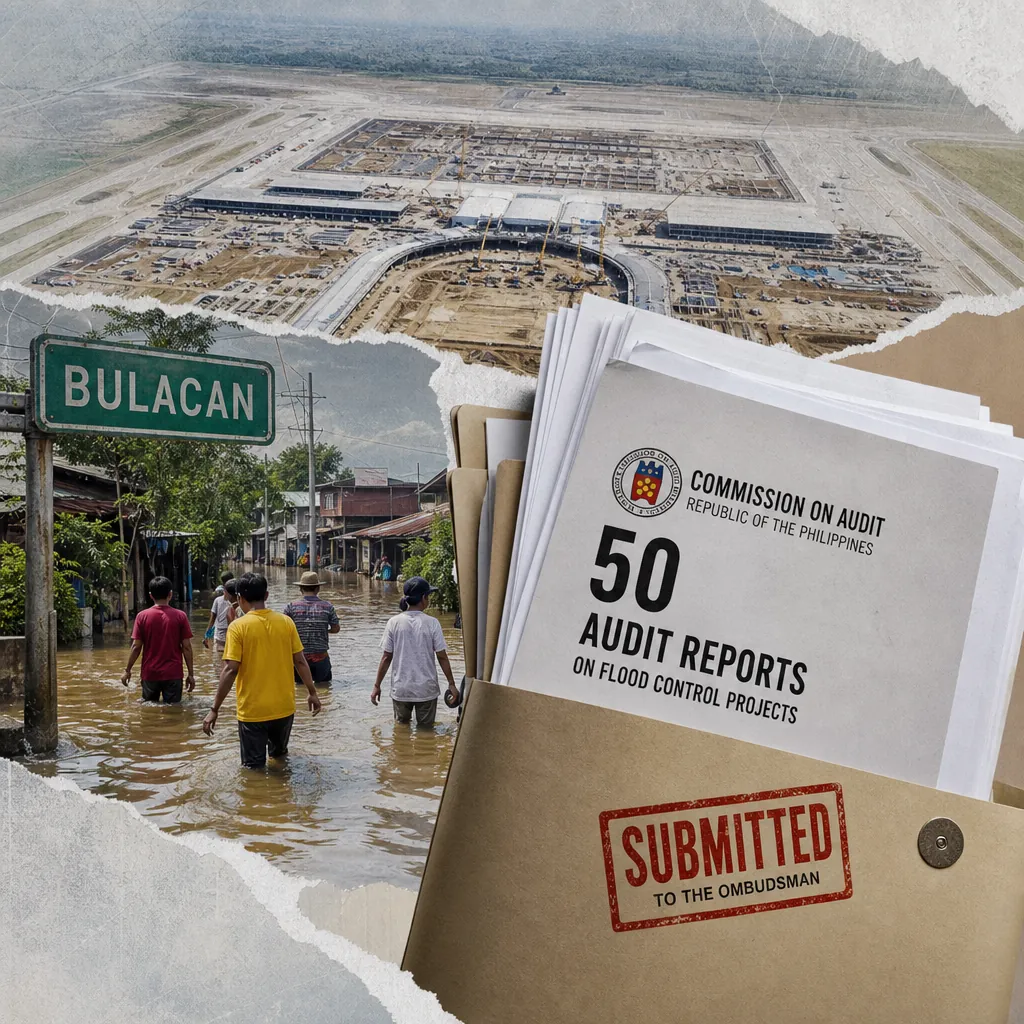
The flooding has also reignited debates about specific projects. One column defended San Miguel Corp. chairman Ramon S. Ang, who is "almost always gets blamed for Bulacan's flooding" over the construction of a P735-billion airport on a 2,500-hectare area of Bulakan town. 92 The column argued that Bulakan has always been prone to flooding given its geography — the town is half a meter to four meters below sea level — and that the airport's alleged disruption of natural river flows may be overstated. 92
Read for the sector: The flooding is driving a conversation about long-term infrastructure investment and climate adaptation. For the construction and real estate sectors, this means increased scrutiny of projects' environmental impacts and resilience. For government, the pressure is to move beyond stopgap measures and invest in comprehensive flood control and drainage systems. The debate over Bulacan's airport highlights the tension between development and environmental concerns, a tension that will only intensify as climate change increases the frequency and severity of extreme weather events.
Conversation trajectory
Immediate (next 24–48 hours): The monsoon is forecast to continue bringing heavy rain to parts of Luzon through Monday, with Zambales and Bataan facing the highest rainfall outlook. 37 PAGASA warnings will remain in effect, and the damage toll is expected to rise as assessments continue. The NLEX situation will be closely monitored, with MMDA pumps and barriers remaining in place. 89
Short-term (next 1–2 weeks): As floodwaters recede, the focus will shift to recovery and rehabilitation. The Office of Civil Defense will update its damage assessment, and local governments will begin the process of declaring states of calamity and accessing emergency funds. The DHSUD's 30-day deadline for resolving housing complaints will come into focus, particularly in the priority regions of CALABARZON, NCR, and Central Luzon. 35
Medium-term (next 1–3 months): The flooding will likely become a political issue, with opposition figures and commentators using it to criticize the government's infrastructure and disaster preparedness record. The flood control corruption scandal, in which former Public Works chief Manuel Bonoan has pleaded not guilty, may gain renewed attention as the public demands accountability. 61 The debate over long-term solutions — dredging Laguna de Bay, drainage rehabilitation, unified flood mitigation strategies — will continue, but concrete action will depend on funding and political will.
Trigger events to watch: The next PAGASA advisory on rainfall warnings; updates from the Office of Civil Defense on damage and affected populations; the DHSUD's progress on resolving complaints by its 30-day deadline; any announcements from the national government on flood control funding; and the outcome of the Bonoan graft case, which could shape public perceptions of government accountability.
Response guidance
For government agencies: Prioritize timely, accurate, and empathetic communication. Acknowledge the severity of the situation and the limitations of the response. Provide clear, actionable information about evacuation centers, relief distribution, and recovery assistance. Avoid statements that appear insensitive or dismissive of public concerns, as these can quickly become focal points of criticism.
For businesses: Demonstrate corporate responsibility through concrete actions — restoring services, extending customer support programs, and providing relief to affected communities. Communicate these efforts transparently, with specific details about what is being done and for whom. Avoid appearing to exploit the disaster for marketing purposes; focus on genuine assistance.
For infrastructure operators: Communicate clearly about the status of operations, the causes of disruptions, and the steps being taken to restore service. Be transparent about the limitations of current infrastructure and the investments needed to improve resilience. Engage with regulators and the public on long-term solutions.
For communicators in affected sectors: Monitor the flood narrative closely, as it will shape public perceptions of government, business, and infrastructure for weeks to come. Be prepared to respond to questions about resilience, preparedness, and accountability. Avoid defensive or dismissive language; instead, acknowledge concerns and outline concrete steps being taken.
Sensitive topics to handle with care: The flood control corruption scandal, government response failures, the environmental impact of development projects, and the adequacy of infrastructure investment. These topics are emotionally charged and politically sensitive; communications should be factual, transparent, and focused on solutions rather than blame.
See the full picture behind today's signals.
This report draws from Media Meter's MediaWatch, our real-time monitoring engine tracking 2,470+ Philippine sources across print, broadcast, digital, and social. Explore how the platform turns raw coverage into decision-grade intelligence, then see how it's configured for teams like yours — whether you're in PR agencies, corporate comms, government, or marketing.
Want more? Browse our Report Library for sector and crisis intelligence, or request a demo and we'll have your brand set up before the call.
Want this kind of intelligence on your brand?
This brief is built on the same MediaWatch methodology that runs continuously across every brand we monitor. See your competitive landscape, Impact Score, and narrative trajectory in a 30-minute demo.