LTO plate crackdown, fee refund row, MMDA SUV scandal
The Philippine automotive conversation on August 28, 2026, was dominated by LTO enforcement controversies, including an MMDA SUV using a truck plate on the busway, a P28.56 billion computer fee refund demand, and the upcoming September 1 fake plate crackdown. Meanwhile, motorcycle brand Rusi faced persistent reliability criticism, and new model launches like the Honda Click125 Street generated buzz.
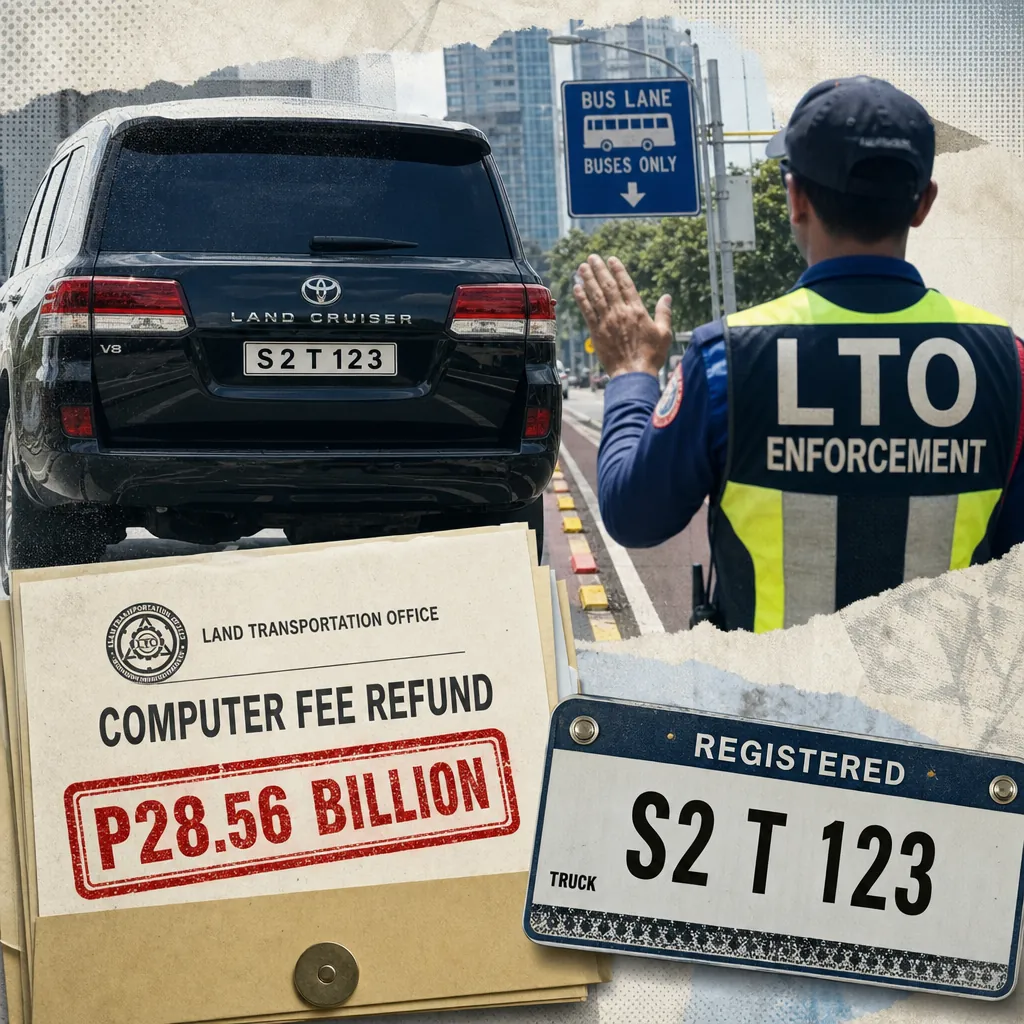
The Philippine automotive conversation on August 28, 2026, was dominated by a cluster of enforcement controversies that converged into a single-day news cycle. The most visible story involved an MMDA SUV using a truck-classified license plate while traversing the EDSA Busway, a restricted lane for public buses. GMA Network's 24 Oras aired footage that drew 53,911 views and 123 comments on YouTube, while the Facebook replication received 104 reactions, including 73 "haha" reactions — a signal that the public viewed the incident as institutional hypocrisy rather than an isolated error.5354 The Land Transportation Office (LTO), the agency that issues plates and enforces vehicle registration, demanded an explanation from the MMDA, the agency that manages Metro Manila's traffic.53
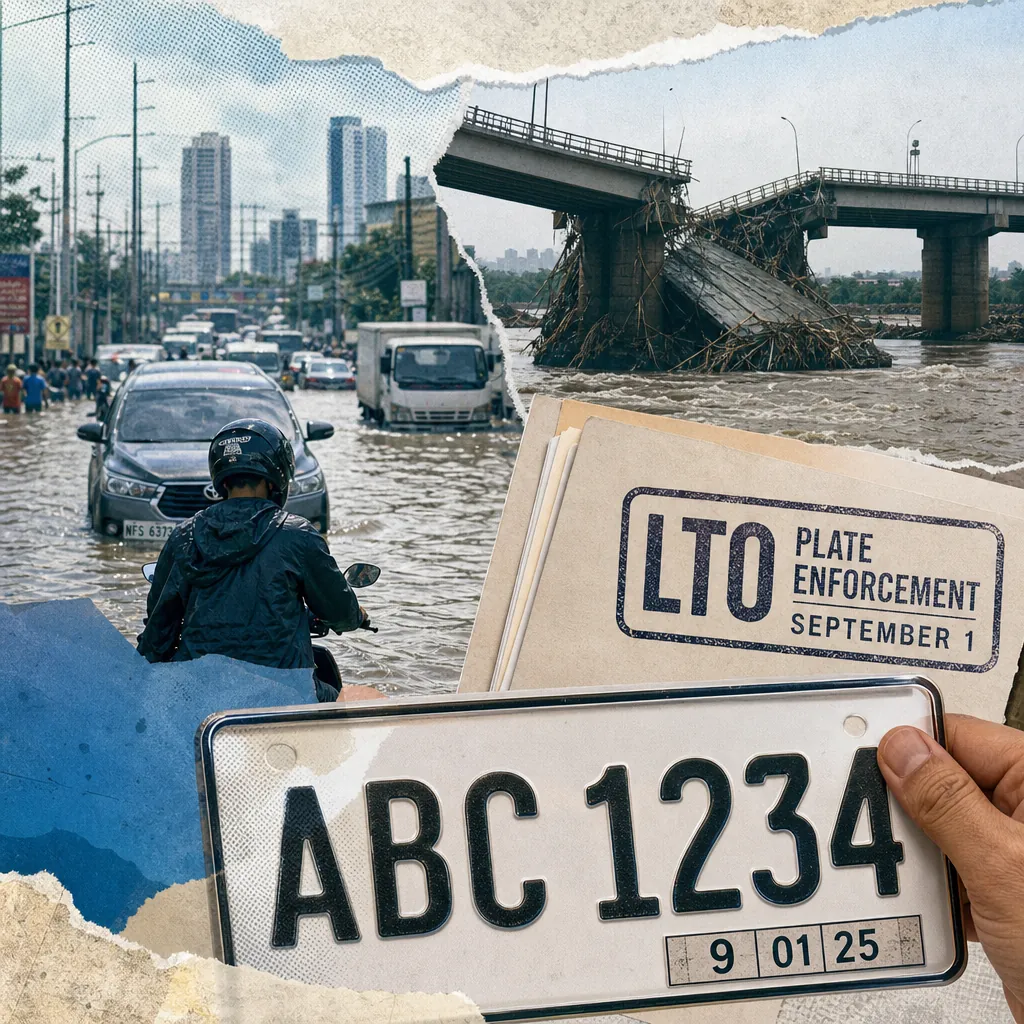
Simultaneously, LTO Chief Markus Lacanilao appeared on the "Shift Happens" program to announce a September 1 nationwide crackdown on unauthorized and fake plates, while defending the agency's position that no undersupply of plates currently exists.5556 The same day, the advocacy group Coalition 169 called for the refund of P28.56 billion in LTO computer fees collected since 2013, a story amplified by automotive media outlet AutoIndustriya.com, which asked its Facebook audience directly, "How much were you charged for computer fees?"5758 The conversation also expanded into public safety enforcement, with the cancellation of a jeepney driver's license for drinking alcohol while driving circulating across Facebook and Twitter, reaching 1,674 views on Twitter and drawing polarized reactions about the severity of the penalty.59
Woven between these regulatory stories were commercial launches and consumer-driven discussions. Honda Philippines generated significant buzz with the announcement of the new Click125 Street variant, highlighting its 50.3 km/L fuel consumption and P90,000 retail price, a post that received enthusiastic engagement on Facebook including 23 likes and 8 loves.78 The EV conversation remained fragmented but showed growth, with the VinFast VF 6 promoted as "engineered for the rainy-season realities Filipino drivers face daily" and the Nissan Kicks e-POWER finally made available for retail.1213 Meanwhile, a persistent narrative of quality skepticism around local motorcycle brand Rusi continued to dominate Reddit discussions, with prospective buyers citing "reliability, parts, hard clutch and false neutral" as their main concerns.4
Key themes
- MMDA SUV on busway with truck plate draws public mockery: A government vehicle using a truck-classified plate to bypass busway restrictions generated 53,911 YouTube views and 73 "haha" reactions on Facebook, signaling public ridicule of institutional hypocrisy rather than outrage.5354
- LTO announces September 1 fake plate crackdown: LTO Chief Markus Lacanilao confirmed a nationwide enforcement action against unauthorized and fake plates, set to begin September 1, while defending the agency's position that no plate undersupply exists.5556
- Coalition 169 demands P28.56 billion computer fee refund: The advocacy group called for the return of computer fees collected by LTO since 2013, a story amplified by automotive media and tapping into long-standing consumer grievances over transaction charges.5758
- Rusi brand faces entrenched reliability skepticism: Reddit discussions consistently warn prospective buyers against the budget Chinese motorcycle brand, citing specific defects like "false neutral" and rust, with one thread drawing 25 upvotes and 36 comments.34
- Honda Click125 Street launch generates commercial buzz: The new variant, priced at P90,000 with 50.3 km/L fuel consumption, drew enthusiastic engagement on Facebook, highlighting the continued strength of established Japanese brands.78
- Road safety incidents drive high emotional engagement: Counterflow-related motorcycle accidents drew 112 likes and 61 sad reactions on Facebook, reflecting strong public concern about rider vulnerability and enforcement accountability.9
- EV adoption conversations fragment between premium and accessible segments: VinFast's aggressive multi-platform push contrasts with budget-conscious buyers researching hybrid options for commercial use, with fuel prices cited as a key motivator.1215
- LTO convenience fees and bureaucratic friction fuel consumer frustration: A Reddit thread on avoiding convenience fees for vehicle registration accumulated 275 upvotes and 82 comments, indicating sustained grassroots interest in questioning official transaction costs.51
How the narratives stack
Dominant: The LTO enforcement cluster — the MMDA SUV plate controversy, the September 1 fake plate crackdown, and the Coalition 169 refund demand — dominated the day's conversation across YouTube, Facebook, and Twitter. Within the captured set, these stories drew the highest engagement and coverage value, with the MMDA SUV story alone generating over 53,000 views on YouTube.53 The convergence of these three threads on a single day created a narrative of institutional accountability that overshadowed commercial launches and consumer discussions.
Counter-narrative: The Honda Click125 Street launch and other new model announcements provided a positive, commercially driven counterpoint to the regulatory scrutiny. Honda's post highlighting the 50.3 km/L fuel consumption and P90,000 price drew enthusiastic engagement, suggesting that consumer enthusiasm for established brands remains strong despite the enforcement controversies.7 Similarly, the VinFast VF 6's weather-resilience messaging capitalized on the Habagat flooding to position EVs as practical solutions for Filipino drivers.12
Emerging: The Coalition 169 refund demand, while currently low-engagement (10 views on one platform), represents an emerging narrative that could gain momentum. The underlying grievance over computer fees has deep roots in consumer frustration, as evidenced by the 275-upvote Reddit thread on convenience fees.51 If the refund campaign receives mainstream amplification, it could transform into a broader government accountability story affecting public perception of all government fees.57
Under-covered: The LTO's declaration that it has eliminated the decade-long license plate backlog — producing over 18.5 million plates and clearing obligations dating back to 2014 — received modest engagement relative to its significance.52 This institutional achievement, which closes a multi-year narrative of government inefficiency, was effectively drowned out by the immediate enforcement controversies. Within the captured set, this story placed low despite its objective importance.
Platform insights
- Facebook: Served as the primary hub for news dissemination and corporate announcements. The MMDA SUV story drew 104 reactions with 73 "haha" reactions, indicating public mockery rather than outrage.54 Commercial brands leveraged the platform for direct promotion, with the Honda Click125 Street launch gaining immediate traction from its community.7 The fuel subsidy payout announcement in Valenzuela City gained substantial support with 491 likes and 188 shares, demonstrating that tangible government support for riders generates strong positive engagement.16
- Reddit: The platform for long-form, detailed consumer discussions. The conversation was more analytical and problem-oriented, as seen in the deep-dive threads about Rusi reliability and the process of transferring motorcycle ownership, which included a detailed account of LTO bureaucracy.319 Unlike the fast-paced news cycle on Facebook, Reddit fostered sustained threads that built upon past discussions over weeks and months, acting as a repository for shared user experiences and sentiment.20
- Twitter/X: Primarily served as a rapid-fire news ticker and amplification platform. Posts were short, headline-driven, and often cited more detailed content available elsewhere, as seen with the Senate's motion regarding PIMS and reports on Cebu's "Oplan BanTal" motorcycle lane proposal.121 The platform's function was to drive attention to stories and direct users to other outlets for full details, with news anchors like @TheNews and @TVPatrol using it to reframe and re-share their reports from other platforms.22
- YouTube: Served as the primary broadcast channel for breaking enforcement news, with 24 Oras and GMA News dominating the August 28 news cycle and driving the highest view counts (53,911 for the MMDA SUV story).53 The timeline showed a progression from informative content in 2023 about plate production to investigative reporting in 2026 about enforcement failures.50
Key voices and communities
Mainstream broadcast media outlets: GMA Network's flagship newscast and ABS-CBN News drove the highest-volume conversation around LTO enforcement and regulatory actions.5364 Their coverage of the MMDA SUV using a truck-classified plate on the EDSA Busway generated over 53,000 views and 123 comments, indicating substantial public appetite for accountability stories involving government agencies.53 These outlets functioned as the primary amplifier for regulatory developments, with their content frequently cross-posted and republished across YouTube, Facebook, and Twitter.6554
Motorist advocacy and consumer rights groups: Organized advocacy groups emerged as a distinct stakeholder community focused on financial accountability in LTO transactions.57 The Coalition 169, represented in interviews by its lead convenor Bernard Yu, called for the refund of approximately P28.56 billion in computer fees collected by LTO since 2013.57 While their direct social media footprint appeared limited — the interview only captured 10 views — their substantive claims were amplified by automotive media outlets.5758
Regulatory enforcement agencies and officials: The Land Transportation Office, under the leadership of Assistant Secretary Markus Lacanilao, represented an institutional stakeholder actively shaping the narrative through direct public statements and enforcement announcements.5556 Recent actions included clarifying standards for temporary and improvised plates, announcing a nationwide crackdown on unauthorized plates starting September 1, and addressing ongoing plate supply questions through interviews with business-oriented news channels.5556
Individual motorists and concerned citizens: Grassroots participants on Reddit and Facebook generated substantial conversation around the practical frustrations of LTO transactions.51 A Reddit thread asking how to renew vehicle registration without paying convenience fees attracted 275 likes and 82 comments, making it one of the most engaged pieces of content in this dataset.51 This group's influence derived not from institutional authority but from the volume and authenticity of their shared experiences, which created persistent reputational pressure on government agencies.51
Budget-conscious first-time motorcycle buyers: This group dominated Reddit motorcycle discussions, particularly around entry-level and Chinese-branded units.4 They actively sought validation on purchases, often weighing emotional appeal against reliability warnings from family and peers.3 The conversation showed strong price sensitivity, with budgets typically ranging from ₱50,000 to ₱60,000 for second-hand units, and a consistent fear of hidden maintenance costs.4
Narrative streams
MMDA SUV plate controversy exposes institutional hypocrisy
The most significant single story of the day involved an MMDA SUV using a truck-classified license plate while traversing the EDSA Busway, a restricted lane for public buses. GMA Network's 24 Oras aired footage that drew 53,911 views and 123 comments on YouTube, while the Facebook replication received 104 reactions, including 73 "haha" reactions — a signal that the public viewed the incident as institutional hypocrisy rather than an isolated error.5354 The LTO demanded an explanation from the MMDA, the agency that manages Metro Manila's traffic, within hours of the story breaking.53
The incident resonated because it mocked the very rules ordinary motorists face daily. The truck-classified plate allowed the SUV to bypass busway restrictions, a privilege not available to private vehicles. The heavy "haha" reaction count on Facebook suggested that public sentiment toward LTO enforcement had crossed from frustration into active mockery, a shift that should concern any organization relying on public cooperation for regulatory compliance.54
For the sector, this story demonstrates that enforcement credibility is fragile. When government agencies are seen as exempt from the rules they enforce, public cooperation with compliance efforts — such as the upcoming September 1 fake plate crackdown — may weaken. Automotive brands and dealers should anticipate heightened public skepticism regarding regulatory consistency and prepare communications that emphasize their own compliance readiness.53
LTO's September 1 fake plate crackdown sets enforcement tone
LTO Chief Markus Lacanilao appeared on the "Shift Happens" program to announce a September 1 nationwide crackdown on unauthorized and fake plates, while defending the agency's position that no undersupply of plates currently exists.5556 The announcement came days before the enforcement action, giving motorists and dealers a short window to secure proper documentation. The LTO also clarified standards for temporary and improvised plates, addressing persistent public confusion around compliance requirements.55
The crackdown represents a natural progression from the LTO's declared victory over the decade-long plate backlog. After producing over 18.5 million plates and clearing obligations dating back to 2014, the agency is shifting from quantity to compliance concerns.52 However, the MMDA SUV incident undermines this enforcement narrative by highlighting that even government entities are being held to account, so private sector compliance messaging must be airtight to avoid similar public shaming.53
For dealers and manufacturers, the September 1 crackdown will likely generate customer-service inquiries from those still awaiting official plates. Proactive guidance on securing LTO authorization documents could mitigate negative sentiment. The enforcement environment is tightening, and any client communications referencing LTO processes should anticipate heightened public skepticism regarding fee structures and regulatory consistency.55
Coalition 169's P28.56 billion refund demand taps into fee grievances
The advocacy group Coalition 169, represented by lead convenor Bernard Yu, called for the refund of approximately P28.56 billion in computer fees collected by LTO since 2013.57 While the initial interview captured only 10 views on YouTube, the story gained cross-platform traction through automotive media coverage, with AutoIndustriya.com asking its Facebook audience directly, "How much were you charged for computer fees?"58
The refund demand taps into a deep well of consumer resentment over ancillary charges. A Reddit thread on avoiding convenience fees for vehicle registration accumulated 275 upvotes and 82 comments, indicating sustained organic interest in bureaucratic cost avoidance.51 Earlier coverage of questionable P169 computer fee collections on Reddit drew 17 likes and 5 comments, showing sustained interest in fee-related grievances.62
For the sector, this narrative poses reputational risk to government clients and regulatory bodies, while also offering automotive industry stakeholders an opportunity to align with consumer interests on transparency issues. Automakers with in-house financing or registration assistance programs should audit their own fee transparency and prepare messaging that distinguishes their charges from LTO-imposed fees. Should this storyline gain mainstream momentum, it could spill over into broader distrust of government-related transaction costs.5751
Rusi's entrenched reliability reputation shapes budget motorcycle market
The conversation around local motorcycle brand Rusi revealed a persistent and deeply embedded narrative of quality skepticism that has evolved over time. Initial threads from late 2023 showed owners seeking practical advice, with one simply asking for "tips or issues" from other owners.2 By early March 2024, a more definitive negative sentiment had crystallized, with a potential buyer expressing doubt, stating that "halos ng nagsasabi sa akin, basura daw ang brand na Rusi," a sentiment that accumulated significant traction with 25 upvotes and 36 comments on Reddit.3
This skepticism persisted and became a primary consideration for buyers, as seen in an August 28, 2026 thread where a user listing the Rusi Classic 250Fi as a top option explicitly cited "reliability, parts, hard clutch and false neutral" as their main concerns.4 The resale market mirrors this, with multiple listings for Rusi units often disclosing issues like "expired OR/CR, faded and craced paints" or "PASO/UNREGISTERED," which reinforces the narrative of unreliability and potential legal hassle.56
However, there is also a counter-narrative emerging from owners who defend the brand, with one thread asking pointedly whether the "pagiging sirain or cheap" reputation is "overstated" compared to Japanese bikes.25 Some owners actively showcase their customization projects, such as cafe racer and scrambler builds, and these posts generate interest, suggesting there is a passionate enthusiast segment that values the platform for its modifiability.26
For the sector, the persistent Rusi quality narrative is a double-edged sword: it may push consumers toward established Japanese brands, but it also risks creating a generalized skepticism of budget motorcycles, which could hurt market growth. The battle for these brands is not about marketing features but about fundamentally shifting a deeply entrenched negative perception built through years of consumer reports. There is an opportunity for a brand to proactively address these issues through transparent quality assurance, warranty programs, and customer service to change the narrative.34
Honda Click125 Street launch highlights Japanese brand strength
Honda Philippines generated significant buzz with the announcement of the new Click125 Street variant, highlighting its 50.3 km/L fuel consumption and P90,000 retail price, a post that received enthusiastic engagement on Facebook including 23 likes and 8 loves.78 The launch was framed around the "12-million-sale milestone" of the series, presenting a narrative of market dominance and value.33
This commercial activity stood in stark contrast to the regulatory controversies dominating the news cycle. The positive engagement on the Click125 launch demonstrated that consumer enthusiasm for established Japanese brands remains strong, even as enforcement stories capture public attention. The fuel efficiency messaging resonated with current fuel prices, with one buyer explicitly comparing the Rusi 250 carburetor versus fuel-injected versions on cost and consumption, and another asking about HEV/PHEV fuel consumption for TNVS use, citing "current petrol prices" as a motivator.2315
For the sector, the Click125 launch shows that economic messaging around efficiency is resonating. Brands that can articulate total cost of ownership — including fuel savings, maintenance costs, and resale value — are well-positioned to capture budget-conscious buyers. The launch also highlights the continued strength of established Japanese brands in a market where budget Chinese brands face reputational challenges.733
Road safety incidents drive emotional engagement and accountability demands
Multiple high-engagement posts documented accidents where riders were injured due to counterflowing jeepneys, with one incident in Cainta, Rizal receiving 47 likes and another in Cebu drawing 112 likes and 61 sad reactions.9 A report on an e-trike accident at EDSA Extension drew 757 likes and 323 comments, indicating high public engagement with traffic incidents and the enforcement actions that follow.30
These incidents amplified public concern about rider vulnerability and the behavior of public utility vehicles. The high emotional engagement on these posts indicated a strong public awareness of road safety issues that could influence conversations around rider protection and infrastructure.9 Simultaneously, regulatory friction was a recurring theme: a detailed account of the LTO transfer-of-ownership process described it as "Sobrang gastos at hassle," including allegations of corruption at the PNP-HPG with claims of a ₱750 clearance fee plus ₱500 to expedite release.19
For the sector, the accident narratives present a risk to all motorcycle brands if the public conversation shifts toward blaming motorcyclists collectively, but they also create an opportunity for brands to highlight safety features, as seen with the MDPPA's Tropang Maalam program publishing school zone safety lists.35 The strong engagement on traffic accident posts suggests that the public seeks both information and reassurance. Brands can position themselves as responsible industry actors by amplifying safety advocacy messages around defensive riding and infrastructure improvements.948
EV adoption fragments between premium and accessible segments
The EV and modern mobility conversation was fragmented but showed clear growth. On one hand, there was significant promotional activity for various models, such as the VinFast VF 6 being promoted as "engineered for the rainy-season realities Filipino drivers face daily" and the Nissan Kicks e-POWER finally being made available for retail.1213 VinFast's aggressive multi-platform push — from VF 3 charging accessories to commercial limo variants and electric motorcycles — generated steady but modest engagement across Facebook and dealer networks.394041
Simultaneously, budget-conscious buyers were actively researching hybrid and plug-in hybrid options for commercial use, with TNVS operators specifically weighing fuel savings against acquisition costs.15 The most practical consumer discussion came from a Reddit user considering an HEV/PHEV for TNVS use, asking about fuel consumption in city driving due to current petrol prices, underscoring the economic motivation for adoption.15
This dual-track conversation will likely intensify as more Chinese-brand EVs (Omoda, Jaecoo, Denza, GAC) push showroom activations and introductory pricing deadlines through September.3132 The sustained flood-related traffic advisories from the Habagat season also present an opening for weather-resilience messaging, as several brands are beginning to incorporate flood-readiness into their EV and crossover positioning.1246
For the sector, the EV conversation is shifting from awareness toward practical consideration. Brands that can articulate total cost of ownership — including fuel savings, maintenance costs, and resale value — are well-positioned to capture budget-conscious buyers. The September 30 introductory pricing deadline for the GAC GS4 Max HEV will likely drive a late-month surge in comparison shopping and dealer inquiry discussions.31
Conversation trajectory
LTO enforcement accountability will intensify over the next 2–4 weeks: The September 1 fake plate crackdown will likely generate high-volume anecdotal reporting about apprehensions and potential complaints about inconsistent application. The MMDA SUV incident has shifted public scrutiny from private motorists to government agencies themselves, creating a perception of institutional hypocrisy that undermines the credibility of enforcement messaging. Expect this accountability-focused conversation to intensify as the crackdown proceeds, with potential spillover into broader discussions about government vehicle privileges and traffic law exemptions.5553
Coalition 169 refund demand could gain mainstream momentum within 7–14 days: The P28.56 billion computer fees controversy, while currently low-engagement, taps into a deeper well of consumer resentment over ancillary charges that has already shown strong traction in community forums. Should this storyline gain mainstream media amplification, it could transform into a broader government accountability narrative affecting public perception of all government fees. The 7–10 day period following any formal government response will be critical for assessing whether this conversation reaches mainstream news cycles.5751
Rusi reliability discourse will deepen as resale market grows: The narrative has matured from simple brand skepticism toward more nuanced buyer considerations — fuel injection versus carburetor trade-offs, parts availability, and total cost of ownership comparisons against established Japanese competitors. Expect this conversation to deepen as resale listings and custom builds continue appearing, suggesting an active secondary market that will sustain discussion of long-term durability and modification potential.526
EV adoption conversations will surge around September pricing deadlines: The September 30 introductory pricing deadline for the GAC GS4 Max HEV will likely drive a late-month surge in comparison shopping and dealer inquiry discussions. The final week of September represents a critical opportunity to engage with price-sensitive buyers who are actively comparing introductory offers against long-term operating costs.3115
Trigger events to watch: The Senate special committee investigation into the PIMS tragedy (already approved for formation as of late August, which will likely resurface venue safety and event management narratives).1 The September 1 nationwide crackdown on unauthorized and fake plates (which the LTO chief has explicitly warned will be strictly enforced).55 The potential formal response from Coalition 169 regarding their P28.56 billion refund demand.57 Any clarification from LTO regarding the MMDA SUV plate controversy under investigation.53
Response guidance
Prepare clients for upcoming plate enforcement friction: With the September 1 crackdown on unauthorized plates now days away, dealers and manufacturers should proactively issue guidance to customers still awaiting official plates on securing LTO authorization documents, as this will likely generate customer-service inquiries and potential negative sentiment if handled poorly. The MMDA SUV incident demonstrates that even government entities are being held to account, so private sector compliance messaging must be airtight to avoid similar public shaming.5553
Monitor and counter the computer fee narrative: The P28.56 billion refund demand, while currently low-engagement, taps into a deeper well of consumer resentment over ancillary charges that has already shown strong traction in community forums. Should this storyline gain mainstream momentum, it could spill over into broader distrust of government-related transaction costs, potentially affecting dealer-imposed fees and documentation charges. Automakers with in-house financing or registration assistance programs should audit their own fee transparency and prepare messaging that distinguishes their charges from LTO-imposed fees.5751
Leverage the backlog resolution as a proactive counter-narrative: The LTO's milestone of clearing the plate backlog is objectively strong news that current coverage underplays. Industry stakeholders should consider co-amplifying this achievement in their own channels — particularly when fielding customer complaints about plate delays — to shift blame onto distribution logistics rather than production failure. This also presents an opportunity for OEMs to reinforce their own role in working with a now-functioning system, potentially restoring some consumer confidence in the overall registration pipeline.52
Develop a transparent ownership education campaign for the entry-level segment: The volume of questions about budget motorcycle reliability indicates an information vacuum that industry players can productively fill. Collaborate with motoring media partners to publish practical comparisons and ownership guides that help first-time buyers make informed decisions, positioning participating brands as trustworthy sources rather than defensive commentators.249
Amplify safety advocacy alongside high-traffic incident reporting: The strong engagement on traffic accident posts suggests that the public seeks both information and reassurance. Coordinate with industry associations to issue timely safety reminders during major weather events and high-incident periods, framing prevention as a community effort that includes responsible enforcement and infrastructure improvements.48
Monitor electrification sentiment as a strategic growth indicator: The mobility landscape is shifting with increased conversation about e-bikes, electric motorcycles, and EV crossovers. Establish a listening framework that tracks EV-related sentiment across platforms, identifying early adopters and skeptics to inform future messaging on charging infrastructure, incentives, and total cost benefits.3412
See the full picture behind today's signals.
This report draws from Media Meter's MediaWatch, our real-time monitoring engine tracking 2,470+ Philippine sources across print, broadcast, digital, and social. Explore how the platform turns raw coverage into decision-grade intelligence, then see how it's configured for teams like yours — whether you're in PR agencies, corporate comms, government, or marketing.
Want more? Browse our Report Library for sector and crisis intelligence, or request a demo and we'll have your brand set up before the call.
Want this kind of intelligence on your brand?
This brief is built on the same MediaWatch methodology that runs continuously across every brand we monitor. See your competitive landscape, Impact Score, and narrative trajectory in a 30-minute demo.