Philippine Connectivity: Disaster Relief, New Services, and Cybersecurity
A snapshot of the Philippine telecommunications conversation on June 14-15, 2026, covering Starlink deployment for earthquake recovery, DITO's new streaming service, and cybersecurity concerns amid low public engagement.
The conversation around Philippine connectivity on June 14-15, 2026, was shaped by two distinct threads: the government's use of satellite internet for earthquake recovery and a new streaming service launch from a challenger telco. However, public engagement remained low, with official announcements drawing minimal reactions and no visible user-generated discussion. The absence of consumer complaints about network issues or telco services was notable, suggesting either that the monitoring window captured only a narrow slice of the conversation or that public attention was elsewhere.
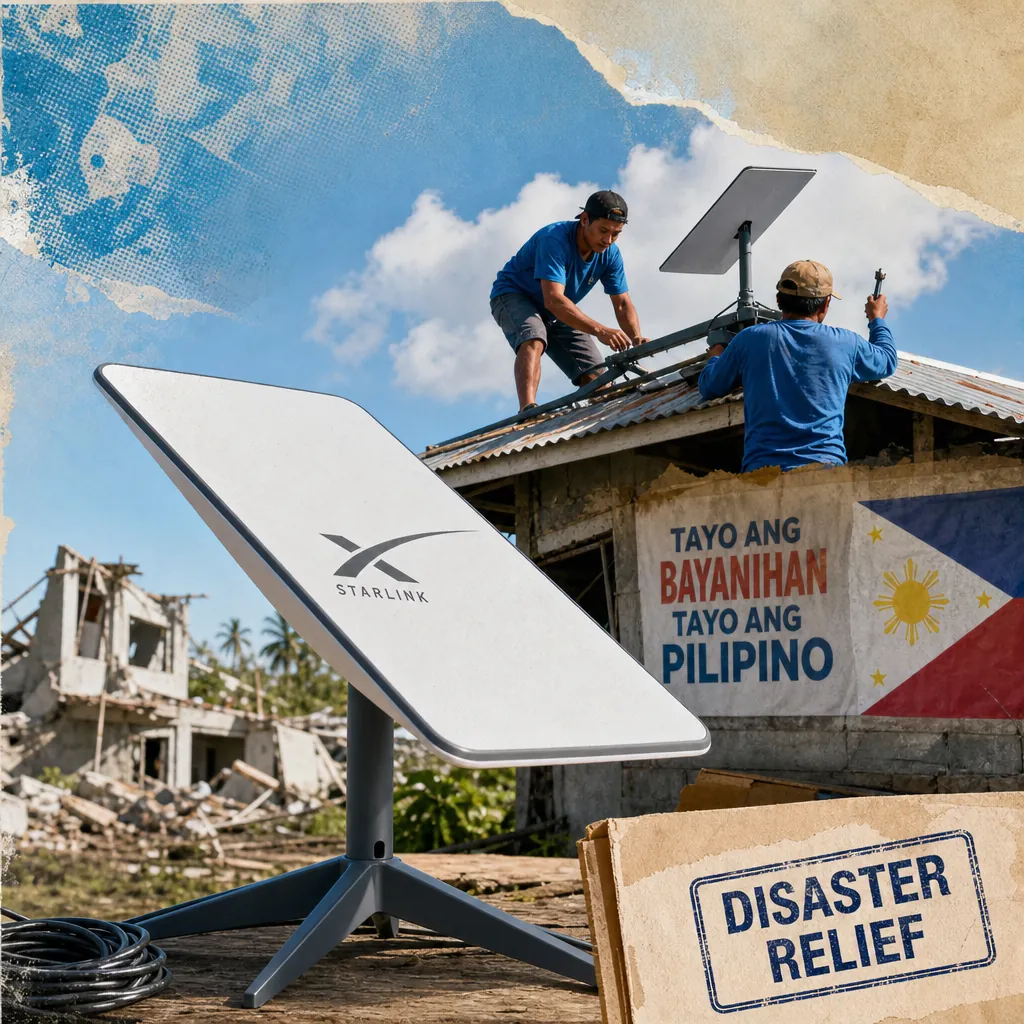
On June 15, President Ferdinand Marcos Jr. visited earthquake-ravaged Sarangani province and announced the deployment of four Starlink satellite internet units to hospitals and schools, with the Department of Information and Communications Technology (DICT) handling installation. The post from the official government page radyopilipinas on Facebook received only 14 likes and 3 comments, indicating low engagement despite the strategic placement in official channels. Meanwhile, OrangeMagazineTV posted about DITO Telecommunity's launch of DITO StreamZone on YouTube, drawing just 22 views with zero comments. The minimal audience suggests these announcements were not yet amplifying into broader public discourse.
Conversation snapshot. The Starlink deployment post on Facebook garnered 14 likes and 3 comments, with a care reaction indicating public approval of the connectivity initiative. The DITO StreamZone launch video on YouTube accumulated only 22 views and no comments, signaling a launch that failed to spark social media buzz. A post about the National Bureau of Investigation (NBI) identifying hackers behind Senate and House website breaches received 21 "haha" reactions and 6 comments, suggesting public skepticism or apathy toward official statements. These figures show that the conversation was driven by official sources rather than user-generated content, and engagement was modest at best.
Key themes
- Government-led connectivity as disaster relief – The Starlink deployment emerged from the earthquake narrative, with the President's office framing internet as critical recovery infrastructure. No user-generated reactions were captured in the dataset, so public sentiment remains unmeasured. The lack of comments on the official post hints that the conversation may have occurred offline or on other platforms not included here.
- DITO's new streaming service goes largely unnoticed – DITO StreamZone's YouTube announcement on June 15 received negligible traction (22 views, zero engagement). This suggests either poor audience targeting or a launch that failed to spark social media buzz. Without user shares or quotes, the narrative remained a one-way broadcast rather than a conversation.
- Absence of consumer pain points or telco complaints – Despite the story keywords covering frequent issues like "#GlobeDown" or "slow internet," the dataset shows no such posts. The only telco-adjacent topic was the NBI's identification of hackers behind Senate and House website breaches. That post received 21 haha reactions and 6 comments, but none visible in the extracted data, so no sentiment analysis is possible.
- Cybersecurity concerns linger – The NBI's confirmation of identified hackers behind the Senate and House website breaches raises the reputational stakes for all connectivity providers, as public concern over cybercrime and data security remains a persistent undercurrent in the sector. The disproportionate number of "haha" reactions suggests public skepticism or low trust in official announcements.
- Satellite connectivity as a competitive threat – The Starlink deployment by the Presidential Office generates a powerful counter-narrative: as a government-provided connectivity solution, it implicitly frames traditional telcos as unable to restore services quickly after natural disasters. This is a reputational threat, especially for PLDT and Globe, who have historically dominated disaster response communications.
- Content bundling as a differentiator – DITO's StreamZone launch signals a strategic move beyond pure connectivity into over-the-top content, following the playbook of Globe Streamwatch and other bundled services. With very low initial viewership, the conversation is nascent, but this aligns with broader industry trends toward data-heavy entertainment packages.
How the narratives stack
Dominant narrative – The dominant story is the government's use of Starlink satellite internet as a disaster recovery tool. President Marcos Jr.'s visit to Sarangani and the deployment of four Starlink units to hospitals and schools positions connectivity as a critical component of disaster resilience. This narrative is driven by official government channels and frames the administration as responsive and proactive in restoring communication in quake-affected areas.
Counter-narrative – The low engagement on the Starlink announcement (14 likes, 3 comments) suggests that the public may not be fully aware of or engaged with this development. The absence of user-generated content or discussion around the deployment indicates that the narrative has not yet penetrated broader public discourse. Additionally, the implicit critique of traditional telcos' disaster response capabilities is not being actively discussed, possibly because the monitoring window was too narrow.
Emerging narrative – DITO's launch of StreamZone represents an emerging narrative around content bundling as a competitive differentiator. While the launch received negligible attention, it signals a shift in strategy for the challenger telco, which may gain traction if promoted aggressively. The trend toward value-added services is likely to grow as telcos seek to differentiate themselves in a saturated market.
Suppressed narrative – The cybersecurity angle, particularly the NBI's identification of hackers behind the Senate and House website breaches, is an under-covered story that matters but is not getting attention proportionate to its significance. The public's skeptical reaction (21 "haha" reactions) suggests a trust gap that could have implications for telcos, as they are often implicated in cybercrime vectors like smishing and SIM swap fraud. This narrative could amplify if further breaches occur or if the impeachment trial of Vice President Sara Duterte brings security issues to the fore.
Platform insights
Facebook – The official government page (radyopilipinas) drove the Starlink story, but engagement was low (14 likes, 3 comments). No follow-up posts or user threads were captured, so the conversation appears to have stalled after the initial announcement. Facebook remains the primary platform for government announcements, but the lack of user interaction suggests that the content did not resonate or reach a wide audience.
YouTube – DITO's StreamZone launch on OrangeMagazineTV attracted only 22 views and zero comments. This platform saw no observable discussion evolution—the video remained a dead drop in the conversation landscape. YouTube is typically used for product launches and explainer videos, but the low viewership indicates poor promotion or lack of interest.
Twitter – A promotional tweet for a TV drama (The Empire) was the only Twitter post in the dataset, completely unrelated to telco. No telco discussions surfaced here, suggesting that Twitter is not a significant platform for this conversation in the current window.
Key voices and communities
Government and disaster response agencies – National and local government accounts, including official media channels, are driving conversations around connectivity as a disaster recovery tool. Their posts emphasize the deployment of satellite internet solutions to restore communication in earthquake-affected areas, generating modest but targeted engagement. This group consistently frames connectivity as a public service necessity during emergencies.
Telecom challengers and innovators – DITO Telecommunity is generating niche but focused attention through product launch announcements on video and social platforms. Their content, such as the DITO StreamZone launch, targets early adopters and tech-savvy audiences with zero-view counts suggesting limited organic reach but strategic intent to build a differentiated value proposition around entertainment bundles.
Cybersecurity and cybercrime response authorities – Official government cybersecurity bodies and law enforcement agencies are addressing digital security incidents, such as website hacking of legislative institutions. Their posts receive high emotional reactions—21 "haha" reactions on a single post—indicating public skepticism or apathy toward official statements, but also demonstrate the authorities' role in managing cyber threat narratives.
Narrative streams
Starlink deployment for earthquake recovery
On June 15, President Marcos Jr. visited Sarangani province, which was hit by a magnitude 7.8 earthquake on June 8, 2026. He announced the deployment of four Starlink satellite internet units to Sarangani Hospital, Malapatan National High School, the Glan local government unit, and the provincial government. The Department of Information and Communications Technology (DICT) is handling installation. The Starlink units are intended to improve communication in affected areas and aid recovery efforts. The post from radyopilipinas on Facebook received 14 likes and 3 comments, with a care reaction indicating public approval. However, the low engagement suggests that the announcement did not generate widespread discussion. The deployment is part of a broader government effort to provide emergency aid and restore infrastructure, with the Department of Social Welfare and Development (DSWD) running evacuation centers for displaced families.
DITO StreamZone launch
DITO Telecommunity launched DITO StreamZone, a new streaming service, on June 15. The announcement was made via a YouTube video on OrangeMagazineTV, which accumulated only 22 views and zero comments. The service is positioned as a value-added offering that bundles content and streaming partnerships, signaling a shift toward converged services. DITO is a relatively new telecom entrant in the Philippines, competing with established players like Globe and PLDT. The low viewership indicates that the launch failed to generate organic traction, possibly due to poor audience targeting or lack of a compelling hook. However, the move aligns with industry trends toward data-heavy entertainment packages, and if promoted aggressively, it could gain traction among value-conscious subscribers.
Cybersecurity and hacking incidents
The NBI confirmed that it has identified the hackers behind the breaches of the Senate and House of Representatives websites. A post about this development received 21 "haha" reactions and 6 comments, suggesting public skepticism or low trust in official statements. The hacking incidents raise concerns about data security and the effectiveness of the SIM Registration Act, which requires mobile phone users to register their SIM cards to combat fraud. Telcos are often implicated in cybercrime vectors like smishing (SMS phishing) and SIM swap fraud, and this event could amplify public anxiety about network vulnerabilities. The NBI's announcement is part of a broader effort to reassure the public, but the skeptical reaction indicates a trust gap that telecom companies may need to address.
Conversation trajectory
The conversation around Philippine connectivity is likely to evolve in the following ways over the next 2–4 weeks:
- Disaster connectivity as a central narrative: The magnitude 7.8 earthquake in Sarangani has pushed connectivity infrastructure into the spotlight, with the President personally delivering Starlink units to affected areas. This event creates a powerful framing for satellite-based solutions as life-saving tools, likely accelerating public discourse around alternative access methods. Expect a sustained conversation spike over the next 2–3 weeks as recovery progresses and additional deployments are announced, with potential for comparisons between Starlink and traditional fiber/mobile networks in crisis scenarios.
- DITO's pivot to content bundling: DITO's StreamZone launch signals a strategic move beyond pure connectivity into over-the-top content. With very low initial viewership, the conversation is nascent, but this aligns with broader industry trends toward data-heavy entertainment packages. If DITO promotes StreamZone aggressively during the earthquake aftermath—as a low-cost distraction or family entertainment—it could gain traction, especially among its base of value-conscious subscribers. The next 30 days will determine whether this becomes a meaningful differentiator.
- Cybersecurity fears amplify public scrutiny: The NBI's identification of hackers behind the Senate and House website breaches, combined with assurances that no sensitive data was compromised, has already generated a mix of relief and skepticism (evidenced by 21 "haha" reactions on a single post). This event re-ignites concerns about SIM registration efficacy, smishing, and data privacy—topics that are chronically active in Philippine digital discourse. Expect a wave of calls for stricter enforcement of the SIM Registration Act and more transparent reporting from telcos on fraud incidents, particularly as the impeachment trial of Vice President Sara Duterte and other high-profile government processes continue.
Key trigger events that will reshape this conversation include: the phased installation of Starlink units across Sarangani, which will generate user-generated speed tests and service reviews within 1–2 weeks; the official marketing push for DITO StreamZone, likely to begin in July 2026; and any subsequent cyberattack disclosures from the NBI or the Cybercrime Investigation and Coordination Center (CICC), which could reignite the #TelcoPH hashtag and drive demands for network-level security guarantees.
Response guidance
For communicators tracking the Philippine telecommunications sector, the following approaches are recommended:
- Proactively frame satellite connectivity as complementary, not competitive: Incumbent telcos should publicly collaborate with DICT on hybrid solutions (e.g., integrating Starlink into disaster response protocols) to neutralize the government's implicit critique. This positions the sector as resilient and partner-oriented.
- Leverage cybersecurity as a competitive differentiator: Following the NBI announcement, telcos should publish transparent updates on fraud prevention efforts and SIM Registration successes, using trusted media channels to rebuild consumer confidence in network security. Timely messaging can capture the attention of users frustrated by spam and OTP theft.
- Invest in influencer-led content partnerships for new services: DITO's StreamZone launch shows low organic interest; a coordinated campaign with gaming or streaming influencers (e.g., Mobile Legends, YouTube PH creators) could drive awareness and convert data-heavy users. The opportunity is time-sensitive as competitors may soon launch similar bundles.
- Monitor social sentiment on streaming quality: Use keyword alerts for terms like "buffering," "lag," and "StreamZone bagal" to prepare a pre-approved response matrix for likely complaints about speed or coverage gaps.
- Amplify disaster-response goodwill: Create dedicated social media content highlighting network restoration efforts in earthquake-affected areas, tagging relevant agencies (DICT, DepEd) to boost reach and credibility.
See the full picture behind today's signals.
This report draws from Media Meter's MediaWatch, our real-time monitoring engine tracking 2,470+ Philippine sources across print, broadcast, digital, and social. Explore how the platform turns raw coverage into decision-grade intelligence, then see how it's configured for teams like yours — whether you're in PR agencies, corporate comms, government, or marketing.
Want more? Browse our Report Library for sector and crisis intelligence, or request a demo and we'll have your brand set up before the call.
Want this kind of intelligence on your brand?
This brief is built on the same MediaWatch methodology that runs continuously across every brand we monitor. See your competitive landscape, Impact Score, and narrative trajectory in a 30-minute demo.