Philippine housing and infrastructure: Floods, taxes, and safety shape the conversation
This snapshot covers the weekend of June 20-21, 2026, examining how government infrastructure projects, flood mitigation, tax amnesty deadlines, and a school safety incident in Cavite are influencing the real estate and property development conversation in the Philippines.
The weekend of June 20, 2026, saw multiple government announcements and news events that directly impact homeowners, property investors, and developers across the Philippines. While no single viral debate emerged, the collective narrative underscores a growing focus on the regulatory, environmental, and safety factors that affect property value and livability. The conversation coalesced around four key threads: local government engagement with subdivisions, flood mitigation in Metro Manila, real property tax amnesty deadlines, and the continued development of New Clark City as a major destination. Additionally, a school stabbing incident in Cavite introduced a safety dimension that could influence buyer sentiment in that key growth corridor.
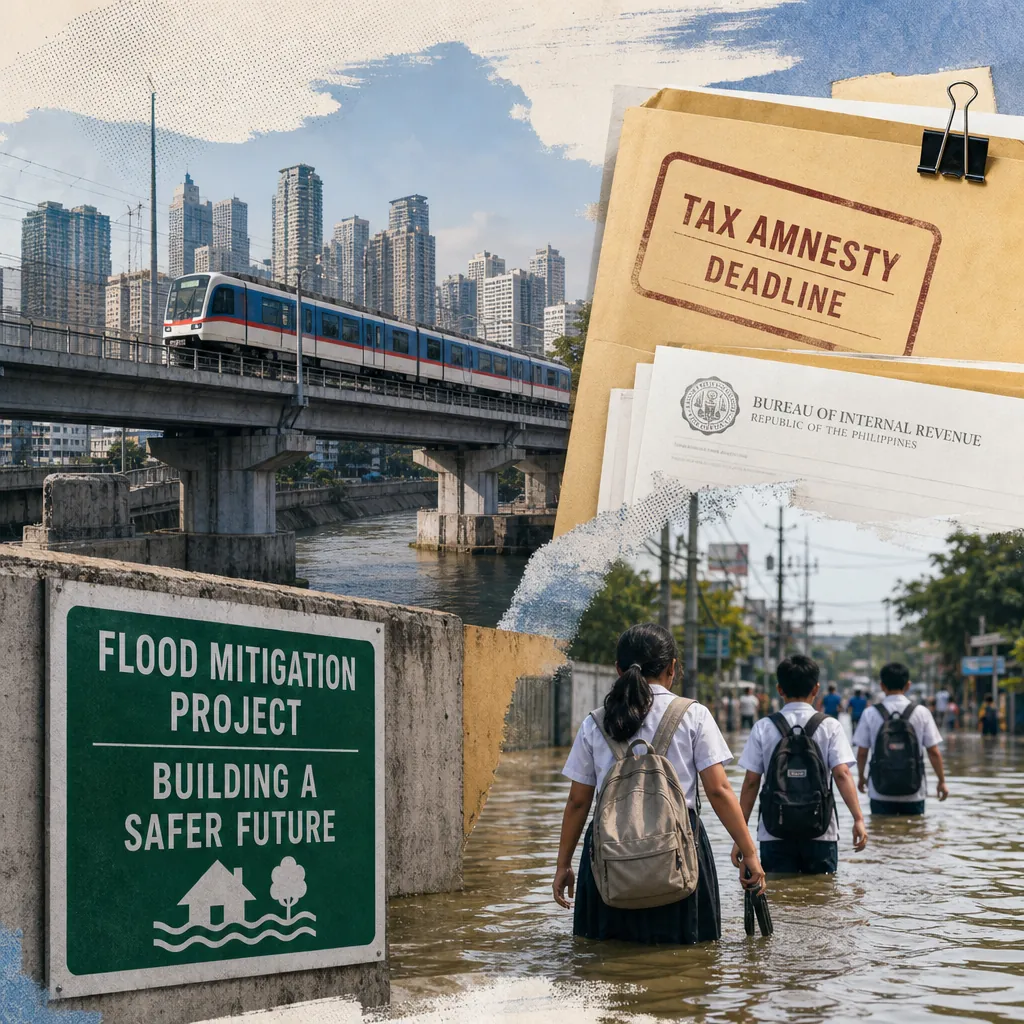
Conversation snapshot. The most substantive homeowner-focused conversation unfolded on Saturday, June 20, when Quezon City Mayor Joy Belmonte hosted a Subdivision Forum for various Homeowners Associations (HOAs) at Great Eastern Hotel. The event brought together the Department of Human Settlements and Urban Development (DHSUD), Manila Water, MERALCO, and the Bureau of Internal Revenue, signaling a deliberate effort to bridge governance gaps between city hall and residential communities. The official QC government post garnered 49 likes and 33 shares, while the mayor's personal page received 155 likes and 116 shares, indicating moderate but engaged reach. Concurrently, flood mitigation announcements from the Department of Public Works and Highways (DPWH) and the Metropolitan Manila Development Authority (MMDA) reinforced the perennial concern of flooding in major metro areas. On Friday, June 19, the DPWH reported clearing tons of garbage from Calatagan Creek in Makati and Marulas Creek in Parañaque as part of Oplan Kontra Baha, a continuing initiative to reduce flood risks during the rainy season. The post from the metrostandard drew only 8 likes but notably received 8 "haha" reactions and 1 angry reaction, suggesting some public skepticism about the effectiveness of such operations. The following day, the MMDA Flood Control team detailed their declogging activities in Quezon City and Manila, removing mud and waste from drainage laterals and catch basins. While the MMDA post had zero recorded engagement, its existence adds to the broader narrative that government agencies are positioning themselves as proactive on flooding—a critical factor for property buyers considering condos in Makati CBD, Bay Area, or other flood-prone zones. The earlier two-year delay on East Timawa Road in Iloilo, resolved in two months per DPWH Secretary Dizon, further highlights public frustration with infrastructure timelines that directly affect property accessibility and resale value.
Key themes
- Local Government-HOA Engagement and Digital Transparency – The QC Subdivision Forum on June 20 set a new standard for direct government-to-homeowner communication, involving DHSUD and major utilities. The unveiling of QC iReport, Open Infra, and Open Data platforms marks a shift toward real-time reporting of infrastructure issues, which could influence how subdivision residents document flooding, construction defects, or delayed road repairs. With only 17 comments on the mayor's post and 3 on the city government's post, the conversation remains niche but carries high relevance for QC homeowners seeking leverage in disputes with developers or HOAs.
- Flood Mitigation as a Property Value Concern – Both the DPWH and MMDA released updates on flood control between June 19 and 20, addressing specific waterways in Makati, Parañaque, Quezon City, and Manila. The DPWH's hauling of trash from Calatagan and Marulas creeks, and the MMDA's declogging of laterals in Sampaloc and Sta. Cruz, signal a pre-rainy-season push. The low engagement (8 likes, few comments) suggests these messages may not be reaching the general public effectively, but for investors eyeing condos in flood-prone areas like Makati CBD or Aseana, these operational details are critical due diligence data.
- Real Property Tax Amnesty Deadline Pressure – The Baguio City government posted on June 20 a reminder that the amnesty on penalties, surcharges, and interests for delinquent real property taxes ends on July 5, 2026, under Section 30 of the Real Property Valuation and Assessment Act. This post received 50 likes and 18 shares, indicating that property owners are actively seeking such tax relief. The deadline aligns with the broader TRAIN Law and estate tax amnesty context, and could trigger a wave of property transactions as owners regularize titles to avoid higher costs—a key consideration for those dealing with clean title issues or preselling purchases.
- New Clark City as a Growing Hub for Events and Development – Two posts from cfchrist and one from abscbnnews highlighted the 45th Anniversary Celebration of Couples for Christ at the New Clark City Stadium, drawing massive engagement: 983 love reactions and 410 comments on one post, and 770 likes and 180 shares on another. The ABSCBN News teaser for the Hot Air Balloon Fiesta further positions New Clark City as a recreational destination. While not directly a real estate conversation, the sustained public interest in New Clark City as a venue reinforces its brand as a livable, mixed-use township, which could boost buyer confidence for nearby preselling house-and-lot or lot-only offerings.
- School Safety Incident in Cavite – A stabbing incident at a school in Cavite on June 16, 2026, generated significant official and public reaction. The Council for the Welfare of Children (CWC) released a press statement urging a child-sensitive response, followed later by the Philippine National Police (PNP) issuing a broader security directive. By June 20, a news aggregator, gmanews, posted a summary that triggered emotional reactions: 36 likes, 18 sad reactions, 9 shares, and 10 comments, indicating the public’s distress. A detailed report from heraldofilipino provided specifics: the attacker was a Grade 8 female student, teachers were in a faculty meeting, and Mayor Luis Ferrer IV mandated metal detectors at all campus entrances, also shouldering medical expenses. This local-level response introduced a concrete policy shift—metal detectors—which could be recontextualized by real estate observers as a potential factor for homebuyers evaluating safety in Cavite subdivisions and mixed-use townships.
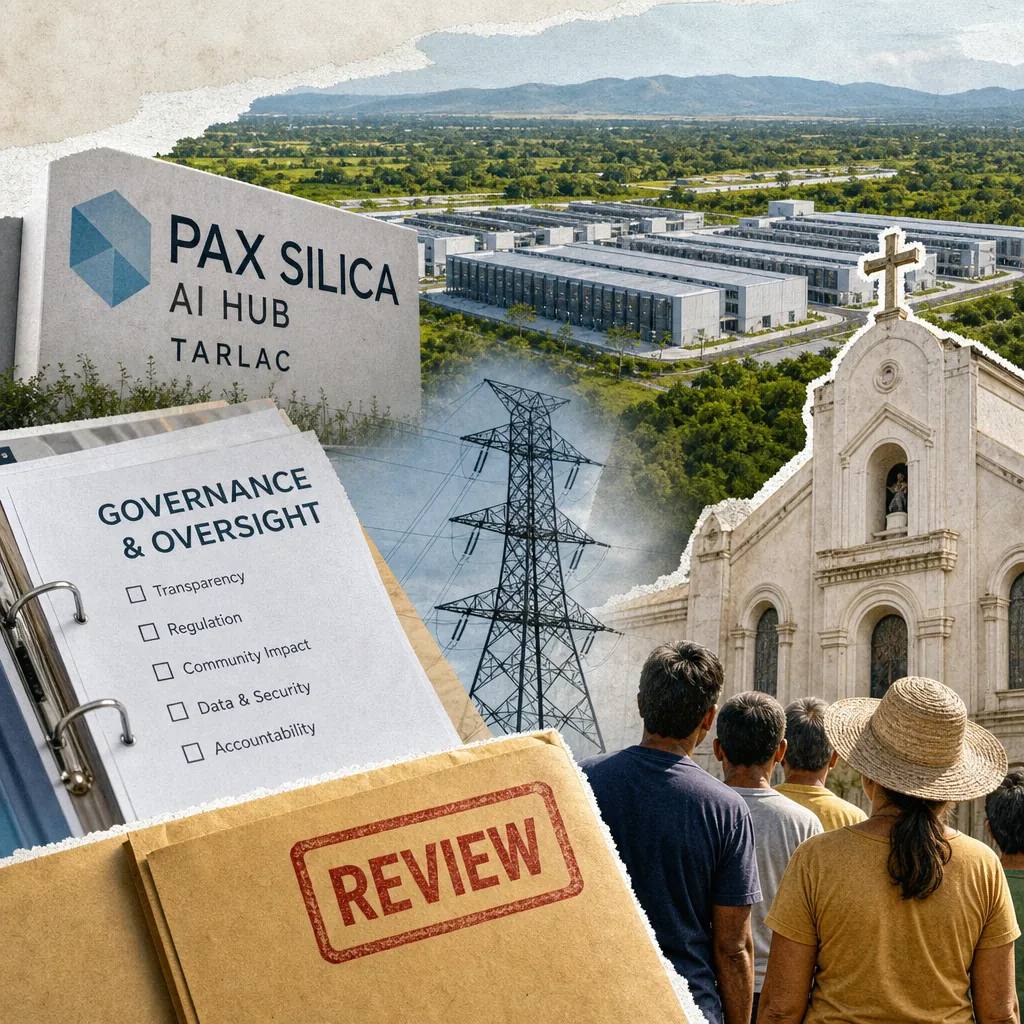
- Infrastructure and AI Hub Development – The government is positioning New Clark City as a centerpiece of the Luzon Economic Corridor (LEC) for semiconductors and artificial intelligence (AI). Executive Secretary Ralph Recto and Finance Secretary Frederick Go led a high-level Cabinet delegation to Clark and New Clark City, underscoring efforts to attract global technology investments. This development could drive demand for residential and commercial properties in the area, as it promises high-value jobs and economic growth.
- Pag-IBIG Promotional Housing Loan Rates – The Expanded Pambansang Pabahay para sa Pilipino (4PH) Program continues to make home ownership more affordable as Pag-IBIG Fund offers promotional housing loan rates for members buying homes above the socialized housing price ceiling of P10 million. This initiative builds on Pag-IBIG Fund's earlier move to increase its maximum housing loan amount to P10 million per borrower, giving members more financing options for homes that better match their needs, income, and family situation.
- SM Prime Expands Office Space Portfolio – SM Offices, the commercial leasing arm of SM Prime Holdings Inc., is set to deliver North Tower 3 at the SM North EDSA Complex in Quezon City in the second half of 2026, adding 31,000 square meters of office space. The project is among the few remaining large-scale PEZA-registered office developments in Quezon City, catering to companies seeking prime locations.
How the narratives stack
Dominant narrative – The dominant narrative is that government infrastructure and housing initiatives are actively improving community access, safety, and affordability. The DPWH's rapid completion of the East Timawa Road in Iloilo (resolved in two months after a two-year delay) and the flood mitigation efforts under Oplan Kontra Baha are framed as evidence of responsive governance. The QC HOA Forum and the introduction of digital transparency platforms (iReport, Open Infra, Open Data) reinforce the message that local governments are listening to homeowners and addressing their concerns. Meanwhile, Pag-IBIG's promotional loan rates and the expansion of SM's office portfolio signal continued investment in housing and commercial real estate.
Counter-narrative – A counter-narrative of skepticism and frustration persists, particularly around flood control and infrastructure delays. The DPWH's flood mitigation post received 8 "haha" reactions, suggesting public doubt about the effectiveness of cleanup operations. The initial two-year delay on the East Timawa Road, even if resolved quickly, highlights a pattern of slow project delivery that can undermine trust. Additionally, the school stabbing incident in Cavite introduces a safety concern that could dampen buyer enthusiasm for residential projects in that area, despite the local government's swift response.
Emerging narrative – An emerging narrative centers on New Clark City as a multi-purpose hub for technology, events, and lifestyle. The government's push to transform the Luzon Economic Corridor into a semiconductor and AI hub, combined with high-profile events like the Couples for Christ anniversary and the Hot Air Balloon Fiesta, is building a brand for New Clark City as a vibrant, mixed-use township. This could attract both investors and residents looking for modern, well-connected communities.
Suppressed narrative – A suppressed narrative is the potential impact of environmental risks on property values. While the DPWH and MMDA flood mitigation posts received some attention, the broader issue of climate change and increasing frequency of extreme weather events is not being discussed in the context of real estate. Similarly, the declining water levels in Angat Dam and other Luzon dams, which could affect water supply for Metro Manila and surrounding areas, received coverage in news media but did not generate significant social media conversation. These long-term risks may be underappreciated by homebuyers and investors.
Platform insights
Facebook – Facebook dominated the conversation with the highest engagement numbers. The QC government posts and the New Clark City event posts drove the bulk of interactions, while flood mitigation updates struggled for visibility. The platform served as the primary channel for government announcements, with DHSUD and local officials using it to disseminate information directly to homeowners. The emotional reactions on the gmanews post about the Cavite stabbing (36 likes, 18 sad reactions) show that Facebook is where users express distress and seek discussion.
Twitter – Only a few relevant posts appeared, with minimal engagement. The platform served as a secondary distribution channel for official news rather than a site of conversation or sentiment evolution. For example, a gmanews tweet about the Cavite school incident accumulated 2,341 views but only 4 likes. This indicates that real estate-related government news has not yet found a strong audience on Twitter in this dataset.
YouTube – A single unrelated Vilma Santos movie marathon from VIVAFilms received 587 views and 9 likes, completely outside the incident’s narrative thread, indicating no cross-platform discussion of the tragedy on video content.
Key voices and communities
- Government and Development Agencies – National and local government accounts, particularly from the DPWH, MMDA, and local government units (Quezon City, Baguio, General Trias), dominate the conversation on infrastructure improvements and community engagement. Their messaging consistently ties new roads, flood mitigation, and tax amnesty to improved quality of life and property value.
- Homeowners Associations and Community Residents – HOAs were explicitly featured in the QC forum, and their concerns—such as flooding, traffic, and subdivision governance—appear indirectly in posts about drainage clearing and road projects. The Alabang traffic complaint post, which received 29 likes and 27 comments, reflects resident frustration that can affect real estate decisions in that corridor.
- Event and Lifestyle Venue Promoters – High-profile events at New Clark City Stadium and Rockwell Center’s Proscenium Theater generate significant social media buzz, indirectly promoting premium real estate destinations. The Couples for Christ anniversary at New Clark City drew nearly 1,000 loves and over 400 comments, while the "Daddyokie" concert at Rockwell received up to 880 likes and over 1,500 love reactions. These venues are part of mixed-use townships developed by major players like the Bases Conversion and Development Authority (BCDA) and Rockwell.
- Media and News Aggregators – Outlets like gmanews, heraldofilipino, and Philstar play a crucial role in amplifying official statements and providing detailed reporting. The gmanews post on the Cavite stabbing triggered the highest emotional engagement, indicating that media framing shapes public perception.
- Private Sector Developers – SM Prime and Pag-IBIG Fund are notable voices in the conversation, with SM Prime announcing office space expansion and Pag-IBIG offering promotional loan rates. These announcements signal continued investment and confidence in the real estate market.
Narrative streams
Local Government-HOA Collaboration and Digital Transparency
The QC Subdivision Forum on June 20 brought together multiple Homeowners Associations with agencies including DHSUD, BIR, Manila Water, and Meralco, signaling a push for transparent, data-driven community management. The introduction of digital platforms—QC Open Data, QC Open Infra, and QC iReport—was positioned as a transparency tool for residents to report concerns and track project progress. This tactical shift could reshape how future subdivision disputes (such as HOA disputes or delayed turnover issues) are escalated. For developers, this means that homeowners now have a direct channel to document infrastructure delays and flooding issues, which could escalate pressure on developers to address construction defects or turnover delays in subdivisions. The inclusion of DHSUD in the forum also signals potential for more aggressive enforcement of the Condominium Act and Maceda Law protections.
Flood Mitigation and Infrastructure as Property Value Drivers
Both the DPWH and MMDA released updates on flood control between June 19 and 20, addressing specific waterways in Makati, Parañaque, Quezon City, and Manila. The DPWH's hauling of trash from Calatagan and Marulas creeks, and the MMDA's declogging of laterals in Sampaloc and Sta. Cruz, signal a pre-rainy-season push. The low engagement (8 likes, few comments) suggests these messages may not be reaching the general public effectively, but for investors eyeing condos in flood-prone areas like Makati CBD or Aseana, these operational details are critical due diligence data. The earlier two-year delay on East Timawa Road in Iloilo, resolved in two months per DPWH Secretary Dizon, further highlights public frustration with infrastructure timelines that directly affect property accessibility and resale value. The DPWH also met with Naga City Mayor Leni Robredo to inspect projects under Oplan Kontra Baha and the Pambansang Pabahay para sa Pilipino (4PH) program, which provides modular shelter units. This indicates that infrastructure and housing are being coordinated at the national and local levels.
Real Property Tax Amnesty Deadline Pressure
The Baguio City government posted on June 20 a reminder that the amnesty on penalties, surcharges, and interests for delinquent real property taxes ends on July 5, 2026, under Section 30 of the Real Property Valuation and Assessment Act. This post received 50 likes and 18 shares, indicating that property owners are actively seeking such tax relief. The deadline aligns with the broader TRAIN Law and estate tax amnesty context, and could trigger a wave of property transactions as owners regularize titles to avoid higher costs—a key consideration for those dealing with clean title issues or preselling purchases. For developers and brokers, this creates a time-sensitive opportunity to position advisory content around tax compliance.
New Clark City as a Multi-Purpose Hub
New Clark City is rapidly emerging as a centerpiece of the Luzon Economic Corridor for semiconductors and artificial intelligence, with the Marcos administration positioning it as a hub for high-value technology investments. Executive Secretary Ralph Recto and Finance Secretary Frederick Go led a high-level Cabinet delegation to Clark and New Clark City, underscoring efforts to attract global technology investments. The delegation toured Texas Instruments Philippines inside Clark Freeport, highlighting the country's engineering talent and manufacturing capabilities. Concurrently, high-profile events like the Couples for Christ anniversary and the Hot Air Balloon Fiesta are generating massive social media engagement, reinforcing New Clark City's brand as a livable, mixed-use township. For developers and investors, these signals indicate that New Clark City is becoming a viable alternative to Metro Manila for both residential and commercial projects.
School Safety Incident in Cavite
A stabbing incident at a school in Cavite on June 16, 2026, generated significant official and public reaction. The Council for the Welfare of Children (CWC) emphasized child protection and mental health, while the PNP directed intensified patrols and school access control. The local government's immediate action to shoulder medical expenses and install metal detectors has been highlighted, which could be perceived as a proactive, safety-first stance. For real estate developers operating in Cavite—a key growth corridor for developers like Camella, Vista Land, and Lumina Homes—the risk is that repeated incidents or perceived government inaction could deter families from considering the area for home purchases. Conversely, developers who visibly support school security enhancements could strengthen their brand as community partners.
Pag-IBIG Promotional Housing Loan Rates and SM Office Expansion
Pag-IBIG Fund is offering promotional housing loan rates for members buying homes above the socialized housing price ceiling of P10 million, building on its earlier move to increase the maximum loan amount to P10 million. This initiative aims to make home ownership more affordable for Filipino workers. Meanwhile, SM Offices is set to deliver North Tower 3 at the SM North EDSA Complex in Quezon City, adding 31,000 square meters of PEZA-accredited office space. These developments signal continued investment in both residential and commercial real estate, catering to growing demand for quality spaces.
Conversation trajectory
Based on the available data, several signals point to where the conversation is headed over the next few weeks and months.
- Local government–HOA collaboration is becoming a central narrative for subdivision governance (next 4–6 weeks). The QC HOA Forum model—involving BIR, DHSUD, Meralco, and Manila Water—is likely to be replicated by other cities, leading to a 3–5x uptick in mentions of local government–HOA partnerships. This will create new accountability mechanisms for developers and HOAs alike.
- Real property tax amnesty deadlines are driving time-sensitive financial discussions (next 2–3 weeks). The Baguio amnesty deadline of July 5, 2026, will likely prompt neighboring LGUs to announce similar programs within 3–6 weeks. This will fuel conversations about capital gains tax, documentary stamp tax, and estate tax amnesty under the TRAIN Law.
- Infrastructure completion narratives are reshaping perceptions of location viability (next 2–3 months). The rapid completion of the East Timawa Road in Iloilo and the Doña Remedios Trinidad-Dingalan Bypass Road in Bulacan will be cited as value drivers for preselling and RFO properties in those areas. Expect a 2–3 month lag before localized real estate discussions begin citing these roads as value drivers.
- Venue-based cultural events are creating soft marketing signals for mixed-use townships (ongoing). High-attendance events at New Clark City Stadium and Rockwell’s Proscenium Theater will continue to generate location tags and positive sentiment, correlating with increased search interest for condos and lots in those areas.
- School safety concerns may influence buyer sentiment in Cavite (next 4–6 weeks). The stabbing incident could lead to heightened sensitivity to child safety among families considering Cavite for home purchases. Developers who proactively support school security measures may mitigate negative perceptions.
Key trigger events that will reshape this conversation include: the July 5 Baguio tax amnesty deadline, which will likely prompt neighboring LGUs to announce similar programs within 3–6 weeks; the upcoming Subdivision Forum follow-ups in Quezon City (expected monthly), which will further institutionalize HOA–local government data-sharing and create case studies for other cities; and the scheduled July opening of “On Your Feet!” at the Proscenium Theater, which will sustain Rockwell-related lifestyle mentions through at least mid-July.
Response guidance
For communicators tracking the Philippine real estate and property development sector, the weekend's conversations offer several actionable insights.
Platform approaches:
- Facebook: Leverage high-engagement government posts about infrastructure improvements, such as the East Timawa Road completion and DPWH flood mitigation efforts, by sharing them with commentary that highlights how better roads and drainage directly enhance access, safety, and property value in nearby developments. Engage constructively in comments on QC’s HOA Forum posts by acknowledging the importance of homeowner feedback and sharing examples of how the developer collaborates with HOAs on common concerns. Use event-related content at New Clark City and Rockwell to showcase lifestyle and placemaking.
- Twitter: Engage with official agency tweets about infrastructure projects by retweeting with a brief note on how improved connectivity benefits residents in nearby developments. Respond to tweets about the Baguio real property tax amnesty by sharing a thread with practical tips for property owners on availing the amnesty, including deadlines and required documents.
- LinkedIn: Publish a thought leadership article tying the infrastructure momentum to the developer’s township planning philosophy. Share the QC HOA Forum update with a post highlighting the developer’s own HOA collaboration initiatives, such as digital reporting tools for subdivision issues.
Key messages:
- "Infrastructure improvements—from bypass roads to flood control—directly enhance the livability and value of our communities, and we actively support these public efforts."
- "We believe in transparent, collaborative relationships with homeowners. Forums like QC’s subdivision meeting show how local governments and developers can work together to solve real concerns."
- "Our developments are designed with resilience in mind—proper drainage, elevated structures, and green spaces—to mitigate flooding and adapt to climate challenges."
- "Tax amnesty programs help property owners regularize their accounts. We encourage buyers and current residents to take advantage of these relief measures to protect their investment."
- "From Rockwell’s Proscenium to New Clark City, we create destinations that bring people together—proof that quality placemaking strengthens communities."
Sensitive topics to navigate:
- Delayed Infrastructure and Flooding: While government posts celebrate quick fixes, past delays (e.g., two-year neglect of East Timawa Road) can remind audiences of broken promises. Avoid blaming previous administrations; instead, frame the current momentum as a positive change. When responding to flood concerns, do not over-promise; acknowledge that comprehensive solutions require long-term maintenance and community discipline.
- HOA Disputes and Administrative Hurdles: Engagement on QC’s HOA Forum posts should avoid appearing tone-deaf to common grievances like delayed turnover, title issues, or high condo dues. Focus on the developer’s proactive support channels rather than dismissing complaints.
- Tax and Financial Burdens: The Baguio tax amnesty post is a positive tool, but property owners may feel overwhelmed by complex local taxes. Position the developer as an educator, not a salesperson, by offering generic guidance without giving legal advice.
- School Safety Incident in Cavite: Avoid framing your message as a sales pitch for housing near “safe” zones; instead, focus on shared community values and your role as a stakeholder in the area. Do not comment on the suspect’s background or school policies; defer to official statements from the PNP and DepEd.
Response priorities:
- Maximize engagement on infrastructure progress posts by sharing them with contextual commentary that connects the dots between public road projects and the developer’s masterplanned communities.
- Participate in community governance conversations by engaging in comment sections on QC HOA Forum posts, offering to share best practices for HOA management and digital reporting tools.
- Capitalize on event-driven placemaking content by preparing a curated social media calendar that repurposes official event posts with subtle branding, reinforcing lifestyle benefits without overt selling.
- For Cavite-related projects, pause all promotional content referencing schools or family themes for at least 48–72 hours to avoid appearing tone-deaf; instead, run generic brand-awareness posts. Coordinate with local government units where you have projects to offer tangible support and then share that action publicly.
See the full picture behind today's signals.
This report draws from Media Meter's MediaWatch, our real-time monitoring engine tracking 2,470+ Philippine sources across print, broadcast, digital, and social. Explore how the platform turns raw coverage into decision-grade intelligence, then see how it's configured for teams like yours — whether you're in PR agencies, corporate comms, government, or marketing.
Want more? Browse our Report Library for sector and crisis intelligence, or request a demo and we'll have your brand set up before the call.
Want this kind of intelligence on your brand?
This brief is built on the same MediaWatch methodology that runs continuously across every brand we monitor. See your competitive landscape, Impact Score, and narrative trajectory in a 30-minute demo.