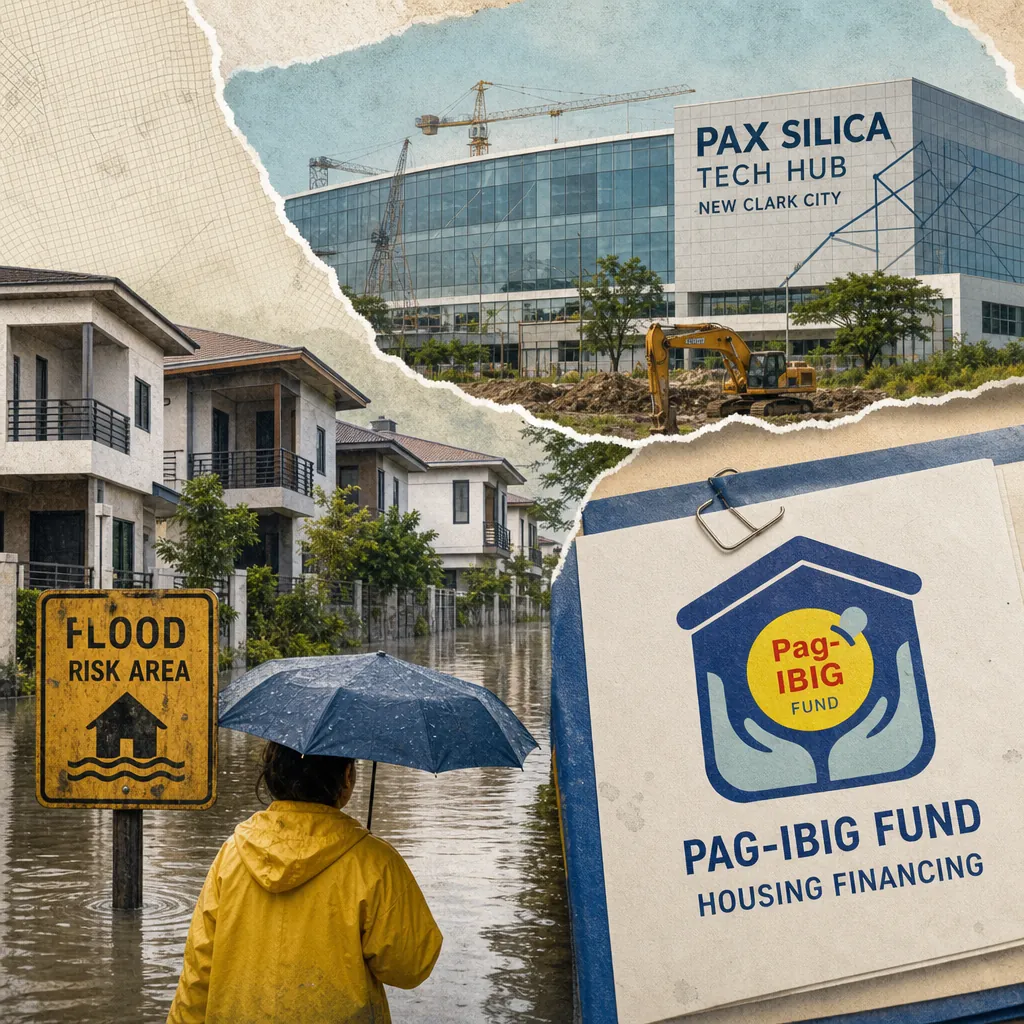
Real estate conversation splits: pre-selling frenzy in Bulacan and QC, connectivity complaints in Cavite, and a Davao consultation gap
The July 4-5 window saw a surge in pre-selling promotions for Megaworld's Northwin Global City and high-end townhouses in Quezon City, while a Reddit user's complaint about internet monopoly in a Camella subdivision and a Davao market controversy over Robinsons Land's consultation process added critical consumer and governance narratives.
The Philippine real estate conversation over the weekend of July 4–5, 2026, unfolded across several distinct threads, reflecting a market that is simultaneously bullish on pre-selling inventory in emerging corridors, grappling with infrastructure bottlenecks in mass-market subdivisions, and facing community-relations challenges in public-private partnerships. The volume of posts and articles was moderate, but the range of topics—from luxury townhouses in Quezon City to a Davao vendor dispute—paints a picture of a sector where opportunity and friction coexist.
On the promotional front, a coordinated wave of content for Megaworld’s 9 Central Park inside Northwin Global City in Bulacan dominated social media. Multiple property specialists on Facebook, Reddit, and YouTube pushed the project with offers as low as ₱7,000–₱9,000 per month, 0% interest, and no downpayment, positioning it as the "Future BGC of the North" and linking it to infrastructure projects like the North-South Commuter Railway and the New Manila International Airport. YouTube walkthroughs from creators like @megaworldatfana and @paulaannrupido garnered modest viewership (59 to 238 views), suggesting a targeted but engaged audience. A separate Reddit post from AnyUmpire6178 on July 5 dedicated to Northwin Global City received 1 like and 1 comment. This promotional surge was complemented by a separate thread of high-end townhouse listings in Quezon City’s Heroes Hills and Capitol Hills, with prices ranging from ₱23 million to ₱58.5 million, featuring elevators, EV-ready garages, and home automation—targeting affluent families seeking suburban exclusivity within Metro Manila.
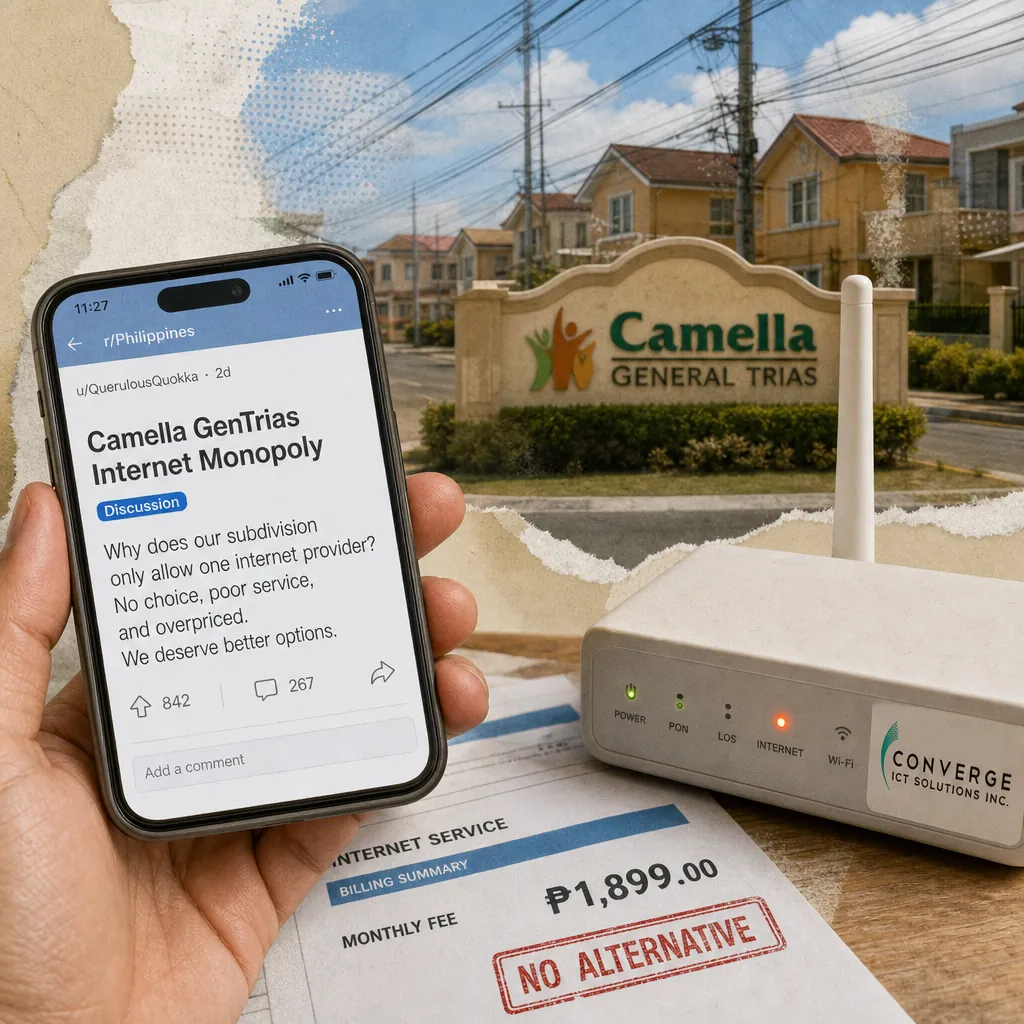
A contrasting consumer-experience narrative emerged on July 5 when Reddit user u/queenstunner posted a HELP request about internet connectivity in a Camella subdivision in Molino, Cavite. The user wrote, "the only available providers are Streamtech (Villar owned) and PLDT, but slots are full. I work from home and need internet for heavy workload". The post received 3 upvotes and 6 comments, with suggestions ranging from SIM-based routers to signal boosters. This complaint highlights a growing consumer frustration with developer-controlled utility monopolies, directly relevant to PLDT and Smart’s service footprint in Villar-developed communities.
Meanwhile, a more critical governance narrative surfaced from Davao City. On July 5, @davaotoday reported that vendors in a public market argued the rehabilitation partnership with Robinsons Land lacked consultation, and that they learned only at the council’s final reading that Robinsons Land would be the developer. The tweet gained 1 like, 1 share, and 40 views—a muted yet pointed signal of friction between local stakeholders and a major developer. This controversy contrasts sharply with the positive news from Megaworld, which on the same day reported retaining 122,000 square meters of lease renewals in the first half, a move that reinforced the "live-work-play" master plan's staying power.
Government housing initiatives also featured prominently. The National Housing Authority (NHA) Region XI turned over a fully furnished condominium unit at Madayaw Residences in Davao City to the family of the late Ateneo student-athlete Rene Clert "Bobet" Baterbonia. Posts from multiple Facebook accounts, including bomboradyocauayan, garnered 100 likes, 94 love reactions, and 8 comments, making it the most emotionally resonant housing post of the weekend. Separately, the Department of Human Settlements and Urban Development (DHSUD) distributed land titles under the Expanded 4PH program’s Enhanced Community Mortgage Program to informal settler families in Antipolo, though a formal announcement received zero engagement. A regulatory concern surfaced when a Facebook user posted an update from DHSUD indicating that complaints about condo corporations and associations should be directed to the SEC, not DHSUD. That post received 28 likes and 3 shares, and the user wrote, "I will be forwarding my complaint to SEC," signaling a potential undercurrent of dissatisfaction with condo management oversight.
Additional threads added further texture. A detailed "Want to Buy / Want to Lease" post from a licensed broker listed 12 specific requirements including lots in Dasmariñas Village and McKinley West, with budgets up to ₱390 million, and BGC condo leases at ₱100K–₱130K per month, underscoring sustained institutional demand in premier Metro Manila addresses. A separate "Want to Lease" post specified extremely detailed requirements: a 2-bedroom in BGC or low-density development, lower floor facing garden, fully furnished with maid’s room, inverter AC, pet-friendly, 100% generator backup covering aircon, and 1 Gbps fiber provisioned to the unit—budget ₱100K/month. These posts collectively demonstrate a sophisticated, high-net-worth buyer and renter base with stringent criteria.
BPO hiring posts on Reddit—for Concentrix and Accenture—named key real estate locations such as Nuvali, BGC, Alabang, Vertis North, and Bridgetowne, reinforcing the symbiotic link between office employment hubs and residential demand in those areas. A Twitter post from @daishinkanwaifu drew a comparison that went viral (61,580 views, 154 likes), stating "Singapore is like BGC na walang traffic na kasing laki ng QC". This comparison mirrors earlier urban-lifestyle discourse and injects a light-hearted but pointed critique of Metro Manila’s congestion into the real estate conversation.
News media coverage on July 5 added several relevant articles. Colliers Philippines released a report highlighting that demand is driving a property boom in the Visayas and Mindanao, with 45,000 condominium units projected for completion from 2026 to 2029, and Cebu and Davao expected to account for more than 60% of the pipeline [Manila Times Online]. The report noted that Iloilo led provincial office take-up in the first quarter of 2026, overtaking Cebu as outsourcing firms sought skilled labor and lower operating costs [BusinessWorld Online]. Ayala Land shares rose on bargain hunting and expansion plans, including fresh investments in its 320-hectare Lio estate in El Nido, Palawan [BusinessWorld Online]. Federal Land shifted four residential developments within its Metropolitan Park complex in Pasay City to 100% renewable energy under a multi-year supply agreement with ACEN Corp., marking a notable ESG integration in the high-end condo segment [BusinessWorld Online]. A Brown Co. Inc. raised ₱4 billion from its maiden fixed-rate bond issuance, with proceeds to support its real estate and renewable energy businesses [Manila Bulletin Online]. Robinsons Land (RLC) published a feature on its vision, highlighting Robinsons Galleria as a case study of long-term planning [Philstar Online].
Water service interruptions were announced for parts of Quezon City, Valenzuela, Bulacan, and Antipolo from July 6 to 13 due to maintenance activities by Maynilad [Inquirer Online]. Separately, the Angat Dam water level fell below the critical level of 160 meters, raising concerns of possible water shortages in Metro Manila [Philstar Online]. These environmental factors could affect real estate desirability in affected areas.
Key themes
- Pre-selling frenzy in Bulacan intensifies – A coordinated wave of promotional content for Megaworld’s 9 Central Park in Northwin Global City flooded platforms with offers as low as ₱7,000–₱9,000 per month, 0% interest, and no downpayment. Multiple agents pushed the same project across Reddit, Facebook, and YouTube, linking it to infrastructure catalysts like the North-South Commuter Railway and New Manila International Airport. The thread remained largely one-sided marketing with minimal critical reactions.
- High-end townhouse cluster in Quezon City – A distinct market segment for wealthy families seeking suburban exclusivity within Metro Manila emerged, with listings in Heroes Hills, Capitol Hills, and Zuazuaregui priced from ₱23 million to ₱58.5 million. Features include elevators, EV-ready garages, home automation, and multiple car parks, suggesting a demographic shift among affluent families prioritizing space and security over CBD convenience.
- Connectivity monopoly complaint in Camella subdivision – A Reddit user’s frustration with internet unavailability in a Camella subdivision in Molino, Cavite, exposed a market access bottleneck. The user noted that only Streamtech (Villar-owned) and PLDT are allowed, and slots are full, directly impacting work-from-home capability. This complaint serves as a canary in the coal mine for developer-controlled utility restrictions.
- Robinsons Land faces consultation backlash in Davao – Vendors in a Davao public market claimed they were not consulted about the Robinsons Land partnership for market rehabilitation, learning of the developer only at the council’s final reading. The controversy, amplified by Davao Today, highlights how developer-community trust can be undermined when partnership details are perceived as imposed rather than collaboratively developed.
- Government housing initiatives generate positive sentiment – The NHA’s turnover of a fully furnished condo unit to the Baterbonia family in Davao City generated widespread positive engagement, with combined reactions exceeding 200 likes, loves, and cares. The DHSUD’s land title distribution under the Expanded 4PH program also received coverage, though with lower engagement. These stories offer a strong counter-narrative to private-sector connectivity complaints.
- Regulatory ambiguity on condo governance surfaces – A Facebook user reported that DHSUD directed condo corporation complaints to the SEC, highlighting a potential gap in regulatory clarity. The post received 28 likes and 8 comments, indicating growing awareness of jurisdictional issues that could amplify negative sentiment around title issues or HOA mismanagement.
- BPO hiring surge reinforces residential demand in key hubs – Multiple Reddit posts advertising thousands of seats across Concentrix and Accenture named Nuvali, BGC, Alabang, Vertis North, and Bridgetowne as hiring sites. This underscores the demand-side fundamentals for residential properties in those areas and reinforces the employment-housing linkage.
- VisMin property boom and office take-up shift – Colliers Philippines reported that demand is driving a property boom in Visayas and Mindanao, with 45,000 condominium units projected for completion from 2026 to 2029. Iloilo led provincial office take-up in Q1 2026, overtaking Cebu as outsourcing firms expanded in regional hubs.
How the narratives stack
Dominant – Within the captured set, the pre-selling promotional surge for Megaworld’s Northwin Global City in Bulacan generated the highest volume of posts across platforms, with multiple agents and YouTube creators pushing the same project. This narrative is developer-driven and one-sided, but its sheer frequency makes it the most visible thread. The Colliers report on VisMin property boom and Iloilo office take-up also received significant news coverage, adding institutional weight to the expansion narrative.
Counter-narrative – The connectivity monopoly complaint in Camella and the Robinsons Land consultation controversy in Davao provide critical counterpoints. The Camella post, though low in engagement (3 upvotes), exposes a consumer pain point that could escalate into broader reputational risk for developers like Vista Land. The Davao controversy, while also low-engagement, carries weight because it comes from a known local news outlet and touches on procedural fairness.
Emerging – The regulatory ambiguity on condo governance (DHSUD vs. SEC jurisdiction) is an emerging narrative that could gain traction if unresolved complaints accumulate. The high-end townhouse cluster in Quezon City is also emerging as a distinct market segment that competes with Makati and BGC condos for affluent families.
Suppressed – The positive government housing stories (NHA turnover, DHSUD land titling) received coverage but relatively low engagement compared to promotional content. The Federal Land renewable energy shift and A Brown bond issuance are positive ESG and financing stories that received limited social media amplification. The water service interruption announcements and Angat Dam level concerns are environmental factors that could affect real estate desirability but have not yet been linked to specific developments in the conversation.
Platform insights
- Facebook – The platform remained the dominant channel for both transactional listings and government housing announcements. Eleven new property posts on July 4–5 were primarily from Pampanga brokers, but the most engaging content was the Baterbonia family condo grant (100 likes, 94 love reactions) and the DHSUD regulatory concern (28 likes, 8 comments). The Northwin Global City posts from Megaworld agents generated high shares (e.g., one post had 100 shares) but few likes or comments, suggesting passive dissemination of marketing content. Detailed Want-to-Buy/Want-to-Lease posts from licensed brokers achieved low public engagement (1 share, 1 comment), indicating that high-budget requests are niche and shared primarily through private messaging.
- YouTube – The 9 Central Park promotion dominated YouTube with six new videos totaling 976 views, the highest being @therealtybuddy’s July 2025 Nuvali update (92,598 views, 745 likes, 152 comments) which was reposted in the dataset but not new. The newer videos from @megaworldatfana and @paulaannrupido averaged 144 and 59 views respectively, indicating limited organic reach for pre-selling condo content. No new YouTube videos appeared from the July 3–5 dataset beyond the Northwin Global City promotions.
- Reddit – Activity on July 5 was notably richer than in the prior window, with five real-estate-relevant posts. Two were promotional (Northwin Global City, Primehomes Capitol Hills), but the most engaging were a help-seeking post about internet in a Camella subdivision (3 upvotes, 6 comments), a luxury duplex listing (2 upvotes, 1 comment), and a highway-driving query from Bulacan to Alabang (1 upvote, 1 comment) that indirectly maps the infrastructure-driven commuting corridor between North and South. BPO hiring posts dominated Reddit volume (4 posts) but contributed to the employment-housing linkage rather than direct real estate discussion.
- Twitter – The only relevant Twitter post came from @davaotoday on July 5, reporting the Robinsons Land market partnership controversy. With 40 views and just 1 share, the conversation remained contained, but the nature of the complaint—lack of consultation—carried implications for future public backlash. Twitter here served as a documented starting point for a potential crisis narrative. A separate viral tweet comparing Singapore to BGC+QC (61,580 views, 154 likes) added a humorous but critical note on urban density.
Key voices and communities
- Licensed Real Estate Professionals (Brokers and Agents) – This group continues to generate the highest post volume across Facebook, Reddit, and YouTube, actively listing condos, house-and-lot packages, and coordinating buyer requests on behalf of developers. Their content consistently includes contact details, license numbers, and specific price points, signaling a competitive, commission-driven ecosystem. New data shows a substantial surge in promotions for Megaworld’s 9 Central Park in Bulacan, with multiple agents offering "No Downpayment" and monthly payments as low as ₱7,000. The geographic footprint has expanded further into Pampanga, where luxury house listings from ₱8.7M to ₱25M have appeared across platforms, often featuring private pools and near-Clark locations. Agents are also promoting affordable RFO units like those in SummerVille 2 with Pag-IBIG financing and triple savings promos. Several YouTube channels now serve as lead-generation vehicles, with dedicated tours of pre-selling projects earning hundreds of views and direct inquiry calls to action.
- Institutional Developers and REIT Sponsors – Corporate accounts from Robinsons Land, Rockwell, BCDA, Ayala Land, Megaworld, and Federal Land drive strategic narrative around long-term portfolio management, infrastructure investment, and project milestones on Facebook and YouTube. New data reinforces this with Ayala Land Estates’ "Built for Breakthroughs" Brokers Rally video (113 views) and Federal Land’s announcement of shifting four residential developments to 100% renewable electricity under an ACEN supply agreement. Liberty Land Corporation posted an aggressive promo for its SummerVille 2 affordable housing project in Pampanga, highlighting "Only 47 Units Left" and monthly amortization as low as ₱15,012 via Pag-IBIG. Megaworld’s hospitality arm also gained coverage with the Savoy Hotel Mactan Newtown awards and leadership changes, adding a lifestyle dimension to the developer narrative.
- High-Value Individual Buyers and Renters – Several posts originate from end-users with substantial budgets and very specific requirements—clean titles, lower floors, ready-for-occupancy units, and prime CBD locations. New data amplifies this segment with a detailed "Want to Buy / Want to Lease" Facebook post listing 12 distinct requests, including a lot or old house in Dasmariñas Village, Makati with a ₱390M cash budget for a repeat client, and a 1-hectare lot in Canlubang for a warehouse. Other requests include a McKinley Hill lot at ₱450K/sqm cash, a Green Meadows lot at ₱200K/sqm, and a San Juan or Mandaluyong house with swimming pool (₱35M-₱100M). On the leasing side, the same post includes a 3-bedroom in BGC at 8 Forbes Town Road, a 2-bedroom at Edades Tower with parking (₱100K-₱130K/month), and an office space in Pasong Tamo. A separate "Want to Lease" post from another user lists extremely specific requirements: a 2-bedroom in BGC or low-density development (e.g. Two Serendra style), lower floor facing garden, fully furnished with maid’s room, inverter AC, pet-friendly, 100% generator backup covering aircon, and 1 Gbps fiber provisioned to the unit—budget ₱100K/month. These posts collectively demonstrate a sophisticated, high-net-worth buyer and renter base with stringent criteria.
- Government and Regulatory Authorities – This group has expanded significantly with new data. Municipal treasurers and tax compliance advisors remain active, with the Muntinlupa City Facebook post on the RPVARA deadline generating high engagement—36 likes, 62 shares, 45 love reactions, and 14 comments. Separately, the National Housing Authority (NHA) and Department of Human Settlements and Urban Development (DHSUD) are now prominent voices. NHA Region XI turned over a fully furnished condominium unit to the Baterbonia family at Madayaw Residences in Davao City, a story covered by multiple media outlets and generating up to 100 likes and 94 love reactions. The DHSUD also distributed land titles under the Expanded 4PH program’s Enhanced Community Mortgage Program, with formal announcements via official government pages and news syndication. A single user post reported that DHSUD directed condo corporation complaints to the SEC, highlighting a regulatory gap for homeowners. An accounting firm also posted a July 5 BIR deadline reminder for Documentary Stamp Tax submissions.
- Media and News Outlets Covering Philippine Real Estate – Independent news platforms like Flying Ketchup and Davao Today are the primary drivers of public conversation around major developers and local controversies, though overall engagement remains low. These outlets can frame a developer’s performance positively—as seen with Megaworld’s 122,000 sqm of lease renewals—or negatively, by amplifying vendor disputes and consultation gaps. Their influence stems from credibility with local audiences rather than raw reach, as even a single critical report can shape stakeholder perception. Colliers Philippines also contributed a research report on VisMin property boom, adding institutional weight to the expansion narrative.
Narrative streams
Megaworld’s Northwin Global City: Pre-selling blitz in Bulacan
A concentrated surge of promotional content for Megaworld’s 9 Central Park inside Northwin Global City flooded platforms over the weekend, with offers as low as ₱7,000–₱9,000 per month, 0% interest, and no downpayment across studio to three-bedroom units. Multiple property specialists pushed the same project across Reddit, Facebook, and YouTube, with turnkey tied to the 2027–2028 timeline and proximity to the New Manila International Airport, NLEX, and the North-South Commuter Railway. One post claimed the project would benefit from the North-South Commuter Railway and the New Manila International Airport, linking infrastructure directly to investment appeal. YouTube videos from @megaworldatfana, @paulaannrupido, and @rafaelpayac provided virtual tours and payment breakdowns, with viewership ranging from 59 to 238 views, suggesting a modest but engaged audience. On July 5, AnyUmpire6178 returned to Reddit with a dedicated post for Northwin Global City, calling it the "New Global City" and offering units for as low as ₱9,000 per month, which received 1 like and 1 comment. A separate post from reggie.ramos.942 on Facebook provided a macro-level analysis of Bulacan’s real estate boom, citing 3–5% annual land appreciation and the impact of MRT-7 and the New Manila International Airport. The thread remained largely promotional, with very few comments or critical reactions, indicating a one-sided marketing push rather than organic buyer discussion.
Read for the sector: This promotional blitz signals an upcoming wave of mortgage inquiries and connectivity demand in a corridor that is being marketed as the "next BGC of the North." However, actual infrastructure delivery (MRT-7, airport construction) will be the deciding factor in whether pre-selling converts to sustained occupancy beyond 2028. For banking clients, this represents a pipeline for mortgage product cross-selling; for telecom clients, it signals future fiber and tower deployment opportunities.
Connectivity monopoly in Camella: A consumer pain point
On July 5, Reddit user u/queenstunner posted a HELP request about internet connectivity in a Camella subdivision in Molino, Cavite. The user wrote, "the only available providers are Streamtech (Villar owned) and PLDT, but slots are full. I work from home and need internet for heavy workload". The post received 3 upvotes and 6 comments, with suggestions ranging from SIM-based routers to signal boosters. This complaint highlights a growing consumer frustration with developer-controlled utility monopolies, directly relevant to PLDT and Smart’s service footprint in Villar-developed communities. The user’s frustration that "the only available providers are Streamtech (Villar owned) and PLDT, but slots are full" exposes a market access bottleneck that could affect customer satisfaction and churn.
Read for the sector: This is a nascent but rapidly actionable trend. For telecom clients (PLDT/Smart), it signals growing consumer frustration that could either be leveraged as a competitive differentiator or absorbed as a service-reputation issue. For developers like Vista Land (Camella), this type of post can escalate into a broader conversation about homeowner rights and ISP monopolies if not addressed. The same dynamic may extend to other large township developments where developers negotiate exclusive utility agreements.
Robinsons Land’s Davao market controversy: Consultation gap
On July 5, @davaotoday reported that vendors in a Davao public market argued the rehabilitation partnership with Robinsons Land lacked consultation, and that they learned only at the council’s final reading that Robinsons Land would be the developer. The tweet gained 1 like, 1 share, and 40 views—a muted yet pointed signal of friction between local stakeholders and a major developer. The core grievance—"lack of consultation"—was repeated across the thread, indicating coordinated messaging even without a dedicated campaign account. No subsequent posts countered or clarified, leaving the conversation as an unresolved challenge for Robinsons Land’s community relations.
Read for the sector: This controversy highlights how developer-community trust can be undermined when partnership details are perceived as imposed rather than collaboratively developed. For clients involved in financing or insuring such projects, or for government entities monitoring compliance with socialized housing and local development plans, this pattern signals a need for enhanced due diligence on community relations practices. The criticism centers not on the rehabilitation itself but on the absence of meaningful stakeholder engagement—a criticism that can quickly escalate into broader narratives about developer arrogance or disregard for local voices.
Government housing initiatives: Positive counter-narrative
The NHA’s turnover of a fully furnished condominium unit to the Baterbonia family at Madayaw Residences in Davao City generated widespread positive sentiment on Facebook, with high love reactions (48, 67, 94) across three separate posts. The post from bomboradyocauayan garnered 100 likes, 94 love reactions, and 8 comments, making it the most emotionally resonant housing post of the weekend. This contrasted sharply with a DHSUD-related post from an anonymous user who complained about condo corporation governance, receiving 28 likes and sparking 8 comments. The user stated they would escalate to the SEC, highlighting a potential gap in regulatory clarity for condo disputes. Additionally, a DHSUD news release on July 5 about land title distributions under the Expanded 4PH program for informal settler families in Antipolo was shared but received zero engagement, suggesting low public awareness of formal housing programs beyond emotional stories.
Read for the sector: These stories offer a strong counter-narrative to any criticism of housing policy execution—but they also raise expectations for faster delivery in other regions. The emotional resonance of the Baterbonia story (student-athlete tragedy turned community support) makes it a potent narrative asset that could be leveraged in broader communications about socialized housing and the 4PH program. For Malacañang, these stories can be woven into a wider housing communications calendar to maintain momentum.
High-end townhouses in Quezon City: A new premium segment
A pre-selling post from Kris Francisco on July 3 promoted 11 units in Heroes Hills, QC, priced ₱40M–₱58.5M, featuring elevators, EV-ready garages, and home automation. Another Facebook post on July 4 offered a fully furnished 5-bedroom townhouse in the same area (Zuazuaregui St.) at ₱23M, with a 4-car garage and 24/7 security. On July 5, Reddit user u/Potential_Money7906 listed a brand-new duplex in M Residences, Capitol Hills, at ₱40M fully furnished, with 5 bedrooms and 6 toilets. This cluster of high-end QC listings—all above ₱20M—indicates a distinct market segment for wealthy families seeking suburban exclusivity within Metro Manila, separate from the BGC/Makati condo market. Prices at ₱23M–₱58.5M for 4–5 bedroom units with elevators and multiple car parks suggest a demographic shift among affluent families who prioritize space, security, and proximity to schools (Ateneo, UP) over CBD convenience.
Read for the sector: For Megaworld and Robinsons Land, this indicates that high-end townhouse product should be part of their pipeline; for government clients (Malacañang), the rise of suburban luxury living has implications for traffic management and property tax bases in QC. This trend aligns with the earlier Rockwell query from u/psychological_rip226 but targets a different lifestyle trade-off.
VisMin property boom and Iloilo office take-up
Colliers Philippines released a report on July 5 highlighting that demand is driving a property boom in the Visayas and Mindanao. The report stated that 45,000 condominium units are projected for completion from 2026 to 2029, with Cebu and Davao expected to account for more than 60% of the pipeline, driven largely by demand for affordable and mid-income projects [Manila Times Online]. Separately, Colliers reported that Iloilo led provincial office take-up in the first quarter of 2026, overtaking Cebu as outsourcing firms sought skilled labor and lower operating costs in regional hubs. Iloilo accounted for 16,000 sq.m. of office transactions, representing nearly half of the total take-up outside Metro Manila [BusinessWorld Online].
Read for the sector: These reports reinforce the narrative of sustained demand outside Metro Manila and validate developer expansion into regional hubs. For banking clients, this signals lending opportunities in VisMin residential and office projects. For telecom clients, the office take-up in Iloilo and other hubs represents high-density fiber-to-the-home and enterprise connectivity opportunities.
Federal Land’s renewable energy shift and A Brown bond issuance
Federal Land shifted four residential developments within its Metropolitan Park complex in Pasay City to 100% renewable energy under a multi-year supply agreement with ACEN Corp. [BusinessWorld Online]. The agreement covers the ready-for-occupancy Six Senses Residences, Mi Casa Residences, Palm Beach Villas, and Palm Beach West. The projects shifted to renewable energy through the government’s Green Energy Option Program (GEOP) and Retail Aggregation Program (RAP). Separately, A Brown Co. Inc. raised ₱4 billion from its maiden fixed-rate bond issuance, which will be deployed to support the growth of its real estate and renewable energy businesses [Manila Bulletin Online].
Read for the sector: These developments signal that ESG integration and capital market access are becoming differentiators in the premium segment. For banking clients, the Federal Land-ACEN partnership creates an opportunity to showcase green financing or sustainability-linked loan products. For government clients, it reinforces the renewable energy transition narrative.
Conversation trajectory
- Pre-selling frenzy in Bulacan will intensify as infrastructure bets solidify – The coordinated promotional push for Northwin Global City is likely to continue as more agents and developers jump on the "BGC of the North" bandwagon. Over the next 3–6 months, expect more developers to announce similar projects in the Bulacan corridor, especially if MRT-7 and New Manila International Airport construction progress visibly. The key trigger will be the release of H2 2026 office occupancy reports from major BPO associations (likely August–September), which will either confirm or challenge the retention narrative from Megaworld.
- Connectivity monopoly complaints will escalate as remote work persists – The Camella internet complaint is a canary in the coal mine. As more residents work from home, similar complaints are likely to surface in other developer-controlled subdivisions. This trend will likely amplify over the next 2–4 months, especially if a widely shared post about ISP monopoly complaints in a large subdivision goes viral. The NTC or DICT may face pressure to regulate exclusive ISP agreements in subdivisions.
- Developer-community consultation friction will become a reputational risk vector – The Davao market controversy involving Robinsons Land reveals that transparency—or lack thereof—during public-private partnership announcements is a growing trigger for backlash. This pattern will likely resurface within 2–4 months when other local governments announce similar redevelopment partnerships, particularly in cities with active civil society monitoring (e.g., Davao, Iloilo, Cebu). Local government council hearings for the Davao market project (likely within 4–6 weeks) will generate intense local conversation and may set a precedent for other PPP real estate deals nationwide.
- Government housing programs will remain a positive narrative anchor – The NHA and DHSUD success stories (Baterbonia turnover, 4PH land titling) provide a strong counter-narrative to private-sector connectivity complaints. Expect more such stories as the 4PH program expands, especially if the government can demonstrate faster delivery in other regions. The emotional resonance of the Baterbonia story makes it a potent narrative asset that could be leveraged in broader communications about socialized housing.
- Environmental factors will periodically disrupt location appeals – Water service interruptions announced for parts of NCR and Bulacan, combined with the Angat Dam level falling below critical, could affect real estate desirability in affected areas. If severe weather events recur, the "flood-free" claims in developer marketing could face increased scrutiny. This environmental factor is likely to resurface with each typhoon season and should be monitored as a periodic trigger.
Key trigger events: August 3, 2026 bidding deadline for multiple foreclosed units across Makati, Manila, and Baguio—expected to spike social conversation around "bank-owned" and "clean title" as buyers compare auction deals against market prices. The re-tendering of the New Clark City ICT infrastructure project (likely within 60–90 days) will reignite debate about government smart-city delivery capabilities. The next major typhoon or heavy rainfall event will test the "flood-free" claims of developers marketing Bulacan and Pampanga townships. Q2 2026 REIT financial results expected in August will provide hard data on occupancy and rental yields.
Response guidance
For PLDT/Smart: Immediately engage with the Camella Molino homeowners’ association to expedite slot allocation or deploy temporary fixed-wireless solutions (e.g., 5G LTE backups) for affected residents. Proactively partner with large developers like Vista Land, Megaworld, and Robinsons Land to pre-negotiate fiber capacity commensurate with project scale. This addresses the direct reputation risk and aligns with the connectivity demands seen in high-end lease requests. Prepare a clear "consumer choice" narrative that positions PLDT/Smart as advocates for open ISP access in subdivisions.
For Malacañang/DHSUD: Leverage the 4PH and land titling success stories to produce short video testimonials from beneficiaries. Explore a directive or incentive for developers in socialized and economic housing to guarantee at least two independent internet service providers with sufficient slots—this would preempt the Camella-type complaints and reinforce digital inclusion as part of the housing program. Prepare a joint FAQ or infographic clarifying which agency handles specific condo complaints (DHSUD vs. SEC) to preempt negative sentiment.
For BPI and Pag-IBIG: Launch an educational campaign targeting QC pre-selling buyers (e.g., first-time investors, OFWs) that explains financing options, reservation fee refund protections under the Maceda Law, and the importance of clean title verification. Use the Primehomes and Mira Residences developers as co-branding partners to capture the growing demand for accessible condo units in the Capitol Hills and Cubao corridors. The August 3 bidding deadline is a prime window to issue a short guide on "What to Know Before Buying a Foreclosed Property."
For developers (general): Proactively address connectivity by partnering with multiple fiber providers or offering built-in LTE/5G solutions. Position communities as offering open ISP competition, avoiding exclusivity deals that limit consumer choice. This can be turned into a competitive advantage without directly naming other developers. For those with mixed-use townships, prioritize visual content featuring lifestyle zones (themed streets, festive lighting) to capitalize on the organic engagement demonstrated by the K-Town Iloilo post.
See the full picture behind today's signals.
This report draws from Media Meter's MediaWatch, our real-time monitoring engine tracking 2,470+ Philippine sources across print, broadcast, digital, and social. Explore how the platform turns raw coverage into decision-grade intelligence, then see how it's configured for teams like yours — whether you're in PR agencies, corporate comms, government, or marketing.
Want more? Browse our Report Library for sector and crisis intelligence, or request a demo and we'll have your brand set up before the call.
Want this kind of intelligence on your brand?
This brief is built on the same MediaWatch methodology that runs continuously across every brand we monitor. See your competitive landscape, Impact Score, and narrative trajectory in a 30-minute demo.