Romualdez arrest, Duterte trial test rule of law
The September 7 conversation was dominated by the arrest of former House Speaker Martin Romualdez on plunder charges and the ongoing impeachment trial of Vice President Sara Duterte, with public sentiment marked by deep skepticism toward official narratives.

The arrest of former House Speaker Martin Romualdez on plunder charges and the ongoing impeachment trial of Vice President Sara Duterte dominated public conversation on September 7, exposing a deep well of public skepticism toward the government's accountability narrative. The day's most striking dynamic was not the legal substance of either case, but the overwhelming public reaction: across Facebook, posts about Romualdez's reported medical emergency drew thousands of mocking "haha" reactions, while official statements framing the arrest as proof of the administration's seriousness were met with derision rather than confidence. The conversation revealed a public that views the arrest of the president's cousin with schadenfreude, and the medical explanations surrounding it as political theater rather than genuine health concerns.
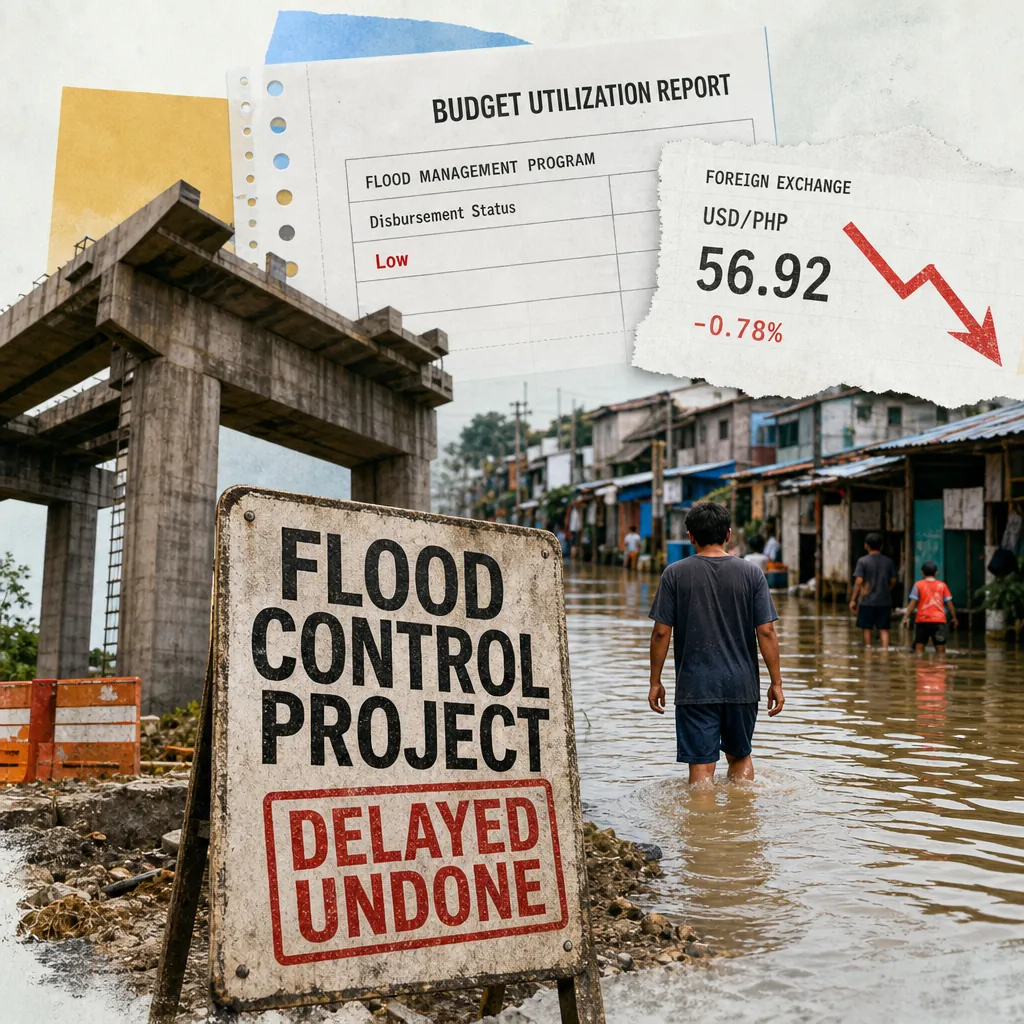
The day's events unfolded with exceptional speed. The Sandiganbayan Third Division, the Philippines' anti-graft court, issued arrest warrants and hold departure orders against Romualdez, resigned Ako Bicol Representative Zaldy Co, and two others for plunder over an alleged ₱7.4-billion flood control kickback scheme.12 Within hours, reports emerged that Romualdez had been admitted to Cardinal Santos Medical Center for a "cardiovascular event" and panic attack, with Interior Secretary Jonvic Remulla personally traveling to the hospital to serve the warrant.34 The visual spectacle of police officers arriving at a private hospital room, followed by the unusual booking process where the detainee shirt was draped over Romualdez due to attached medical apparatus, became the defining image of the day's coverage.56
Meanwhile, the impeachment trial of Vice President Sara Duterte continued on a parallel track, with the Philippine Statistics Authority (PSA) testifying that 37 deceased individuals, including a two-month-old infant who died in 1965, were listed as recipients of confidential funds under her office during 2023.30 This revelation transformed the trial's narrative from political accusation to documentary integrity, with Senator Win Gatchalian publicly questioning whether names without birth or death records actually exist.32 The convergence of these two accountability crises—one involving the president's cousin, the other the vice president—created a single, overwhelming feed of elite scandal that dominated every platform.
Key themes
- Public mockery overwhelms sympathy for Romualdez's medical emergency: The reported "cardiovascular event" and panic attack drew thousands of "haha" reactions across Facebook, with one post documenting the hospital booking process receiving 1,569 laughing reactions against just 12 angry responses.6 The public's dominant response was disbelief that the medical emergency was genuine, viewing it instead as a delay tactic or political theater.
- Government accountability messaging backfires: Statements from administration allies framing the arrest as proof of presidential seriousness drew intense mockery. Senator Panfilo Lacson's assertion that the arrest should "silence Marcos critics" generated 631 "haha" reactions on Facebook, while DPWH Secretary Vince Dizon's similar framing drew 226 laughing reactions against just 4 angry ones.9 The public interpreted these statements as defensive rather than principled.
- PSA testimony reveals deceased and minor confidential fund recipients: Philippine Statistics Authority Assistant National Statistician Marizza Grande testified that 37 dead individuals and 25 minors were listed as recipients of confidential funds under Vice President Sara Duterte's office, including a two-month-old infant who died in 1965.30169 This revelation shifted the trial's focus from political accusation to verifiable documentation failures.
- Senator Gatchalian's questioning reframes issue as data integrity: Senator Win Gatchalian's query—whether listed names without birth or death records actually exist—shifted the conversation from the defense's legal posturing to the prosecution's evidence-integrity, positioning the issue as a matter of public record accuracy.32
- DepEd budget crisis reveals education funding contradictions: Education Secretary Sonny Angara confirmed that no funding was allocated for new teacher hires in 2027, with a shortage of 14,274 teachers costing around ₱4.29 billion, even as the department proposed a ₱975-billion budget with a ₱145-billion supplemental fund request.10547 The seeming contradiction drew public frustration, with sadness reactions outnumbering positive responses on related posts.77
- MMDA chief's EDSA Busway violation becomes accountability test: Metropolitan Manila Development Authority General Manager Nicolas Torre III went on leave after his personal vehicle, fitted with MMDA markings, was caught using the EDSA Busway. The Land Transportation Office revoked the driver's license, but public reaction was dominated by mockery, with one post drawing 118 "haha" reactions against just 2 angry responses.3796
- Legarda-Leviste asylum speculation adds to elite scandal narrative: Tabloid reporting suggested Senator Loren Legarda and Representative Leandro Leviste might seek asylum abroad amid potential legal cases, with reports that Leviste had vacated his BGC penthouse and was in France.135 The NBI announced it would request an immigration lookout bulletin against Leviste.79
- Non-scandal government news struggles for attention: Substantive policy stories—including the DepEd budget crisis, NBI's flood control probe, and BARMM election security preparations—drew minimal engagement compared to the political scandals, suggesting public attention was almost entirely captured by the accountability crises.4148
How the narratives stack
Dominant: The arrest of Martin Romualdez on plunder charges dominated the conversation, but the focus was less on the legal substance and more on the spectacle of his hospital confinement. The most widely circulated update—that Romualdez suffered a "cardiovascular event" and panic attack—became the primary subject of public commentary, with laughter-themed responses dwarfing all other emotional indicators by a wide margin.11 Within the captured set, this story drew the highest engagement across all platforms, with one Facebook post alone accumulating over 8,200 "haha" reactions.54
Counter-narrative: The government's framing of the arrest as evidence of the administration's seriousness about accountability formed a distinct counter-narrative, but it was consistently overwhelmed by public mockery. Official statements from Malacañang, DPWH Secretary Dizon, and Senator Lacson all drew derisive reactions, suggesting the public viewed the administration's messaging as defensive rather than principled.9 A smaller thread of sympathy for Romualdez's health existed but remained in the distinct minority.11
Emerging: The PSA testimony revealing deceased and minor confidential fund recipients is emerging as a significant new narrative that could shift the Duterte impeachment trial from political accusation to documentary integrity. Senator Gatchalian's questioning of whether listed names actually exist introduces a procedural dimension that could broaden scrutiny to other government agencies' record-keeping.32 This storyline is still in its early amplification phase, with view counts in the hundreds rather than thousands, but its factual grounding makes it difficult for defense narratives to overcome.30
Under-covered: The DepEd budget crisis—specifically the zero allocation for new teacher hires in 2027 despite a documented shortage of 14,274 teachers—received far less attention than the political scandals, despite its direct impact on public education.105 The seeming contradiction between the department's ₱975-billion budget proposal and its inability to hire teachers drew modest engagement, suggesting audiences were too focused on the political trials to process the education funding implications.47
Platform insights
- Facebook: The dominant platform for emotional reaction, with the highest engagement concentrated on posts featuring photos of police at the hospital or statements from government officials. A video of DILG Secretary Remulla arriving to serve the warrant drew 1,983 likes and 765 comments, while posts about Romualdez's medical condition consistently generated far more "haha" reactions than any other emotion type.4 The platform served as the primary arena for public sentiment expression, with mockery the prevailing response across all updates throughout the evening.
- X (Twitter): Functioned primarily as a breaking news wire, with engagement flowing through views rather than emotional reactions. The arrest confirmation post drew 14,212 views but only 45 likes and 7 responses, indicating a more restrained, news-consuming posture compared to Facebook's overt mockery.57 The platform also carried the PSA testimony and Senator Gatchalian's questioning, with view counts ranging from 94 to roughly 1,700, indicating a niche but highly informed audience of journalists, political staffers, and engaged citizens.33
- Reddit: Served as a hub for consolidating details and fostering more substantive discussion. The post "More photos: Martin Romualdez arrested in the hospital for plunder" received 731 upvotes and 215 comments, with users dissecting the procedural irregularities and medical justifications presented.5 A separate thread on the Duterte bail procedures provided detailed legal context, explaining that weekend courts exist specifically to process bail under Supreme Court circulars.71
- YouTube: Captured the explanatory and documentary angle, with Rappler's video "Martin Romualdez arrested for plunder" accumulating 21,808 views and 137 comments, representing the highest video engagement.17 The "What happens now?" explainer video drew 2,321 views, indicating that as the evening progressed, audiences shifted from immediate reaction toward seeking legal clarification and procedural understanding.18
Key voices and communities
- General public and anti-corruption advocates: The largest and most emotionally charged participant group, characterized by volume rather than institutional authority. Their engagement is overwhelmingly dismissive and satirical, with "haha" reactions dominating standard likes by a ratio of roughly 10-to-1 on major news outlets' posts.22 This group's sentiment signals that the public is closely watching for preferential treatment or procedural shortcuts.
- Government and law enforcement institutions: The PNP-CIDG, NBI, DILG, and Malacañang operate with coordinated messaging through official press conferences and media statements, positioning themselves as enforcers of lawful process. Their content strategy prioritizes procedural transparency, but public reception indicates persistent distrust that institutions must contend with.15
- Political opposition and minority bloc voices: A smaller but vocal group using the arrest and trial to advance accountability narratives. Their messaging emphasizes that due process must continue unhindered and warns against the case becoming a symbolic gesture rather than genuine institutional reform.26 Representative Leila de Lima's statement that this "should not be the end of efforts to achieve justice" represented the opposition's cautious framing.9
- Mainstream media organizations: Traditional and digital news outlets serve as both primary reporters and amplifiers of the arrest narrative, providing a mix of breaking news alerts, explainer videos, live updates, and feature stories. Their content achieved significant reach, with explainer videos on the plunder case and arrest process amassing over 20,000 views each.1728
- Institutional and technical voices: Government representatives and technical experts from the PSA occupy a distinct conversational space focused on evidentiary verification and administrative processes. Their statements carry significant weight despite comparatively lower direct engagement metrics, as their contributions are widely repackaged by other stakeholder groups.30
Narrative streams
The hospital arrest of Martin Romualdez: spectacle over substance
The arrest of former House Speaker Martin Romualdez unfolded as a multi-stage public spectacle that began with the Sandiganbayan Third Division's issuance of arrest warrants and hold departure orders for plunder over an alleged ₱7.4-billion flood control kickback scheme.1 Within hours, reports emerged that Romualdez had been admitted to Cardinal Santos Medical Center for a "cardiovascular event" and panic attack, with Interior Secretary Jonvic Remulla personally traveling to the hospital to serve the warrant.34 The visual documentation of police officers processing the arrest at the hospital bedside—with medical apparatus attached and the detainee shirt draped over Romualdez—became the defining image of the day's coverage.56
The public response was overwhelmingly skeptical. A Facebook post from Inquirer.net describing the health episode accumulated 519 "haha" reactions against just 12 "angry" reactions and 1 "sad" reaction, signaling overwhelming public disbelief.6 The skepticism crystallized when booking photos showed Romualdez unable to stand or wear the detainee shirt properly, which users interpreted as theatrical rather than legitimate—one post documenting the process drew 1,569 "haha" reactions compared to only 12 "angry" responses.6 By evening, the narrative had shifted to questioning whether the hospital confinement was a deliberate delay tactic, particularly as his camp simultaneously filed motions while police maintained custody.813
Romualdez's camp filed an urgent motion for continued hospital confinement under custody, listing diagnoses that included hypertensive atherosclerotic cardiovascular disease, unstable angina, and signs of previous strokes.7 The motion stated he had undergone angioplasty in October 2024 and listed conditions including coronary artery disease, Type 2 diabetes, and cerebrovascular ischemic disease.153 The detailed medical disclosure was met not with sympathy but with intensified mockery, suggesting the public viewed the medical filings as legal strategy rather than genuine health concerns.721
The read for the sector: For government communicators, the overwhelming public skepticism toward the medical explanation signals that official narratives around high-profile arrests will be met with deep cynicism. The public's default distrust appears to override even well-documented medical evidence when the subject is a high-ranking political figure, making transparent, verifiable procedural updates more effective than narrative framing.
PSA testimony transforms Duterte trial into documentation crisis
The impeachment trial of Vice President Sara Duterte took a significant turn when Philippine Statistics Authority Assistant National Statistician Marizza Grande testified that 37 deceased individuals, including a two-month-old infant who died in 1965, were listed as recipients of confidential funds under Duterte's office during 2023.30 Grande also confirmed that 25 minors were among the listed recipients, calling the discovery "unusual and unique" during direct examination.169 The testimony covered names that signed acknowledgment receipts used by the Office of the Vice President and the Department of Education to liquidate their ₱612.5 million in confidential funds.90
Senator Win Gatchalian's pointed question—whether the listed individuals without corresponding birth or death records actually exist—emerged as the key political counter-move.32 This query shifted the conversation from the defense's legal posturing to the prosecution's evidence-integrity, positioning the issue as a matter of public record accuracy rather than legal interpretation. The revelation transformed what was previously dismissed as partisan attacks into a documentary integrity issue that government agencies must now address.32
The PSA's involvement as the verifying authority creates collateral exposure for the statistics agency itself. The public questioning of PSA's record-keeping reliability—prompted by a sitting senator's challenge—risks undermining trust in government data infrastructure more broadly.32 Engagement metrics on these specific posts remain modest, with view counts in the hundreds rather than thousands, but the substantive nature of the questions raised carries weight beyond raw numbers.33
The read for the sector: The documentation irregularities revealed in the confidential fund recipient lists represent the most significant new development in the impeachment conversation. The deceased infant disclosure provides concrete evidence that has been prominently cited across multiple stakeholder groups, establishing a factual baseline that will be difficult for defense narratives to overcome. For government agencies beyond the OVP, this signals that verification failures can rapidly become institutional crises, making proactive review of internal records essential.
Government accountability messaging meets public derision
The administration's attempt to frame the Romualdez arrest as evidence of its seriousness about accountability backfired spectacularly on social media. Senator Panfilo Lacson's statement that the arrest "should hush President Marcos' critics" drew 631 "haha" reactions on Facebook, making it one of the most intensely mocked statements of the day.9 DPWH Secretary Vince Dizon's similar framing—that the case proves "serious ang pangulo" about accountability—drew 226 "haha" reactions against just 4 "angry" ones.9
The political framing advanced by administration allies actually appeared to deepen public cynicism rather than build confidence in the justice process. The overwhelming mockery reactions to these statements, compared to relatively muted responses to opposition figures like De Lima, suggest that the administration's messaging around accountability is being interpreted as defensive rather than principled.9 Malacañang issued a statement respecting the Ombudsman's filing, while Interior Secretary Remulla's candid admission that serving the warrant was personally painful garnered reactions reflecting public cynicism about close personal ties.29
The reputational risk for Malacañang has crystallized from a legal challenge into a credibility problem. The carefully constructed narrative—that the arrest demonstrates the President's seriousness about accountability—is being actively undermined by the public's focus on the procedural optics: a hospital-room booking, medical apparatus, and the perceived convenience of the health emergency.10 Government-aligned spokespersons confirming the arrest and the medical details are inadvertently feeding the very skepticism they seek to counter, as each official statement invites further mockery of the situation.1011
The read for the sector: For stakeholders monitoring government communications, the lesson is that while the legal case may proceed legitimately, the narrative battle is being lost in real-time on social media, where procedural facts are being overshadowed by optics-skepticism and the perception of special treatment for political elites. The mocking tone dominating social media signals that the public views this as farce, not justice, and this unstable emotional state could quickly pivot to outrage if further procedural stumbles occur.11
DepEd budget crisis: education funding contradictions emerge
The Department of Education's budget situation emerged as a significant but under-covered narrative, with Education Secretary Sonny Angara confirming that no funding was allocated for new teacher hires in 2027. The shortage stands at 14,274 teachers, costing around ₱4.29 billion to address.105 Angara noted that recruitment has actually picked up in the current cycle, with 32,000 new teachers hired this year compared to an average of around 20,000, but the zero allocation for 2027 creates a cliff for future staffing.105
The contradiction deepened when reports emerged that DepEd proposed a ₱975-billion 2027 budget while simultaneously seeking a ₱145-billion supplemental fund.47 Angara attributed the budget reduction to infrastructure projects being defunded within the department's allocation.78 The seeming contradiction between the budget proposal and the hiring freeze provides opposition groups with readily deployable messaging material about government priorities.46
The emotional response pattern to this news skewed negative, with sadness reactions outnumbering positive or amused reactions by a considerable margin on Facebook posts.77 The lack of engagement with the justification post—which drew no comments or shares—suggests that explanations rooted in technical budget mechanics do not effectively counter emotional public responses.78 Career advancement for existing staff remains stalled as well, with roughly 100,000 qualified personnel waiting for promotions that lack funding.105
The read for the sector: The DepEd budget discourse is transitioning from policy reporting toward emotional and political framing, with markedly higher sad and angry reactions compared to positive responses on related posts. This narrative will likely evolve into broader accusations of misplaced priorities as oversight bodies and advocacy groups begin their budget review cycles, making proactive, human-centered storytelling from DepEd leadership essential.
MMDA chief's EDSA Busway violation: accountability test for traffic enforcers
A parallel accountability story emerged around Metropolitan Manila Development Authority General Manager Nicolas Torre III, who went on leave after his personal vehicle, fitted with MMDA markings, was caught using the EDSA Busway.96 Torre admitted he was on board the SUV when it passed the busway, saying he affixed the MMDA's name, logo, and blinker to make the personal vehicle look official.96 The Land Transportation Office revoked the license of the driver, and Torre paid a ₱14,000 fine.154
The public reaction was dominated by mockery, with one Facebook post about the driver's revoked license drawing 118 "haha" reactions against only 2 angry responses.37 The incident resonated with ongoing public frustration over rule enforcement and perceived impunity among ranking officials, with the EDSA Busway serving as a flashpoint for broader frustration with government privilege.37 The revocation of the driver's license by LTO demonstrates institutional action, yet the overwhelming public reaction suggests the public views this as performative accountability rather than genuine institutional reform.37
The read for the sector: For agencies involved in traffic enforcement, this incident reinforces a recurring pattern where public officials' conduct becomes a proxy test for the administration's commitment to its own rules. The public's amusement response indicates this story has saturated its current lifecycle, but further developments will either validate or undermine the accountability narrative.
Legarda-Leviste asylum speculation adds to elite scandal narrative
Tabloid reporting suggested that Senator Loren Legarda and Representative Leandro Leviste might seek asylum abroad amid potential legal cases, with reports that Leviste had vacated his BGC penthouse and was in France.135 NBI Director Melvin Matibag confirmed the bureau had received information that Leviste moved his belongings three weeks ago, though the report was not yet verified.135 The NBI announced it would request an Immigration Lookout Bulletin Order against Leviste this week.79
The framing of the asylum claim—that Legarda and Leviste were selling BGC condos and shares in preparation for departure—resonated with the existing public perception that powerful figures would flee rather than face accountability, though the story remained speculative with no official confirmation.43 The Abante Facebook front page amplified the story by connecting it to the Romualdez plunder case and the VP spy fund investigation, creating a unified narrative of a political elite under siege.45
The read for the sector: The asylum narrative, while currently limited in engagement, carries potential for significant amplification given its novelty and the prominent positions of those involved. The convergence of multiple corruption narratives—Romualdez's plunder arrest, Legarda's asylum speculation, and Sara Duterte's confidential fund issues—creates a compounding effect that amplifies opposition messaging across all monitored platforms.
Conversation trajectory
The Romualdez arrest and Duterte impeachment trial conversation is showing accelerated development with several dynamics now visible. The Sandiganbayan's ruling on Romualdez's urgent motion for continued hospital confinement carries immediate potential to either validate or undermine the skepticism narrative, depending on the outcome. If the motion is denied, expect a surge in conversation celebrating the arrest's procedural legitimacy; approval of extended confinement risks amplifying the skepticism angle and reinforcing narratives of preferential treatment for political elites.12 The eventual transfer of Romualdez from hospital to PNP custody will likely generate a second wave of coverage, particularly if the transfer process is documented or delayed. Observation window: 48–72 hours.
The PSA testimony on deceased and minor confidential fund recipients is still in its early amplification phase, with relatively low engagement figures on early posts suggesting the story has not yet reached peak visibility. Expect the conversation to evolve over the next 5–7 days from political accusation toward technical verification, with increasing focus on the PSA's record-keeping processes and whether additional listed names will show similar discrepancies.32 The PSA's formal response to Senator Gatchalian's inquiry about database record verification could either validate or complicate the deceased recipient narrative. Observation window: 5–7 days.
The DepEd budget crisis will likely intensify as the national budget approval process accelerates, with the contradiction between the proposed supplemental request and the hiring freeze narrative providing fertile ground for opposition messaging. The House of Representatives budget deliberations for DepEd 2027 allocations are expected within the next 2–3 months, providing a concrete hook for legislative questioning.77 Observation window: 2–3 months.
The Senate impeachment trial schedule, announced by Senate Majority Leader Juan Miguel Zubiri, will see impeachment proceedings held in the mornings on Mondays through Wednesdays in September, with afternoons devoted to budget hearings and regular session. In October, larger portions of the Senate's schedule will be devoted to the trial, with whole-day proceedings set for October 1–2, 5–9, and 12–15.166 This extended timeline suggests the trial will remain a fixture in public discourse for weeks, with each procedural development subject to close scrutiny. Observation window: through October.
Trigger events that will reshape this conversation include: the Sandiganbayan's ruling on Romualdez's hospital confinement motion; the eventual transfer of Romualdez from hospital to PNP custody; the PSA's formal response to Senator Gatchalian's inquiry; the first substantive testimony on the unexplained wealth article in the impeachment trial; and any statement from Malacañang or allied political figures that could reframe the narrative toward political motivations.
Response guidance
Procedural transparency over political messaging: For government communicators, prioritize verifiable procedural updates over narrative framing. The overwhelming mockery of official statements suggests audiences are actively seeking verifiable details rather than political spin. Emphasize that the Sandiganbayan—not the executive—issued the warrant based on probable cause, and stress that medical accommodations are being granted through proper legal channels, not special treatment.10
Low-emotional register for official statements: Instruct spokespersons to adopt a consistent, low-emotional register when discussing the case. Any official statement that acknowledges the health situation invites further speculative commentary and public mockery; instead, all public responses should be minimal, factual, and refer all inquiries to the judicial process.11 The less oxygen the spectacle receives from official sources, the faster the narrative can be redirected toward the substantive legal proceedings.
Prepare contingency messaging for delay perceptions: The current reaction patterns suggest that if legal proceedings are seen as stalled due to medical deferments, the public mood could shift from mockery to active anger. Pre-drafted statements reinforcing the rule of law's impartiality should be ready for deployment.12
Address documentation integrity proactively: For government agencies handling confidential funds, proactively review and verify internal records before the trial narrative expands to other agencies. The PSA's credibility bind demonstrates how rapidly verification failures can become institutional crises.3032 Agencies that publicly acknowledge weaknesses and institute safeguards may avoid the prolonged reputational damage currently plaguing the OVP.
Human-centered storytelling for education budget: The DepEd budget narrative requires messaging that acknowledges teacher shortage concerns while explaining infra-budget reallocations. Technical explanations alone do not counter emotional public responses; pair data with human-interest narratives about classroom impact and alternative support mechanisms.77
Avoid amplifying speculative narratives: The Legarda-Leviste asylum story and the Romualdez medical condition are both speculative and emotionally charged. Direct engagement risks amplifying unverified narratives; monitoring-only is the recommended approach until factual confirmation or official statements emerge.43
See the full picture behind today's signals.
This report draws from Media Meter's MediaWatch, our real-time monitoring engine tracking 2,470+ Philippine sources across print, broadcast, digital, and social. Explore how the platform turns raw coverage into decision-grade intelligence, then see how it's configured for teams like yours — whether you're in PR agencies, corporate comms, government, or marketing.
Want more? Browse our Report Library for sector and crisis intelligence, or request a demo and we'll have your brand set up before the call.
Want this kind of intelligence on your brand?
This brief is built on the same MediaWatch methodology that runs continuously across every brand we monitor. See your competitive landscape, Impact Score, and narrative trajectory in a 30-minute demo.